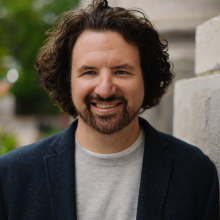
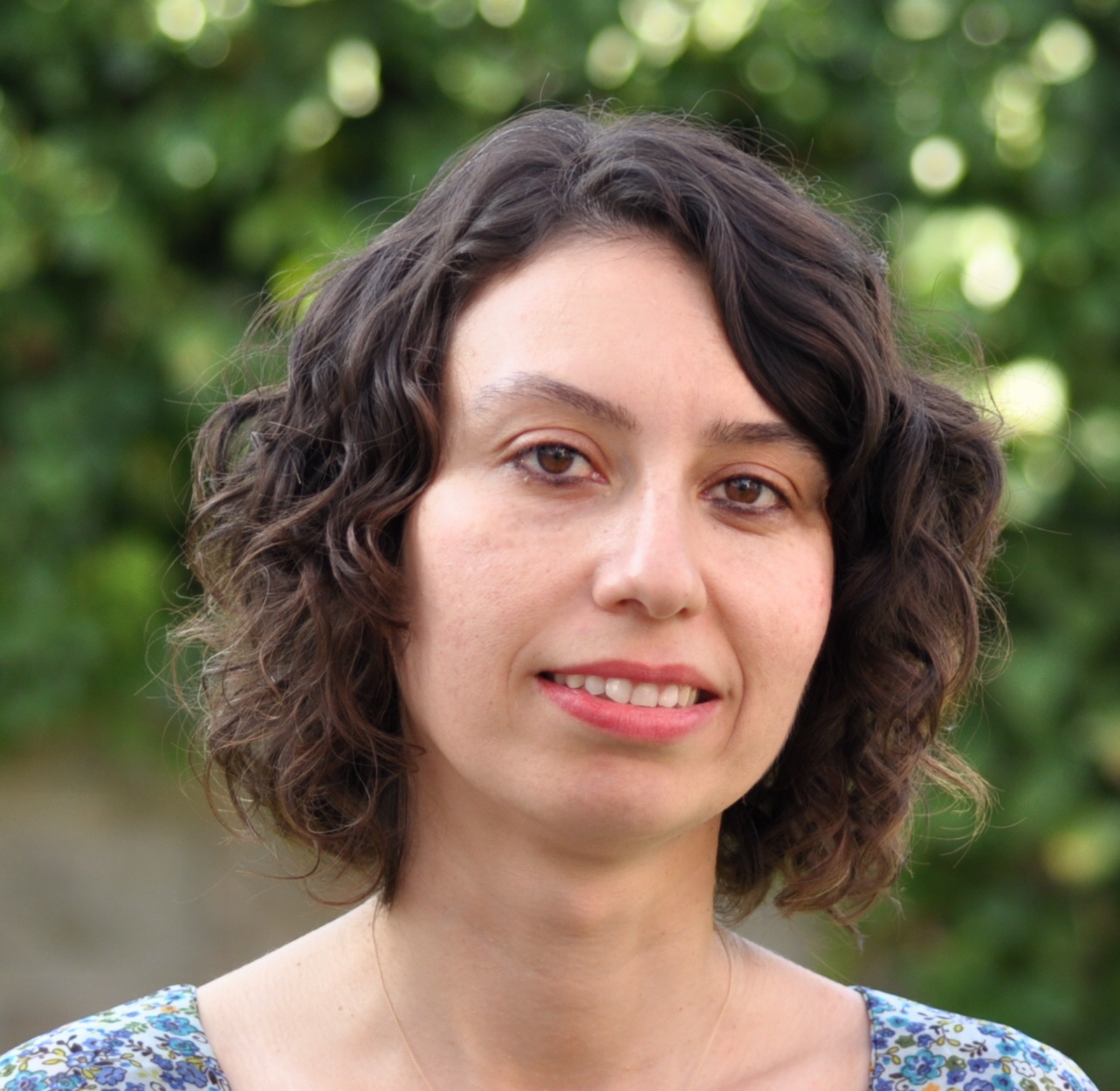
Prof. Anya Belz is Full Professor of Computer Science at Dublin City University's School of Computing and Science Lead at ADAPT Research Centre. A leading NLP researcher with PhD-level expertise, she specializes in natural language generation, evaluation methodologies, and multimodal systems. Recipient of multiple best paper awards and NAACL Test of Time Award nomination. Research innovations include foundational work on statistical language generation (deployed in weather forecasting systems), comparative evaluation frameworks, vision-language integration, and reproducibility quantification. Current EPSRC-funded ReproHum project coordinates 20 global labs studying evaluation consistency. Achievements : Developed industry-deployed generation systems for accessibility applications Pioneered cross-modal alignment techniques for image description Authored 100+ publications spanning generation, evaluation, and reproducibility
Timothy O'Donnell serves as Associate Professor in the Department of Linguistics at McGill University and holds a Canada CIFAR AI Chair at Mila—Québec Artificial Intelligence Institute. He co-directs the Montréal Computational and Quantitative Linguistics Laboratory (MCQLL) and directs McGill's interdisciplinary Cognitive Science Program. Additionally, he maintains affiliations as an associate member of the School of Computer Science, member of McGill NLP, and affiliate of the Reasoning and Learning Laboratory. His academic foundation includes a PhD from Harvard University, establishing expertise in quantitative and computational approaches to language. Dr. O'Donnell's research centers on computational models of language learning and processing, mathematical linguistics, and probabilistic inference. His work bridges cognitive science, natural language processing, and machine learning to model human language acquisition and processing. Key investigations include grammar induction, neural language modeling, syntactic control mechanisms, and the cognitive foundations of linguistic phenomena. His methodologies emphasize probabilistic frameworks and mathematical rigor to explain language universals and processing constraints. Analysis of his recent publications reveals dominant trends in visually-grounded grammar induction, surprisal-based processing models, and neural language model architectures. His work consistently connects computational linguistics with cognitive theory, particularly in language acquisition modeling and the explanation of linguistic patterns through probabilistic inference. Cross-cutting themes include information locality, lexical trade-offs, and the mathematical properties of language systems. His scientific recognition includes the prestigious William Dawson Scholar award and Canada CIFAR AI Chair, highlighting contributions to artificial intelligence and computational linguistics. These honors reflect leadership in advancing AI research through linguistic insights. As co-director of MCQLL, Dr. O'Donnell leads an interdisciplinary team integrating computational, quantitative, and cognitive approaches to linguistic research. The laboratory fosters collaboration between linguists, computer scientists, and cognitive scientists, driving innovation in natural language processing and language modeling while maintaining strong ties to Mila's AI research ecosystem.
Matthew R. Gormley is an Associate Professor at Carnegie Mellon University , affiliated with the School of Computer Science and the Machine Learning Department . He also serves as an affiliate of the Language Technologies Institute and directs the ML Minor/Concentration program. Research interests include Natural language processing for dialogue systems Summarization (multi-document and long-document) NLP applied to medical text analysis Low-resource language and domain adaptation Syntactic and semantic parsing Autoregressive and approximation-aware machine learning Computationally efficient models His work spans both theoretical and applied domains, focusing on unsupervised learning and multilinguality. Recent publications highlight advancements in long-context modeling, data contamination taxonomies, and medical summarization. His collaborations with prominent researchers like Graham Neubig, Jason Eisner, and Thomas Schaaf demonstrate his interdisciplinary approach. Scientific contributions include Developing novel training methods for conditional random fields Advancing neural finite-state transducers Building concrete NLP pipelines for Chinese Creating annotated datasets like Annotated Gigaword Teaching roles at CMU include co-instructing 10-301/10-601 Introduction to Machine Learning and 10-423/10-623 Generative AI . He has mentored numerous PhD and Master's students in areas such as multilingual NLP, medical text analysis, and structured data processing.
Mario Giulianelli is an Associate Professor of Computational Linguistics at University College London (UCL). Prior to this position, he was a senior research scientist at the UK AI Security Institute working on AI evaluation science, and a postdoctoral fellow at ETH Zurich in the Institute for Machine Learning, Department of Computer Science. He completed his PhD at the Institute for Logic, Language and Computation of the University of Amsterdam under Raquel Fernández's supervision. He maintains affiliations as an associated researcher at the ETH AI Center and as a member of the ELLIS Society. His educational background includes a PhD from the University of Amsterdam, Master's degree in Artificial Intelligence, and undergraduate studies in Computational Linguistics at the University of Tübingen. His research explores computational principles underlying language understanding, production, learning, and use in both natural and artificial cognitive systems. He has made significant contributions to computational psycholinguistics, semantics and pragmatics, language variation and change modeling, and AI evaluation science. Notably, his 2018 paper has been described as introducing the first mechanistic interpretability method for language models. Giulianelli's recent publications demonstrate a strong focus on advancing AI evaluation methodologies while maintaining deep connections to computational linguistics foundations. His work bridges theoretical linguistics with practical AI development, particularly in language model evaluation, information theory applications to discourse analysis, and cognitive modeling of language processing. The consistent publication of high-impact work at top venues (including ICML Spotlight and ACL panel selections) reflects the significance of his contributions to both NLP and AI safety communities. Notable achievements include: ICML Spotlight paper (top 2.6%) on token-to-character language model conversion ACL panel discussion selection (top 0.8%) for research on inductive biases in language models Best Paper Award at EMNLP 2018 workshop on neural network interpretability Competitive ETH Zürich postdoctoral fellowship ELLIS Society membership nomination Giulianelli actively contributes to the research community through mentoring (including SPAR program involvement), organizing workshops like GenBench, and extensive collaboration across institutions. His invited talks at leading universities worldwide demonstrate the international recognition of his work at the intersection of computational linguistics and AI evaluation.
Gabriele Sarti is a PhD Student and Research Fellow in Computational Linguistics at the University of Groningen, associated with the Center for Language and Cognition in the Faculty of Arts. His research focuses on interpretability for natural language processing systems, particularly in generative models and machine translation. Research interests center on developing methods to understand and control large language models, with emphasis on: interpretability techniques, multilingual systems evaluation, controlled text generation, and human-AI collaboration frameworks. Recent work explores model steering mechanisms, attribution methods for trustworthy AI, and tools for democratizing interpretability research. Publications demonstrate consistent focus on operationalizing interpretability advances through open-source software development. Work spans multilingual machine translation evaluation, controlled generation techniques, and foundational research on transformer model mechanics.
Professor Gertjan van Noord is affiliated with the University of Groningen , working in the Language Technology group under the Faculty of Arts . His research focuses on computational linguistics , dependency parsing , natural language processing , and machine translation , particularly for morphologically rich languages .
Antonio Toral is a leading researcher at the University of Groningen, focusing on Neural Machine Translation (NMT) , human evaluation , and parallel corpus curation . His work spans low-resource language modeling, lexical diversity enhancement, and multilingual figurative language detection. Affiliations: University of Groningen, MaCoCu Project, CREAMT Consortium Key projects: MaCoCu (Massive collection of under-resourced language data) CREAMT (Creativity in literary translation) Research interests include: Improving NMT naturalness and lexical richness Document-level evaluation of machine translations Character-level modeling and downsampling techniques Reproducibility challenges in human NLP evaluation Cross-lingual formality transfer without parallel data His recent articles (2021–2025) demonstrate expertise in: Reinforcement learning for naturalness preservation Statistical analysis of translationese effects Dependency-based reordering models Pivot translation for Catalan→Chinese Domain-specific corpus creation for EU Digital Service Infrastructures
Naoaki Okazaki is a Professor in the Department of Computer Science at Tokyo Institute of Technology's Graduate School of Information Science and Engineering, with joint research affiliations at AIST (National Institute of Advanced Industrial Science and Technology). He serves as a leading researcher in Natural Language Processing with particular expertise in grammatical error correction, bias evaluation in language models, and Asian language processing. His research interests span multiple critical areas of contemporary NLP including: Natural language processing for educational applications Bias evaluation and mitigation in pre-trained language models Machine translation, especially for Japanese and Korean Subword tokenization techniques and vocabulary optimization Multimodal learning and vision-language models Development of evaluation metrics for NLP tasks Professor Okazaki's publication record demonstrates consistent high-impact contributions to top NLP conferences (ACL, EMNLP, NAACL) from 2021-2025. His recent work shows increasing focus on the challenges posed by large language models, including membership inference attacks, prompt sensitivity in bias evaluation, and developing native Japanese resources rather than relying on translation approaches. His research group regularly achieves state-of-the-art or competitive results across multiple NLP tasks. As Program Chair for ACL 2023, Professor Okazaki contributed to improving conference peer review processes and increasing transparency in academic decision-making. His leadership extends to mentoring numerous graduate students who frequently appear as co-authors on his publications.
James Henderson is a Senior Researcher at Idiap Research Institute where he heads the Natural Language Understanding group. He currently serves as Action Editor for Transactions of the Association for Computational Linguistics (TACL) and was recently awarded an ERC Advanced Grant for his project 'Interpretable Beliefs and Programmable Knowledge with Bayesian Attention in Large Language Models' (BALM). Previously, Henderson held positions as Chargé de Cours at University of Geneva's Department of Computer Science and Principal Scientist at Xerox Research Centre Europe (now Naver Labs Europe). Henderson's research focuses on machine learning methods for natural language processing, with pioneering work on recurrent neural networks for syntactic and semantic parsing. His current investigations include representation learning for language semantics, graph-to-graph deep learning models, entity induction, and variational-Bayesian attention-based representation learning. His research bridges Bayesian inference, transformer architectures, and structured prediction for NLP tasks. His publication portfolio demonstrates consistent contributions to core NLP methodologies, with recent emphasis on transformer optimization, Bayesian neural methods, efficient model architectures, and graph-based language representations. Research frequently appears in top venues including ACL, EMNLP, ICLR, and NeurIPS. Honors: ERC Advanced Grant (2023) Henderson leads the Natural Language Understanding group at Idiap, currently recruiting PhD students and postdoctoral researchers for his ERC project. He obtained his PhD and MSc from University of Pennsylvania and BSc from Massachusetts Institute of Technology, all in computer science.
Artem Sokolov serves as an Honorary Professor in the Department of Computational Linguistics at Heidelberg University and as a Research Scientist at Google Berlin. His primary research focuses on machine translation and structured prediction within natural language processing. Previously, he held positions at Amazon, the Statistical NLP Group at Heidelberg University led by Prof. Stefan Riezler, LIMSI, and Orange Labs in France, contributing to advancements in statistical and neural machine translation systems. He earned his PhD in Computer Science and Artificial Intelligence from the IRTCITS research center in Kyiv. His doctoral thesis investigated randomized algorithms for locality-sensitive embeddings of the Levenstein edit distance, establishing foundational work for efficient string similarity search in computational linguistics and intrusion detection systems. Dr. Sokolov's research expertise spans machine translation, imitation learning, bandit algorithms, and weakly supervised learning. He has pioneered methods for learning from partial feedback in structured prediction tasks, particularly addressing exposure bias in sequence generation and multi-facet evaluation of translation systems. His work bridges theoretical machine learning with practical NLP applications, emphasizing robustness against noisy data and scalable optimization techniques for real-world deployment. Analysis of his recent publications reveals trends toward scalable influence functions for model interpretability, multi-attribute control in machine translation, and rigorous auditing of multilingual datasets. His research consistently intersects natural language processing, machine learning optimization, and data quality assessment, with increasing emphasis on ethical AI considerations and efficient learning from weak supervision signals. Scientific awards include: 1st place at ECML/PKDD Discovery Challenge 2010 (English quality task) 2nd place at ECML/PKDD Discovery Challenge 2010 (general task) 2nd place in Semi-Supervised Feature Learning Challenge at NIPS 2011 3rd place in Semi-Supervised Feature Learning Challenge at NIPS 2011 As co-Principal Investigator for the 2015-2017 grant "Weakly Supervised Learning of Cross-Lingual Systems", Dr. Sokolov developed techniques for learning cross-lingual rankings from weakly supervised data sources like patent citations and Wikipedia hyperlinks. He has mentored students through teaching advanced courses including Imitation Learning, Stochastic Learning, and Statistical Machine Translation at Heidelberg University, supervising seminar projects on structured prediction and optimization algorithms. Dr. Sokolov is an active member of the Statistical NLP Group at Heidelberg University and collaborates with research teams at Google Berlin. His current work focuses on advancing production-scale machine translation systems through scalable inverse reinforcement learning and robust training methodologies, building on his extensive background in both academic research and industrial applications.
Dr. Burcu Can Buglalilar is a Lecturer in Computing Science at the Department of Computing Science and Mathematics, University of Stirling, where she is a member of the Data Science and Intelligent Systems Research Group. She previously held academic positions at Hacettepe University (2015-2020) and University of Wolverhampton (2020-2022). Her research focuses on Natural Language Processing with particular emphasis on unsupervised learning techniques for morphology, syntax, and semantics in agglutinative languages like Turkish. She applies both statistical methods (including nonparametric Bayesian learning) and deep learning approaches to language representation problems. Dr. Can Buglalilar's recent work shows a clear trajectory toward Large Language Models and their applications, with upcoming lectures scheduled for 2025 on both Large and Small Language Models. Her publications consistently address fundamental challenges in representing and processing morphologically rich languages. Scientific Recognition: Best Paper Award at RepL4NLP, ACL 2018 TUBITAK Project Performance Award (2022) As an active member of the NLP community, Dr. Can Buglalilar serves as Senior Associate Editor for ACM TALLIP and Associate Editor for Journal of Natural Language Engineering. She has organized workshops including the 8th Representation Learning for NLP (Repl4NLP) at ACL 2023. She is currently developing the Turkish Neural NLP Toolkit and welcomes MSc and PhD students interested in natural language processing, computational linguistics, and machine learning for language.