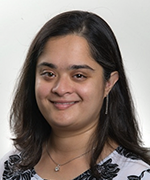
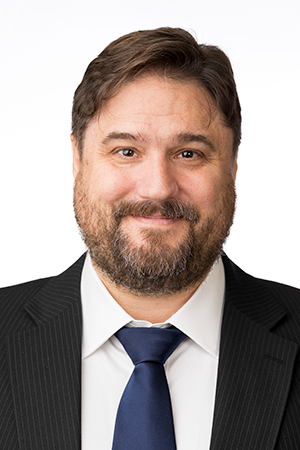
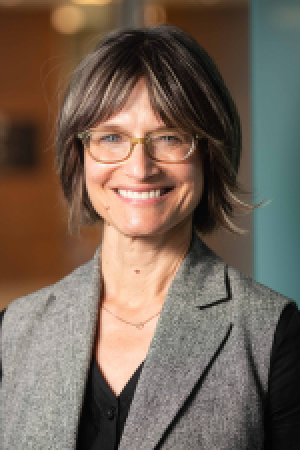
Devi Parikh is an Associate Professor at the School of Interactive Computing, Georgia Institute of Technology, and a Research Director at Meta’s FAIR lab. Her research focuses on generative models, AI for creativity, computer vision, and natural language processing. Education: B.S. in Electrical and Computer Engineering from Rowan University (2005), M.S. and Ph.D. in Electrical and Computer Engineering from Carnegie Mellon University (2007, 2009). Research interests include embodied AI, human-AI collaboration, and creative applications of AI. She has held visiting positions at Cornell, MIT, CMU, and others. Awards include NSF CAREER Award, IJCAI Computers and Thought Award, and multiple fellowships. Led development of Habitat , a platform for embodied AI research, and contributed to the Open Catalyst Project for renewable energy storage.
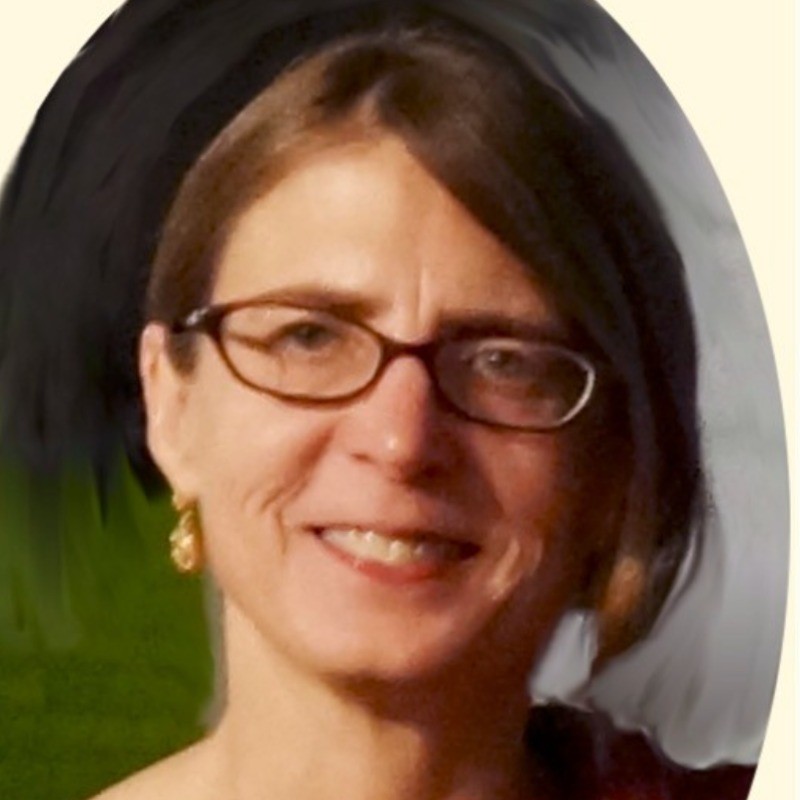
Nancy Pollard is a Professor at Carnegie Mellon University, affiliated with both the Robotics Institute and the Computer Science Department. Her research focuses on understanding physical interaction with the environment through robotics and computer graphics, particularly in areas like dexterous manipulation, human motion analysis, and soft robotics. She explores how human examples can inform robot control policies and create natural-looking animations. Her work bridges robotics and graphics to solve challenges such as optimizing motion for humanoid robots and improving the realism of animated hands. Key projects include developing fast physically plausible motion techniques, studying hand motion complexity, and creating intuitive tools for modeling hand-object interactions. She also investigates the physical correctness thresholds in graphics and the design of affordable soft robotic hands for real-world applications like agriculture. Recent publications highlight advancements in motion retargeting for anthropomorphic manipulations, co-optimization of soft robotic hand design and control, and frameworks for sensor placement in soft hands. Her research emphasizes human-inspired approaches to robotics and the application of biomechanical insights to improve robotic dexterity. Pollard advises students such as Arjun Lakshmipathy and collaborates on projects involving both academic and industrial applications. Her work has been supported by grants focused on robotics design and simulation-based manipulation capture.
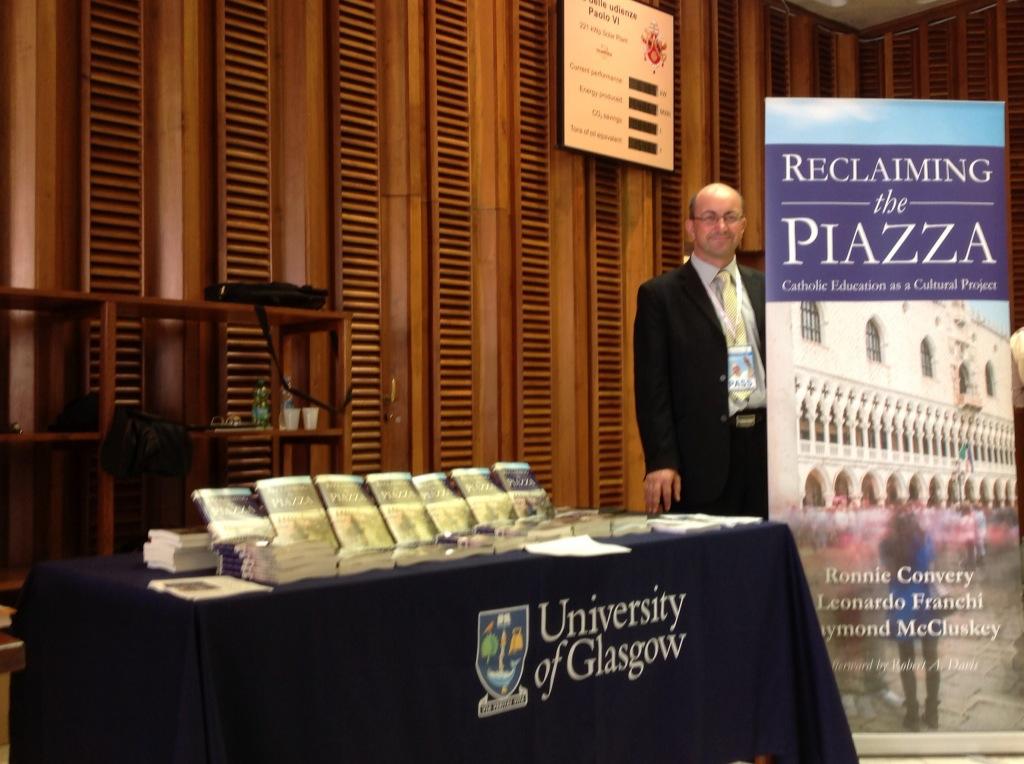
Dr. Leonardo Franchi serves as a Senior Lecturer in Pedagogy, Praxis & Faith at the University of Glasgow's School of Education. He is an internationally recognized scholar in Catholic education, holding significant editorial roles including Series Editor for both Catholic Education Globally - Challenges and Opportunities (Springer) and Education and Integral Human Development (Catholic University of America Press). In September 2024, he was appointed co-convenor of the Scottish Catholic Historical Association and maintains an active role as Executive Member of the Association of Catholic Institutes of Education. Franchi's educational background includes a Master of Arts (Hons), Post Graduate Certificate in Education, Master of Education, Post Graduate Certificate in Academic Practice, and a PhD. His academic journey reflects both theoretical depth and practical teaching experience in educational settings. His research interests center on Catholic education with particular focus on religious education, teacher formation, and the integration of liberal arts in higher education. Franchi has made significant scholarly contributions through the Reclaiming the Piazza series and numerous publications exploring how Catholic educational philosophy can address contemporary challenges while maintaining theological integrity. His work consistently examines the intersection of faith, culture, and educational practice, with increasing attention to character formation, intercultural dialogue, and the application of Catholic social teaching to educational policy. Analysis of his recent publications reveals a consistent trajectory examining Catholic educational identity in pluralistic contexts, with growing emphasis on character formation, teacher professional identity, and the integration of Catholic intellectual tradition with contemporary educational challenges. His 2023-2025 work shows increased focus on Scottish Catholic educational history, the application of papal encyclicals to educational practice, and the role of music and arts in religious formation. Series Editor for Catholic Education Globally - Challenges and Opportunities (Springer) Series Editor for Education and Integral Human Development (Catholic University of America Press) Co-convenor of Scottish Catholic Historical Association (since 2024) Executive Member of Association of Catholic Institutes of Education (since 2016) Academic Adviser to Academic Advisory Forum for Religious Education Reform in England and Wales (2019-2022) Franchi actively supervises doctoral students on diverse topics including professional identity of Catholic school teachers, music and religious education, Jesuit educational charism, and solidarity in Jesuit higher education. His supervision portfolio demonstrates his commitment to both theoretical exploration and practical application in religious educational contexts. He has received grant funding, including £10,000 from Porticus UK to support academics from developing countries attending the ACISE 2018 conference. Franchi also serves on multiple editorial boards including Review of Religious Education, Formation and Theology, and Studia Pedagogica Ignatiana. His professional activities extend to international presentations, with keynotes at institutions including Australian Institute of Theological Education and Radboud University, demonstrating his global influence in Catholic educational discourse. Franchi also serves as Director of Mater Christi Multi Academy Trust in Lancaster and holds a 0.5 FTE position as Professor of Catholic Education at the University of Notre Dame Australia.
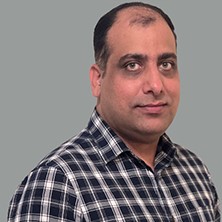
Atreyi Kankanhalli is a Professor at the National University of Singapore, specializing in Information Systems with a focus on knowledge management, healthcare IT, and digital innovation. Their research spans over three decades, with prolific contributions in top journals like MIS Quarterly, Journal of AIS, and Information & Management. They have co-authored over 150 papers addressing topics such as crowdsourcing, online communities, and the impact of AI on scholarly practices. Notable work includes studies on user adherence to health apps, innovation in public sector data utilization, and the ethical challenges of generative AI in peer review. Kankanhalli has also led research on global virtual teams and digital technologies' role in social justice, reflecting a commitment to both technical and societal dimensions of information systems. Education & Background: While specific degree details are not provided, their extensive publication history and academic roles imply advanced qualifications in Information Systems or related fields. They have collaborated with global researchers across institutions like NUS, University of Illinois, and Singapore Management University. Research Themes: Core areas include digital health interventions (e.g., fitness app adherence), organizational innovation via open data and crowdsourcing, and the socio-technical challenges of AI in academia. Their work often bridges theoretical frameworks with practical applications, such as healthcare decision support systems and policy-driven technology adoption. Impact & Influence: As an editorial board member and frequent conference contributor (e.g., ICIS, PACIS), Kankanhalli shapes the field's research agenda. Their recent focus on generative AI's implications highlights proactive engagement with emerging technologies' ethical and methodological challenges.
Muhammad Farooq is an Assistant Professor of English at Seton Hall University's Department of English. He specializes in 20th- and 21st-century British, postcolonial, and global Anglophone literature, with research focusing on postcolonial studies, necropolitics, memory, and spatial literary studies. His current book project, The Production of Necrospace: Literary Imaginary and Ungrievable Lives in the Af-Pak Frontier , examines necrogeographies through literary texts from the British colonial era to contemporary Af-Pak works. Education: PhD in English, Kent State University (2023) His research explores intersections between literature and socio-political structures, particularly in contested regions like the Afghanistan-Pakistan frontier. Farooq’s work often addresses how literature conceptualizes spaces of death (necrospace) and the politics of grievability. His recent publications analyze Afghan American fiction’s soundscapes, Pashto poetry’s engagement with drone warfare, and modernist narratives like Virginia Woolf’s works. He has received multiple awards including the 2024 University Research Council Grant and the 2023 Ohio International Consortium Award. Farooq teaches courses such as Postcolonial Theory and Literature and Death, Memory, and Resilience , emphasizing critical thinking across cultural divides. Grants: University Research Council Grant (2024), Newberry Renaissance Consortium Grant (2020) No specific labs or research teams are mentioned, but his interdisciplinary approach bridges literary analysis with geopolitical and cultural studies.
Prof. Dr. Ingo Scholtes is Chair of Machine Learning for Complex Networks at Julius-Maximilians-Universität Würzburg's Center for Artificial Intelligence and Data Science (CAIDAS). His research spans network science, graph machine learning, and computational social science, with applications in software engineering, ecology, biology, and physics. He received a Juniorfellowship from the German Informatics Society (2014) and an SNSF Professorship (CHF 1.5Mio, 2018). Current affiliations: JMU Würzburg (since 2021), University of Zurich (2018-2024), Bergische Universität Wuppertal (2019-2021) Research focus: Higher-order network modeling, temporal graph analysis, AI for collaborative systems, causality-aware machine learning His recent publications demonstrate strong trends in temporal network analysis , graph neural networks for time-series, and higher-order models across software engineering and social science domains. He co-chairs multiple international workshops on complex networks and serves as associate editor for EPJ Data Science and Advances in Complex Systems. Key scientific contributions: Foundational work on higher-order network models published in Nature Physics Methodological innovations in temporal network visualization (HOTVis) and path-based analysis (pathpy) As both educator and organizer, he leads the Computational Social Science Section at GI e.V., mentors across disciplines, and develops tools like git2net for collaboration analysis. His work bridges theoretical foundations with practical applications in network science.
Ghaith Hiary is a Professor and Vice Chair for Graduate Recruitment in the Department of Mathematics at The Ohio State University. He holds a PhD from the University of Minnesota (2008). His research focuses on computational and analytic number theory, with emphasis on the Riemann zeta function, L-functions, random matrix theory, and asymptotic analysis. Hiary's work bridges theoretical mathematics and high-performance computation. He develops efficient algorithms (e.g., amortized-complexity methods) to evaluate zeta functions at extreme heights (e.g., near t=10 28 ), implemented in C++/Mathematica. His research uses random matrix models to study zeta-function moments and employs techniques like van der Corput estimates and hybrid methods for explicit bounds. His publications demonstrate consistent focus on zeta-function computations, factorization algorithms, and arithmetic biases. Recent work (2022-2025) explores invariant measures, Lehman's method generalizations, and sign changes in random multiplicative functions, maintaining strong ties to analytic and probabilistic number theory. Hiary shares code and datasets via GitHub, including implementations of T 1/3 algorithms for zeta computations. He collaborates with institutions like the University of Waterloo and maintains numerical databases of zeta zeros.
Professor Kecia Ali is a scholar of Religion and Islamic Studies at Boston University, with a PhD from Duke University. Her research focuses on Islamic law, gender studies, ethics, and biography, emphasizing feminist critiques of religious texts and institutions. She has authored influential books like Sexual Ethics and Islam and The Lives of Muhammad , exploring intersections of gender, law, and culture in Islamic traditions. Ali has held fellowships at Brandeis University and Harvard Divinity School before joining BU in 2006. She actively contributes to organizations like the American Academy of Religion and served as President of the Society for the Study of Muslim Ethics (2014–2016). Her work bridges religious studies with popular culture, analyzing themes in J.D. Robb's fiction and critiquing academic sexism. Courses taught include Islamic law, Quranic studies, and representations of Muhammad.
Yoel Inbar is an Associate Professor at the University of Toronto, affiliated with the Department of Psychology and the Morality, Affect, and Politics (MAP) Lab. His research explores the intersection of moral intuitions, emotions, and political/social beliefs, with a focus on disgust sensitivity and its implications. He also investigates public acceptance of emerging technologies like genetic engineering. Contact: yoel.inbar@utoronto.ca . PhD, Cornell University BA, University of California at Berkeley His research spans moral psychology, political ideology, and behavioral responses to technological innovation. Recent studies employ natural language processing to analyze morality in real-world contexts, such as political discourse and environmental attitudes. The MAP Lab emphasizes interdisciplinary approaches, integrating psychology, behavioral economics, and computational methods to study moral decision-making and its societal consequences. Alumni from the lab include researchers now at institutions like UC Berkeley, University of the Fraser Valley, and Cornell University, reflecting his mentorship of advanced psychological and behavioral science scholars.
Paul Taele is an Instructional Assistant Professor and Deputy Lab Director in the Sketch Recognition Lab at Texas A&M University's Department of Computer Science & Engineering. He holds a Ph.D. (2019), M.S. (2010), and dual B.S. degrees in Computer Science and Mathematics from the University of Texas at Austin (2006). His research focuses on sketch recognition, haptics, and intelligent interfaces for education and accessibility, with notable work in mid-air gesture recognition, educational sketching tools, and assistive technologies for disabilities. He has contributed to projects like Kanji Workbook , Hashigo , and HaptiMoto , and has published over 50 peer-reviewed articles across venues like CHI, IUI, and AAAI. Taele has received awards including the NSF Student Travel Grant (2014) and Ford Foundation Honorable Mention (2015). He teaches courses in capstone design, programming, and sketch recognition, and mentors students across all academic levels through strict eligibility criteria for research collaborations. Education : Ph.D. Computer Science, Texas A&M University (2019) M.S. Computer Science, Texas A&M University (2010) B.S. Computer Science & Mathematics, University of Texas at Austin (2006) Concentration in Mandarin Chinese, National Chengchi University (2007) Research Interests : Taele's work bridges HCI and AI to create accessible educational interfaces. His projects emphasize: Sketch Recognition : Developing algorithms for mid-air gestures, children's developmental assessments, and language learning Accessibility : Haptic systems for visually impaired learners and algebra education Educational Tech : Intelligent tutoring systems for music, math, and East Asian languages Awards & Grants : EAAI-20 Travel Grant (2020) Ford Foundation Dissertation Honorable Mention (2015) NSF East Asia-Pacific Summer Institutes (2013, 2012) Royce E. Wisenbaker Fellowship (2009) Lab & Teams : Director of the Sketch Recognition Lab (SRL) and collaborator with global institutions like Singapore Management University and National Taiwan University. Active in organizing workshops like SketchRec at IUI conferences.
Jonathan Santo is a Professor of Psychology at the University of Nebraska at Omaha (UNO), where he serves as Director of the Graduate Developmental Psychology Program and as a faculty member in the Office of Latino/Latin-American Studies. His research explores peer relations, cultural differences in self-esteem, and classroom-level influences on child and adolescent development, with a focus on improving school environments and fostering positive social interactions. ORCA Faculty Fellow His research spans broad areas including Developmental Psychology , Social Support Systems , and Cross-Cultural Peer Dynamics , with specific attention to peer victimization , self-continuity , school climate , and developmental trajectories in Brazilian and Colombian youth . Recent publications analyze topics like hikikomori experiences , friendship security , and HPA axis dysregulation in adolescents. Scientific awards include the ORCA Faculty Fellow recognition. His work often involves longitudinal assessments of peer relationships cross-cultural comparisons (Brazil, Colombia, China, Nigeria, Singapore, U.S.) policy-focused blog posts on family separations and school interventions
David Salesin is an Affiliate Professor in the Department of Computer Science & Engineering at the University of Washington and a Principal Scientist/Director at Google Research since 2019. He has held academic roles at Cornell University (Visiting Assistant Professor, 1991-92) and guest professorships at Zhejiang University. His career spans academia and industry, including leadership at Adobe's Creative Technologies Lab (2005-17) and Microsoft Research (1999-2005). PhD, Stanford University (1991) Sc.B., Brown University (1983) His research focuses on computer graphics, particularly non-photorealistic rendering, digital typography, color science, and adaptive document layout. He pioneered techniques in image-based rendering, pen-and-ink illustration, and facial animation, with applications in multimedia and user interface design. Article Trends : His work bridges procedural content generation, 3D visualization, and artistic computing, emphasizing user-driven tools for creative industries. Key subfields include texture advection, multiresolution modeling, and real-time camera control for virtual cinematography. Scientific Awards : ACM Fellow (2002) ACM SIGGRAPH Achievement Award (2000) Carnegie Foundation Professor of the Year (1998) NSF Presidential Faculty Fellow (1995-98) Alfred P. Sloan Research Fellowship (1995-97) Numerous industry grants and lab donations He has advised over 30 PhD and Master's students, including leaders at Microsoft, Pixar, and Google. His labs at UW and Adobe focused on graphics, imaging, and creativity tools.
Melissa Koenig serves as Professor and Director of Graduate Studies at the University of Minnesota's Institute of Child Development (ICD), where her research examines social and testimonial learning mechanisms in children through investigations of trust, cultural learning, memory, language, and cognitive development. As a first-generation college student, she prioritizes supporting students navigating academic systems through collaborative mentorship. Education PhD (2002), University of Texas at Austin Her research program spans cognitive development, cross-cultural studies, early childhood, language acquisition, theory of mind, and social-emotional development across peer, parent, and romantic contexts. The lab employs interdisciplinary, multi-method approaches with explicit cultural analysis to advance developmental science, particularly examining how children evaluate information sources and integrate testimony into moral frameworks. Analysis of her 2021-2024 publications reveals dominant themes in epistemic trust development, including how children assess informant credibility through moral behavior, group affiliation, and cultural context. Key trajectories show increasing sophistication in distinguishing epistemic versus practical reasoning, cross-cultural variations in trust attribution, and the developmental emergence of resistance to power-based corruption like bribery. Advising & Mentorship Accepts new PhD students for Fall 2026 cohort Requires prospective students to contact prior to December 1 application deadline Public advising statement details mutual expectations and support structures Specializes in guiding students through academic navigation and hidden curriculum challenges She directs the Early Language and Experience Lab, which maintains a collaborative research environment focused on uncovering constraints and supports for children's social learning across diverse contexts, with particular attention to cultural and socioeconomic variables in developmental processes.
Sami H. Assaf is a Gabilan Distinguished Professor of Science and Engineering and Professor of Mathematics at the University of Southern California. He currently serves as Director of Graduate Studies for the Department of Mathematics and was named a Dean's Leadership Fellow for Physical Sciences and Mathematics in 2024. His academic career spans from CLE Moore Instructor at MIT (2008-2011) through Assistant Professor (2012-2019), Associate Professor (2019-2022), to his current position as Professor (2022-present). Dr. Assaf earned his Ph.D. in Mathematics from the University of California, Berkeley in 2007 under Mark Haiman, with his dissertation titled "Dual equivalence graphs, ribbon tableaux and Macdonald polynomials." He completed his undergraduate studies at the University of Notre Dame in 2001, graduating summa cum laude with Honors in Mathematics and Philosophy. His research primarily focuses on symmetric function theory and its rich interplay with algebraic combinatorics, representation theory, and algebraic geometry. Dr. Assaf's recent publications center on polynomial generalizations of symmetric functions, including Schubert polynomials, Demazure characters, and nonsymmetric Macdonald polynomials. His work has established important connections between combinatorial structures and representation-theoretic objects, particularly through the development of dual equivalence and weak dual equivalence frameworks. Dr. Assaf's research has been consistently supported by multiple National Science Foundation grants (most recently DMS-2246785) and Simons Foundation Collaboration Grants (most recently Award 953878). His publication record shows remarkable productivity with over 40 papers in top mathematics journals since 2005, including numerous collaborations with graduate students and postdoctoral scholars. Among his honors are the Gabilan Distinguished Professorship (2023), multiple USC Mentoring Awards (2017, 2024), the Herb Alexander Prize for outstanding dissertation (2007), and both the National Science Foundation and National Defense Science and Engineering Graduate Research Fellowships. As an educator and mentor, Dr. Assaf has successfully guided numerous Ph.D. students to completion, including Henry Ehrhard, Grant Bowles, and Peter Kagey. He also founded and directs the Venice Math Circle, an innovative early math education program that uses creative approaches like dinosaur sorting and building blocks to teach deep mathematical concepts to children from Pre-K through 8th grade, emphasizing discovery and analytical thinking over rote memorization.
Hanbyul Joo is an Assistant Professor in the Department of Computer Science and Engineering at Seoul National University (SNU). Prior to joining SNU, he was a Research Scientist at Facebook AI Research (FAIR) in Menlo Park. He completed his Ph.D. in the Robotics Institute at Carnegie Mellon University, working with Yaser Sheikh, and received his M.S. in Electrical Engineering and B.S. in Computer Science from KAIST, Korea. Dr. Joo's educational journey began at KAIST, where he earned both his Bachelor's and Master's degrees. He then pursued his Ph.D. at Carnegie Mellon University's Robotics Institute, completing his dissertation titled "Sensing, Measuring, and Modeling Social Signals in Nonverbal Communication." His doctoral work focused on developing the Panoptic Studio, a unique sensing system with over 500 synchronized cameras for capturing social interactions. Dr. Joo's research primarily focuses on endowing machines and robots with the ability to perceive and understand human behaviors in 3D . His goal is to build "social Artificial Intelligence" that can interact with humans using social signals (body languages). He pursues this direction using data-driven methods where data is collected by measuring the wide spectrum of social signals transmitted during interpersonal social interaction. His research spans computer vision, machine learning, computer graphics, and robotics , with particular emphasis on 3D human pose estimation, human-object interaction, and social signal processing. His recent publications demonstrate a clear trend toward leveraging diffusion models for 3D reconstruction and generation tasks, with a focus on human-centric applications. His work bridges the gap between 2D image understanding and 3D scene reconstruction, often utilizing pre-trained models to overcome data limitations. The research consistently addresses fundamental challenges in understanding human behavior, interaction with objects, and social dynamics in 3D space. Dr. Joo is a recipient of several prestigious awards including the Samsung Scholarship and the CVPR Best Student Paper Award in 2018 . His paper "Total Capture: A 3D Deformation Model for Tracking Faces, Hands, and Bodies" received this honor at CVPR 2018. His research has been widely recognized in top computer vision and AI conferences, with multiple oral presentations at venues like CVPR, ICCV, and ECCV. Dr. Joo actively mentors a large group of students, with approximately 15 current students working toward MS/PhD degrees under his supervision. His lab, the SNU VCLab, focuses on cutting-edge research in computer vision and graphics. He has secured significant research funding through his work, though specific grant details aren't provided on his website. Dr. Joo frequently serves as an area chair for major conferences including CVPR, ICCV, and NeurIPS, demonstrating his standing in the academic community. Dr. Joo leads the SNU VCLab, which has developed several notable datasets and tools including SNU ParaHome, FrankMocap, and the CMU Panoptic Studio Dataset. His lab maintains strong industry connections, with students interning at leading companies like Meta. The lab's research focuses on building the infrastructure and algorithms needed for social AI, with an emphasis on practical applications that can be deployed in real-world settings.