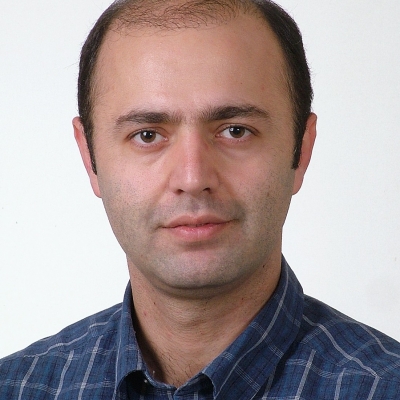
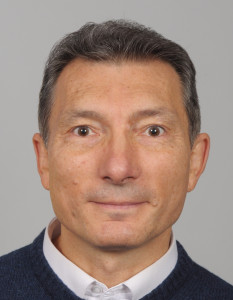
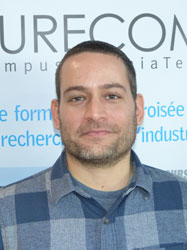
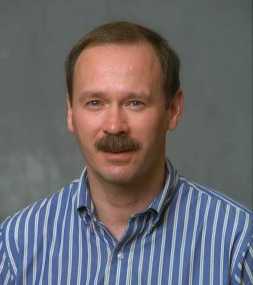
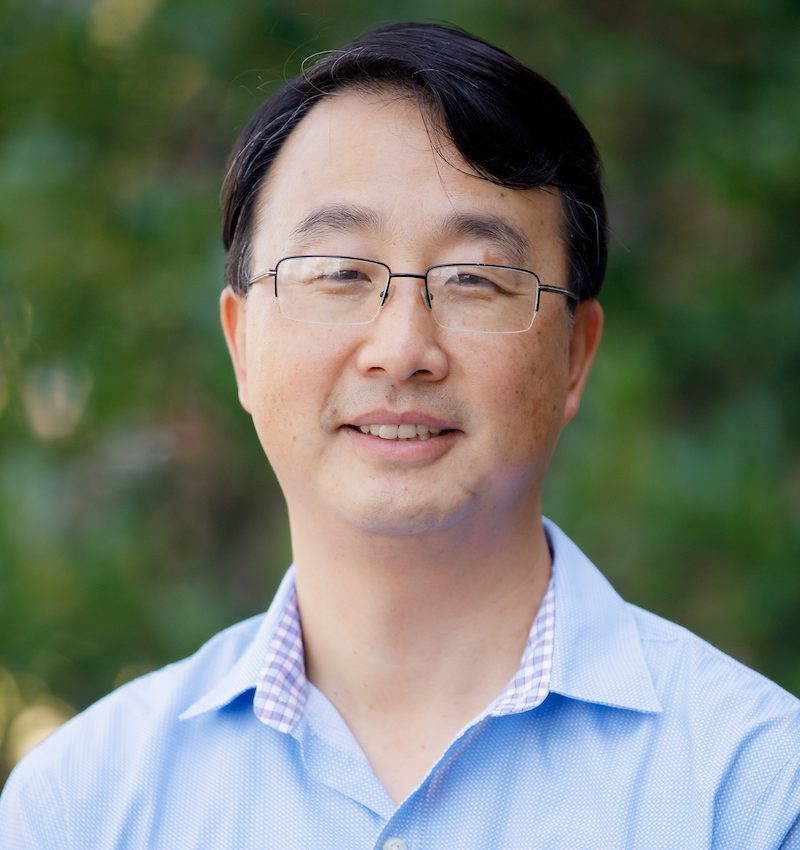
Zhiyuan Yan is a Professor and Associate Chair in the Department of Electrical and Computer Engineering at Lehigh University. He holds a B.E. from Tsinghua University and M.S./Ph.D. degrees from the University of Illinois at Urbana-Champaign. His research focuses on coding theory, VLSI design, wireless communications, and embedded systems. He is a Senior Member of the IEEE and received the NSF CAREER Award in 2011. Educational Background: B.E., Electrical Engineering, Tsinghua University M.S., Electrical Engineering, University of Illinois at Urbana-Champaign Ph.D., Electrical Engineering, University of Illinois at Urbana-Champaign Research Interests: His work spans coding theory (including polar codes and LDPC codes), VLSI implementations for communication systems, and cybersecurity through physical unclonable functions (PUF). He explores neuromorphic computing, memristive neural networks, and hardware-efficient error correction techniques. His contributions include efficient decoder architectures and distributed storage solutions. Scientific Awards: 2011: NSF CAREER Award Advising & Grants: While specific student names aren't listed, his research has been supported by multiple grants. His lab focuses on collaborative projects between academia and industry, emphasizing practical implementations of theoretical advancements. Lab & Teams: His research team develops cutting-edge VLSI systems, neural network accelerators, and secure communication protocols. Collaborations include work on memristive hardware and neuromorphic computing architectures.
Armelle WAUTIER is a Professor at CentraleSupélec, affiliated with the L2S laboratory. Her work focuses on automatic systems, signal processing, and telecommunications. She leads research in cognitive radio systems, dynamic reconfiguration frameworks, and adaptive waveform design. Her expertise spans CDMA systems, interference management, and low-complexity algorithms for decoding and detection. Research interests include telecommunications, wireless networks, and control systems with a focus on optimizing network performance through AI-driven approaches. Key contributions involve cognitive frameworks for radio reconfiguration and algorithms for BER-constrained systems. Publications emphasize cognitive radio systems, CDMA uplink capacity, and interference modeling. Her work bridges theoretical signal processing with practical telecom applications. No awards or grants are explicitly listed in the provided texts.
Kai Wu is an Associate Professor at Xidian University's School of Electronic Engineering, working within the MOE Key Laboratory of Intelligent Perception and Image Understanding in Xi'an, China. His research spans wireless communications, integrated sensing and communications (ISAC), and signal processing, with a particular focus on millimeter-wave systems, radar signal processing, and MIMO technologies. He maintains strong collaborative ties with international researchers, particularly with J. Andrew Zhang, Y. Jay Guo, and Xiaojing Huang from institutions including University of Technology Sydney. Dr. Wu's research interests center on the integration of communication and sensing technologies, with significant contributions to frequency-hopping MIMO radar-based communications, angle-of-arrival estimation, and RIS-assisted ISAC systems. His work addresses critical challenges in wireless communications including spectrum efficiency, channel modeling in complex environments, and the development of energy-efficient communication systems. Recent research has expanded into transformer-based deep learning approaches for signal processing applications and the application of magnetic particle spectroscopy in biomedical contexts. Analysis of Dr. Wu's publication record reveals a strong focus on practical implementations of theoretical concepts, with numerous experimental validations of proposed communication and sensing techniques. His work demonstrates a clear progression from fundamental signal processing techniques to integrated communication-sensing systems, with increasing emphasis on RIS-assisted technologies and machine learning applications in recent years. The interdisciplinary nature of his research spans telecommunications engineering, signal processing, and biomedical applications. Dr. Wu has established himself as a leading researcher in the field of integrated sensing and communications, with over 40 publications in top-tier IEEE journals and conferences. His collaborative network includes prominent researchers in wireless communications, and he serves as a frequent reviewer for major IEEE publications in his field. While specific grant information isn't detailed in the available records, his extensive publication output suggests successful funding from national research programs in China.
Jihoon Choi is a Professor in the Department of Electrical Engineering at Korea University's College of Engineering. With an extensive publication record spanning over two decades from 2000 to 2025, he has established himself as a leading researcher in wireless communications and signal processing. His work primarily focuses on MIMO systems, space-time coding techniques, and channel estimation methodologies. Choi's research interests center around advanced wireless communication techniques, particularly in next-generation wireless systems. His work spans multiple specialized areas including Space-Time Line Coding, mmWave communications, physical layer security, and intelligent reflecting surface technologies. He has made significant contributions to the development of novel precoding and combining strategies for multiuser MIMO systems, with special emphasis on rate balancing and interference management techniques. Analysis of his recent publications (2021-2025) reveals a strong research trajectory focused on space-time line coding applications across diverse scenarios including UAV systems, SAR imaging, and physical layer security. His work demonstrates a consistent pattern of innovation in wireless communications, with increasing emphasis on practical implementations for 5G/6G systems. The publications show a clear evolution from fundamental signal processing techniques to more complex system-level implementations addressing real-world challenges in wireless communications. Throughout his career, Professor Choi has maintained a highly productive research output with over 70 publications in prestigious IEEE journals and conferences. His work demonstrates strong collaboration patterns, particularly with researchers like Jingon Joung, Wonjun Lee, and Yong Hoon Lee, suggesting active participation in research groups or laboratories focused on wireless communications. His recent publications indicate ongoing research activity with multiple 2025 publications currently in process.
Michel Kulhandjian is a researcher specializing in Wireless Communication and Machine Learning applications. His work spans NOMA Systems , RF Fingerprinting , and Drone-Assisted Sensing across academic institutions. Key collaborations with Carleton University , Carleton University , and University of Ottawa researchers Active in 5G/6G technologies and IoT Security since 2018 His recent articles focus on: 2024 : Pedestrian detection, drone-based tree health monitoring, and industrial IoT security 2025 : AI-powered agricultural robotics Scientific contributions include: Code design for OTFS-NOMA systems Low-complexity detection algorithms 3D CNN frameworks for signal analysis RF Fingerprinting under impaired channels
Xuemin (Sherman) Shen is a University Professor at the University of Waterloo, specializing in advanced communication systems and AI-driven network optimization. His research focuses on 6G networks, digital twin technology, vehicular systems, and generative AI applications in wireless communications. He leads initiatives in edge computing, federated learning, and secure physical layer communications. Key research areas include 6G architecture design, intelligent transportation systems, and AI integration into network management. His work bridges theoretical advancements with practical implementations in areas like OTFS modulation, MIMO equalization, and hybrid-field antenna systems. Recent projects emphasize digital twin frameworks for network orchestration, immersive communications via edge computing, and trustworthy semantic communication systems. His contributions span both foundational studies and applied solutions in wireless security, distributed learning, and terahertz communication systems.
Tuna Tuğcu is a Professor in the Department of Computer Engineering at Bogazici University, where he leads research in nanonetworking and wireless communications. He holds affiliations with the Computer Networks Research Lab (NetLab), Nanonetworking Research Group (NRG), and Telecommunications and Informatics Technologies Research Center (TETAM). He earned his PhD in Computer Engineering from Bogazici University in 2001 and completed postdoctoral research at Georgia Institute of Technology. His research focuses on NanoNetworking/Molecular Communications , 5G Networks , Cognitive Radio , and Wireless Systems . Key areas include diffusion-based signal propagation, modulation techniques for molecular channels, and optimization of nanoscale communication protocols. His recent publications emphasize practical applications in transmitter localization, error minimization, and throughput enhancement for emerging technologies. Awards include: Best Paper Award at ISCC'12 (2012) Best Paper Award at AICT (2010) National Utility Model for disaster coordination systems (TR 2013 11786 Y) He serves as Senior Projects Coordinator and chairs the Information Technologies Committee. He also contributes to ÖBİKAS and TETAM governance. No specific grants or student advisees are detailed in the source text.
Emanuel Radoi is a Professor in Signal Processing at the University of Brest , France, and a member of the "Information Security, Intelligence and Integrity" research team at Lab-STICC, CNRS UMR 6285. He has been an IEEE Senior Member since 2014 and served as Associate Editor for IEEE Communications Letters (2018-2021). M.Sc. (1997) and Ph.D. (1999) in Electronic Engineering and Signal Processing from University of Brest 20 book chapters and over 120 international conference/journal papers Specializes in UWB signal processing, full-duplex communications, spectrum sensing, time-frequency analysis, and sparse signal processing His recent research focuses on IR-UWB radar applications for indoor localization, people counting, and collision avoidance systems, as well as full-duplex communication architectures and compressed sensing techniques. He has developed experimental USRP-based implementations for real-time signal processing and contributed to advanced sea clutter models for radar target detection. Key publications address: Compressed sensing for UWB channel estimation (2016-2022) Self-interference cancellation in full-duplex transceivers (2020-2022) Machine learning integration with radar signal processing (2024) Cognitive radio architectures for high-speed railway applications (2014) Scientific Contributions: 2014 IEEE Senior Membership 2018-2021 IEEE Communications Letters Associate Editor Best Paper Award and Exemplary Reviewer recognition He actively participates in international conferences, chairs technical sessions, and contributes to journal special issues. His work bridges theoretical signal processing with practical implementations in wireless systems and radar technologies.
Stéphane Azou is a Full Professor at the Ecole Nationale d'Ingénieurs de Brest (ENIB), part of the University of Brest, France. He holds a Master's and PhD in Electronic Engineering from the University of Brest (1993 and 1997), and an HDR (Habilitation à Diriger des Recherches) from the same institution in 2007. His career includes roles as an Associate Professor at the University of Brest (2000–2012) and leading the Signal Processing for Communications group at Lab-STICC from 2007–2012. Currently, he heads the Microwave Photonics & Photonics Architectures and Systems (ASMP) team within Lab-STICC. His research focuses on optical communications, fiber-wireless systems, signal processing, and hardware impairments compensation. He has authored over 60 articles and serves as an Associate Editor for the International Journal of Electronics and Communications and is a Senior Member of the IEEE. Education: PhD in Electronic Engineering, University of Brest (1997) Master of Science in Electronic Engineering, University of Brest (1993) HDR (Accreditation to Supervise Research), University of Brest (2007) Research Interests: His work spans optical fiber communication systems, radio-over-fiber technologies, advanced modulation formats, and signal processing techniques for improving system performance. Key areas include physical layer monitoring, compensation of hardware impairments (e.g., IQ imbalance, laser phase noise), and experimental validation of novel architectures like C-RAN and 5G fronthaul systems using semiconductor optical amplifiers (SOAs). Professional Contributions: Azou has led teams in Lab-STICC, a CNRS laboratory, and contributed to projects on parametric networks for joint channel estimation and symbol detection. His recent work addresses challenges in UWB radar-based detection, nonlinear compensation techniques, and stochastic modeling of optical components like SOAs. Awards and Roles: Senior Member, IEEE (2017–present) Associate Editor, International Journal of Electronics and Communications
Milica Stojanovic is a Professor in the Department of Electrical and Computer Engineering at Northeastern University, with a secondary affiliation as a permanent Guest Investigator at the Woods Hole Oceanographic Institution (WHOI). Her expertise spans wireless communications, underwater acoustic systems, and statistical signal processing. She holds a B.S. from the University of Belgrade and M.S./Ph.D. from Northeastern University. Education: B.S. (1988, University of Belgrade), M.S./Ph.D. (1991/1993, Northeastern University) Postdoctoral Fellowships: Woods Hole Oceanographic Institution (1993), NSF Research Scholarship (1994) Her research focuses on underwater acoustic communications, pioneering advancements in signal processing and network design. Notable contributions include phase-coherent modems and underwater OFDM systems. Awards include IEEE Fellow (2010), Ocean Engineering Society’s Distinguished Technical Achievement (2015), and Aarhus University’s honorary doctorate (2022). She chairs the IEEE Technical Committee on Underwater Communication and serves as an editor for the IEEE Journal of Oceanic Engineering. Recent projects include underwater acoustic networks, software-defined networking for the Internet of Underwater Things, and robotic aquaculture systems. Her work bridges theoretical research with practical applications in marine environments. Grants: U.S. Army Research Lab, NSF, Office of Naval Research Labs: Institute for the Wireless Internet of Things (IoT)
Professor Paul Mitchell has been with the University of York since 2005, specializing in wireless communications and underwater information systems. With over 22 years of research experience and industrial background at BT and DERA/QinetiQ, his primary focus is on underwater acoustic networks, terrestrial wireless sensor networks, and communication protocols development including novel MAC and routing strategies. His research applies machine learning to distributed communication problems, traffic modeling, and queuing theory. Professor Mitchell has authored over 140 refereed publications and secured over £2.3M + €4.7M in research funding as principal and co-investigator. He teaches courses including Mobile Communication Systems and Communications Engineering, and holds administrative roles including Research Committee Chair. His laboratory facilities include acoustic modems and wireless sensor development kits for practical experimentation. Awards include: IET Best paper award (2009) IEEE NESEA Best paper award (2012) IEEE iCCECE Best paper award (2018) BROADNETS Best paper award (2018)
Fotios Stavrou is an Assistant Professor at the Communication Systems Department of EURECOM, a leading research institution in France. His academic journey includes a Diploma in Electrical and Computer Engineering from Aristotle University of Thessaloniki (2008), a PhD in Electrical Engineering from the University of Cyprus (2016), and postdoctoral research at Aalborg University (2016–2017) and KTH Royal Institute of Technology (2017–2021). Currently, he leads research in goal-oriented semantic communication, networked control systems, and interdisciplinary applications combining control theory, communication, optimization, and AI. His research focuses on semantic-aware communication paradigms, emphasizing the mathematical framework of information significance and utility. Key areas include rate-distortion-perception theory, digital twin-enabled optical networks, and AI-driven automation. He actively contributes to projects like the EU-funded 6G-GOALS initiative, aiming to integrate AI-native networks and semantic communication for future 6G systems. Notable achievements include a Best Poster Award at MenaML 2025 and a Best Paper Award at ACP 2023. His work spans over 40 publications, with recent focus on optimizing communication systems for semantic efficiency, digital twin applications, and resource allocation under uncertainty. He mentors PhD students and postdoctoral researchers, fostering innovation in both theoretical and applied domains. Current projects involve autonomous optical network management, leveraging digital twins and large language models, alongside foundational studies in rate-distortion-perception functions. His research bridges fundamental theory with practical implementations, addressing challenges in 5G/6G networks and networked control systems.
James S. Lehnert is a Professor at the School of Electrical and Computer Engineering , Purdue University, where he has been since 1984. He holds a B.S., M.S., and Ph.D. from the University of Illinois at Urbana-Champaign (1978, 1981, 1984). His research focuses on spectrum management , CDMA systems , channel estimation , and spread spectrum communications . He has led projects for DARPA, NSF, and the Air Force Office of Scientific Research, collaborating with institutions like the University of Michigan and Ohio State University. He has authored numerous articles in top journals like IEEE Transactions on Communications and IEEE Journal on Selected Areas in Communications . His awards include the IEEE MILCOM Lifetime Achievement Award (2009) and recognition as a Highly Cited Researcher (2000-2010). He is also a Fellow of the IEEE for contributions to spread-spectrum communications. Dr. Lehnert has advised over 30 graduate students, many of whom now hold prominent roles in academia and industry. He teaches advanced courses such as ECE544: Digital Communications and ECE639: Error Control Coding . His research group operates the Spread Spectrum and Satellite Communications Research Laboratory (S3CRL).
Ali Dziri is a permanent researcher at CentraleSupélec's Cedric Laboratory , focusing on wireless communications, signal processing, and embedded systems. His work spans 2004–2023 with key contributions in UWB communication, IoT networks, video/image transmission, and real-time tracking algorithms. His research interests include: Wireless Communications Signal Processing Embedded Systems Machine Learning IoT Networks Video/Image Compression Recent publications highlight trends in neural networks for channel equalization, MIMO relays for WSNs, and 5G D2D communication protocols. He has no listed scientific awards or advisees.
Dr. Aijun Song is an Associate Professor in the Department of Electrical and Computer Engineering at the University of Alabama College of Engineering. He is affiliated with the Center for Water Quality Research and the Alabama Water Institute. His work bridges engineering, environmental science, and technology, with a focus on developing innovative underwater communication systems and autonomous vehicle technologies for water monitoring applications. Dr. Song's educational background includes: Ph.D. in Electrical and Computer Engineering from University of Delaware M.S. in Electrical and Computer Engineering from Xidian University, Xi'an, China B.S. in Electrical and Computer Engineering from Xidian University, Xi'an, China Dr. Song's research primarily focuses on underwater acoustic communications, signal processing, and autonomous vehicle technologies. His work addresses challenges in underwater wireless communications including channel modeling, equalization techniques, and full-duplex communication systems. He has made significant contributions to the development of underwater sensor networks, acoustic transceivers, and communication protocols for autonomous underwater vehicles. His research has important applications in environmental monitoring, ocean exploration, and water quality assessment. Dr. Song's recent publications demonstrate a strong trend toward practical implementations of underwater communication technologies, with increasing emphasis on reconfigurable intelligent surfaces, energy-efficient systems, and real-world testbed validation. His work spans theoretical development, simulation, and extensive field testing in lake and river environments. The research addresses critical challenges in underwater communication including channel variability, interference cancellation, and long-range transmission. Dr. Song has received notable recognition for his work: NSF CAREER Award from the National Science Foundation (2021) Outstanding Faculty/Staff-Initiated Engagement Effort by the Council on Community-Based Partnerships at the University of Alabama (2019) Outstanding Service Award from the 8th ACM International Conference on Underwater Networks & Systems (2013) Dr. Song actively mentors students and collaborates on interdisciplinary research projects. He serves as co-principal investigator for the USGS FLOW Academy, working with Dr. Lisa Davis and Dr. Steven Burian to provide hands-on water science education. His leadership in the Tuscaloosa MATHCOUNTS program has significantly impacted local STEM education, particularly for underserved populations and female students. Dr. Song's research has been supported by significant funding including an NSF CAREER award and collaborations with the US Geological Survey. Dr. Song leads a research team focused on underwater robotics and wireless communication technologies. His lab develops and tests autonomous underwater vehicles including JaiaBots and EcoMapper systems. The team is advancing underwater swarming technologies to enhance water monitoring capabilities, with an emphasis on creating open-source, low-cost solutions for automated water data collection and rapid flood disaster response. Recent field demonstrations at the Black Warrior River and Lake Tuscaloosa showcase the practical applications of his research.