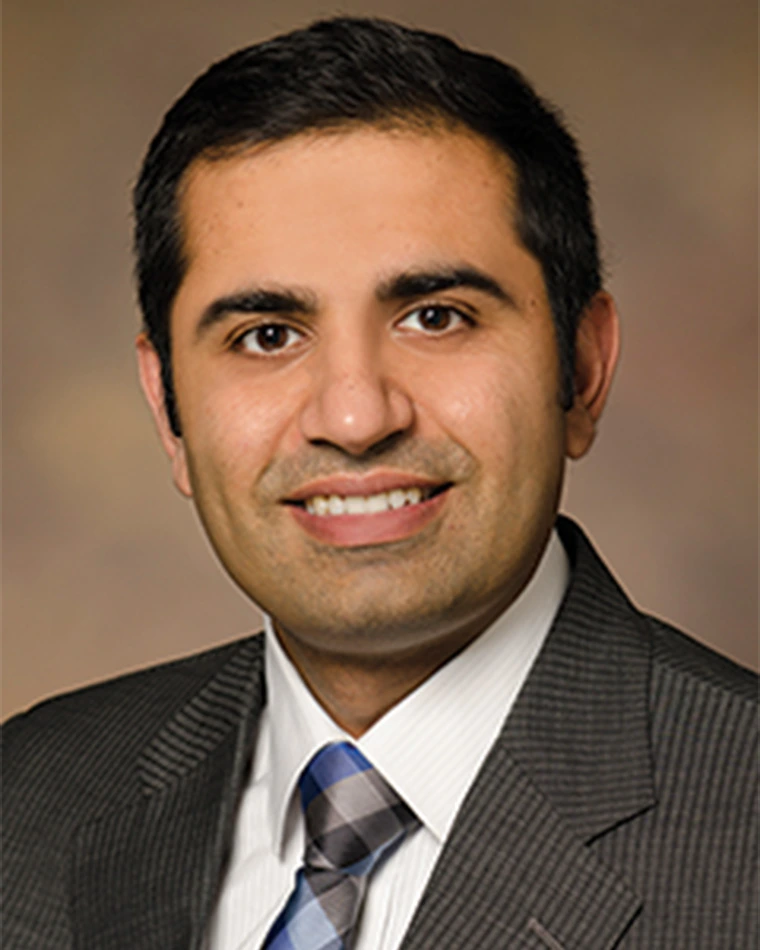
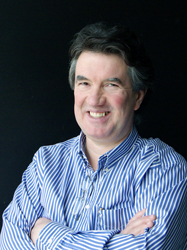
Berberidis Kostas is a Professor at the University of Patras, Department of Computer Engineering and Informatics. His academic work focuses on Information Processing over Networks , Adaptive Signal Processing , and Wireless Communications . He is affiliated with the Division of Hardware and Computer Architecture. Specialized in Statistical Learning and Distributed Information Processing Contributed to advancements in Signal Processing for Communications and Array Signal Processing Notable research areas include: Adaptive and distributed learning algorithms Wireless channel equalization and relaying Hyperspectral and biomedical image processing Resource allocation with security constraints Recent publications cover topics like blind hyperspectral unmixing , secure resource allocation , and FIR filter optimization , reflecting his interdisciplinary focus on signal processing, communications, and computational imaging.
Dr. Toros Arikan is an Assistant Professor in the Department of Electrical Engineering at the University of Notre Dame's College of Engineering. His research focuses on signal processing for remote sensing applications, with particular emphasis on underwater acoustics and indoor radio frequency systems. He applies deep learning techniques to solve complex problems in environmental mapping, localization, and tracking. B.S., M.S., and Ph.D. in Electrical and Electronics Engineering from University of Illinois Urbana-Champaign and Massachusetts Institute of Technology Professor Arikan's work addresses fundamental challenges in underwater acoustic localization, reverberant environment modeling, and challenging-environment communications. His recent publications highlight neural network-based solutions for Steiner minimum trees and boundary estimation problems. His research on HF communications systems spans topics including low-latency transmission, Doppler tolerance, and modem design for underwater applications. Earlier work includes biomedical ultrasound signal processing for blood velocity estimation.
Stefan Hägele is a researcher at the Chair of Media Technology, Technical University of Munich, affiliated with the Munich Institute of Robotics and Machine Intelligence (MIRMI). He completed his B.Sc. and M.Sc. in Electrical and Computer Engineering at TUM, graduating with distinction in 2022. B.Sc. in Electrical and Computer Engineering, TUM (2019) M.Sc. in Electrical and Computer Engineering, TUM (2022) His research focuses on signal processing applications in communications, radar, and image processing, combined with applied machine learning. Key areas include mmWave radar analysis, WiFi-based indoor positioning, privacy-preserving rehabilitation systems, and complex-valued neural networks. Recent publications highlight his work in radar-based object classification (using MIMO architectures), material recognition (SMCNet), visible light positioning (VLP-KAN), and skeleton estimation for rehabilitation (PoinTS). His contributions also appear in projects like 6G-Life, DFG Teleoperation over 5G, and CeTI (Tactile Internet).
Lajos Hanzo is a distinguished Professor at the University of Southampton's School of Electronics and Computer Science (ECS), where he has established himself as a leading authority in wireless communications and signal processing. His academic profile showcases extensive contributions to the field with over 1400 publications and significant recognition through multiple prestigious fellowships. Dr. Hanzo received his degree in electronics in 1976 and his doctorate in 1983, followed by an honorary doctorate in 2009. His educational background laid the foundation for a career that has continually evolved with communication technologies from early wireless systems through to contemporary 6G research and quantum communications. Hanzo's research spans wireless communications, optical wireless systems, MIMO technologies, and increasingly intersects with artificial intelligence applications for next-generation networks. His work demonstrates remarkable synergy between theoretical foundations and practical implementations, addressing challenges in spectral efficiency, channel capacity, and reliable transmission across diverse communication scenarios. He has made seminal contributions to space-time coding, non-orthogonal multiple access (NOMA), and index modulation techniques that have influenced multiple generations of wireless standards. Analysis of his recent publications reveals a clear progression toward more complex communication paradigms, with increasing focus on 6G technologies, integration of deep learning with traditional communication theory, and exploration of quantum-inspired communication approaches. His work consistently addresses the tension between theoretical capacity limits and practical implementation constraints, with recent papers demonstrating particular interest in millimeter-wave communications, visible light communication, and massive connectivity solutions for IoT applications. FREng (Fellow of the Royal Academy of Engineering) FIEEE (Fellow of the IEEE) FIET (Fellow of the Institution of Engineering and Technology) Fellow of EURASIP (European Association for Signal Processing) DSc (Doctor of Science) While specific details of his advising activities aren't prominently featured in the provided materials, Hanzo's extensive publication record spanning multiple decades suggests significant mentorship of graduate students and postdoctoral researchers. His research has clearly attracted substantial funding to support investigations across wireless communications, with particular emphasis on coding theory, MIMO systems, and next-generation network architectures. The collaborative nature of his recent work indicates ongoing engagement with international research consortia addressing 5G evolution and 6G standardization.
Ravi Tandon is a Professor in the Department of Electrical and Computer Engineering at the University of Arizona, where he holds a Craig M. Berge Faculty Fellowship and a courtesy appointment in Applied Mathematics. He joined the university in 2015 after serving as a Research Assistant Professor at Virginia Tech. Education: PhD in Electrical and Computer Engineering, University of Maryland, College Park, 2010 B.Tech in Electrical Engineering, Indian Institute of Technology (IIT) Kanpur, 2004 Research Interests: His research spans information theory and its applications to wireless networks, machine learning, security, and privacy. He focuses on trustworthy machine learning, privacy-preserving AI, federated learning, secure communications, and private information retrieval. His work aims to develop foundational theories and practical systems for secure, fair, and efficient AI and communication systems. Recent Research Trends: His most recent publications (2023–2025) emphasize trustworthy AI, including fairness-accuracy tradeoffs, robustness, uncertainty quantification, and privacy in generative models and causal inference. He also continues to advance information-theoretic foundations of secure communications and distributed learning. Scientific Awards: NSF CAREER Award (2017) Keysight Early Career Professor Award (2018) Best Paper Award, IEEE GLOBECOM 2011 Advising and Grants: Dr. Tandon actively supervises PhD and MS students, with former students placed at Apple, Google, Meta, NXP, and other leading tech firms. He has led significant research projects, including an NSF SaTC grant on differential privacy in graph mining. His editorial service includes roles at IEEE Transactions on Information Theory, IEEE Transactions on Wireless Communications, and IEEE Transactions on Communications. Labs and Teams: He leads a research group focused on information theory, machine learning, and privacy, collaborating with researchers in computer science, applied mathematics, and industry. His work bridges theoretical foundations with real-world AI and communication system design.
Benoît Geller is a Full Professor at IP Paris (Institut Polytechnique Paris)-ENSTA in the Computer Science and Systems Engineering Unit (U2IS). He heads the Specialized Master on autonomous systems for Defense (ILEMs) and has extensive experience in wireless communications research, particularly focusing on security and safety for defense applications. Accreditation to Lead Research (HDR) in Information Sciences from University of Paris (2004) PhD in wireless communication networks from INPG (1992) Engineering Master in Telecommunications from ENSERB (1988) Professor Geller's research focuses on wireless network security, with expertise in protecting communications against environmental interference and intentional attacks. His work spans from theoretical foundations in information theory and coding to practical applications in underwater acoustic channels, tactical communications, and IoT networks. He has developed innovative approaches using finite fields algebraic error correcting codes, turbo and LDPC codes, cryptography, and Bayesian inference techniques. His publication record shows a consistent focus on underwater communication systems, signal processing techniques, and security mechanisms. The research demonstrates a progression from theoretical foundations to practical implementations, with recent work emphasizing energy efficiency and resistance to jamming in tactical communication scenarios. His work has significant applications for the French Ministry of Defense. Knight of Academic Palms (2018) IEEE Senior member (2010) French Navy Reserve Superior Officer (2006) Professor Geller has led numerous European projects including Mast AIDA, Medea+ INCA, Medea+ MIDAS, Newcom++, Horizon 2020 Bridges, and MarTERA Bioglider. With approximately 100 international publications and 4 pending international patents, his research has made significant contributions to the field of secure wireless communications. He previously served as head of the Multisensor and Information Team at SATIE lab (Ecole Normale Superieure Paris Saclay) before joining ENSTA Paris in 2007-08.
Philippe Ciblat is a Full Professor at Institut Polytechnique de Paris , affiliated with the Communications and Electronics Department (Comelec) and the Information Processing and Communication Laboratory (LTCI) . He obtained his Engineering Degree from Télécom Paris (1996), DEA in Automatic Control from Université Paris-Saclay (1996), PhD from Université Gustave Eiffel (2000), and HDR diploma (2007). After a postdoctoral fellowship at Université de Louvain (2001), he joined Télécom Paris as Associate Professor in 2001 and was promoted to Full Professor in 2011. Research Activities: His research spans three core areas: Statistical/Digital Signal Processing (blind equalization, frequency estimation, distributed estimation) Signal Processing for Communications (OFDM synchronization, UWB localization, cooperative communications) Resource Allocation (HARQ optimization, power allocation, distributed networks) Scientific Leadership: He has served as Associate Editor for IEEE Transactions on Signal and Information Processing over Networks (2018-2022), Senior Area Editor for IEEE Transactions on Signal Processing (2011-2012), and held editorial roles in IEEE Communications Letters and Transactions on Signal Processing. He chairs technical committees at EUSIPCO, SPAWC, and IEEE conferences. PhD Supervision: He has mentored 23 PhD students, including Current: Nils Reynaud (deep reinforcement learning for wind farms), Abdelghani Ghanem (multi-agent driving behavior), Sylvain Nerondat (deep reinforcement learning for ad hoc networks) Former: Yue Bi (distributed computing), Hakim Hafidi (robust graph ML), Arthur Louchart (nonlinear satellite systems), Vincent Corlay (lattice decoding), Alix May (optical network monitoring) Grants & Collaborations: Currently leads projects with TotalEnergies (2025-2028), PEPR Twinfarms (2025-2028), and ANR SUCCEN (2025-2027). Formerly secured ANR, Marie-Curie, and CIFRE grants with Thales, Nokia, Mitsubishi, and Huawei. Labs & Teams: Affiliated with LTCI (Signal, Statistics and Learning team) and has conducted sabbaticals at Technische Universität Berlin, Rutgers University, and Universidad Nacional de Colombia. Actively participates in international conferences as TPC member and reviewer.
Derrick Wing Kwan Ng is a Scientia Associate Professor in the School of Engineering, specializing in Electrical Engineering and Telecommunications at the University of New South Wales (UNSW). He holds editorial positions with prestigious IEEE journals including IEEE Transactions on Communications and IEEE Transactions on Wireless Communications, and serves as an area editor for the IEEE Open Journal of the Communications Society. Dr. Ng received his Bachelor of Engineering degree with First Class Honors in Electronic Engineering from The Hong Kong University of Science and Technology (HKUST) in 2006, followed by a Master of Philosophy (M.Phil.) from the same institution in 2008 under Prof. Vincent K. N. Lau. He completed his Ph.D. at the University of British Columbia (UBC) in 2012 under Prof. Robert Schober. He has held research positions including Senior Research Fellow at the Institute for Digital Communications at Friedrich-Alexander-University, Germany, and ARC DECRA Research Fellow from 2017 to 2019. Dr. Ng's research focuses on cutting-edge wireless communication technologies, particularly in the areas of Integrated Sensing and Communication (ISAC) , Reconfigurable Intelligent Surfaces (RIS) , and 5G/6G wireless systems . His work addresses critical challenges in wireless networks including physical layer security, energy-efficient resource allocation, and advanced signal processing techniques for next-generation wireless systems. His research has significant implications for improving wireless network performance, security, and reliability in diverse applications from terrestrial to satellite communications. Dr. Ng has been recognized as an IEEE Fellow (Class 2021) and has been a Highly Cited Researcher by Clarivate Analytics since 2018. His research has garnered over 17,900 citations with an h-index of 64 (as of February 2022). He has received numerous prestigious awards including the IEEE TCGCC Best Journal Paper Award in 2018, IEEE ICC Best Paper Awards in 2018 and 2021, IEEE Globecom Best Paper Awards in 2011 and 2021, and several other conference best paper awards. As an educator and research leader, Dr. Ng has supervised numerous graduate students and secured significant research funding for his projects. His editorial service spanning over a decade, including serving as editorial assistant to the Editor-in-Chief of IEEE Transactions on Communications from 2012 to 2019, demonstrates his commitment to advancing the field. His research group at UNSW focuses on developing innovative solutions for next-generation wireless communication systems, particularly in the areas of intelligent surfaces, integrated sensing and communication, and secure wireless transmission.
Richard K. Martin is a Professor in the Department of Electrical and Computer Engineering at the Air Force Institute of Technology (AFIT), Wright-Patterson Air Force Base, OH. He has been a faculty member since 2004 and holds a Ph.D. in Electrical and Computer Engineering from Cornell University. Education: Ph.D., Electrical and Computer Engineering, Cornell University, 2004 M.S., Electrical and Computer Engineering, Cornell University, 2001 B.S., Electrical Engineering, University of Maryland, 1999 (Summa Cum Laude) B.S., Physics, University of Maryland, 1999 (Summa Cum Laude) His research focuses on radio tomographic imaging, laser radar (LADAR), signal processing, and engineering education . He has made significant contributions to channel equalization, wireless localization, and polarimetric LiDAR systems. His work bridges theoretical signal processing with practical defense and sensing applications. The recent articles highlight a strong trend in optical remote sensing, spectropolarimetry, and advanced signal processing for defense and surveillance. His work increasingly integrates machine learning, sensor fusion, and real-time imaging under atmospheric distortions. Scientific Awards: 2013 Air Force Outstanding Science and Engineering Educator Award Eta Kappa Nu Instructor of the Year (twice) Instructor of the Quarter (three times) Dr. Martin has led numerous student research initiatives, including the COEUR program to enrich undergraduate research. He has secured research funding in areas such as RF sensing, LADAR, and wireless security. He holds eight patents and has published extensively in IEEE journals and conferences. He leads research in the development of rapid Mueller matrix polarimeters, spectropolarimetric LADAR, and radio tomographic imaging systems , often in collaboration with students and defense labs.
Cédric Le Ruyet is a prominent researcher at the Conservatoire National des Arts et Métiers (CNAM) , affiliated with the CEDRIC Laboratory. His work spans Wireless Communications , Signal Processing , and 5G/6G Network Design , with a focus on Filter Bank Multicarrier (FBMC) systems, MIMO , and Cognitive Radio . He collaborates extensively with institutions like CEA-LETI and CNAM . His research interests include Channel Modeling , Resource Allocation , Beamforming , and Machine Learning in wireless contexts. He has contributed to Reconfigurable Intelligent Surfaces (RIS) for beam optimization and SCMA/OFDM codebook design. Recent publications highlight his work on QAM-FBMC systems, Rayleigh Fading Models , and 5G Network Coexistence . His articles often explore Distributed MIMO , Low-Complexity Equalizers , and Indoor Positioning via Channel State Information (CSI) . He has authored numerous IEEE Transactions and conference papers, with technical reports for projects like ANR POSEIDON and NF-PERSEUS . His methodologies integrate Genetic Algorithms , Lattice-Reduction , and Deep Learning for next-gen wireless systems.
Dr. Farshad Miramirkhani serves as an Assistant Professor in the Department of Electrical and Electronics Engineering at Isik University's Faculty of Engineering and Natural Sciences. As a full-time lecturer and IEEE Senior Member, he directs the OPTWiCOM Research Group focusing on physical-layer design of optical wireless communication systems. Education: BSc in Electrical and Electronics Engineering, Isfahan University (2007-2011) MSc in Electrical and Electronics Engineering, Isfahan University (2011-2014) PhD in Electrical and Electronics Engineering, Ozyegin University (2015-2018) Research Focus: His expertise spans channel modeling and characterization for visible light communication (VLC) systems across medical, vehicular, and underwater environments. Current investigations include machine learning-enhanced adaptive modulation for medical body sensor networks, 5G/6G integration with VLC, and infrared communications. His work emphasizes practical applications in health monitoring and next-generation wireless infrastructure. Publication Trends: Recent publications (2021-2025) demonstrate a clear trajectory toward health-focused VLC applications and standardization contributions. Over 60% of his recent work addresses medical body sensor networks and channel modeling for healthcare, while significant efforts support IEEE 802.11bb standardization through reference channel models for diverse environments. Machine learning integration for adaptive systems represents a growing research thread. Awards and Recognition: IEEE 802.11bb-2023 Working Group Award (2023) Board of Trustees Outstanding Scientific Achievement Award (Isik University, 2019 & 2020) Best Paper Award at IEEE BlackSeaCom 2019 Ord. Prof. Bedri Karafakioglu Research Incentive Award (2019) IEEE Turkey Section Doctoral Thesis Award Academic Leadership: Dr. Miramirkhani advises Master's students on VLC-integrated health monitoring systems and vehicular communications. His OPTWiCOM group secures funding through projects like 'Innovative Optical Wireless Technologies for 5G and Beyond' and 'LiFi for In-Flight Entertainment Systems', providing graduate students with full tuition waivers, housing, health insurance, and research stipends. He teaches core courses including Wireless Communications and Introduction to Communication Systems. Research Infrastructure: The OPTWiCOM group maintains specialized facilities for VLC channel emulation and physical-layer testing, with active collaborations on medical body sensor networks and underwater communications. Current initiatives focus on machine learning-enhanced VLC systems for 6G networks and standardization of light communication protocols.
Xiaodan Pang is a Tenure Professor at Riga Technical University (RTU) specializing in cutting-edge photonics and communications research. Her work focuses on developing next-generation optical and wireless technologies for high-speed data transmission systems, with significant contributions to silicon photonics, terahertz communications, and integrated sensing and communication architectures. Her primary research interests include: Digital signal processing Wireless communications Signal processing Fiber optics Optoelectronics Photonics Professor Pang's recent publications demonstrate leadership in overcoming fundamental challenges in high-speed communications. Her 2025 work spans silicon photonics ring-resonator modulators for optical-amplification-free links, photonic terahertz chaos systems for secure ranging, and analog fronthaul solutions for 6G networks. Key themes include neural network equalization for ultra-high baudrate transmission, energy-efficient unamplified optical links, and integrated sensing-communication systems leveraging terahertz frequencies. This research directly addresses critical bottlenecks in data center interconnects, 6G mobile infrastructure, and secure high-precision wireless applications. Her technical profile is documented through ORCID (0000-0003-4906-1704), Scopus (54407301300), and Web of Science (D-5032-2015) identifiers, with active professional engagement via LinkedIn.
Alexey BALITSKIY is a Postdoctoral Researcher at the Department of Mathematics within the Faculty of Science, Technology and Medicine (FSTM) at the University of Luxembourg. His research focuses on geometric analysis, topology, and convex geometry, with particular attention to systolic inequalities, geometric bounds, and billiard dynamics. He explores topics such as Urysohn width, waist inequalities, and symplectic geometry, contributing to both theoretical advancements and applications in geometric optimization. His work often bridges pure mathematics with computational approaches, addressing problems in geometric measure theory, metric embeddings, and discrete geometry. Notable contributions include generalizations of classical plank inequalities and studies on equality cases in conjectures like Viterbo’s and Mahler’s. Alexey’s research is disseminated through high-impact journals such as the Journal of Topology and Analysis and collaborations on topics like flip cycles in plabic graphs and geometric complexity of planar drawings. Alexey’s publications reflect a strong focus on geometric inequalities, with recent work emphasizing codimension 2 width estimates, systolic vertex counting, and multi-plank generalizations. His work often intersects with symplectic geometry, convex billiards, and computational topology, demonstrating interdisciplinary reach. Despite no listed awards or grants, his prolific output since 2016 highlights sustained academic engagement and innovation in geometric analysis.
Gian Carlo Cardarilli is a researcher specializing in digital hardware design and machine learning acceleration. His work focuses on FPGA implementations, Residue Number System (RNS) architectures, and reconfigurable computing for applications in wireless communication, edge AI, and fault-tolerant systems. Key collaborations with institutions like IEEE and ACM through publications. Active in translating theoretical algorithms into practical hardware solutions for real-time systems. Research interests include: Optimizing deep learning models for heterogeneous platforms. Developing radiation-hardened memory systems. Creating energy-efficient signal processing architectures. Advancing reconfigurable functional units for embedded processors. His article analyses span fields like Quantum Cellular Automata , Variable Fractional Delay Filters , and RNS-Based Position Estimation , reflecting a trend toward adaptive, low-power, and domain-specific hardware.
Dirk Slock is a Professor at EURECOM's Communication Systems department. His research focuses on advanced signal processing for wireless communications, including transmitter/receiver design for 4G/5G systems, Massive MIMO, stochastic geometry, and audio signal processing. He has contributed to areas like interference management, compressive sensing, and Bayesian methods. Slock teaches courses on statistical signal processing and wireless communication techniques. His notable awards include IEEE Fellow (2006) and EURASIP Fellow (2015). Collaborations with students like Christo Kurisummoottil Thomas have yielded Best Student Paper Awards at SPAWC 2018. His work addresses challenges in cell-free MIMO, semi-blind channel estimation, and secure communication systems. Recent research trends explore ultra-massive MIMO signal detection, dynamic channel prediction with tensor methods, and cell-free network optimization. His publications span 639 entries, emphasizing practical implementations of theoretical signal processing advancements.