

Prof. Dr. Kerstin Lemke-Rust is a Professor at the Department of Computer Science at Bonn-Rhein-Sieg University of Applied Sciences (H-BRS) and a key member of the Institute for Cyber Security and Privacy (ICSP). Her affiliations include leadership roles in the Gesellschaft für Informatik (GI) and the International Organisation for Cryptologic Research (IACR). Her research spans: Cryptographic algorithm security (side-channel/fault analysis) Blockchain and IoT security Automotive cybersecurity Hardware vulnerability detection She teaches courses in IT Security, Applied Cryptography, and Embedded Systems across bachelor’s and master’s programs. Recent publications (2021-2025) focus on blockchain privacy, side-channel attacks, and hardware security, reflecting her emphasis on real-world cryptographic vulnerabilities. She leads research initiatives at ICSP and collaborates internationally on cybersecurity projects.
جستوجوی استاد و پژوهشگر
استاد راهنما، استاد دانشگاه یا پژوهشگر مناسب برای مسیر پژوهشیتان را پیدا کنید و با او ارتباط بگیرید.
نمایش ۲۵۶-۲۶۴ از ۲۶۴ استاد راهنما
اطلاعات این پروفایلها از صفحات عمومی دانشگاهها جمعآوری شده و ممکن است بهروز نباشد.
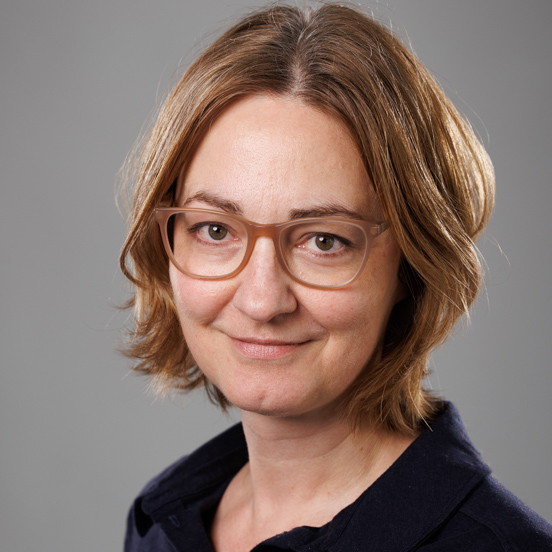
Professor Snjezana Gligorevic is a faculty member in the Department of Electrical Engineering and Information Technology at Aachen University of Applied Sciences. She serves as a Professor specializing in Information Processing Systems and is also a member of the University Senate. Her research and teaching interests focus on: Information Theory and source coding Error correction and channel coding Digital Signal Processing techniques Communication systems and signal transmission Radar signal processing applications Professor Gligorevic teaches multiple courses across bachelor and master programs including Information Theory, Coding for Error Correction, Digital Signal Processing, and Applied Transmission Line and Signal Theory. Her practical courses emphasize hands-on experience with signal processing algorithms, circuit simulation using LTspice IV, and implementation of communication systems. Contact information: Email: gligorevic@fh-aachen.de Phone: +49 241 6009-52134 Office: Building E, Room E 334 Address: Eupener Str. 70, 52066 Aachen
Kaja Nieland serves as a Lecturer in the Section of Music Pedagogy at the University of Kassel, Germany. Her office is located at Mönchebergstraße 1, Room 2023 in Kassel (postal code 34125), with direct contact via telephone +49 561 804-4265. Her research focuses on foundational aspects of music education, emphasizing pedagogical methodologies and instructional practices within musical contexts. This includes curriculum development and teaching strategies specific to music instruction. Contact details are maintained through the university's official channels, reflecting active institutional affiliation without indication of part-time status or secondary appointments.

Andrew Begelمشاهده پروفایل
دانشیار
Andrew Begel is an Associate Professor in the Software and Societal Systems Department at Carnegie Mellon University's School of Computer Science. Previously, he was a Principal Researcher at Microsoft Research from 2006 to 2022. He received his Ph.D. in Computer Science from the University of California at Berkeley and holds a Master of Engineering from MIT. Dr. Begel is internationally recognized for his pioneering research on cooperative and human aspects of software engineering, combining empirical studies of professional software engineers with organizational behavior. His work focuses on accessibility, neurodiversity, and human-computer interaction, with particular emphasis on creating more inclusive technology workplaces. He was the first to study emotions in software engineering and conducted groundbreaking research on autistic software developers, identifying their unique strengths and challenges. His research portfolio shows a clear trajectory toward understanding human factors in software development, with increasing focus on neurodiversity and accessibility. Early work examined code comprehension through eye tracking and fMRI studies, while recent publications focus on creating inclusive environments for autistic software engineers and developing tools that support mixed-ability collaboration. His work spans empirical software engineering, human-computer interaction, and accessibility research, often bridging these domains to address real-world challenges in software development environments. Best Paper Award — SIGCSE (2021) ACM Distinguished Member (2019) Best Paper Honorable Mention Award — CSCW (2019) Best Paper Award — ICSE, Software Engineering In Practice (2019) Most Influential Paper Award (10 Years) — ICER (2019) Best Paper Honorable Mention Award — CHI (2017) Dr. Begel has been deeply involved in academic service, organizing and serving on program committees for top software engineering conferences. He has run FSE and ICSE's ACM Student Research Competitions and ICSME's Doctoral Symposium. He created the Autism at Work Research Workshop series, bringing together researchers, practitioners, and autism self-advocates to help autistic engineers find and keep jobs. As a member of Microsoft's AI Ethics Board, he contributed to disseminating best practices for responsible AI engineering. His teaching includes courses at the University of Washington's iSchool and coding camps for autistic youth. Dr. Begel leads the Autism at Work Research Workshop series and has established himself as a prominent figure in creating more inclusive environments for neurodiverse software engineers. His work bridges academic research with practical applications in industry settings, particularly through his collaborations with Microsoft and other technology companies.
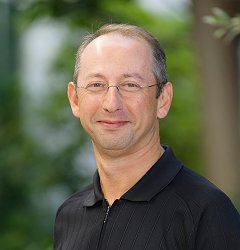
Tevfik Bultan is a Professor and Chair of the Department of Computer Science at the University of California, Santa Barbara. His research focuses on software verification, program analysis, software engineering, and computer security. He directs the Verification Laboratory (VLab) and has authored over 100 refereed publications. Education Ph.D. in Computer Science, University of Maryland, College Park (1998) M.S. in Computer Engineering, Bilkent University (1992) B.S. in Electrical Engineering, Middle East Technical University (1989) Research Focus Bultan's work spans automated verification techniques, security vulnerability detection, quantitative program analysis, and symbolic execution. His lab develops tools for analyzing software systems with applications in cloud security, network protocols, and embedded systems. Awards and Honors ACM Distinguished Scientist (2016) NSF CAREER Award (2000) UCSB Outstanding Graduate Mentor Award (2016) ACM SIGSOFT Distinguished Paper Awards (2005, 2014) NATO Science Fellowship (1993) Professional Activities He has chaired program committees for top conferences including ICSE, FSE, and ASE. Currently serves as associate editor for ACM TOSEM and on steering committees for ISSTA, ASE, and ICSE. Regularly advises PhD students and postdoctoral researchers in verification and security. Laboratory Leads the Verification Laboratory (VLab) focusing on automated reasoning techniques for software systems. Current projects include symbolic analysis for vulnerability detection, quantitative information flow, and security policy verification.
Michael Lindnerمشاهده پروفایل
پژوهشگر ارشد
- Medieval History
- German History
- Philology
- +۳ مورد دیگر
Michael Lindner serves as a Senior scientist at the Monumenta Germaniae Historica (MGH), an integral research institute within the Berlin-Brandenburg Academy of Sciences and Humanities in Berlin, Germany. His position places him at the forefront of critical scholarly work on medieval European historical sources. Dr. Lindner's research specializes in Medieval History with concentrated expertise in German History , Philology , and Historical Documents . His scholarly activities encompass Textual Criticism and the preparation of authoritative Source Editions , contributing significantly to the understanding of medieval political, religious, and cultural frameworks through primary source analysis. Contact details are maintained through the MGH office at Jägerstrasse 22/23, 10117 Berlin (Space 453), with professional communication channels including email lindner@bbaw.de and telephone +49 (0)30 20370 239.

- vascular disease
- atherosclerosis
- aortic aneurysm
- +۴ مورد دیگر
Lars Maegdefessel is a Professor of Molecular Vascular Medicine at the Technical University Munich (TUM), School of Medicine and Health. He leads the Experimental Vascular Medicine unit at Klinikum rechts der Isar and serves as a DZHK Junior Group Leader. His research focuses on the therapeutic and biomarker potential of non-coding RNAs in vascular diseases including atherosclerosis, aortic aneurysm, and related vascular pathologies. Dr. Maegdefessel's research interests center on the role of non-coding RNAs in vascular diseases, with particular focus on the vulnerability of atherosclerotic vascular lesions and the progression and rupture of abdominal aortic aneurysms. His laboratory utilizes unique human biobank materials and various pre-clinical experimental models to investigate novel molecular approaches for combating cardiovascular diseases. His work spans from basic research on microRNAs, long non-coding RNAs, and circular RNAs to translational applications in vascular medicine. Analysis of Dr. Maegdefessel's publication record reveals a strong focus on non-coding RNA mechanisms in vascular pathology, with particular emphasis on atherosclerosis stabilization, aneurysm development, and vascular inflammation. His research has evolved from basic miRNA characterization to sophisticated therapeutic applications including targeted delivery systems and novel biomarker discovery. The publications demonstrate a consistent trajectory toward clinical translation of RNA-based vascular therapeutics. ERC Consolidator Grant (2023) Russel Ross Award from American Heart Association (2023) Heisenberg Professorship of German Research Foundation (2016) Werner Risau Award of American Heart Association (2016) ERC Starting Grant (2015) Prince Daniel Research Award of Swedish Heart and Lung Foundation (2014) Ragnar Söderberg Fellowship in Medicine (2014) Dr. Maegdefessel's research program includes extensive collaboration with international teams and utilizes advanced methodologies including RNA sequencing, microarrays, proteomics, and epigenomic analyses. His laboratory investigates ncRNA function in human vascular tissues and pre-clinical models, with recent work focusing on artery-on-a-chip technology and novel therapeutic delivery systems for vascular applications.
Cătălin Hrițcuمشاهده پروفایل
استاد مدعو
- formal methods for security
- programming languages
- design and verification of security-critical systems
- +۱۱ مورد دیگر
Cătălin Hrițcu is a tenured faculty member and head of the Formally Verified Security group at the Max Planck Institute for Security and Privacy (MPI-SP) in Bochum, Germany. He also serves as Adjunct Professor in the Faculty of Computer Science at Ruhr University Bochum (RUB), where he is affiliated with HGI and the CASA Cluster of Excellence. His educational background includes: PhD from Saarland University in Saarbrücken, Germany Habilitation from ENS Paris Hrițcu's research focuses on developing rigorous formal techniques for security. His primary interests span three interconnected areas: Formal methods for security: secure compilation, compartmentalization, memory safety, speculative execution defenses, information flow control, and security protocols Programming-languages techniques: program verification, machine-checked proofs, dependent types, formal semantics, and property-based testing Design and verification of security-critical systems: compilation chains, reference monitors, tagged hardware architectures, and high-assurance cryptography His recent publications reveal a strong trajectory toward addressing real-world security challenges through formal methods, with increasing emphasis on hardware security aspects like speculative execution vulnerabilities and memory safety. Hrițcu has received significant scientific recognition: ERC Starting Grant on formally secure compilation Distinguished Paper Award at CSF 2025 for FSLH: Flexible Mechanized Speculative Load Hardening Distinguished Paper Award at CSF 2021 for SSProve As an advisor, Hrițcu has mentored numerous PhD students and postdoctoral researchers who have gone on to successful academic careers. His group receives substantial funding through projects like ERC SECOMP. He has co-authored volumes of the Software Foundations textbook series and actively teaches courses at RUB. Hrițcu leads the Formally Verified Security research group at MPI-SP, which includes PhD students, postdocs, and research interns working on cutting-edge problems at the intersection of programming languages and security. The group has made significant contributions to verification tools including F* and Coq, with applications in secure compilation and cryptographic verification.

- Program Analysis
- Formal Methods
- Security
- +۵ مورد دیگر
Sébastien Bardin is a Senior Researcher and CEA Fellow at the Software Safety and Security Laboratory of Commissariat à l'Energie Atomique (CEA) in Paris-Saclay, France, with affiliation to University Paris-Saclay. He leads significant research initiatives including the BINSEC group on binary-level security analysis (since 2012) and the QBricks group on quantum program verification (since 2020), and served as Head of the Software Quantum Program at CEA LIST from 2021-2023. His research focuses on formal methods and automatic program analysis with applications in software security. Key areas include binary-level security analyses such as vulnerability detection & assessment, reverse engineering, and malware deobfuscation, as well as quantum programming and verification. His methodological expertise spans symbolic execution, abstract interpretation, software model checking, and SMT solving. Bardin's publications demonstrate consistent impact across top venues in security and formal methods, with notable papers at ESOP, CAV, ICSE, NDSS, and S&P. His work on robust symbolic execution, directed fuzzing, and binary-level analysis has established him as a leading researcher in security-oriented program analysis. Recent publications show growing emphasis on quantum program verification alongside continued contributions to binary security analysis. Scientific Awards: ICSE 2021 ACM SIGSOFT Distinguished Paper Award RTAS 2021 Best Paper Award CAV 2021 Selected Paper CEA Fellow (2021-present) ACM Senior Member (2021-present) Bardin actively mentors PhD students and has advised numerous researchers who have received recognition including GDR Sécurité and GDR GPL PhD awards. His service to the community is extensive, with leadership roles in GDR Sécurité, RESSI, and organizing major conferences including CAV 2023 (sponsor co-chair) and FIC 2023 (scientific program chair). He also contributes to multiple program committees across security and formal methods venues.