Asta Zelenkauskaite is a Professor of Communication and Graduate Faculty Member in the Department of Communication at Drexel University. She is affiliated with the Center for Science, Technology, and Society. Her research focuses on social media dynamics, misinformation, and digital communication practices, employing mixed-methods approaches to analyze emergent online behaviors. She holds a PhD in Mass Communication from Indiana University (2012). Education: PhD in Mass Communication, Indiana University, 2012 Research Interests: Social media research and user-generated content analysis Emergent online practices and ideological influence Disinformation, inauthentic behaviors, and post-truth challenges Macro- and micro-level studies of digital media landscapes Recent Work Trends: Dr. Zelenkauskaite’s recent publications emphasize AI’s role in content analysis, disinformation mitigation strategies, and cross-cultural climate change narratives. Her work bridges social science, information science, and linguistics to address societal challenges like vaccine hesitancy and digital misinformation. Awards/Grants: No specific awards listed, but her research has been supported by interdisciplinary grants focusing on AI ethics and digital media governance. Labs/Teams: Active in Drexel’s Center for Science, Technology, and Society, collaborating on projects addressing technology’s societal impacts. Her work often involves international partnerships, particularly in Eastern European contexts like Lithuania.
Maia Cucchiara is an Associate Professor of Urban Education at Temple University’s College of Education and Human Development, specializing in the sociology of education policy within urban contexts. Her work critically examines how schools and cities intersect as urban amenities, focusing on issues of equity, parental engagement, and systemic inequality. Currently, she leads an NSF-funded study on school culture in innovative urban high schools and evaluates trauma-informed practices in Philadelphia elementary schools. Her research also explores teacher role identity, parental anxiety, and the impact of market-driven education reforms on civic engagement. Education background includes postdoctoral training as a National Academy of Education/Spencer Foundation Scholar. She teaches courses such as Socio-cultural Foundations of Education (undergraduate) and The Urban Environment (graduate), emphasizing critical analyses of urban education systems. Research interests span education policy , school reform , and urban education , with a focus on how middle-class families navigate public schooling. Her award-winning book Marketing Schools, Marketing Cities (2013) won the 2014 Pierre Bourdieu Award for Best Book in Sociology of Education. Recent studies highlight themes like teacher-student relationships, trauma-informed pedagogy, and the role of social media in remote education. Her work consistently critiques structural inequities, advocating for policies that center marginalized voices in urban education landscapes. Grants: NSF-funded research on innovative urban high schools, evaluation of trauma-informed practices in Philadelphia schools. Awards: Pierre Bourdieu Award (2014), Spencer Foundation Postdoctoral Scholarship. Office: Ritter Annex 255; Phone: (215) 204-8184.
Neal D. Goldstein, PhD, MBI, is an Associate Research Professor of Epidemiology at Drexel University's Dornsife School of Public Health. His work focuses on computational methods in epidemiology, particularly leveraging electronic health records (EHR) for infectious disease surveillance and public health resource optimization. He holds a PhD in Epidemiology from Drexel and an MBI from Oregon Health & Science University. Research interests include data analysis methods, infectious disease transmission, spatial epidemiology, and translational epidemiology. Goldstein has authored over 60 peer-reviewed publications, a textbook on EHR-based epidemiological analyses, and co-authored chapters in academic textbooks. His work has been featured in national media outlets including Kaiser Health News and Politico. Key projects include NIH-funded studies on HIV surveillance and predictive modeling of healthcare-associated infections. Goldstein also maintains a blog discussing methodological advances in epidemiology and EHR research. He advises students and collaborates on grants focused on improving public health resource allocation through data-driven approaches. Goldstein's lab emphasizes bridging EHR informatics with epidemiological practice to address challenges in infectious disease management and healthcare equity.
Kerri Raissian is an Associate Professor in the School of Public Policy at the University of Connecticut. She holds a B.A. in Sociology from Vanderbilt University (2002), an MPA (2008), and a Ph.D. in Public Administration from Syracuse University's Maxwell School (2013). Her research focuses on child and family policy, particularly the intersection of public policy with fertility, family formation, and family violence. She has received the 2016 Vernon Memorial Prize for her JPAM paper analyzing the impact of gun control legislation on domestic homicides. Raissian's work bridges program evaluation, economic demography, and applied microeconomics. She has published in journals like the Journal of Policy Analysis and Management, Child Maltreatment, and the European Journal of Ageing. Her recent projects include studies on paid family leave policies, firearm ownership surveys, and pandemic-era child welfare dynamics. She actively collaborates with Connecticut agencies to address family violence and child welfare challenges. Teaching expertise includes financial management for public organizations, research methods, and social policy. She has been recognized by the UConn Provost’s Office for outstanding teaching evaluations. Raissian’s career includes prior roles in government and nonprofits serving abused children and adults, informing her applied policy research approach.
Dr. Braden E. Norris is an Assistant Professor in the Department of Kinesiology at Sam Houston State University (SHSU), College of Health Sciences. He holds a Ph.D. (2024), M.S. (2020), and B.S. (2018) in Kinesiology from Indiana University-Bloomington, with a focus on Sport Management. His research explores sports gambling, collegiate student-athletes, and governance, with notable work on pandemic impacts and fan behavior. Education: Ph.D. in Kinesiology, Indiana University-Bloomington (2024) M.S. in Athletic Administration, Indiana University-Bloomington (2020) B.S. in Sport Marketing & Management, Indiana University-Bloomington (2018) Research Interests: Sports Gambling Behavior & Prevention Collegiate Student-Athlete Welfare Sport Marketing & Governance Technology in Sports Communication Pandemic Response in Athletics Publications Trends: Dr. Norris focuses on gambling behavior analysis, pandemic adaptations in athletics, and digital media strategies. His work bridges psychological theories with practical governance, emphasizing student-athlete welfare and industry ethics. Grants & Awards: No awards explicitly listed in provided materials. Advising & Labs: No advising students or lab affiliations mentioned. Research likely centers on independent or collaborative projects.
Michael Goh serves as Professor and Campbell Leadership Chair in Education and Human Development at the University of Minnesota's College of Education and Human Development, where he coordinates Graduate Programs in Higher Education. Previously (2017-2022), he held the systemwide position of Vice President for Equity and Diversity across the university's five campuses. His educational foundation includes: PhD in Counseling and Student Personnel Psychology from the University of Minnesota MS in Counseling and Counselor Education from Indiana University BA in Psychology and Sociology (double major) from Indiana University Goh's research centers on cultural intelligence (CQ) and intercultural competence development within higher education contexts, examining cross-cultural counseling practices, leadership for inclusive excellence, and culturally intelligent frameworks for mental health services. His interdisciplinary approach bridges psychology, sociology, and educational leadership to address diversity, equity, and inclusion challenges in global academic environments, with particular focus on international student development and culturally responsive administration. His 2020-2025 publications reveal consistent exploration of intercultural competence in higher education internationalization, with strong emphasis on Asian case studies (Japan, Singapore) and practical applications for DEI leadership. Recurring themes include global citizenship education frameworks, equity-driven institutional transformation, and cross-cultural therapeutic expertise development, demonstrating both theoretical depth and practical implementation strategies across diverse educational settings. Notable recognitions include: Fellow of the American Psychological Association (2024) Commissioner for Midwestern Higher Education Compact (2021-2025) Senior Fellow at Minnesota Institute for Trauma Informed Education (2021-present) Pacific Circle Consortium Honors Recognition for cross-border scholarly work (2018) Exemplary Diversity Leadership Award from American Counseling Association (2010) Multiple distinguished teaching and mentorship awards from University of Minnesota His grant leadership includes NSF-funded Louis Stokes North Star STEM Alliance targeting underrepresented students in STEM fields, and NIH Partners in Research Grant developing culturally responsive children's mental health practices. Current projects focus on linguistic access to mental health services and multinational studies of expert counselors across Asia. Goh previously directed the University of Minnesota's Institute for Diversity, Equity, and Advocacy (IDEA), fostering interdisciplinary equity research, and maintains connections with the Workforce Development and Research Lab through his focus on culturally intelligent leadership development.
Ain A. Grooms serves as an Assistant Professor in the Educational Leadership and Policy Analysis Department at the University of Wisconsin-Madison School of Education. Her research centers on K-12 educational equity, specifically examining access and outcomes for students of color and traditionally disenfranchised communities through the critical lens of race and place. She investigates how educational policies impact student achievement and leadership practices across school, district, and state levels. Her primary research domains include: Educational equity frameworks and implementation Race and place intersections in policy analysis Retention strategies for educators of color Equity-focused principal pipeline development Computer science education policy implementation Chronic absenteeism in marginalized communities Analysis of Dr. Grooms' recent publications reveals a consistent focus on dismantling systemic barriers through leadership development and policy innovation. Her work examines how educational leaders navigate racialized contexts, with particular attention to computer science equity, pandemic response adaptations, and the sustainability of equity-focused initiatives. Publications span high-impact journals including Educational Policy and Urban Education, demonstrating rigorous mixed-methods approaches to educational justice. Her scholarship connects theoretical frameworks with practical leadership applications, emphasizing community-engaged solutions to persistent educational inequities. Current projects investigate institutional responses to demographic shifts and the development of counterspaces for marginalized students and educators.
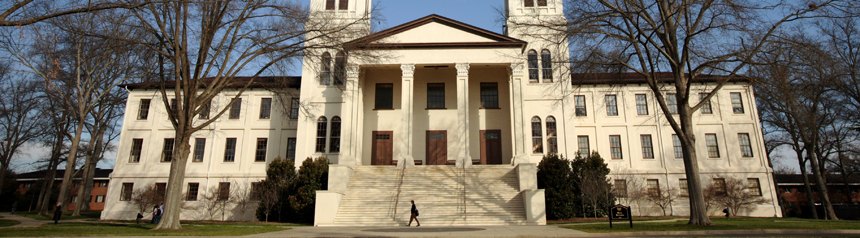
Dr. Katherine Mickley Steinmetz is a Professor in the Department of Psychology at Wofford College, where she directs the Neuroscience of Cognition and Emotion Lab. Her office is located in the R. Milliken Science Center 231D, and she can be reached at (864) 597-4643 or steinmetzkr@wofford.edu. She has established herself as a prominent researcher in emotional memory and cognition through her extensive publication record and laboratory work. Dr. Steinmetz earned her undergraduate degree in Psychology and Neuroscience from Allegheny College, where she participated in the Neuroscience in the Humanities program and completed a thesis on electrophysiological changes caused by learning words in emotional contexts. She then pursued graduate studies at Boston College under Dr. Elizabeth Kensinger, using neuroimaging (fMRI), eye-tracking, electrophysiological, and behavioral techniques to investigate neural mechanisms influencing memory for emotional events. Following this, she completed a post-doctoral fellowship focusing on stress and sleep effects on memory at Boston College and Notre Dame. Her research program focuses on understanding the neuroscience behind how emotional processing influences attention and memory. Dr. Steinmetz combines behavioral testing, event-related potential (ERP) recordings, and salivary hormonal assays to examine both cognitive and neural processes guiding attention toward and memory for emotional information. She is particularly interested in how factors like stress and anxiety modulate these processes. Her work spans multiple domains including emotional memory enhancement, cross-cultural differences in memory, physiological correlates of emotional processing, and the interaction between sleep, stress hormones, and memory consolidation. Analysis of Dr. Steinmetz's publication history reveals consistent focus on emotional memory mechanisms across various contexts. Her research demonstrates how emotional content differentially affects item versus background memory, how stress hormones like cortisol modulate memory processes, and how attentional mechanisms interact with emotional processing. Her methodological approach integrates multiple techniques including ERP, eye-tracking, physiological monitoring, and behavioral paradigms to provide comprehensive insights into emotion-cognition interactions. Dr. Steinmetz has authored numerous peer-reviewed publications in prominent journals including Journal of American College Health, Frontiers in Physiology, Cognition and Emotion, Memory, and Affective Science. She has also contributed book chapters and co-authored the book "How Does Emotion Affect Attention & Memory?" (2010) with Elizabeth A. Kensinger, which reviews behavioral and neuroimaging evidence on emotion's effects on memory and attention in individuals with and without PTSD. As an educator, Dr. Steinmetz has focused on developing effective undergraduate research experiences in cognitive neuroscience. Her work in this area addresses the challenges of preparing students for careers in this interdisciplinary field while maintaining sustainable faculty development. She appears to be actively involved in mentoring undergraduate researchers through her laboratory work at Wofford College. Dr. Steinmetz's Neuroscience of Cognition and Emotion Lab serves as the primary research hub for her investigations. The lab employs multiple methodological approaches to study emotion-cognition interactions, providing students with hands-on research experience in cognitive neuroscience techniques. Her research program demonstrates continuity from her graduate and postdoctoral training while developing its own distinct focus on the interplay between emotional processing, attention, and memory.
David Miles is a Professor of Financial Economics at Imperial College Business School, affiliated with the Department of Finance. He serves on the Budget Responsibility Committee of the Office for Budget Responsibility and the Commission of the Irish Central Bank. Previously, he was a member of the Bank of England's Monetary Policy Committee (2009–2015). His research focuses on fiscal sustainability, financial stability, monetary policy, and demographic change. He has also contributed to analyses of housing markets, mortgage dynamics, and the impact of remote work on urban economies. Education & Professional Background: Academic roles at Birkbeck College, London and Oxford University Industry experience with Morgan Stanley and Merrill Lynch Research Interests: Fiscal policy challenges and long-term sustainability Monetary policy design and implementation Demographic shifts and their macroeconomic implications Pension system reform and risk management Housing market dynamics and mortgage market innovation Key Publications Trends (2021–2024): Recent work emphasizes pension fund sustainability (e.g., USS pension scheme analysis), post-pandemic economic recovery strategies, and the macroeconomic impacts of demographic changes. He explores policy trade-offs between health safety and economic activity during the pandemic, as well as long-term structural issues in financial systems. Awards: CBE (2016 Queen's New Year’s Honours) Advisory & Grants: Active in policy advisory roles across UK and EU institutions. His work often bridges academic research with practical policymaking, particularly in fiscal and monetary domains. Labs/Teams: Collaborates with cross-disciplinary teams at Imperial College and external institutions on topics like pension systems, macroeconomic modeling, and public health policy.
Martyn T. Smith is a Professor of Toxicology and the Kenneth Howard and Marjorie Witherspoon Kaiser Endowed Chair in Cancer Epidemiology at the University of California, Berkeley. He has led the Superfund Research Program (SRP) Center at Berkeley since 1987, a flagship NIH-funded program focusing on toxic waste site remediation and the exposome paradigm. His research spans molecular epidemiology, toxicology, and genomics, with a focus on chronic diseases like cancer and diabetes. Education: BSc in Biology (Queen Elizabeth College, 1977), PhD in Biochemistry (Medical College of St. Bartholomew's Hospital, 1980), Postdoc in Toxicology (Karolinska Institute, 1981). Awards: AAAS Fellow, 2010 Children’s Environmental Health Network Award, 2024 Stokinger Award (ACGIH). Teaching: Courses include Advanced Toxicology and Health Risk Assessment. Dr. Smith’s research emphasizes the exposome approach to assess cumulative environmental risks, particularly from chemicals like arsenic, benzene, and PFAS. His team combines biomedicine and engineering to address complex environmental health challenges. Grants & Labs: The SRP Center, funded at ~$2.15M annually, includes 6 projects and 5 cores targeting hazardous site remediation. Collaborations focus on translational research and community engagement. Future Work: Expanding exposomics applications to improve risk assessment and remediation strategies for multi-chemical contaminated sites.
Sabrina Karim is an Associate Professor in the Department of Government at Cornell University and serves as the Associate Director of the Reppy Institute for Peace and Conflict Studies. Her research focuses on conflict and peace processes, particularly state-building in post-civil war contexts, with a geographic emphasis on Sub-Saharan Africa and Bangladesh. She examines international security assistance to post-conflict states and gender reforms in peacekeeping, using experimental methods to explore topics like policing reforms and public perceptions of security sectors. Karim holds affiliations with the Institute for African Development, South Asia Program, and the Reppy Institute’s core faculty roles. Her work bridges academic rigor and policy relevance, addressing issues such as election violence prevention in Liberia, the impact of epidemics on marginalized populations, and the economic consequences of peacekeeping withdrawal. She has conducted extensive fieldwork in Liberia, Bangladesh, and other post-conflict regions, producing evidence-based insights on gendered security sector reforms and democratic transitions. Karim’s research often integrates experimental designs with qualitative analysis to assess policy interventions, such as gender-balancing measures in police forces and UN peacekeeping mandates. Roles: Faculty Associate at Einaudi Center, PACS Steering Committee Member, SAP Faculty Associate Research Themes: Peacebuilding, Gender in Security, Post-Conflict Governance, Experimental Methods Geographic Regions: Liberia, Bangladesh, Sub-Saharan Africa Karim’s publications emphasize the interplay between gender equality and conflict dynamics, arguing that women’s inclusion in security sectors and peace processes can reduce violence and improve governance. Her experimental studies in Liberia, such as testing police reforms’ impact on public trust, demonstrate practical applications of her scholarship.
Rob Ley is an Adjunct Professor at the USC School of Architecture, specializing in experimental architectural design and public art. He founded Rob Ley Studio, known for installations at venues like the Storefront for Art and Architecture (New York) and the Taubman Museum of Art. His work spans public commissions for institutions such as Eskenazi Hospital and O’Hare Airport. Ley holds a B.Arch from the University of Illinois and an M.Arch from UCLA. Education: Bachelor of Science in Architecture, University of Illinois, Urbana-Champaign (1993–1996) Master of Architecture, University of California, Los Angeles (1997–2000) Ley’s research focuses on integrating technology and innovation into public spaces, with a secondary emphasis on the social impact of design. His studio’s projects highlight experimental approaches to urban environments and community engagement. Awards & Grants: 2015 American’s for the Arts - Public Art Network Year in Review Award Graham Foundation Grant AIA Research Grants IDEC Special Projects Grant 2010 Best Storefront Design Award (Municipal Art Society of New York) Ley teaches graduate and undergraduate design studios at USC, emphasizing digital fabrication and materials innovation. He has lectured globally on public art and design at institutions such as Cooper Union and the American Institute Vienna. His work bridges architectural practice with social responsibility, advocating for design solutions that address urban challenges.
Dr. Joanna Moss is an Associate Professor in Psychology at the University of Surrey, affiliated with the School of Psychology and the Development, Education, Language and Outreach in Psychology (DevELOP) Research Group. She completed her PhD at the University of Birmingham in 2005, followed by research roles at the Institute of Psychiatry, Psychology & Neuroscience and the Cerebra Centre for Neurodevelopmental Disorders. Her research focuses on autism characteristics in individuals with genetic syndromes, employing methodologies like eye-tracking, EEG, and behavioral assessments. She has secured funding from the Academy of Medical Sciences, British Academy, and others. Dr. Moss co-chairs the Scientific and Clinical Advisory Team for the Cornelia de Lange Syndrome Foundation and advises on international research committees. She teaches a final-year undergraduate module on neurodevelopmental conditions and advises PhD students. Her lab, NDEV Research Lab, explores social-cognitive mechanisms in neurogenetic syndromes. Recent work emphasizes inclusive autism research, anxiety in high-risk groups, and machine learning approaches to phenotype analysis. Education: PhD in Psychology, University of Birmingham (2005) Roles: Senior Academic Tutor, Module Convenor for Neurodevelopmental Conditions Labs/Teams: NDEV Research Lab (www.ndevresearchlab.com) Her research highlights syndrome-specific profiles of autism traits, emphasizing the need for tailored assessments and interventions. Key findings include distinct gaze-following patterns in genetic syndromes and the role of executive dysfunction in repetitive behaviors. She advocates for ethical research practices, including preregistration in undergraduate studies.
Drew Cingel is an Associate Professor and Graduate Advisor in the Department of Communication at the University of California, Davis. His research focuses on the interplay between human development—particularly child and adolescent development—and media effects, with an emphasis on understanding how developmental stages influence media choices and how media exposure impacts development. He regularly consults with media companies and policymakers to design media that supports healthy child and adolescent development. Education: Ph.D., Media, Technology, and Society, Northwestern University, 2016 M.A., Communication, Wake Forest University, 2012 B.A. (two degrees), Media Effects and Psychology, Pennsylvania State University, 2010 Research Interests: Effects of social media on adolescent mental health Children’s learning from media (e.g., television, tablets) Moral reasoning development through media exposure Parental mediation strategies for media use His work bridges experimental and survey methodologies, often addressing societal concerns about digital media’s role in youth development. Publications & Trends: Recent articles explore personalized social media algorithms’ impact on minors, cross-cultural comparisons of media use during the pandemic, and the validation of moral intuition measurement tools. His research consistently highlights the dual-edged nature of media: while media can foster learning and moral development, it also poses risks like mental health challenges and social comparison effects. Teaching & Advising: Teaches CMN 147 (Children, Adolescents, and the Media) and CMN 141 (Media Effects). As Graduate Advisor, he mentors students in communication studies and supports academic programs. Labs & Teams: Affiliated with UC Davis’ Media Labs, which investigates digital media’s societal impacts. Collaborates with the Human Development Graduate Group to integrate interdisciplinary perspectives.
Rick Horan is a Professor in the Department of Agricultural, Food, and Resource Economics at Michigan State University (MSU), part of the College of Agriculture & Natural Resources. He holds a Ph.D., M.A. from Pennsylvania State University, and dual B.S. degrees from Appalachian State University. His research focuses on environmental and natural resource economics, particularly the interplay between economic and ecological systems. Key areas include endangered species management, invasive species control, wildlife disease dynamics, and agricultural pollution policy. He has published in top journals like PNAS, American Economic Review, and the American Journal of Agricultural Economics. Horan has served as Managing Editor of Resource and Energy Economics (2010–13), Associate Editor roles for American Journal of Agricultural Economics and Natural Resource Modeling , and contributed to a National Academy of Sciences report on environmental policy. His teaching includes Advanced Natural Resource Economics and Microeconomic Theory analysis. Research highlights include modeling ecological thresholds, bioeconomic approaches to species management, and integrating human behavior into epidemiological models. His work has been featured in media outlets like The Economist and Forbes. Horan’s advising and grants focus on interdisciplinary solutions for environmental challenges. His labs and research teams address complex issues like agri-environmental service coordination and sustainable land-use strategies. Current research explores policy mechanisms for balancing economic activities with ecosystem preservation.