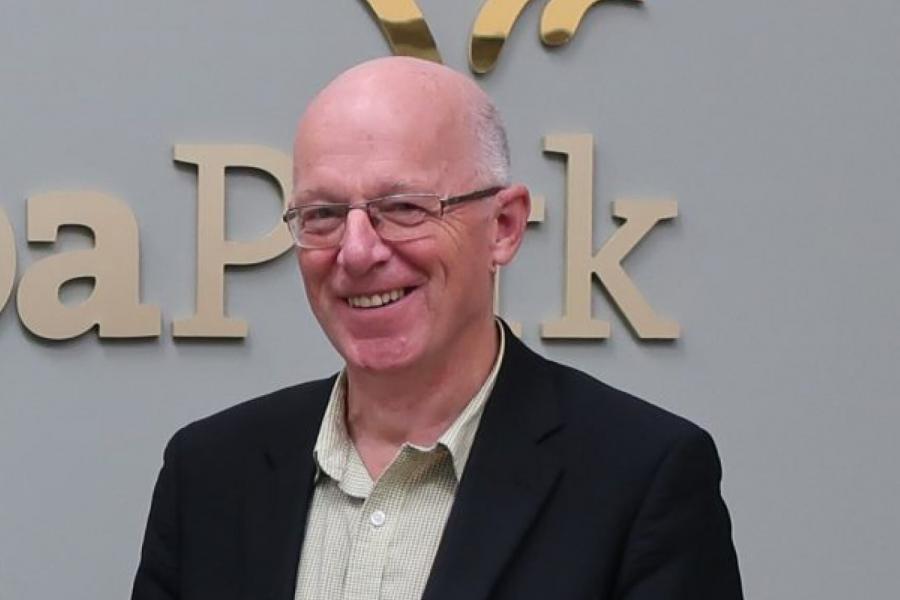
Mehdi Abdollahi is an Associate Professor at Chalmers University of Technology's Department of Food and Nutrition Science. His research focuses on alternative proteins, food biotechnology, and plant-based hybrid foods, with emphasis on sustainable utilization of food side streams, legumes, cereals, and microalgae as future protein sources. Develops pH-shift technology and ultrasound-assisted methods for protein extraction Specializes in hybrid food engineering via fermentation and biorefinery Works on 3D food printing and high-moisture extrusion for food analogs Researches collagen and biobased food packaging materials His work includes >100 peer-reviewed publications, 4 book chapters, and 3 patents. Current projects involve collaborations with Arla Foods, Lantmännen, and Nordic Seafarm, addressing sustainable seafood systems and plant-protein hybridization. 2024 Bertebos Prize recipient 2025: Recognized among Sweden's Top 101 Sustainability Figures Mentors 7 PhD students and 3 postdocs while collaborating with European institutions like Kristianstad University and Ankara University. His group explores biorefinery strategies, hybrid food functionality, and innovative packaging solutions.
Professor Oula Ghannoum is a renowned plant scientist and academic leader at the Hawkesbury Institute for the Environment (HIE), Western Sydney University. She serves as Director of the ARC Training Centre for Smart and Sustainable Horticulture and holds leadership roles, including Biological Sciences Discipline Lead and Associate Editor at Functional Plant Biology . Her research focuses on photosynthesis, global change biology, and protected cropping, aiming to enhance food security and climate resilience through crop improvement and sustainable agricultural practices. Education: BSc (Honours) in Plant Biochemistry, University of NSW (1993) PhD in Plant Physiology, Western Sydney University (1998) Research Interests: Professor Ghannoum’s work addresses global challenges like food security and climate change by exploring plant responses to environmental stress. Her lab uses advanced technologies like smart glasshouses and hyperspectral imaging to optimize crop yield and quality. Key areas include sugar signaling pathways in C3/C4 plants, water use efficiency, and heat tolerance in cereal crops. Grants & Funding: She has secured over $25M in research funding, leading projects on C4 photosynthesis, automated crop monitoring, and protected cropping systems. Notable collaborations include the ARC Centre of Excellence for Translational Photosynthesis and Future Food Systems CRC. Awards: 2024 Vice-Chancellor’s Excellence in Research Award 2023 Education and Outreach Award (Australian Society of Plant Scientists) 2001 ARC Postdoctoral Fellowship Labs & Teams: Her team develops innovative frameworks for sustainable horticulture, combining biology with AI and smart technologies. Ongoing work includes imaging-based crop monitoring and phenotyping for climate-resilient crops.
Dr. Cristina Rosell is a Professor and Head of the Department of Food and Human Nutritional Sciences at the Faculty of Agricultural and Food Sciences, University of Manitoba. Her research focuses on grain-based food innovation, starch properties, and sustainable bakery processes. Education: PhD and BSc in Pharmacy from Universidad Complutense de Madrid, Spain Dr. Rosell specializes in cereal science, enzymatic food modification, and gluten-free product development. Her current projects include optimizing bakery processes with computational tools, tracing rice supply chains via blockchain, and integrating bioactives into gluten-free foods. Her work bridges food chemistry, nutritional science, and industrial bakery technology. Her recent research trends emphasize gluten-free bread using legume and root starches, starch-plant compound interactions , and sustainable food processing via microwave-assisted extraction, high-pressure treatments, and fermentation. Key subfields include dough rheology, polyphenol bioactivity, and techno-functional ingredient development. Dr. Rosell’s teaching includes graduate seminars in food science (HNSC 7130). She supervises graduate students in breadmaking, starch hydrolysis, and functional food design. Her lab explores grain quality, enzymatic treatments, and bakery product optimization through interdisciplinary approaches combining chemistry, nutrition, and process engineering.
Professor Sylvia Urban is a distinguished academic at RMIT University, serving as a Professor of Chemistry in the School of Science. She leads the Marine and Terrestrial Natural Product (MATNAP) research group and is the Program Manager for the Bachelor of Science degree, the largest and flagship program in the School of Science. Professor Urban also holds significant leadership roles including Reconciliation and Responsible Practice Facilitator in the School of Science (STEM College) and member of the Nugulu Committee at RMIT University. Her expertise spans natural products chemistry and separation science, with particular focus on chromatography for purification and instrumental analysis for structural characterisation and elucidation. Professor Urban's research interests encompass natural product chemistry isolation and structural elucidation, NMR spectroscopy and mass spectrometry for characterisation of natural products, High Performance/Pressure Liquid Chromatography (HPLC) and other chromatographic techniques for natural product purification, hyphenated spectroscopic techniques such as HPLC-NMR and HPLC-MS for natural product profiling, and biological evaluation of natural products for drug discovery applications. Her work primarily focuses on exploring the biodiversity of Australian marine and terrestrial organisms including plants, fungi, sponges, and algae to discover new compounds with therapeutic potential. She has developed various dereplication and chemical profiling strategies to expedite the discovery process. Professor Urban's publication record demonstrates a strong focus on natural products derived from Australian flora and marine organisms, with particular emphasis on their chemical characterisation and biological evaluation. Her research spans ethnobotanical studies of Indigenous Australian medicinal plants, phytochemical profiling of Australian species, anthelmintic and antimicrobial assessments of natural compounds, and development of analytical methodologies for natural product research. The interdisciplinary nature of her work connects chemistry with pharmacology, ethnobotany, and sustainable development goals related to health, education, and gender equality. STEM College Learning & Teaching Award (Award for Values in Action) 2024 STEM College Athena Swan Award 2023 Top STEM College Media Star 2022 School of Science Reconciliation Champion Award for 2021 School of Science Associate Dean's Impact Award (Applied Chemistry) for 2021 STEM Female Educator of the Year Award in the STEM College in 2021 Fellow of the Royal Australian Chemical Institute (RACI) in 2020 2019 Australian Award for University Teaching (AAUT) Citation for Outstanding Contributions to Student Learning Professor Urban actively supervises Masters and PhD students, with recent projects focusing on nanoparticle synthesis, natural product evaluation from Australian plants and marine organisms, food science applications, and biomedical imaging agents. She has received numerous teaching grants including the SteLR Grant 2017 for Pen-enabled, Real-time Student Engagement for Teaching in STEM Subjects, SteLR Plus Learning and Teaching Grant 2016 for Contextualizing Learning Chemistry, and Global Learning by Design (GLbD) Learning and Teaching Grant 2014. As the leader of the MATNAP research group, Professor Urban oversees a team focused on exploring Australian biodiversity for drug discovery. She has been instrumental in establishing the VICS Molecular Resolution Facility (chromatography node at RMIT University) as part of "The Pipeline – An Integrated Approach to Drug Design and Development." Her research involves collaborations both within and external to RMIT University, including Australian and international university and industry partners.
Dr. Sajid Alavi is a Professor in the Department of Grain Science and Industry at Kansas State University. He joined the faculty in 2002 after earning his Ph.D. in Food Science/Food Engineering from Cornell University (2002), M.S. in Agricultural and Biological Engineering from Penn State (1997), and B.S. in Agricultural Engineering from IIT (1995). His research focuses on extrusion processing in food, pet food, and feed applications, with expertise in rheology, food microstructure imaging, and process sustainability. He leads global projects in Africa, Brazil, India, and beyond, emphasizing sustainable food technologies and AI-driven processing innovations. Dr. Alavi is a recipient of the 2010 Young Research Scientist Award from the Cereals & Grains Association. He teaches GRSC 620 (Intro to Extrusion Processing) and GRSC 820 (Advanced Extrusion Processing), and has trained over 1,000 industry leaders through his renowned 'Extrusion Processing: Technology and Commercialization' short course. His work bridges food science and engineering, addressing challenges in plant-based meat analogs, nutrient bioavailability, and food aid product development. Key facilities associated with his work include the BIVAP Feed Quality Assurance Lab and Hal Ross Flour Mill. His research spans sensory analysis of meat alternatives, fiber utilization in pet food, and sustainability assessments of novel crops like intermediate wheatgrass. Recent studies explore insect protein in pet food, AI-driven extrusion optimization, and iron bioavailability in fortified foods. Dr. Alavi’s contributions span academic, industrial, and global food security domains, reflecting a commitment to innovative, scalable food solutions.
Ueli Grossniklaus is an Ordinary Professor at the University of Zurich within the Faculty of Mathematical and Natural Sciences , affiliated with the Department of Plant and Microbiology . His work focuses on plant developmental biology, particularly epigenetic and genetic mechanisms governing reproduction and adaptation. Key Courses: Epigenetics, Plant Biology Workshop, Group Seminars on Current Research Laboratory Techniques: Advanced methods in plant cell mechanics, transcriptomics, and genome editing Research Interests span plant epigenetics, reproductive biology, and the interplay between environmental stress and genetic regulation. He investigates: Mechanistic control of gametogenesis and fertilization Epigenetic contributions to plant adaptation Evolutionary implications of asexual reproduction Biophysical forces in plant cell growth Publication Trends (2025–2018) reveal expertise in: Arabidopsis and fern model systems Epigenetic regulation (DNA methylation, histone dynamics) Apomixis and hybrid seed failure mechanisms Biomechanics of pollen tubes and carnivorous plants Genome editing tools (CRISPR) and long-read sequencing Scientific Collaborations include interdisciplinary projects on: Microfluidic devices for plant cell analysis Gene drive ecology and ethics 3D imaging of plant reproductive structures Advising and Grants focus on mentoring through research internships in developmental biology, genetics, and systems biology. His lab engages in: Epigenetic response to environmental stress Cell wall mechanics in reproduction Computational modeling of plant growth Laboratory Teams integrate plant biologists, bioengineers, and computational scientists to study: Mechanistic gene regulation Evolutionary developmental biology Microrobotics for cellular force measurement
Dr. Belay Ayele is a Professor in the Department of Plant Science at the University of Manitoba's Faculty of Agricultural and Food Sciences. His research focuses on molecular mechanisms of plant hormones, seed biology, and abiotic stress tolerance in cereal crops. Education: PhD from University of Alberta; Postdoctoral Fellow at RIKEN Plant Science Center (Japan) and Iowa State University (USA) Research interests include: Elucidating hormonal regulation of seed dormancy and germination Molecular basis of preharvest sprouting resistance Genomic approaches to improve cereal stress tolerance Transcriptional regulation of plant growth under environmental challenges His recent work explores hormonal crosstalk in cereal crops (wheat, barley), emphasizing ABA/GA balance, jasmonate signaling, and stress adaptation. Publications span plant molecular biology, genomics, and bioenergy applications.
Maria Manuela Pintado is Full Professor and Director of CBQF research center at Universidade Católica Portuguesa's Faculty of Biotechnology. She leads interdisciplinary research in sustainable food systems and functional ingredients. Research domains include: Valorization of agro-industrial byproducts Development of bioactive edible films Design of functional foods for chronic disease prevention Circular economy applications in food systems Recent publications (2023-2025) show strong focus on sustainable biomaterials and health-promoting ingredients, with notable increases in circular economy applications and precision nutrition studies. Key innovations include antiviral biopolymers from yeast and bioactive films for food preservation. Awards include recognition for circular economy innovations and upcycling research. Directs extensive EU-funded projects including THRIVE (€4M) and CIRCUL-A-BILITY, supervising large research teams and industrial partnerships.
Gary W. Felton is a Professor and Department Head of Entomology at the Pennsylvania State University's College of Agricultural Sciences. His research focuses on chemical ecology, insect-plant interactions, and induced plant defenses against herbivores. Key Affiliations: Pennsylvania State University, College of Agricultural Sciences, Department of Entomology Research Interests: Dr. Felton investigates how plants perceive and respond to herbivore attacks, with particular emphasis on biochemical mechanisms like flavonoid-mediated defenses, microbial interactions in Lepidoptera, and stomatal regulation of volatile signaling. His work bridges agricultural sustainability and ecological theory. Recent Publications: His 2025 studies explore salinity stress impacts on tomato defenses, microbiome roles in herbivore digestion, and volatile-mediated host plant specialization. Earlier works (2023-2024) examine water stress effects, flavonoid toxicity, and microbial influences on plant-herbivore dynamics. Scientific Awards: Huck Chair of Chemical Ecology (2022) Laboratory Focus: The Felton Lab studies herbivore-induced plant defenses, microbial symbiosis in pest species, and integrated pest management strategies across crops like maize, tomatoes, and sorghum.
Prof. Dr. Laura Nyström is a Full Professor of Food Biochemistry at ETH Zurich's Department of Health Sciences and Technology (D-HEST), part of the Institute of Food, Nutrition and Health (IFNH). She leads a research group focused on sustainable food systems, dietary fiber mechanisms, and plant-based material utilization. Her career includes tenure as Assistant Professor (2009–2016) and Associate Professor (2016–2021) before her promotion to Full Professor in 2022. She also chairs the D-HEST department since 2022. Education: MSc (2002) and DSc (2008) in Food Sciences from the University of Helsinki, Finland. Postdoctoral research (2008–2009) in Cereal Technology at the same institution. Research Interests: Healthy and sustainable foods via plant-based materials Health-promoting dietary fiber interactions Genetic diversity of grains and crop utilization Antioxidant extraction from olive mill waste (co-founding Gaia Technologies GmbH) Development of analytical methods for food chemistry Scientific Contributions: Over 70 publications, 3 book chapters, and 2 patents ERC Starting Grant (2015), AOCS Young Scientist Award (2017), and ETH Zurich Leadership Award (2018) Advising & Innovation: Guided interdisciplinary research teams on food chemistry and sustainability Co-developed industrial partnerships for food waste valorization Labs & Initiatives: EPNOE (European Polysaccharide Network) collaborations HealthFerm citizen science project on sourdough fermentation
Dr. Martin Scanlon is a Professor and Dean of the Faculty of Agricultural and Food Sciences at the University of Manitoba. His work focuses on physical and structural changes in plant materials during food processing, particularly in oilseed-based systems and cereal products. Education: Operative Miller Certificate (with Distinction), City & Guilds (London), England PhD (Food Science), University of Leeds, England BSc Hons (Food Science), University of Leeds, England His research spans modeling process-ingredient interactions, aerated food materials, ultrasonic analysis, and grain-legume science. Recent projects include novel canola oil extraction methods and mitigating acrylamide precursors in wheat. Analysis of his publications reveals expertise in sustainable processing (supercritical CO₂, microemulsions), dough rheology, antioxidant recovery, and bubble dynamics in cereal systems. No scientific awards are explicitly mentioned. Dr. Scanlon is not currently accepting graduate students and has not disclosed specific grant funding or lab affiliations in the provided texts.
MARIO MARTINEZ MARTINEZ is Associate Professor at University of Valladolid's Department of Agricultural and Forestry Engineering, with secondary appointments at Aarhus University and Purdue University. His research develops plant-based macromolecular assemblies for food, pharmaceutical, and packaging applications. Research focuses on: Structure-function relationships of plant biopolymers Green modification techniques for polysaccharides Food waste valorization strategies Edible packaging development Nutrient bioaccessibility enhancement Recent publications showcase innovative approaches to starch modification using deep eutectic solvents, waste upcycling (bread, apple pomace, garlic peels), and functional ingredient development from underutilized sources (macroalgae, hawthorn). Major recognitions include: Nils Foss Talent Prize 2021 DFF-Sapere Aude excellence grant (€1M) Ontario Early Researcher Award Young Scientist Award from Cereals & Grains Association Leads research on sustainable food systems through international collaborations and industry partnerships.
Dr Carol Verheecke-Vaessen is a Senior Lecturer in Applied Molecular Mycology at Cranfield University, affiliated with the Centre for Soil, Agrifood and Biosciences and the Applied Mycology Group under the Environment and Agrifood theme. She leads the Food Safety module in the MSc Food Systems & Management program and is the Director of the Mycotoxin Training Hub, developing industry-focused training and research initiatives globally. Education: PhD in Mycotoxin Research, Federal University of Toulouse, France (2014) Postgraduate Certificate in Academic Practice, Cranfield University (2021) Her research focuses on understanding the molecular mechanisms of mycotoxin production in fungi under environmental stress, particularly climate change. She develops holistic solutions from farm to fork for managing mycotoxin risks, including biocontrol agents, decision support systems, and food waste valorization. Her work spans agrifood chain contamination assessment using advanced molecular and analytical techniques. The recent publications reflect a strong trend in climate change impact on mycotoxin dynamics, real-time detection methods (e.g., CO2 monitoring, spectroscopy), biocontrol strategies in coffee and cereals, and innovative pretreatment techniques for mycotoxin analysis. Her studies often involve interdisciplinary collaborations across Europe, Africa, and Asia. Scientific Awards: Best Innovative PhD Award, Federal University of Toulouse (2015) Fellow of the Higher Education Academy (FHEA) She actively supervises PhD and MSc students and has secured funding from Research England, Innovate UK, and BBSRC. She is co-leading the development of the Magan Centre of Applied Mycology and contributes to the Africa Centre of Excellence for Sustainable Cooling and Cold-chain (ACES). Her research projects include Oats for the Future, NutriNuts, and Gender-equal mycotoxin training, emphasizing sustainable and equitable food systems. Laboratories and Research Teams: Applied Mycology Group, Cranfield University Mycotoxin Training Hub (Director) Magan Centre of Applied Mycology (Co-Lead) Africa Centre of Excellence for Sustainable Cooling and Cold-chain (ACES) – Active Member
Professor Jim Harris is a leading academic in Environmental Technology at Cranfield Environment Centre, Cranfield University. He holds the Chair in Environmental Technology, a position he has held since 2002. His work spans microbial ecology, ecological restoration, soil health, and sustainable land systems, with significant contributions to policy, industry, and international standards. First degree in Applied Biology, North East London Polytechnic Doctoral work on microbiology of stored topsoil on opencast mine sites His research interests are centered on microbial ecology and its role in ecosystem processes, particularly in disturbed landscapes. He investigates soil formation, organic matter dynamics, waste treatment (e.g., landfill leachate), and the quantitative assessment of ecosystem services. He applies systems ecology to urban planning, water treatment, and land restoration. His work bridges science and practice, influencing government policy and industrial applications. The recent publications reflect a strong focus on soil health quantification , microbial community dynamics , nutrient cycling in waste-amended soils , and urban ecosystem services . There is a clear trend toward integrating Bayesian modelling , resilience metrics , and decision-support tools for environmental management. His team frequently collaborates on interdisciplinary studies involving carbon, nitrogen, and phosphorus cycling in agricultural and urban systems. Jim Harris has secured funding from major UK research councils including BBSRC, NERC, and EPSRC, as well as from government agencies (Defra, Environment Agency, Natural England), industry (Syngenta, AECOM, SITA), and international bodies (European Union, Royal Society). His research has informed national and international guidance on ecological restoration and land use. He is actively involved in professional societies such as the Society for Ecological Restoration, British Society of Soil Science, British Ecological Society, and Institution of Agricultural Engineers. He has contributed to major book publications and editorial roles in high-impact journals. His laboratory and research group focus on soil microbial communities , ecosystem resilience , and bioremediation . Projects like RestREco (Restoring Resilient Ecosystems) and Urban BESS (Biodiversity and Ecosystem Service Sustainability) highlight his team’s focus on reconnecting green-blue infrastructure and enhancing urban sustainability. He also leads work on food and nutrition security in the context of global disruptions like the COVID-19 pandemic.
Dr. Huazhong Shi is a Professor in the Department of Chemistry and Biochemistry at Texas Tech University. His research focuses on molecular biology, biochemistry, and plant stress response mechanisms, with a particular emphasis on gene editing for crop improvement, herbicide resistance development, and computational simulations of protein-small molecule interactions. Ph.D., Wuhan University, China, 1995 Research Associate, University of Arizona, 1999-2001 Research Associate, University of California, 2001-2003 Research Associate, Purdue University, 2003-2004 Dr. Shi’s research explores gene editing strategies to enhance crop traits such as clonal seed production, haploid induction, and herbicide resistance. His lab also investigates molecular dynamics simulations to understand enzyme-herbicide interactions and stress-inducible gene regulation. Key projects include engineering salt-tolerant crops via Na+/H+ antiporter optimization and elucidating the roles of SHI genes in stress response pathways. The 15 most recent publications highlight advancements in gene editing for hybrid vigor preservation, directed evolution of herbicide-resistant enzymes, and computational modeling of stress tolerance mechanisms. These works span disciplines including plant biotechnology, environmental toxicology, and agricultural sustainability, with subfields such as RNA splicing, redox biology, and nutrient-stress interactions. Dr. Shi’s lab includes graduate students Yihui Yuan, Hongjia Qian, Amna Aqdas, Karthik Kalvakuntla, and Shoumik Kundu, alongside research associate Dr. Jianfei Guo. His work contributes to global food security through biotechnological innovations in crop resilience to environmental stresses.