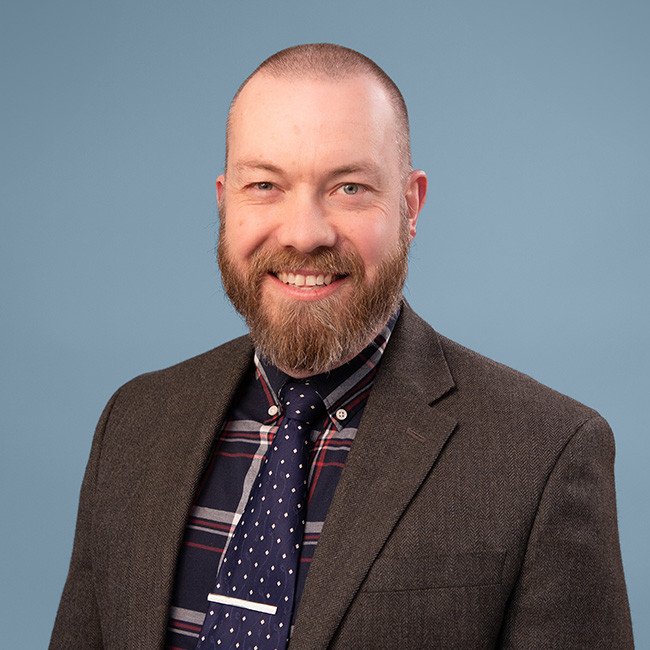
Neil Ewins is a researcher at the University of Sunderland specializing in the historical and economic dimensions of ceramic production and trade. His work examines Anglo-American ceramic markets from the 18th century to present, with emphasis on globalization impacts, cultural identity in commerce, and Staffordshire ceramics. Research Focus: Ewins investigates how ceramic marketing strategies evolved in response to global economic shifts, particularly UK industry adaptation to overseas competition. His publications analyze trade networks, consumer preferences, and material culture across centuries, blending historical archaeology with economic theory. Publication Trends: Recent works (2017-2023) explore globalization's effects on heritage industries, while earlier scholarship (1990s-2010s) established foundational research on transatlantic ceramic trade patterns and merchant networks.
Professor Ivan Bonev Gatsov serves as Professor and former Department Head at the Department of Archaeology, New Bulgarian University (NBU) since 2000, where he currently teaches specialized courses including Neolithic Studies on the Balkans and Stone-Copper Age in Southeast Europe. His academic career spans over 40 years with concurrent appointments at the National Archaeological Institute with Museum (Bulgarian Academy of Sciences, 1978-2011). His educational background includes undergraduate studies at Sofia University (1968-1972), doctoral research at Jagiellonian University in Krakow (1973-1978), and Doctor of Sciences degree (2006) for research on prehistoric lithic assemblages from Eastern Thrace. His fieldwork experience encompasses 12 major international excavations across Bulgaria, Turkey, Greece, Romania, and Georgia since 1973. Professor Gatsov's research focuses on comparative lithic analysis of Neolithic and Chalcolithic periods in Southeast Europe and Anatolia, with particular expertise in chipped stone assemblages from Eastern Thrace and South Marmara regions (7th-5th millennia BC). His work examines Paleolithic-Mesolithic transitions, obsidian sourcing, and Neolithisation processes through systematic documentation of raw material procurement systems and technological adaptations. Recent publications (2009-2013) emphasize interregional cultural contacts and comparative technological studies between Balkan and Anatolian prehistoric communities. His 50+ publications include 7 monographs and 40+ journal articles, with recent work appearing in Eurasia Antiqua, Anatolica, and BAR International Series. Key contributions include comprehensive analyses of stone tool technologies at Troy, Barcin Hoyuk, and Pietrele settlements. Professor Gatsov maintains active international collaborations with the German Archaeological Institute, Dutch Institute in Istanbul, Istanbul University, and Georgian National Museum. His fieldwork methodology integrates excavation with laboratory analysis of lithic artifacts, providing students with hands-on training in material culture studies and regional cultural sequencing.
Dr. Linda Adorno is a Research Associate at Freie Universität Berlin's Department of History and Cultural Studies, affiliated with the Institute of Classical Archaeology. Since 2025, she has led the DFG project A new model for the western city district of Selinunte . Previously, she held research positions at the German Archaeological Institute in Rome (2021-2025) and has collaborated continuously with the University of Augsburg (since 2015) and University of Bonn (2011-2016) on Sicilian archaeological projects. She completed her PhD in 2020 at Rheinische Friedrich Wilhelms Universität Bonn with a dissertation on locally produced pottery at Selinunte. Her research focuses on: Greek pottery production and cultural exchange in Sicily Colonial-indigenous interactions in the western Mediterranean Archaeology of craft specialization and urban development Hellenistic and Archaic period material culture Her publications demonstrate consistent focus on Selinunte's urban fabric, with recent works emphasizing 3D modeling of city districts, craft quarter organization, and ritual practices. Archaeological field methodology forms a core theme across her research output. She maintains active collaborations with the German Archaeological Institute and multiple universities, coordinating multidisciplinary fieldwork at key Sicilian sites including Selinunte and Agrigento.
Dr. Albert Dietz is a Research Associate and Head of the Munich Office in the long-term academy project "KIŠIB" at the Ludwig Maximilian University of Munich . Holding a doctorate in Near Eastern Archaeology (2019) and master's in Ancient Near Eastern Studies (2015), his work focuses on iconography, material culture analysis, and historical geography of the Ancient Near East. 2022–present: Temporary Academic Councillor at LMU 2019–2022: Research Associate in multiple projects 2015–2018: Doctoral fellow at Graduate School Distant Worlds Research interests center on: Storm-god iconography across cultures Cylinder seal material profiling Upper Mesopotamian historical geography Deity representation mechanics Cultural memory through material objects Publication trends show interdisciplinary work combining: Scientific analysis (Raman spectroscopy) Iconographic studies across civilizations Ceramic typology in stratified contexts Cultural exchange through visual material Historical reconstructions from travel records Fieldwork experience includes excavations at: Ur (Iraq) - 2022, 2019, 2017 Gird-i Shamlu (Iraqi Kurdistan) - 2015–2017 Tell el-Burak (Lebanon) - 2013–2015 Haft Tappeh (Iran) - 2012
Ryan Wilkinson is an Associate Professor in the Department of History at Ambrose University, specializing in ancient Mediterranean and early medieval European societies. His research examines late antiquity with focus on societal collapse/resilience, Christian doctrinal history, and intersections of political violence, communication, and social networks in ancient contexts. Education PhD, Harvard University MA, The University of Arizona BA, The University of Arizona Research Focus Wilkinson's current book project explores early Christian theologies of creation and their contemporary relevance. His research methodology combines textual analysis with archaeological evidence, particularly studying the transformation of societies during the fragmentation of the Roman Empire. Recent work includes analyzing biblical influences in 6th-century Gothic historiography and economic networks in post-Roman Gaul. Publication Trends Publications demonstrate consistent focus on late antiquity through interdisciplinary approaches. Recent works (2017-2020) exhibit: Integration of numismatic and ceramic evidence with historical narratives Analysis of communication networks during political transitions Methodological innovations in archaeological interpretation Examination of religious narratives in political discourse
Hugh Elton is a Professor in the Department of Ancient Greek & Roman Studies at Trent University, where he has taught since 2006. His office is located in Lady Eaton College, and he maintains active academic affiliations through ongoing archaeological collaborations in Turkey. Prior to joining Trent, he taught at various American universities beginning in 1993 and served as Director of the British Institute at Ankara from 2001 to 2006. Professor Elton holds a B.A. from the University of Sheffield and a D.Phil. from the University of Oxford. His academic journey established the foundation for his specialized expertise in Roman military command structures and Anatolian regional history. Specializing in Roman and Late Roman political and military history, Professor Elton focuses on Cilicia and Isauria in southern Turkey with particular attention to ancient warfare command perspectives and urban-rural settlement dynamics. His research integrates archaeological fieldwork with historical analysis to examine how environmental factors, leadership decisions, and terrain interactions shaped historical outcomes. Recent projects investigate climate change impacts on agricultural systems and resource management strategies in Late Antiquity through interdisciplinary analysis of textual, material, and environmental evidence. Professor Elton's publication record (2017-2023) reveals three converging research trajectories: imperial resource management systems (particularly Constantinople's food supply), environmental history examining societal resilience to climate shifts, and political-military analysis of command structures and rebellion dynamics. His work consistently emphasizes regional variation in the Eastern Roman Empire and employs multi-proxy datasets to reconstruct historical decision-making contexts that single-discipline approaches cannot resolve. Professor Elton has directed significant archaeological projects including a multi-period survey in the Göksu Valley and provided expert consultation for infrastructure projects like the BTC pipeline. His fieldwork through initiatives such as the Avkat Archaeological Project examines long-term settlement patterns, agricultural systems, and environmental interactions in ancient Anatolia, combining traditional archaeological methods with scientific analysis of environmental data.
Kirił Marinow serves as Associate Professor at the Department of Byzantine History within the Faculty of Philosophy and History at the University of Lodz. With a career spanning over two decades at the institution, he progressed from Assistant positions in Medieval History (2005-2008) to Assistant Professor (2010-2021), before achieving his current rank in 2021. His institutional involvement extends beyond teaching and research through significant administrative roles including membership in the Faculty Council since 2008, the University Senate (2012-2020), and serving as Faculty Coordinator for the Erasmus+ programme (2020-2021). Marinow's research focuses on Medieval Bulgarian history (7th-14th centuries), Byzantine-Bulgarian relations, historical geography of the Balkan Peninsula, Byzantine militarism, and Byzantine literature. His scholarly work examines military struggles, mutual perceptions between Byzantines and Bulgarians, and the historical significance of medieval capitals like Constantinople, Great Preslav, and Veliko Tarnovo. He has developed particular expertise in analyzing Byzantine military manuals, fortresses in the Haemus Mountains, and the role of the Bible in medieval Balkan culture. His 83 publications demonstrate consistent scholarly output with recent work emphasizing geopolitical analysis of Byzantine-Bulgarian relations, cultural transmission mechanisms, and comparative urban studies of medieval capitals. The publications reveal a methodological approach combining historical source analysis with archaeological evidence and geographical considerations. First Degree Prize of the Rector of the University of Lodz (individual) for 'Byzantium and Bulgaria in the 7th-14th centuries. Rivalry and coexistence' (2017) Second Degree Award of the Rector of the University of Lodz (team) for 'Bulgarian Tsarism. Politics–society–economy–culture, 866–971' (2016) Bronze Medal for Long Service awarded by the President of the Republic of Poland (2016) First Degree Award of the Rector of the University of Lodz (team) for 'Constantinople - New Rome. City and People in the Early Byzantine Period' (2013) Marinow serves as scientific secretary of 'Studia Ceranea' journal since 2011 and participates in numerous editorial boards across Poland and Bulgaria. His four promoted theses reflect his mentoring role, while his involvement in four major research projects demonstrates his capacity to secure funding and collaborate internationally, particularly with Bulgarian institutions. His office hours are held on Monday from 10:15-11:45, maintaining direct engagement with students.
Dr. hab. Jarosław Źrałka is an Associate Professor at the Department of New World Archaeology, Institute of Archaeology, Jagiellonian University in Kraków, Poland. He specializes in Mesoamerican archaeology and art, with a focus on pre-Columbian Maya civilization, including settlement patterns, iconography, and the Classic Maya collapse. His research includes directing the Nakum Archaeological Project in Guatemala since 2006 (with Wiesław Koszkul), where he has made significant discoveries about Maya urban development and ritual practices. His research interests encompass: Origins and collapse of Maya civilization Mesoamerican iconography and graffiti Colonial-era art conservation Paleodemography and settlement patterns Protoclassic period transitions He has received multiple prestigious awards including the Prime Minister's Award for his doctoral dissertation and research grants from National Geographic, National Science Centre Poland, and FAMSI. Since 2018, he leads a mural conservation project in Chajul, Guatemala. Dr. Źrałka holds leadership roles in academic organizations including Vice-Presidency of the European Association of Mayanists and editorship of Contributions in New World Archaeology .
Mikko Nykyri is a Post-doctoral researcher at the Department of Electrical Engineering within the School of Energy Systems at Lappeenranta-Lahti University of Technology (LUT). His research focuses on energy systems with particular emphasis on smart grids, energy communities, and demand response mechanisms. His work bridges theoretical approaches with practical applications in the energy sector, aligning with LUT's strategic focus on energy transition. Dr. Nykyri's research interests center around the intersection of energy systems and digital technologies. He investigates how machine learning, particularly deep reinforcement learning, can optimize energy efficiency in buildings and industrial processes. His work on energy communities explores economic models, blockchain-based settlement systems, and educational approaches through serious games. He also maintains research interests in power electronics, including inverter technologies and semiconductor device characterization. His research demonstrates strong interdisciplinary connections across electrical engineering, computer science, and energy economics. An analysis of Dr. Nykyri's publication history reveals a clear evolution from fundamental power electronics research toward increasingly complex system-level applications. His early work focused on specific technical challenges in power conversion and semiconductor devices, while his recent publications address holistic energy system challenges including community-scale economics, AI-driven optimization, and educational frameworks. This progression reflects the broader energy transition from component-level improvements to integrated system solutions, with particular emphasis on the role of digitalization in enabling new energy paradigms. Dr. Nykyri has established a robust collaborative network, frequently working with researchers including Tommi J. Kärkkäinen, Saku Levikari, and Pertti Silventoinen. His peer review activity for Applied Energy demonstrates his recognized expertise in the field. His research maintains a practical orientation, with multiple studies involving real-world industrial applications and educational demonstrators that bridge academic research with industry implementation needs.