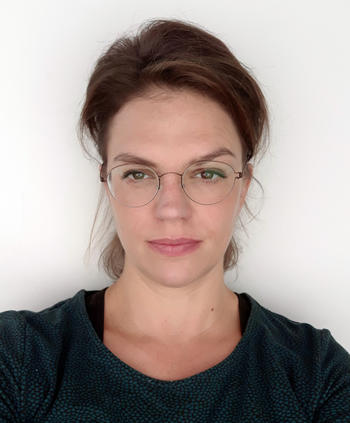
Margaret Graves is the Adrienne Minassian Associate Professor of Islamic Art and Architecture at Brown University’s History of Art and Architecture department, serving as Director of Graduate Study. She holds a PhD, MSc, and MA from the University of Edinburgh. Her research focuses on Islamic art and material culture, particularly medieval and modern acts of making, forgery, and colonial-era craft reform. Notable works include Arts of Allusion (2018), winner of major prizes, and her forthcoming Invisible Hands on 19th/20th-century ceramics forgery. Research interests span medieval Islamic intellectual history, colonial antiquities markets, and collaborations with conservators. Teaching includes courses on cultural heritage, museum studies, and Islamic art historiography. Awards include the 2019 International Center of Medieval Studies Book Prize and the 2021 Karen Gould Prize. Current projects explore postcolonial craft legacies, international banking ties to antiquities markets, and occult sciences in medieval craftsmanship.
Wei-Cheng Lin is Associate Professor of Art History and the College at the University of Chicago , specializing in Chinese art and architecture. He serves as Faculty Director of the Dispersed Chinese Art Digitalization Project , sits on the steering committee of the Center for the Art of East Asia , and acts as Architectural Studies Advisor. His office is located in CWAC 268 with weekly office hours on Wednesdays. Educational background details are not explicitly provided in the text; however, he held an appointment as Assistant Professor of East Asian Art and Architecture at Iowa State University during 2006–2007. Lin’s research interrogates the intersections of visual and material culture in medieval Chinese Buddhist art and architecture and the ritual dimensions of Chinese funerary practices . Current book projects include Performative Architecture of China , which explores how architecture enacts meaning through historical performance, and Necessarily Incomplete: Fragments of Chinese Artifacts , which investigates the active roles of fragmentary artifacts in shaping multivalent cultural significance. Across more than twenty publications, Lin’s scholarship ranges from detailed studies of Mount Wutai and Dunhuang to theoretical inquiries into architectural historiography , materiality , and contemporary Chinese art . His work bridges art history, architectural history, religious studies, and digital humanities. Grants & Digital Initiatives: Faculty Director, Dispersed Chinese Art Digitalization Project (DCADP) — supported by the Cyrus Tang Foundation Manages DCADP publication series, including Beijing Zhihua Temple (2024) and Exhibiting East Asian Art in a Global Context (2025, co-edited with Chelsea Foxwell) Laboratories & Teams: Lin leads collaborative efforts through the Center for the Art of East Asia and the UChicago Center in Beijing , organizing exhibitions, international conferences, and digital humanities workshops that integrate art-historical research with cutting-edge visualization technologies.
Melissa McCormick, Andrew W. Mellon Professor of Japanese Art and Culture at Harvard University, holds a Ph.D. in Japanese Art History from Princeton University (2000) and a B.A. in art history and Japanese from the University of Michigan (1990). She has taught at Columbia University as the Atsumi Assistant Professor of Japanese Art (2000-05) and at Harvard since 2005, where she was promoted to Professor with tenure in 2009. She has held visiting professorships at the University of Zurich and Universidade Estadual de Campinas, Brazil. Education : University of Michigan (B.A.), Princeton University (Ph.D.), Gakushūin University (1996-98) Affiliations : Harvard Art Museums, Metropolitan Museum of Art, NHK Documentaries, Getty Foundation Her research explores the interplay of text and image in Japanese art, focusing on emaki (narrative scrolls), The Tale of Genji , and Buddhist themes. Her 2018 monograph The Tale of Genji: A Visual Companion and 2009 book Tosa Mitsunobu and the Small Scroll in Medieval Japan established new frameworks for analyzing scroll format and narrative. Current projects examine Buddhist nun-artist Ōtagaki Rengetsu and bridal manuscript traditions. Selected articles highlight her work on Hakubyō (ink-line painting), medieval Genji genealogies, and the poetics of chigo (novice) tales. She has contributed to exhibitions at the Metropolitan Museum of Art and Dartmouth College’s Hood Museum. Scientific Awards : Mellon Fellowship in the Humanities (1990) At Harvard, McCormick teaches courses ranging from introductory surveys ( Arts of Japan ) to advanced seminars on gender, tea culture, and museum research. She co-curated the 2019 Tale of Genji exhibition at the Met, which received critical acclaim, and developed an edX course with over 20,000 enrollments. Her consultancy work extends to opera and dance companies, including Japan Society and Asia Society of Texas.
Dr Hajni Elias is an Affiliated Lecturer in Chinese Art and Material Culture at the University of Cambridge's Faculty of Asian and Middle Eastern Studies, and a Fellow of Clare Hall. She holds a B.A. in East Asian Studies from Princeton University, and M.A. and M.Phil. in Modern Chinese History from Columbia University. She completed her Ph.D. at Cambridge in 2018, focusing on regional identity in the Eastern Han Dynasty's Southwest China. Her research explores material culture, artistic transmission along the Southwest Silk Road, and early funerary practices in the region. Education: B.A. in East Asian Studies, Princeton University M.A. and M.Phil. in Modern Chinese History, Columbia University Ph.D. in Asian and Middle Eastern Studies, University of Cambridge (2018) Research Interests: Dr Elias specializes in the material culture of Southwest China, particularly during the Eastern Han Dynasty. Her work examines artistic and cultural exchanges along the Southwest Silk Road, focusing on how regional identity is reflected in artifacts like stelae, tomb bricks, and ceramics. She also investigates funerary and memorial practices, challenging traditional narratives of Southwest China as a cultural backwater. Her interdisciplinary approach combines archaeology, art history, and historical texts to understand early Chinese societies. Awards and Fellowships: Leverhulme Early Career Fellowship Teaching and Grants: She teaches courses on Chinese Art and Material Culture, co-taught with the History of Art Department. Her Leverhulme Fellowship supported her research into regional artistic exchanges. She has contributed to major publications, including a recent book on early funerary art in Southwest China. Labs/Teams: No specific lab or team is mentioned in the provided information.
Hsueh-man Shen is the Director of Masters Studies and Ehrenkranz Associate Professor in World Art at New York University’s Institute of Fine Arts. She holds a D.Phil. from Oxford University in Archaeology, an M.A. in Art History from National Taiwan University, and an LL.B. in Law from the same institution. Her research focuses on medieval Chinese art and archaeology, particularly how cross-cultural exchanges shaped artistic practices through translation, replication, and hybridization. She has curated major exhibitions such as Gilded Splendor: Treasures of China’s Liao Empire (2006) and contributed to the Cave Temples of Dunhuang project (2016), emphasizing Silk Road cultural networks. Her current book project explores maritime activities’ impact on Buddhist art during the 10th–14th centuries. Shen’s work bridges art history, archaeology, and material culture studies, addressing topics like relic deposits, shipwrecks, and cross-cultural curatorial practices. She has held prestigious fellowships, including the Leiden University Hulsewé-Waznieski Professorship (2019) and a Wissenschaftskolleg zu Berlin residency (2008–2009). Education: D.Phil., Archaeology, University of Oxford M.A., Art History, National Taiwan University LL.B., Law, National Taiwan University Her research interests include Buddhist art’s transformation across dynasties, the role of replication in devotion, and maritime trade’s influence on cultural boundaries. She teaches courses such as Colors in the Visual Culture of Medieval China and Shipwrecks and the ‘Other’ Silk Road , integrating theoretical and material perspectives. Shen’s awards reflect her global academic contributions, including the EURIAS Senior Fellowship (2018–2019) and Progress 100 Visiting Professorship at Kyushu University (2017). Her publications span exhibition catalogues, monographs like Authentic Replicas: Buddhist Art in Medieval China (2019), and peer-reviewed articles analyzing Silk Road networks, Liao dynasty funerary practices, and cross-cultural material exchanges.
Sören Stark is a Professor of Central Asian Archaeology at New York University's Institute for the Study of the Ancient World (ISAW). He holds roles as Vice Director (Spring/Summer 2025 & AY2025-26) and Chair of the Visiting Scholar Search Committee (AY2025-26). His expertise focuses on the archaeology of Central Asia, particularly Hellenistic and Late Antique Sogdiana, and the dynamics between agrarian societies and nomadic groups. Stark received his PhD in 2005 from Martin-Luther-Universität Halle-Wittenberg and has conducted extensive fieldwork in Tajikistan, Uzbekistan, and the Bukhara oasis. Key projects include directing excavations at Bashtepa (since 2015), investigating agro-pastoral communities in Western Sogdiana, and analyzing Bronze/Iron Age petroglyphs and Iron Age kurgans. His research integrates archaeological data with historical sources, emphasizing regional connectivity and cultural interactions during the Hellenistic and post-Hellenistic periods. Stark co-edits Brill's Handbook of Oriental Studies and has published widely on topics such as Türk archaeology, Sogdian material culture, and Greco-Bactrian coinage. Recent work highlights include the 2019 publication on Bashtepa's fortifications and terracotta figurines, alongside studies on urbanization patterns in Bukharan Sogdiana. His field methodologies combine stratigraphic excavation, ceramic analysis, and radiocarbon dating to reconstruct socio-environmental histories. Laboratory and team collaborations involve the Uzbek-American Expedition in Bukhara (UzAmEB) and the NYU Abu Dhabi archaeological initiative. Stark's research bridges ancient history and archaeology, addressing questions of cultural identity, political frontiers, and subsistence strategies in Central Asia's crossroads.
Joel Palka is an Associate Professor in the School of Human Evolution and Social Change at Arizona State University (ASU). His research focuses on Maya archaeology, ethnohistory, and cultural interaction in Mesoamerica, particularly in Chiapas, Mexico. He leads long-term collaborative projects with Lacandon Maya communities, emphasizing ritual landscapes, pilgrimage routes, and subsistence strategies. His work integrates archaeological, ethnographic, and historical methodologies. Key research areas include Mesoamerican warfare, sacred landscapes, and Lacandon Maya cultural resilience. He investigates how ritual practices, such as pilgrimage and cremation, reflect socio-religious dynamics. His projects at sites like Mensabak explore overland trade networks, fortified sanctuaries, and ecological adaptations like aquaculture. Recent studies highlight Lacandon Maya knowledge systems, including indigenous conservation practices and artifact repatriation. His interdisciplinary approach bridges archaeology with contemporary community engagement, addressing themes of identity, environment, and colonial impact. Publications span 30 years, with a focus on ritual symbolism, ethnohistory, and archaeological site analysis. He has collaborated with international scholars and institutions on projects such as the Paso de la Amada ceremonial center and the repatriation of Maya artifacts.
Fahmida Suleman is Senior Curator of Islamic Art & Culture at the Royal Ontario Museum (ROM) and holds a non-budgetary cross-appointment as Associate Professor at the University of Toronto (Department of Near and Middle East Civilizations and Art History). She specializes in medieval and contemporary Islamic art, with a focus on the Fatimid period , Shi‘i material culture , and Islamic iconography , particularly textiles and jewelry from the Middle East and Central Asia. Education : DPhil and MSt in Islamic Art & Archaeology from the University of Oxford; BA Hons in Islamic and Religious Studies from the University of Toronto. Her research integrates fieldwork on female silversmithing traditions in Oman and exhibitions like Being and Belonging (2023–2024), Picnics and Pastimes (2024–2025), and the forthcoming The Indian Ocean: Monsoon Worlds (2026). She co-founded the Islamic Art and Material Culture Collaborative (IAMCC) to promote interdisciplinary research and curated the Albukhary Foundation Gallery of the Islamic World at the British Museum. Her work bridges medieval Islamic art with modern diasporic narratives, emphasizing marginalized voices and cultural preservation. At the University of Toronto, she teaches courses on curating Islamic material culture and Islamic iconography . She is currently documenting the Widad Kawar Collection of Arab Dress and Heritage Arts and exploring food and hospitality cultures in the Middle East through material culture.
Marina Pucci is an Associate Professor of Near Eastern Archaeology at the University of Florence's Department of History, Archaeology, Geography, Arts and Entertainment (SAGAS). She specializes in the Late Bronze Age and Iron Age periods in Syria and Anatolia, with particular expertise in ceramic analysis, spatial studies, and cultural contact during these historical periods. Her extensive fieldwork includes directing excavations at key sites such as Kınık Höyük in Turkey and participating in major projects at Alalakh, Zincirli, and Tell Shech Hamad. Her academic background includes a PhD summa cum laude from Freie Universität Berlin and a Master's degree from the University of Pisa. She has held numerous academic positions including Fixed-term Researcher under the Rita Levi Montalcini program and currently serves as an Associate Professor at the University of Florence. Pucci's research focuses on material culture of the Late Bronze Age and Iron Age in Anatolia, the Levant, Central Syria, and Northern Mesopotamia. She examines group identity, migration theories, center-periphery relationships in the Neo-Assyrian and Hittite Empires, functional analysis of pottery, social archaeology, architectural space, and Syrian archaeology. Her work often explores cultural encounters, technological transfers, and the impact of political changes on material culture across the ancient Near East. Her recent publications demonstrate a consistent focus on the Amuq region, ceramic analysis, and Iron Age material culture. Her work increasingly incorporates digital documentation methods and addresses cultural heritage preservation in conflict zones. She examines transitions between historical periods, particularly the Late Bronze to Iron Age transition, analyzing how material culture reflects social, political, and economic changes. Her research connects specific archaeological findings to broader historical narratives about cultural contacts and transformations in the ancient Near East. As an academic advisor, Professor Pucci supervises undergraduate, master's, and doctoral students, guiding thesis work on Near Eastern archaeology. She has secured significant research funding including MAECI grants, OrMe Foundation support, Prin projects, and Rita Levi Montalcini funding. Her international collaborations span institutions in Turkey, Syria, Iran, Israel, Germany, and the United States. Professor Pucci leads archaeological field teams at Kınık Höyük in Niğde, Turkey, directing a group of 6-7 students and postdocs from the University of Florence. She coordinates international collaborations with the Oriental Institute at Chicago, Freie Universität Berlin, and various Turkish and Syrian universities on excavation and preservation projects. Her work has significant implications for understanding cultural heritage in conflict areas and developing preservation strategies for endangered archaeological sites.
Dr. Steve Renette is an Assistant Professor in Mesopotamian Archaeology at the University of Cambridge's Department of Archaeology. His research focuses on material culture, art and iconography, and the interplay between Mesopotamian and Zagros societies during the Chalcolithic and Early Bronze Age (c. 6000–2000 BCE). University of Cambridge, Department of Archaeology Research Interests: Specializing in environmental archaeology, geoarchaeology, and landscape studies, Dr. Renette investigates cultural evolution and field methods across Mesopotamia and the Near East. His work emphasizes local community practices in adopting external influences and reconstructs historical geography. Publications: His recent articles analyze Kani Shaie's 2024 Early Bronze Age excavations, seal impression analysis, and regional ceramic chronologies. His studies span from prehistoric land use (2019) to Hellenistic-Parthian occupations (2024), with a focus on stratigraphic continuity and cross-border interactions. Professional Activities: Involved in the Kani Shaie Archaeological Project (2012–2016) and the Mahidasht Survey Project, Dr. Renette contributes to cultural heritage preservation and regional absolute chronology development.
Ashli White serves as Professor and Chair of the History Department within the College of Arts and Sciences at the University of Miami. Her academic leadership focuses on revolutionary Atlantic history with particular expertise in material culture studies. Her research centers on the material dimensions of revolutionary movements across the Atlantic World, examining how objects like ceramics, furniture, garments, maps, and political emblems transmitted revolutionary ideals. White's work reveals how enslaved and free populations, women and men, across social strata engaged with revolutionary politics through tangible objects. Her scholarship demonstrates how material culture served as a dynamic medium for expressing political convictions, contesting power structures, and negotiating revolutionary change during the American, French, and Haitian revolutions. White's publications reveal consistent thematic focus on the circulation of revolutionary objects and symbols throughout the Atlantic World. Her work demonstrates how material culture functioned as a critical vector for transmitting revolutionary ideals across geographic and social boundaries, with particular attention to the Haitian Revolution's transformative impact. The research shows a methodological commitment to interdisciplinary analysis connecting physical artifacts with political history. White actively contributes to academic discourse through book reviews in premier historical journals including The American Historical Review and The William and Mary Quarterly , engaging with scholarship on imperial history, Caribbean studies, and revolutionary movements. As department chair, she oversees historical research and pedagogy while maintaining an active scholarly profile. Her collaborative work on cartographic exhibitions demonstrates engagement with public history initiatives and interdisciplinary projects examining Caribbean representation.
Elisa Roßberger is an Assistant Professor with tenure track for Explorative Visual Archaeology of the Ancient Near East at the Free University of Berlin since October 2022. Previously, she held a similar position for Digital Humanities for Near Eastern Archaeology and Assyriology at Julius-Maximilians-Universität Würzburg (2021-2022). Her academic journey includes post-doctoral positions at LMU München's Graduate School Distant Worlds and Centre for Advanced Studies. Dr. Roßberger's educational background includes: PhD in Near Eastern Archaeology from Eberhard-Karls-Universität Tübingen (2010, summa cum laude), published as "Schmuck für Lebende und Tote" (2015) Graduate studies as a scholarship recipient of the DFG Graduate College "Forms of Prestige in Ancient Cultures" at LMU München (2006-2009) Studies in Near Eastern Archaeology, Political Science (International Relations), and Assyriology in Munich, Beirut, and Tübingen (2000-2006) Her research focuses on the archaeology of Iraq, Syria, and the Levant during the 3rd and 2nd millennia BCE, with particular emphasis on visual culture, multimodality, and digital approaches to ancient studies. She has conducted extensive fieldwork since 2000 at archaeological sites including Ba'ja (Jordan), Gerçin Höyük (Turkey), Tell Burak (Lebanon), Emar and Qatna (Syria), Tilla Bulak (Uzbekistan), and Ur (Iraq). Dr. Roßberger's scholarly output demonstrates consistent engagement with visual representation in ancient societies, particularly examining cylinder seals, terracotta figurines, and Babylonian imagery. Her work bridges traditional archaeological analysis with innovative digital methodologies, creating new approaches to understanding ancient material culture through multimodal analysis. Her major research projects include: Co-leading the interdisciplinary long-term project "KIŠIB. Digital Corpus of Ancient West Asian Seals and Sealings" since 2025 Leading the BMBF eHeritage project "Annotated Corpus of Ancient West Asian Imagery: Cylinder Seals" (ACAWAI-CS, 2020-2023) Leading the BMBF eHeritage project "Concept for Digitization of Ancient Near Eastern Cylinder and Stamp Seals" (DigANES, 2017-2018) Dr. Roßberger is actively involved in academic communities: Member of the DFG Network "Archaeological Image Research: Limitations and Transgressions of Images" since 2025 Co-Chair of the NFDI4Objects Community Clusters "Objects as Information Carriers" since 2024 Editorial board member for "Visual Culture of Ancient Western and Central Asia" (Palgrave Macmillan) Co-organizer of multiple international conferences on ancient Near Eastern temple inventories and digital perspectives on seals and sealings
Michael Doolan is a Senior Lecturer at Sydney College of the Arts, University of Sydney. He holds a PhD from Monash University (2013), a Master of Arts (2001), and a Bachelor of Arts (1981). His work explores the intersection of memory, narrative, and objects, using ceramics and mixed media to create sculptures that interrogate childhood narratives and their influence on adult identity. Doolan’s installations often feature disorienting optical effects and fairy tale motifs, reinterpreting classic stories through a contemporary lens. Education: PhD, Faculty of Art Design & Architecture, Monash University (2013) Master of Arts, Monash University (2001) Bachelor of Arts, Monash University (1981) Research Interests: Doolan’s practice focuses on the legacy of fairy tales and their unresolved narratives. By combining handcrafted techniques with digital fabrication, his sculptures critique cultural narratives and materiality. His work often features uncanny, monochromatic ceramic forms that evoke childhood memories while questioning adult perceptions of selfhood. Exhibitions & Awards: Recent highlights include the Deakin University Small Sculpture Award 2024 , participation in the Korean International Ceramics Biennale 2019 , and solo exhibitions such as Stories with Endings Changed (2018) and World without World (2017). His work is featured in major public and private collections internationally. Associations: Member, Australian Network for Art & Technology (ANAT) Member, International Society for the Arts, Sciences and Technology (Leonardo) Current Projects: Researching new sculptural works that blend handcrafting with digital fabrication to reflect contemporary entanglements between human and machine processes.
Dr. Wannasarn Noonsuk is an Associate Professor in the Department of Art, Design, and Art History at California State University, Fresno, where she has taught courses like Asian Art, Southeast Asian Art, and South Asian Art since 2018. Her research focuses on the archaeology of Peninsular Thailand , early maritime trans-Asiatic trade , state formation in Southeast Asia , and the social roles of Hindu-Buddhist art . Education : Post-Doctoral Study (2013), École Française d'Extrême-Orient; Ph.D. (2012), M.A. (2009) in Art History, Cornell University; M.A. (2005) in Anthropology, University of Hawai'i; B.A. (2001) in Archaeology, Silpakorn University. Her recent publications analyze Hindu elements in Southeast Asian art (2024), Srivijaya network dynamics (2024), and employ scientific analyses of ceramics (2019-2020) to trace trade and cultural exchange. She has presented at institutions including SOAS (2021), National University of Singapore (2019), and Cornell University (2010), and serves as Vice President of Programs for the Fresno County Archaeological Society (2021-present). Her work spans archaeological science , cultural heritage management , and cross-cultural interactions between South and Southeast Asia, particularly in pre-modern trade and religious networks.
Anna Stevens is a Lecturer in Archaeology & Ancient History at Monash University and Director of the Amarna Project at the McDonald Institute for Archaeological Research, University of Cambridge. Her research focuses on ancient Egypt, particularly urbanism, material culture, and non-elite life in Amarna during the reign of Akhenaten. She directs excavations at Akhetaten (Amarna), exploring topics such as health, burial practices, and urban heritage preservation. Stevens co-edits the Ancient Egypt in Context book series (Cambridge University Press), integrating Egyptology with broader social sciences. Education: PhD in Egyptian Archaeology, Monash University. Key Projects: Amarna Cemetery Project (2010–): Investigates non-elite burials, integrating archaeology and bioarchaeology to study health and funerary practices. Akhenaten's City: Protecting Amarna's Urban Heritage (2023–26): Creates photogrammetric models and conservation strategies for ancient housing areas. Research Interests: Urban archaeology, material culture analysis, lived religion, and cultural interaction in ancient Egypt, with emphasis on non-elite populations and Akhenaten's religious reforms. Grants & Funding: Supported by the National Endowment for the Humanities, British Academy, Egypt Exploration Society, and American Research Center in Egypt. Labs & Teams: Leads international teams at Amarna, collaborating with institutions like Southern Illinois University and CNRS. Engages in public outreach through lectures and the Journal of Egyptian Archaeology .