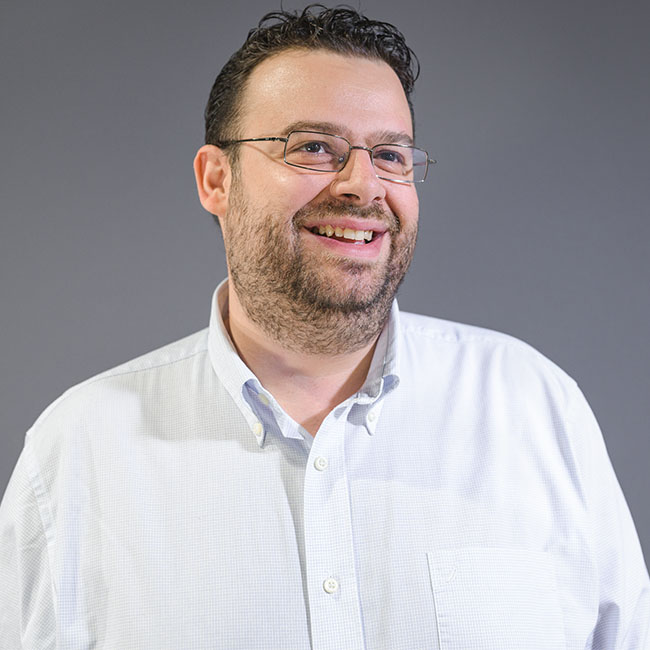
Professor Bill O'Neill is a Fellow in Engineering at Downing College and holds the Professor of Laser Engineering position at the University of Cambridge. He leads the Centre of Industrial Photonics and focuses on cutting-edge laser-based manufacturing technologies. BSc (Essex) MSc (Essex) MA PhD (Imperial) His research spans high-power laser applications in materials processing, including aerospace alloys, medical alloys, ceramics, and polymers. He investigates ultra-short laser-matter interactions (femtosecond pulses) for thermal-free machining and nanofabrication techniques aimed at developing personal factory systems. Key projects include electron backscattered diffraction analysis (EBSD) validation of material responses and £10M UK research council-funded innovations. Publications highlight advancements in laser microstructuring, x-ray collimation, and cold gas dynamic spray technologies. His work trends toward precision manufacturing, materials science, and photonics applications. As head of the Centre of Industrial Photonics, O'Neill's team explores nanoparticle manipulation for on-demand fabrication of complex products, envisioning a future where desktop printers create micro/nano devices.
Dr. Vinothkannan Mohanraj is an Assistant Professor in the Hydrogen Research Theme at Coventry University, UK, specializing in polymer electrolyte membranes and electrochemical devices. His research focuses on developing durable materials for fuel cells, water electrolyzers, redox flow batteries, and electrocatalysts. He earned his Ph.D. from Jeonbuk National University (2018) and held postdoctoral positions at DGIST and Newcastle University. Key collaborations include Prof. Oliver Curnick and Prof. John Graves at Coventry University's C-ALPS. Mohanraj has been recognized in the Top 2% Global Scientists list (Stanford University, 2022-2024) and received the Royal Society Short Industry Fellowship (2025). His work aligns with UN Sustainable Development Goals related to clean energy and sustainability. Education: Ph.D. in Energy Storage and Conversion Engineering, Jeonbuk National University (2015-2018) MSc Chemistry, Madurai Kamaraj University (2014) Bachelor's in Chemistry, Madurai Kamaraj University (2012) Research Interests: Polymer electrolyte membranes (PEMs/AEMs), fuel cells, water electrolyzers, redox flow batteries, and electrocatalysts. His work emphasizes improving durability, conductivity, and operational efficiency under low humidity/high-temperature conditions. Awards & Recognition: Top 2% Global Scientists (Stanford University, 2022, 2023, 2024) Royal Society Short Industry Fellowship (2025) Merit International Student Scholarship, Jeonbuk National University (2015-2018) His articles highlight advancements in composite membranes, nanomaterials, and electrochemical systems, with applications in sustainable energy storage and conversion. Mohanraj also serves as an editorial board member for Polymers and Scientific Reports .
Professor Eduardo Saiz Gutierrez is a Chair in Structural Ceramics at the Department of Materials, Faculty of Engineering, Imperial College London. He leads the Centre for Advanced Structural Ceramics (CASC) and coordinates the BioBone Initial Training Network under FP7, involving nine academic and industrial partners. His research spans ceramic composites, graphene-based materials, and bioceramics for bone repair. Research Interests Hierarchical bioinspired ceramic composites High-temperature interfacial phenomena (spreading, capillarity) Graphene synthesis and composite fabrication Biomaterials for bone tissue engineering Advanced processing techniques for ceramics Key Affiliations Centre for Advanced Structural Ceramics (Director) Institute for Molecular Science and Engineering LFC-UK (Laminar Flow Control underpinning technology) The Composites Centre Scientific Contributions He has supervised numerous PhD and MSc students, including Claudio Ferraro, Gil Machado, and Eleonora D'Elia, while securing significant grants for projects like BioBone. His group has developed novel methods for graphene growth, ceramic sintering, and self-healing composites.
Professor Dan Balint is the Head of the Mechanics of Materials Division in the Department of Mechanical Engineering at Imperial College London. He holds a Ph.D. in Engineering Sciences from Harvard University (2003), an S.M. in Applied Mathematics from Harvard (2001), and a B.S. in Engineering Mechanics from Michigan State University (1998). Prior to joining Imperial in 2006, he was a Research Associate at the Cambridge Centre for Micromechanics. His research spans theoretical and computational solid mechanics, with focus areas including: Micromechanics of crystalline materials (metals/ceramics) Dislocation-defect interactions and failure mechanisms Discrete dislocation plasticity methods Nuclear cladding materials and zirconium hydrides Thin film failure and metal forming processes Fracture mechanics and material size effects Recent publications (2022-2025) predominantly explore dislocation dynamics, zirconium alloy behavior under nuclear conditions, computational modeling of microstructural stresses, and machine learning applications in materials science. Common themes include thermomechanical degradation, crack initiation mechanisms, and multi-scale modeling approaches. Professor Balint serves as Associate Editor of the European Journal of Mechanics - A/Solids and consults for industrial partners including Rolls Royce, BP, and the US Air Force.
Dr. Alexander J G Lunt is a Senior Lecturer in Mechanical Engineering at the University of Bath, specializing in micromechanical testing and materials characterization. He leads the Integrated Materials Processing and Structures Research Centre and has a PhD in Mechanical Microscopy from the University of Oxford. His research focuses on advanced materials, composites, additive manufacturing, and synchrotron/neutron-based techniques. He has supervised 5 PhD students and collaborates with industries like Rolls-Royce and Airbus. Notable awards include the John Willis Award and Vice Chancellor's Engage Award. His work contributes to UN SDGs in sustainable materials and manufacturing.
Professor Gao Min Gao is a distinguished academic at Cardiff University's School of Engineering, holding the position of Professor of Energy Materials and Head of the Thermoelectric Laboratory. With over 25 years of experience in thermoelectric research, he has established himself as a leading expert in energy conversion technologies. His career at Cardiff University spans from Research Assistant/Associate (1993-1999) to his current professorship (2016-Present), with progressive academic promotions reflecting his significant contributions to the field. BSc in Semiconductor Physics from Xidian University, China PhD in Thermoelectrics under Professor D M Rowe at Cardiff University, UK Professor Gao's research focuses on fundamental understanding of thermoelectric processes for energy harvesting applications, with key areas including thermoelectric materials and devices, solution processed solar cells (Perovskite, OPV), concentrated photovoltaic/thermoelectric systems, and magnetocaloric materials. His work has significantly advanced the field, particularly through his early contributions to Peltier module applications for waste heat recovery and the development of improved TE module theory. His current research emphasizes novel characterization techniques for thermoelectric processes and innovative concepts for full-spectrum solar energy harvesting based on hybrid PV-TE systems. His extensive publication record demonstrates consistent high-impact research output across thermoelectrics and solar energy conversion. The articles show a clear progression from fundamental thermoelectric theory to practical applications and hybrid systems, with recent work focusing on spectral splitting, advanced concentrator designs, and novel material systems like Fe11Ti3Al6 alloys. His research bridges fundamental physics with practical engineering applications, particularly in waste heat recovery and solar energy harvesting. Board Member of European Thermoelectric Society (2013-2019) Member of EPSRC Review College (2016-Present) Theme coordinator (Device Physics), UK Thermoelectric Network (2016-Present) Independent expert for EC H2020 Programme (2014-2016) Professor Gao has supervised numerous PhD students, with current projects spanning laser micro-spectroscopy, next-generation photovoltaics, graphene/ceramic composites, and full-spectrum solar energy harvesting. His externally funded research includes significant projects such as the EU-RFCS-funded 'Development of innovative TEG systems optimized for energy harvesting from EAF off-gas cooling water' (2020-2024) and the EPSRC SUPERGEN project on 'Environmental impact of perovskite solar cell' (2019). His Thermoelectric Laboratory at Cardiff University serves as a hub for cutting-edge research in energy materials and conversion technologies.
Aleksey Rogov is a Researcher in the Department of Materials Engineering at the University of Manchester, UK. His work focuses on advanced surface engineering techniques, particularly plasma electrolytic oxidation (PEO), contributing to sustainable materials development and corrosion protection technologies. Key Research Areas Plasma Electrolytic Oxidation (PEO) for metal coatings Corrosion resistance in light alloys Electrochemical synthesis of ceramic coatings Surface modification of magnesium, aluminum, and titanium alloys Recent Research Trends His publications highlight innovations in PEO processing, including data-driven AI optimization of coatings, incorporation of nanomaterials (e.g., Ce-zeolite) for active corrosion protection, and fundamental studies on discharge dynamics during PEO. Collaborative efforts with Aleksey Yerokhin and others explore coatings for biomedical devices, renewable energy applications, and industrial manufacturing.
James Roscow is a Senior Lecturer in the Department of Mechanical Engineering at the University of Bath, affiliated with the Centre for Integrated Materials, Processes & Structures (IMPS), IAAPS, and the Institute of Sustainability and Climate Change. His research focuses on developing ferroelectric composites for energy harvesting, sensing, and energy storage, with expertise in material fabrication, property tuning, and numerical modeling. He holds a PhD in Mechanical Engineering from the University of Bath and a BSc in Materials Science from the University of Manchester. Research interests include porous ferroelectric ceramics, piezoelectric and pyroelectric materials, and their applications in renewable energy and sensors. He has led or contributed to 12 projects funded by organizations like EPSRC and Innovate UK, exploring topics such as low-cost transducers, nanofluid cooling for solar panels, and phase transformations in ceramics. Key publications (2021–2025) address piezoelectric energy harvesting, porous material design, and advanced manufacturing techniques. His work aligns with UN SDGs, particularly sustainable energy and innovation. Roscow supervises PhD students in functional ceramics, energy storage, and sensor technologies. Notable collaborations include projects on hydraulic energy harvesters, SONAR transducers, and self-healing materials. He has contributed datasets on piezoelectric composites and energy storage systems, emphasizing reproducibility and applied research.
Chris Cheeseman is a Professor of Materials Resources Engineering at the Department of Civil and Environmental Engineering, Imperial College London. He leads the Materials Section and directs the UKCRIC Centre for Infrastructure Materials, funded by EPSRC. His expertise lies in materials science applied to sustainability, including waste management, circular economy, and low-carbon materials. He holds affiliations with multiple interdisciplinary centers, including the Grantham Institute and the Marine and Coastal Environments Network. Chris earned his PhD in ceramics science from the University of Oxford, followed by industry experience as a Technical Manager. At Imperial since 1990, he has supervised over 120 graduate students and published 220+ papers. His research emphasizes innovation, spawning spin-off companies like Novacem (low-carbon cements) and Aeropowder (waste feather applications). Key research themes include carbon sequestration via olivine, magnesium-based cements, and recycling of industrial byproducts. His work bridges material science with environmental engineering, addressing global challenges like climate change and resource efficiency. Recent articles focus on novel cements, waste valorization (e.g., sewage sludge ash), and sustainable construction materials. Collaborative projects include EPSRC-funded infrastructure initiatives and collaborations with industry on permeable pavements and superhydrophobic surfaces. Chris has pioneered curricula in advanced materials for sustainable infrastructure and environmental engineering. His labs focus on material lifecycle analysis, industrial symbiosis, and scalable low-carbon solutions.
Louisa Campbell is a Lecturer in Heritage Materials Science at the University of Glasgow’s School of Humanities, with an Honorary Research Associate role. Her research focuses on innovative methodologies for analyzing Roman and prehistoric material culture, including the use of p-XRF and Raman spectroscopy. She leads interdisciplinary projects involving the Colleges of Arts and Science & Engineering, such as pigment analysis on Roman sculptures and development of non-destructive analytical tools. Her work emphasizes the Antonine Wall’s archaeological significance, particularly through studies of its distance stones’ polychromy and material composition. She collaborates across disciplines to advance heritage science, including contributions to museum exhibitions and educational resources. Key grants include a £100k Lord Kelvin Adam Smith Leadership Fellowship and Historic Environment Scotland funding. Teaching responsibilities include convening the MSc Heritage Materials Science program and undergraduate courses on archaeological theory and Scottish archaeology. She chairs the National Committee for Carved Stones in Scotland and is a Fellow of the Society of Antiquaries of Scotland.
Dr. Spencer Jeffs is an Associate Professor in Aerospace Engineering at Swansea University's School of Aerospace, Civil, Electrical and Mechanical Engineering. Based in the Institute of Structural Materials, his research focuses on advanced high-temperature materials including ceramic matrix composites (CMCs), titanium alloys, and nickel superalloys, with applications in gas turbines and nuclear reactors. He is a Chartered Engineer (CEng) and Fellow of the Higher Education Academy (FHEA), teaching across foundation, aerospace, mechanical, and materials engineering modules. Current roles: Admissions Tutor (2017-present), Honorary Editor for the Engineering Integrity Society (2020-present) Research aligns with SDGs 7 (Affordable Clean Energy) and 9 (Industry Innovation) His work employs experimental and computational techniques like mechanical testing, electron microscopy, and X-ray CT, often in collaboration with industrial partners. Recent publications emphasize small punch testing for additive manufacturing, process optimization, and structural integrity of advanced materials. Supervision includes PhD projects on CMCs, corrosion-fatigue interactions, and hybrid composite driveshafts.
Professor David Armstrong serves as Professor of Materials Science and Engineering at the University of Oxford and Fellow and Tutor at St Edmund Hall. His work focuses on developing materials for extreme environments including nuclear fusion reactors, aerospace systems, and energy storage applications through microstructural control and advanced mechanical characterization. His educational background includes a first degree in Materials Science from St Anne’s College, Oxford and a DPhil from Corpus Christi, Oxford investigating micromechanical properties in copper and nickel alloys. This foundational work evolved into radiation damage studies during his Culham Centre for Fusion Energy Junior Research Fellowship. Armstrong's research centers on mechanical behavior of materials under extreme conditions—high temperatures (jet engines, reactors), radiation exposure (nuclear facilities, space), and high stresses (batteries, geological systems). He develops novel testing methodologies for nanoscale mechanical properties up to 1300 K, collaborating with Rolls Royce, UKAEA, ESA, and Berkeley on fusion materials, aerospace components, and battery technologies. His work bridges fundamental micromechanics with industrial applications in energy systems. Analysis of his 2023-2025 publications reveals dominant themes in nuclear fusion materials (tungsten, ODS steels), lithium battery interfaces, and ceramic composites for extreme environments. Methodologically, his group pioneers correlative microscopy combining nanoindentation, TEM, and atom probe tomography to study irradiation effects, high-temperature deformation, and interfacial degradation across length scales. His scientific recognition includes: Culham Centre for Fusion Energy Junior Research fellowship (2009) Royal Academy of Engineering Research Fellowship (2013) Institute of Materials Minerals and Mining Grunfeld Memorial Award & Medal (2015) As an educator, Armstrong teaches core mechanical properties courses across undergraduate years and leads Fusion CDT modules on nuclear materials. He supervises numerous doctoral students while serving on the EPSRC Fusion Advisory Board and CDT management board. Current grants support micro-engineering of alloys for nuclear environments and lithium-metal battery development through industry partnerships with Rolls Royce and MicroMaterials. His research group operates advanced micromechanical testing facilities for high-temperature and irradiated materials, collaborating with UKAEA’s Culham Centre and European fusion laboratories on plasma-facing component development. Future work targets solid-state battery interfaces and radiation-resistant high-entropy alloys for next-generation fusion reactors.
Ajeet Kumar is a Researcher in the Department of Mechanical Engineering at the University of Bath, affiliated with the Centre for Integrated Materials, Processes & Structures (IMPS) and the Centre for Sustainable Energy Systems (SES). He holds a PhD in Physics from the University of Hyderabad (2016) and an MSc from Mohanlal Sukhadiya University (2007). His research focuses on textured porous piezoelectric materials for sensors and energy harvesting applications, contributing to UN Sustainable Development Goals related to energy and innovation. Key roles include Research Assistant Professor (Yeungnam University, 2018–2023), Postdoctoral Fellow (Yeungnam University, 2018), and prior Research Associateships at Defence Metallurgical Research Laboratory and the University of Hyderabad. His expertise spans piezoelectrics, ferroelectrics, thin/thick films, and energy storage technologies. Research interests emphasize advanced materials for energy harvesting, including pyroelectric, thermomagnetic, and magneto-mechano-electric systems. Recent work explores single-crystal piezoelectricity, laser-based material processing, and low-temperature energy conversion. Publications highlight innovations in piezoelectric single crystals, magneto-mechano-electric generators, and energy-efficient composites. Collaborations focus on sustainable energy solutions and multifunctional materials.
Jonathan Jeffers is a Professor of Mechanical Engineering and Associate Dean for Enterprise at Imperial College London's Faculty of Engineering. He leads the Medical Engineering division, focusing on healthcare technology and improving surgical treatments for osteoarthritis. His research spans biomedical engineering, clinical sciences, and materials engineering, with affiliations to networks like the Additive Manufacturing Network and the Centre for Blast Injury Studies. He co-founded OSSTEC and Additive Instruments, advancing implant and surgical tool technologies. His work emphasizes additive manufacturing in orthopedics, including stiffness-matched knee implants and regenerative biomaterials. Awards include an NIHR Research Professorship. Education: BSc in Mechanical Engineering from Trinity College Dublin and PhD from the University of Southampton. Research Interests: Development of regenerative orthopedic implants, biomechanics of joint surgery, and integration of machine learning in surgical customization. His team explores material properties of lattice structures and their application in bone scaffolds. Recent projects include optimizing hip resurfacing techniques and reducing implant revision risks via advanced materials and surgical tools. Key Contributions: Co-developed ceramic hip resurfacing implants with long-term success and pioneered automated implant customization using CT/X-ray data. His work on capsular mechanics post-arthroplasty has advanced surgical techniques. Industry collaborations include Finsbury Orthopaedics and Embody Orthopaedic, blending academic and industrial innovation. Labs/Teams: Medical Engineering division at Imperial, leading a 50-member team in healthcare tech. Active in the Institute for Deep Tech Entrepreneurship, fostering academic-industry partnerships.
Dr. Evangelos Kordatos serves as the Associate Head of the School of Engineering and Built Environment at Sheffield Hallam University, where he has held roles including Lecturer, Senior Lecturer, and Principal Lecturer since 2013. He leads the Mechanical Engineering area and oversees course accreditation with Professional, Statutory and Regulatory Bodies such as IMEchE and IET. His research focuses on Non-Destructive Evaluation (NDE) and Structural Health Monitoring (SHM) methodologies for advanced materials, particularly composites and additive-manufactured materials. Education: MEng in Materials Science and Engineering, University of Ioannina, Greece (2008) MSc in Chemistry and Materials Technology, University of Ioannina (2013) PhD in Materials Engineering, University of Ioannina (2013) Postdoctoral Research Associate at Texas A&M University (USA), specializing in aerospace materials and shape memory alloys. Research Interests: Non-Destructive Evaluation (NDE) via ultrasonics, acoustic emission, and IR thermography Structural Health Monitoring (SHM) for early damage detection Mechanical and fracture behavior of advanced materials Additive Manufacturing of composite materials He leads projects such as the EU-funded IAPETUS initiative and collaborates with institutions like Texas A&M University and the Norwegian University of Science and Technology. His work includes over 60 peer-reviewed publications and editorial roles in Applied Sciences and other journals. Teaching includes modules on Materials Science, Fracture Mechanics, and Non-Destructive Evaluation across Materials Engineering, Mechanical Engineering, and Packaging Professional programs. He has advised numerous MSc/MEng projects and supervises PhD students in SHM, NDE, and sustainable composites.