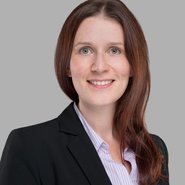
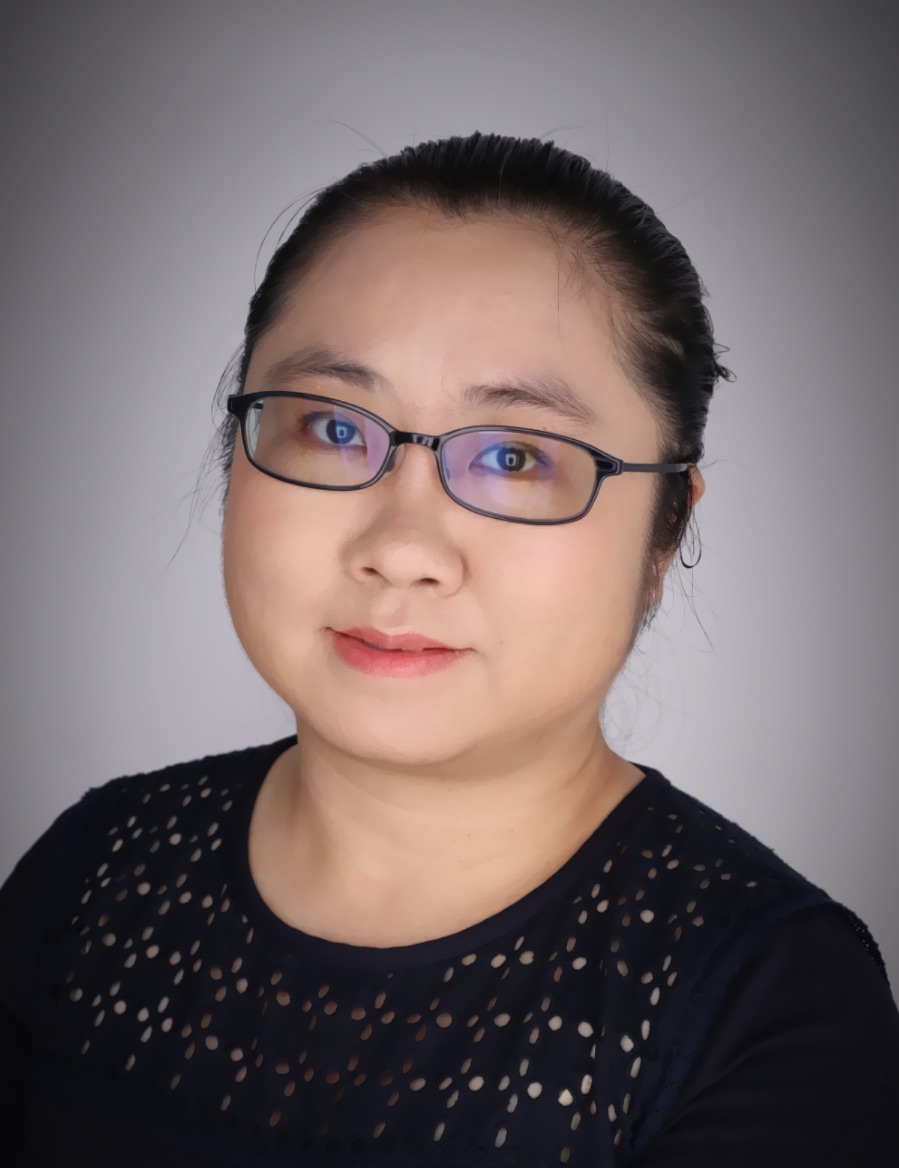
Krish Muralidhar is the Baldwin Chair and Professor of Marketing & Supply Chain Management at the University of Oklahoma's Price College of Business. He holds a Ph.D. from Texas A&M University, an MBA from Sam Houston State University, and a B.Sc. from the University of Madras, India. His research centers on data privacy , developing techniques for secure data analysis, sharing, and dissemination. Key areas include statistical disclosure limitation, differential privacy, database reconstruction risks, and perturbation methods. He patented the Data Shuffling technique for secure data release. Recent publications (2022–2025) focus on census data privacy, reidentification vulnerabilities, and critiques of differential privacy in machine learning. Trends highlight rigorous evaluations of privacy risks in statistical databases and policy-relevant solutions. Awards: Distinguished Doctoral Alumni Award (Texas A&M, 2006) Teaching Incentive Program Award (1994) Excellence in Research Award (1995) Best Inter-disciplinary Paper Award (2002) Best Paper Award (2005) No advising, grant, lab, or team details were provided.
Dr. Daniel Tward is an Assistant Professor at the University of California, Los Angeles (UCLA), holding joint appointments in the Department of Neurology and the Department of Computational Medicine. He earned his Ph.D. in Biomedical Engineering from Johns Hopkins University and completed postdoctoral training at the Kavli Neuroscience Discovery Institute. His research integrates neuroimaging, machine learning, and differential geometry to analyze brain structure changes in neurodegenerative diseases like Alzheimer's, with a focus on bridging molecular pathology and clinical imaging. Research Interests: Dr. Tward's work addresses challenges in neuroimaging data complexity, developing computational tools to map brain anatomy across scales (from centimeters to microns). Key areas include neurodegeneration in the medial temporal lobe, multi-modal image registration, and spatial transcriptomics. His lab emphasizes high-dimensional statistics and geometry-driven analysis to improve diagnostic accuracy and clinical trial design. Grants & Projects: Secured NIH funding for: A 3D multimodal human brain atlas integrating MRI and histology. CloudReg—a distributed framework for massive neuroimage registration. Contributions to the BRAIN Initiative Cell Census Network (BICCN) for mouse/rat brain atlases. Students & Training: Mentors undergraduate researchers via the BIG Summer program, with projects on neural networks, spatial transcriptomics, and MRI analysis. No PhD/Master's advisees listed.
Professor James Brown serves as the ABS Professor of Official Statistics and Head of Discipline for Mathematical Sciences at the University of Technology Sydney (UTS). He holds a B.Sc. (Hons) in Mathematics with Actuarial Studies (1993), M.Sc. in Social Statistics (1996), and Ph.D. in Census Coverage Assessment (2000) from the University of Southampton. His research focuses on census methodology, survey design, policy evaluation, and multilevel statistical modeling. He has led major projects including the 2012 Rwanda Census Quality Report and contributed to UK census coverage strategies. Professional roles include Fellow of the Royal Statistical Society, Chair of Scotland’s 2022 Census Steering Group, and member of the ABS Methodology Advisory Committee. He has editorial experience with journals like the Journal of the Royal Statistical Society Series A and International Statistical Review . Key funded projects include studies on HIV legal frameworks, food security during the pandemic, and healthcare safety regulation. Awards : Fellow of the Royal Statistical Society, Member of British Society for Population Studies Grants : Includes $3M for legal-environment assessments in HIV policy and census quality advisory roles in New Zealand and Australia. His advisory work spans national statistical agencies, including collaborations with the Office for National Statistics (UK) and Statistics New Zealand. Current research emphasizes administrative data integration and future population statistics frameworks.
Xiao-Li Meng is the Whipple V. N. Jones Professor of Statistics at Harvard University and Founding Editor-in-Chief of the Harvard Data Science Review. He has held leadership roles including Chair of Harvard's Department of Statistics (2004-2012) and Dean of the Graduate School of Arts and Sciences (2012-2017). A globally recognized statistician, he was awarded the COPSS President’s Award (2001) as the best statistician under 40. His research spans foundational statistical theory, computational methods (e.g., EM algorithm, MCMC), and interdisciplinary applications in astronomy, public health, and engineering. Meng earned his BS in Mathematics from Fudan University (1982) and PhD in Statistics from Harvard (1990), with a faculty tenure at the University of Chicago before returning to Harvard in 2001. His work emphasizes bridging theoretical and applied statistics, with notable contributions to Bayesian inference, differential privacy, and astrostatistics. He authored the influential column The XL-Files in the IMS Bulletin, blending technical insight with accessible commentary. Meng advocates for data science education and ethical AI, emphasizing collaboration across disciplines and societal sectors. His leadership has shaped Harvard’s graduate programs and data science initiatives, while his over 150 publications and 400+ presentations reflect a prolific career at the intersection of academia and public impact. Awardees include the IMS Fellowship, ASA Founders Award, and NSF CAREER Award. His current projects explore generative AI ethics, data democratization, and statistical paradigms in big data environments. Meng’s vision prioritizes ‘conducting principled data science’ through rigorous methodological development and societal accountability.
Anne E. Brisendine, DrPH, MPH, CHES is an Assistant Professor at the University of Alabama at Birmingham (UAB) School of Public Health, Department of Health Policy & Organization. She also serves as Deputy Director of UAB's Applied Evaluation and Assessment Collaborative (AEAC) and Associate Scientist at Civitan International Research Center. Education: DrPH in Maternal and Child Health (UAB, 2017) MPH in Maternal and Child Health (UAB, 2013) BA in American Studies (Barnard College, 2009) Research Interests span maternal and child health, autism spectrum disorders, developmental monitoring in early education, statewide health systems development, early childhood mental health, and telehealth implementation. Her work examines social determinants of health, particularly focusing on disparities in pediatric emergency care, telehealth access, and vaccine acceptance. Recent Articles reveal expertise in telehealth utilization patterns, ASD service equity, and community health assessment methodologies. Notably, she investigates racial disparities in healthcare access, Medicaid population challenges, and pandemic-related healthcare delivery innovations. Teaching Activities include courses on Foundations of Maternal and Child Health (HPO605) and Policy and Women's Health (HPO633) at UAB School of Public Health, along with graduate committee memberships. Grants focus on Alabama's maternal and child health initiatives, including Title V Needs Assessment, 988 Suicide Crisis Line capacity building, and statewide developmental monitoring programs.
Ortis Yankey is a Research Fellow and Geospatial Data Analyst with the WorldPop Research Group at the University of Southampton, UK. He holds a Ph.D. in Geography from Kent State University (Ohio, USA). His research focuses on Bayesian spatial statistics, spatial and spatiotemporal epidemiology, and health/medical geography. Current work involves developing statistical approaches to produce high-resolution population estimates in low-income countries using geospatial data integration and examining health outcomes in underserved populations. Education: Ph.D. in Geography, Kent State University, Ohio, USA Research Interests: Population Modelling Spatial Epidemiology Health/Medical Geography Spatial Statistics Articles Trends: Recent work emphasizes Bayesian methods, spatial data integration for public health, and addressing demographic data gaps in low-resource settings. Themes include healthcare accessibility in Ghana, obesity predictors in Uganda, and vaccination coverage mapping. Labs/Teams: Active member of the WorldPop Research Group and the Population, Health and Wellbeing (PHeW) research group.
Dr. Linda K. Nozick is a Professor and Director of Civil and Environmental Engineering at Cornell University, leading research in infrastructure resilience and disaster risk management. She co-founded the College Program in Systems Engineering and previously served as a Visiting Associate Professor at the Naval Postgraduate School. Her work focuses on mathematical modeling for complex systems, including transportation networks, natural hazard mitigation, and critical infrastructure protection. Education: B.S. in Systems Analysis and Engineering, George Washington University (1989) M.S./Ph.D. in Systems Engineering, University of Pennsylvania (1990-1992) Research Interests: She pioneers models for transportation systems, network science, and disaster risk management. Key areas include: Optimization of infrastructure resilience Hurricane evacuation modeling Insurance-market dynamics for catastrophic risks Seismic retrofitting strategies Data-driven decision support systems Recent Work Highlights: Recent studies address hurricane evacuation behavior prediction using mobility data, equity in hazmat routing, and multi-hazard risk assessment for power grids. Awards: 2011 Presidential Early Career Award for Scientists and Engineers NSF CAREER Award (1997) Sandia National Labs Recognition Award (2009) Member of Nuclear Waste Technical Review Board Academic Service: Leads Cornell's Master of Engineering strategic planning and coordinates the Engineering Systems & Management mission area. She advises federal agencies on infrastructure renewal through National Academy Committees. Lab/Team Affiliations: Directs research initiatives in disaster resilience engineering and collaborates with Sandia National Labs on infrastructure optimization tools.
Professor Tara Murphy serves as the Head of School of Physics at the University of Sydney and is a Chief Investigator in the ARC Centre of Excellence for Gravitational Wave Discovery. Her leadership position within one of Australia's premier academic institutions places her at the forefront of astronomical research and academic administration in the field of physics. Professor Murphy's research focuses on extreme astronomical objects that change rapidly on human timescales, specifically in the domain of radio transients. She leads the Variables and Slow Transients (VAST) project on the Australian SKA Pathfinder Telescope, where her team aims to detect radio emission from distant explosive events such as supernovae and gamma-ray bursts, as well as objects in our local neighborhood like flaring stars and potentially exoplanets. Her work aligns with the Faculty of Science Research Strengths in Understanding the Universe, Fundamental Laws of Nature, Earth and Space Exploration and Technologies, and Data and Decisions. She has pioneered radio follow-up of gravitational wave events detected by LIGO, achieving the first detection of radio emission from a binary neutron star merger GW170817. Analysis of Professor Murphy's recent publications reveals a strong emphasis on radio transient phenomena, gravitational wave follow-up observations, and the development of survey techniques using the Australian SKA Pathfinder (ASKAP). Her work spans multiple astronomical subfields including pulsar astronomy, tidal disruption events, fast radio bursts, and gamma-ray burst afterglows. The VAST survey and RACS (Rapid ASKAP Continuum Survey) projects form the backbone of her observational work, with numerous publications detailing discoveries of new radio transients, pulsars, and other variable phenomena. Professor Murphy actively mentors the next generation of astronomers, currently supervising multiple PhD students including Ashna GULATI, Qichen HUANG, Mali LAND-STRYKOWSKI, Joshua LEE, Vasudev MITTAL, Oliver OAYDA, Kovi ROSE, and Kavya SHAJI. Her students work on diverse projects ranging from radio follow-up of gravitational wave events to testing the cosmological principle and searching for unusual radio transients. Her research program is closely tied to major astronomical facilities including the Australian SKA Pathfinder telescope and the ARC Centre of Excellence for Gravitational Wave Discovery. Through her leadership of the VAST project and Australian efforts in gravitational wave follow-up, she has established a significant research team focused on time-domain radio astronomy, contributing substantially to our understanding of the dynamic radio sky.
John Hughes, PhD, is an Associate Professor and Chair of the Department of Biostatistics and Health Data Science at Lehigh University's College of Health. With nearly 30 years of experience in higher education, he has held positions at institutions including Frostburg State University, the University of Minnesota, and Pennsylvania State University. His methodological research focuses on statistical models for dependent data, Bayesian methods, and spatial and spatiotemporal analysis. He has developed numerous software packages for R and Perl, including copCAR , ngspatial , and krippendorffsalpha . Dr. Hughes' interdisciplinary work spans environmental health, bioimaging, vaccine hesitancy, and spatial epidemiology of HPV-related cancers. He has consulted for organizations such as the Courage Kenny Research Center and Temple University. His education includes a PhD in Statistics from Penn State University and an MS in Applied Computer Science from Frostburg State University. His research emphasizes statistical computing and the application of advanced models to health data. Recent work includes methodologies for agreement coefficients, environmental noise measurement, and spatial analysis of vaccination refusal patterns. Dr. Hughes teaches courses in biostatistics, data science, and programming, reflecting his dual role as a teacher-scholar. Professional contributions include software development, collaborative research projects, and academic leadership. His work bridges computational innovation and real-world health challenges, positioning him as a key figure in modern biostatistical research.
Douglas Anton Kammen is an Associate Professor of Southeast Asian Studies at the National University of Singapore (NUS), where he has built a distinguished career focused on political violence, social movements, and human rights in Southeast Asia. His expertise particularly centers on Indonesia and Timor-Leste, drawing from extensive fieldwork and archival research across the region. Education and Career Trajectory: PhD from Cornell University, where he was inspired by exceptional teachers to pursue Southeast Asian studies Department of Political Science, Canterbury University (1998-2000) Fulbright Senior Scholar at Universitas Hasanuddin in Makassar (2000-2001) Universidade Nacional Timor Lorosae in Dili (2001-2003) Current position: Associate Professor, Southeast Asian Studies, National University of Singapore Research Focus: Kammen's scholarly work delves deep into the complexities of political violence, examining how social movements emerge and function within repressive contexts. His research particularly emphasizes the Indonesian mass violence of 1965-66, military politics across Southeast Asia, and the intricate dynamics of popular political thinking in post-colonial societies. His work on Timor-Leste spans from colonial land policies to contemporary governance challenges, providing crucial insights into the nation's ongoing state-building efforts. Teaching and Academic Service: At NUS, Kammen has developed and taught comprehensive courses including the foundational module "Southeast Asia: A Changing Region," advanced courses on "Politics in Southeast Asia" and "War in Southeast Asia," and specialized honors modules on theoretical frameworks and ethnic relations. His graduate seminars focus specifically on Indonesian studies and comparative state formation, contributing significantly to the next generation of Southeast Asian scholars. Major Publications and Impact: His recent works demonstrate a consistent focus on historical continuities and contemporary challenges in Southeast Asian politics. From examining colonial land concessions in Portuguese Timor to analyzing polygamy patterns across historical periods, his research bridges historical analysis with contemporary policy implications. His 2024 publications on visual histories of Indonesian mass violence and colonial land legacies represent significant contributions to understanding long-term impacts of historical violence and colonial governance. Recognition and Awards: Fulbright Senior Scholar award (2000-2001) Orcid identifier: 0000-0001-9054-9045 Extensive citation record across multiple disciplines Collaborative Networks: Throughout his career, Kammen has maintained extensive collaborative relationships with scholars across Southeast Asia and internationally. His co-authored works include partnerships with researchers from multiple institutions, demonstrating his commitment to collaborative scholarship. His current position at NUS places him within one of Asia's premier research universities, providing platforms for continued significant contributions to Southeast Asian studies.
Jessica L'Roe is an Assistant Professor of Geography at Middlebury College. Her research focuses on human-environment relationships in forest landscapes undergoing rapid change, with emphasis on conservation and development initiatives, land access, inequality, and livelihood transitions. She conducts fieldwork in the Amazon Basin, East Africa, and collaborates with organizations globally. She holds a Ph.D. in Geography from the University of Wisconsin-Madison, alongside an M.A. in Agricultural and Applied Economics, an M.Sc. in Conservation Biology and Sustainable Development, and an undergraduate degree in Environmental Science from the University of North Carolina. Her teaching portfolio includes courses on natural history, land and livelihoods, environmental change in Latin America, and place-based data analysis. She actively involves students in data science projects, such as analyzing disaster vulnerability through social media data and exploring historical race-land connections using U.S. agricultural census data. Her courses emphasize fieldwork, statistical analysis, and critical engagement with global environmental challenges. L'Roe's research spans topics like deforestation dynamics in the Amazon, well-being indices in DRC forests, and land competition in Uganda. She combines quantitative and qualitative methods, often using spatial data tools like R and GeoDa. Her work bridges academic inquiry with applied solutions for sustainable development challenges. Outside academia, she enjoys natural history, gardening, and raising a family, reflecting her commitment to connecting human and environmental well-being.
Prof. Anika Groß is a Professor for Database Systems and Programming at the Department of Computer Science and Languages at Anhalt University of Applied Sciences in Köthen, Germany. She holds a PhD from the University of Leipzig (2014) and has held roles as a PostDoc in strategic research at Daimler AG and as a research assistant at the Interdisciplinary Centre for Bioinformatics (IZBI). She is actively involved in academic governance, serving on the faculty council, board of examiners, and various sustainability and research data management committees. Her research focuses on database systems, knowledge graphs, and ontology engineering, with applications in environmental science, medicine, and material sciences. Education - PhD (Dr. rer. nat.) in Computer Science, University of Leipzig (2014) - Diploma in Bioinformatics, MLU Halle-Wittenberg (2007) - Postdoctoral research at University of Leipzig's Database Group (2008–2013) Research Interests Her work emphasizes temporal graphs, ontology evolution, and semantic data integration. She develops tools like Region Evolution eXplorer (REX) and contributes to projects such as AgriRestore (ecosystem restoration) and MeineWaldKI (AI-based forest monitoring). Her recent focus includes wearable device applications in healthcare and digital twins for lithium value chains. Recent Research Trends Recent publications highlight interdisciplinary applications of knowledge graphs in agriculture and environmental science, leveraging temporal analysis and machine learning for tasks like chemical transformation prediction and bladder monitoring. She also explores cross-lingual semantic annotations in medical forms and holistic clustering of linked data. Professional Roles - Executive Committee Member, GI Database Systems Group - Fellow, Institute for Technologies and Economics of Lithium (ITEL) - Co-Chair of multiple workshops including FGDB-Workshop @ LWDA 2018 and BigDS@BTW 2017 Labs & Collaborations She leads research teams in projects funded by DFG, European Union (EFRE), and ITEL, collaborating with organizations like Daimler AG and ANU. Her lab focuses on advancing database systems and interdisciplinary data science applications.
Mary C. Meyer is a Professor in the Department of Statistics at Colorado State University. Her research focuses on nonparametric function and density estimation, particularly under shape restrictions, with applications across ecological modeling, survey methodology, and statistical computing. Education: Ph.D. in Statistics from the University of Michigan (1996) Research Interests: Nonparametric function and density estimation Shape-restricted inference Constrained regression models Bayesian nonparametric methods Penalized isotonic regression Statistical software development Recent Publications show a focus on constrained regression splines, domain mean estimation, and applications in forest dynamics and survey methodology. She has developed several R packages including cgam and tools for cone projections. Grants: Funded by NSF grant DMS-0905656 for research on constrained optimization algorithms. Email Contacts: meyer@stat.colostate.edu and mmeyer@stat.uga.edu
Dr. Shenyue Jia is an Assistant Professor of Geography and Director of the Geospatial Analysis Center at Miami University, Ohio. Her research focuses on leveraging satellite and crowdsourced data to analyze climate change impacts in semi-arid ecosystems and human adaptation strategies. She also innovates GIS education to democratize geospatial analysis tools beyond traditional software. Education: Ph.D. in Geography (UCLA), M.S. in Cartography (Nanjing University), B.S. in GIS (Nanjing Normal University) Her research interests include: Wildfire risk assessment using SMAP soil moisture and vegetation indices GIS applications in disaster response (e.g., power outage analysis during wildfires) Social media data utilization for crisis management GIS curriculum development emphasizing R/Python tools Recent projects include NASA DEVELOP's Kentucky tornado power outage analysis and collaborative work with CrisisReady on real-time geolocation data platforms. She has presented at AGU Annual Meetings and received grants from CADS and Miami University's CTE. Key Collaborations: CrisisReady, Thriving Earth Exchange, Google Geo for Good Teaching initiatives include a Climate Science Communication course and 3D urban modeling projects funded by the Humanities Center. She advises Slade Laszewski, whose 2024 ERC publication on WUI population trends earned recognition.
Jamiko Deleveaux is an Assistant Professor of Sociology at the University of Mississippi. His research focuses on migration's impact on identity, particularly addressing health and climate change challenges in Caribbean communities. He employs mixed-methods approaches combining demographic analysis with participant narratives. Education: B.A. Sociology, University of Mississippi (2012) M.A. Sociology, University of Mississippi (2014) Ph.D. Applied Demography, University of Texas at San Antonio (2018) His teaching emphasizes policy, population health, and data analytics through hands-on learning. Deleveaux has collaborated with the Center for Population Studies on projects for nonprofits, the Census Bureau, and governmental offices. His work bridges demographic trends with community-level impacts, particularly in vulnerable regions affected by environmental and sociological shifts.