Michel M. Maharbiz is a Professor in the Department of Electrical Engineering and Computer Science at the University of California, Berkeley. He leads research on miniaturized bioelectronic interfaces, including neural dust implants and cyborg insects. He holds affiliations with the Berkeley Sensor & Actuator Center (BSAC), Center for Neural Engineering & Prostheses (CNEP), and SWARM Lab. His education includes a Ph.D. in EECS from UC Berkeley (2003) and a B.S. in EE from Cornell University (1997). Maharbiz's research integrates MEMS, ultrasonic systems, and synthetic biology to develop wireless neural interfaces, implantable sensors, and biohybrid devices. Key focus areas are neural dust technology for peripheral nerve recording, magnetoelastic strain sensors for medical applications, and electrochemical biosensing using bacterial flagellar motors. His publications emphasize neural interfaces, ultrasonic implants, and biomedical monitoring. Recent articles explore ultrasonic power delivery (2025), radiation detectors for oncology (2025), and fracture-healing smart plates (2019). Trends include miniaturization of wireless implants, closed-loop therapeutic systems, and novel biomaterials. Scientific Awards: McKnight Technological Innovations in Neuroscience Award (2017) Chan-Zuckerberg Biohub Investigator (2017) NSF CAREER Award (2009) MIT TR10 Top Emerging Technology (2009) Bakar Fellows Spark Award (2012) He directs the Maharbiz Lab, advancing neural dust and bioelectronic interfaces. Projects include impedance-based fracture monitoring, carbon fiber neural arrays, and hernia repair sensors. Funding includes NSF and industry partnerships for implantable device development.
Michael McAlpine is a Professor in the Mechanical Engineering department at the University of Minnesota . He also holds affiliations with the Biomedical Engineering and Electrical and Computer Engineering departments. His research focuses on 3D printing functional materials & devices , Nanoscale inks , Biomedical devices , Bioelectronics , and Flexible Microsystems . Research Interests : 3D Printing, Biomedical Engineering, Nanotechnology, Flexible Electronics, Microfluidics Labs : ME 361/363 Contact : mcalpine@umn.edu , (612) 626-3303, ME 117 Recent Research Trends include 3D Printed Biomedical Devices , Flexible Electronics , and Bioprinting Applications . His work spans from Spinal Organoid Formation to Programmable Drug Release Capsules . Scientific Award : Circulation Research 2020 Best Manuscript Award
Josh Atkinson is an Assistant Professor in the Department of Civil and Environmental Engineering and the Omenn-Darling Bioengineering Institute at Princeton University. His research focuses on using synthetic biology and protein engineering to control electron transport in microbes for environmental applications, such as bioelectronic sensors and bioremediation. The Atkinson Lab investigates microbial energy processing, biofilm-electronic interfaces, and sustainable biotechnologies. Affiliations: Princeton University, Omenn-Darling Bioengineering Institute Research Interests: Microbial electron transport, bioelectronic systems, environmental monitoring, sustainable catalysis His work bridges disciplines like electrochemistry, bioengineering, and environmental science to engineer living materials for real-world challenges. The lab recruits students across levels, emphasizing diversity and interdisciplinary collaboration. Recent projects include real-time contaminant sensors and light-controlled biofilm patterning. Articles highlight innovations in bioelectronics and microbial systems engineering. The lab’s future directions involve scaling-up bioelectronic devices and enhancing microbial community understanding.
Rahul Sarpeshkar is a Professor of Engineering, Microbiology & Immunology, Physics, and Molecular & Systems Biology at Dartmouth College, holding the Thomas E. Kurtz Professorship and chairing the Neukom Computational Science Cluster. His research bridges analog circuits with quantum physics, synthetic biology, and ultra-low-power systems. BS in Electrical Engineering and Physics from MIT (1995) PhD in Computation and Neural Systems from Caltech (1998) His research focuses on analog synthetic biology , quantum circuit design , and bio-inspired supercomputing , emphasizing noise, thermodynamics, and energy efficiency. He develops cytomorphic chips to model biochemical networks and quantum-inspired circuits for spectrum analysis. Recent work integrates quantum and classical computation for biological simulations, drug cocktail formulation , and ATP energy measurement in living cells. Patents highlight innovations in quantum emulation and medical devices. Scientific awards include: Fellow, National Academy of Inventors (2018) IEEE Fellow (2018) NSF CAREER Award ONR Young Investigator Award Packard Fellow Award Junior Bose Teaching Award, MIT He leads a wet lab for synthetic microbial circuit implementation and a dry lab for quantum and nanoelectronics, mentoring a multidisciplinary team of physicists, bioengineers, and computer scientists.
Suradip Das is a Research Assistant Professor in the Department of Neurosurgery at the Perelman School of Medicine, University of Pennsylvania, where he serves as a Senior Research Investigator. His work bridges neural engineering and regenerative medicine to address critical challenges in nerve and muscle repair. His academic training includes: B.Tech in Biotechnology from Heritage Institute of Technology (2010) PhD in Biosciences and Bioengineering from Indian Institute of Technology Guwahati (2016) Dr. Das specializes in biomaterials development , peripheral nerve injury models , neuromuscular interface engineering , and stem cell-based regeneration . His research pioneers innervated tissue-engineered muscle constructs, demonstrating how motor neurons and endothelial cells synergistically enhance skeletal myocyte maturation. He innovates custom mechanobioreactors that apply tensile forces to guide nanofiber alignment for optimal myofiber formation, significantly advancing volumetric muscle loss treatments. Analysis of his 15 most recent publications reveals a dominant focus on neuromuscular regeneration (75% of articles), with emerging exploration of psychedelic compounds in neural repair. His work consistently integrates human iPSC-derived models , multi-cellular co-cultures , and large-animal validation to address translational gaps. Key trends include optogenetic control of motor units (2023), porcine nerve injury models (2020), and the critical role of pre-innervation in creating pro-regenerative microenvironments (2020-2022). As a core member of the Cullen Lab, Dr. Das collaborates on developing biofabricated neural microtissues for delayed nerve fusion and rapid functional recovery. His research directly informs clinical strategies for peripheral nerve repair and muscle regeneration through rigorous mechanistic studies and innovative engineering solutions.
Professor Ali Gilles Tchenguise Miserez holds a joint appointment as Professor in the School of Materials Science and Engineering and the School of Biological Sciences at Nanyang Technological University (NTU) in Singapore. He is also the President's Chair in Materials Science and Engineering. His research group, the Biological and Biomimetic Materials Laboratory (BBML), is highly interdisciplinary, bringing together molecular biologists, chemists, bio-physicists, and materials scientists to study natural materials with unique properties not found in man-made materials. Prof. Miserez's research interests span multiple areas including bioelastomeric membranes & coiled-coil engineering, mechanisms of biofouling adhesion & anti-adhesive coatings, molecular biomimetics of non-mineralized hard tissues, biomineralized structures with graded properties, and liquid-liquid phase separation. His work focuses on understanding the molecular, physico-chemical, and structural principles of biological materials and translating these designs into novel biomimetic synthesis strategies. His laboratory emphasizes "green chemistry" approaches that mimic nature's energy-efficient synthesis methods under ambient conditions. Prof. Miserez's publication record demonstrates significant impact across multiple disciplines, with work appearing in top journals including Science, Nature Materials, Nature Biotechnology, Nature Chemical Biology, and Advanced Materials. His recent research has particularly focused on peptide coacervates for intracellular delivery of therapeutics, with applications in cancer treatment, mRNA delivery, and nucleic acid therapeutics. This work represents a convergence of materials science, biochemistry, and medicine with significant translational potential. Singapore National Research Foundation (NRF) Fellowship (2011) - $3 Million individual research grant for early career scientists Prof. Miserez has mentored numerous PhD students and postdoctoral researchers, many of whom have gone on to successful careers in academia and industry. His laboratory has developed strong international collaborations and has secured significant research funding. Current projects include developing peptide-based delivery systems for cancer therapeutics, understanding marine biofouling mechanisms, and creating biomimetic materials inspired by natural systems. The BBML laboratory is actively recruiting talented researchers interested in interdisciplinary work at the interface of biology and materials science.
Dr. Su Ryon Shin is an Assistant Professor in the Division of Engineering in Medicine at Harvard Medical School and Brigham and Women's Hospital (BWH) in Cambridge, MA. She leads an active research laboratory focused on bioengineering, tissue engineering, and regenerative medicine, with particular expertise in 3D bioprinting, biomaterials, and organ-on-a-chip technology. Her research interests span biohybrid robotics, decellularized extracellular matrix, stem cell-based tissue engineering, and volumetric muscle regeneration . Dr. Shin's work integrates advanced biomaterials with cellular systems to create innovative solutions for tissue regeneration and disease modeling. She has pioneered approaches using human stem cell-derived materials for volumetric tissue regeneration and developed biohybrid neuromuscular robots powered by living cardiac muscle cells. Her publication record demonstrates consistent productivity with over 180 publications, including numerous first/senior author papers in high-impact journals like Science Robotics, Advanced Materials, and Nature Reviews Bioengineering . Her work shows a clear progression from fundamental biomaterials development to increasingly complex tissue engineering applications and translational research. Dr. Shin has received significant recognition including being named a 2025 BWH Health & Technology Innovation Awardee , Highly Cited Researcher 2024 by Web of Science, and multiple Stepping Strong Innovator Awards (2015, 2018, 2020). Her research has been featured in Nature Reviews Bioengineering for breakthrough work on biohybrid robots. She actively mentors students and postdocs, with former lab members accepted to prestigious programs like MIT's PhD program in Chemical Engineering. Her collaborative approach is evident through numerous interdisciplinary projects with researchers across Harvard Medical School, BWH, and international institutions.
Dr. Youngchan Kim is a Lecturer in Quantum Biology at the University of Surrey , serving as Director of the Quantum Biology Doctoral Training Centre (QB-DTC). He is affiliated with multiple departments including the School of Biosciences, Advanced Technology Institute, and Quantum Sciences Group. PhD in Physics (2011), Korea Advanced Institute of Science and Technology MSc in Physics (2008), KAIST BSc in Physics (2006), Chung-Ang University Graduate Certificate in Learning and Teaching (2022), Advance HE His research focuses on quantum phenomena in biological systems at physiological temperatures, particularly using femtosecond optical spectroscopy and genetically engineered fluorescent proteins to explore evolutionary adaptations and develop quantum-bio-inspired technologies like room-temperature single-photon sources. The 15 most recent publications span quantum biology, biophotonics, and optical spectroscopy, with particular emphasis on quantum coherence in biological systems , terahertz birefringence , fluorescent protein dynamics , and biomedical imaging innovations . These works demonstrate his interdisciplinary approach bridging physics, biology, and medical applications. As QB-DTC Director, he leads transdisciplinary initiatives fostering collaboration between quantum physics and biosciences. His technical expertise includes time-correlated single-photon counting , common-path interferometry , and ultrafast fluorescence depolarization techniques.
Dr. Yu Zhong is an Assistant Professor in the Department of Materials Science and Engineering at Cornell University's College of Engineering, where he leads the Yu Zhong Group. His research laboratory focuses on the design and synthesis of novel soft materials and nanomaterials for applications in electronics, energy, healthcare, and sustainability. As a principal investigator, he oversees a dynamic research team comprising postdoctoral associates, graduate students, and undergraduate researchers working on cutting-edge materials science projects. Dr. Zhong received his educational training at prestigious institutions, earning his B.S. in Chemistry from the University of Science and Technology of China (USTC) in 2011, followed by a Ph.D. in Chemistry from Columbia University in 2017 under the supervision of Prof. Colin Nuckolls. His doctoral research centered on designing contorted molecules for electronic and energy applications including organic solar cells, photodetectors, and gas sensors. He then conducted postdoctoral research at the University of Chicago in Prof. Jiwoong Park's group, where he worked on the design and synthesis of 2D polymers for ultrathin electronic circuits and energy conversion. Dr. Zhong's research program spans three primary directions: (1) the bottom-up synthesis of ultrathin nanoporous membranes using techniques like laminar assembly polymerization (LAP) for applications in water desalination, nanofiltration, and gas separation; (2) the study of transport behaviors in hybrid organic-inorganic 2D heterostructures created through layer-by-layer assembly for use in optical, electronic, and thermal management devices; and (3) the development of mixed ionic-electronic materials for bio-inspired and bioelectronic devices. His group employs advanced synthesis methods including organic/polymer synthesis, supramolecular and reticular chemistry, and 2D materials characterization to explore novel scientific phenomena and technological applications. An analysis of Dr. Zhong's recent publications reveals a strong focus on the synthesis and characterization of 2D polymers and organic-inorganic hybrid materials. His work bridges fundamental materials science with practical applications in energy conversion, electronics, and separation technologies. A notable trend is his development of innovative synthesis techniques like laminar assembly polymerization that enable precise control over material structure at the molecular level, leading to breakthroughs in areas such as lithium-ion transport, osmotic power generation, and ultra-narrowband photodetection. Dr. Zhong's scientific achievements have been recognized with several prestigious awards: Pegram Award for Meritorious Graduate Research, Columbia University (2016) Camille and Henry Dreyfus Postdoctoral Fellowship, Dreyfus Foundation (2016) Arun Guthikonda Memorial Fellowship, Columbia University (2015) Jack Miller Award for Excellence in Teaching, Columbia University (2014) As an advisor, Dr. Zhong mentors a diverse group of researchers including postdoctoral associate Qiyi Fang, multiple Ph.D. students (Yuhe Zhang, Kaushik Chivukula, William Xie), M.S. students, and undergraduate researchers. His group has secured funding for research on soft and nanomaterials, with projects spanning organic electronics, 2D materials synthesis, and biomimetic membranes. Dr. Zhong actively seeks motivated graduate students and postdoctoral fellows to join his research team, emphasizing the importance of interdisciplinary collaboration in advancing materials science. The Yu Zhong Group operates state-of-the-art laboratories in Bard Hall at Cornell University, equipped for organic synthesis, materials characterization, and device fabrication. The research team works collaboratively across disciplines, partnering with experts in physics, chemistry, and engineering to tackle complex challenges in materials science. Current projects focus on developing novel synthesis methodologies and exploring structure-property relationships in soft materials to enable next-generation electronic, energy, and healthcare technologies.
Yen-Cheng Liu is a former researcher at École polytechnique fédérale de Lausanne (EPFL), affiliated with the School of Life Sciences (BIOS) and multiple departments including LCOM and CMI. His work focuses on interdisciplinary research at the intersection of biomedical engineering, nanotechnology, and cancer biology. Key research areas include nanoplasmonic biosensors, single-cell analysis, optofluidic systems, and cancer immunology. He holds collaborations with institutions like the University of Lausanne and the Centre Hospitalier Universitaire Vaudois (CHUV). His research emphasizes real-time monitoring of cellular secretions, tumor microenvironment dynamics, and diagnostic platform development for pathogens and genetic diseases. Notable contributions include high-throughput microarray technologies for single-cell secretion profiling and optofluidic platforms for molecular diagnostics. Liu’s publications span journals like Advanced Science , Advanced Functional Materials , and Biosensors and Bioelectronics . His work integrates engineering principles with biological systems to address challenges in precision medicine and cancer therapy.
Professor Brigitte Voit leads the Macromolecular Chemistry division at the Leibniz Institute for Polymer Research Dresden (IPF) and holds the chair for 'Organic Chemistry of Polymers' in the Faculty of Mathematics and Natural Sciences / Faculty of Chemistry and Food Chemistry at Technische Universität Dresden. She is actively involved in interdisciplinary collaborations with the Center for Advancing Electronics Dresden (cfaed), Centre for Regenerative Therapies Dresden (CRTD), and the Dresden International Graduate School for Biomedicine and Bioengineering (DIGS-BB) through the DRESDEN-concept initiative. Additionally, she serves as chairwoman of the Materialforschungsverbund Dresden (MFD). Academic Affiliation: Technische Universität Dresden Research Focus: Synthesis of multifunctional polymers, dendritic polymers, bioactive materials, responsive hydrogels, radical ring-opening polymerization Research Trends: Her recent publications highlight advancements in bioinspired polymer systems, including polymersome membranes for synthetic cells, light-driven enzymatic control, hierarchical biomimetic structures, and tunable hydrogels. These works reflect her expertise in integrating polymer chemistry with biomedicine and sustainable materials. Interdisciplinary Roles: Involvement in cfaed, CRTD, DIGS-BB, and DRESDEN-concept Leadership: Former Scientific Director at IPF (2002-2022), current department head Publications demonstrate her group's focus on responsive and bioactive polymer architectures, with applications in drug delivery, bioelectronics, and sustainable materials.
Prof Wen Wang is Professor of Biomedical Engineering and Vice-Principal and Executive Dean for Science and Engineering at Queen Mary University of London, affiliated with the School of Engineering and Materials Science and the Centre for Bioengineering. He is a Chartered Engineer and holds fellowships from the Institution of Mechanical Engineers (FIMechE), Higher Education Academy (FHEA), American Institute for Medical and Biological Engineering (FAIMBE), and the Royal Academy of Engineering (FREng), reflecting his leadership and technical excellence in engineering and biomedical sciences. His research focuses on vascular bioengineering , biomaterial mechanics , and cell biomechanics , with particular emphasis on the endothelial glycocalyx , vascular stem cells , and transmembrane transport . He employs advanced techniques such as AFM nano-indentation, confocal microscopy, and microfluidic platforms to study the mechanical properties, shear stress responses, and structural stability of biological systems. His work spans from fundamental biophysics to translational applications in drug delivery and cardiovascular disease. Prof Wang has led multidisciplinary research projects in the UK and through international collaborations with partners in the US, China, and Japan. His recent publications highlight sustained contributions to understanding microcapsule mechanics , extracellular vesicles , biofluid dynamics , and biomolecular sensing . His work integrates experimental and computational modeling, particularly in microcirculation and cellular transport phenomena. He has received notable scientific recognition through multiple prestigious fellowships and has published extensively in high-impact journals including Nature Communications , Journal of Controlled Release , Biosensors and Bioelectronics , and Journal of Fluid Mechanics . His research demonstrates a strong trajectory in both fundamental discovery and applied biomedical innovation. Prof Wang actively supervises research and collaborates with clinical and engineering partners at Queen Mary and King's College London. His leadership in the School of Engineering and Materials Science underscores his role in shaping academic strategy and research excellence in science and engineering at Queen Mary University of London.
Christina Tringides is a tenure-track Assistant Professor in Materials Science and NanoEngineering at Rice University, affiliated with the Neuroengineering Initiative (NEI). She holds the CPRIT Scholar in Cancer Research title and leads the Tringides Lab, which develops soft materials and neurotechnologies for neural system interfaces. Her interdisciplinary work spans from cellular to organ levels, addressing both in vivo and in vitro applications. Education: B.S. in Materials Science & Engineering and Physics from MIT (2015); Ph.D. in Biophysics from Harvard University (2022) under David Mooney. Postdoctoral research at ETH Zürich with Janos Vörös as an ETH Fellow. Recognized with awards including the WIMA laureate (2023), NSF GRFP (2017), and Fulbright Scholar (2015). Research focuses on hydrogels, bioelectronics, and implantable electrode arrays. Key projects include biomimetic in vitro platforms for neural studies and viscoelastic biohybrid interfaces for neuromodulation. Her lab’s innovations aim to advance neurological disorder treatments and diagnostics. Scientific contributions include over 20 peer-reviewed articles, with recent work emphasizing conductive hydrogels, synaptic stimulation systems, and immunotherapy biomaterials. Active in professional organizations like the Materials Research Society and American Chemical Society.
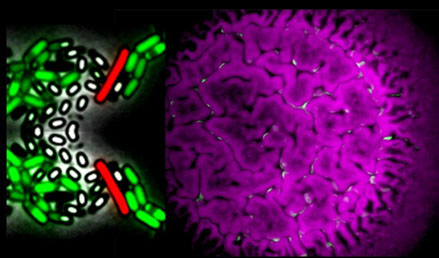
Gurol Suel is a Professor in the Department of Molecular Biology at the University of California San Diego (UCSD), affiliated with the Division of Biological Sciences. His research focuses on understanding electrical signaling in bacterial biofilms and the emergent collective behaviors they exhibit. His lab integrates quantitative biology, mathematical modeling, and synthetic biology approaches to explore principles of microbial organization and coordination. Dr. Suel earned his PhD in Molecular Biophysics from UT Southwestern Medical Center under Dr. Rama Ranganathan, followed by postdoctoral training in Dr. Michael Elowitz's lab at Caltech, combining biology and applied physics. His work has revealed groundbreaking discoveries about ion channel-mediated electrical signaling in biofilms, including their role in nutrient time-sharing between distant communities and the segmentation clock driving cellular differentiation. Key research areas include: biofilm signaling networks, bacterial collective computation, membrane potential dynamics, and engineering controllable microbial systems. His lab develops novel tools for studying bioelectronic interactions, such as potassium ion-based bioelectronic delivery systems. Spatial and temporal patterning in biofilms, including fractal interface formation and memory encoding through membrane potentials, are central themes in his work. Though no specific student names are listed, his lab actively conducts PhD rotations and trains researchers in experimental and theoretical microbiology. His work is supported by grants enabling exploration of biofilm communication and synthetic microbial systems. Contact information includes the UCSD Pacific Hall address and the email 'gsuel@ucsd.edu'. The lab's physical location includes specialized equipment for biofilm electrophysiology and quantitative imaging, as shown in lab photo collections.
Roles & Affiliations: Prof. Piotr Dudek is a Professor of Circuits and Systems in the School of Electrical and Electronic Engineering at The University of Manchester. He has held visiting roles at Hong Kong University of Science and Technology, Gdansk University of Technology, and Sorbonne University. He is a Senior Member of the IEEE and chairs/co-chairs technical committees in circuits and systems. Education: Mgr inz (Technical University of Gdańsk, Poland), MSc and PhD (UMIST, UK). Research Interests: Focuses on VLSI design, vision sensors (SCAMP chip family), cellular processor arrays, neuromorphic engineering, and brain-inspired systems. Develops low-power, high-performance embedded vision systems for robotics, biomedical applications, and autonomous systems. Projects & Contributions: Leads projects like SCAMP vision chips, FORTE (memristor-based systems), and Agile robotic vision. Involved in EPSRC-funded initiatives and collaborates internationally. Active in reviewing for journals/conferences and holds editorial roles. Awards: Recipient of Best Paper/Demo awards at ISCAS, CNNA, IJCNN, and ICDSC. Holds the Royal Academy of Engineering/Leverhulme Trust Senior Research Fellowship. Lab & Teams: Directs the Microelectronics Design Lab, fostering interdisciplinary work between VLSI design, robotics, and neuroscience. Supervises 11 PhD students and collaborates with global researchers in bioelectronics and computational systems.