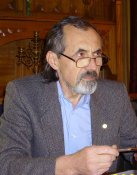
Gheorghe Paun is a Senior Researcher at the Institute of Mathematics of the Romanian Academy (1994–present) and a Visiting Researcher at the University of Sevilla (2009–present). He earned his Ph.D. in Mathematics from the University of Bucharest (1977), supervised by Solomon Marcus. His research spans Automata and Language Theory (descriptional complexity, regulated rewriting), Natural Computing (DNA computing, membrane computing), and he is the initiator of membrane computing . Education : M.Sc. in Mathematics (1974), University of Bucharest (specialization: computer science) Ph.D. in Mathematics (1977), University of Bucharest His work includes foundational contributions to DNA computing (book DNA Computing. New Computing Paradigms , 1998) and membrane computing (book Membrane Computing. An Introduction , 2002). He has collaborated with over 100 researchers globally and advised multiple Ph.D. students, including Victor Mitrana and Gianina Georgescu. His scientific awards include the Gheorghe Lazar award (1981), Corresponding Member of the Romanian Academy (1997), Doctor Honoris Causa from Silesian University of Opava (2007), and recognition as an ISI Highly Cited Scientist (2007). He also holds honorary citizenships in Curtea de Arges (1998), Arges County (2007), and Cicanesti village (2009). Paun has served on editorial boards for journals like Theoretical Computer Science. Natural Computing Series and Natural Computing , and organized major workshops in membrane computing. His academic contributions include over 150 publications and editorial roles in 20+ journals.
William Sulis is an Associate Clinical Professor in the Department of Psychiatry and an Associate Member of the Department of Psychology at McMaster University, where he also directs the Collective Intelligence Lab (CILab). With a unique interdisciplinary background spanning mathematics, physics, and psychiatry, Dr. Sulis bridges the gap between theoretical science and clinical practice. His educational journey is exceptionally diverse: B.Sc. (Hon) in Mathematics with minor in Theoretical Physics, Carleton University (1976) M.D., University of Western Ontario (1980) M.A. in Mathematics, University of Western Ontario (1984) Ph.D. in Mathematics, University of Western Ontario (1989) FRCPC in Psychiatry (1984) Ph.D. in Theoretical Physics, University of Waterloo (2014) CRCPC in Geriatric Psychiatry (2015) Dr. Sulis's research explores the intersection of complex systems theory with psychological and psychiatric phenomena. His work on Collective Intelligence investigates how group dynamics emerge from individual interactions, while his research on Temperament and Psychobiology examines the continuum between normal personality variations and mental illness. He has made significant contributions to understanding Synchronization in Complex Systems and developed the concept of Transient Induced Global Response Synchronization (TIGoRS) , which has implications for neural coding and information processing. His theoretical work extends to Quantum Foundations and Process Algebra Theory , where he proposes novel approaches to quantum mechanics. Analysis of his recent publications reveals a consistent thread connecting complex systems theory with psychological and psychiatric applications. His work increasingly focuses on bridging the gap between temperament theory and clinical psychiatry, using mathematical and computational approaches to understand mental illness. Simultaneously, he continues to develop theoretical frameworks in quantum physics through process algebra models, demonstrating remarkable interdisciplinary range. Dr. Sulis has received several prestigious awards including The Governor General's Medal for having the highest overall grade point average in his graduating class, the Henry Marshall Tory Scholarship, and multiple Harry Stevenson Southam Scholarships. Throughout his career, Dr. Sulis has mentored numerous students across disciplines, supervising research projects spanning collective intelligence, semantic space modeling, network dynamics, and temperament studies. His Collective Intelligence Lab has served as a hub for interdisciplinary research connecting computer science, psychology, and psychiatry. Dr. Sulis has also been actively involved in professional organizations, serving as President of The Society for Chaos Theory in Psychology and the Life Sciences (1996-1998) and holding editorial positions for several journals including "Dynamical Psychology" and "Nonlinear Dynamics in Psychology and the Life Sciences." As Director of the Collective Intelligence Lab at McMaster University, Dr. Sulis fosters research exploring how complex adaptive systems can model cognitive and social phenomena. The lab serves as an intellectual nexus where mathematics, computer science, psychology, and psychiatry converge to address fundamental questions about intelligence, both individual and collective.
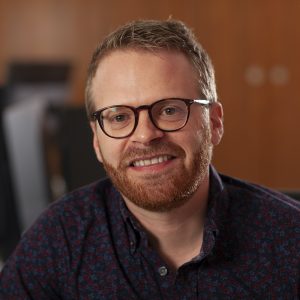
Sebastian Risi is a Professor at the IT University of Copenhagen , where he directs the Creative AI Lab and co-directs the Robotics, Evolution and Art Lab (REAL) . His work bridges computational evolution, deep learning, and collective intelligence for applications in robotics, art, and video game design. His research focuses on self-organizing AI systems that grow or assemble through local interactions, inspired by biological development. Key areas include neuroevolution , neural cellular automata , and generative modeling , with applications in adaptive robotics, game content creation, and damage-resilient AI. Recent publications highlight trends in self-assembling neural architectures (NDPs) and 3D functional machine generation (Minecraft experiments). Awards include ERC Consolidator Grant (2022), Best Paper at FDG’21 , and Google Faculty Award (2019). Scientific Awards : ERC Consolidator Grant (GROW-AI), Best Paper FDG’21, Runner-Up IEEE Games’20, GECCO 2017 Competition Winner, Sapere Aude Grant, Amazon/Google Faculty Awards He advises on projects like GROW-AI (EU-funded), AI-TESTER (game testing), and C2SIM (military systems). Media coverage includes Science , Wired , and Popular Science .
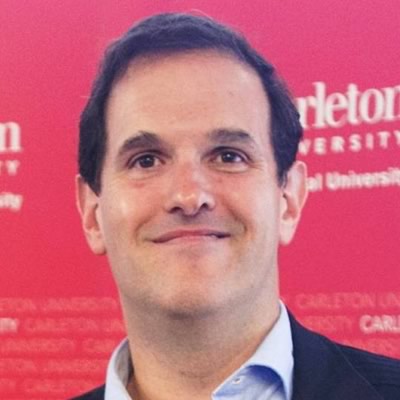
Dr. Gabriel Wainer is a Professor in the Department of Systems and Computer Engineering at Carleton University's Faculty of Engineering and Design. He leads the Advanced Real-Time Simulation Lab and specializes in modeling and simulation methodologies, particularly focusing on discrete event systems, real-time modeling, cellular automata, and DEVS formalism. Research Interests: Discrete event systems, DEVS formalism, cellular automata, real-time simulation, IoT applications, and parallel/distributed simulation Affiliation: Carleton University Recent publications highlight his work in advanced simulation frameworks, energy-efficient 5G systems using deep reinforcement learning, and pandemic modeling with cellular automata. His lab develops tools like PROMETHEUS and Devsmap for standardized DEVS model representation, while also exploring applications in wireless communication, building energy systems, and behavioral epidemiology.
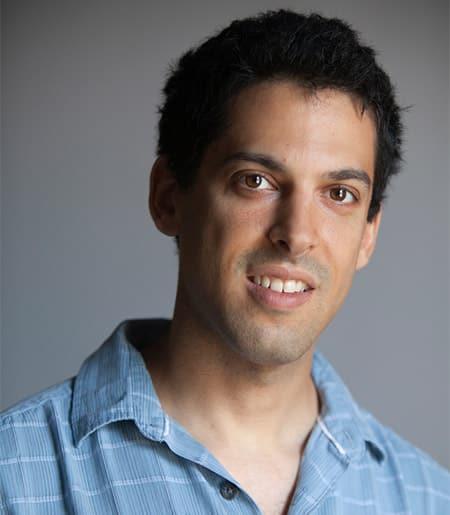
Lionel Levine is a Professor in the Department of Mathematics at Cornell University, affiliated with the College of Arts and Sciences. His academic research focuses on abelian networks, interacting particle systems, and the emergence of complex patterns from simple rules. He has held prestigious fellowships, including the Simons Fellowship and Sloan Research Fellowship, and has been honored with an endowed professorship. Levine's work bridges probability theory, combinatorics, and statistical physics, with notable contributions to the study of sandpile models and internal diffusion-limited aggregation (IDLA). Education: Ph.D. in Mathematics (2007), University of California, Berkeley. Research Interests: Applied Mathematics, Combinatorics, Probability, Abelian Networks, Sandpile Models, and their intersections with computer science and statistical physics. His research explores how local rules generate large-scale structures, such as in abelian networks and sandpile models. Awards and Honors: Simons Fellowship, Sloan Research Fellowship, Endowed Professorship in the College of Arts and Sciences. Teaching: Courses include Probability Theory (MATH 6710/6720), Topics in Probability: Math for AI Safety (MATH 7710), and undergraduate mathematics courses like Strategy, Cooperation, and Conflict (MATH 1340). Grants and Funding: Supported by the National Science Foundation (NSF), Simons Foundation, Sloan Foundation, and Institute for Advanced Study. Collaborations: Collaborates with prominent researchers such as Yuval Peres, Cris Moore, and Jim Propp. His work has been published in leading journals like the Annals of Probability and Duke Mathematical Journal. Future Work: Continues investigating AI safety, causal models, and multi-agent learning, including research on mathematical frameworks for transformer circuits and hidden incentives in AI systems.
Stefano Gogioso is a Departmental Lecturer at the University of Oxford , specializing in quantum theory and quantum software. He holds a DPhil in Computer Science from Oxford (2013–2017) and advanced degrees from Cambridge (MASt, BA) and the University of Genova (MSc, BSc). As a Fellow at Kellogg College and co-founder of Hashberg Ltd , he develops quantum programming tools and focuses on quantum causal structures, quantum field theory, and natural language processing applications. His research bridges foundational quantum theory with practical applications, including near-term quantum computing and educational outreach through visual methods like Quantum in Pictures . Research Interests: Quantum foundations, quantum software, categorical quantum mechanics, quantum field theory, and quantum causality. His work emphasizes pictorial formalisms and compositional methods, with contributions to indefinite causality, quantum cellular automata, and quantum natural language processing (QNLP). Key Contributions: Published over 25 papers, including works on causal polytopes, categorical Feynman diagrams, and QNLP pipelines. Co-developed Hashberg 's quantum programming tools and serves as a mentor for AI initiatives at CDL-Oxford. His thesis introduced dynamics in categorical quantum mechanics, addressing symmetry and quantum clocks. Teaching: Teaches quantum computing courses for MSc/MFoCS students, professionals, and continued education. Courses include Quantum Software , Quantum Computing for Software Engineers , and bespoke corporate training. Labs/Teams: Part of the Oxford Quantum Group and involved in collaborative projects with industry and academia. Advising: Supervised students like Nicola Pinzani (causal orders) and Maria Stasinou (quantum field theory). Grants/Awards: Not explicitly listed, but recognized for contributions to quantum foundations and education.
Dr. Steven Manson is a Professor in the Department of Geography, Environment, and Society at the University of Minnesota's College of Liberal Arts, where he also served as Associate Dean for Research and Graduate Programs. He directs the Human-Environment Geographic Information Science (HEGIS) laboratory and leads major data science initiatives like the National Historical Geographic Information System (NHGIS) and IPUMS Terra. PhD in Geography, Clark University (2002) BA Honours in Geography, University of Victoria (1995) His research focuses on geographic information science and human-environment systems , using agent-based modeling and big data to analyze land use change, urban dynamics, and sustainability challenges. Recent work explores spatiotemporal data harmonization and geospatial cyberinfrastructure . The articles reveal trends in GIScience methodology , urbanization analysis , and data-intensive sustainability research . Key contributions include self-organizing map applications for health data and hybrid statistical-GIS techniques for environmental policy. Scientific accolades include: Ecological Society of America Sustainability Science Award NASA Earth System Science Fellow McKnight Land Grant Professorship As Principal Investigator for NHGIS and IPUMS Terra, he secured over $40M in NSF, NIH, and DOJ grants for spatiotemporal data infrastructure. Outreach initiatives include developing open geospatial textbooks adopted globally and collaborating with Twin Cities K-12 programs.
Keisuke Ishihara is an Assistant Professor in the Department of Computational and Systems Biology at the University of Pittsburgh School of Medicine. His research focuses on engineering human brain and cardiac organoids using genetic, chemical, and computational approaches to uncover novel regulatory mechanisms and physical principles underlying tissue development. His lab is located at Biomedical Science Tower 3, with an office in room 10020A. Dr. Ishihara holds a PhD in Systems Biology from Harvard University. His work bridges synthetic biology, developmental biology, and biophysics to address fundamental questions in organogenesis and cellular morphogenesis. Recent research highlights include studies on BMP-mediated neural tube patterning in organoids and the biophysical dynamics of microtubule assemblies in large cells. Publications from his lab emphasize interdisciplinary approaches to understand cell size scaling, mitotic spindle dynamics, and self-organization in synthetic tissues. His team has contributed to advancements in organoid technology, uncovering dormant genetic programs and physical principles governing tissue architecture. Laboratory activities are centered at the University of Pittsburgh, collaborating with the School of Medicine's computational and systems biology initiatives. For more details, visit his lab website linked below.
Adjunct Professor Evgeny Osipov is affiliated with La Trobe University's Business Analytics department. His research spans artificial intelligence, hyperdimensional computing, and neural network architectures. Academic Rank: Adjunct Professor Department: Business Analytics Email: E.Osipov@latrobe.edu.au Research interests include: Hyperdimensional computing and vector symbolic architectures Spiking neural networks and reservoir computing Hardware-efficient AI implementations Causal reasoning in large language models Self-organizing maps and spatiotemporal sequence learning Applications in smart cities and robotic navigation Recent research outputs demonstrate expertise in: Developing unsupervised learning frameworks using hypervectors Optimizing reservoir computing with cellular automata Creating memory-efficient neural network models Advancing hyperdimensional classification techniques Exploring causal graph integration in language models
Prof. Harald Sternberg is a distinguished academic at HafenCity University Hamburg, holding the position of University Professor for Hydrography and Geodesy. His affiliations include the Department of Geodesy and Geoinformatics, where he leads research in hydrographic education and advanced geomatics technologies. He previously served as Vice President for Teaching and Studies (2009-2022) and Acting President (2010) of HCU. Education: Ph.D. in Geodesy from University of the Bundeswehr Munich (1999), specializing in trajectory determination of land vehicles using hybrid systems. Early career included roles as scientist at Bundeswehr University (1991-2001) and academic leadership at HAW Hamburg (2005-2009). Research focuses on underwater mapping, navigation systems, and sensor integration. Key projects include: Level 5 Indoor Navigation (5G-based positioning), hydrothermal vent exploration using deep-towed multibeam systems, and low-cost mobile mapping solutions. He also investigates smartphone-based inertial navigation and autonomous underwater vehicles for infrastructure monitoring. Publications span underwater vision systems, satellite-derived bathymetry, and 3D point cloud analysis. Over 200 peer-reviewed articles and book chapters reflect expertise in geomatics applications. Current research emphasizes 5G-enabled indoor navigation and environmental sensor networks. Grants include BMWK-funded autonomous deep-sea monitoring and BGR exploration projects in the Indian Ocean. His lab develops innovative tools like the HOMESIDE sled for seafloor surveys. Supervises Ph.D. research on hydrothermal vent analysis and data-driven inertial localization.
Stuart Kurtz is a Professor in Computer Science and the College at the University of Chicago, and serves as Master of the Physical Sciences Collegiate Division. He holds the endowed position of George and Elizabeth Yovovich Professor. His research focuses on theoretical computer science, including computational complexity theory, randomness in computation, type theory, and formal logic. He has contributed to foundational areas such as the Berman-Hartmanis Isomorphism Conjecture and the computational properties of random sets. Kurtz is affiliated with the Theoretical Computer Science and Programming Languages Groups at the University of Chicago. He has been recognized with the 2009 Quantrell Award for teaching excellence. His service roles include Director of Undergraduate Studies and Department Chair in Computer Science. He actively mentors Ph.D. students and has advised multiple graduates in complexity theory and related fields. His academic background includes a Mathematics Ph.D. from the University of Illinois, supervised by Carl Jockusch. He approaches type theory as an intersection of formal logic and functional programming. Research interests span measure-theoretic randomness, computational logic, and complexity class separations. His recent work explores connections between theoretical computer science and interdisciplinary fields like physics and statistics. In teaching, Kurtz has instructed courses such as Formal Language Theory, Discrete Mathematics, and Honors Intro Programming. His service contributions include roles in the Computation Institute and Toyota Technological Institute at Chicago. His lab affiliations and collaborative work reflect a strong commitment to advancing theoretical foundations in computer science.
Emily Burkhead is a Teaching Associate Professor in the Department of Mathematics at the University of North Carolina at Chapel Hill (UNC). She holds a Ph.D. in Mathematics from UNC (2006) and has held academic positions at Meredith College, Duke University, and as a Visiting Lecturer/Researcher at UNC. Her research bridges discrete dynamical systems, ergodic theory, and mathematics education. Early work focused on topological classifications of cellular automata, while recent contributions involve stochastic cellular automata models for virus dynamics (HIV, Ebola) and pedagogical best practices. Key publications include analyses of HIV spread in lymph nodes (with Jane Hawkins and Donna Molinek) and Ebola virus dynamics. Her methodological innovations in stochastic cellular automata have been cited in studies on disease progression, computational modeling, and urban information diffusion. Emily earned a B.A. from the College of Wooster (2001), M.S. (2004) and Ph.D. (2006) from UNC, followed by postdoctoral work at the Santa Fe Institute (2006-2007).
Ario Sadafi is a researcher at the Technical University of Munich (TUM) , affiliated with the Chair of Computer Science Applications in Medicine under Prof. Nassir Navab. His work spans medical image analysis , machine learning , and computational pathology , with a strong focus on developing AI-driven solutions for microscopic imaging in hematology and oncology. Research Focus: Multiple Instance Learning for weakly supervised medical image classification. Explainable AI for biomedical single-cell imaging. Continual and cross-domain learning for robust diagnostic models. Microscopic image analysis for blood cell disorders and leukemia subtyping. Teaching Contributions: Sadafi has been actively involved in teaching courses such as Computer Aided Medical Procedures , Medical Augmented Reality , and Deep Learning for Medical Applications . He also supervises practical courses and seminars in 3D Computer Vision and Machine Learning in Medical Imaging . Labs & Collaborations: He works closely with the MEDIA (Medical Image Analysis) and NARVIS labs at TUM, contributing to projects in surgical data science , generative models , and robotics & ultrasound . Publications Impact: His research output (2018–2025) emphasizes AI-driven hematology , with applications in red/white blood cell classification, leukemia subtype diagnosis, and interpretable deep learning models for clinical use.
Mauro Maggioni is a Professor in the Departments of Mathematics and Applied Mathematics and Statistics at Johns Hopkins University. His research focuses on the mathematical foundations of Data Science, with applications in molecular dynamics, hyperspectral imaging, and reinforcement learning. He employs techniques from Harmonic Analysis, Approximation Theory, and Probability to develop scalable algorithms, particularly multiscale methods for analyzing high-dimensional data. Maggioni’s work bridges theoretical mathematics and practical applications, including cardiac electrophysiology modeling, unsupervised segmentation of hyperspectral images, and reduced-order modeling of complex systems. Education: B.S. in Mathematics from Università degli Studi in Milan, Italy; Ph.D. in Mathematics from Washington University in St. Louis. He held a Gibbs Assistant Professorship at Yale before moving to Duke University and later becoming a Bloomberg Distinguished Professor at JHU. Research Interests: Mathematical foundations of Data Science, Machine Learning, Partial Differential Equations, and their applications in physical and biological systems. Notable contributions include diffusion wavelets, interaction kernel learning, and multiscale geometric analysis of molecular dynamics data. Scientific Awards: Popov Prize in Approximation Theory (2007), NSF CAREER Award and Sloan Fellowship (2008), Fellow of the American Mathematical Society (2013), Simons Fellowship (2020). Advising & Grants: Maggioni mentors postdocs and students in areas like stochastic systems and signal processing. His group’s work is supported by Simons Foundation grants, NSF funding, and collaborations with institutions like MINDS and CIS at JHU. Labs/Teams: Leads a research group focused on data-driven discovery in mathematics and applied sciences, emphasizing interdisciplinary collaboration across computational methods, statistics, and domain-specific applications.
Professor Paul Neville Balister is a faculty member and Fellow in the Mathematical Institute at the University of Oxford, where he serves as a University Lecturer and Professor of Mathematics. His research is centered in combinatorics and discrete mathematics, with strong ties to probabilistic methods and theoretical computer science. His research interests include combinatorics, graph theory, random graphs, probabilistic combinatorics, cellular automata, and discrete probability. These areas are evident from his extensive publication record in top-tier mathematical journals such as the Journal of the European Mathematical Society and Random Structures and Algorithms . The recent publications demonstrate a consistent focus on structural and probabilistic aspects of discrete systems, particularly in monotone cellular automata, graph saturation games, and random graph orderings. His work often explores threshold phenomena, extremal configurations, and asymptotic behavior in combinatorial models. While no formal awards are listed in the provided text, his active collaboration with leading mathematicians and publication in premier venues indicate significant recognition in the field. Professor Balister advises students and contributes to research grants, though specific names and projects are not detailed. He is part of the Combinatorics research group at Oxford, which fosters collaborative work in discrete mathematics and its applications.