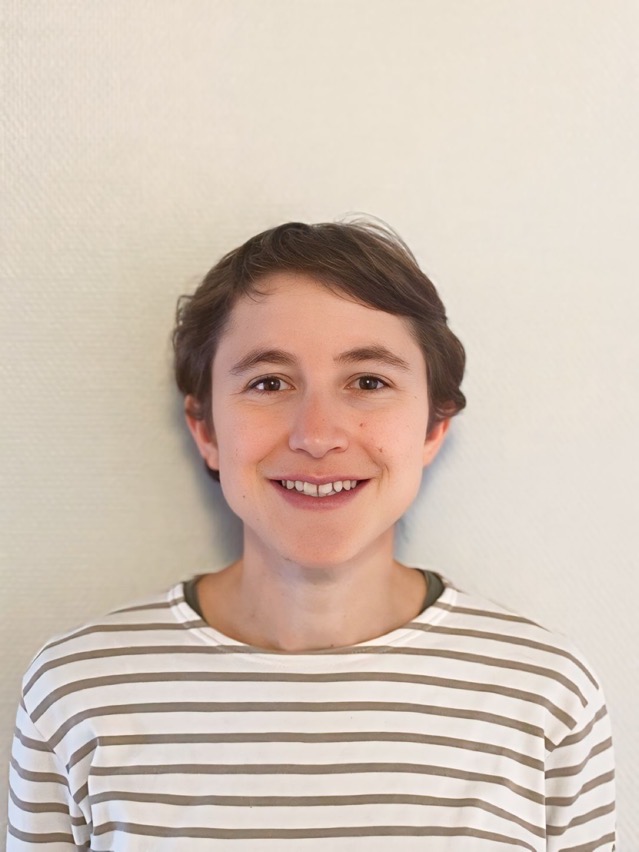
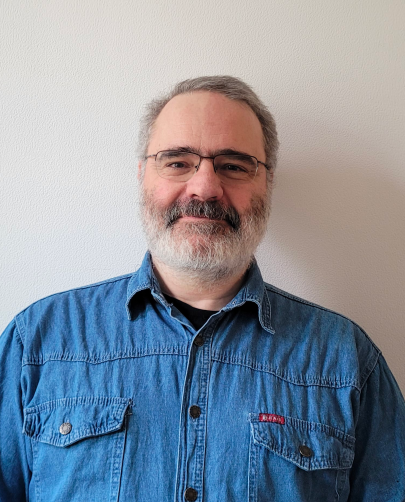
Martin Delacourt is a Lecturer at the University of Orléans, affiliated with the LIFO (Laboratoire d'informatique fondamentale d'Orléans). He earned his PhD on December 5, 2011, under the joint supervision of Bruno Durand and Victor Poupet at LIF Marseille. His research focuses on cellular automata, including directional dynamics, limit sets, and decidability of computational problems. PhD: University of Montpellier 2 (2011) ENS Lyon: Bachelor (2006), Master (2008) His research explores cellular automata through computational complexity, symbolic dynamics, and formal verification. Key themes include limit set characterization, defect dynamics, and algorithmic properties of number systems. He has published in conferences like AUTOMATA, MFCS, and CiE. Teaching responsibilities include courses in network engineering, computability, complexity theory, operating systems, and algorithm analysis at the University of Orléans. He has supervised work-study students in the MIAGE program since 2018.
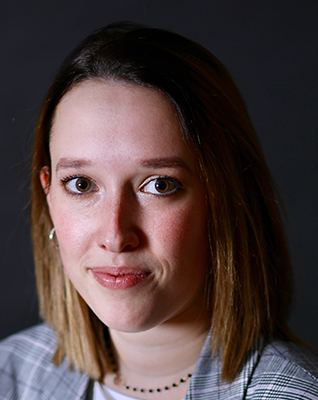
Irène Marcovici is a Professor in the Department of Mathematics at the University of Rouen Normandy, affiliated with the Raphaël Salem Mathematics Laboratory (LMRS). She leads the Probability and Dynamical Systems team within LMRS and participates in the ALEA and SDA2 working groups of the GDR Informatique Fondamentale et ses Mathématiques. PhD in Mathematics (2013, University of Paris Diderot) Habilitation à Diriger des Recherches (2021, University of Lorraine) Her research focuses on probability theory , dynamical systems , and cellular automata , with significant contributions to percolation theory, self-organization phenomena, and combinatorics on words. She investigates how randomness influences complex systems, particularly through probabilistic cellular automata and their ergodic properties. Analysis of her recent publications (2021-2025) reveals a strong emphasis on percolation dynamics (e.g., corner percolation with directional bias), self-stabilization mechanisms in cellular systems, and combinatorial structures like Kolakoski sequences. Her work bridges theoretical computer science and pure mathematics, often employing stochastic methods to solve problems in symbolic dynamics and discrete geometry. Supervision & Collaborations: Currently supervising Maxence Poutrel (with Jérôme Casse) Previously supervised Pierrick Siest (2021-2024), Jocelyn Begeot (now Associate Professor), and Pierre-Adrien Tahay (now PRAG at Telecom Nancy) Regular collaborations with Régine Marchand, Nazim Fatès, and Pascal Moyal Laboratory Context: As leader of the Probability and Dynamical Systems team at LMRS, she contributes to France's national research infrastructure in fundamental mathematics, with connections to CNRS and international working groups focused on automata theory and discrete probability.
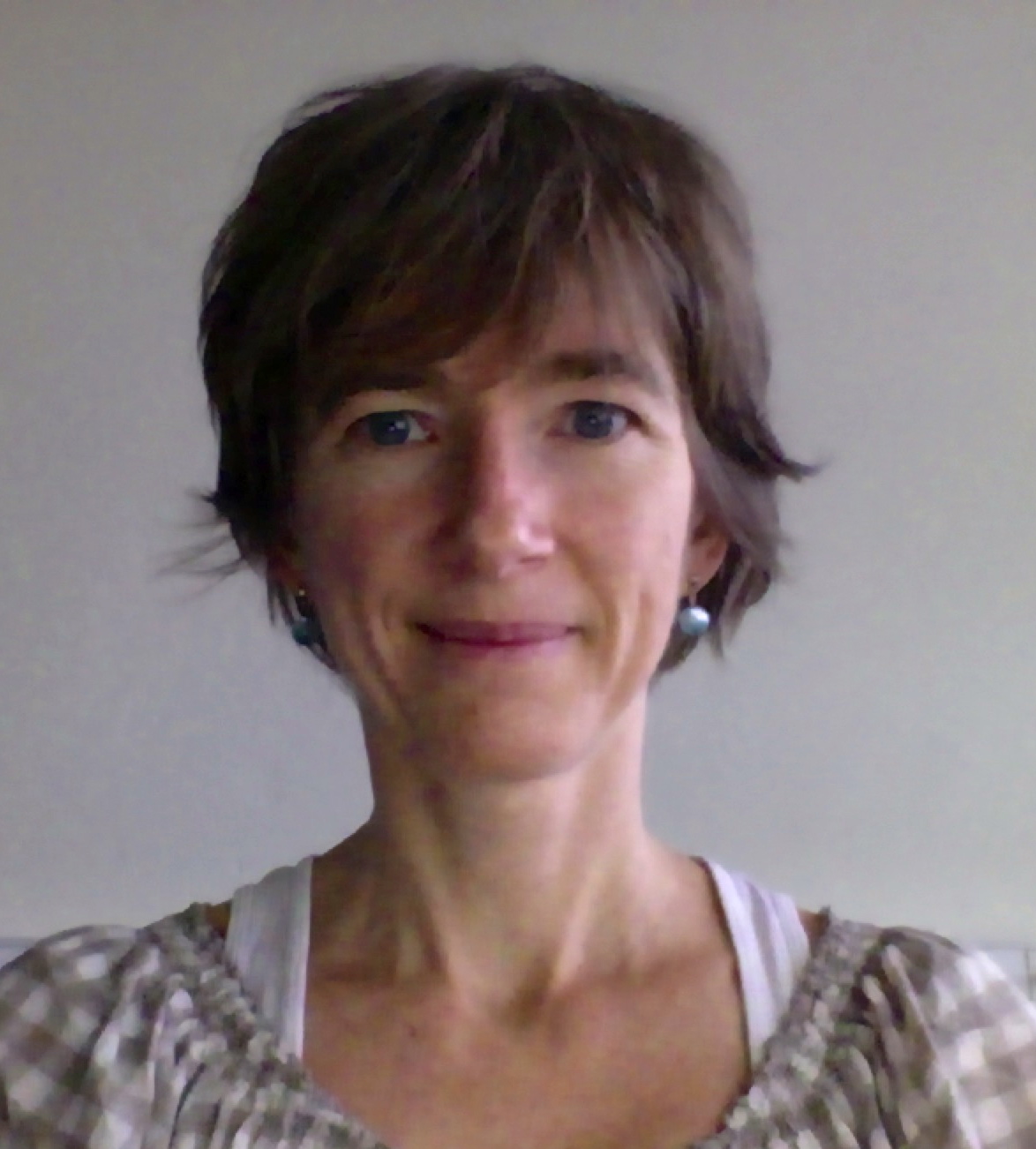
Sara Riva is an Associate Professor (Maître de Conférences) in Computer Science at Université de Lille, affiliated with the CRIStAL laboratory (UMR 9189). She is a member of the BioComputing research group and the MSV thematic group. Her academic journey includes a PhD jointly supervised by Université Côte d'Azur and Università degli Studi di Milano-Bicocca (2019-2022) and postdoctoral research at Université de Bordeaux (2022-2023). Her research explores Discrete Dynamical Systems , Cellular Automata , and Boolean Networks , with emphasis on equation solving, factorization methods, and dynamics modeling. She develops algorithmic approaches to analyze complex behaviors in computational and biological systems. Publications (2019-2023) demonstrate consistent focus on theoretical foundations of discrete systems, with applications in systems biology and complex modeling. Key themes include Boolean network dynamics, computational pipelines for equation solving, and sensitivity analysis in cellular automata. Awards: First prize for PhD students (Computer Science), STIC doctoral school Teaching: Extensive instructional experience at Université de Lille and Université Côte d'Azur covering: Algorithms & Programming (72+ lab hours) Databases (39+ lab hours) Logic, Graph Theory, Web Technologies (18+ lab hours each) IT Security and Information Coding (18 hours each) Academic Service: Member of CRIStAL's parity commission; Program Committee for AUTOMATA 2024; President of ADSTIC PhD association (2021-2022); Organized summer schools (EJCIM 2022).
National Institute of Science and Technology (INSA)France
Christine Solnon is a Professor of Computer Science at INSA Lyon, affiliated with the CITI lab and Inria EMERAUDE team. Her research bridges Ant Colony Optimization (ACO) and Constraint Programming (CP) to solve complex combinatorial problems in vehicle routing, scheduling, and graph algorithms. Deputy head of science at Inria Lyon Centre Co-investigator in projects like ANR MAMUT (2022-2026) and ANR DeCrypt (2019-2022) Her work focuses on hybridizing ACO with CP for optimization, addressing time-dependent problems (e.g., Time-Dependent TSP with Time Windows ), multi-robot coordination, and differential cryptanalysis. Google Scholar lists 15 recent articles (2025-2023) exploring topics like non-crossing path planning for tethered robots, spatio-temporal traffic modeling, and algorithmic ethics. She mentors PhD students in areas such as Time-Dependent Vehicle Routing Problems and Mathheuristics , often co-supervising with institutions like Lab-STICC and LIRIS. Her software tools (e.g., AntSolver, Castor) demonstrate practical applications of her research.
Hugo Duminil-Copin is a Permanent Professor at the Institut des Hautes Études Scientifiques (IHES) since 2016. His research lies at the intersection of probability theory and statistical physics, focusing on critical phenomena in lattice models such as Ising, Potts, percolation, and self-avoiding walks. Fields of Interest: Probability Theory, Statistical Physics, Percolation, Critical Behavior, Mathematical Physics Scientific Awards : Fields Medal (2022) Dobrushin Prize (2019) ERC Starting Grant 'CriBLaM' (2017) European Mathematical Society Prize (2016) Recent Publications highlight his work on critical exponents, conformal invariance, and phase transitions across diverse models (Ising, random-cluster, six-vertex) using probabilistic and geometric methods. He has also advanced the understanding of Gaussian free fields and their connection to percolation theory.
National Institute of Applied Sciences of RouenFrance
Irène Marcovici is a Professor at the University of Rouen Normandy, affiliated with the Raphaël Salem Mathematics Laboratory (LMRS) and leading the Probability and Dynamic Systems Team. Her research spans probability theory, cellular automata, stochastic processes, and combinatorics, with a focus on ergodicity, percolation, and self-organization phenomena. She collaborates with institutions like the GDR Fundamental Computer Science and its Mathematics and has contributed to journals such as Probability Theory and Related Fields, Annales Henri Lebesgue, and Theoretical Computer Science. Education: Habilitation à Diriger des Recherches (2021, University of Lorraine), PhD in Mathematics (2013, University of Paris Diderot) Research Focus: Marcovici's work explores probabilistic cellular automata, percolation models, and their applications in physics, computer science, and mathematics. Key projects include analyzing stability regions in queueing systems, developing decentralized diagnostics, and studying self-descriptive sequences. Her articles highlight interdisciplinary connections between discrete mathematics and stochastic dynamics. Notable Collaborations: She has co-authored publications with researchers like Jérôme Casse, Régine Marchand, Nazim Fatès, and Mathieu Sablik. Her team participates in the ALEA and SDA2 working groups under GDR Fundamental Computer Science and its Mathematics.
Jérôme Casse is an Assistant Professor of Mathematics at the University Paris-Saclay, affiliated with the Probability and Statistics team at the Mathematics Department (IMO). He holds teaching roles at the IUT of Sceaux (School of Marketing and Management), NYU Shanghai, and Mines Nancy. His research focuses on probability theory, stochastic dynamical systems, combinatorics, and integrable systems, with particular emphasis on probabilistic cellular automata (PCA), nearest neighbour trees, and models like the 8-vertex system. Research interests span reversible stochastic systems, ergodic theory, spatial stochastic processes, and their applications in statistical mechanics. His work often explores the interplay between discrete and continuous probabilistic structures, with a focus on invariant laws, integrable models, and processes iterated ad libitum. Key contributions include studies on Poisson-Kirchhoff systems, edge correlations in lattice models, and the dynamics of random trees with catastrophes. Teaching responsibilities include calculus, probability, graph theory, and partial differential equations across institutions like IUT GEA (192h/year) and NYU Shanghai. His publications (15+ articles since 2012) reflect expertise in stochastic processes, cellular automata, and their applications in both pure and applied mathematics. Laboratory affiliations include the Laboratoire de Mathématiques d'Orsay (LMO), where he occupies office 3E3, and the IUT of Sceaux (office 401). No specific grants or awards are highlighted in the provided materials.
Jérôme Durand-Lose is a Professor at the University of Orléans and a member of the Orléans Fundamental Computer Science Laboratory (LIFO) since 2004. He currently serves as Deputy Scientific Director for Europe and International at CNRS and previously directed LIFO from 2010 to 2016. His career includes significant CNRS delegations at the Laboratory of Parallel Computing (LIP) from 2002–2004 and the Computer Science Laboratory of the École Polytechnique (LIX) starting in 2017. Former student of École normale supérieure de Lyon PhD in Computer Science, University of Bordeaux I, 1996 Habilitation to Supervise Research (HDR), University of Nice, 2003 His research centers on the theoretical frontiers of computation, specializing in unconventional models that transcend classical Turing machine frameworks. This includes pioneering work on signal machines, cellular automata, and abstract computational systems to explore fundamental limits of computability. His contributions bridge theoretical computer science with mathematical physics, emphasizing geometric and dynamic computational paradigms. Scientific Awards: No awards explicitly mentioned in source text As an HDR-qualified supervisor, he oversees doctoral research though specific advisees are undocumented. His leadership spans institutional roles including Vice Presidency of Research at the French Computer Science Society (2016–2018) and directorship of LIFO, yet no grant details appear in the provided material. He maintains active laboratory affiliations through LIFO at the University of Orléans, where he has driven research since 2004, and contributes to national coordination via CNRS delegations at LIP and LIX. His work integrates with the French Computer Science Society’s strategic initiatives while advancing unconventional computation frameworks internationally.
Jérôme DURAND-LOSE is a Professor of Computer Science at the University of Orléans, France, affiliated with the Faculty of Science and Technology and the Department of Computer Science. He is a member of the Graphs, Algorithms and Calculation Models team at LIFO (Fundamental Computer Science Laboratory of Orléans) and serves as Deputy Scientific Director for Europe and International at CNRS Computer Sciences since May 2024. He completed his PhD in Computer Science at the University of Bordeaux I in 1996, followed by a Habilitation à Diriger des Recherches (HDR) from the University of Nice-Sophia Antipolis in 2003. His academic career includes positions as Lecturer at the University of Nice-Sophia Antipolis (1998-2004), CNRS delegation to LIP (Laboratory of Parallel Computing) at ÉNS Lyon (2002-2004), and recruitment as University Professor at the University of Orléans in 2004. He has been promoted through the professorial ranks to the second exceptional class in 2023. DURAND-LOSE's research focuses on unconventional models of computation, particularly signal machines for abstract geometrical computation in Euclidean spaces. His work explores cellular automata, reversible computing, distributed systems, and self-stabilization. He has made significant contributions to understanding geometric computation, collision computing, and computational universality in continuous space-time models. His research demonstrates how continuous geometry can be harnessed for both classical and hypercomputation. His recent publications demonstrate a consistent focus on abstract geometrical computation, with particular emphasis on signal machines capable of representing complex mathematical structures like infinite countable linear orderings. His work bridges theoretical computer science with geometric and continuous models of computation, exploring both classical and hypercomputation capabilities through the manipulation of signals in Euclidean space. Member of the Editorial Board of the International Journal of Unconventional Computing (2011-) Chair of the Steering Committee of the International Conference on Machines, Computations and Universality (2013-) Member of the Board of the Computability in Europe association (2011-2014) Participation in 32 international conference program committees, including 9 as chair As an academic leader, DURAND-LOSE has supervised four PhD students to completion, served as Director of LIFO (Fundamental Computer Science Laboratory of Orléans) from 2010-2016, and held various administrative roles including Provisional Administrator of the UFR Sciences and Technology (2020-2021). He has been actively involved in the organization of numerous international conferences in unconventional computation, including chairing program committees for MCU and UCNC conferences. He is affiliated with LIFO (Fundamental Computer Science Laboratory of Orléans, ÉA 4022), where he leads the Graphs, Algorithms and Calculation Models team. His laboratory work focuses on geometric computation models, signal machines, and their applications to understanding computational universality in continuous spaces.
Gioia Maria Vago is a Lecturer at the University of Burgundy , affiliated with the Institute of Mathematics of Burgundy (IMB) and the research team Geometry, Algebra, Dynamics and Topology . She holds a Habilitation à Diriger des Recherches (HDR) (2013) and a PhD in Mathematics (1998) under the supervision of Christian Bonatti. Research Focus : Topological, algebraic, combinatorial, and algorithmic aspects of discrete and continuous dynamical systems, including hyperbolic dynamics, Morse flows, cellular automata, and aperiodic tilings. Teaching : Diversified instruction in Mathematics, Computer Science, and Mathematics-Computer Science for audiences ranging from mathematicians to biologists, including courses on Discrete Mathematics, Graph Theory, Unix/Linux, programming, and statistical software (R, Maple, Statistica). Students : Co-directed PhD thesis of Abdelrazak Jmel (2013) and supervised post-doc Maria Alice Bertolim (2004-2005) under a French Ministry fellowship. Notable Collaborations : Work with Michel Boileau on three-dimensional Ogasa invariants, and with Alain Jacquemard on computational biology projects (allosteric regulation models). Software Achievements : Developed Maple programs for unstable manifold conjugacy analysis and VBA tools for biochemical data optimization. Scientific Awards : HDR in Mathematics (2013) PhD Thesis with Mention Très Honorable et Félicitations du Jury (1998) French Ministry Postdoctoral Fellowship for Maria Alice Bertolim (2004-2005) Research Trends : Her work bridges topological complexity (e.g., Ogasa invariant) with combinatorial and algorithmic methods, particularly in high-dimensional dynamics (2008 paper on diffeomorphism centralizers) and low-dimensional systems (1999-2001 papers on hyperbolic manifolds).
Nicolas Ollinger is a Professor at the University of Orleans, where he is a member of the Faculty of Science and Technology (UFR Sciences et Techniques). He belongs to the GAMoC research team within the LIFO (Laboratoire d'Informatique Fondamentale d'Orléans) laboratory, focusing on theoretical computer science and discrete models for complex systems. Dr. Ollinger completed his doctoral thesis at École Normale Supérieure de Lyon under the supervision of Marianne Delorme and Jacques Mazoyer. Prior to his current position, he was a lecturer at the University of Provence from 2003 to 2011, where he was part of the Escape team at the LIF laboratory. Professor Ollinger's research focuses on discrete models for complex systems , with particular emphasis on cellular automata classification and algorithms, tilings, dynamics of Turing machines, associated decision problems, and combinatorics on words. His work bridges theoretical computer science with discrete mathematics and dynamical systems theory, exploring fundamental questions about computation and complexity in discrete settings. His recent publications demonstrate a consistent focus on cellular automata dynamics, particularly freezing cellular automata, reversible computation, and the computational properties of Turing machines. His research shows increasing interest in the intersection of computational complexity with discrete dynamical systems, with applications to understanding phase transitions and stability in computational models. Professor Ollinger has supervised six PhD students throughout his career, including Samuel Nalin, Diego Maldonado, Rodrigo Torres-Avilés, Bastien Le Gloannec, Gaétan Richard, and Vincent Bernardi. His supervision often involves collaborations with researchers from other institutions, reflecting the international nature of his research network. As a member of the GAMoC team at LIFO, Professor Ollinger contributes to a vibrant research environment focused on models of computation. His work has been presented at major international conferences in theoretical computer science, including STACS, CiE, and RC, and published in reputable journals such as Nonlinearity, Journal of Computer and System Sciences, and Theoretical Computer Science.
Prof. Hind CASTEL is a Professor at Telecom SudParis affiliated with the SAMOVAR Lab (formerly UMR 5157). Her research focuses on computational statistics, multimedia engineering, e-health, and distributed systems. She contributes to projects involving optical technologies, cybersecurity, and IoT networks. She participates in academic events such as the SOP Seminar on June 12, 2023, discussing advanced mathematical methods for optimization and boundary problems. Her work addresses challenges in memory management (disaggregated systems), high-speed optical communication (III-V-on-SOI lasers), and natural language interfaces for process data. Part of the NeSS group Active in doctoral student mentoring through Samovar's annual PhD Day events Recent publications explore garbage collection in distributed systems, laser-based optical networking, and AI-driven query interfaces for business processes.
Natalia Kushik is a Lecturer at Telecom SudParis, part of the Institut Polytechnique de Paris. Her primary affiliation is with the ACMES (Algorithmics and Computer Models for Engineering and Systems) research group. Her research focuses on model-based testing methodologies, formal verification of systems, and applications in software-defined networking (SDN), cloud computing, and distributed systems. Her work extensively employs finite state machines (FSMs) and automata theory to design test strategies for complex systems. Notable areas include deriving homing/synchronizing sequences for automata, race condition detection in distributed systems, and optimizing network configurations using timed models. She has contributed to improving the reliability and security of SDN controllers and cloud infrastructures through formal methods. Recent trends in her publications emphasize probabilistic approaches for test suite minimization, emulation-based validation of dynamic networks, and formal analysis of reactive systems. She has collaborated on projects involving QoE (Quality of Experience) evaluation for multimedia services and fault models for digital circuits. Her work often bridges theoretical computer science with practical system implementation challenges. Her articles frequently explore intersections between formal methods and real-world applications, such as applying cellular automata for network parameter modeling and using SMT solvers for configuration validation. She has also published on optimizing interpreted programming languages using state models and proactive trust assessment mechanisms for service systems. Kushik’s research is characterized by interdisciplinary collaborations, with contributions to both academic conferences (e.g., ICTSS, ENASE) and industry-oriented venues (e.g., IEEE NCA). Her work addresses challenges in system reliability, security, and scalability across diverse domains like telecommunications, cloud computing, and embedded systems.
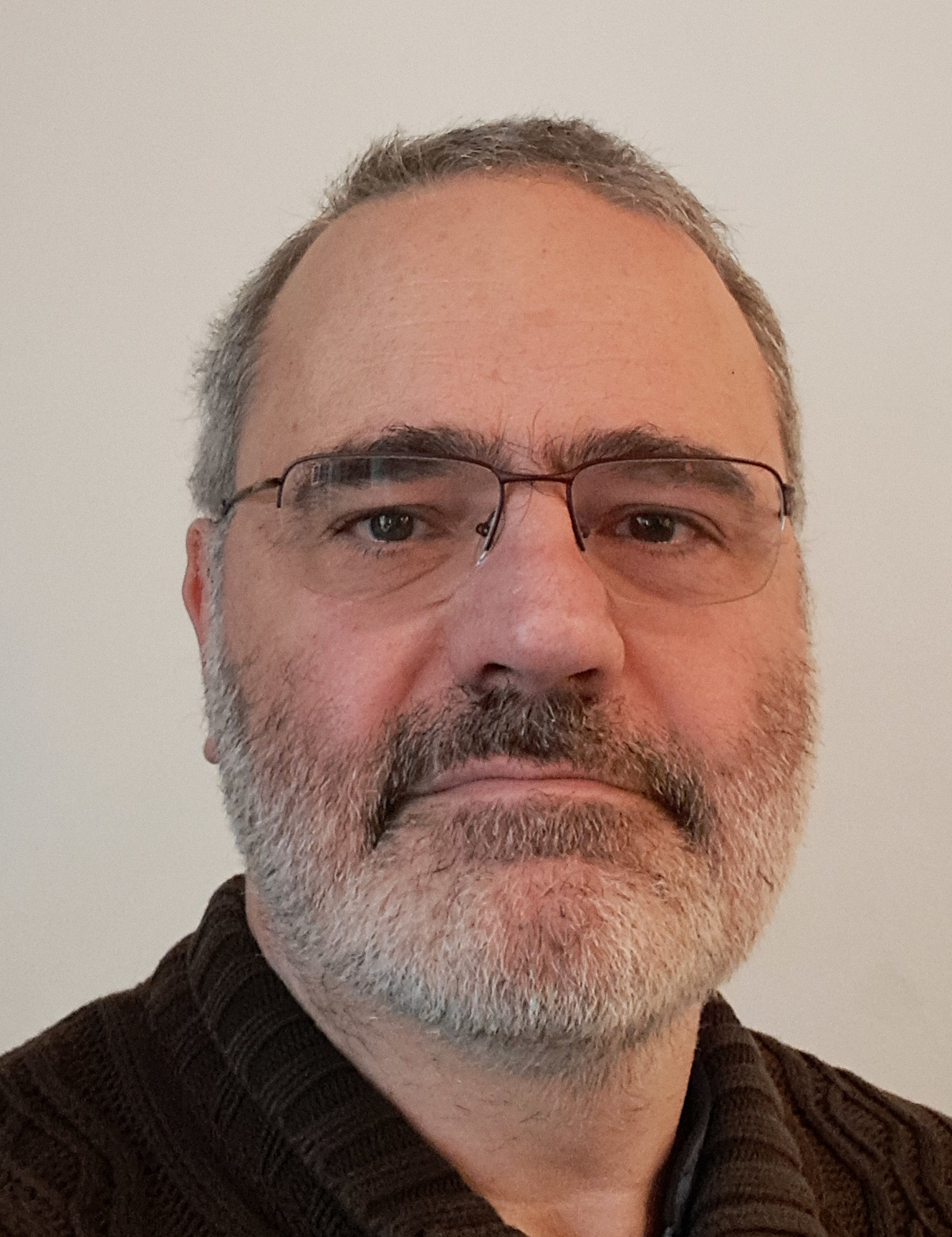
Pierre-Yves LOUIS is a Professor at Institut Agro Dijon, part of Université Bourgogne Franche-Comté, France. He serves as the main responsible for the Data & Digital Specialization (DN2A) for engineers at the Dijon Agro Institute. Previously, he was a Maître de conférences (Associate Professor) at Université de Poitiers from 2009 to 2020. His affiliations include CNU 26 (Applied Mathematics and Applications of Mathematics), the Department of Engineering and Process Sciences (DSIP), UMR PAM IAD/UBE/INRAE (Food and Microbiological Processes), and the Institute of Mathematics of Burgundy (UMR 5584 CNRS). His research focuses on applied probability, stochastic algorithms, learning/adaptive algorithms, MCMC methods, and stochastic simulations and modeling. He applies statistical methods to life sciences, including clustering, data analysis, and text mining. His work encompasses statistical computing with R programming, random models, random dynamics, and stochastic models for large interacting systems in physics and life sciences. He has made significant contributions to the study of random fields, Gibbs measurements, spin systems, interacting particle systems, and probabilistic cellular automata (PCA), with mathematical and probabilistic aspects of statistical mechanics. His recent book Probabilistic cellular automata (Theory, Applications and Future Perspectives) published by Springer demonstrates his leadership in this field. His recent publications reveal a strong interdisciplinary approach, applying probabilistic methods to diverse domains. He has developed theoretical advances in urn models and interacting stochastic processes while simultaneously applying these methods to medical problems (pain assessment, chronic conditions), sports science (athlete performance analysis in alpine skiing), and food technology (nutritionally balanced meal generation through the HOX project). This demonstrates his ability to bridge theoretical probability with practical applications across multiple disciplines. Winner of the mathematics aggregation competition Editor of Probabilistic cellular automata (Theory, Applications and Future Perspectives) published by Springer While specific students aren't named in available materials, his authorization to direct research indicates he supervises PhD candidates. He has successfully collaborated with various institutions across Europe, including notable projects like 'HOX, mathematics for smart meals' in collaboration with Wuji and co (My Chef is Smart) with AMIES support, creating AI to generate nutritionally balanced menus. His work demonstrates strong grant acquisition capabilities and successful industry partnerships. LOUIS is affiliated with several research groups including the PMB team at UMR PAM IAD/UBE/INRAE in Dijon, the SPOC team at the Institute of Mathematics of Burgundy (UMR 5584 CNRS), and participates in networks like MAthématiques de l'Imagerie, Apprentissage et GEométrie Stochastique (RT MAIAGES) and Alea network (CNRS GDRI). His collaborative approach is evident through his co-organization of numerous scientific events and his international visiting researcher positions at institutions including IMT Lucca, University of Padova, and EURANDOM at TU Eindhoven.
Bruce DENBY is a Professor at Sorbonne University specializing in speech processing, telecommunications, and indoor localization. His research spans multiple disciplines including computer science, physics, and environmental science with significant contributions across these fields. His primary research interests include: Silent Speech Interfaces and speech restoration technologies Indoor localization using wireless networks and GSM fingerprints Telecommunications and signal processing Environmental modeling of road dust and air pollution Machine learning applications in speech recognition Dr. DENBY's research trajectory shows evolution from early work in high energy physics to speech processing and wireless communications, with recent publications (2022-2025) demonstrating continued innovation in WiFi analytics, client density mapping, and future speech interfaces. His work increasingly integrates deep learning techniques while maintaining focus on practical applications, particularly for speech restoration and privacy-preserving network analysis. Notable scientific achievements: Chester Sall Award Paper (2012) for work on FPGA-based FM broadcast receivers Significant contributions to the Silent Speech Challenge benchmark with deep learning approaches Development of the NORTRIP model for road dust emissions Highly cited work on Silent Speech Interfaces (over 500 citations) Dr. DENBY has secured research funding across multiple domains, collaborating with institutions across Europe. His work demonstrates strong interdisciplinary connections between speech technology, wireless communications, and environmental science, with applications ranging from assistive technologies to urban air quality management.