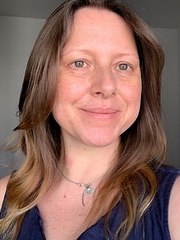
Flora Meilleurمشاهده پروفایل
دانشیار
Flora Meilleur serves as a Neutron Scattering Scientist at Oak Ridge National Laboratory (ORNL) working on the IMAGINE and MaNDi diffractometers (HFIR CG-4D and SNS BL-11B), and holds a joint appointment as Associate Professor in the Biochemistry Department at North Carolina State University since 2007. She joined ORNL in 2005 after completing her PhD and has been instrumental in developing neutron scattering capabilities for structural biology research. Dr. Meilleur earned her Ph.D. in Structural Biology from the European Molecular Biology Laboratory (EMBL) and Université Grenoble Alpes (Grenoble, France) in 2004. Prior to joining ORNL, she served as an instrument scientist at the Institut Laue Langevin (ILL) on the LADI diffractometer. She was promoted to Associate Professor at NCSU in 2015 and established a university consortium that secured NSF funding to build the IMAGINE instrument at HFIR in 2009, serving as lead scientist for this project from 2009-2017. Her research focuses on applying neutron scattering techniques to understand enzymatic mechanisms, particularly in cellulose-degrading enzymes including lytic polysaccharide monooxygenases. She leads projects on cellulose deconstruction for biofuel production, nylon depolymerization, and enzyme immobilization in biopolymer matrices. Her laboratory employs a multidisciplinary approach combining X-ray and neutron diffraction and scattering, DFT calculations, and isotopic labeling techniques to study protein structure, dynamics, and function. Current research includes characterizing nylon hydrolases in collaboration with Dr. Josh Michener and studying biopolymer matrices as part of the BIG collaboration funded by the Novo Nordisk Foundation. Analysis of Dr. Meilleur's recent publications reveals a consistent focus on advancing neutron scattering methodologies for structural biology, with particular emphasis on enzymatic mechanisms in biomass degradation. Her work spans fundamental method development (beamline instrumentation, sample environments) to biological applications (viral proteins, polymer-degrading enzymes). A notable trend is the expansion of neutron techniques to study challenging biological questions, including time-resolved studies and complex enzyme systems, with increasing applications to viral research as evidenced by her SARS-CoV-2 related publications. 2013 ORNL Significant Event Award (Team award for construction and commissioning of CG4-D beamline and IMAGINE instrument; Role: Science lead) Dr. Meilleur has mentored numerous graduate students and post-doctoral fellows who utilize small angle X-ray/neutron scattering, X-ray/neutron crystallography, and computational methods in their research. She serves as Editor for the Journal of Applied Crystallography (2015-present) and was appointed as a main editor in 2021. She also mentors for the IUCr Early Career Board (2025-present) and previously served as Secretary of the Neutron Scattering Society of America (2019-2022). She has organized and led the annual 'Neutrons in Structural Biology' workshop at ORNL since 2010, fostering community development in this specialized field. Dr. Meilleur leads the Meilleur lab at NC State which focuses on structural enzymology using neutron scattering techniques. Her laboratory collaborates extensively with researchers at ORNL's High Flux Isotope Reactor and Spallation Neutron Source facilities. She has served on multiple professional committees including the SNS/HFIR user committee (SHUG) from 2007-2009 and as a member-at-large of the NSSA between 2008-2012, demonstrating sustained leadership in the neutron scattering community.