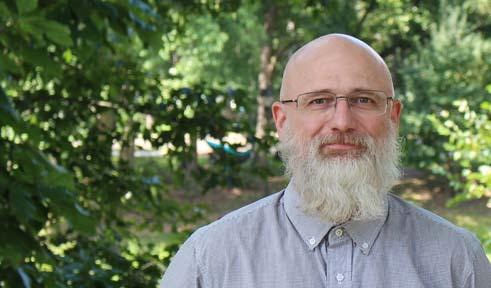
Eric Roberts is a Professor of Geology and Geological Engineering and Director of the Potential Gas Agency at the Colorado School of Mines. His research focuses on basin analysis, energy exploration, and sedimentary geology with specializations in Mesozoic-Cenozoic basins of Gondwana and North America. He leads projects in U-Pb geochronology, critical minerals exploration, and paleoenvironmental reconstruction through vertebrate paleontology and stratigraphy studies. Roberts' work integrates advanced geochronological techniques with field-based analyses to address questions in paleobiology, resource exploration, and earth system dynamics. Key research themes include: Geochronology of sedimentary and volcanic deposits Paleoclimate reconstruction using paleosols Stratigraphic frameworks for dinosaur fossil records Resource potential of helium/hydrogen reserves Antarctic and African vertebrate paleontology His exploration of hominin burial practices in the Rising Star Cave System has provided critical insights into early human behavior. Roberts' interdisciplinary approach bridges geological, biological, and environmental sciences to advance understanding of Earth's history and resource management strategies.
Markus Friedrich is a Professor in the Department of Biological Sciences at Wayne State University, affiliated with the College of Liberal Arts and Sciences. His research focuses on insect development, gene family evolution, and arthropod visual systems, with a particular interest in cave-adapted species. He has held roles including Editor-in-Chief of the Molecular Biology and Genomics Section for the journal Insects and advised on the Australian Research Council project DP230100731 (2023-2024). Education: PhD in Zoology from Ludwig-Maximilians-Universität München (1995), postdoctoral training at Caltech (1996–1999). His research interests span comparative genomics, evolutionary developmental biology, and the genetic basis of sensory adaptations. Notable work includes studies on opsin gene evolution, cave animal adaptations, and the genomic basis of arthropod diversification. Recent publications highlight discoveries in harvestmen relict eyes, horseshoe crab Pax6 homologs, and cave beetle sleep behavior. Teaching includes courses like BIO4220 Biological Dimensions of Evolutionary Psychology and BIO1500 Basic Life Diversity . He has supervised numerous students and volunteers, fostering a dynamic research lab environment. His work integrates genomic, developmental, and evolutionary approaches to unravel mechanisms of trait evolution in insects. Grants/Awards: Australian Research Council funding, editorial leadership in entomology journals. Labs/Teams: The Friedrich Lab focuses on evolutionary genetics, with projects involving Tribolium beetles, cave organisms, and comparative genomics.
Prof. Dr. Nadine Göppert is a University Professor (W3) of Hydrogeology at the Institute of Geological Sciences , Freie Universität Berlin , Germany. She previously served as an Akademische Rätin and Senior Scientist at the Karlsruhe Institute of Technology (KIT) from 2011–2024, and held research positions at the Weizmann Institute of Science (2009–2011) and University of Karlsruhe (2008–2009). Her academic background includes a Dr. rer. nat. (2008) and Diploma in Geology (2002) from the University of Karlsruhe. Education Doctorate in Hydrogeology (2008), University of Karlsruhe Diploma in Geology (2002), University of Karlsruhe Her research focuses on karst hydrology , groundwater tracing , particle transport dynamics , and water quality monitoring in alpine and subtropical karst systems. Recent publications analyze tracer experiments , microplastic transport , and hydrochemical variability across diverse karst environments. Her teaching portfolio includes Applied Hydrogeology , Field Methods , and Laboratory Techniques for students in Geosciences and Water Engineering. She has supervised numerous theses on topics like karst groundwater dynamics and fluorescence-based water quality analysis .
Edouard Bard (born September 1, 1962) is a distinguished French climatologist currently serving as Professor of Climate and Ocean Evolution at the Collège de France. He is also a member of the French Academy of Sciences and deputy director of the European Centre for Research and Education in Environmental Geosciences (CEREGE) at the Arbois Technopole in Aix-en-Provence. His academic journey began with geological engineering studies at ENSG in Nancy, followed by doctoral research at the Commissariat à l'énergie atomique (CEA) in Gif-sur-Yvette (1987), and postdoctoral work at Columbia University's Lamont-Doherty Earth Observatory (1988-1989). Bard's research spans climatology, oceanography, and geology with a focus on understanding the natural functioning of the ocean-atmosphere-cryosphere-biosphere system across timescales from centuries to millions of years. His work integrates analytical chemistry techniques to reconstruct past environments from marine and lake sediments, corals, stalagmites, and polar ice. He has pioneered methods using mass spectrometry to measure radioactive isotopes for dating climate variations recorded in geological archives. Bard's publication record shows consistent contributions across paleoclimatology, with particular emphasis on radiocarbon dating calibration, sea level reconstruction, and climate-ocean interactions. His recent work (2010-2013) focuses on ice sheet dynamics, meltwater pulses, and cosmogenic nuclide applications, while maintaining his foundational work in radiocarbon methodology. His research demonstrates a clear trajectory from methodological development to application in major climate questions. His scientific achievements have been recognized with numerous prestigious awards: Macelwane Medal of the American Geophysical Union (1997) Wegener Medal of the European Geosciences Union (2013) Foreign Member of the National Academy of Sciences of the USA (2014) Multiple recognitions as a Highly Cited Researcher Beyond research, Bard has significantly contributed to public understanding of climate science through popular books like 'L'Homme et le climat' (2005) and 'L'Océan, le climat et nous' (2011). He organized numerous Collège de France symposia on climate change, served as scientific curator for major exhibitions, and participated in high-level policy discussions including the Grenelle de l'Environnement and UN Climate Change Conferences. As deputy director of CEREGE and coordinator of the EQUIPEX ASTER-CEREGE project, he leads significant research infrastructure in environmental geosciences.
Professor Victoria C. Smith is a leading volcanologist at the School of Archaeology, University of Oxford. Her research focuses on tephrochronology, using volcanic ash layers to date and correlate sedimentary and archaeological records. She manages Oxford's electron microprobe facilities and cryptotephra laboratory, supporting global research on explosive volcanism. Research Interests : Volcanology, tephrostratigraphy, magmatic processes, and paleoenvironmental reconstruction. Geographic Focus : Italy, Mexico, Japan, Azores, Canary Islands, Ethiopian Rift, Antarctica. Her recent publications highlight collaborations in geochronology, magma evolution modeling, and tephra applications in synchronizing climate-human records. She supervises MSc and doctoral students in Archaeological Science, focusing on volcanic ash as chronological tools.
Dr. Maria Giuditta Fellin is a Lecturer at the Department of Earth and Planetary Sciences at ETH Zurich, affiliated with the Institute of Geochemistry and Petrology. She is part of the Earth Surface Dynamics Group and specializes in low-temperature thermochronology, using fission-track and (U-Th)/He dating techniques on zircon and apatite to study mountain belt exhumation and erosion processes. Her work focuses on linking tectonic activity, erosion patterns, and long-term landscape evolution. Her research spans global tectonic regions including the Pamir, Alps, Apennines, and Andes. She teaches courses on sedimentary petrography, microscopy, geochronology, and climate-soil-water interactions. No specific scientific awards are listed in the provided information. Her technical expertise includes advanced geochronological methods and quantitative modeling of tectonic-erosional systems.
Stephen J. Burns is a Professor in the Department of Geosciences at the University of Massachusetts Amherst, within the College of Natural Sciences. His research centers on paleoclimatology using speleothems as high-resolution archives of continental climate change. He investigates stable isotopes and trace elements to reconstruct past precipitation and monsoon dynamics, with a focus on tropical and subtropical regions such as Mexico, Madagascar, South America, and Southeast Asia. Education: Ph.D., Duke University, 1987 (Dolomite Geochemistry) M.S., University of North Carolina (Carbonate Sedimentology) B.A., Rice University Post-11 years at University of Bern, Switzerland His research focuses on understanding climate variability on orbital to decadal timescales, especially in continental regions where data are sparse. He uses speleothems—cave deposits like stalagmites—as 'underground ice cores' to extract paleoclimate signals from oxygen and carbon isotopes. His work explores climate-culture interactions, including links between climate shifts and the decline of the Mayan civilization and Madagascar's megafauna. He has led major projects in the Yucatan, Peruvian Andes, Oman, Yemen, Brazil, and Vietnam, often in collaboration with anthropologists and international climate scientists. The recent publications reflect a strong trend in tropical paleoclimatology, with emphasis on monsoon systems, interhemispheric climate dynamics, and human-environment interactions during the Holocene and Late Pleistocene. His work frequently appears in top-tier journals such as Science , PNAS , and Geophysical Research Letters , demonstrating both methodological rigor and broad scientific impact. Scientific Awards: No awards explicitly mentioned in the text. Stephen J. Burns actively mentors students and leads interdisciplinary research teams. He has secured sustained funding for field expeditions and laboratory analyses, though specific grants are not listed. His collaborations span departments (e.g., Anthropology at UMass) and institutions (e.g., MIT, Duke, international universities). He is currently engaged in three major speleothem-based projects: (1) climate variability in the Yucatan and its link to Mayan cultural evolution, (2) environmental history of Madagascar and megafaunal extinction, and (3) climate change in Vietnam with David McGee (MIT). These efforts are supported by advanced geochemical facilities and fieldwork logistics. Labs and Research Teams: Geochemistry and Paleoclimate Laboratory at UMass Amherst (implied through research activity) Collaborative network with stable isotope labs (e.g., Cheng/Edwards lab for U-Th dating) Field teams in tropical cave systems across multiple continents Interdisciplinary group including anthropologists and climate modelers
Dr. Viola C. Schmid is a postdoctoral researcher in the Quaternary Archaeology research group at the Austrian Academy of Sciences (ÖAI) in Vienna, with additional teaching roles at the University of Tübingen and University of Vienna. She earned her master's degree in 2013 and completed a binational PhD magna cum laude in 2019 through a joint program between the Universities of Tübingen and Paris Nanterre. Her career includes research positions at the University of Geneva (2019), ÖAI (2020-2021), and Leiden University (2021-2022), before returning to ÖAI in October 2022. Her research explores prehistoric archaeology across Africa and Europe, focusing on human evolution during the Pleistocene. Key interests include: Population dynamics and knowledge transfer in hunter-gatherer societies Technological systems development in Paleolithic and Mesolithic contexts Middle and Later Stone Age site excavations Reanalysis of archaeological collections using modern methods Schmid's publications primarily investigate lithic technology evolution, site formation processes, and Middle Stone Age adaptations in Africa and Europe. Her work frequently employs experimental approaches and interdisciplinary methods to analyze raw material sourcing, tool production techniques, and cultural transitions. Research sites span South Africa (Umhlatuzana, Diepkloof), Senegal (Toumboura III), Austria (Csaterberg), and Germany (Swabian Jura caves). While no scientific awards are documented, she actively contributes to international projects like the South African Middle Stone Age research during MIS 5 and the Peuplement humain et paléoenvironnement en Afrique program. Her grants and students are not specified in available materials. At ÖAI, she collaborates within the Quaternary Archaeology research group, focusing on Pleistocene human-environment interactions. She maintains academic networks through co-authorships with researchers across Europe and Africa, particularly in lithic technology and Paleolithic site analysis.
Dr. Sarah K. Carmichael is a Professor in the Department of Geological and Environmental Sciences at Appalachian State University , where she also serves in the Appalachian Studies Faculty . Her interdisciplinary research focuses on fluid-rock reactions , manganese geomicrobiology , and paleoenvironmental reconstruction of mass extinction events through Devonian period studies . B.A. from Smith College M.A. and Ph.D. from Johns Hopkins University Her research combines geochemistry of mass extinctions , microbe-mineral interactions in caves , and Appalachian manganese ore formation through fieldwork from Mongolian mountains to Vietnamese basins . She leads the DAGGER (Devonian Anoxia, Geochemistry, Geochronology, and Extinction Research) Team and collaborates with Dr. Suzanna Bräuer on cave geomicrobiology projects. Recent publications focus on Devonian-Mississippian stratigraphy in Mongolia , mercury isotope evidence for Late Devonian ocean anoxia , and human impact assessment in Appalachian caves . Her work has been recognized with National Geographic Explorer status, inclusion in the Explorers Club 50 , and the UNC Board of Governors Teaching Award . Scientific awards include National Geographic Explorer (2018, 2022) Explorers Club 50 (2022) Board of Governors Teaching Award (2020) Academy of Outstanding Teachers induction (2022) KWI Distinguished Service Award (2020) William C. Strickland Outstanding Junior Faculty Award (2014) She mentors numerous student researchers and has secured over $1.2 million in external funding from organizations like the National Science Foundation and National Geographic Society . Her laboratory work utilizes advanced techniques such as electron microscopy and isotope analysis to decode micron-scale mineral textures that reveal Earth's ancient environmental changes.
Rossana Bellopede is an Associate Professor at the Politecnico di Torino, affiliated with the Department of Environmental, Land and Infrastructure Engineering (DIATI) . She leads the Raw Materials (DIATI) laboratory and contributes to projects like CITERIA (critical raw material recovery) and SHOWCAVE (tourist cave impact mitigation). Her roles include coordinating PhD programs in Civil and Environmental Engineering and teaching courses on Circular Economy , Natural Stone Characterization , and Occupational Safety . Research focuses on solid waste recovery (tunnel muck, mining tailings) natural stone durability (weathering, bowing phenomena) microplastic pollution (karst systems, groundwater, caves) asbestos testing (industrial safety) Recent publications examine textile wastewater microfibers (2025), microplastic transport in karst environments (2025), and critical raw material recovery techniques (2025). Her work aligns with SDG 12 (Responsible Consumption) and SDG 11 (Sustainable Cities). Scientific participations include Advisor for ANIM (National Mining Engineers Association) Organizing committee of Heritage Stones Workshop (2021) Research network PROMETIA (2018-2025) She manages commercial projects like CE marking for Piasentina Stone , develops FAST4C circular textiles protocols (2024-2028), and supervises PhD candidates studying microplastic pollution in karst systems stone durability mechanisms sustainable construction materials
Briana L. Pobiner is an Associate Research Professor affiliated with the National Museum of Natural History. Her research focuses on paleoanthropology, zooarchaeology, and taphonomy, with a regional specialization in Africa. She investigates early human diets, particularly the role of meat-eating, using bone surface modifications to analyze interactions between hominins, predators, and scavengers. Her fieldwork spans Kenya, Tanzania, South Africa, Romania, and the U.S., including projects at Ol Pejeta Conservancy, Olorgesailie, Engare Sero, and Friesenhahn Cave. Education: Ph.D. in Anthropology (2007, Rutgers University), M.A. Anthropology (2002, Rutgers), B.A. Evolutionary Studies (1997, Bryn Mawr College, magna cum laude). Teaching includes courses on archaeological methods, biological anthropology pedagogy, and science communication. She has received prestigious awards for outreach, including the 2021 Leakey Foundation Communication Award and Friend of Darwin Award. Research interests emphasize experimental taphonomy, Pleistocene subsistence strategies, and science education. Over 50 peer-reviewed publications span topics from bone modification analysis to human evolution pedagogy. Active projects include taphonomic surveys in Kenya and Romania, and collaborations on early hominin fossil sites. Her work bridges empirical field research with public engagement, advocating for accurate evolution education in schools and museums.
Christopher Miller is a Professor of Geoarchaeology at Eberhard Karls University of Tübingen (since 2016) and Director of Undergraduate Studies in the Institute for Archaeological Sciences (since 2013). He previously served as Junior Professor of Geoarchaeology (2010-2016) and Acting Head of the Archaeometry Division (2013-2015). His research focuses on site formation processes, archaeological micromorphology, and the role of fire in human evolution, with a particular emphasis on Paleolithic cave sites. Education: PhD (2010): Eberhard Karls University of Tübingen, Dissertation on Paleolithic cave sites' formation processes and settlement dynamics MSc (2004-2006): University of Maine, Thesis on geoarchaeological settings in the eastern US BA (2000-2004): Boston University, Dual degree in Archaeology and Earth Science Research interests include: Micromorphological analysis of archaeological sediments Geochemical tracing of Paleolithic sites Reconstruction of prehistoric human-environment interactions Development of novel microanalytical techniques for archaeological contexts His recent publications highlight interdisciplinary approaches to site formation processes, paleoenvironmental reconstruction, and the application of clumped isotope thermometry in archaeological contexts. He has conducted fieldwork in South Africa, Italy, Germany, and the Levant, focusing on cave systems and open-air sites. As an academic leader, he oversees the Geoarchaeology research group and collaborates with international teams on projects such as the Neolithic Movila lui Deciov settlement and the Swabian Jura Paleolithic sites. His work bridges geochemistry, archaeology, and environmental science to unravel the complexities of human adaptation in prehistoric environments.
Michael Chazan is a Professor at the University of Toronto, Department of Anthropology. His research focuses on the Paleolithic periods of Africa, Europe, and the Middle East, with expertise in lithic analysis, paleoarchaeology, and the history of archaeology. PhD, Yale University (1992) His work explores early human technological evolution, including the transition from Lower to Middle Paleolithic, fire use in Wonderwerk Cave, and lithic technology in the Levant and South Africa. Key projects involve the Holon site (Israel) and Kathu Pan 1 (South Africa). Recent publications highlight his contributions to understanding prehistoric subsistence strategies, spatial organization, and dating techniques. Collaborative studies with L.K. Horwitz and others emphasize interdisciplinary approaches. Chazan advises graduate student Sarah Ranlett and postdoctoral supervisee Hilary Duke. His fieldwork teams have conducted significant excavations at Wonderwerk Cave, advancing knowledge of Acheulean cultures.
Gregory S. Springer is a Professor in the Department of Earth and Environmental Geosciences at Ohio University's College of Arts and Sciences. He has served in multiple leadership roles, including Department Chair (2016–2020), Faculty Senator (2023–24), and Leadership Fellow in the Mid-American Conference Academic Leadership Development Program (2023–24). His research is centered on karst systems, paleoclimate, and geomorphic responses to environmental change. Education: Ph.D. in Earth Resources, Colorado State University, 2002 M.S. in Geology, West Virginia University, 1994 B.S. in Geology, West Virginia University, 1991 Dr. Springer’s research lies at the intersection of geomorphology, hydrology, and paleoenvironmental science. His primary focus is on cave systems in the Appalachian region, where he uses speleothems, sediments, and geomorphic features to reconstruct past climates, flood events, and human impacts such as Native American land use. His work combines field-based observations with geochemical and sedimentological analyses to understand long-term landscape evolution. He teaches courses including Introduction to Geology, Natural Disasters, and Stream Geomorphology, both in-person and online. The 15 most recent publications reflect a sustained focus on karst processes, paleoflood hydrology, and paleoclimate reconstruction. These works span disciplines such as hydrology, sedimentology, and climate science, with recurring themes including speleothem isotope records, cave scallop hydraulics, and human-induced environmental change. His research often involves interdisciplinary collaboration and student participation, particularly in Appalachian cave systems. Scientific Awards and Honors: Fellow, National Speleological Society Leadership Fellow, Mid-American Conference Academic Leadership Development Program (2023–24) Dr. Springer has advised over 15 Master’s students, many of whom have pursued careers in environmental consulting, government agencies (e.g., EPA, USGS), and energy sectors. His research has been supported through institutional and collaborative grants, though specific grant titles are not listed. He actively engages in scientific outreach through public talks, media coverage, and open-access dissemination of research. He is a member of the Geological Society of America, American Geophysical Union, and the West Virginia Association for Cave Studies. His research projects often involve field teams working in cave systems across West Virginia, with a focus on Buckeye Creek and Culverson Creek cave systems. These teams include students and collaborators conducting hydrological monitoring, sediment sampling, and geomorphic mapping.
Dr. Alexandra Turchyn is a researcher at the Department of Earth Sciences, University of Cambridge. Her work focuses on isotope geochemistry and biogeochemical cycles, particularly through sedimentary processes and carbon-sulfur-iron interactions. She supervises projects related to global biogeochemical cycles, submarine basalt weathering, sedimentary diagenesis, and geomicrobiology. Key research tools: stable isotope mass spectrometers Recent interests: calcium and strontium isotopes in sedimentary systems Methodological innovation: reactive transport modeling for subsurface process quantification Her group investigates how planetary environments evolve through isotopic, chemical, and mineralogical analyses of modern and ancient sediments, pore fluids, and rocks. Current projects include development of new methods for gas isotope ratio measurements in SO 2 and CO 2 using advanced laboratory equipment. Major research themes include: Carbon cycle evolution across Earth history Climate change reconstruction through geochemical proxies Subsurface biogeochemical processes Isotope fractionation in natural systems Contact: atur07@esc.cam.ac.uk