Max Planck Institute for Intelligent SystemsGermany
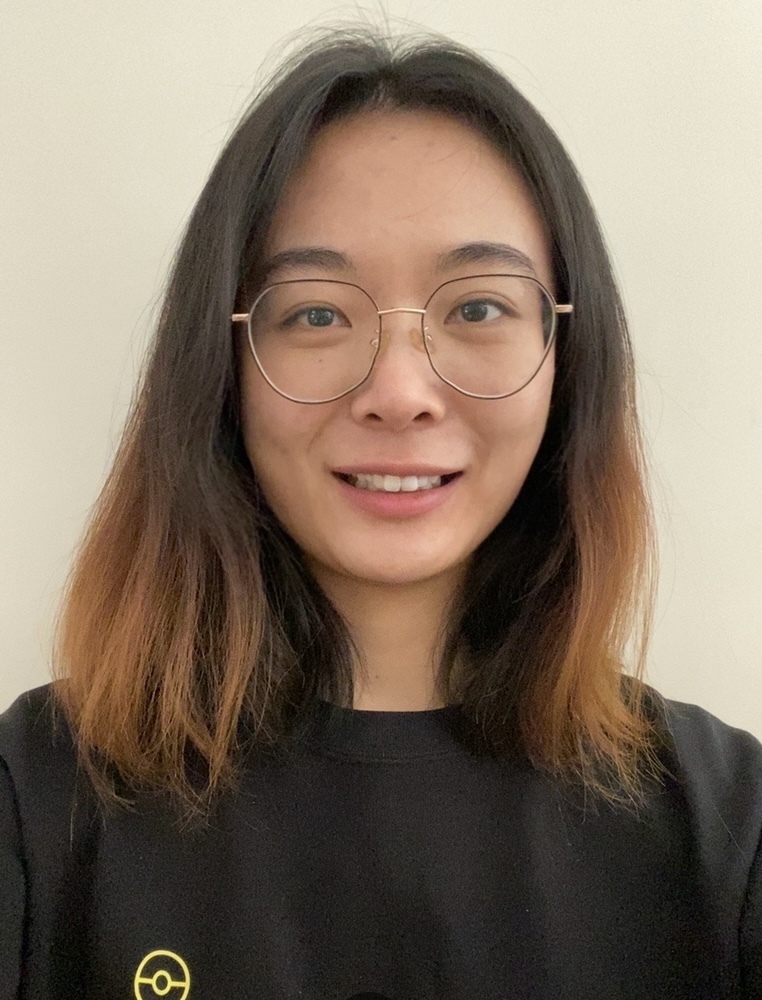
Hanqi Zhou is a Ph.D. student in the Machine Learning Excellence Cluster at the University of Tübingen and a scholar in the IMPRS-IS program. She is jointly supervised by Dr. Álvaro Tejero-Cantero from the Machine Learning ⇌ Science Colaboratory and Dr. Charley Wu from the Human and Machine Cognition Lab. M.Sc. in Cognitive Systems from Ulm University B.Sc. in Information Science from Southeast University Research Interests : Hanqi’s work focuses on the intersection of human cognition and machine learning . She explores how probabilistic machine learning models can simulate human memory systems, structure learning capabilities, and temporal causality inference mechanisms. This research aims to bridge insights from human learning to inspire advancements in machine intelligence.
Praveen Kumar Donta is an Associate Professor (Docent) and Senior Lecturer at the Department of Computer and Systems Sciences, Stockholm University, Sweden. His research focuses on distributed computing continuum systems, learning-driven approaches for IoT and edge computing, and intelligent data protocols. He leads the Distributed Immersive Participation research group which investigates how humans and things can be more connected and exchange information in real and virtual societies. Education: Ph.D. in Computer Science & Engineering from Indian Institute of Technology (Indian School of Mines), Dhanbad (2021) Visiting Ph.D. Fellow at Mobile&Cloud Lab, University of Tartu, Estonia (2019-2020) Master in Technology from JNTUA, Ananthapur (2014) Bachelor in Technology from JNTUA, Ananthapur (2012) Dr. Donta's research centers on distributed computing continuum systems that integrate cloud, edge, and IoT devices to deliver scalable and low-latency computing resources. His work explores learning techniques in IoT, AI/ML for computing systems, cognition and causality in computing systems, and cyber-physical continuum applications. He investigates how human body analogies can inform the design of more resilient and efficient distributed systems, as well as developing frameworks for privacy enforcement, equilibrium in computing continuum systems, and energy-efficient user interactions with smart environments. His research has significant applications in smart city management, satellite services, and intelligent transportation systems. Dr. Donta's publication record demonstrates a strong focus on the intersection of distributed systems, machine learning, and privacy-preserving technologies. His recent work shows an increasing emphasis on human-inspired approaches to distributed computing, with particular attention to making these systems more interpretable, efficient, and adaptable. His research spans theoretical foundations of computing continuum systems to practical implementations in areas like satellite services, smart environments, and anomaly detection. Scientific Awards and Recognition: IEEE Senior Member ACM Professional Member Dr. Donta serves as an editorial board member for several prestigious journals including IEEE Internet of Things Journal, Computing (Springer), Transactions on Emerging Telecommunications Technologies (Wiley), Measurement, and Computer Communications (Elsevier). He actively mentors the next generation of researchers, currently supervising PhD student Alfreds Lapkovskis and co-supervising Shubham Vaishnav. His research is supported by projects such as the Heterogeneous Computing Continuum for a Sustainable Smart City Management (HCSCM), which aims to develop scalable, secure solutions for urban environments by integrating IoT, edge, and cloud computing. As part of the Distributed Immersive Participation research group, Dr. Donta collaborates with researchers across disciplines to explore how technological advances enable humans and things to be more connected. The group focuses on application areas such as culture, transport, intelligent vehicles and e-health, developing solutions that enhance participation in both real and virtual societies.
Brenden M. Lake is an Associate Professor of Psychology and Data Science at New York University, transitioning to Princeton University in Fall 2025 as an Associate Professor of Computer Science and Psychology. His work bridges human cognition and machine intelligence , focusing on computational models that explain cognitive phenomena while advancing AI capabilities. Research Themes: Few-shot concept learning, neuro-symbolic modeling, grounded language acquisition from child input, systematic generalization in neural networks, and human-inspired inductive biases. Lab Affiliation: Human & Machine Intelligence Lab at Princeton (formerly NYU’s Human & Machine Learning Lab), utilizing child-centric data and meta-learning frameworks. Scientific Recognition: MIT Technology Review 35 Under 35 (2019) Society of Mathematical Psychology Outstanding Paper Award (2018) Academic Contributions: Pioneering research on few-shot learning, program induction, and systematic generalization in humans and machines. His Nature (2023) and Science (2024) publications demonstrate how human cognitive mechanisms can enhance AI systems.
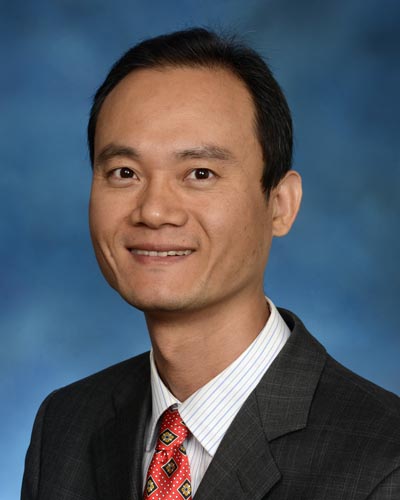
Rong Chen is an Associate Professor in the Department of Diagnostic Radiology and Nuclear Medicine at the University of Maryland School of Medicine. He serves as Associate Vice Chair of AI and leads the Biomedical Data Mining Laboratory, focusing on integrating machine learning, computational neuroscience, and neuroimaging to decode brain-behavior relationships. His work spans clinical and translational research for disorders like Alzheimer’s, Parkinson’s, autism, and HIV, and he develops open-source software (GAMMA suite, Advanced Connectivity Analysis) for neuroimaging data analysis. Education: BS in Biomedical Engineering, Southeast University, China (1996) MS in Electrical Engineering, The Graduate School of Chinese Academy of Sciences (1999) PhD in Electrical and Computer Engineering, Washington State University (2003) Postdoctoral Researcher in Radiology, University of Pennsylvania (2005) MTR in Translational Research, University of Pennsylvania (2012) Research Interests: Computational modeling of neural activity and behavior Development of machine learning frameworks for neuroimaging Brain-inspired AI and therapeutic concepts Longitudinal analysis of brain disorders Distributed data mining for heterogeneous databases Software tools for biomarker detection and functional connectivity Scientific Contributions: 20+ years of advanced modeling and algorithm development Two open-source neuroimaging software packages (GAMMA suite, ACA) NIH and BRAIN initiative-funded research Editorial roles in journals like Frontiers in Computational Neuroscience Honors: Senior Member of IEEE Labs & Collaborations: Dr. Chen collaborates with institutions like NIH and Oracle, and his lab has developed tools used in studies on sickle cell disease, autism, and traumatic brain injury.
Shailee Jain is a postdoctoral researcher at the Chang Lab in the Department of Neurosurgery at University of California, San Francisco (UCSF). Previously, she completed her PhD in Computer Science at the Huth Lab, University of Texas at Austin, with collaborations at Google AI Language and Intel Brain-Inspired Computing Lab. Her work bridges artificial neural networks with biological language processing systems. Education : PhD in Computer Science (2023), UT Austin; BSc at NITK Surathkal Shailee's research focuses on Neuro-AI intersections, particularly interpreting neural NLP models to understand brain language processing . Her recent work explores voxel function modeling , context-sensitive speech encoding , and geometric signatures in neuro-AI systems . Key publications include: 2024: Frameworks for generative causal testing in language neuroscience 2023: Natural language fMRI dataset for voxelwise modeling 2022: Self-supervised speech modeling for cortical response prediction Awards & Recognition : 2025: Rookie of the Year Award (CogHear'25) 2024: Glushko Dissertation Prize 2024: SNL Dissertation Award 2023: UT Austin Graduate School Fellowship Active in academic service as Handling Editor for JoCNForum and Co-organizer for BayLI meetings, Shailee mentors through Women in Computer Science and reviews for top-tier venues. She teaches at summer schools like Cajal's NeuroAI program in Lisbon.
Prof. Dr. Klaus R. Pawelzik is a Professor at the University of Bremen's Institute for Theoretical Physics, where he leads the Theoretical Bio- and Neurophysics research group. His research bridges theoretical physics and neuroscience, with laboratories located in the Cognium building on the university campus. His primary research interests include: Computational models of neural dynamics and information processing Neurophysics and mechanisms of cortical computation Brain-computer interfaces and neuroprosthetic systems Dynamical systems approaches to causality and network analysis Biologically plausible learning algorithms for spiking neural networks Attention mechanisms and sensory processing in primate brains Recent publications (2015-2020) demonstrate strong focus on attention mechanisms in visual processing, causal inference methods for dynamical systems, hardware implementations for neuroprosthetics, and biologically inspired learning algorithms. The work consistently integrates mathematical rigor with experimental neuroscience, featuring collaborations with neurophysiology labs and engineering groups. Prof. Pawelzik leads an active research team developing both theoretical frameworks and experimental platforms for neuroscience research. The lab specializes in open-source neurotechnology solutions, including wireless implantable devices for electrocorticography and FPGA-based processing systems for real-time neural signal analysis.