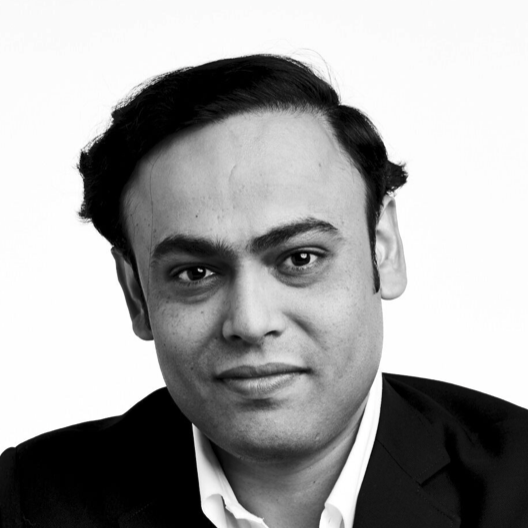
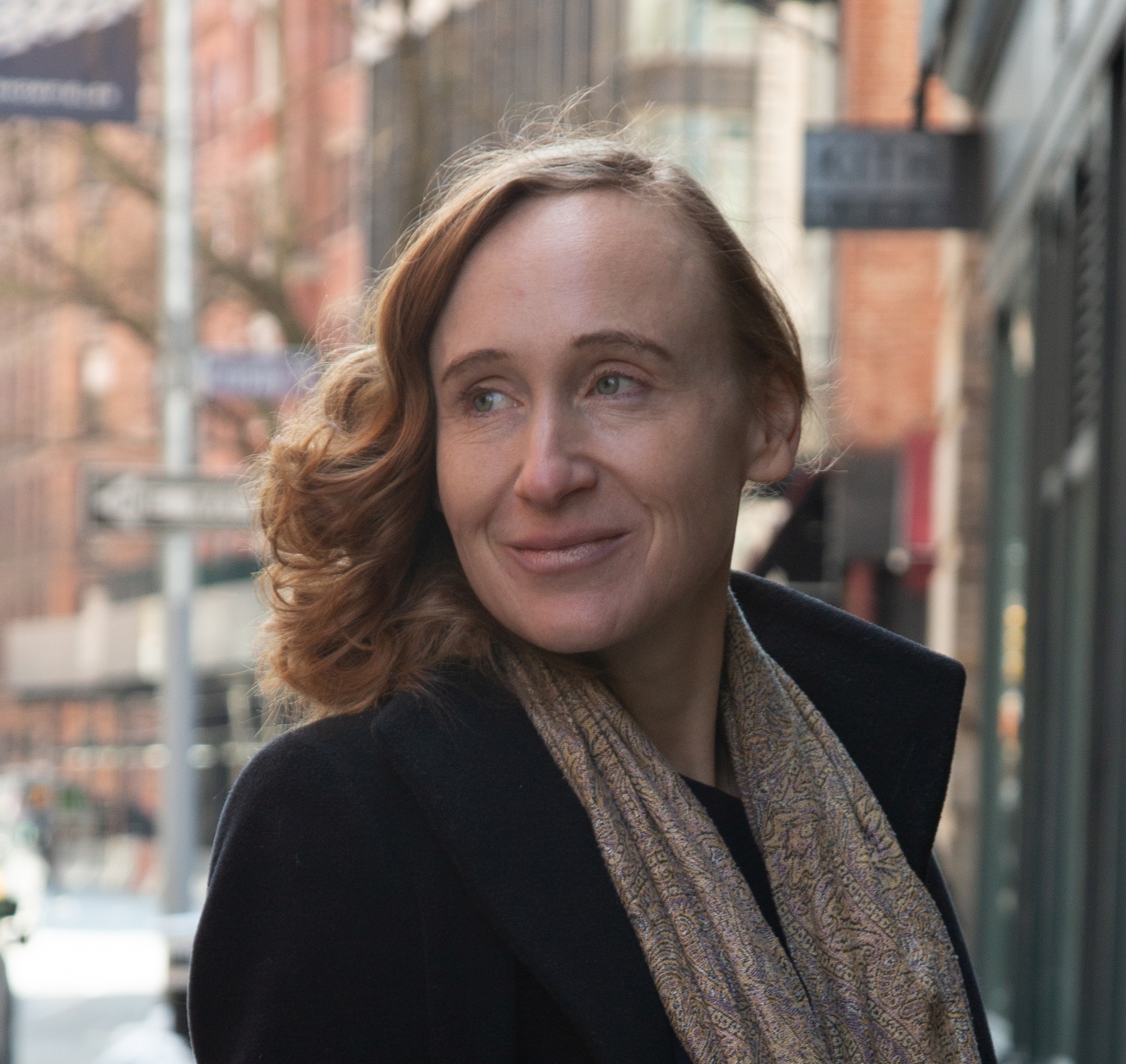
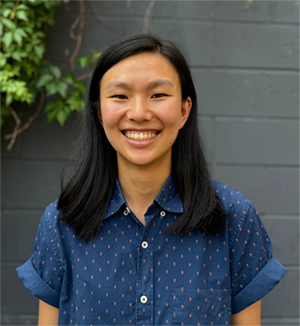
Jiaxuan You is an Assistant Professor at the Siebel School of Computing and Data Science, University of Illinois at Urbana-Champaign, leading the U Lab focused on achieving Artificial General Intelligence (AGI) in digital environments. His research spans graph neural networks (GNNs), relational data, foundation models, and machine learning systems. PhD and MS in Computer Science from Stanford University (2021) Developed GraphGym and PyTorch Geometric (PyG) for graph learning Core member at Kumo AI (2021-2023) His research explores: Graph-enhanced LLMs: Integrating relational structures into foundation models AGI Development: Self-optimizing AI agents and tool utilization ML Systems: Scalable architectures and redundancy-free computation Interdisciplinary Applications: Financial networks, crop yield prediction, and metro systems Recent publications focus on temporal reasoning, multi-agent dynamics, and hybrid architectures for LLMs. He actively develops open-source tools like DBGYM and GraphRouter. Scientific recognition includes: JPMC PhD Fellowship Baidu Scholarship Best Student Paper at AAAI 2017 World Bank Big Data Innovation Challenge winner He mentors PhD and intern students, emphasizing machine learning systems expertise. His lab collaborates on AGI workshops (e.g., ICLR 2024) and industry projects.
Ali H. Sayed is the Dean of the School of Engineering (Faculté des sciences et techniques de l'ingénieur - STI) at École Polytechnique Fédérale de Lausanne (EPFL), Switzerland, where he also directs the Adaptive Systems Laboratory (Laboratoire de systèmes adaptatifs). Previously, he served as an emeritus professor and chair of the Electrical Engineering Department at UCLA. He is a highly cited researcher and a member of the US National Academy of Engineering and the World Academy of Sciences. Sayed served as president of the IEEE Signal Processing Society in 2018 and 2019. Professor Sayed's research focuses on adaptation and learning theories, data and network sciences, statistical inference, multi-agent systems, adaptive networks, and optimization. His work bridges theoretical foundations with practical applications in signal processing, machine learning, and network science. He has made significant contributions to distributed learning algorithms, social learning over networks, and adaptive signal processing techniques that have influenced both academic research and practical implementations. His recent publications demonstrate a strong focus on multi-agent systems, distributed learning, privacy-preserving techniques, and social learning over networks. The research trends show increasing emphasis on federated learning with privacy guarantees, graph-based learning approaches, and the intersection of social dynamics with information processing. His work consistently addresses fundamental theoretical questions while maintaining relevance to practical applications in communication networks, social media analysis, and distributed artificial intelligence systems. Professor Sayed has received numerous prestigious awards throughout his career, including: IEEE Fourier Award (2022) Norbert Wiener Society Award (2020) IEEE Signal Processing Society Education Award (2015) Papoulis Award from the European Association for Signal Processing (2014) Technical Achievement Award from IEEE Signal Processing Society (2012) Terman Award from the American Society for Engineering Education (2005) IEEE Donald G. Fink Prize (1996) Multiple Best Paper Awards from IEEE and EURASIP Sayed has authored or co-authored over 570 publications and six monographs. He has mentored numerous PhD students and researchers in the fields of signal processing and adaptive systems. His editorial leadership includes serving as Editor-in-Chief of IEEE Transactions on Signal Processing (2003-2005) and EURASIP Journal on Advances in Signal Processing (2006-2007), as well as Founding Editor-in-Chief of the Open Access Book Series on Information and Learning Sciences. At EPFL, Professor Sayed leads the Adaptive Systems Laboratory, which focuses on developing theoretical frameworks and practical algorithms for adaptive systems, networked learning, and distributed signal processing. The lab's research encompasses both fundamental theoretical investigations and applications to real-world problems in communications, social networks, and computational biology.
Professor Martin Schrimpf is a Tenure Track Assistant Professor at EPFL, holding dual appointments in the School of Life Sciences (SV) and the School of Computer and Communication Sciences (IC). His research bridges computational neuroscience, deep learning, and cognitive science to model human natural intelligence in vision and language. He leads the NeuroAI Lab, focusing on aligning artificial neural networks with brain mechanisms and human behavior. Education: PhD in Brain and Cognitive Sciences from MIT (2017–2022), MSc in Software Engineering from TUM/LMU/UNA (2014–2017), and BSc in Information Systems from TUM (2011–2014). His work has been recognized with awards including the Neuro-Irv Open Science Prize, McGovern Fellowship, and Takeda AI+Health Fellowship. He co-founded Integreat, a social impact startup recognized with Google.org’s Impact Challenge and TUM’s Social Impact Award. Research interests include neuroAI, brain-like models, and clinical translation (e.g., visual prosthetics). He has published in top venues like Neuron, Nature Human Behavior, NeurIPS, and ICLR. Current projects involve developing topographic language models (TopoLM) and investigating causal language network interactions using LLMs. Teaching: Courses include Neuroscience Foundations for Engineers and Brain-like Computation and Intelligence . Supervised over 26 students, including PhD candidates Badr Alkhamissi, Ben Lönnqvist, and Yingtian Tang. Active in grants from SNSF, NeuroX, and EPFL’s AI Center. Labs/Teams: NeuroAI Lab at EPFL Neuro-X Institute. Future directions include advancing brain-inspired models for clinical applications and expanding interdisciplinary collaborations between neuroscience and AI.
Saurabh Amin is a Professor in the Department of Civil and Environmental Engineering at the Massachusetts Institute of Technology (MIT), where he also serves as the Edmund K. Turner Professor and Undergraduate Officer. He is a Principal Investigator at the Laboratory of Information and Decision Systems and holds affiliations with the Operations Research Center and the Center for Computational Science and Engineering. His educational background includes: B.Tech. 2002, Indian Institute of Technology (IIT) Roorkee M.S. 2004, University of Texas (UT) Austin Ph.D. 2011, University of California (UC) Berkeley Saurabh Amin's research focuses on the design and control of infrastructure systems using game theory and optimization in networks. His work spans three main areas: resilient network control, information systems and incentive design, and optimal resource allocation in large-scale infrastructure systems. By concentrating on critical infrastructure domains including highway transportation, electric power distribution, and urban water networks, his research develops innovative theory and tools to enhance system performance against both stochastic and adversarial disruptions. His approach involves modeling cyber-physical interactions in infrastructures to assess vulnerabilities, developing detection and response tools for failures at various scales, and designing economic incentive schemes that improve aggregate public good while accounting for dependencies and private information among strategic entities. Amin's work bridges mathematical systems theory with practical civil engineering applications, creating a rigorous theoretical foundation for infrastructure resilience that addresses diverse failure mechanisms from natural disasters to deliberate malicious actions. His recent publications demonstrate a strong focus on decarbonization of energy systems, resilient infrastructure planning under climate uncertainty, optimization methods for complex networked systems, and game-theoretic approaches to sustainable infrastructure management. His work increasingly integrates artificial intelligence and machine learning techniques with traditional control theory to address contemporary challenges in infrastructure resilience and sustainability. The research shows a clear trajectory toward addressing climate change impacts on infrastructure systems while maintaining economic efficiency and operational reliability. Professor Amin has received numerous prestigious awards and honors: Common Ground Excellence in Teaching Award, 2025 HSCC Test-of-Time Award, 2024 MIT CEE, Distinguished Service and Leadership Award, 2023 Samuel M. Seegal Prize (SoE) – inspiring students in pursuing and achieving excellence, 2022 Earll M. Murman for Excellence in Undergraduate Advising, 2022 C3.ai Digital Transformation Institute Research Award, 2020 MIT, Ole Madsen Mentoring Award, 2020 MIT, Energy Initiative Research Award, 2020 National Academy of Engineering, China-America Frontiers of Engineering Symposium speaker, 2019 MIT, Robert N. Noyce Career Development Professor, 2015-2018 Google Faculty Research Award, 2015 National Science Foundation CAREER Award, 2015 Siebel Energy Institute Research Award, 2015 MIT, Solomon Buchsbaum AT&T Research Fund Award, 2012 Professor Amin has been actively involved in significant research projects including the C3.ai DTI project on Causal Reasoning for Real-Time Attack Identification in Cyber-Physical Systems and another on Learning in Routing Games for Sustainable Electromobility. He serves as the chief scientist on multi-institutional NSF grants, including the $9 million Foundations of Resilient Cyber-Physical Systems (CPS) project. His teaching portfolio includes courses such as 1.008 Engineering for a Sustainable World, 1.104 Sensing and Intelligent Systems, 1.020 Engineering Sustainability: Analysis and Design, and 1.208 Resilient Networks. As Undergraduate Officer, he plays a key role in shaping the educational experience for civil and environmental engineering students at MIT. Professor Amin leads the Resilient Infrastructure Networks Lab at MIT, where his team develops theoretical foundations and practical tools for infrastructure resilience. The lab focuses on the intersection of control theory, game theory, and optimization applied to cyber-physical infrastructure systems. Current research directions include pandemic-resilient urban mobility and hurricane-resilient smart grid operations, reflecting the lab's commitment to addressing pressing societal challenges through rigorous systems engineering approaches.
Pengtao Xie is an Associate Professor (tenured) in the Department of Electrical and Computer Engineering at UC San Diego, with cross-appointments in the Division of Biomedical Informatics and affiliations across multiple schools and institutes including the Halıcıoğlu Data Science Institute, School of Biological Sciences, and Skaggs School of Pharmacy. His research bridges human-inspired machine learning and healthcare applications. Education: PhD in Machine Learning, Carnegie Mellon University (2018) MS from Tsinghua University BS from Sichuan University Research Interests: His work focuses on machine learning inspired by human learning strategies , including learning by testing, interleaving, self-explanation, and teaching. These techniques are applied to large language models , foundation models , healthcare , and biomedicine . Recent efforts emphasize generative AI for medical image segmentation and protein function prediction. Scientific Awards: NIH MIRA Award (2025) NSF Career Award (2024) Best Graduate Teacher Award, ECE UCSD (2023) ICLR Notable-Top-5% Paper (2023) Global Top-100 Chinese Young Scholars in AI (2022) Tencent Faculty Award (2021) AMIA Doctoral Dissertation Award Finalist (2020) Siebel Scholarship (2014) Teaching & Mentorship: He has developed and taught courses such as Deep Generative Models , Probabilistic Graphical Models , and Linear Algebra and Applications . He actively mentors PhD, master's, and undergraduate students, with alumni now at CMU, Stanford, Mila, and industry roles. Labs & Teams: He leads a research group within the Center for Machine-Intelligence, Computing and Security and collaborates with the Institute for Genomic Medicine and Institute of Engineering in Medicine at UC San Diego.
Julia Kempe is a Silver Professor of Computer Science, Mathematics, and Data Science at New York University (NYU), holding joint appointments at the Courant Institute and the Center for Data Science (CDS). She serves as Director of the CDS and is on research leave at the CSD, ENS, Paris (2023–24). Her expertise spans interdisciplinary research in quantum computing, machine learning, and data science. She holds PhDs in Mathematics (UC Berkeley, 2001) and Computer Science (École Nationale Supérieure des Télécommunications, Paris, 2001), alongside advanced degrees in theoretical physics and mathematics from prestigious institutions in France and Austria. Research Interests: Data Science, Machine Learning (theoretical foundations and applications to physics), and past contributions to quantum computing. She focuses on robustness in machine learning models, adversarial examples, and interdisciplinary applications of physics-informed AI. Awards and Honors: Knight of the National Order of Merit (France, 2010), Femme en Or de la Recherche (France, 2010), ERC Starting Grant (2007, top-ranked in Europe), and numerous academic fellowships. She is a member of Academia Europaea (2018) and a Fellow of the Asia-Pacific Artificial Intelligence Association (2022). Grants and Leadership: Principal investigator of NSF NRT grants for CDS PhD programs, co-PI on NASA TCAN grants, and leader in NYU’s Senior Leadership Team. She designed NYU’s Data Science undergraduate programs and expanded interdisciplinary collaborations in machine learning and quantum computing. Labs and Teams: Directs the CDS, collaborates with the Courant Institute, and leads research initiatives in Paris. Her work bridges theoretical computer science, physics, and applied data science, emphasizing interdisciplinary innovation.
Mihaela van der Schaar is the John Humphrey Plummer Professor of Machine Learning, Artificial Intelligence, and Medicine at the University of Cambridge, leading the van der Schaar Lab. She holds dual affiliations with the Department of Applied Mathematics and Theoretical Physics (DAMTP) and the Centre for Mathematical Imaging in Healthcare. Her research focuses on healthcare AI, machine learning, and operations research. She has authored over 250 journal articles and 275 conference papers, with notable contributions to synthetic data for privacy, causal inference, and clinical decision-making. Her work has led to 35 U.S. patents, including foundational innovations in streaming video compression (MPEG-4 standards). Awards include the Oon Prize (2018), IEEE Fellow (2009), and recognition as the UK's most-cited female AI researcher (2019). Leadership roles include Director of the Cambridge Centre for AI in Medicine and Co-Director of the European Laboratory for Learning and Intelligent Systems. She has mentored global academic leaders and pioneered initiatives like the Inspiration Exchange for early-career researchers. Key projects include predictive models for hospital resource allocation during pandemics and AI tools for personalized medicine. Publications span machine learning theory, healthcare applications, and interdisciplinary fields like network science. Her lab's impact includes tools like AutoPrognosis (automated ML for clinical prediction) and SynthCity (synthetic healthcare data generation).
Prof. Dr. Wolfgang Nejdl is a Professor at the Institute for Data Science within the Faculty of Electrical Engineering and Computer Science at Leibniz University Hannover. He serves as Executive Director of the L3S Research Centre and Leibniz Forschungszentrum Inclusive Citizenship. Web Science Information Retrieval Artificial Intelligence Deep Learning His recent research focuses on AI applications in medicine , multimodal data fusion , and ethical AI systems . Projects include CAIMed (AI in Causal Medicine) and DAISEC (AI & Cybersecurity). His publications span conferences like AAMAS, WWW, and SIGIR. Notable awards include membership in the National Academy of Science and Engineering (acatech) . Former students hold positions at institutions like Stanford, TU Dresden, and ETH Zürich. Current projects involve climate resilience AI , federated learning for healthcare , and quantum-inspired data science .
Jeffrey L. Krichmar is a Professor in the Department of Cognitive Sciences and Department of Computer Science at the University of California, Irvine. His academic journey includes a B.S. in Computer Science from the University of Massachusetts Amherst (1983), an M.S. in Computer Science from The George Washington University (1991), and a Ph.D. in Computational Sciences and Informatics from George Mason University (1997). Prior to UCI, he served as Assistant Professor at George Mason University (1997-1999) and Senior Fellow at The Neurosciences Institute (1999-2007). University of California, Irvine (2007-present) George Mason University (1997-1999) The Neurosciences Institute (1999-2007) His research focuses on neurorobotics , exploring how embodied cognition and biologically plausible neural models can enhance robotic systems. Key areas include spiking neural networks , neuromodulation , path planning , and interactive tactile robots for therapeutic applications. His work bridges neuroscience , robotics , and cognitive science , with applications in autonomous vehicles , neuroprosthetics , and AI explainability . Recent publications emphasize spiking neural networks for navigation , neuromodulated attention , and neuromorphic hardware integration. The development of CARLsim, a GPU-accelerated spiking neural network simulator now in version 6.0, represents a major technical contribution. His team's work on socially assistive robots like CARL-SJR targets therapeutic applications for autism and ADHD. Scientific Awards IJCNN 2020 Best Paper Award Finalist for Best Student Paper at IJCNN 2018 Best Paper Award at IEEE IJCNN 2009 Grants include National Science Foundation funding for neural models of decision-making (2009). His lab (Cognitive Anteater Robotics Laboratory) develops systems that use large-scale brain simulations for autonomous behavior , with applications in adaptive robotics , sensorimotor learning , and neuroethology . Current projects explore neuromodulatory influences on attention systems and cognitive flexibility .
Subhabrata Sen is an Assistant Professor of Statistics at Harvard University, located in Science Center 713, Cambridge. His research focuses on Applied Probability, Statistics of Networks, Signal Detection, and Machine Learning. He holds a PhD from Stanford University (2017), advised by Amir Dembo and Andrea Montanari, and prior degrees from the Indian Statistical Institute, Kolkata. His work bridges statistical theory, high-dimensional data analysis, and applications in networks and physics-inspired methods. Key contributions include foundational studies on spin glasses, community detection, and causal inference in complex systems. His research often employs mean-field techniques and explores universality principles in estimation problems. Selected awards and recognition are not explicitly mentioned in the provided text. His advising and grants include postdoctoral mentoring at Microsoft Research and MIT (2017-19). He collaborates on projects involving spectral methods, random matrix theory, and multi-layer network analysis. Labs/teams: Active in Harvard's Statistics Department research groups focused on statistical theory and network science. Maintains an academic website with preprints and resources.
Angelina Wang is an incoming Assistant Professor at Cornell Tech and the Department of Information Science at Cornell University, starting Fall 2025. Her research focuses on responsible AI, particularly machine learning fairness and algorithmic bias. She holds a Ph.D. in Computer Science from Princeton University and a B.S. in Electrical Engineering and Computer Science from UC Berkeley. Current postdoctoral work at Stanford’s HAI and RegLab explores sociotechnical challenges in AI deployment. Her research addresses fairness evaluation in generative AI, societal impacts of AI systems, and ethical trade-offs in algorithm design. Notable awards include the NSF GRFP, Siebel Scholarship, and Microsoft AI & Society Fellowship. Her work bridges technical and social dimensions of AI, emphasizing human-centered evaluation and interdisciplinary collaboration. Recent publications span medical AI applications (e.g., Alzheimer’s subphenotypes, corticosteroid treatment efficacy) and foundational fairness research. She advocates for proactive ethical considerations in technical work, citing examples like surveillance risks in facial recognition and dataset biases in computer vision. Angelina advises prospective PhD students in Cornell’s Information Science program and collaborates on projects like SciDaSynth for scientific knowledge synthesis. Her advocacy includes challenging fairness impossibility theorems and promoting algorithmic pluralism in auditing practices.
Bruno Castro da Silva is an Assistant Professor in the College of Information and Computer Sciences (CICS) at the University of Massachusetts Amherst. He holds a PhD in Computer Science from UMass Amherst (2014), and MSc and BSc degrees from the Federal University of Rio Grande do Sul (UFRGS), Brazil. Prior to UMass, he was an Associate Professor at UFRGS and a postdoctoral researcher at MIT's Aerospace Controls Laboratory. His research focuses on reinforcement learning (RL), robotics, and AI safety, aiming to develop algorithms that ensure safe and autonomous task decomposition while meeting user-specified safety criteria. Key areas include hierarchical policies, active learning, and biologically-plausible mechanisms. He has published in top venues like ICML, NeurIPS, and Science, and received awards such as the Best Paper at RLDM 2022 and Distinguished Reviewer distinctions. He teaches courses in reinforcement learning and machine learning at UMass, emphasizing accessibility and safety. His work also extends to fostering diversity in STEM education. He leads the Autonomous Learning Laboratory and collaborates with organizations like Adobe Research and the Laboratory of Computational Neuroscience in Rome.
Pouya Bashivan is an Assistant Professor in the Department of Physiology at McGill University's Faculty of Medicine. His research focuses on developing computational models to explain and regulate neural responses during visual tasks requiring memory, combining machine learning, neuroscience, and cognitive science. Education : Ph.D. in Computer Engineering (2016), Postdocs in Machine Learning (2020) and Computational Neuroscience (2016-2020) His lab investigates: Topographical neural networks for visual cortex simulation Massively-multitask models for prefrontal cortex Saccade-driven visual exploration models Predictive hippocampus models for episodic memory Recent publications explore adversarial robustness, memory-augmented networks, and brain-state decoding. Current projects emphasize causal models, brain-AI alignment, and translating computational neuroscience into therapeutic applications. The lab is located in the McIntyre Medical Sciences Building, Room 1117, Montreal, Quebec.
Sara Magliacane is an Assistant Professor at the University of Amsterdam , affiliated with the Amsterdam Machine Learning Lab (AMLab) and the Informatics Institute . She also holds a Research Scientist position at the MIT-IBM Watson AI Lab and has been an ELLIS Scholar since 2022. Education PhD in Artificial Intelligence (2017), VU Amsterdam MSc in Computer Engineering (2011), Politecnico di Milano BSc in Computer Engineering (2008), Università degli Studi di Trieste Research Focus : At the intersection of Causality and Machine Learning , her work addresses Causal Representation Learning from high-dimensional data (images, sequences) Causal Discovery in latent confounder scenarios Causality-inspired Reinforcement Learning for robustness and adaptability Neurosymbolic AI for theoretical guarantees Publication Trends : Her recent work explores Factored adaptation in non-stationary environments (NeurIPS 2022) Temporal causal identifiability (ICML 2022) Binary interaction-based causal discovery (UAI 2023) Safe exploration in visual RL (HSCC 2021) Structure learning lower bounds (NeurIPS 2020) Scientific Recognition : ELLIS Scholar (2022–present) Spotlight presentations at ICML 2022 and ICLR 2022 Advising & Collaborations : Currently supervising 6 PhD students at the University of Amsterdam and AUMC, with 12 alumni advisees. Collaborates with researchers at MIT-IBM Watson AI Lab, Simons Institute, and TUM.
Martin Wells is the Charles A. Alexander Professor of Statistical Sciences at Cornell University, with joint appointments in Social Statistics, Clinical Epidemiology, and Industrial Labor Relations. Since joining Cornell in 1987, he has developed methodologies spanning Bayesian inference, tensor analysis, and machine learning applications in biomedicine and finance. His research integrates statistical theory with computational innovations, particularly in high-dimensional modeling and quantum-inspired algorithms. Recent work focuses on geometric approaches to tensor decomposition, misclassification correction methods, and phylodynamic models incorporating dormancy effects. Professor Wells teaches statistical methodology across disciplines including law, medicine, and biology, adapting analytical frameworks to diverse research contexts. His interdisciplinary collaborations extend to Weill Medical College and the School of Industrial and Labor Relations.