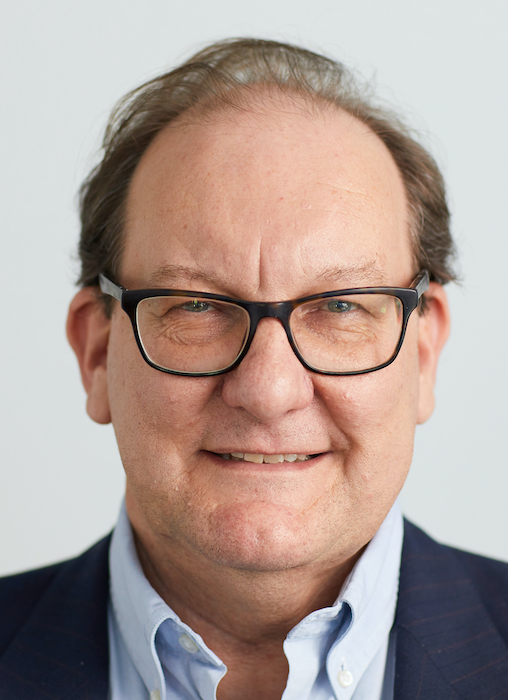
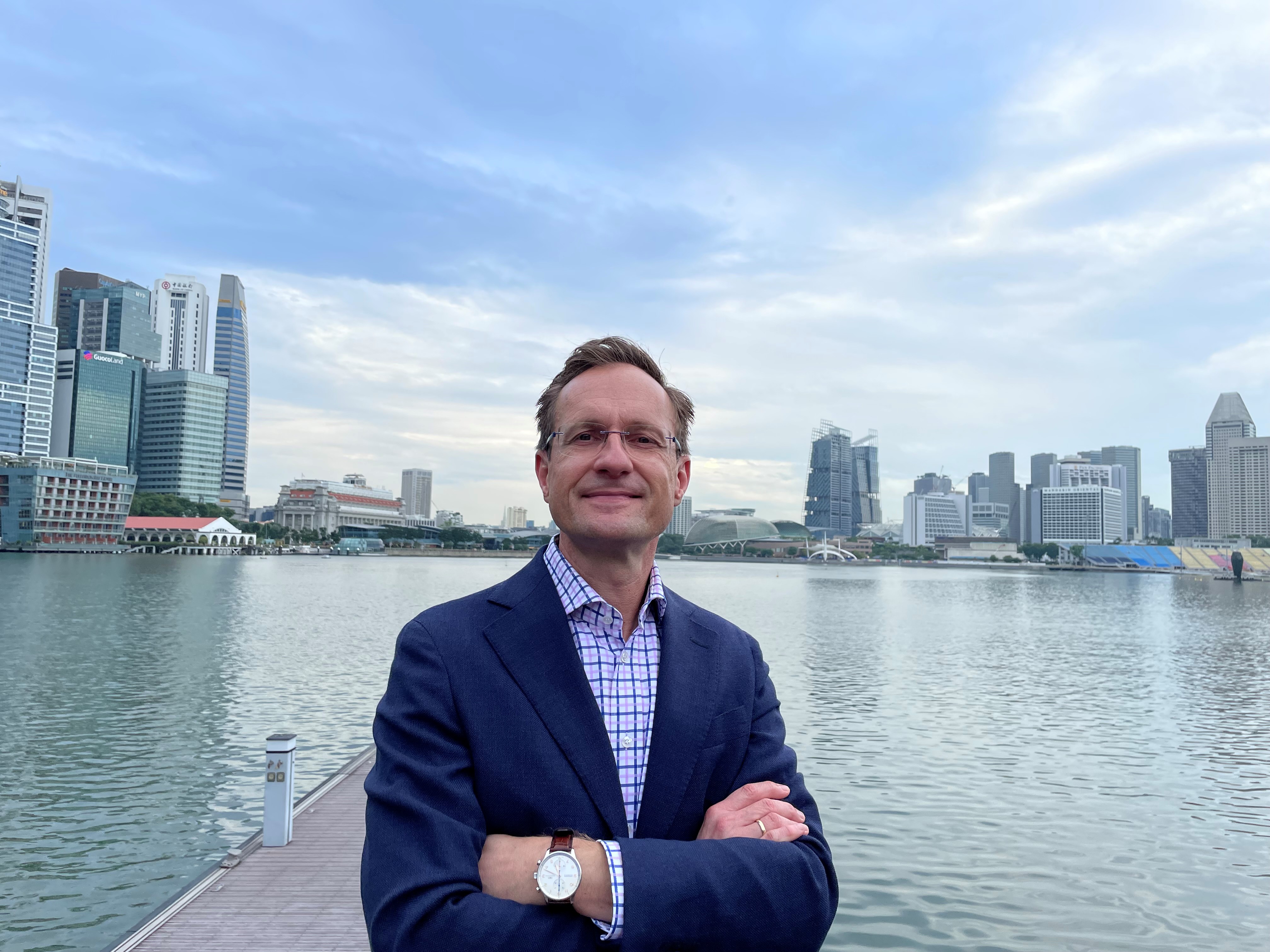
Bjarte Hannisdal is an Associate Professor in the Department of Geosciences at the University of Bergen, Norway, and affiliated with the Bjerknes Centre for Climate Research. He plays a key leadership role in iEarth, a national Centre of Excellence in geoscience education, serving as the iEarth Education Chair and Head of Focus Area 1, which aims to develop innovative frameworks for higher education in geosciences. Department of Geosciences, University of Bergen Bjerknes Centre for Climate Research iEarth – Centre of Excellence in Geoscience Education His research lies at the intersection of geobiology, paleontology, and Earth system science, with a strong focus on quantitative methods. He investigates Earth system evolution, causality in dynamical systems, and the co-evolution of life and the planet using advanced statistical and information-theoretic approaches applied to geological and fossil records. His work spans microbial ecology in deep-sea sediments, paleoclimatology through isotope analysis, and the detection of causal interactions in deep time. Hannisdal has made significant contributions through a high-impact publication record, with articles in top journals such as Science , Nature Geoscience , PNAS , and Physical Review E . His recent publications highlight trends in applying machine learning and information theory to geoscience problems, including microbial responses to oxygen, causality detection in incomplete records, and the calibration of geochemical proxies. These works reflect a strong interdisciplinary trend, integrating biology, physics, and computational methods into Earth sciences. He is actively involved in higher education, having developed and taught courses such as GEOV114 (Introduction to Geobiology) and GEOV302 (Data Analysis in Geosciences), and contributes to others like GEOV344 and BIO318. His educational research explores student-centered learning and computational skill development. He has supervised doctoral research, including Dario Blumenschein’s project on educational change. His work is supported by funding from the Research Council of Norway, Trond Mohn Foundation, and EU Horizon 2020. Hannisdal collaborates widely across institutions and disciplines, as evidenced by his co-authorship with researchers from Norway, the US, Germany, and others.
Leon Musolff is an Assistant Professor in the Business Economics and Public Policy group at the Wharton School, University of Pennsylvania. His research focuses on empirical industrial organization, particularly in the context of digital markets and algorithmic competition. Specializes in structural industrial organization and causal inference techniques Studies e-commerce platform design, algorithmic pricing, and AI impacts on productivity Active researcher in antitrust and digital economy policy Research Interests: Professor Musolff investigates how digital platforms shape market dynamics through algorithmic design, pricing strategies, and competitive behaviors. His work spans e-commerce auctions, AI-driven productivity analysis, search engine market dominance, and platform self-preferencing. Recent Publications: His field experiments and structural models analyze collusion detection in public procurement, generative AI's impact on software development, Amazon's Buybox algorithm effects, Google's search market share drivers, and pricing dynamics in algorithmic markets.
Dr. Pirro Hysi is a Reader (equivalent to Associate Professor) in Ophthalmology at King's College London, where he serves as School Academic Lead for Postgraduate Research within the School of Life Course & Population Sciences. His work bridges genetics, genomics, and ophthalmology, with a focus on understanding the genetic basis of eye diseases and related conditions. Dr. Hysi's research spans multiple areas of genetic ophthalmology and population genomics. His work primarily focuses on genome-wide association studies (GWAS) to identify genetic variants associated with eye conditions including myopia, glaucoma, keratoconus, and age-related macular degeneration. He also investigates the intersection of genetics with metabolomics, exploring how metabolic pathways influence ocular health and disease progression. His research has expanded into machine learning applications for disease prediction and the genetic basis of systemic conditions that impact eye health. His publication record demonstrates a strong focus on large-scale genetic studies, often leveraging data from the UK Biobank and other international cohorts. Recent work has expanded into applying machine learning approaches to predict disease progression and exploring the genetic basis of conditions beyond ophthalmology, including cardiovascular health, metabolic disorders, and pregnancy-related conditions. Dr. Hysi serves as Principal Investigator or Co-Investigator on multiple research projects funded by organizations including Fight for Sight, the BrightFocus Foundation, NIH, and the Fetal Medicine Foundation. His current projects include investigating metabolic factors in age-related eye diseases, developing vision measurement technology, and identifying glaucoma therapy targets through multi-omic analysis. He is actively involved in several major research consortia, particularly the UK Biobank Eye and Vision Consortium, and has contributed to numerous large-scale genetic studies across multiple medical specialties. His work has been featured in high-impact journals including Nature Communications, JAMA Ophthalmology, and Nature Medicine.
Eli Ben-Michael is an Assistant Professor in the Department of Statistics & Data Science and the Heinz College of Information Systems and Public Policy at Carnegie Mellon University. He is also affiliated with the CMU-NIST AI Measurement Science & Engineering Cooperative Research Center (AIMSEC). Previously, he was a Post-Doctoral Fellow at Harvard University in the Institute for Quantitative Social Science and the Department of Statistics. Ben-Michael's research focuses on developing statistical and computational methods to solve practical issues in public policy and social science research. His work brings together ideas from statistics, optimization, and machine learning to create methods for credible and robust causal inference and data-driven decision making. His research spans multiple domains including healthcare policy, criminal justice reform, reproductive health, and education. His scholarly work shows a strong emphasis on causal inference methodology, with particular attention to synthetic control methods, balancing weights, policy learning, and sensitivity analysis. His recent publications demonstrate applications across diverse fields including healthcare, economics, social policy, and criminal justice. Ben-Michael completed his PhD in Statistics from UC Berkeley and earned his undergraduate degree in Computer Science and Statistics from Columbia University. His technical expertise includes developing open-source software, with contributions to the R packages 'augsynth' and 'multical' for synthetic control methods and multilevel calibration.
Associate Professor Kai-Hsiang Chuang is a Principal Research Fellow at the School of Biomedical Sciences within the Faculty of Health, Medicine and Behavioural Sciences at the University of Queensland. He is also affiliated with the Queensland Brain Institute and the Centre for Advanced Imaging. His research focuses on understanding brain networks, developing advanced imaging techniques, and translating these findings to improve diagnosis and intervention for neurological disorders. Dr. Chuang received his Ph.D. in electrical and biomedical engineering from the National Taiwan University, Taiwan, in 2001. His doctoral research focused on improving the detection of brain activity using functional magnetic resonance imaging (fMRI). Ph.D. in Electrical and Biomedical Engineering, National Taiwan University (2001) Dr. Chuang's research spans multiple areas of brain imaging and neuroscience. His primary focus is on functional brain mapping , where he develops in vivo imaging techniques including functional MRI and multimodal integration with optogenetics, calcium imaging, and electrophysiology. He applies these techniques in both humans and animal models to improve understanding and intervention of brain function, disease processes, and treatment effects. Another key area is brain networks in learning, memory, and dementia . His work explores how brain network wiring and activity underpin cognition and behavior, with particular focus on understanding the causal relationship between brain network activity and memory formation. He develops techniques to modulate behavior by manipulating brain network activity. More recently, Dr. Chuang has expanded into brain waste clearance research, studying the brain's fluid drainage system that clears waste and toxic molecules like amyloid plaques. His lab is developing imaging techniques to track this system's function and understand its regulatory mechanisms, which could provide new treatment targets for dementia. Analysis of Dr. Chuang's recent publications reveals a strong focus on advancing functional MRI techniques for brain network analysis, particularly in rodent models. His work consistently bridges basic neuroscience with clinical applications, especially in understanding memory formation and dementia. A notable trend is the development of multimodal approaches that combine fMRI with optogenetics, calcium imaging, and electrophysiology to establish causal relationships in brain networks. His research increasingly addresses the translation of preclinical findings to human applications, with growing emphasis on Alzheimer's disease mechanisms and potential interventions. Dr. Chuang serves on the editorial boards of multiple prestigious journals including Frontiers in Neuroscience: Brain Imaging Methods , Imaging Neuroscience , and Scientific Reports , reflecting his standing in the field. Editorial Board Member, Frontiers in Neuroscience: Brain Imaging Methods Editorial Board Member, Imaging Neuroscience Editorial Board Member, Scientific Reports Dr. Chuang is actively involved in research supervision, currently serving as Principal Advisor for one PhD student working on "Developing imaging and neuro-technologies for decoding memory formation" and Associate Advisor for two other PhD projects. He has successfully completed supervision of three PhD students on topics related to resting-state networks, memory consolidation, and functional MRI. ARC Discovery Projects (2024-2028): "Decoding the brain network of memory formation" ARC Training Centre for Innovation in Biomedical Imaging Technology (2017-2024) NHMRC-NIH BRAIN Initiative Collaborative Research Grants (2016-2023) Universities Australia - Germany Joint Research Co-operation Scheme (2017-2018) Mater Medical Research Institute Limited grant for mindfulness-based cognitive therapy research (2017-2020) Dr. Chuang leads the Functional and Molecular Neuroimaging Group at the Queensland Brain Institute. His laboratory focuses on understanding the functional connectome of the brain and developing functional and molecular imaging techniques to study brain connectivity associated with behavior. The group has developed various MRI techniques to track neuronal connections, map large-scale brain synchrony, and quantify cerebral blood flow and metabolism in vivo. His research team collaborates extensively with other experts at UQ and internationally, including collaborations with Associate Professor Darryl Eyles, Professor Jürgen Götz, Professor Tianzi Jiang, Dr. Fatima Nasrallah, Professor Linda J. Richards, Professor Pankaj Sah, Professor Elizabeth Coulson, Dr. Patricio Opazo, Professor Feng Liu, and Professor Markus Barth.
Ross Horne is a Senior Lecturer in the Department of Computer & Information Sciences at the University of Strathclyde, Glasgow, United Kingdom. He is a member of the StrathCyber and Mathematically Structured Programming research groups. Education: PhD (University of Southampton, 2012), BA (Oxford University, 2005) Prior Appointments: Research Fellow at University of Luxembourg (2018-2023), Senior Research Fellow at Nanyang Technological University (2015-2018), Associate Professor at Kazakh-British Technical University (2012-2015) Research Interests: Dr. Horne's work focuses on security and privacy protocols for digital systems, particularly addressing threats in payment technologies, ePassports, and decentralized identity management (e.g., Solid protocol). His theoretical contributions bridge concurrency theory, proof theory, and logic through applications to security verification and process calculi. Developed formal models for unlinkability in EMV payment protocols Created intuitionistic logical frameworks for process equivalence Explored graphical proof systems beyond formulaic representations Investigated legal-compliant AI for space systems (CubeSat anomaly detection) Scientific Contributions: He has published extensively in top venues including ACM CCS, IEEE CSF, LICS, and CONCUR. His 2017 CONCUR best paper introduced intuitionistic characterizations of bisimilarity. Principal Investigator for EU COST Action on Distributed Knowledge Graphs Co-developed privacy models adopted in Luxembourg parliamentary responses Advising: Currently accepting PhD students with strong mathematical and computer science skills for research in security/privacy of emerging systems. Former student Semen Yurkov completed a thesis on privacy-preserving smart card payments. Interdisciplinary Work: Collaborates with space lawyers through the Interdisciplinary Master Program in Space Resources. Projects include AI for CubeSat reliability and legal-compliant software certification frameworks.
Associate Professor Wayne Wobcke is a faculty member in the School of Computer Science and Engineering at the University of New South Wales (UNSW), where he has been employed since 2002. His academic career includes previous positions at the University of Sydney until 1998, British Telecom Labs in the UK for three years, and the University of Melbourne for one year. He holds a PhD in Computer Science from the University of Essex (1989), an MSc from the University of Queensland (1985), and a BSc (Hons) in Mathematics/Computer Science from the University of Queensland (1984). Dr. Wobcke's research spans both theoretical and practical aspects of artificial intelligence and data science. His work encompasses intelligent agents, data mining, agent-based modeling, dialogue management, personal assistants, recommender systems, and computational social science. He has collaborated extensively with industry through three Cooperative Research Centres (Smart Internet Technology CRC, Smart Services CRC, and Data to Decisions CRC), where he served as a Programme Manager and Project Leader for over 10 years. Notable achievements include developing a voice-controlled mobile application for email and calendar interaction (a precursor to Apple's Siri) and deploying a people-to-people recommender system for online dating on one of Australia's largest dating sites. His recent research focuses on data science in humanitarian contexts and machine learning applications in official statistics, conducted in collaboration with BPS (Statistics Indonesia) and STIS (Politeknik Statistika, Indonesia). His publication record shows a consistent trajectory of impactful research, with recent work concentrating on poverty targeting, domain adaptation, natural language processing for recommender systems, and political opinion mining. Scientific Awards: Best Paper Nomination, 11th Workshop on Argument Mining (2024) UNSW Arc Postgraduate Research Supervisor Award (2017, 2018) AAAI Deployed AI Application Award, Twenty-Sixth Annual Conference on Innovative Applications of Artificial Intelligence (2014) Best application paper runner up, 17th Pacific-Asia Conference on Knowledge Discovery and Data Mining (2013) Dr. Wobcke has successfully supervised numerous research students, with Irwan Rahadi currently working on 'Causal Modelling and Machine Learning for Official Statistics'. His grant portfolio includes significant funding from the Australian Research Council and various Cooperative Research Centres, totaling over $3.7 million since 2003. He teaches COMP9414 Artificial Intelligence and COMP9727 Recommender Systems at UNSW.
Gürkan Bebek is an Assistant Professor at Case Western Reserve University with cross-departmental affiliations: Department of Nutrition, School of Medicine Center for Proteomics and Bioinformatics, School of Medicine Department of Computer and Data Sciences, Case School of Engineering Gürkan Bebek specializes in bioinformatics analysis of complex biological networks, focusing on precision medicine for cancer and systems biology of Alzheimer's disease. His research explores Shared mechanisms in COPD and lung cancer Causal regulatory network inference Functional subgraph mining in cancer Proteomic differences in Alzheimer's progression Notch signaling in glioma stem cells as reflected in his publications spanning 2007-2025. Key collaborative networks include Alzheimer's disease proteomics with Miyagi Lab Glioblastoma research with Yu/Man/Bao teams Breast cancer metastasis studies with Keri Lab Network biology methodologies with Chance/Koyutürk groups
Dr. Ulrich Zierahn-Weilage is an Associate Professor at the Utrecht School of Economics , Utrecht University , and a Research Associate at the ZEW – Leibniz Centre for European Economic Research in Mannheim, Germany. He is affiliated with the CESifo Research Network and Global Labor Organization (GLO) . His work addresses the intersection of digitalization , globalization , and labor market dynamics, with a focus on regional economic disparities and skill-based wage effects . Primary Affiliation : Utrecht University School of Economics Secondary Affiliation : ZEW – Leibniz Centre for European Economic Research Research Networks : CESifo, GLO Research Interests : Consequences of digitalization and globalization for labor market careers Regional economic disparities and agglomeration effects Methodological Expertise : Applied econometrics Causal inference Machine learning Quantitative data analysis Publication Trends : Recent work examines technological change (2016-2025), emphasizing automation risks , minimum wage spillovers , and skill adaptation to digitalization. Key themes include labor market institutions , task reconfiguration , and policy implications for open societies. Supervision and Funding : Supervised PhD candidates Cäcilia Lipowski (graduated 2024) and Sarah McNamara (in progress) Research funded by H2020 project GI-NI and Horizon project SkiLMeeT , focusing on technology-driven skill transformation and digital-green economic transitions
Debabrota Basu is a tenured faculty member (Inria Starting Faculty Position - ISFP) at the Scool team (previously called SequeL) of Inria Centre at University of Lille in France. He teaches postgraduate-level courses on privacy, responsible machine learning, and research methods in AI at École normale supérieure-PSL University, Université de Lille, and Centrale Lille. He is also a member of the ELLIS Society (European Laboratory for Learning and Intelligent Systems) and the Paris unit of ELLIS. Dr. Basu earned his PhD in Computer Science from the Department of Computer Science, School of Computing, National University of Singapore, advised by Stéphane Bressan and Pierre Senellart. Prior to that, he obtained a B.E. degree with Honours in Electronics and Telecommunication Engineering from Jadavpur University. Before joining Inria, he was a postdoctoral researcher at Chalmers University of Technology's Data Science and AI Division. Dr. Basu's research focuses on constructing algorithms for developing efficient, robust, private, and ethical learning machines that solve real-world problems. His methodological approach blends statistics, machine learning, and optimization. His application interests span sustainable agro-ecology, medical and pharmaceutical applications, energy-efficient autonomous systems, and algorithmic audits. Recent collaborations include the Inria-Indian Statistical Institute associate team SeRAI for developing Sequential Testing and Learning Algorithms for Verifiably Robust and Responsible AI, and the Inria-INRAE collaboration on Resilient Agricultural Decision Making under Environmental Risks. His publication record demonstrates expertise in bandit algorithms, reinforcement learning, and privacy-preserving machine learning. Recent work shows a strong theoretical foundation with practical applications, particularly in pure exploration bandits, differential privacy mechanisms, constrained optimization, and fairness verification. His research bridges the gap between theoretical guarantees and real-world deployment challenges across multiple domains. Dr. Basu has received notable recognition for his contributions: Best Student Paper Award at ACM EAAMO 2022 for 'On Meritocracy in Optimal Set Selection' Young researcher (JCJC) grant from the French National Research Agency (ANR) in 2022 in 'Artificial Intelligence and Data Science' He leads the project 'RL under Real-life Constraints: Regrets and Algorithms' and supervises PhD students and postdoctoral researchers. His research is supported by multiple projects including REPUBLIC ('Vers l'IA responsable avec l'apprentissage par renforcement sous contraintes') and 'Foundations of robustness and reliability in artificial intelligence.' Dr. Basu actively collaborates with institutions worldwide, including establishing the RELIANT associate team with Kyoto University for investigating structured multi-armed bandit problems.
Prof. Dr. Martin Raubal is a Full Professor at the Institute for Cartography and Geoinformation, Department of Civil, Environmental and Geomatic Engineering, ETH Zurich. He leads research on spatial decision-making, mobile GIS, and location-based services, with applications in transportation, energy, and aviation. His work integrates cognitive engineering and eye-tracking to analyze human mobility and interaction with geospatial systems. Doctorate in Geoinformation (with distinction), Vienna University of Technology (2001) MS in Spatial Information Science and Engineering, University of Maine (1997) Dipl.-Ing. in Surveying Engineering and Geoinformation, Vienna University of Technology (1998) His research focuses on spatiotemporal human mobility, cognitive models for GIS, and sustainable urban systems. Key projects include the Digital Underground initiative at the Singapore-ETH Centre and the Empirical Use and Impact Analysis of Mobility-as-a-Service (EIM). Awards include the UV-Helava Prize and multiple best paper recognitions. Recent publications emphasize 3D spatial analysis, AI-driven geospatial tools, and causal inference in mobility modeling. Collaborations span institutions like Lufthansa Systems, SBB, and ETH-IVT. His lab investigates applications such as electric vehicle charging networks, bikeability indexes, and augmented reality in transportation planning.
Jonathan D. Cohen is a Robert Bendheim and Lynn Bendheim Thoman Professor in Neuroscience and Professor of Psychology and Neuroscience at Princeton University. He leads the Natural and Artificial Minds Initiative as Associate Director, bridging computational neuroscience, cognitive science, and machine learning. His research explores the interplay between cognition, neural dynamics, and AI systems. Research interests include Computational models of cognitive control and decision-making Cerebellar-cortical interactions in neurodevelopment and aging Neural-symbolic integration in AI architectures Quantum computing applications for cognitive modeling Medical applications of machine learning Recent publications demonstrate expertise in artificial neural networks, autism neurobiology, semantic cognition, and interdisciplinary approaches to modeling human and machine intelligence. His work spans theoretical neuroscience, AI interpretability, and translational medicine applications. Scientific contributions include Advancing hybrid mamba-transformer architectures for efficient reasoning Elucidating cerebellar roles in cognitive aging and disease Innovations in quantum models of cognition Developing frameworks for causal analysis in neural networks Exploring neurochemical diversity in psychedelic-producing fungi
Robert Brunner serves as Professor of Astronomy at the University of Illinois at Urbana-Champaign, where he bridges astrophysical research with computational innovation. His work focuses on extracting knowledge from massive astronomical datasets through advanced statistical and machine learning techniques, while also extending methodologies to finance and agricultural applications. Research interests center on developing machine learning algorithms (random forests, deep neural networks, Bayesian estimation) for astronomical data analysis, cosmological parameter constraints via n-point clustering measurements, and hardware acceleration using GPUs/cloud systems. His interdisciplinary approach spans source classification, transient phenomena detection in surveys like SDSS and DES, and applications in financial time-series analysis and agricultural remote sensing. Recent publications (2019-2025) reveal strong cross-domain expertise: astronomical catalogs for Rubin Observatory and Spitzer surveys coexist with financial market analysis using community detection methods and agricultural computer vision systems. Key methodological threads include spatio-temporal forecasting, multimodal learning for earnings calls, and anomaly detection via extended isolation forests, demonstrating consistent innovation in handling petascale datasets across scientific boundaries.
Martin Hebart is a Professor for Computational Cognitive Neuroscience and Quantitative Psychiatry at Justus Liebig University Giessen and an Independent Max Planck Research Group Leader at the Max Planck Institute for Human Cognitive and Brain Sciences in Leipzig, Germany. His work bridges cognitive neuroscience, computer science, and psychology to explore visual perception, object recognition, and computational models of brain function. PhD in Psychology from Bernstein Center for Computational Neuroscience Berlin (2014) M.Sc. and B.Sc. in Neuro-cognitive Psychology from Ludwig Maximilian University Munich His research integrates psychophysics , neuroimaging (fMRI, MEG), and machine learning to decode how visual input transforms into stable object representations and how these insights inform psychiatric conditions like hallucinations. Articles highlight his focus on computational models , neural network alignment , and large-scale behavioral-neuroimaging datasets (e.g., THINGS-data). His group’s work spans from basic visual cognition to translational applications in psychiatry. Scientific awards include postdoctoral fellowships from the National Institute of Mental Health (2016) and Alexander von Humboldt Foundation (Feodor Lynen, 2016), alongside doctoral and study scholarships. He leads a multidisciplinary team at the intersection of JLU Giessen’s Medical Department and MPI, mentoring students in visual neuroscience , AI-driven modeling , and clinical applications .
Mathieu Fontaine is an Associate Professor in Machine Listening at Télécom Paris , affiliated with the LTCI Lab within the IDS Department (Information, Data, Signal). His research focuses on machine listening for speech and audio signal processing. PhD in Informatics (2019), Lorraine University Master in Applied and Fundamental Mathematics (2015), Poitiers University BSc in Fundamental Mathematics (2013), Rennes University Fontaine's research spans speech enhancement , speaker separation , source localization , and music source separation using heavy-tailed probabilistic models and deep Bayesian networks , with applications in augmented reality . He has expertise in Python , signal processing , and machine learning (80% proficiency). His recent publications (2024) include work on diffusion models for speech synthesis , room acoustics estimation from 3D meshes , robust audio scene analysis , and direction-aware speech processing . Earlier publications (2022-2023) explore flow-based NMF , alpha-stable representations , and adaptive beamforming in multiparty environments. Fontaine collaborates with the S2A team and ADASP group at LTCI Lab. His work integrates probabilistic modeling with deep learning to address challenges in real-world audio processing, including reverberation, noise, and complex acoustic environments.