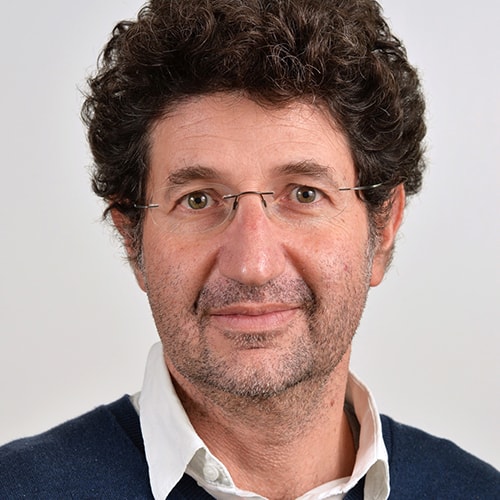
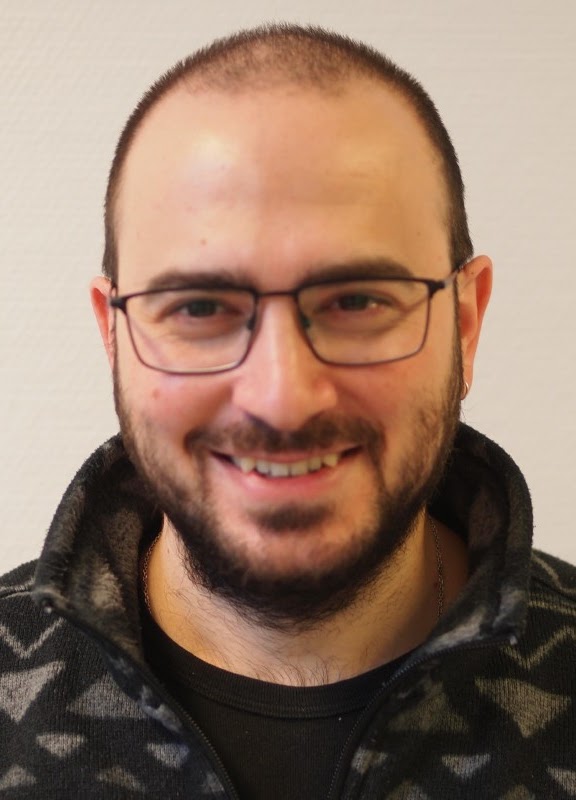
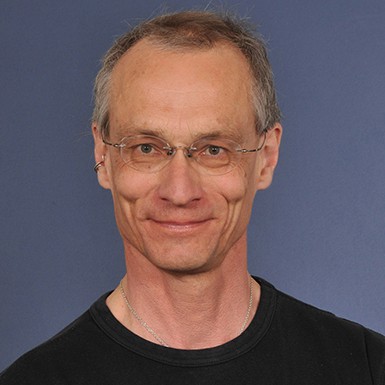
Jan Østergaard is a Full Professor in Information Theory and Signal Processing at Aalborg University's Department of Electronic Systems. He leads the AI and Sound research section and directs the CASPR center. His expertise spans AI-driven acoustic signal processing, information theory, and EEG signal analysis. Østergaard holds a M.Sc. from Aalborg University and a PhD (cum laude) from Delft University of Technology. Major awards include the Danish Young Researcher’s Award and a EURASIP Best Thesis honor. His work focuses on speech enhancement, sound zone technologies, and neural tracking of auditory attention. Recent research emphasizes low-latency speech transmission, deep learning for sound field control, and robust voice activity detection. He serves on editorial boards and national committees, advancing Denmark’s sound technology initiatives. Education: M.Sc. (Aalborg, 1999), PhD (Delft, 2007) Research interests emphasize practical AI applications in sound systems, including hearing aid improvements, data-efficient acoustic modeling, and feedback control in networked systems. Over 210 publications and 17 active projects reflect his interdisciplinary impact across academia and industry.
Alessandra Meddis serves as an Assistant Professor in the Section of Biostatistics within the Department of Public Health at the University of Copenhagen's Faculty of Health and Medical Sciences. Her academic work centers on developing and applying advanced statistical methodologies for longitudinal and time-to-event data analysis, with significant contributions to public health research in Denmark and internationally. Her institutional affiliation is clearly established through university contact details and departmental listings. Her primary research interests include correlated survival data analysis, competing risk modeling, informative cluster size methodology, causal inference techniques for observational studies, and environmental epidemiology applications. Dr. Meddis has developed specialized expertise in handling complex survival data structures while maintaining focus on real-world public health problems, particularly in HIV comorbidity patterns, environmental exposure effects, and pandemic-related mortality analyses. Her methodological innovations directly address challenges in clustered and censored data common across medical research domains. Analysis of Dr. Meddis's recent publication record reveals a consistent trajectory of high-impact interdisciplinary research spanning clinical medicine, epidemiology, and statistical methodology. Her work appears in leading journals across biostatistics, infectious diseases, and public health, demonstrating strong collaborative networks with clinical researchers and epidemiologists. Key thematic areas include HIV treatment outcomes, environmental health exposures, and critical care applications during the pandemic, with recent methodological papers advancing survival analysis techniques for complex data structures. Scientific Awards: No scientific awards were specified in the available institutional profile. Advising and Grants: The institutional profile does not provide details regarding graduate student supervision or specific research grant funding. Her collaborative publications suggest involvement in multi-investigator projects including the COCOMO HIV cohort study and pandemic-related research initiatives. Labs and Teams: Dr. Meddis is affiliated with the Section of Biostatistics within the Department of Public Health, though specific laboratory facilities or dedicated research teams are not described in the source material. Her extensive co-authorship patterns indicate active participation in multiple research consortia across medical specialties.
Ninette Pilegaard is a Professor and serves as Deputy Head of Division and Head of Section for Transport Policy at the Department of Technology, Management and Economics, Technical University of Denmark (DTU). Her academic career spans multiple research domains with significant contributions to transportation policy and economics. Her research interests focus on transportation policy analysis with particular expertise in: Road charging systems and pricing mechanisms Bicycle infrastructure and safety analysis Commuting behavior and accessibility impacts Car ownership and usage patterns Relationship between transportation accessibility and labor market outcomes Dr. Pilegaard's scholarly work demonstrates a strong empirical approach combining transportation engineering with economic analysis. Her recent publications reveal a consistent focus on evidence-based policy evaluation, particularly in the Danish context. She frequently employs quasi-natural experimental methods to assess transportation policy impacts, with particular attention to road pricing, cycling infrastructure, and the economic implications of transportation systems. Her research has been supported by major funding bodies including Innovation Fund Denmark and Forskningsrådsfinansiering, and has resulted in publications in high-impact transportation journals such as Transportation Research Parts A and D, and Journal of Safety Research. As an academic supervisor, Dr. Pilegaard has served as Main Supervisor for PhD projects, including the 'Productivity and agglomeration' project. She has been actively involved in numerous research collaborations both within DTU and with external partners. Her laboratory work focuses on transportation data analysis, particularly utilizing Danish transportation datasets to examine policy impacts. She has developed expertise in analyzing hospital data for traffic safety research and has contributed to methodologies for assessing infrastructure effects on traffic accidents.
Francisco Camara Pereira is a Professor and Head of Section at the Department of Technology, Management and Economics at the Technical University of Denmark (DTU). His research focuses on Intelligent Transportation Systems, Machine Learning, and Data-Driven Decision-Making in transportation contexts. He actively contributes to advancing transportation science through interdisciplinary approaches combining simulation, optimization, and AI techniques. His work addresses challenges in public transport analysis, charging infrastructure planning, and multimodal demand prediction. Recent projects include developing graph-based optimization methods for electric vehicle networks and causal discovery frameworks for transportation systems. He supervises multiple PhD students in areas like federated learning for cyclist safety, causal graph neural networks, and socially aware AI models. Key contributions include publications on smart card data analysis for travel surveys, stochastic infrastructure expansion models, and transfer learning for bike-share systems. His research aligns with UN Sustainable Development Goals related to sustainable cities and innovation. Dr. Pereira collaborates internationally on transportation policy and infrastructure projects. His lab focuses on translating theoretical advancements into practical solutions for urban mobility challenges.
Niels Richard Hansen is a Professor at the Department of Mathematical Sciences , University of Copenhagen, leading research at the intersection of Artificial Intelligence and Statistics . He co-founded the Copenhagen Causality Lab and focuses on automating causal explanation discovery from data using Bayesian networks, stochastic processes, predictive models, and machine learning. His work emphasizes creating interpretable and robust AI systems capable of generalizing across domains. His research has produced over 56 publications spanning causal inference , graphical modeling , stochastic processes , and machine learning . Recent work includes: Predictive and causal learning (2018 keynote) High-dimensional regression solutions (2016 lecture) Interdisciplinary applications in actuarial science , environmental statistics , and neuroscience He actively contributes to scientific communication through media appearances and public explanations of statistical concepts, including analyses of: Gaussian correlation inequality proofs Daylight saving time and blood clots Mathematical approaches to lotteries Climate change vs lunar effects
Vito Latora is a Professor of Applied Mathematics and Chair of Complex Systems at the School of Mathematical Sciences, Queen Mary University of London, and also holds the position of Professor of Theoretical Physics at the University of Catania. He leads the Complex Systems and Networks Group, driving cutting-edge research at the intersection of physics, mathematics, and interdisciplinary sciences. His research focuses on complex systems, particularly the structure and dynamics of networks, including multiplex, temporal, and higher-order networks such as simplicial complexes and hypergraphs. He explores applications in social, biological, financial, and cognitive systems, with recent work on creativity, innovation, and success through network analysis. The 15 most recent publications reveal a strong trend in advancing network theory beyond pairwise interactions, with a focus on higher-order structures, memory effects, synchronization, and epidemic spreading. His work combines rigorous mathematical modeling with real-world applications, often published in high-impact journals like Nature Communications , Physical Review Letters , and Science Advances . Dual communities in spatial and biological networks Modeling epidemics with limited detection resources Synchronization via higher-order and directed interactions AI-driven financial risk management Evolutionary games on hypergraphs Interdisciplinary success and funding dynamics Vito Latora has mentored several researchers who appear as co-authors, including Iacopini, Williams, Di Bona, and Lacasa. While specific grants are not listed, his collaborative projects with neuroscientists and anthropologists, along with frequent publications, suggest active funding. He is involved in major scientific events such as NetSci 2023, indicating leadership in the network science community. He leads the Complex Systems and Networks Group at Queen Mary, fostering a collaborative environment for studying complex systems through theoretical, computational, and data-driven approaches.
Christian Erik Kampmann is an Associate Professor at the Department of Strategy and Innovation, Copenhagen Business School. He holds a Ph.D. in Management from MIT and an engineering background from DTU, bridging technical rigor with socio-economic research. Education: MIT (Ph.D. in Management), DTU (Engineering) Research Interests focus on system dynamics as applied to sustainable energy transitions, electric mobility, and green urban mobility. His methodological work enhances structural dominance analysis and eigenvalue techniques for complex system modeling. Recent publications address feedback loop gains, market misperceptions of feedback, and comprehensive analytical approaches for policy modeling, reflecting his interdisciplinary focus on sustainability challenges. Teaching includes courses on system dynamics, sustainable business strategy, and quantitative business research, with supervision of theses on electric mobility and product-service sustainability. External engagements involve board membership (Magasin du Nord, 2018-2020) and computer modeling consultancy (Zerolytics, Whitebox).
Derek Beach is a Professor at the Department of Political Science, Aarhus University. His expertise lies in advancing process tracing methodology for academic research and policy evaluation, with a focus on European integration processes, voter behavior, and case study methods. He is currently leading a four-year project on Mechanisms and Mechanistic Evidence in the Social Sciences. Research Interests: Beach specializes in methodological development of process tracing, applying it to both academic and policy contexts. His substantive research explores EU crisis negotiations, the role of analogical reasoning in policy analysis, and evidential pluralism in social science research. He has co-authored a textbook on foreign policy analysis and process tracing in Danish. Collaborations & Consultancy: Beach collaborates with the Wellbeing Investments in Schools and Enterprises (WISE) project at the University of Birmingham and has worked with the World Bank's Independent Evaluation Group and the Joint Data Center (World Bank/UNHCR) on policy evaluations. His consultancy work spans UN agencies and global institutions. Teaching: He teaches across all levels (BA to PhD), including courses on Methods, US Presidential Election Simulation Models, and Case-Based Methods. His pedagogical focus aligns with his methodological research, emphasizing process tracing and evaluation techniques. Publications & Contributions: His scholarly work includes foundational texts on process tracing and empirical studies on EU integration. He has contributed to journals like European Journal of Political Research , Synthese , and Sociological Methods & Research , though specific publication years are not listed in the provided data.
Bo Markussen is a Professor at the University of Copenhagen within the Department of Mathematical Sciences . He is also a member of the Data Science Laboratory , where he contributes to statistical methodology and interdisciplinary collaborations. His academic journey began with a Cand.Scient (MSc) and PhD in Statistics from the University of Copenhagen, awarded in 1998 and 2002 respectively. 2012–present: Professor, Department of Mathematical Sciences, University of Copenhagen 2009–2012: Associate Professor, Department of Basic Sciences and Environment, University of Copenhagen 2006–2009: Assistant Professor, Department of Basic Sciences and Environment, University of Copenhagen Bo Markussen's research focuses on applied statistics , particularly in functional data analysis and multiple testing corrections in genetics . His work spans diverse domains including environmental science, agriculture, and public health. Recent research output highlights applications in Arctic climate data analysis, fire risk modeling, plant stress phenotyping, and nutritional biomarker prediction. His recent publications demonstrate a strong trend toward machine learning integration with statistical modeling , addressing challenges in high-dimensional data analysis and environmental risk assessment. Collaborations span institutions in Denmark and internationally, reflecting his engagement in pan-Arctic climate studies and tropical agricultural research. 2018–present: Associate Editor, Scandinavian Journal of Statistics 2017–2019: Chair, Danish Society for Theoretical Statistics 2015–2017: Board Member, Danish Society for Theoretical Statistics As a central figure in the Data Science Laboratory , Markussen leads statistical consultancy initiatives and contributes to methodological advancements. His expertise bridges theoretical statistics with real-world applications, particularly in handling complex datasets across biological and environmental domains.
Georgios Arvanitidis is an Associate Professor at the Technical University of Denmark (DTU) in the Department of Applied Mathematics and Computer Science, specifically within the Section for Cognitive Systems (CogSys). He has established himself as a leading researcher in geometric machine learning, focusing on the application of differential geometry principles to enhance machine learning models. His work bridges theoretical mathematics with practical applications in artificial intelligence, with particular emphasis on understanding the geometric structure of data manifolds and latent spaces. Dr. Arvanitidis completed his educational journey with a Bachelor's degree from the Department of Informatics at the Aristotle University of Thessaloniki, followed by a Master's degree in Computer Science from Saarland University supported by the Max Planck Institute for Informatics. He earned his PhD at DTU's Cognitive Systems section under the supervision of Søren Hauberg, with additional research experience at Philipp Hennig's Probabilistic Numerics group. Prior to his current position as associate professor, he was a PostDoc at the Max Planck Institute for Intelligent Systems working with Bernhard Schölkopf. Dr. Arvanitidis's research primarily focuses on differential geometry in machine learning , where he explores how geometric structures can enhance representation learning and statistical modeling. His work in generative models investigates how learning the geometry of data manifolds can improve deep learning architectures. In the domain of deep learning theory , he examines why deep learning models generalize effectively on unseen data, with particular attention to the curvature properties of loss landscapes. His research in approximate Bayesian inference applies geometric principles to improve uncertainty quantification in neural networks. Through his innovative approaches, Dr. Arvanitidis has established himself as a leading researcher in geometric machine learning, contributing to both theoretical foundations and practical applications across various domains including robotics and life sciences. The publication trends of Dr. Arvanitidis reveal a consistent and evolving focus on geometric approaches to machine learning problems. His recent work (2023-2025) demonstrates increasing sophistication in applying Riemannian geometry to deep learning architectures, with particular emphasis on latent space geometry, optimization on manifolds, and geometric interpretations of neural network behavior. A notable pattern is the progression from foundational work on geometric representations to more applied research in areas like robotics and causal inference. His publications span top-tier conferences including NeurIPS, ICML, ICLR, and AISTATS, reflecting the high impact of his research. The interdisciplinary nature of his work is evident in collaborations across mathematics, computer science, and robotics domains, with recent papers addressing challenges in multimodal sampling, safety guarantees for dynamical systems, and counterfactual explanations. Dr. Arvanitidis has received several notable scientific awards and recognitions: Sapere Aude starting grant from the Independent Research Fund Denmark (DFF) GADL funding i-Rase, Pathfinder, and EIC (European Innovation Council) funding Best reviewer award for NeurIPS 2019 Best reviewer award for NeurIPS 2018 Best student paper award at Robotics: Science and Systems (R:SS) 2021 Dr. Arvanitidis actively mentors PhD students and researchers, currently supervising Alejandro Valverde, Johanna Gegenfurtner, and Albert Kjøller Jacobsen. He has previously co-supervised Alison Pouplin's PhD and worked with research assistant Georgios Pantis. His group receives substantial funding through multiple prestigious grants including the Sapere Aude starting grant from the Independent Research Fund Denmark, as well as European Innovation Council funding. He has been instrumental in creating opportunities for students interested in geometric machine learning, offering BSc and MSc thesis projects focused on generative models, deep learning theory, and optimization techniques. Dr. Arvanitidis also contributes significantly to the academic community as a reviewer for top conferences including ICLR and TMLR, and as an area chair for NeurIPS, ICML, AISTATS, and UAI. He co-organized the Machine Learning Summer School 2020 in Tübingen, further demonstrating his commitment to education and community building. Dr. Arvanitidis leads a vibrant research group focused on geometric machine learning within the Cognitive Systems section at DTU. His team includes multiple PhD students working on cutting-edge research at the intersection of differential geometry and artificial intelligence. The group has developed notable software tools, including the "geometric_ml" GitHub repository with over 70 stars, which contains implementations for applying Riemannian geometry in machine learning. His research has practical applications in robotics, where geometric approaches enable more robust motion planning, as evidenced by his work on "Reactive Motion Generation on Learned Riemannian Manifolds" which received a best student paper award. Additionally, his methodologies have found applications in life sciences, as mentioned in his 2022 AISTATS paper. The collaborative nature of his work is evident through extensive partnerships with researchers at institutions including the Max Planck Institute for Intelligent Systems, University of Cambridge, and various European universities. His recent news items indicate active engagement with the academic community through talks, conference presentations, and ongoing supervision of new PhD students joining his group.
Arijit Khan is an Associate Professor in the Department of Computer Science at Aalborg University, Denmark. He leads the Data Engineering, Science and Systems group and is affiliated with the Technical Faculty of IT and Design. His research focuses on Graph Neural Networks , Blockchain , Data Management , and AI interpretability . He is the Principal Investigator (PI) of a major project on Data Management, Fundamental Algorithms, and Machine Learning for Emerging Problems in Large Networks (2022–2027). Research Interests : Graph Data Management & Machine Learning Blockchain Transaction Analysis Large Language Model + Knowledge Graph Synergies Healthcare AI (e.g., ICU glucose prediction) Explainable AI for Graph Neural Networks Research Trends : His publications emphasize neuro-symbolic systems , uncertain graph analysis , and AI-driven blockchain insights . Recent work bridges large language models with knowledge graphs and explores GPU performance optimization via shader code analysis. Awards & Grants : No explicit awards listed, but his active research grants include a 5-year project on large network analysis with interdisciplinary applications in life and health sciences. Funding emphasizes algorithmic innovation and data science integration. Labs/Teams : Head of the Data Engineering, Science and Systems research group, focusing on AI for societal impact ('AI for the People') and scalable graph data systems. Collaborations span blockchain analytics, healthcare informatics, and GPU architecture design.
Søren Rud Kristensen is a Professor at the Department of Public Health, University of Southern Denmark and holds an Honorary Senior Lecturer position at Imperial College London. His research focuses on healthcare organization and performance, particularly incentive design for quality improvement, with expertise in microeconometric analysis of large administrative datasets. He has held roles including Senior Lecturer (2017-2021) at Imperial College London. Key research areas include payment for performance systems, integrated care models, and clinical guideline implementation. He has published extensively on healthcare quality, patient safety, and health policy with 71+ peer-reviewed articles. His work addresses challenges like hospital competition effects, spillover mechanisms of financial incentives, and the impact of adverse events on patient outcomes. He has received multiple research grants including support for Manchester research stays and funding from Sygekassernes Helsefond. Teaching responsibilities include modules on integrated health care, quality management, and data-driven quality development. His current projects focus on regulating knowledge use in healthcare (PINCH project) and evaluating resource constraints in primary care. Labs/teams involvement includes collaborations through the Danish Centre for Health Economics (DaCHE) and international networks analyzing health systems in England, Brazil, Mozambique, and Zimbabwe. His work bridges economic theory with practical healthcare system improvements.
Henrik Jeldtoft Jensen is a Professor of Mathematical Physics and leads the Centre for Complexity Science at Imperial College London. His work spans multiple disciplines, focusing on the statistical mechanics of complex systems, with applications in physics, biology, neuroscience, and finance. Professor, Mathematical Physics Leader, Centre for Complexity Science Institution: Imperial College London His research interests lie at the intersection of theoretical physics and complex systems. He is best known for developing the Tangled Nature Model of evolving ecosystems, which has been extended into financial modeling through the Tangled Finance approach. His work in brain dynamics involves analyzing fMRI and EEG data using tools from statistical physics. He has made significant contributions to self-organized criticality and stochastic dynamics of complex systems, particularly in condensed matter and evolutionary contexts. The recent publications reflect a strong trend toward interdisciplinary complexity science, integrating concepts from physics, biology, economics, and neuroscience. Keywords across these works include complexity, statistical mechanics, dynamical systems, and network theory, with subfields ranging from neural avalanches to financial instability and biodiversity modeling. Henrik Jensen is the author of two influential books: Self-Organized Criticality and Stochastic Dynamics of Complex Systems (with Paolo Sibani), which have been widely cited across disciplines. He has supervised numerous PhD and postdoctoral researchers through the Centre for Complexity Science, though specific names are not listed. His research has been supported by grants from UK research councils and international collaborations, particularly in interdisciplinary complexity projects. He is affiliated with the Centre for Complexity Science, a multidisciplinary research hub at Imperial College London that brings together physicists, mathematicians, biologists, and social scientists to study complex adaptive systems.
Filipe Rodrigues is an Associate Professor in the Department of Technology, Management and Economics at the Technical University of Denmark (DTU), where he conducts research in intelligent transportation systems and transportation science. His work integrates machine learning, artificial intelligence, and behavioral modeling to improve urban mobility and public transport systems. His research interests lie at the intersection of machine learning , transportation science , and behavioral modeling . He specializes in discrete choice modeling , reinforcement learning , graph neural networks , and smart card data analytics . His work contributes to sustainable urban mobility, leveraging big data and AI for proactive traffic control and public transport optimization. The recent publications highlight a strong trend toward integrating AI and behavioral science in transportation. Key themes include ride-sourcing driver behavior , public transport trip validation , autonomous fleet control , and causal machine learning . These works predominantly employ deep learning , Bayesian modeling , and offline reinforcement learning techniques, often applied to real-world datasets from Denmark and beyond. Scientific Contributions: Active contributor to journals like Transportation Research Part C and Journal of Choice Modelling . Supervises multiple PhD projects on AI in transportation and causal modeling. Regular presenter at major transportation and AI conferences. Advising and Grants: Filipe Rodrigues is the main or co-supervisor of several PhD students including O. B. Lassen, F. M. F. Santos, A. Nguyen, and X. Wu. He leads and participates in funded research projects such as 'Proactive traffic control through AI and Big Data' and 'Causal Graph Neural Networks for machine learning meta-modelling', indicating sustained grant support. His collaborative network spans institutions in Europe and beyond. Labs and Teams: He is part of the Intelligent Transportation Systems research group at DTU, collaborating closely with researchers like F. C. Pereira and C. M. L. Azevedo. The team focuses on data-driven mobility solutions, combining simulation, machine learning, and behavioral insights.
Alessia Benedetta Platania is an Associate Professor at the Niels Bohr Institute , University of Copenhagen, specializing in Quantum Gravity , Black Hole Physics , and Gravitational Cosmology . Her research focuses on non-perturbative approaches to quantum gravity, particularly asymptotic safety, and its implications for black hole entropy, singularity resolution, and early universe cosmology. Research Themes : Quantum gravity phenomenology, black hole thermodynamics, renormalization group flows, multi-messenger astronomy Recent Collaborations : Key contributions to collaborative frameworks involving institutions across 15+ countries, with significant media coverage and Wikipedia citations Her 2025 work on photon-graviton flows explores intersections between positivity bounds, weak gravity conjectures, and asymptotic safety. Earlier studies (2022–2024) investigate causality/unitarity in quantum gravity and quantum evaporation mechanisms. She co-authored the White Paper and Roadmap for Quantum Gravity Phenomenology (2025), a community-driven initiative for experimental validation strategies. Scientific Networks : Collaborated with 100+ researchers globally Contributions to Journal of High Energy Physics , Classical and Quantum Gravity , and Physics Letters B Research disseminated through 20+ news outlets and social media platforms (X, Bluesky, Mendeley)