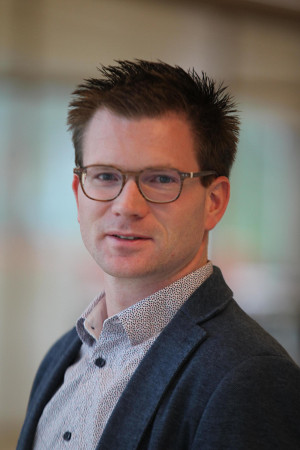
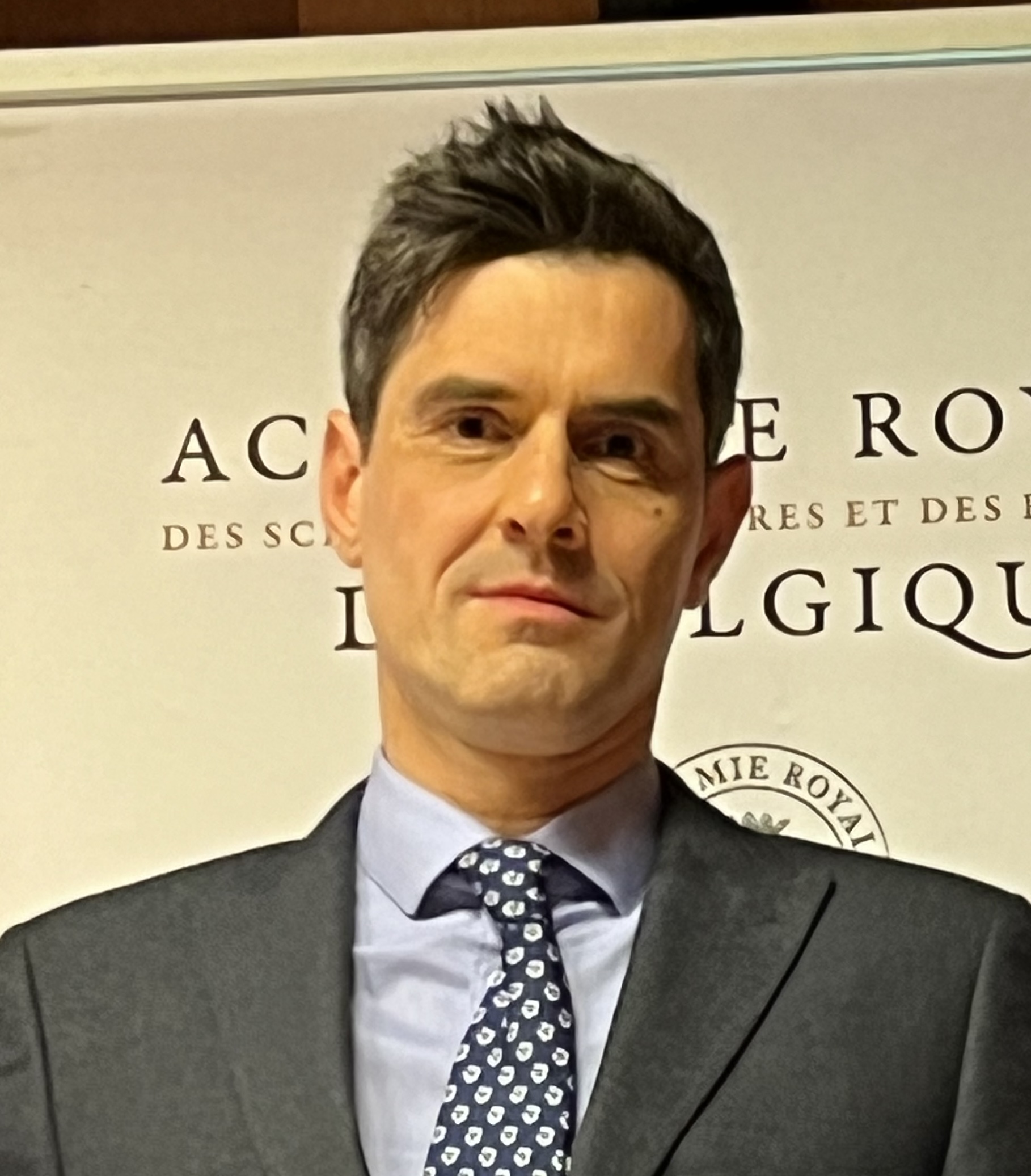
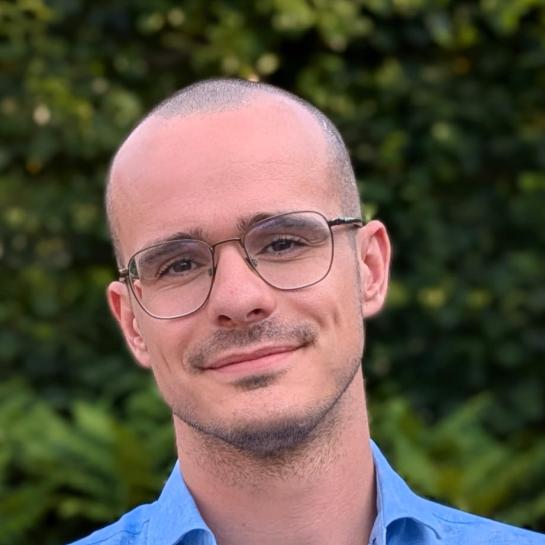
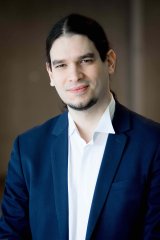
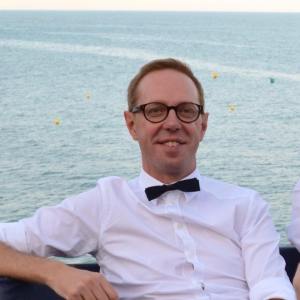
David Martens is a Professor of Data Science at the University of Antwerp , where he directs the Applied Data Mining Research Group within the Faculty of Business and Economics . He also serves as Chair of the Department of Engineering Management and Director of the Antwerp Center on Responsible AI . His academic work spans data mining , interpretable machine learning , and the societal impact of AI . PhD in Applied Economic Sciences (KU Leuven, 2008) Director, Antwerp Center on Responsible AI Chair, Department of Engineering Management Martens' research focuses on responsible AI and data ethics , with applications in finance, public policy, and behavioral analysis. His recent publications emphasize counterfactual explanations , LLM interpretability , and privacy implications in AI systems. His articles reveal trends in Explainable AI (XAI) , including narrative-driven explanations , graph neural networks , and ethical challenges like monetization risks and algorithmic bias. Keywords span Computer Science , Artificial Intelligence , and Behavioral Data . Martens is a leading voice in data science ethics , authoring the book Data Science Ethics: Concepts, Techniques, and Cautionary Tales (Oxford University Press, 2022). He combines academic rigor with industry experience, having consulted for banks, telecom firms, and startups in fraud detection and digital advertising .
Matthew B. Blaschko is a Professor in the Department of Electrical Engineering at KU Leuven, Belgium. He serves as director of the KU Leuven ELLIS unit and is a fellow in the ELLIS Health program. He is a Core PI in the Flanders AI Research Program, working as a workpackage lead for Decision Support Systems and Medical Imaging. Blaschko is also a member of the KU Leuven Institute for Artificial Intelligence and one of the leaders of the working group on Machine Learning and Data Science. Professor Blaschko received his B.S. from Columbia University, M.S. from the University of Massachusetts Amherst, and Dr. rer. nat. from Technische Universität Berlin (awarded for work at Max Planck Institutes Tübingen). He was a Newton International Fellow at the University of Oxford and received his Habilitation (HDR) from École Normale Supérieure de Cachan. Prior to joining KU Leuven, he was a Permanent Research Scientist in the INRIA Saclay Research Center and a Faculty Member at Ecole Centrale Paris. His research focuses on machine learning techniques applied to visual data, with particular emphasis on calibration in deep learning, medical image analysis, and federated learning. Blaschko's work bridges theoretical foundations with practical applications, as evidenced by technology developed in his research being incorporated into MONA, software for ophthalmic image analysis. His research group has made significant contributions to the fields of model calibration, uncertainty estimation, and medical imaging analysis, with recent publications showing strong trends toward improving reliability of AI systems in medical contexts and advancing theoretical understanding of calibration metrics. Professor Blaschko has been recognized with several awards including the Université Paris-Saclay STIC Doctoral School Best Scientific Contribution Award, Best Paper Award at CVPR 2008, Main Award at DAGM 2008, and Best Student Paper Award at ECCV 2008. Professor Blaschko has supervised numerous PhD and Master's students, with current and former students including Deniz Soysal, Claire Marchal, Dongli Xu, Sebastian Gruber, Jiameng Li, Marco Mezzina, and many others working on diverse topics from Alzheimer's disease analysis to surgical phase recognition. His research has been supported by various funding sources including the Flanders AI Research Program. He has co-organized several influential workshops including the "Another Brick in the AI Wall: Building Practical Solutions from Theoretical Foundations" at CVPR 2025, Commands 4 Autonomous Vehicles workshop at ECCV 2020, and the Learning from Limited Labeled Data workshop series at NIPS 2017 and ICLR 2019. His laboratory focuses on machine learning for medical image analysis, with applications in ophthalmology, neurology, and surgical robotics. The group maintains active collaborations with medical institutions and participates in international challenges such as the KNee OsteoArthritis Prediction (KNOAP2020) challenge.
Ingrid Van Keilegom is a Full Professor at the Faculty of Economics and Business (FEB) at KU Leuven. She is a member of the LISS – KU Leuven Institute of Sports Science and serves as a program director for the POC Master in Statistics. Senior academic staff member of FEB Council and Campus Council Observer in Faculty of Science Council Member of LStat General Assembly Her research focuses on Survival Analysis and Nonparametric Regression , with expertise in: Dependent Censoring Cure Models Measurement Error Correction Quantile Regression Multivariate Statistical Inference Causal Surrogacy Metrics Recent publications emphasize copula-based methods, quantile regression for censored data, and applications to biomedical and economic forecasting. Key projects include instrumental variable approaches for endogeneity in cure models, bankruptcy prediction via machine learning, and measurement error modeling in multivariate settings. Notable affiliations: Centre for Efficiency and Productivity Analysis Collaborations in pharmaceutical statistics and actuarial science
Pieter Simoens is an Assistant Professor at Ghent University and affiliated with the imec research institute. He works at the intersection of distributed artificial intelligence, edge computing, and collective intelligence, with a focus on AI applications for resource-constrained environments and robotic systems. His research explores innovative approaches to machine learning deployment in heterogeneous infrastructures, task planning for IoT-integrated robotics, and modeling collective decision-making processes. He has contributed to frameworks like DIANNE for distributed deep learning and developed methods for cognitive modeling in reinforcement learning scenarios. With over 100 publications, his recent work spans adaptive neural networks, privacy-preserving surveillance, UAV hyperspectral data analysis, and computational fairness in AI systems. He leads research initiatives within the Internet Technology and Data Science Lab (IDLab) and contributes to educational programs in software engineering and applied machine learning. Responsible for courses on software engineering, mobile development, system design, and applied machine learning Active in edge computing and neuromorphic algorithms research Develops AI solutions for robotics, surveillance, and industrial IoT applications
Jan De Bruyne is a Lecturer at the Faculty of Law and Criminological Sciences, KU Leuven. He chairs the Research Unit KU Leuven Centre for IT & IP Law and serves as Division Head of the CiTiP Division (Center for IT & IP Law). He is actively involved in interdisciplinary research at the intersection of law, artificial intelligence, and technology, with a focus on liability frameworks, data governance, and ethical AI. Member of Leuven.AI - KU Leuven Institute for Artificial Intelligence Member of LIM - KU Leuven Institute for Mobility Member of LISS - KU Leuven Institute for Sports Sciences His research interests center on legal challenges posed by artificial intelligence, including liability for AI systems, comparative law approaches, and ensuring compliance through design. He explores fairness in AI through moral damage compensation, safety principles in healthcare AI, and regulatory mechanisms for human oversight in AI systems. His work addresses the democratization of Big Tech regulation, quality improvement in hernia surgery via big data, and user flexibility in energy networks. Recent publications analyze intersections between the AI Act and GDPR, EU data regulation for energy transitions, and comparative liability frameworks for autonomous vehicles. As a promotor or co-promotor, he leads 12 active research projects (2024-2028) on topics ranging from AI ethics to medical device regulation. Jan De Bruyne teaches courses including ICT Law, Electronic Contracts Law, and Technology & Law at KU Leuven.
Femke Ongenae is an Associate Professor at Ghent University's Faculty of Engineering and Architecture within the Department of Information Technology . She leads research at the IMEC postdoctoral level in areas bridging eHealth, predictive healthcare, and knowledge graph technologies . Her work focuses on context-aware systems, stream reasoning, and hybrid AI for healthcare and smart infrastructure applications. Key research domains: Artificial Intelligence , Health Informatics , Knowledge Graphs Leadership roles: Digital Innovation for Man and Society research unit, eBehaviourChange group Her recent publications (2023-2025) highlight advancements in: Semantic rule mining for decision support systems Anomaly detection in healthcare and water networks Context-aware machine learning for COPD and migraine monitoring Knowledge graph embeddings for industrial process monitoring Collaborative projects involve: Developing INK framework for knowledge graph rule mining Building DIVIDE system for adaptive IoT querying Creating MASSIF platform for semantic IoT services Advancing stream reasoning for real-time healthcare applications
Ognyan Oreshkov serves as a permanent Researcher at the Quantum Information Center (QuIC) within the Brussels School of Engineering at Université libre de Bruxelles. Funded by the F.R.S.-FNRS, he maintains active research collaborations across Europe through major grants from the Templeton Foundation and Wallonia-Brussels Federation. His research spans quantum foundations with emphasis on causal structures in quantum theory, quantum reference frames, and quantum error correction. Oreshkov investigates how quantum mechanics handles temporal ordering, developing frameworks for processes with indefinite causal order that challenge classical notions of spacetime. His work bridges theoretical physics and quantum information science, particularly in quantum gravity implications and quantum computation applications. Analysis of his 15 most recent publications reveals a dominant focus on causal structures (73%), quantum reference frames (40%), and error correction frameworks (27%). Key trends include operational approaches to time reversal, mathematical characterization of process matrices, and experimental implications of indefinite causal order for quantum technologies. Marie Curie Intra-European Fellowship for Career Development F.R.S.-FNRS Chargé de Recherches Fellowship Oreshkov leads research within QuIC's quantum foundations group, supported by the Excellence of Science Consortium project "Creating highly entangled quantum states in the NISQ era" and the ARC Consolidation Grant "Quantum Physics and Information with Indefinite Causal Structure". His current work develops mathematical frameworks for quantum causal models applicable to quantum gravity and next-generation quantum computing architectures. Based at QuIC's facilities within the Brussels School of Engineering, his laboratory focuses on theoretical quantum information with connections to experimental quantum optics groups through the University of Vienna and Oxford collaborations.
Sam Verboven serves as Assistant Professor within the Department of Business Technology and Operations (BUTO) at the Vrije Universiteit Brussel (VUB), based at the Brussels Humanities, Sciences & Engineering Campus (PL5.4.30, Pleinlaan 2). His teaching portfolio includes core courses such as Fundamentals of Data Science, Information Systems Strategy and Management, IT Modeling, and Introduction to Informatics and SCM, reflecting his integration of technical and business perspectives. Verboven's research program centers on context-aware analytical methodologies that harmonize machine learning innovations with operational realities across finance, healthcare, HR, and marketing domains. His primary expertise lies in causal machine learning and multi-task learning frameworks, specifically designed to incorporate domain expertise and business requirements into algorithmic development. This approach enables the creation of decision-support systems that maintain technical rigor while addressing organizational constraints. Analysis of his recent publications (2023-2025) reveals consistent emphasis on causal inference methodologies, fairness-aware decision optimization, and legally aligned machine learning architectures. His work spans high-impact applications including mortgage loan pricing, organ transplantation logistics, financial compliance systems, and sustainable energy forecasting, demonstrating how machine learning can be adapted to meet regulatory and operational demands across diverse sectors. Scientific awards: No awards or fellowships documented in available materials. Advising and grants: Source information does not specify doctoral students, master's advisees, or externally funded research projects. Laboratory affiliations: No dedicated research labs or specialized teams mentioned in provided content.
Academic Affiliation An Goris is a full professor at the Faculty of Medicine , KU Leuven, affiliated with the Department of Neuroscience and Laboratory for Neuroimmunology . She serves on the Faculty Council of Medicine and Departmental Council of Neurosciences as a ZAP member. Research Focus Her work bridges neuroimmunology and genetic epidemiology , with specific emphasis on: Mechanistic understanding of multiple sclerosis (MS) through single-cell transcriptomics Epstein-Barr virus as a causal trigger in MS Machine learning for MS prognosis prediction Immune cell dynamics under immunomodulatory treatments CNS resilience and neuroprotection in disease progression Genetic clustering of severity markers Publications Recent work demonstrates multidisciplinary approaches combining immunology, genetics, and computational methods. Key trends include: Single-cell resolution of immune subsets in neuroinflammatory diseases Integration of AI for longitudinal disease modeling Identification of genetic loci influencing MS severity Characterization of NK cell diversity in MS Exploration of viral reactivity in MS cohorts Development of genomic biobanking infrastructure Mentorship She actively supervises research projects, including co-supervision of Swinnen S. (2024) and Masrori P. (2023). Her leadership spans multiple collaborative consortiums like MultipleMS and Belgian Genomic Biobank initiatives.
Abel Diaz Berenguer is a Researcher at the Department of Electronics and Informatics at Vrije Universiteit Brussel. He holds two postdoctoral researcher positions within the Research-Development-Innovation group. His work focuses on applying artificial intelligence techniques to healthcare, medical imaging, and transportation systems. He has been actively involved in projects such as the VLIR409 initiative addressing treatment response prediction for COVID-19 in Cuba and the BRGRD81 project on precision medicine for COPD. Education: Postdoctoral Researcher in Artificial Intelligence (Vrije Universiteit Brussel) Research Interests: Abel's research spans information theory, medical imaging analysis, deep learning, and causal inference applications. He develops algorithms for facial expression recognition, disease prognosis models, and financial time series prediction. His work emphasizes practical applications in healthcare diagnostics, driver safety systems, and personalized medicine. Grants & Projects (2022-2027): BRGRD81: Applied AI for COPD precision medicine ($1.5M funding) VLIR409: Multicentric validation of COVID-19 prognostic models ($1.2M funding) Awards: BENELEARN2019 Best Paper Award (2019) Academic Engagement: Abel has reviewed for IEEE Transactions on Medical Imaging, participated in the 27th Iberoamerican Congress on Pattern Recognition, and delivered lectures on item response theory modeling in 2024. Labs/Teams: Part of the Medical Imaging and Artificial Intelligence Lab at VUB, collaborating with global institutions like Mbarara University and MUST in Uganda.
Nicolas Franco is a Lecturer in Mathematics at the University of Namur (2022–present) and scientific collaborator at Hasselt University's Data Science Institute. His expertise spans mathematical modeling of COVID-19, noncommutative geometry applications in physics, and quantum computing. Previously, he held postdoctoral positions at Hasselt University (2020–2022), University of Namur (2015–2022), Jagiellonian University (2014–2015), and Copernicus Center for Interdisciplinary Studies (2012–2014). Education Doctor of Science: Lorentzian approach to noncommutative geometry (University of Namur, 2011) Master's in Mathematics (University of Namur, 2006) Bachelor of Music: Piano & Chamber Music (Royal Conservatory of Mons, 2003) Research Focus Franco's research integrates mathematical physics with practical applications. His primary domains include: Epidemiological Modeling : Long-term COVID-19 forecasting for the European CDC and Belgian government Quantum Structures : Causality in noncommutative geometries, κ-Minkowski spacetime constraints Quantum Computing : Robust quantum machine learning, qubit-efficient optimization Publication Trends Recent works demonstrate a shift toward quantum computing applications (2021–2024), focusing on optimization robustness and security in quantum neural networks. Earlier foundational contributions (2011–2017) established frameworks for Lorentzian distance formulas and causal structures in noncommutative geometry. Awards & Recognition Namur Resident of the Year - Science Category (2020) Multiple Belgian Mathematical Olympiad prizes (1996–2001) International math competition awards (FFJM) Professional Activities Member: European COVID-19 Scenario Hub (ECDC), RESTORE Consortium Consultant: Belgian federal government pandemic response Reviewer: Physical Review Letters, PLOS Computational Biology, etc.
Hussain Syed Kazmi is an Assistant Professor at KU Leuven, affiliated with the Department of Electrical Engineering (ESAT) and the Faculty of Engineering Science. He serves as head of the Subdivisie EnergyVille Electa - Kazmi and is a member of EnergyVille and KIES (KU Leuven Institute for Energy and Society). His work focuses on energy systems innovation through data science and machine learning. Assistant Professor, Department of Electrical Engineering (ESAT) Head of Subdivisie EnergyVille Electa - Kazmi Member of EnergyVille and KIES Institute His research spans energy systems, machine learning, and building dynamics, with projects addressing electric vehicle smart charging, renewable energy forecasting, grid stability analysis, and climate-resilient building design. Publications emphasize interpretable AI, physics-informed modeling, and energy flexibility quantification. Recent projects include: Physics-infoRmEd: Data-driven control for building energy demand Esurrogates: Climate resilience and energy efficiency co-optimization FlexIQ: User flexibility in distribution networks Kazmi teaches courses such as Capita Selecta Data Science for Energy and Smart Distribution Systems, integrating his research into energy-focused academic training.
Wouter Verbeke is Professor of Decision Science at KU Leuven's Faculty of Economics and Business (FEB), where he directs the POC Doctoraatsprogramma Economie en Bedrijfswetenschappen and chairs the Doctoral Committee. He is a core member of Leuven.AI and leads the Information Systems Engineering Research Group (LIRIS), focusing on data-driven business decision-making. His research spans causal machine learning, uplift modeling, and cost-sensitive learning with applications in fraud detection, credit risk, operations management, and pricing. Verbeke pioneers decision-centric frameworks that optimize business outcomes rather than purely predictive accuracy, emphasizing causal inference for resource allocation and fairness in algorithmic decision systems. Analysis of his recent publications reveals a strong trend toward graph-based anti-fraud systems (particularly for AML/smurfing detection), interpretable causal machine learning in finance, and HR analytics using process mining. His work increasingly integrates fairness considerations into operational decision systems while advancing theoretical foundations of treatment effect estimation under network interference. Scientific awards: EURO award for best article in European Journal of Operational Research (Innovative Applications of O.R.) (2014) Verbeke actively supervises doctoral candidates including S. De Vos and M. Reusens, with research funded through major grants like ANUBIS (Aligned oNline and multilevel User and entity Behavior) and prescriptive analytics projects for intelligent organizations. He serves on editorial boards of Decision Support Systems, Business Information Systems Engineering, and INFORMS Journal on Data Science. As leader of the LIRIS research group within FEB, he drives interdisciplinary collaborations between data science and business domains, maintaining strong industry partnerships for real-world validation of fraud analytics, credit risk, and operational decision systems.
Jan Dhaene is a full professor at the Faculty of Economics and Business (FEB) at KU Leuven, Belgium. He leads the Insurance Research Group and holds roles as coordinator of the group and head of the Division of Actuarial Applications for Insurance Companies and Pension Fund Management. His research focuses on actuarial sciences, financial mathematics, fair valuation, comonotonicity, and risk-sharing mechanisms. He actively participates in institutional governance through roles like member of the Faculty Council and Programme Committee for the Master in Actuarial and Financial Sciences. Recent projects include exploring competitive equilibrium in insurance markets, peer-to-peer insurance risk pooling, and causal machine learning applications in finance. He has published extensively on topics such as quantile risk-sharing rules, collaborative insurance models, and herd behavior in stock markets. His work bridges theoretical actuarial science with practical insurance market challenges, emphasizing fairness, systemic risk analysis, and innovative risk-sharing frameworks. Notable contributions include developing the herd behavior index (HBI) to measure co-movement in financial markets and advancing methodologies for fair valuation of insurance liabilities. He collaborates internationally and serves as promotor/co-promotor in multiple research projects funded by national and institutional grants.
Sam Leroux is a Tenure Track Assistant Professor and IMEC Postdoctoral Researcher at Ghent University's Faculty of Engineering and Architecture, Department of Information Technology. His research spans multiple interdisciplinary domains where artificial intelligence meets real-world applications, with particular emphasis on machine learning, deep neural networks, and distributed systems. He maintains active collaborations with IMEC and contributes to several EU and national research initiatives focused on practical AI deployment. Dr. Leroux's research interests center on developing efficient and privacy-aware machine learning systems that can operate effectively on resource-constrained devices. His work bridges theoretical advances in neural network architectures with practical applications in agriculture, healthcare monitoring, industrial IoT, and sustainable computing. He has pioneered approaches in adaptive neural networks that dynamically adjust computation based on available resources, enabling AI deployment at the network edge without compromising privacy. His publication record reveals a clear trajectory from foundational work in neural network architectures toward increasingly applied research. Recent publications demonstrate strong focus on privacy-preserving AI techniques, hardware-efficient machine learning, and computer vision applications in agriculture and industrial settings. His work consistently addresses the tension between model performance and resource constraints, with growing emphasis on ethical considerations in AI deployment. As an academic supervisor, Leroux currently guides numerous doctoral researchers across diverse projects including broiler welfare monitoring, hardware-efficient continuous learning, UAV-based agricultural sensing, and privacy-aware ergonomic analysis. He serves as Promotor for the 'Hardware-efficient continuous learning' project funded by the Special Research Fund, demonstrating his leadership in securing competitive research funding. His work environment features strong connections between Ghent University's academic research and IMEC's technological expertise, creating a fertile ground for translating theoretical advances into practical solutions. This positioning enables his research group to tackle challenges spanning from algorithm development to hardware implementation, with particular focus on real-world validation of proposed techniques.