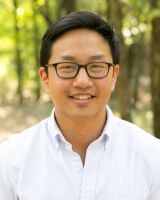
Y. Samuel Wang is an Assistant Professor in the Department of Statistics and Data Science at Cornell University. He holds a PhD in Statistics from the University of Washington and a BS in Applied Mathematics and Economics from Rice University. Prior to academia, he worked as a management consultant and served as a postdoctoral researcher at the University of Chicago’s Booth School of Business. His research focuses on causal discovery, graphical models, mixed membership models, and high-dimensional data analysis, with applications in network science, environmental studies, and healthcare. Education: PhD in Statistics, University of Washington BS in Applied Mathematics & Economics, Rice University Research Interests: Development of interpretable statistical methods for causal inference and graphical model structures High-dimensional data analysis, particularly in non-Gaussian settings Applications in collaborative networks, environmental microbiology, and healthcare outcomes Recent Research Trends: Recent publications emphasize causal discovery under latent confounding, functional graphical models, and gender dynamics in scholarly collaborations. Methodological contributions include robust high-dimensional inference techniques and computational tools for cyclic structural equation models. Professional Activity: Licensed on GitHub, Google Scholar, and ORCID GitHub repositories include projects on causal discovery (highDNG), gender homophily analysis (genderHomophily), and mixed membership models (mixedMem)
Dr. Wei Dai is a Senior Lecturer (Associate Professor) in the Department of Electrical and Electronic Engineering at Imperial College London, part of the Faculty of Engineering. He holds affiliations with the EPSRC Centre for Maths of Precision Healthcare and the Communications and Signal Processing group. His research focuses on sparse signal processing, machine learning applications in signal processing, linear and bilinear inverse problems, wireless communications, and random matrix theory. Notably, he contributed to the first compressive sensing DNA microarray prototype and has a highly cited 2009 paper on compressive sensing reconstruction. Dr. Dai's educational background includes a Ph.D. in Electrical and Computer Engineering from the University of Colorado at Boulder (2007) and postdoctoral research at the University of Illinois at Urbana-Champaign (2007-2010). His work bridges theoretical signal processing with practical applications in sensing, communication systems, and biomedical signal analysis. He leads research initiatives in gridless DOA estimation, robust beamforming, and cortico-muscular coupling analysis using advanced optimization techniques. His research outputs span topics like spectral compressed sensing, Bayesian methods for integrated sensing-communication systems, and dictionary learning for causal discovery. Ongoing work emphasizes low-rank matrix recovery, distributed compressed sensing, and mathematical frameworks for super-resolution localization. Dr. Dai collaborates across disciplines, leveraging signal processing innovations for healthcare technology and next-generation wireless systems.
Professor Inga Prokopenko is a faculty member at the University of Surrey's School of Biosciences (Faculty of Health and Medical Sciences), specializing in e-One Health and leading the Statistical Multi-Omics group. Her research focuses on genetic epidemiology, multi-omics approaches, and the comorbidity between metabolic disorders like type 2 diabetes and conditions such as cardiovascular disease, cancer, and mental health disorders. She leads studies on genetic determinants of blood glucose regulation, obesity-related risks, and shared pathophysiological pathways between diseases. Key research areas include: Genetic links between type 2 diabetes and cancers (breast, pancreatic, etc.) Mechanisms of GLP-1 receptor signaling in diabetes treatment Causal relationships between depression and diabetes using Mendelian randomization Role of abdominal obesity in cancer susceptibility She supervises PhD/MSc students in biosciences and medicine programs and develops computational tools like comorbidPRS for polygenic risk score analysis. Her work integrates large-scale genomic data from cohorts like the UK Biobank and EPIC studies to uncover shared genetic mechanisms across diseases. Recent work highlights include: Systematic reviews on flavan-3-ols and cardiovascular health Meta-analyses of trans-ethnic diabetes GWAS data Epigenetic studies linking blood metabolites to cancer risk Her research bridges statistical genetics with clinical applications, emphasizing precision medicine strategies for complex diseases.
Lawrence L Wu is a Professor of Sociology and Director of the NYU Population Center at New York University. He holds a Ph.D. in Sociology from Stanford University (1987) and an A.B. in Sociology and Applied Mathematics from Harvard University (1980). His research focuses on social demography, nonmarital fertility, sexual and contraceptive behavior, family dynamics, poverty, life course analysis, and event history methods. Dr. Wu’s work examines demographic trends such as fertility patterns, premarital births, and the intergenerational transmission of social behaviors. He has contributed to understanding the impacts of economic conditions (e.g., the Great Recession) on fertility, the role of education in fertility decisions, and the effects of public policies like sex education on teen births. His methodological expertise includes event history analysis and competing risks modeling. Recent publications highlight trends in nonmarital fertility, the decoupling of sex and marriage across cohorts, and causal estimates of demographic processes. Though no awards are explicitly listed, his extensive peer-reviewed output reflects significant contributions to demographic research. As director of the NYU Population Center, he likely oversees collaborative research in population studies, though specific grants or lab activities aren’t detailed in the text.
Samantha Curle is a Reader in the Department of Education at the University of Bath, serving as Director of all MRes Programmes in the Humanities and Social Sciences Faculty. She also holds roles as Institutional Academic Lead for the South West Doctoral Training Partnership and Director of Studies for the MRes in Advanced Quantitative Methods. Her research focuses on English Medium Instruction (EMI) in global higher education, particularly its academic and linguistic outcomes, technology integration, and psychological dimensions. Career highlights include a PhD from the University of Oxford (2018) on stakeholders’ attitudes toward EMI in Japanese higher education. She has extensive editorial roles, including guest editorships at Frontiers in Educational Psychology and Data in Brief . Her expertise spans quantitative methods, applied linguistics, and bilingual education, contributing to UN Sustainable Development Goal 4 (Quality Education). Education: PhD (University of Oxford, 2018) MSc Research Methods (University of Oxford, 2014) Bachelor of Education (Open University of Hong Kong, 2010) Grants and Projects: Leading projects on EMI in Saudi Arabia, Brazil, and Hong Kong-UK collaboration Focus on educational inequalities in Spain using CART models Awards: Adjunct Professor (2024) Her research has yielded 88+ publications, emphasizing EMI’s role in STEM, teacher professional development, and sustainable education. She advises doctoral students on quantitative EMI studies and advocates for evidence-based policy in multilingual education.
Roles and Affiliations: Daniel Berkowitz is a Professor of Economics at the University of Pittsburgh. He holds a secondary appointment at the Graduate School of Public and International Affairs. His research focuses on comparative institutions, development economics, and applied microeconomics, with a strong emphasis on legal frameworks and economic reforms in transitioning economies, particularly China and post-Soviet states. Recent Activities: Visiting Researcher, Bank of Finland Institute for Emerging Economies (2024) Visiting Professor, Heinz School of Carnegie Mellon University (2022) Executive Secretary of the Association for Comparative Economic Studies (2019-2021) Former Co-Managing Editor of the Journal of Comparative Economics (2007-2016) Research Interests: Berkowitz’s work explores how legal institutions, political dynamics, and historical contexts shape economic outcomes. Key themes include: The impact of legal transplants on trade and development State-owned enterprises and reforms in China Environmental and energy economics, including fracking’s economic implications Bureaucratic capacity and policy effectiveness His interdisciplinary approach merges law, economics, and policy analysis. Publications Overview: His recent work addresses topics like household financial strategies in fracking regions, bureaucratic influences on income distribution, and corporate governance in China. Earlier research examined Russia’s market reforms and the long-term effects of legal systems on trade. Grants and Labs: Active in cross-institutional collaborations, including visiting roles at Tsinghua University and the National Bureau of Economic Research. No specific lab affiliations were mentioned, but his work often involves empirical field studies and institutional analysis.
Anthony Constantinou is a Senior Lecturer at Queen Mary University of London, part of the School of Electronic Engineering and Computer Science. He leads the MInDS Research Group and the Bayesian AI Lab, focusing on causal machine learning for decision-making under uncertainty. His research spans healthcare, defense, sports, economics, and gaming, with a strong emphasis on Bayesian networks and causal inference. Research Interests: Causal machine learning, decision systems, Bayesian networks, uncertainty quantification, and their applications in healthcare, military defense, sports analytics, and economics. He collaborates with academia and industry to advance AI-driven decision-making systems. Grants: Noted for securing funding such as the Engineering and Physical Sciences Research Council grant (EP/S001646/1) for Bayesian AI research. His work emphasizes practical applications in diverse fields through collaborative projects. Labs & Teams: Head of the MInDS Research Group and Bayesian AI Lab, fostering interdisciplinary research in AI and decision systems.
Salvatore Ruggieri is a Full Professor at the Department of Computer Science, University of Pisa, Italy. He coordinates the National PhD Program in Artificial Intelligence for Society and teaches in the Master Program in Data Science and Business Informatics. His research focuses on algorithmic fairness, explainable AI, causality, and discrimination discovery, with contributions to tools like YaDT, X-SPELLS, and SCube. He co-chaired FAT*2020 and contributed to projects such as NoBias and HumanE-AI. His work bridges theoretical foundations with practical applications in fairness, privacy, and societal impact. Education: Ph.D. in Computer Science (1999), University of Pisa. Research Interests: Algorithmic Fairness and Non-Discrimination Explainable AI (XAI) Causal Inference Methods Decision Tree Algorithms Social Network Analysis Key Contributions: Developer of YaDT (decision tree tool) and SCube (segregation discovery). Advocacy for ethical AI through policy frameworks and GDPR-compliant explanations. Scientific Awards: Recipient of the Best Ph.D. Thesis in Theoretical Computer Science (EATCS, 1999).
Quan Zhou is an Assistant Professor in the Department of Statistics at Texas A&M University, part of the College of Arts & Sciences. His research focuses on developing advanced sampling methods, particularly Markov chain Monte Carlo (MCMC) algorithms, with applications in Bayesian methodology, variable selection, stochastic optimization, and statistical genetics. He holds a BS from Fudan University and a PhD from Baylor College of Medicine, followed by a postdoctoral fellowship at Rice University. He teaches courses such as Mathematical Probability, Multivariate Analysis, and Advanced Stochastic Processes. Notable contributions include work on informed MCMC samplers, Schrödinger bridge theory, and high-dimensional structure learning. He advises PhD students like Hyunwoong Chang (now at UT Dallas) and Guanxun Li (Beijing Normal University). Active in academic service, he served as President of the Southeastern Texas Chapter of the American Statistical Association (SETCASA).
Senarath Dharmasena is an Instructional Associate Professor at the Department of Agricultural Economics within the College of Agriculture & Life Sciences at Texas A&M University. He holds a Ph.D. in Agricultural Economics from Texas A&M University and an undergraduate degree in Agriculture from the University of Peradeniya. His research focuses on consumer economics, applied demand analysis, agribusiness, and food market dynamics. Dr. Dharmasena’s work explores complex economic systems, including food price inflation, rural land market valuation, and the impact of macroeconomic factors on food security. He employs advanced methodologies like causal inference, machine learning, and hedonic pricing models. His recent publications analyze U.S. demand patterns for alternative food products, energy drinks, and agricultural aviation industry economics. As an associate editor for the Journal of Agribusiness in Developing and Emerging Economies (JADEE), he contributes to academic discourse. His affiliations include Texas A&M AgriLife Extension Service and the Agribusiness, Food and Consumer Economics Research Center (AFCERC). His research integrates socioeconomic factors with food policy implications, emphasizing practical applications in agriculture and consumer behavior.
Steven Lehrer is a Professor of Economics at Queen's University, Canada, affiliated with the Faculty of Arts and Science. He holds dual appointments in the Department of Economics and previously taught at NYU-Shanghai and NYU. His research focuses on empirical microeconomics, including the economics of education, health economics, causal inference, and experimental economics. He has held roles such as Research Associate at the National Bureau of Economic Research and Chief Economist at JANYS Analytics. Lehrer's education includes a Ph.D. from the University of Pittsburgh (2001) and a B.A. from McGill University (1996). He has received prestigious awards like the 2013 John Vanderkamp Prize and the 2009 Victor R. Fuchs Award in Health Economics. His research interests span policy evaluation, genetic influences on economic outcomes, and data science applications. Key contributions include studies on universal childcare effects, social media data in forecasting, and the role of molecular genetic data in public policy. Lehrer has supervised over 20 graduate students and secured major grants, including SSHRC Insight Research Grants. His work appears in top journals like Nature Genetics , Review of Economic Studies , and Journal of Labor Economics . Grants: SSHRC Insight (2024-2027, $94k), Shanghai Thousand Talent Grant (750k RMB). Teaching: Econometrics, Health Economics, Causal Inference. Service: Editor of Canadian Journal of Economics, Associate Editor roles at Empirical Economics and Canadian Public Policy .
Yubai Yuan is an Assistant Professor of Statistics at the Pennsylvania State University, affiliated with the Department of Statistics within the Eberly College of Science. He holds a PhD from the University of Illinois Urbana-Champaign (2020) and completed postdoctoral research at UC Irvine. His research focuses on network science, causal inference, and statistical machine learning, with applications to neuroscience and social systems. Notable awards include the 2022 NSF-Simons Center Fellow Award and the 2019 ASA Student Paper Award. Education: PhD in Statistics (UIUC, 2020), MS in Statistics (Sun Yat-sen University, 2016), BS in Mathematics (Shandong University, 2012). Research interests span complex network analysis, optimal transport, active learning, and mediation analysis. Current projects include de-confounding causal inference and hypergraph modeling. Teaching includes courses on probability theory and statistical modeling at Penn State. Advises PhD students Yuanchen Wu (active learning on graphs) and Siyu Huang (latent network structures). Collaborates with the Center for Social Data Analytics and organizes workshops in statistical network science. Publications emphasize methodological advancements in network analysis, causal pathways, and data integration. Recent work addresses disaster response via social media data and neuronal activity analysis using optimal transport frameworks.
Seth Sullivant is a Distinguished Professor in the Department of Mathematics at North Carolina State University (NC State), within the College of Sciences. His research focuses on algebraic statistics, computational and combinatorial algebra, and mathematical phylogenetics. He holds a Ph.D. in Mathematics from the University of California, Berkeley (2005). His expertise spans interdisciplinary areas, including algebraic approaches to statistical problems, combinatorial methods in phylogenetics, and the development of algebraic tools for graphical models. He is affiliated with research groups in Algebra and Combinatorics, Mathematical Biology, and Symbolic Computation at NC State. Recent research trends in his publications emphasize the application of algebraic geometry and combinatorics to statistical models, phylogenetic network analysis, and identifiability problems in systems biology. His work bridges abstract mathematical concepts with practical statistical methodologies, addressing challenges in data analysis and model interpretation. No specific scientific awards are listed in the provided texts. His advising and grant activities are not detailed here, though his extensive publication record suggests active research collaborations. He is part of research teams focused on advancing algebraic methods in statistics and computational biology.
Yufei Huang is a Professor in the Department of Medicine at the University of Pittsburgh and the Leader of AI Research at UPMC Hillman Cancer Center. He holds a PhD and MS in Electrical Engineering from Stony Brook University. His work bridges artificial intelligence, bioinformatics, and cancer research, focusing on applications such as drug response prediction, epigenetic regulation, and viral pathogenesis. Huang is affiliated with both the School of Medicine and the School of Computing and Information, reflecting his interdisciplinary research. His contributions span computational tools for healthcare, including R Shiny apps for drug response analysis and machine learning models for unbiased patient representation. Research interests include AI-driven oncology, molecular mechanisms of cancer progression, and leveraging genomics for precision medicine. He has contributed to studies on lung cancer therapeutics, viral infections (e.g., SARS-CoV-2 and KSHV), and epigenetic modifications like m6A methylation. His lab develops innovative algorithms for single-cell transcriptomics and spatial biology to unravel disease mechanisms. Notable projects include MetGen, a generative model for metastatic cancer prediction, and m6A-express, which deciphers RNA methylation's role in gene expression. His work on CASTOR1 phosphorylation highlights biomarker discovery in lung adenocarcinoma. Huang's interdisciplinary approach integrates machine learning, virology, and computational biology to address critical challenges in healthcare and cancer research.
Badi H. Baltagi is a Distinguished Professor of Economics and Senior Research Associate at the Center for Policy Research, Maxwell School of Citizenship and Public Affairs, Syracuse University. He previously served as the George Summey, Jr. Professor of Liberal Arts at Texas A&M University (1993–2005) and has held visiting positions at the University of Arizona and the University of California, San Diego. He currently holds a part-time chair position in Economics at the University of Leicester, United Kingdom. Ph.D. in Economics, University of Pennsylvania, 1979 Baltagi’s research focuses on econometrics, particularly panel data, spatial econometrics, health econometrics, and theoretical econometrics. His work has significantly advanced methodologies in fixed and random effects models, spatial dependence, and network effects in panel data. He is renowned for his authoritative textbooks, including Econometric Analysis of Panel Data and Econometrics , which are standard references in graduate econometrics courses worldwide. His recent publications (2021–2025) demonstrate a strong trend toward integrating spatial and network structures into panel data models, with applications in health, labor, and international trade. He frequently publishes in top journals such as Journal of Econometrics , Econometric Reviews , and Economics Letters , emphasizing robust estimation, specification testing, and dynamic modeling. Kuwait Prize for Economics and Social Sciences (2018) Distinguished Achievement Award in Research, Texas A&M University (2002) Multa and Plura Scripsit Awards, Econometric Theory Distinguished Authors Award, Journal of Applied Econometrics Fellow, Journal of Econometrics Fellow, Econometric Reviews Fellow, International Association for Applied Econometrics Fellow, Spatial Econometrics Association Fellow, Society for Economic Measurement Research Fellow, IZA (since 2002) Research Fellow, CESifo (since 2003) Global Labor Organization (GLO) Fellow Lifetime Fellow, Economic Research Forum (MENA region) Baltagi has held major editorial roles, including co-editor of Economics Letters (2011–present), former editor of Empirical Economics (1999–2018), and replication editor for Journal of Applied Econometrics (2003–2018). He is the series editor for Contributions to Economic Analysis (Emerald Publishing) and Advanced Studies in Theoretical and Applied Econometrics (Springer). He has advised numerous Ph.D. students and collaborates extensively with researchers globally, particularly in spatial and health econometrics. He is actively involved in organizing and presenting at major conferences such as the International Panel Data Conference and the International Association of Applied Econometrics. Baltagi is a founding member and former director of the International Association for Applied Econometrics and serves on the board of directors and advisory boards of the Spatial Econometrics Association and the Journal of Spatial Econometrics , respectively. His leadership in establishing and promoting specialized econometric fields underscores his influence in shaping modern econometric research.