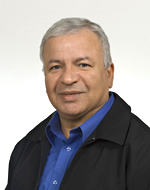
Abdelhamid Sayari is a Full Professor in the Department of Chemistry and Biomolecular Sciences at the University of Ottawa , leading a research program focused on porous materials and CO₂ capture. His work bridges inorganic chemistry, materials science, and environmental catalysis, with an emphasis on designing stable and efficient adsorbents for greenhouse gas mitigation. His research interests include: Functionalization of mesoporous silica and hybrid materials Heterogeneous catalysis for organic synthesis and environmental remediation CO₂ capture via amine-functionalized adsorbents Gas separation technologies Hydrothermal stability of materials Recent studies highlight advancements in amine-stabilized CO₂ adsorbents, humidity-dependent adsorption mechanisms, and theoretical modeling of reaction pathways. His work addresses critical challenges in mitigating greenhouse gases while advancing sustainable materials design. Despite no listed awards, his contributions to CO₂ capture technology are widely recognized in the field. He leads a research team focused on translating material innovations into practical solutions for environmental challenges.
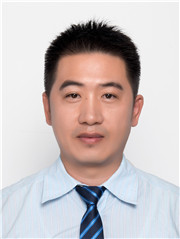
Michalis Konsolakis is a Full Professor at the School of Production Engineering and Management, Technical University of Crete (TUC). He holds a B.Sc. (1997) and Ph.D. (2001) in Chemical Engineering from the University of Patras, with postgraduate research at Cambridge University under a Greek-British Joint Research Programme. Previously, he served as Lecturer (2004–2010) and Assistant Professor (2010–2013) in TUC’s Department of Sciences before moving to his current position. His research focuses on heterogeneous catalysis, materials science, and surface science, particularly in energy/environmental processes like CO₂ hydrogenation, catalytic reactor design, and renewable energy systems. He has published over 200 peer-reviewed articles and serves on editorial boards of >10 journals. Konsolakis directs the Materials Science and Processes Lab (MatProLab) and the Industrial, Energy and Environmental Systems Lab at TUC. Teaching highlights include over 10 undergraduate and 5 postgraduate courses in chemistry, thermodynamics, materials science, and catalysis. He authored a general chemistry textbook and lecture notes. His work emphasizes sustainable energy solutions, including CO₂ conversion to synthetic fuels and green hydrogen production. Recent research trends in his publications emphasize advanced catalytic materials (e.g., ceria-based nanomaterials), electrochemical systems for hydrogen production, and techno-economic assessments of bioenergy processes. His labs develop novel catalysts for industrial applications, bridging fundamental science and engineering. Professional roles include editorial board memberships and international peer review for >100 journals. He collaborates globally on projects addressing environmental challenges through catalysis and materials innovation.
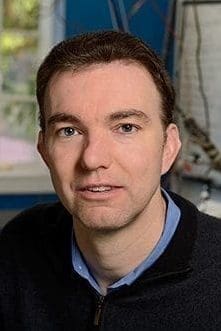
Dr. Qingye Lu is an Associate Professor in the Department of Chemical and Petroleum Engineering at the University of Calgary. Her research focuses on bioadhesion, colloid and interfacial chemistry, nanomaterials, and their applications in environmental and energy systems. She holds a PhD in Analytical Chemistry from the University of Alberta and has postdoctoral training in Civil and Environmental Engineering and Chemical and Materials Engineering. She leads the Laboratory of Interfacial Science and Advanced Materials (LISAM), developing advanced materials for sustainability, energy, and environmental challenges. Education: PhD in Analytical Chemistry, University of Alberta MSc in Physical Chemistry, Wuhan University BSc in Chemistry, Wuhan University Research Interests: Bioinspired materials for CO2 capture and oil/water separation Interfacial science in energy systems (e.g., solar evaporation, fuel cells) Environmental applications: wastewater treatment, heavy metal adsorption Awards: Early Career Research Excellence Award (2020) Queen Elizabeth II Graduate Scholarship (2008–2009) Advising: Seeks motivated Master’s and PhD students across disciplines. Labs: LISAM Lab focuses on interfacial science and advanced materials for energy and environment.
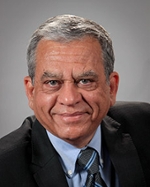
Professor He Bin is Dean of the Department of Materials Science and Engineering at the Shenzhen University of Technology , where he has served since 2025.01. He is a core member of the Guangdong Provincial Higher Education Crystal Growth and Application Engineering Technology Center and recognized as a Shenzhen Overseas High-Level Talent . Previously, he was an Associate Professor at Shenzhen University of Technology (2018-2025) and held research positions at Southern University of Science and Technology and University of Hong Kong. PhD in Materials Physics and Chemistry from Beijing University of Technology (2008) Bachelor in Materials Forming and Control Engineering from China University of Petroleum (1998) His research focuses on diamond and related materials , thin film technology , and nanostructures , with applications in thermal management , photoelectrocatalysis , precision tooling , cultured diamond , 3D printing , and ultra-wide bandgap semiconductors . Recent publications highlight advancements in photoelectrochemical systems , electrocatalytic water splitting , and surface engineering . Scientific achievements include: Shenzhen University of Technology Major Project and Scientific Research Platform Construction Award (2019) First Prize for High-level Paper (2018) Peacock Talents Category C (2018) He has secured over 20 research grants, including projects from the Shenzhen Higher Education Stable Support Program and Guangdong Province Characteristic Innovation Projects. His work spans 12 representative papers , 3 book chapters , and 6 national patents in diamond-based technologies and heterojunction systems.
Professor Agba Salman is a distinguished academic at the School of Chemical, Materials and Biological Engineering , University of Sheffield, holding the Chair in Particle Technology . He serves as Director of the Diamond Pilot Plant and Course Director for MSc Pharmaceutical Engineering. His research bridges fundamental particle science with industrial applications across food, pharmaceuticals, fertilizers, and catalysts. Salman's work focuses on granulation processes, powder restructuring, and continuous manufacturing. He has pioneered methodologies linking early-stage granulation science with equipment design through computational modeling and real-time monitoring systems. Collaborations with major companies like Nestlé, AstraZeneca, and GSK demonstrate his industrial impact. Key article trends reveal expertise in: High-shear granulation for food/pharma Roll compaction optimization Sustainable granulation practices PAT implementation in continuous processing Lipid/oil migration analysis Microstructure engineering Salman has received recognition through 10 International Granulation Workshops he hosted and 18 special journal issues edited. His group's work on industrial-scale continuous manufacturing (powder-to-tablet systems) addresses critical knowledge gaps while enhancing economic efficiency across multiple sectors.
Dr. Alan M. Allgeier is a Professor in the Chemical and Petroleum Engineering Department at the University of Kansas School of Engineering, where he also serves as Associate Director of the Center for Environmentally Beneficial Catalysis (CEBC). He joined KU in Fall 2017 after 20 years of industry experience at DuPont and Amgen. Dr. Allgeier holds a B.S. in Chemistry from Case Western Reserve University (1992) and M.S./Ph.D. degrees in Inorganic Chemistry from Northwestern University (1997). His research focuses on sustainable catalysis and manufacturing with four primary themes: characterization of porous materials using multi-technique approaches including NMR relaxometry; continuous flow processing for pharmaceuticals; synthesis of heterogeneous catalysts; and design of redox enzyme catalytic processes. His work bridges fundamental understanding of catalytic species with practical applications in renewable resource utilization and pharmaceutical manufacturing. Analysis of Dr. Allgeier's recent publications reveals a strong trend toward sustainable chemical processes, particularly in biomass conversion to valuable chemicals and materials. His work integrates advanced characterization techniques (especially NMR-based methods) with catalytic process development, focusing on hydrodeoxygenation reactions, biocatalysis using ethanol as a terminal reductant, and novel reactor design for pharmaceutical manufacturing. The research demonstrates a consistent commitment to Green Chemistry principles across multiple application areas. Bellows Faculty Scholar, University of Kansas School of Engineering (2021) Catalysis Club of Philadelphia Award (2021) Russell Malz Award for Service to Catalysis, Organic Reactions Catalysis Society (2014) Amgen Green Chemistry Award for "A Novel, Green Process for AMG 423" (2011) Sigma Xi Award for excellence in graduate research, Northwestern University (1994) Dr. Allgeier has successfully mentored numerous graduate and undergraduate students, with several completing Ph.D. dissertations under his supervision. His research is supported by significant funding including an NSF RII Track-2 FEC grant ($4 million), multiple Kansas Corn Commission awards, and industry partnerships with Honeywell, IFF Inc., and DuPont. His current projects focus on renewable polymers, ethanol derivatives, and advanced characterization of porous materials. The Allgeier Research Group maintains active collaborations with industry partners and national laboratories, operating specialized facilities for catalysis research, NMR characterization, and continuous flow pharmaceutical manufacturing. The group's work on sustainable catalysis directly supports the UN definition of sustainable development by developing processes that meet present needs without compromising future generations' ability to meet theirs.
Professor Mark Baker is a Professor of Surface Science and Engineering at the University of Surrey, affiliated with the School of Engineering and the Engineering Materials Research Centre. He holds a BSc in Chemical Physics from the University of Kent and a PhD in Materials Science from the University of Surrey. His research focuses on advanced materials characterization techniques for thin films and coatings, particularly femtosecond laser ablation (fs-LA) XPS depth profiling, corrosion resistance, and energy materials. He has supervised multiple PhD/EngD students and collaborates with industry partners like Thermo Fisher Scientific and Plasma Quest Ltd. Research interests include thin film devices, wear/corrosion coatings, and spectroscopic techniques like XPS, AES, and SEM. Over 200 publications and 6,000+ citations highlight his contributions to surface engineering and materials science. His recent work explores fs-LA XPS for perovskite solar cells and corrosion mitigation in cast iron pipelines. He also leads employability initiatives as Faculty Director of Employability. Notable projects include collaborations on smart windows using VO₂ coatings and fs-LA XPS instrumentation development. His work bridges academia and industry, addressing challenges in energy conservation, corrosion control, and advanced material synthesis.
Dr. Tosin Somorin is a Chancellor's Fellow/Lecturer in Energy at the University of Strathclyde's Department of Chemical and Process Engineering. His research focuses on sustainable waste conversion, energy systems, and biogenic carbon sequestration, contributing to UN SDGs 7, 11, and 13. He holds a PhD in Gas Turbine Engineering from Cranfield University and has extensive experience in environmental consulting and interdisciplinary research. Education: PhD in Gas Turbine Engineering, Cranfield University (2011–2015) BSc in Microbiology and Biotechnology, University of Hertfordshire (2009–2010) Research Interests: Sustainable waste-to-energy processes, thermochemical/biochemical conversion, circular economy strategies, and environmental impact assessment. Specific areas include gasification, anaerobic digestion, and engineered biochar for carbon capture. Teaching: Contributes to modules such as CP538 (Environmental Engineering for Industrial Challenges), CP407 (Chemical Engineering Design), and 18530 (Chemical Engineering Project). Supervises students in wastewater treatment, resource recovery, and sustainable agri-food systems. Projects: Principal Investigator: 'Geo-Project - Next Generation Wastewater' (2023–2024) Co-Investigator: EU Horizon-funded 'REFINE' project (2023–2027) for solar fuels Awards: 2023 Strathclyde Medal for the 'Sustainable Impact by Design' Team. Labs/Teams: Leads research groups focused on experimental design, process modeling, and feasibility studies for innovative energy technologies.
Howard Fairbrother is a Professor and Interim Chair in the Department of Chemistry at Johns Hopkins University, with a joint appointment in the Department of Materials Science and Engineering. He leads an active research group at the intersection of environmental chemistry, surface science, and materials chemistry, focusing on nanostructures, nanomaterials, and sustainable technologies. Education: B.A. in Chemistry, Oxford University, 1989 Ph.D. in Chemistry, Northwestern University, 1994 Postdoctoral Research, University of California, Berkeley, 1994–1997 His research spans environmental implications of nanomaterials, electron/ion-induced deposition processes, and sustainable applications such as nutrient delivery systems and microplastic analysis. He employs advanced techniques including XPS, AFM, TEM, SEM, and mass spectrometry. His work is highly collaborative, involving the NSF-funded Center for Sustainable Nanotechnology (CSN), EPA, NIST, and multiple academic institutions. Recent publications (2021–2025) reveal a strong focus on environmental nanotechnology, including micro/nanoplastics, carbon dots, biodegradable nanocomposites, and gas separation membranes. The research integrates materials synthesis, surface characterization, and environmental fate studies, with applications in sustainable agriculture, environmental monitoring, and semiconductor technology. Scientific Awards: Fellow of the American Chemical Society (2011) National Science Foundation CAREER Award (2000) Outstanding Graduate Thesis Award, Northwestern University (1994) Professor Fairbrother advises several graduate students and maintains the JHU Surface Analysis Facility. He has served as Senior Editor for the Journal of Physical Chemistry and held leadership roles in the American Chemical Society’s Colloids and Surface Chemistry Division. His group actively engages in interdisciplinary research, mentoring, and innovation in both environmental and materials sciences. His lab collaborates with researchers across JHU, including the Department of Geography and Environmental Engineering, and external partners such as Mirexus Biotechnologies, the University of Florida, and the University of Maryland. The Fairbrother group emphasizes sustainability, precision materials design, and real-world environmental impact.
Dr Stuart Wagland is a Reader in Energy and Environmental Chemistry and Deputy Director of Research at Cranfield University's School of Water, Energy and Environment. He holds a PhD in waste chemistry from Cranfield and additional degrees in Chemistry and Display Technology. A Chartered Chemist (CChem) and Fellow of both the Royal Society of Chemistry (FRSC) and the Higher Education Association (FHEA), Dr Wagland specializes in waste management, enhanced landfill mining, and resource recovery from solid wastes. His work bridges chemistry and engineering, focusing on anaerobic digestion optimization, bioleaching, and critical metal extraction from waste streams. Research interests include waste characterization, energy potential assessment, and advanced thermal treatment technologies. Key projects involve EU Horizon 2020 initiatives (SMART GROUND, NEW MINE) and Interreg NW Europe's REGENERATIS project, aimed at recovering metals from industrial waste. Dr Wagland coordinates the UK Enhanced Landfill Mining Network and collaborates with EURELCO, a European consortium. Current activities include doctoral supervision in waste management and landfill mining. He has secured grants from Innovate UK, EPSRC, and the European Regional Development Fund. Awards include the Lord Kings Norton Medal for contributions to carbon capture and storage.
Davood Pourkargar is an Assistant Professor in the Tim Taylor Department of Chemical Engineering at Kansas State University. He is also a Graduate Faculty Member at the Food Science Institute and a Faculty Researcher at the Johnson Cancer Research Center. His work focuses on integrating data with first-principle models to understand complex systems across multiple scales. Ph.D. in Chemical Engineering from Pennsylvania State University (2015) M.S. in Process Simulation and Control from Sharif University of Technology (2010) B.S. in Chemical Engineering from Sharif University of Technology (2008) His research interests span computational multiscale modeling, digital twin development, applied artificial intelligence, and optimization-based control of complex process networks. Dr. Pourkargar's work integrates process systems engineering with artificial intelligence to address challenging problems in chemical, biological, energy, and food systems. He develops intelligent frameworks for controlling complex process networks, designing cyber-physical architectures for smart manufacturing, and advancing system identification using machine learning and process data analytics. A significant aspect of his research involves physics-informed machine learning applied to cancer dynamics modeling and drug distribution in the human body. Dr. Pourkargar's publication record shows a strong focus on predictive modeling and control of chemical processes, particularly ammonia synthesis systems, polysilicon reactor systems, and food extrusion processes. His recent work increasingly incorporates machine learning techniques, especially transformer architectures and physics-informed approaches, applied to both traditional chemical processes and emerging areas like organ-on-a-chip systems for drug discovery. 2024 Carl R. Ice College of Engineering Outstanding Assistant Professor Award NSF EPSCoR Research Fellowship 2023 Kansas EPSCoR First Award AFOSR Faculty Fellowship Big XII Faculty Fellowship Robert F. Smith School Distinguished Junior Researcher Award from Cornell University (2017) O. Hugo Schuck Best Paper Award (2014) Dr. Pourkargar has successfully mentored numerous graduate students through their master's and doctoral research, with several receiving departmental and college-level awards. His research has been supported by significant grants from the National Science Foundation, Kansas EPSCoR, and K-State's Global Food Systems initiative. His lab has presented extensively at major conferences including AIChE Annual Meetings and American Control Conferences. The Intelligent Systems and Process Systems Laboratory (ISPSL) led by Dr. Pourkargar operates computational and experimental facilities in Durland Hall. The lab is expanding into robotic additive manufacturing and autonomous biomanufacturing, supported by research infrastructure grants. The group maintains active collaborations with the Johnson Cancer Research Center and the Terasaki Institute for Biomedical Innovation.
Dr. Sofia Angeli is a Group Leader at the Institute of Catalysis Research and Technology (IKFT), Karlsruhe Institute of Technology (KIT), Germany, since March 2024. Previously, she held roles as Senior Scientist/Group Leader (2021–2024) and Postdoctoral Researcher (2017–2019) at KIT. Her research focuses on catalysis for energy transition, CO₂ valorization, kinetic modeling, and digitalization of catalytic processes. She leads interdisciplinary projects integrating experimental and computational methods to advance sustainable chemical processes. PhD in Chemical Engineering (2016): Aristotle University of Thessaloniki, Greece. Thesis: Hydrogen production via intensified methane steam reforming processes. M.Sc. in Advanced Materials (2012): Aristotle University of Thessaloniki. Diploma in Chemical Engineering (2009): Aristotle University of Thessaloniki. Research Interests : Sofia’s work spans kinetic modeling, CO₂ conversion, catalytic pollutant removal, and digital tools for catalysis research. She develops novel catalysts for methane reforming and designs data management systems like Adacta and CaRMeN to streamline reaction mechanism analysis. Her projects often address industrial challenges in emissions reduction and renewable energy. Her recent publications emphasize catalytic processes for energy sustainability (e.g., methane oxidative coupling) and automated modeling frameworks. She collaborates widely, contributing to journals like Chemical Engineering Journal and ACS Catalysis . Advising & Teams : As a Group Leader, she oversees researchers in catalysis and data-driven processes. Her team works on cutting-edge projects supported by KIT’s infrastructure and interdisciplinary networks. Labs/Teams : Active in the IKFT and the Deutschmann Group, focusing on catalyst design and process intensification.
Catherine BATIOT-DUPEYRAT is a Professor at the University of Poitiers , affiliated with the ENSI Poitiers and the Institute of Chemistry of Environments and Materials of Poitiers (IC2MP, UMR CNRS 7285) . She co-leads the MediaCat Team , focusing on advanced catalytic processes and their plasma-assisted enhancements. Research Interests : Preparation and characterization of solid catalysts, oxidation reactions (catalytic combustion, dry reforming of methane, oxidative coupling of methane), VOCs oxidation, non-thermal plasma-assisted catalysis, CO2 activation, and catalyst regeneration. Publication Trends : Her work centers on leveraging plasma-catalysis synergy for sustainable chemical processes. Key themes include CO2 and methane conversion, VOCs removal, and improving catalyst resistance to deactivation. Her publications span high-impact journals like Applied Catalysis B: Environmental and Chemical Engineering Journal . Technical Contributions : She has contributed to 4 patents, 3 book chapters, and over 45 international conference communications. Her research has led to significant advancements in catalyst design for environmental applications, with an h-index of 29 and over 2854 citations (October 2021). Contact : catherine.batiot.dupeyrat@univ-poitiers.fr
Prof. Dr. Malte Behrens is a Professor of Inorganic Chemistry at the Christian-Albrechts-Universität zu Kiel, Germany, having previously held the same position at the University of Duisburg-Essen since 2014. He leads the Behrens research group, focusing on catalysis, energy storage, and nanomaterials for sustainable energy conversion. His work includes developing transition metal oxide catalysts for oxidation reactions and exploring dynamic processes in catalysts using operando techniques. Behrens has held roles such as Vice Dean of the Faculty of Chemistry at Duisburg-Essen and is a member of the Center for Nanointegration Duisburg-Essen (CENIDE). He has received awards like the Jochen-Block-Prize and has authored over 30 significant publications. His research spans heterogeneous catalysis, electrocatalysis, and ammonia decomposition as a hydrogen storage medium. Education: PhD from Christian-Albrechts-Universität Kiel (2006), Habilitation from TU Berlin (2013). Key Projects: Collaborative Research Centre/TRR 247 (heterogeneous oxidation catalysis), Priority Program 2080 (dynamic catalytic systems). Awards: Jochen-Block-Prize (2013), BASF-Thesis-Prize (2006). His research emphasizes structure-property relationships in catalysts, with applications in methanol synthesis, CO₂ conversion, and ammonia decomposition. He advises PhD students Jil Gieser and Benjamin Mockenhaupt and collaborates with institutions like the Fritz-Haber-Institut and Max Planck Institutes.
Abhaya Datye is a Distinguished Regent's Professor of Chemical and Biological Engineering at the University of New Mexico (UNM), with a secondary appointment in the Department of Chemistry. He specializes in catalysis and advanced materials, focusing on catalyst design, thermal stability, and novel applications in energy conversion. His research addresses challenges in methane conversion, CO oxidation, and sustainable chemical processes, often leveraging single-atom catalysts and high-entropy materials. Education details are not explicitly provided, but his work spans academic and industrial collaborations. Key research areas include catalytic dehydrogenation reactions (e.g., ethane/ethanol upgrading), CO2 mitigation via catalytic fixation, and solar-driven chemical processes. His group develops strategies for catalyst regeneration and stability under extreme conditions. Notable contributions include breakthroughs in ceria-based catalysts, platinum-palladium Janus nanoparticles, and structurally stable single-atom systems. His work integrates experimental and computational methods, with applications in automotive emissions control, renewable energy, and green chemistry. Recent projects emphasize decarbonization pathways using solar thermal energy and novel approaches to methane dehydroaromatization. He leads initiatives in UNM’s catalysis facilities, advancing both fundamental and applied research. Key Projects: Solar-driven ethylene production, high-entropy oxide catalysts, self-healing diesel oxidation catalysts. Lab Focus: UNM Catalysis Research Center, emphasizing nanomaterial synthesis and reaction engineering. Grants: Federal and industry-funded projects on catalyst design and environmental sustainability.