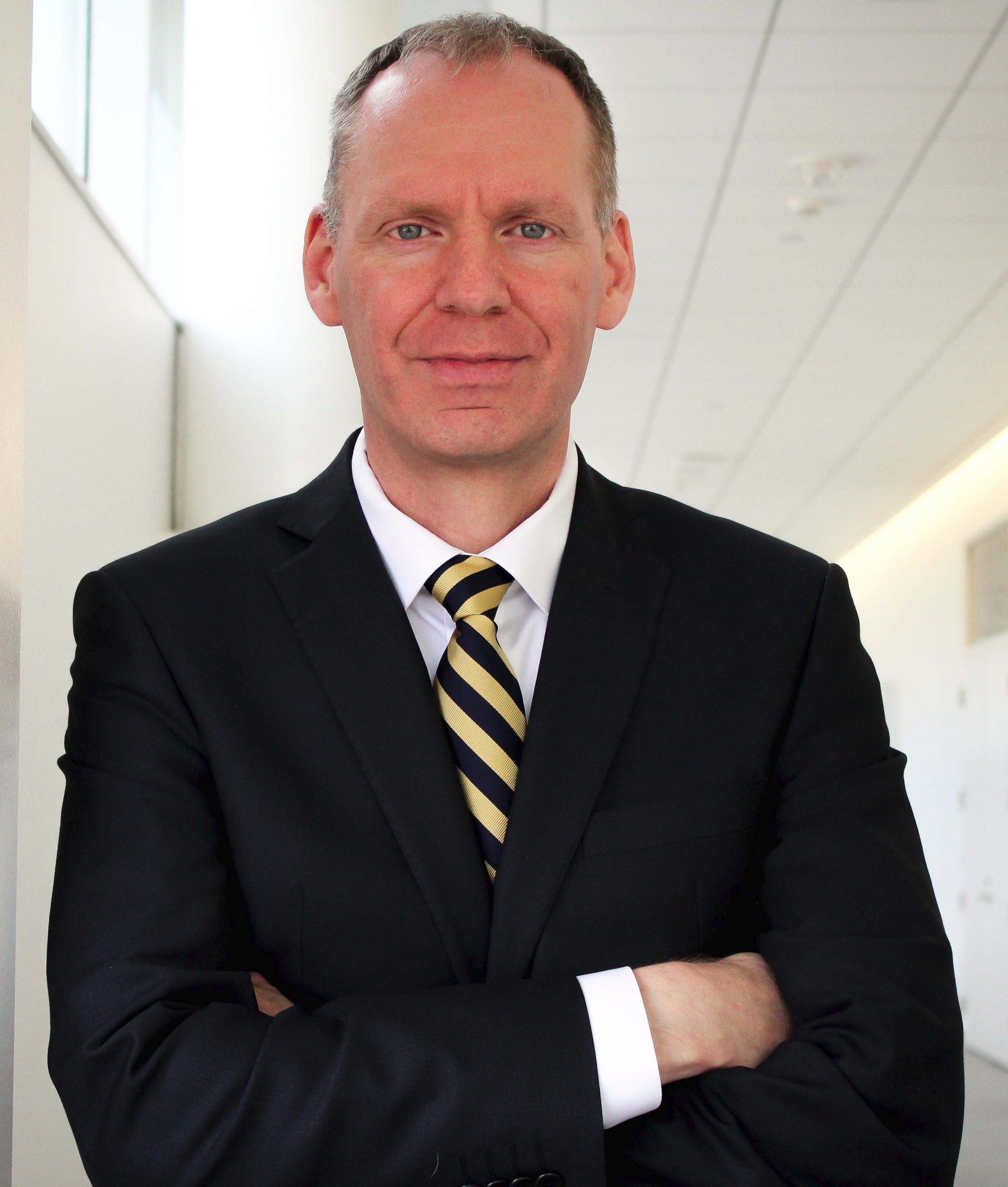
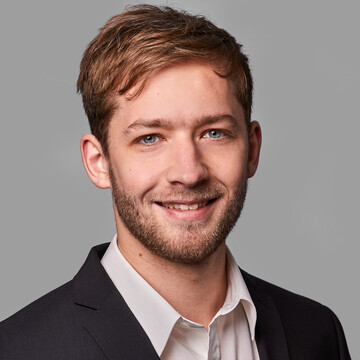
Emily Whiting is an Associate Professor of Computer Science at Boston University and Director of the Shape Design & Computation Lab. She also serves as Director of PhD Admissions and Co-Director of the BU Computer Graphics Lab. Her research focuses on computational fabrication, architectural geometry, and computer-aided design, bridging digital geometry processing, engineering mechanics, and rapid prototyping. She holds a PhD from MIT (2012), an SM in Design & Computation from MIT (2006), and a BASc in Engineering Science from the University of Toronto (2004). Previously, she was faculty at Dartmouth and a Marie Curie Postdoctoral Fellow at ETH Zurich. Her research interests include 3D printing optimization, structural design for fabrication, and tools for functionally-valid object creation. Notable projects include work on elastic garments, climbing experience replication, and print-wind instrument design. Her work has been featured on TEDx and PBS NOVA, and she has received awards such as the NSF CAREER Award and Sloan Research Fellowship. Education: PhD (MIT), SM (MIT), BASc (University of Toronto) Labs: Shape Design & Computation Lab, BU Computer Graphics Lab Key Projects: Knitting 4D garments, Environment-Scale Fabrication, Thermal-comfort casts Recent professional activities include program committee roles at SIGGRAPH 2025 and UIST 2024, and serving as Program Co-Chair for Pacific Graphics 2024. She advises a team of PhD and MS students, with alumni now in academia and tech industries.
Patrick Dallasega is an Associate Professor in the Department of Industrial Plants at the Faculty of Science and Technology of the Free University of Bolzano (Italy). He holds a PhD from the University of Stuttgart and has been a Visiting Scholar at Chiang Mai University (Thailand) and Worcester Polytechnic Institute (USA). His expertise spans supply chain management, Industry 4.0 integration in SMEs, lean construction methodologies, and sustainable production planning in ETO/MTO environments. He teaches Project Management and Industrial Plants courses in Industrial Mechanical Engineering programs. His research focuses on digital transformation in manufacturing, including smart mobile factories, augmented reality applications for training, and synchronization of production and on-site assembly processes. Collaborative projects like the AR-enhanced industrial training initiative with Memc aim to reduce errors and costs in complex industrial setups. His work emphasizes human-centered technology integration, sustainability, and real-time data utilization for adaptive production strategies. Education Bachelor/Master: Free University of Bolzano (Italy) MSc: Polytechnic University of Turin (Italy) PhD: University of Stuttgart (Germany) Research Interests Professor Dallasega’s research explores the intersection of Industry 4.0 technologies with lean manufacturing principles, particularly in complex Engineer-to-Order (ETO) and Make-to-Order (MTO) sectors. He investigates how digital twin frameworks, augmented reality (AR), and real-time data analytics can enhance supply chain resilience, reduce operational losses, and improve workforce training efficiency. His work also addresses sustainability challenges in mobile and distributed manufacturing systems, emphasizing eco-friendly logistics and smart factory design. Key Projects Recent collaborations include: Development of an AR-based training module to boost procedural knowledge retention in machinery setups Comparative studies on Industry 4.0 adoption in SMEs across Europe and Asia Framework for digital twin-driven quality control in precast manufacturing Grants & Advising No specific grants or student advisees are listed in the provided data. His focus remains on collaborative industry projects and institutional teaching responsibilities. Labs & Teams Involved in cross-disciplinary teams at the Free University of Bolzano, particularly in the NOI Techpark innovation hub. Leads initiatives on smart mobile factories and human-centered robotics applications in manufacturing environments.
Shahrzad Esmaeili is a Professor in the Department of Mechanical and Mechatronics Engineering at the University of Waterloo. She holds a PhD in Materials Engineering from the University of British Columbia (2002), and master’s and bachelor’s degrees in Materials Science and Engineering from Shiraz University (1988, 1980). Her research focuses on processing-structure-property relationships in light alloys, metallic biomaterials, and additive manufacturing. She has expertise in phase transformations, surface modifications, and multi-length scale characterization. Notably, she received an Early Researcher Award from the Ontario Ministry of Research and Innovation. Her work bridges experimental and computational methods to study microstructural phenomena in aluminum and magnesium alloys. Recent publications emphasize non-isothermal annealing, precipitation hardening, and bio-structure fabrication. Education: PhD, Materials Engineering, University of British Columbia (2002) MSc, Materials Science and Engineering, Shiraz University (1988) BSc, Materials Science and Engineering, Shiraz University (1980) Research Interests: Her work integrates experimental and modeling approaches to study nanostructured materials, including metallic biomaterials and light alloys. Key areas include: Precipitation hardening mechanisms in Al-Mg-Si and Mg-Zn alloys Surface functionalization via laser-assisted deposition Additive manufacturing of porous titanium bio-structures Thermal-mechanical processing of aluminum composites Publications: Over 100 peer-reviewed articles span microstructural analysis, alloy behavior under thermal treatments, and biomedical applications. Recent trends focus on non-isothermal processing effects, microalloying strategies, and advanced surface modification techniques. Awards: Early Researcher Award (Ontario Ministry of Research and Innovation) Grants & Collaboration: Her research involves interdisciplinary collaborations, though specific grants are not detailed here. She leads studies on novel processing routes for high-performance alloys and biomaterials. Labs/Teams: Active in materials characterization and computational modeling groups at the University of Waterloo, focusing on multi-scale material analysis.
Rasmus Bjørk is a Professor at the Technical University of Denmark (DTU) in the Department of Energy Conversion and Storage. His research focuses on advanced materials for energy systems, particularly in magnetocaloric and elastocaloric cooling, magnetic materials, and additive manufacturing for functional devices. His work contributes to the UN Sustainable Development Goals, especially in affordable and clean energy. PhD Supervision: Active projects include energy storage using topological spin textures, magnetothermal waste heat harvesting, and bio-magnetometers. Key Research Areas: Magnetic refrigeration, energy harvesting, and freeze-casting of functional materials. Recent advancements include 3D-printed elastocaloric coolers and studies on magnetoresistive devices. His team develops novel techniques for optimizing magnetic systems and energy conversion processes. He has published over 160 articles and led projects on regenerator design, magnetic bearings, and sensor technologies. Collaborations span multiple countries and disciplines. Notable contributions include pioneering work on freeze-casting for biomaterials and the MagTense micromagnetic framework. His research bridges theoretical modeling and practical applications in sustainable energy solutions.
Jorge Louçã is a Full Professor in the Department of Information Science and Technology at ISCTE-IUL, where he has been a faculty member since 2000. He is also an Integrated Researcher at ISTAR-Iscte, the Research Center in Information Sciences, Technologies and Architecture, and leads the research group The Observatorium . He holds a PhD in Computer Science and Artificial Intelligence from Université Paris Dauphine and the University of Lisbon, and completed his Aggregation in Complexity Sciences in 2019. PhD in Computing – University of Lisbon & Université Paris-Dauphine (2000) Master’s in Informatique: Intelligent Systems – Université Paris-Dauphine (1995) Aggregation in Complexity Sciences – ISCTE-IUL (2019) His research centers on computational modeling of social systems, focusing on data-intensive analysis of human communication, knowledge generation in large networks, and the dynamics of complex systems. He founded the Doctoral Program in Complexity Sciences and has been instrumental in advancing the field through international collaborations such as the UNESCO Unitwin network for the Complex Systems Digital Campus and participation in the Conference on Complex Systems (CCS/ECCS). The recent publications highlight a strong interdisciplinary focus, combining network science, data analysis, and social theory. Key themes include the modeling of malaria transmission, information diffusion in social media, structural inequality in education, and the dynamics of opinion and popularity. His work often employs agent-based models, temporal network analysis, and entropy-based measures, reflecting a deep integration of computational and theoretical approaches. Research Methods for Doctorate in Complexity Sciences Advanced Topics in Complexity Sciences Data Science Fundamentals Development for the Internet and Mobile Applications Web Interfaces for Data Management Advanced Network Analysis Jorge Louçã has supervised over a dozen doctoral and master’s students, with completed theses on topics such as malaria modeling, information diffusion, temporal networks, and social inequality. His research has been supported by projects like NESS (Non-Equilibrium Social Science in ICT and Economics), reflecting his leadership in interdisciplinary science. He has held significant academic management roles, including Director of the Department of Information Science and Technology and head of multiple degree programs. His work continues to bridge computer science, social science, and policy, positioning him as a key figure in the global complexity science community.
Professor Hailiang Yu is an Honorary Fellow at the University of Wollongong's School of Mechanical, Materials, Mechatronic and Biomedical Engineering. His research focuses on engineering materials, manufacturing processes, and mechanical engineering, with over 100 journal/conference publications and 30 science-focused newspaper commentaries. He serves as co-Editor-in-Chief of Modeling and Numerical Simulation of Material Science , and holds editorial roles in Scientific Reports and International Research Journal of Engineering Science, Technology and Innovation . Yu has secured significant funding through grants such as the Australian Research Council's 'Large-volume gradient materials' project (2017–2020) and 'A Physical-based abrasive wear model' (2013–2016). His work emphasizes cryorolling, microstructure optimization, and advanced material fabrication techniques. He currently supervises Master's and PhD students in materials engineering and manufacturing innovation. Key research themes include cryogenically processed alloys, bimetallic clad sheets, and high-entropy composites. His publications in journals like Metallurgical and Materials Transactions A and Journal of Materials Processing Technology reflect expertise in structural optimization, tribology, and corrosion resistance. Yu aims to become an international leader in materials manufacturing and mechanical engineering.
Filippo Ubertini is Professor of Civil and Environmental Engineering at the University of Perugia, Italy, where he coordinates the International Doctoral Programme in Civil & Environmental Engineering and represents the University inside the FABRE national bridge-research consortium. He leads the Structural Health Monitoring Laboratory ( SHM-Lab ) and is the primary contact for assignments linked to smart-infrastructure research. Education: While explicit degrees are not listed in the supplied text, his role as programme coordinator and full professor implies completion of a PhD and habilitation in Civil Engineering. Research focus: Ubertini’s work sits at the intersection of smart materials and data-driven infrastructure management . He develops self-sensing cementitious composites doped with carbon micro-fibers or graphene nano-platelets that can measure strain, cracking and moisture in real time, turning whole bridges and buildings into distributed sensors. Complementary research threads include low-cost acquisition electronics, UAV & InSAR remote sensing, Bayesian & adversarial machine-learning algorithms for damage detection, digital twins and life-cycle cost analysis of bridge networks. Publication trends (2024-2025): Roughly 30 peer-reviewed items per year concentrate on (i) AI-enhanced operational modal analysis and transfer-learning damage classification across bridge populations, (ii) experimental characterisation of 3D-printed and cast self-sensing concrete, (iii) full-scale validation on curved box-girder, masonry and railway bridges, and (iv) integration of satellite radar data with numerical collapse simulations to predict residual service life of landslide-affected viaducts. Scientific awards & recognition: No specific prizes or fellowships are mentioned in the provided text. Doctoral supervision & grants: The text does not enumerate individual students or funded projects; however, his coordination of an international PhD programme and numerous experimental campaigns imply sizeable supervisory and funding responsibilities. Laboratory & team: Ubertini heads the SHM-Lab at UniPg, maintaining facilities for material mixing, 3D concrete printing, electrical impedance tomography, UAV photogrammetry, and large-scale structural testing, while collaborating with the European FABRE consortium and multiple EU projects.
Roy Sterritt is a Lecturer in Informatics at the School of Computing, Ulster University. His research focuses on autonomic computing, robotics, machine learning, and cybersecurity. He has contributed extensively to decentralized systems and fault management in autonomous environments. Research Interests: Roy’s work spans autonomic computing, robotics, and AI, with applications in cloud systems, space exploration, and drone fleets. He emphasizes self-adaptation, fault tolerance, and security protocols. Scientific Awards: Highly Ranked Scholar in Autonomic Computing (2024) Multiple Best Paper Awards (2016–2023) Recent Trends: His recent publications highlight autonomic solutions in cloud security, robot swarms, and space systems, leveraging machine learning and adaptive communication protocols. Projects & Collaborations: Roy has led projects like SPAAACE-Ware and DEL CAST AWARD, focusing on autonomic analytics and apoptotic computing. He organizes international conferences on autonomous systems and collaborates globally.
Sir Harshad Bhadeshia is a renowned Indian-British metallurgist and Professor of Metallurgy at Queen Mary University of London since 2022. Previously, he held the Emeritus Tata Steel Professorship at the University of Cambridge, where he worked from 1980 until his move to Queen Mary. His research focuses on the theory of solid-state transformations in multicomponent steels , aiming to create novel alloys and processes with minimal resource use. Education: BSc from City of London Polytechnic, PhD from University of Cambridge (1980) under David V. Edmonds Research Areas: Phase transformations in steel, computational modeling, neural networks, Bainite, welding technology, hydrogen embrittlement resistance, nanostructured materials Scientific Awards: Bessemer Gold Medal (2006), Hume Rothery Prize (1992), Rosenhain Medal (1994), Knight Bachelor (2015), Adolf Martens Medal (2017), William Menelaus Medal (2025) Editorial Roles: Editor for Materials Science and Engineering: A , Materials Science and Technology , and Science and Technology of Welding and Joining Students: Roger Reed, Rachel Thomson His Google Scholar publications (over 650) cover topics in metallurgy, phase transformations, computational modeling, hydrogen resistance, and AI in materials science, with a significant emphasis on Bainite, welds, and nanostructured steels. The SKF University Technology Centre (2009-2019) and Computational Metallurgy Laboratory (2005-18) highlight his leadership in industrial collaborations and international research. His scientific awards and fellowships (Royal Society, Royal Academy of Engineering, Institute of Materials, Minerals and Mining) underscore his global recognition.
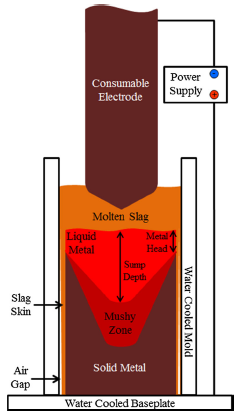
Dr. Matthew John M. Krane is a Professor in the Department of Materials Engineering at Purdue University and a member of the Purdue Center for Metal Casting Research. His work focuses on the design, development, and modeling of materials processes , particularly solidification and thermal processing of metal alloys, with strong emphasis on defect prevention and uncertainty quantification in numerical models. Current projects include grain-refined particle transport in DC casting , exergy optimization in copper smelting , and boron segregation in continuous casting . Past research includes through-process modeling of Al alloys , microsegregation studies , and laser hardening techniques . Scientific awards include an invited keynote lecture at the 2015 International Symposium on Liquid Metal Processing and Casting and multiple invited papers in high-impact journals.
David M. Labyak is an Assistant Professor at Michigan Technological University's College of Engineering, affiliated with both the Manufacturing and Mechanical Engineering Technology and Mechanical and Aerospace Engineering departments. He teaches courses in computer-aided engineering, finite element methods, dynamic systems control, machine design, robotics dynamics, and Industry 4.0 concepts. PhD in Mechanical Engineering-Engineering Mechanics (2003) and MS in Mechanical Engineering (2000) from Michigan Tech Over 24 years of industrial experience in automotive, aerospace, mining, and consulting sectors His research interests span solid mechanics, finite element analysis, vibration analysis, machinability of metals, biomechanics, and helmet design optimization. Collaborative work includes dynamic testing, acoustic modeling, and workforce development initiatives. Recent publications highlight interdisciplinary work in vibration testing, metalcasting, and educational frameworks. Key areas include defect detection in additive manufacturing, dynamic fixture design, and experiential learning for mechatronics.
Rainer J. Hebert is a Professor in the Department of Materials Science and Engineering at the University of Connecticut, serving as Director of the Pratt and Whitney Additive Manufacturing Center and Associate Director of the Institute of Materials Science. His research focuses on advancing additive manufacturing technologies with particular emphasis on materials development and process optimization for industrial applications. Education Ph.D., University of Wisconsin-Madison, 2003 Postdoctoral Fellow, University of Wisconsin-Madison, 2003-2005 Post Doctoral Fellow, Research Center Karlsruhe, Germany (now Karlsruhe Institute of Technology), 2003-2005 Research Interests Professor Hebert's research spans multiple areas within materials science and additive manufacturing. His primary focus is on developing new alloys specifically designed for additive manufacturing processes, with particular attention to how microstructures form during rapid solidification and laser processing. He investigates powder characteristics and their effects on the final manufactured products, aiming to improve quality and performance. His work on quasicrystal-reinforced aluminum alloys has shown promising results for high-performance applications, and he has made significant contributions to understanding the fundamental mechanisms of laser powder bed fusion. Hebert's research bridges fundamental materials science with practical industrial applications, particularly in aerospace and high-temperature environments. Publication Trends Analysis of Professor Hebert's recent publications reveals a strong focus on advancing additive manufacturing technologies, particularly laser powder bed fusion. His work spans from fundamental materials science (microstructure formation, phase transformations) to practical applications (alloy design, process optimization). A notable trend is the increasing integration of computational methods with experimental work to predict and optimize material behavior. His research shows a progression from basic microstructure characterization to more complex systems involving multi-material interactions, intelligent manufacturing systems, and the development of specialized alloys resistant to cracking and other defects. The consistent theme across his publications is improving the reliability and performance of additively manufactured components for demanding applications. Awards Materials Science and Engineering Program Teaching Award, 2010-2011 Advising and Grants As Director of the Pratt and Whitney Additive Manufacturing Center, Professor Hebert oversees significant research initiatives funded by both government agencies and industry partners, particularly in aerospace applications. His leadership in the Institute of Materials Science provides opportunities for student research and collaboration across multiple disciplines. His extensive publication record suggests active mentorship of graduate students in materials science and engineering. His research program likely involves multiple PhD and Master's students working on various aspects of additive manufacturing, from fundamental materials science to process development. Laboratories and Teams Professor Hebert directs the Pratt and Whitney Additive Manufacturing Center at UConn, which serves as a hub for collaborative research between academia and industry. The center focuses on advancing metal additive manufacturing technologies, particularly for aerospace applications. He also plays a key leadership role in the Institute of Materials Science, one of UConn's premier research centers. His research teams likely include graduate students, postdoctoral researchers, and industry collaborators working on projects related to powder characterization, laser processing, microstructure analysis, and alloy development. The collaborative nature of his work is evident from the multi-institutional authorship on many of his publications.
Sebastian Thiery serves as a Professor in Manufacturing Engineering at Leuphana University of Lüneburg, specifically holding a Ph.D. Professorship for Manufacturing – Innovative Manufacturing. His research focuses on advanced manufacturing processes with particular emphasis on sheet metal forming technologies. Thiery's primary research interests include Incremental Sheet Forming with Active Medium (IFAM) , Deep Drawing Processes , Process Control and Optimization , and the application of Artificial Neural Networks in manufacturing systems. His work bridges theoretical modeling with practical industrial applications, particularly in metal forming operations where geometrical accuracy and process robustness are critical concerns. Analysis of his publication record reveals a clear research trajectory focused on improving manufacturing processes through innovative control strategies. His recent work emphasizes the integration of machine learning techniques with traditional manufacturing processes, particularly using neural networks for friction compensation and draw-in prediction. The publications demonstrate increasing sophistication in process control methodologies, moving from basic IFAM process development to sophisticated closed-loop control systems that incorporate real-time monitoring and adaptive adjustments. Thiery actively collaborates with researchers including Mazhar Zein El Abdine, Jens Heger, and Noomane Ben Khalifa, suggesting participation in a dedicated research group or laboratory focused on advanced manufacturing processes. His work appears to be supported by research grants, including funding from the German Research Foundation (DFG) as indicated in one of his publications.
Christopher Gourlay is a Professor of Physical Metallurgy at Imperial College London's Department of Materials, part of the Faculty of Engineering. He has been affiliated with the Engineering Alloys research theme since 2008, specializing in microstructure development during phase transformations in alloys and solders. His research focuses on lightweight magnesium and aluminum alloys, electronic solder joint reliability, and solidification processes. He holds a MEng in Metallurgy from the University of Oxford (2002) and a PhD from the University of Queensland (2007), where his work centered on semi-solid deformation of Al and Mg alloys. He was awarded a RAEng/EPSRC Research Fellowship in 2008. Research interests include solidification microstructure control, intermetallic compound effects in solders, and alloy recyclability. Key projects involve thermal fatigue resistance of solder joints, grain refinement in magnesium alloys, and in-situ imaging of microstructural dynamics. He is a Fellow of the Institute of Materials (FIMMM) and the Institute of Cast Metals Engineers (FICME), and currently chairs the Electronic Packaging and Interconnection Materials Committee at TMS (USA, 2023–2027). His group employs advanced characterization techniques like synchrotron radiography and FIB-based nanoscale engineering, addressing challenges in electronic materials and sustainable manufacturing processes.
Jaakko Akola is a Professor in the Department of Physics at the Norwegian University of Science and Technology (NTNU). His research focuses on computational materials science, particularly density functional theory (DFT) and atomistic simulations of materials, nanoparticles, molecules, and interfaces. He leads significant projects such as "SIDI" (inoculation in cast iron), "Infinity-RETIS" (chemical rare events), and "AllDesign" (rational alloy design), alongside coordinating EU-funded initiatives like "CritCat" for catalyst development. The Materials Theory group under Akola employs DFT, molecular mechanics, and Monte Carlo methods to explore atomic-scale structures and functions in technological applications. Key research areas include platinum-free catalysts for hydrogen energy, amorphous semiconductors for memory devices, noble metal nanoparticles in biological environments, and alloy design for cast iron and aluminum. Recent work integrates machine learning to advance theory-driven material design, reducing reliance on experimental trial-and-error. Akola's publications highlight advancements in hydrogen evolution catalysis, phase-change memory materials, and alloy precipitation. His projects often involve interdisciplinary collaborations with experimental teams. He teaches Quantum Physics 1 (FY2045) and Computational Physics (TFY4235) at NTNU, reflecting his commitment to education alongside research.