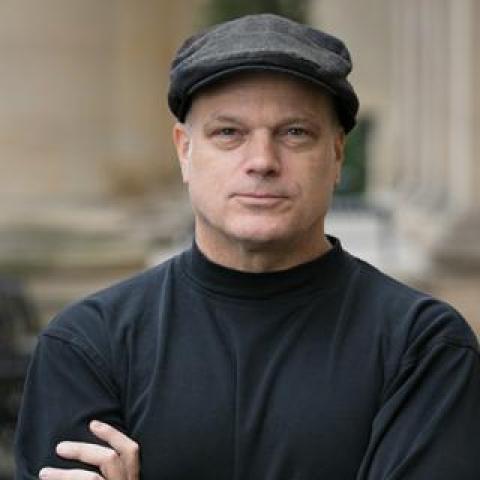
Salikoko S. Mufwene is the Edward Carson Waller Distinguished Service Professor of Linguistics at the University of Chicago. He holds additional appointments on the Committees on Evolutionary Biology, Conceptual and Historical Studies of Science, and African Studies. His research integrates ecological perspectives into evolutionary linguistics, focusing on language contact, creole genesis, language endangerment, and the impact of colonization and globalization on linguistic diversity. Education: PhD in Linguistics, University of Chicago (1979) Key Themes: Language evolution, creole languages, population structure, decolonial linguistics, language policy Mufwene’s work emphasizes the role of population dynamics in language change, drawing parallels with biological evolution. His recent articles examine topics such as the cultural-artifact nature of language, the ecological drivers of creole hybridization, and the decolonization of linguistic paradigms. He has also contributed extensively to debates on language endangerment and multilingualism in super-diverse societies. Scientific Awards: Fellow, Linguistic Society of America (2018) Fellow, American Philosophical Society (2022) Fellow, American Academy of Arts and Sciences (2023) Collège de France lectures (2003, 2023-24) Summer Institute of the Linguistic Society of America (1999, 2005, 2015, 2017)
Nicholas Guyatt serves as Professor of North American History in the Faculty of History at the University of Cambridge and is a Fellow of Jesus College. He joined Cambridge in 2014 after teaching positions at Princeton University, Simon Fraser University, and the University of York. His academic foundation includes a BA and M.Phil. from the University of Cambridge and a Ph.D. from Princeton University under Daniel T. Rodgers. Guyatt's research centers on race, national identity, and state formation in 18th-19th century America, with core expertise in colonial history, the Atlantic World, and intellectual history of American imperialism. His work critically examines racial segregation, maritime history, and evolving concepts of citizenship and world order. Analysis of his recent publications reveals consistent thematic focus on racial ideologies, colonization projects, and imperial thought across the early republic and Civil War eras. His scholarship demonstrates methodological breadth spanning political, intellectual, and social history with particular attention to African American experiences and transnational connections. His distinguished recognition includes: Stanford Humanities Center Faculty Fellow (2009-2010) British Academy Mid-Career Fellow (2013-2014) Senior Visiting Research Fellow at Oxford's Rothermere American Institute (2013-2014) He actively supervises M.Phil. and Ph.D. candidates in 18th-19th century American/Atlantic history, especially welcoming research on Native Americans, African Americans, slavery/abolition, and empire. His editorial leadership with Zed Books' 'Global History of the Present' series reflects commitment to diversifying historical scholarship beyond Eurocentric frameworks. Current major projects include co-authoring 'Jefferson's Wolf: The Struggle to End Slavery in the Founding Era' (Harvard University Press, 2026) and editing 'The Oxford Illustrated History of the United States' (OUP, 2026), demonstrating sustained scholarly productivity through collaborative academic networks.
Raymond B. Craib serves as the Marie Underhill Noll Professor of History and Associate Chair at Cornell University, where he holds core faculty appointments in the Latin American and Caribbean Studies (LACS) program and serves on the LACS Steering Committee. His interdisciplinary work bridges historical scholarship with critical geography and political theory, focusing on spatial dimensions of power and resistance. His academic trajectory includes a BA in History from Eastern Michigan University (1990), an MA in Latin American Studies from the University of New Mexico (1994), and a PhD in History from Yale University (2001). Eastern Michigan University: BA History (1990) University of New Mexico: MA Latin American Studies (1994) Yale University: PhD History (2001) Craib's research interrogates the intersections of space, politics, and everyday practice through frameworks of critical geography, cartography, and radical political subjectivity. His scholarship spans Cultural History, Social History, Comparative and Transnational History, Empires and Colonialism, Historical Geography, and Political Thought, with particular emphasis on Latin America's global connections. He challenges transnational historical orthodoxy by centering the immediacy of place while maintaining global contextual awareness, especially regarding anarchist and leftist movements. His publications reveal a sustained engagement with libertarian and anarchist experiments across the 20th-21st centuries, examining how spatial imaginaries shape political projects from interwar Chile to contemporary Silicon Valley utopianism. Craib's work consistently analyzes the tension between state-centric cartographic control and fugitive landscapes of resistance, connecting historical case studies to modern phenomena like seasteading and digital colonialism. Scientific recognition includes: Global Public Voices fellow (2020-2021) Graduate and Professional Teaching Prize As an active educator and researcher, Craib mentors graduate students in historical methodology and supervises theses exploring spatial history and radical politics. His collaborative projects, such as the 2020-21 fellowship with José Ragas of Universidad Católica (Chile), demonstrate international scholarly engagement. Craib maintains deep institutional connections across Cornell's interdisciplinary landscape, contributing to the Latina/o Studies Program and Romance Studies department while leading innovative courses like 'Starting Your Own Country: From Utopia to the Network State.' His research methodology combines extensive multi-archival work across Latin America, the Caribbean, and Pacific Islands with critical theoretical frameworks.
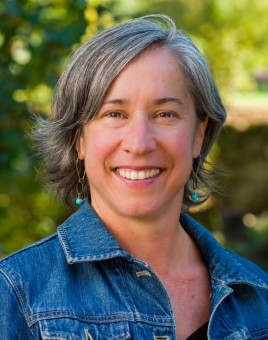
Greta Binford is a Professor of Biology at Lewis & Clark College, where she conducts pioneering research on spider biodiversity and venom evolution. Her work focuses on the biochemical and evolutionary mechanisms underlying spider venoms, particularly in brown recluse spiders (Loxosceles) and their relatives (Sicarius), with significant contributions to understanding dermonecrotic toxin distribution. She teaches specialized courses including Arachnology/Biodiversity, Invertebrate Zoology, and Evolution, integrating biodiversity themes across her curriculum and public outreach initiatives. Binford's research program employs integrative approaches spanning field collection, protein biochemistry, and molecular genetics to investigate venom evolution. She has demonstrated the shared evolutionary origin of sphingomyelinase D toxins in Loxosceles and Sicarius spiders, providing critical insights for medical applications. Her work bridges biodiversity science with toxinology, emphasizing how ecological pressures shape venom complexity and function across spider lineages. Analysis of her recent publications (2020-2023) reveals concentrated research on Caribbean spider biogeography and molecular mechanisms of phospholipase D toxins. Key themes include enzyme specificity determinants, structural stabilization of venom proteins, and evolutionary patterns of island endemism. Her work frequently combines taxonomic discovery with biochemical analysis, exemplified by studies on Micrathena orb-weavers and Antillattus jumping spiders. Binford actively mentors undergraduate researchers through hands-on laboratory and fieldwork, securing substantial funding including an NSF CAREER award (2006) for 'Venom Evolution in Sicariid Spiders', a collaborative Caribbean biogeography grant (2011), and a recent HDR DSC grant (2021) building data science capacity through biodiversity research. Her grants consistently emphasize undergraduate training and interdisciplinary collaboration. She leads a dynamic research laboratory at Lewis & Clark College where students participate in all stages of venom research, from specimen collection to molecular analysis. Her team maintains international collaborations focused on Caribbean arachnid biodiversity and contributes to public education about spider biology, emphasizing their ecological importance and dispelling common misconceptions.
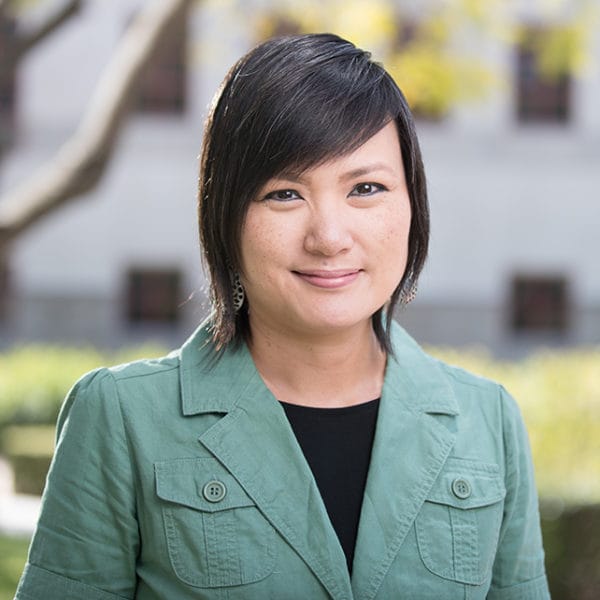
Farren Yero is an Assistant Professor in the History Department at Lehigh University's College of Arts and Sciences, where she specializes in the history of health, medicine, and gender with a focus on Latin America and the Caribbean. Her interdisciplinary scholarship bridges medical history, gender studies, and Atlantic world history, examining how race, gender, and power have shaped health experiences and medical practices in the early modern period. Dr. Yero received her Ph.D. in History and Gender, Sexuality and Feminist Studies from Duke University in 2020, an M.A. in History from Duke University in 2016, an M.A. in Latin American Studies from Tulane University in 2013, and a B.A. in Anthropology from the University of Florida in 2010. Her academic journey began with archaeological work at the Kingsley Plantation in Jacksonville, Florida, which shaped her interest in Atlantic history and the transatlantic slave trade. Yero's research focuses on health disparities, care practices, and disease experiences in the early modern Atlantic world, with particular attention to smallpox vaccination history. Her current book project, Atlantic Antidote: Race, Gender, and the Birth of the First Vaccine , explores racial and gendered intersections of labor, childrearing, and disease prevention in the Spanish Americas. She is also developing a history of the Caribbean's earliest smallpox epidemic (1519) through the life of America's first "patient zero." Her work consistently examines how marginalized communities navigated health challenges within colonial contexts. Her publications reveal a strong emphasis on vaccine history, gender and medicalization, Afro-Caribbean religious practices during epidemics, and the intersections of race, citizenship, and public health. Yero's scholarship demonstrates how medical history provides critical insights into broader social structures, particularly regarding race, gender, and power dynamics in colonial societies. Nineteenth Century Studies Dissertation Award from the Latin American Studies Association (LASA) Richmond Brown Dissertation prize, Honorable Mention, from the Latin American and Caribbean Section of the Southern Historical Association Dr. Yero has received significant research support from the National Endowment for the Humanities, American Council of Learned Societies, Fulbright-Hays program, Andrew W. Mellon Foundation, John Carter Brown Library, Newberry Library, Institute of Advanced Studies in the Humanities at the University of Edinburgh, and Omohundro Institute of Early American History and Culture. She previously held postdoctoral positions at Binghamton University, College of William and Mary, University of Edinburgh, and Duke University. At Lehigh, she teaches courses on health and society in Latin America, gender and medicine, pandemics, and digital/public history methods.
Gabriel de Avilez Rocha is the Vasco da Gama Assistant Professor of History and Portuguese and Brazilian Studies at Brown University. He holds a Ph.D. from New York University (2016) and a B.A. from Harvard University (2008). His research focuses on social and environmental histories of colonialism and slavery in the early modern Atlantic world, emphasizing linkages between Africa, Brazil, the Caribbean, and Iberia. He currently works on The Atlantic Acceleration: Empires and Uprisings from the Global Commons, 1400-1560 , examining how ecological struggles shaped colonial expansion. Research Interests: Early modern Iberian empires Black Atlantic studies Environmental history/eco-criticism Microhistory methods Community engagement initiatives Teaching: Courses include Global Ocean History , Colonial Encounters in the Atlantic , and Environmental History of Latin America . His work appears in Colonial Latin American Review , Early American Studies , and William & Mary Quarterly .
Montserrat Cachero Vinuesa is a Full Professor in the Department of Economics, Quantitative Methods and Economic History at Pablo de Olavide University in Spain. She specializes in Economic History and Institutions, with a particular focus on applying network analysis to historical research. Her work bridges the fields of economic history, early modern studies, and digital humanities. Her research interests center on the application of network theory to historical contexts, particularly examining merchant networks in the Atlantic world during the early modern period. She investigates how social and economic networks facilitated trade, colonization, and cultural exchange between Europe and the Americas. Her work spans multiple dimensions including gender dynamics in commerce, book trade networks, risk management in pre-industrial trade, and the institutional frameworks that enabled transatlantic economic integration. Her scholarly output demonstrates a consistent trajectory of applying network analysis to historical questions, with increasing methodological sophistication over time. Recent work has focused on gender dimensions of commercial networks, particularly women's roles in the book trade, alongside continued exploration of Basque merchant networks, Atlantic trade routes, and colonial economic structures. Her research combines traditional archival methods with innovative network visualization and analysis techniques. Dr. Cachero Vinuesa is the creator of RedLab, an academic space dedicated to the application of network analysis to historical research. This initiative reflects her commitment to methodological innovation and interdisciplinary collaboration. She is actively involved in doctoral education through the History and Humanistic Studies program at her institution, with emphasis on European, American, and geographical approaches to historical research.
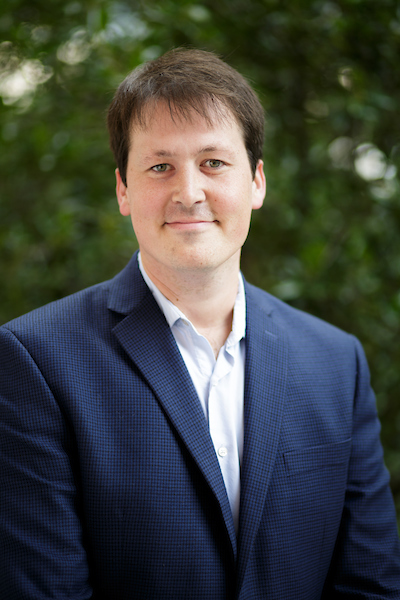
Brian Hamm is an Assistant Professor in the Department of History at Samford University's Howard College of Arts and Sciences. He joined Samford in 2019 and has served as coordinator of the Global & Cultural Studies Program since 2021, teaching courses ranging from Colonial Latin America to Riots, Rebellions, and Revolutions in Latin America. His educational background includes: PhD in History, University of Florida, 2017 MA in History, University of Florida, 2012 BA in History (Summa Cum Laude), Pepperdine University, 2010 Hamm specializes in colonial Latin America and the early modern Atlantic world, with research focusing on religious history and migration patterns. His work examines Portuguese immigrant integration in Spanish Caribbean societies, identity construction in colonial contexts, and the intersection of disease narratives with political theory in historical writings. His publications (2016-2022) consistently explore Portuguese migration in the Spanish Caribbean, Sephardic Jewish colonization movements, and Bartolomé de Las Casas' historical interpretations, revealing thematic continuity in Atlantic world migration studies and religious minority experiences. Hamm has received recognition through: Frankel Postdoctoral Fellow at the University of Michigan While specific grant details and student advisees aren't documented, his academic leadership as Global & Cultural Studies Program coordinator demonstrates institutional engagement. His teaching portfolio spans foundational world history surveys to specialized courses on inquisitions and revolutions, reflecting broad pedagogical expertise. No dedicated research laboratories or formal team structures are indicated in available materials.
Professor Jennifer N. Heuer is a distinguished historian at the University of Massachusetts Amherst, holding the rank of Professor in the Department of History within the College of Humanities and Fine Arts. Her research focuses on the intersection of gender, revolution, family, war, citizenship, slavery, and colonialism, with a primary emphasis on the French Revolution era. She has authored two major monographs: Family and the Nation: Gender and Citizenship in Revolutionary France, 1789-1830 (2007) and The Soldier’s Reward: Love and War in the Age of the French Revolution and Napoleon (2024), the latter winning the 2024 David H. Pinkney Prize for distinguished scholarship in French history. Her work explores themes such as the impact of revolution and war on family structures, the role of petitioning as a political tool, and the cultural symbolism of clothing in national identity. She has published extensively in English and French journals, including French History , Journal of Military History , and Annales Historiques de la Révolution française . As co-editor of French Historical Studies and co-author of Life in Revolutionary France , she has shaped scholarly discourse on European history and gender studies. Heuer’s specializations include the French Revolution, modern France, Atlantic Revolutions, and the histories of gender, race, and colonialism. She has presented her research globally, including in France, the UK, Italy, and Asia, and has been a keynote speaker at international conferences. Her recent work addresses post-war societies, human rights legacies of revolutions, and the transnational dimensions of gender and nationalism.
Ali KUBAT is a full-time Lecturer at Karabük University's School of Foreign Languages, Department of Foreign Languages, since 2022. He holds a PhD in English Language and Literature (2023) from Atatürk University and Karabük University, along with two master's degrees in English Language and Literature (2018-2021) and a BA in International Relations (2015-2018) from Anadolu University. Education : PhD (2023), English Language and Literature, Atatürk University & Karabük University Master's (2021), English Language and Literature, Karabük University Master's (2019), English Language and Literature, Karabük University BA (2018), Western Languages and Literatures, Karabük University BA (2018), International Relations, Anadolu University His research focuses on postcolonial theory and gender studies, analyzing intersections of patriarchy and colonialism in Jean Rhys' Wide Sargasso Sea . His 2021 conference papers explore madness as rebellion and Creole women's double colonization in the novel. The articles highlight his engagement with postcolonial and feminist frameworks, particularly in Caribbean literature. No scientific awards or formal advisees are documented in available sources.
JoAnna Poblete is an Associate Professor of History in the Department of History at Claremont Graduate University, part of the School of Humanities, Arts, and Social Sciences. She specializes in U.S. imperialism, colonialism, migration, labor, and environmental and indigenous histories, with a regional focus on the Pacific, Caribbean, and unincorporated U.S. territories. Her educational background includes a PhD and MA in History from UCLA and a BA from the University of California, Davis. PhD, History, UCLA MA, History, UCLA BA, University of California, Davis Her research lies at the intersection of colonialism, identity, and environmental justice. She employs oral history and comparative methodologies to examine the lived experiences of colonized peoples in Hawai‘i, American Sāmoa, and the U.S. Virgin Islands. Her work bridges Asian-American, Pacific Islander, and Caribbean studies, emphasizing the interconnectedness of U.S. imperial practices across regions. Her publications reflect a consistent focus on labor, gender, environment, and indigenous resistance. Her recent articles explore women’s activism in St. Croix, marine practices in American Sāmoa, and Filipinx American identity. Her books, Islanders in the Empire and Balancing the Tides , demonstrate a deep engagement with comparative colonial labor systems and environmental policy under U.S. imperialism. She has received significant recognition for her scholarship and teaching: Best Book Award in History, Association for Asian American Studies (2018) Faculty Diversity Award for Outstanding Teaching, Claremont Colleges (2018) Poblete has secured research support for her projects, including public digital archives such as the St. Croix Community Health Archive. She mentors graduate students and teaches courses in oral history, Pacific worlds, immigration, and environmental indigeneity. Her work is widely disseminated through open-access publishing and public scholarship, including podcast interviews on the New Books Network. She leads research initiatives centered on community health in the U.S. Virgin Islands and maintains a public digital archive to preserve and share local knowledge. Her projects often involve collaboration with affected communities, reflecting a commitment to ethical and engaged scholarship.
Justin Roberts is a Professor and Department Chair in the Department of History at Dalhousie University, where he specializes in the history of slavery in the British Empire. His research spans the Early Modern Atlantic World, Caribbean slavery, and environmental history, with a focus on Barbados and sugar plantations. His educational background includes: PhD from Johns Hopkins University MA from Johns Hopkins University MA from Queen's University BA from Simon Fraser University Roberts' research examines the expansion of slavery across the English empire from 1640-1720, the relationship between slavery and environmental history, and the dynamics of plantation societies. He has recently completed a book on the early English tropics and is currently investigating road building as a tool of imperialism and the first Jamaican maroon war. His scholarly output demonstrates a consistent focus on the economic, social, and environmental dimensions of slavery. Recent articles analyze the role of disease in Caribbean slavery, plantation productivity, and slave demography during abolition. His methodological approach often integrates interdisciplinary perspectives, including geographical information systems (GIS).
Rüdiger Bieler serves as Curator (Research Professor) in the Integrative Research Center at the Field Museum of Natural History, Chicago, and is a Member of the Committee on Evolutionary Biology at the University of Chicago. His dual institutional affiliation bridges museum-based organismal research with academic evolutionary biology training. His research centers on evolutionary systematics and taxonomy of marine Mollusca, particularly Gastropoda and Bivalvia, integrating morphological, paleontological, and molecular data. Key focus areas include: Development of collections-based research methodologies Large-scale specimen and data management systems Bivalve Assembling-the-Tree-of-Life (BivAToL) initiatives Coral reef restoration ecology in the Florida Keys Marine biogeography and biodiversity assessment His work frequently addresses conservation challenges through systematic frameworks. Bieler's editorial leadership includes significant contributions to PeerJ as Editor (2,100+ contributions) and involvement with WoRMS (marinespecies.org) and MolluscaBase.org. His research infrastructure development supports global taxonomic efforts through digital platforms and specimen databases. Professional leadership roles include past presidency of both the American Malacological Society and the International Society for Malacology (Unitas), reflecting his standing in the malacological community. Current service includes the WoRMS steering committee and chief editorship for MolluscaBase.org. His publication record demonstrates consistent output in marine biodiversity documentation, with recent emphasis on: Discovery of novel anatomical features in mollusks Island biogeography patterns in remote archipelagos Adaptive radiation mechanisms in marine invertebrates Integration of micro-fragmentation techniques for reef restoration Methodological innovations in species diversity estimation and mark-recapture adaptations for taxonomic work represent cross-disciplinary contributions.
Amanda J. Snyder serves as an Associate Lecturer in the Department of History at the University of Central Florida with key administrative roles: Coordinator of Undergraduate Programs Director of the History Lab Her academic profile centers on the early modern Atlantic World, with specialized research in Caribbean piracy, crime and identity formation, and frontier/borderland dynamics. She integrates these themes into courses covering Florida history, American frontier development, and maritime law, demonstrating an interdisciplinary approach to historical analysis. Dr. Snyder's publication record features a significant 2018 contribution to Caribbean colonial scholarship examining Spanish fortifications and English designs in 17th-century Jamaica. This work reveals her methodological focus on material culture, colonial architecture, and cross-cultural interactions during European imperial competition. Her research trajectory emphasizes how physical structures shaped geopolitical conflicts and cultural exchanges in the Atlantic World. As Coordinator of Undergraduate Programs, she oversees curriculum development and academic advising for history majors, ensuring comprehensive training in historical methodology and critical analysis. Her leadership extends to the History Lab where she implements innovative pedagogical approaches combining digital tools with primary source research. The History Lab functions as an experiential learning hub under Dr. Snyder's direction, facilitating student engagement with archival materials, community-based projects, and public history initiatives. This laboratory environment bridges theoretical knowledge with practical historical investigation, fostering advanced research skills among undergraduate scholars.
Brett Gonzalez is a Research Fellow at the School of Biological Sciences , University of Western Australia, affiliated with the Minderoo-UWA Deep-Sea Research Centre . He holds a PhD in Biology (University of Copenhagen, 2017), an MSc in Wildlife and Fisheries Sciences (Texas A&M University, 2010), and a BSc in Marine Biology (Texas A&M University at Galveston, 2005). His research focuses on enhancing understanding of rare and unique taxa in underexplored environments like the deep-sea, subterranean caves, pelagic zones, and interstitial habitats . He integrates traditional taxonomy with modern techniques such as high-throughput sequencing, 3D-reconstruction, and advanced microscopy. Key research areas include evolutionary processes shaping biodiversity , adaptation mechanisms in extreme environments, and biogeographic distributions of marine organisms. Recent work includes studies on scale worm diversity in hadal zones, cryptic species in subterranean estuaries , and molecular delimitation of leech species . Active Research Projects: Characterisation of high-resolution tubular eyes in Acoetidae scale worms (2025) - Chief Investigator at University of Western Australia. External Affiliations: Research Associate, Smithsonian National Museum of Natural History (2023–). Former Postdoctoral Researcher (2018–2023), Smithsonian National Museum of Natural History.