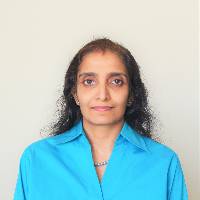
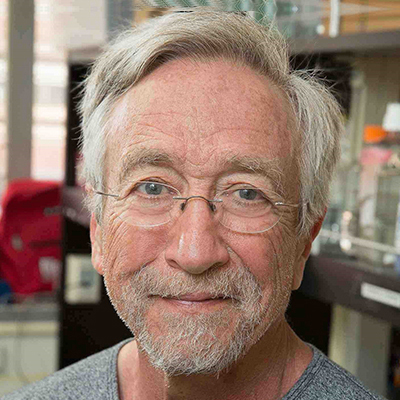
Dr. Pravitha Ramanand is an Assistant Research Professor in Electrical Engineering at the University of Texas at Tyler, specializing in biomedical signal processing and predictive analytics for neonatal care. Education: Ph.D. in Technology (Cochin University of Science and Technology, 2004) Postdoctoral training: Henry Ford Hospital (Neuro-magnetism, 2005) University of Kentucky (Biomedical Engineering, 2008-2010) University of Texas at Tyler (2019-2021) Her research develops AI-driven methods for analyzing physiological signals from preterm infants, focusing on predicting cardiorespiratory events and detecting pulmonary hypertension. Current projects involve signal processing algorithms, stochastic modeling, and wearable sensor technologies for neonatal intensive care applications. Recent publications demonstrate expertise in oximetry analysis, EEG complexity quantification, and physiological interdependence modeling. Her work bridges electrical engineering, neonatology, and computational biomedicine.
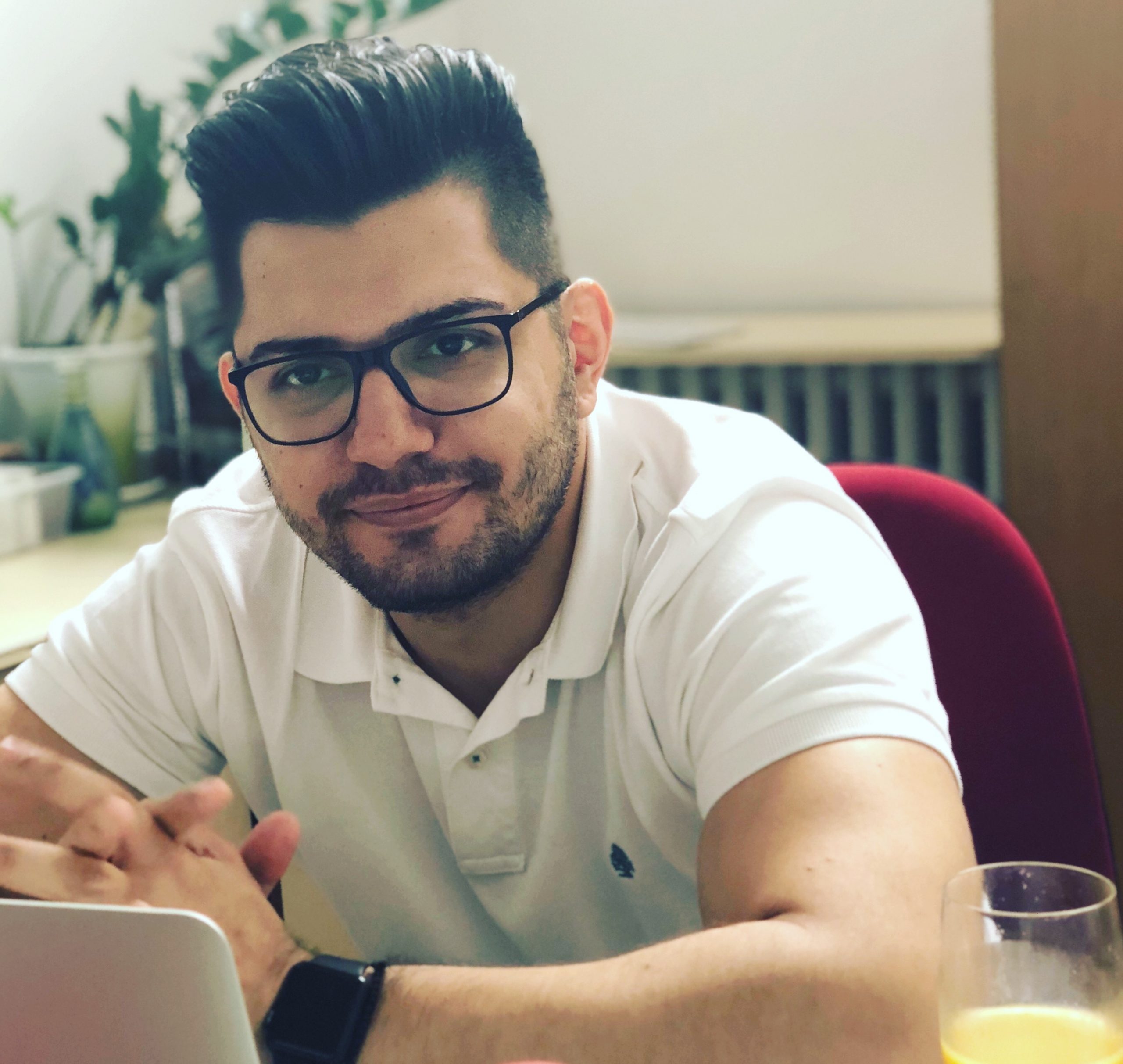
Stavrov Dushko is an Associate Professor at the Faculty of Electrical Engineering and Information Technologies (FEIT) of Ss. Cyril and Methodius University in Skopje. His research focuses on control systems, robotics, fuzzy logic, and machine learning applications. He has contributed to advancements in robotics testing, dynamical systems analysis, and industrial automation. His work bridges theoretical concepts with practical implementations in automotive systems, robotic arms, and chemical processes. Education details are not explicitly mentioned, but his publications suggest expertise in control engineering and automation. Research interests include PID control optimization, fuzzy logic algorithms, and anomaly detection in industrial settings. His articles reflect a trend toward integrating fuzzy logic with robotics and addressing synchronization in coupled systems. No scientific awards are listed, and no advisees have been documented. His professional contributions are centered on FEIT, with a focus on advancing automation and control methodologies.
Viktor Müller serves as a Research Scientist at the Center for Lifespan Psychology, Max Planck Institute for Human Development in Berlin, where he has led the "Interactive Brains, Social Minds" project as Principal Investigator since 2004. His research bridges neuroscience, psychology, and complex systems theory to investigate brain dynamics during social interactions. His academic foundation includes a PhD (Dr. rer. soc.) in Social Sciences from the University of Tübingen (1996), preceded by research positions at Saarland University's School of Psychology (2002-2004) and the University of Tübingen's Physiological Institute and Institute of Medical Psychology (1993-2002). Müller's research program centers on behavioral and neuronal plasticity across the lifespan, with pioneering work in intra- and interbrain dynamics. He investigates cortical oscillatory mechanisms, network topology dynamics, and deterministic chaos in complex brain systems, with particular emphasis on genetic and psychophysiological aspects of neuronal plasticity. His innovative approach employs naturalistic paradigms like music performance and choir singing to study hyper-brain networks in ecologically valid social contexts. Analysis of his 2016-2024 publications reveals consistent focus on social neuroscience methodologies, particularly network analysis of interbrain synchrony during joint musical activities. His work demonstrates how hyper-brain network properties evolve during group interactions, establishing foundational frameworks for understanding neural coordination in real-world social settings. His scientific recognition includes: Visiting Fellowship at Washington University School of Medicine, St. Louis (2008) Nordmark Neuropharmaka Award for Behavioral Research in Parkinson's Disease (1994) As PI of the "Interactive Brains, Social Minds" project, Müller directs a research team developing novel neuroimaging and network analysis techniques to study brain dynamics during social coordination. His laboratory investigates neural mechanisms underlying interpersonal action coordination through multimodal approaches including EEG, physiological monitoring, and behavioral analysis during natural group interactions.
Fokke van Meulen is a University Researcher at Eindhoven University of Technology, affiliated with the Signal Processing Systems group within the School of Electrical Engineering. He also contributes to research in the Eindhoven MedTech Innovation Center and Biomedical Diagnostics Lab. Current appointments: University Researcher (Signal Processing Systems, TU/e) Research focus: Biomedical diagnostics, sleep staging, and sensor technology His work integrates biomedical engineering with advanced signal processing , developing innovative diagnostic tools for sleep disorders utilizing wearable sensors and machine learning . Recent publications demonstrate expertise in accelerometer-based monitoring and electromyography applications. Scientific contributions include the VCBM 2021 Honorable Mention award. His research outputs reveal strong trends in polysomnography , non-invasive diagnostics , and medical sensor integration . Van Meulen contributes to the university's UN Sustainable Development Goals through biomedical innovations that improve healthcare accessibility and quality.
Alain Martin is a Professor at the University of Burgundy , affiliated with the Faculty of Sports Sciences and the INSERM U1093 Laboratory . His research focuses on the plasticity of the neuromuscular system , examining adaptations to functional demands through electrostimulation, imagined contractions, and eccentric exercises. Doctorate in Biomechanics (1994) Authorization to direct research (2000) His work spans neurophysiology , biomechanics , and muscle physiology , with recent studies analyzing spinal/corticospinal excitability, vibration reflexes, and fatigue mechanisms. Publications highlight collaborations with teams in France and international institutions. Current projects involve electrical muscle stimulation, motor imagery, and eccentric cycling physiology.
Owen Hamill is an Associate Professor in the Department of Neurobiology at the University of Texas Medical Branch (UTMB). With a primary focus on mechanosensitive ion channels, his research explores how mechanical forces influence neuronal activity and cancer progression. He can be reached at ohamill@utmb.edu. BS, Monash University, Australia PhD, University of New South Wales, Australia Postdoctoral training at University of New South Wales and Max Planck Institute Göttingen His research investigates mechanosensitivity in the mammalian brain, demonstrating how single mechanosensitive channel currents trigger spiking in neocortical and hippocampal neurons. Additionally, he examines mechanical force regulation of prostate tumor cell migration through Ca 2+ influx. Current efforts target molecular identification of mechanosensors and channel gating plasticity in pathological conditions. Recent publications highlight mechanosensitive channels' role in cardiorespiratory-brain coupling (2024), neural network synchronization (2021), and tumor cell mechanotransduction (2007-2012). These studies employ electrophysiology, immunohistochemistry, and stem cell models to characterize channel function across neuroscience, cancer biology, and biophysics disciplines. While specific scientific awards aren't listed in the provided text, his 2001 review on mechanotransduction (Physiol. Revs, 81:685-740) remains a foundational reference in the field. His work bridges neuroscience and cancer biology through mechanosensitive channel research, with implications for traumatic brain injury and tumor metastasis.
Professor Aneta Stefanovska is a leading researcher in the Department of Physics at Lancaster University and a prominent member of the Data Science Institute. Her work focuses on understanding the physical principles underlying living systems through the lens of nonlinear dynamics and oscillatory phenomena across multiple biological scales. Stefanovska's research centers on chronotaxic systems (from chronos - time and taxis - order), a framework she pioneered for characterizing biological systems that maintain stable oscillatory behavior despite continuous external perturbations. Her work spans from cellular processes to cardiovascular and brain dynamics, with applications in aging, anesthesia, and disease states. She has developed the MODA Toolbox , a suite of numerical methods for studying chronotaxic systems as an inverse problem. Her recent publications reveal a strong interdisciplinary focus on neurovascular coupling, cardiovascular dynamics, and time-frequency analysis methods. The research demonstrates how similar oscillatory patterns emerge across vastly different systems - from surface state electrons on liquid helium to human physiological processes. Her work bridges fundamental physics with clinical applications in Alzheimer's disease, autism spectrum disorder, and cardiovascular health. Professor Stefanovska leads multiple significant research projects including 'DSI:Quantitative Assessment of Autistic Spectrum Disorder' (2021-2025), 'Network dynamics-based standards for endothelial health' (2023-2025), and 'Creation and evolution of quantum turbulence in novel geometries' (2023-2027). She has received funding from various sources including the H2020: COSMOS project. She is an active scientific contributor with numerous invited talks worldwide on chronotaxic dynamics, multiscale oscillatory phenomena, and the physics of biological rhythms. Her current research extends into investigating dynamical markers of cancer, further demonstrating the broad applicability of her theoretical framework.
Weiyong Xu is a Postdoctoral Researcher in the Department of Psychology at the University of Jyväskylä, Finland, specializing in cognitive neuroscience with a focus on memory, learning, and neural mechanisms of reading acquisition. His research employs advanced neuroimaging techniques including EEG and MEG to investigate how the brain processes speech sounds, letters, and their associations during learning. Xu's research interests center on cognitive neuroscience with emphasis on memory consolidation during rest and sleep, neural mechanisms of reading acquisition across different languages, and the interaction between bodily rhythms (cardiac cycle, respiration) and learning processes. His work bridges cognitive psychology with physiological measures to understand how internal bodily states influence cognitive functions. He has particular expertise in studying letter-speech sound integration in both alphabetic and logographic languages, examining how these processes develop in children and function in literate adults. Analysis of Xu's publication record reveals a clear progression from foundational work on reading acquisition and audiovisual integration to increasingly sophisticated investigations of memory consolidation and interoception. His recent work demonstrates a growing interest in how bodily rhythms modulate learning processes, with several 2023-2025 publications examining cardiac cycle and respiration phase effects on neural processing and learning outcomes. The publications consistently employ rigorous neuroimaging methodologies while addressing theoretically significant questions in cognitive neuroscience. Xu serves as Principal Investigator for the Research Council of Finland project 'The reorganization of memory representations during rest and sleep' (2022-2025) and contributes as a Team Member to several other significant projects including 'Brain-wide memory consolidation in sleep studied with simultaneous electrophysiology and ultra-quiet zero-echo time fMRI' and 'Optimizing learning - synchrony of the brain and body as a tool?'. These projects reflect his expertise in memory research and the intersection of physiological rhythms with cognitive processes.
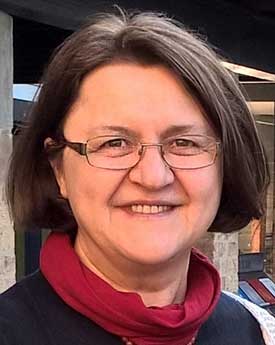
Beatriz Giraldo Giraldo is a prominent researcher at the Institute for Bioengineering of Catalonia (IBEC), where she leads the Biomedical Signal Processing and Interpretation research group. Her work bridges biomedical engineering and clinical medicine, focusing on advanced signal processing techniques applied to physiological signals. She maintains strong affiliations with the University of Barcelona and Universitat Politècnica de Catalunya, contributing to the collaborative research environment of IBEC. Dr. Giraldo Giraldo's research focuses on cardiorespiratory analysis, particularly in the context of mechanical ventilation weaning. She has developed sophisticated methods using time-frequency analysis, wavelet transforms, and machine learning to predict weaning outcomes and analyze respiratory patterns. Her work has significant clinical implications for intensive care units, helping determine the optimal timing for extubation and reducing complications from premature ventilator removal. Her recent publications demonstrate consistent research productivity with a focus on applying advanced signal processing techniques to solve clinical problems. She has published extensively on topics including cardiorespiratory phase synchronization, heart rate variability analysis, and the development of medical decision support systems using artificial intelligence. Dr. Giraldo Giraldo has received recognition through numerous publications in high-impact journals and conferences including IEEE Transactions on Biomedical Engineering, Physiological Measurement, and annual IEEE Engineering in Medicine and Biology Society conferences. Her research has been consistently funded, supporting ongoing work in biomedical signal processing and its clinical applications. She actively mentors students and collaborators, with numerous publications showing co-authorship with junior researchers. Her work involves substantial interdisciplinary collaboration between engineers, physicians, and computer scientists, reflecting the integrative nature of modern biomedical research.
Jordi Solà Soler is a Researcher at the Institute for Bioengineering of Catalonia (IBEC) , specializing in Biomedical Signal Processing and Interpretation . His work focuses on cardiorespiratory dynamics and sleep-related breathing disorders, particularly obstructive sleep apnea syndrome (OSAS). Research Areas : Biomedical signal processing, sleep apnea, respiratory analysis, ECG-derived respiration, cardiorespiratory synchronization, breath sound analysis Recent publications highlight his expertise in: Cardiorespiratory phase synchronization analysis ECG-derived respiration estimation methods Snore pattern classification for apnea screening Upper airway assessment through acoustic monitoring Geriatric breathing pattern variability studies Neurovascular hemodynamic responses in apnea patients Key methodologies include advanced signal processing algorithms, linear mixed-effects modeling, and multimodal sensor integration. Collaborations span sleep medicine, biomedical engineering, and clinical physiology domains. His work contributes to non-invasive diagnostic tools and understanding cardiorespiratory interactions during sleep-wake cycles.
Jan Wikgren is a Senior Lecturer and Vice Head of the Department of Psychology within the Faculty of Education and Psychology. His research bridges psychophysiology, neuroscience, and behavioral conditioning, with a specialized focus on sensory gating mechanisms and cardiorespiratory influences on learning. He investigates neurocognitive processes using methods like transcranial stimulation (tDCS/tRNS) and classical conditioning paradigms. Research interests center on: Psychophysiological interactions between cardiac cycles and cognition Disgust conditioning in clinical populations (e.g., OCD) Exercise-derived neuroplasticity across lifespan Sensory gating and startle reflex modulation Non-invasive neuromodulation techniques Publication trends (2021–2025) reveal interdisciplinary work combining neuroimaging, genetic models, and physiological monitoring. Dominant themes include: hippocampal plasticity influenced by aerobic fitness, interoceptive learning modulated by cardiac rhythms, and clinical applications of brain stimulation for behavioral disorders. Research utilizes both human cohorts and rodent models. No awards or student advisories are documented. Collaborative projects include sensory gating studies and cardiac-cycle-dependent learning mechanisms.
Jack Feldman is Distinguished Professor of Neurobiology at the David Geffen School of Medicine, University of California, Los Angeles (UCLA). He leads research on respiratory neurobiology from his laboratory at CHS, Los Angeles, focusing on the preBötzinger complex and its role in breathing rhythm generation. Research Focus: Respiratory rhythmogenesis, neural circuits, opioid/nicotine effects on breathing, sighing mechanisms, and neurophysiological plasticity Lab: PreBötzinger Complex Research Laboratory, CHS, UCLA His scientific contributions include discovering fundamental neural mechanisms for respiratory control, with recent work examining synchronization in microcircuits and clinical implications for disorders like congenital central hypoventilation syndrome. Publications span high-impact journals in Neuroscience , Nature , Science , and The Journal of Physiology . Major Scientific Awards: NIH MERIT Award (1991-2001) NIH Outstanding Investigator Award (2017-2023) Hodgkin Huxley Katz Prize (2016) UCLA Faculty Research Lecture (2018) David Geffen School of Medicine Chair in Neuroscience (2022---)