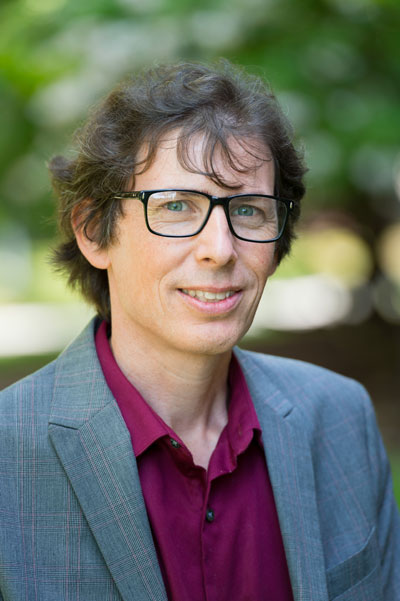
Steven Rogak is a Professor in the Department of Mechanical Engineering at the University of British Columbia's Faculty of Applied Science. He holds a P.Eng. license and degrees including a B.A.Sc. in Mechanical Engineering from UBC, and M.Sc. and Ph.D. from Caltech. P.Eng., University of British Columbia B.A.Sc., University of British Columbia M.Sc., Ph.D., California Institute of Technology His research focuses on aerosol science, particularly solid nanoparticles from combustion processes, their climate and health impacts, and mitigation strategies. Key areas include: Soot morphology and transport properties Engine emission reduction via fuel injectors Indoor air filtration systems Membrane-based energy exchangers Atmospheric particulate analysis The 15 most recent articles span experimental and theoretical studies on soot characterization, membrane technologies, and aerosol dynamics, with applications in climate modeling, healthcare ventilation, and sustainable materials. Collaborations include Westport Innovations and interdisciplinary teams. Rogak leads the Aerosol Laboratory at UBC, where he applies fluid mechanics and heat transfer fundamentals to address environmental and health challenges. He emphasizes experimental rigor and welcomes graduate students with expertise in these areas.
Leibniz Institute for Tropospheric ResearchGermany
Dr. Arun Babu Suja is a Research Scientist at the Leibniz Institute for Tropospheric Research (TROPOS) in Leipzig, Germany, affiliated with the Department of Atmospheric Microphysics . His research focuses on aerosol-climate interactions in extreme environments including the Arctic, Himalayas, and oceanic regions. Education: Ph.D. in Physics, University of Kerala, India (2018-2022) M.Phil. in Physics, University of Kerala (2014-2015) M.Sc. in Physics, University of Kerala (2011-2013) B.Sc. in Physics and Computer Application, University of Kerala (2008-2011) Research Experience: 2022-Present: Research Scientist at TROPOS, Germany 2016-2022: Research Scholar at ISRO's Vikram Sarabhai Space Centre 2015-2016: Research Fellow at Indian Institute of Science Research Interests: Specializes in aerosol mixing state, aerosol-cryosphere interactions, radiative forcing, and ice nucleating particles. Current projects include studies of Arctic aerosol transport (APAICA) and Bay of Bengal aerosol characteristics (BIOCAT-IIOE2). Publications: His 10 publications (2019-2024) focus on aerosol properties in Himalayan/Arctic regions, with emphasis on carbonaceous aerosols, black carbon distribution, and radiative effects. Research methodologies combine field measurements and chemical analysis. Awards: ISRO Junior Research Fellowship (2016)
Chaoliu Li is a Research Scientist in Professor Noah Planavsky’s lab at Yale University, focusing on geochemistry and atmospheric processes. His work examines the transport and deposition of carbonaceous particles, particularly black carbon, in remote regions like the Himalayas and Tibetan Plateau. He investigates how these particles influence glacier melting, carbon cycling, and climate dynamics. Li’s research also explores the impact of local and transboundary emissions on environmental systems. His studies emphasize the interplay between atmospheric chemistry, glaciology, and climate change. Key areas of interest include the role of dust and anthropogenic pollutants in glacier darkening, isotopic tracing of carbon sources, and the implications of light-absorbing particles for regional climate feedback mechanisms. Awarded no specific prizes mentioned, Li’s publications span over a decade, addressing topics such as black carbon deposition trends, measurement biases in atmospheric monitoring, and the influence of fossil fuel emissions on remote ecosystems. His work bridges field observations, laboratory analysis, and modeling to address pressing environmental challenges in high-altitude regions.
Dr. David Green is a Senior Research Fellow at the School of Public Health, Faculty of Medicine at Imperial College London, leading the Aerosol Science Team within the Environmental Research Group. His research focuses on aerosol and gas measurement, source apportionment, and health impact studies. Key leadership roles include directing the Centre for Low Emission Construction and contributing to diversity initiatives. His work integrates advanced analytical techniques, such as real-time supersite monitoring in London, to inform public health policies and environmental forecasting systems. Research interests emphasize aerosol composition measurement, development of new techniques, and quantifying emission sources in urban environments. Collaborative projects span agencies like the Environment Agency, EPSRC, and EU initiatives. He supervises PhD students exploring topics such as non-road mobile machinery emissions, satellite-based traffic analysis, and subway air quality. His team’s work bridges environmental science and public health, addressing issues like ultrafine particle exposure, particulate matter on public transport, and policy-driven emission reductions. Key Collaborations: Includes STFC Air Quality Network, High Speed 2, and EU Metrology for Nitrogen Dioxide projects. Advising: Oversees five PhD students and post-doctoral fellows, focusing on environmental engineering and public health applications. Labs/Teams: Leads the Aerosol Science Team and contributes to the MRC Centre for Environment and Health.
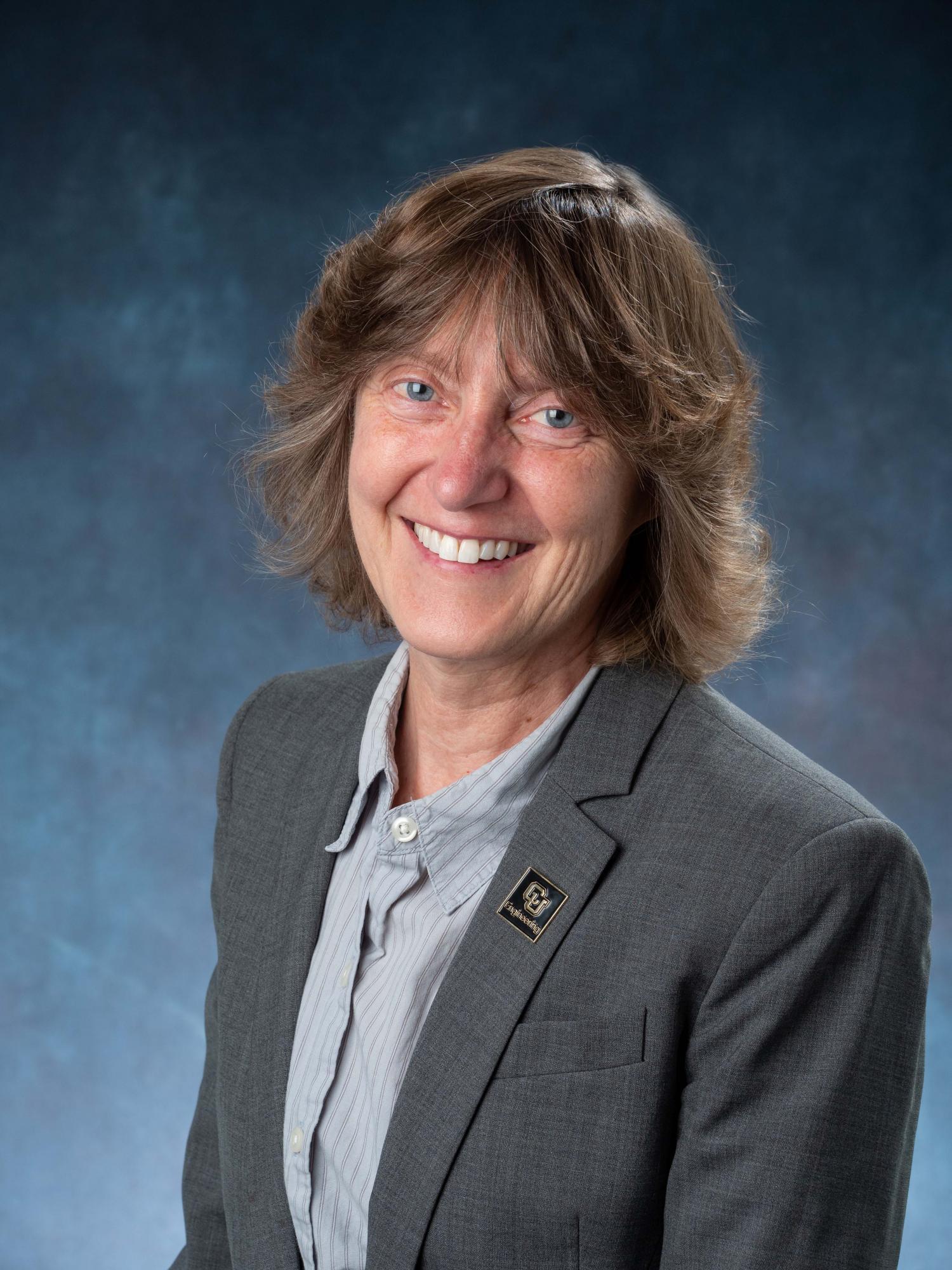
Dr. Hope Michelsen is an Associate Professor in the Department of Mechanical Engineering at the University of Colorado Boulder, specializing in Thermo Fluid Sciences and Air Quality. Her research focuses on carbonaceous particle formation mechanisms, combustion diagnostics, and their environmental impacts. She leads efforts in developing laser/X-ray-based diagnostic tools for studying soot evolution in flames and atmospheric systems. Research Interests include soot inception/growth, black carbon climate effects, and particle synthesis control. She has pioneered studies on resonance-stabilized radicals' role in soot formation and developed novel sampling techniques like jet-entrainment methods. Her work bridges fundamental combustion science with practical applications in air quality and climate mitigation. Awards: Fellow, American Physical Society Fellow, The Optical Society Alameda County Women’s Hall of Fame Inductee Lab facilities include advanced diagnostics at ECME 1B68/ECNW 180. Research collaborations involve multi-scale modeling of emissions and atmospheric transport. Current projects address wildfire soot dynamics and Arctic methane monitoring through inverse modeling techniques.
Dr. Judith Chow is a Research Professor and holds the Nazir and Mary Ansari Chair in Entrepreneurialism and Science at the Desert Research Institute (DRI) in Reno, Nevada. She is also a member of the graduate faculty in the Department of Environmental Science and Atmospheric Sciences Program within the Department of Physics at the University of Nevada, Reno (UNR), where she advises graduate students pursuing Masters and Doctoral degrees. With over 40 years of experience in atmospheric, air quality, and environmental health research, Dr. Chow leads DRI's Environmental Analysis Facility (EAF), directing a team of research scientists and technicians in developing and applying advanced analytical methods for characterizing atmospheric particles. Sc.D. in Environmental Science and Physiology from Harvard University (1985) M.S. in Environmental Health Sciences from Harvard University (1983) B.S. in Biology from Fu-Jen Catholic University, Taiwan (1974) Dr. Chow's research spans multiple critical areas in atmospheric science, with particular focus on ambient air and source sampling, chemical and physical analysis of suspended particulate matter, field study design and management, and source apportionment modeling. Her work integrates chemistry, physics, biology, engineering, biostatistics, toxicology, epidemiology, and medicine to address complex air quality challenges. She has established international collaborations across Asia, the Americas, Europe, Africa, Australia, and Antarctica, demonstrating the global relevance of her research. Analysis of Dr. Chow's most recent publications (2023-2025) reveals a continued emphasis on advanced particulate matter characterization, with growing attention to emerging pollution sources like battery fires, spacecraft materials, and industrial processes. Her work increasingly incorporates sensor technology and real-time monitoring approaches, reflecting the evolving nature of air quality research. There's also a noticeable expansion into environmental justice applications and health-focused studies, particularly examining the impacts of air pollution on vulnerable populations. ISI Highly Cited Researcher in ecology and environment with over 28,000 citations and an h-index of 83 Recognized as one of Stanford University's Top 2% of the World's Most Cited Scientists Appointed to U.S. EPA's Clean Air Science Advisory Committee (2015-2018, re-appointed 2021) Member of U.S. National Academy of Sciences committees addressing airborne particulate matter research priorities Co-editor for Aerosol and Air Quality Research and Particuology journals Dr. Chow advises numerous graduate students at UNR and has secured funding for over 50 large atmospheric studies throughout her career. She has led international projects assessing port operations' air quality impacts in southern California, measuring emissions in Canada's Oil Sands Region, designing air quality networks for the World Bank in developing countries, and evaluating photochemical aging effects on biomass burning emissions. Her Environmental Analysis Facility serves as a hub for advanced analytical methods development, particularly for characterizing suspended atmospheric particles and their effects on health, climate, visibility, ecosystems, and cultural artifacts. As founder and leader of DRI's Environmental Analysis Facility, Dr. Chow heads a multidisciplinary team that develops and applies advanced analytical methods to characterize atmospheric particles. Her facility has expanded capabilities to obtain more information from archived samples using thermal and mass spectrometric technologies, with current priorities including improved detection of brown carbon, application of microsensors to human exposure estimates, and simulation of source profile changes using photochemical flow tube reactors.
Tuukka Petäjä is a Professor at the University of Helsinki's Faculty of Science and Department of Physics, currently serving as Docent and supervisor for the Doctoral Programme in Atmospheric Sciences. He is affiliated with the Institute for Atmospheric and Earth System Research (INAR). Research focuses on atmospheric and Earth system science Active in aerosol research and climate modeling Recipient of multiple scientific awards His research spans air pollution mapping, aerosol dynamics, and climate-relevant particle formation. Recent publications analyze aerosol sources in Europe, Arctic blowing snow events, and machine learning applications in atmospheric science. Notable scientific awards include: Aerosol Foundation Award (2022) Finnish Association for Aerosol Research Award (2010) Thompson Reuters Highly Cited Researcher in Geosciences (2014-2016) He supervises doctoral students and co-manages research infrastructure projects, including SMEAR Stations for Earth system-atmosphere relations. Current research involves international collaboration through initiatives like ACTRIS and PEEX-Academic-Challenge workshops.
Professor Roy Harrison OBE FRS is the Queen Elizabeth II Birmingham Centenary Professor of Environmental Health at the University of Birmingham and holds an Adjunct Professor position at King Abdulaziz University, Saudi Arabia. With a 45-year academic career, he specializes in air pollution , focusing on emissions, atmospheric transformations, and health impacts of particulate matter. B.Sc. (Chemistry, 1969) Ph.D. (Organic Chemistry, 1972) D.Sc. (Environmental Chemistry, 1989) His research spans airborne particle characterization , chemical aging of aerosols, traffic emission mitigation technologies, and environmental policy development . Recent publications emphasize source apportionment , oxidative potential measurement , and machine learning applications in pollution modeling. Scientific recognition : Officer of the Order of the British Empire (2004) Fellow of the Royal Society (2017) Web of Science Highly Cited Researcher Professor Harrison has supervised 30+ doctoral researchers and serves on numerous advisory boards including DEFRA's Air Quality Expert Group and WHO air quality guidelines committees. He is Editor-in-Chief of Climate and Atmospheric Science (Nature) and maintains active roles in multiple editorial boards.
Dr. Mehdi Amouei Torkmahalleh is an Assistant Professor in Environmental and Occupational Health Sciences at UIC's School of Public Health. His research examines ultrafine particle exposure from indoor, workplace, and anthropogenic sources, particularly investigating links to neurodegenerative diseases. With a chemical engineering background, Torkmahalleh pioneered studies on cooking emissions reduction and nanoparticle toxicology. Research focuses on: Ultrafine particle exposure assessment Atmospheric chemistry of heavy metals Cooking emission mitigation Neurodegenerative disease mechanisms Climate change and environmental equity Publications demonstrate consistent focus on aerosol chemistry, with recent work exploring neurotoxicological impacts of air pollutants using molecular dynamics simulations. Over 50 collaborative publications address global air quality challenges including COVID-19 impacts.
Leibniz Institute for Tropospheric ResearchGermany
Dr. Markus Hermann is a Research Scientist and Group Leader of Experimental Aerosol Physics at the Leibniz Institute for Tropospheric Research, where he has worked since 2004. He leads the Tropospheric Aerosols workgroup within the Department of Atmospheric Microphysics. His academic background includes a Diploma in Physics from Johann Wolfgang Goethe University Frankfurt (1987-1994) and a PhD in Aerosol Measurement Technology from Leibniz Institute/University of Leipzig (1994-2000), followed by postdoctoral research (2000-2004). His research focuses on: Atmospheric aerosol properties and distribution Upper troposphere and lower stratosphere dynamics Aircraft-borne measurement systems development Computational Fluid Dynamics (CFD) modeling Volcanic aerosol impacts on atmospheric chemistry Dr. Hermann's publications predominantly explore atmospheric particle measurements, aerosol-cloud interactions, and stratospheric-tropospheric exchange processes. His work utilizes CARIBIC aircraft data to analyze aerosol distributions, volcanic impacts, and mercury transport across hemispheres. Awards: ESF INTROP Poster Prize EAC 2006 He teaches courses on 'Atmospheric Aerosol' and 'Airborne Aerosol Measurement Systems' and leads multiple research projects including CARIBIC-AMS (DFG), IAGOS-D (BMBF), IGAS (EU), and UAV (DFG). Dr. Hermann represents TROPOS in several international committees including the SPARC 'Stratospheric Sulfur and its Role in Climate' initiative, HALO Scientific Steering Committee, and European Research Infrastructure IAGOS.
Naomi Zimmerman is an Associate Professor in the Department of Mechanical Engineering at the University of British Columbia (UBC) and holds the Canada Research Chair in Real-World Air Quality Sensing. She leads the iREACH (Integrated Research in Energy, Air, Climate & Health) laboratory, focusing on technology and policy interventions for air quality and climate outcomes. Her work bridges atmospheric science, environmental engineering, and public health. B.A.Sc. in Chemical Engineering from University of Waterloo Ph.D. in Chemical Engineering and Applied Chemistry from University of Toronto Postdoctoral Fellowship at Carnegie Mellon University’s Center for Atmospheric Particle Studies Her research addresses real-world air pollutant behavior through low-cost sensor networks, machine learning models, and interdisciplinary collaboration with institutions like UBC’s Liu Institute and IRES. Key areas include transportation emissions (e.g., LNG vehicles, autonomous vehicles), wildfire smoke impacts, and environmental justice. The 15 most recent publications highlight her expertise in PM2.5 calibration, spatial modeling, and emissions from gasoline direct injection engines. Keywords span environmental science, atmospheric chemistry, and machine learning, with sub-fields covering wildfire smoke, urban monitoring, and climate policy. Canada Research Chair (2024–present) Zimmerman collaborates with regulatory agencies and non-profits, emphasizing stakeholder engagement. Her lab develops tools for rapid environmental policy evaluation. No active student recruitment is currently ongoing, though she welcomes exceptional fellowship applicants.
Dani Mendoza DellaGiustina is an Assistant Professor at the University of Arizona's Lunar and Planetary Laboratory (LPL), with research focused on surface and near-surface structure of small airless worlds. She serves as Principal Investigator for OSIRIS-APEX and Deputy Principal Investigator for OSIRIS-REx missions, while also contributing to Artemis III LEMS, Hera, and Martian Moons eXplorer as a science team member. Ph.D., University of Arizona (2021) Current faculty since 2014 Teaching courses: PTYS 416/516 (Planetary Surface Processes) Her research interests include planetary geophysics , asteroid surface evolution , space weathering , and water distribution in the solar system . She combines remote-sensing data, geophysical instruments, and terrestrial analog field studies to investigate airless body processes. Recent publications focus on Bennu's seismic activity , carbonate vein analysis , regolith dynamics , and planetary analog seismology . Her work reveals insights into rubble-pile asteroid interiors, impact resurfacing, and low-cohesion surface physics. Awarded The Brilliant 10 (2022) by Popular Science, she mentors graduate students and leads spacecraft mission instrument development. Current advisees include Rishi Chandra, Carson Fuls, and Robin Van Auken.
Jozef Lengyel is a Research Fellow at the Department of Physical and Theoretical Chemistry under the TUM School of Natural Sciences at the Technische Universität München . His work focuses on molecular-level understanding of atmospheric processes and catalytic reactions using clusters and subnanometer-sized particles. Research Themes : Environmental Physical Chemistry, Atmospheric Particle Formation, Solvation Chemistry, Gas-Phase Ion Reactions Awards : Emmy Noether Program (DFG), Alexander von Humboldt Fellowship, Lise Meitner Fellowship, Journal of Mass Spectrometry Award Education : PhD from University of Chemistry and Technology Prague (collaboration with Heyrovsky Institute) Lengyel’s experimental methods address atmospheric aerosol nucleation and cluster dynamics , contributing critical data for climate models. His work spans heterogeneous reaction mechanisms and catalysis , particularly in methane activation and oxidation processes. Recent publications highlight advancements in gas-phase cluster analysis and kinetic modeling of aerosol formation. Scientific honors reflect recognition in both physical chemistry and mass spectrometry communities. Selected Scientific Awards : Emmy Noether Junior Research Group (DFG, 2020) Alexander von Humboldt Research Fellowship (2018) Lise Meitner Fellowship (Austrian Science Fund, 2016) Journal of Mass Spectrometry Award (2014) Gordon F. Kirkbright Bursary Award (2014)
University of Illinois Urbana-ChampaignUnited States
Nicole Riemer is a Professor at the University of Illinois Urbana-Champaign, affiliated with the Department of Climate, Meteorology and Atmospheric Sciences, Civil and Environmental Engineering, and the National Center for Supercomputing Applications (NCSA). Her research focuses on aerosol particles' creation, transport, and transformation, with applications to climate, health, and pollution mitigation. She develops advanced simulations to study aerosol impacts on weather patterns, climate change, and human health. Education : Not explicitly stated in the provided texts. Affiliations : Multiple roles across climate, engineering, and supercomputing departments. Her work integrates observational data, satellite information, and computational models to address global challenges like air pollution and climate feedback loops. Key areas include aerosol mixing state, black carbon dynamics, and aerosol-cloud interactions. Dr. Riemer has received prestigious awards, including the Atmospheric Sciences Ascent Award (2021) and the NSF CAREER Award (2013). Her research outputs span aerosol chemistry, climate modeling, and computational methods. Notable datasets include work on particle-resolved modeling and machine learning applications in environmental science. She actively mentors graduate students and collaborates internationally on climate and atmospheric science projects.
Xiaoliang Wang is a Research Professor and Director of the Atmospheric Sciences Graduate Program at the University of Nevada, Reno (UNR) and the Desert Research Institute (DRI). He holds a Ph.D. and M.S. from the University of Minnesota (2006 and 2002) and dual B.E. degrees in Thermal Engineering and Environmental Engineering from Tsinghua University (2000). His research focuses on aerosol science, including instrument development, emission characterization, and air quality measurement. He leads projects on lithium-ion battery fire emissions, vehicle non-tailpipe emissions, and coal mine dust exposure reduction. He has developed key instruments like the nanoparticle aerodynamic lens for aerosol mass spectrometers and the DRI Portable Emissions Measurement System (PEMS). Wang has received prestigious awards including the 2020 AAAR Benjamin Y. H. Liu Award for aerosol instrumentation, the 2021 DRI Science Medal, and the 2024 NSHE Mid-Career Researcher Award. He serves on committees for the American Association for Aerosol Research (AAAR) and has authored over 100 peer-reviewed articles. His work spans fields like spacecraft fire safety, fugitive dust measurement, and computational fluid dynamics modeling. Key contributions include miner safety training programs reducing silica exposure and studies on brake/tire wear emissions near highways. His research integrates laboratory methods, field measurements, and numerical simulations to address environmental and occupational health challenges.