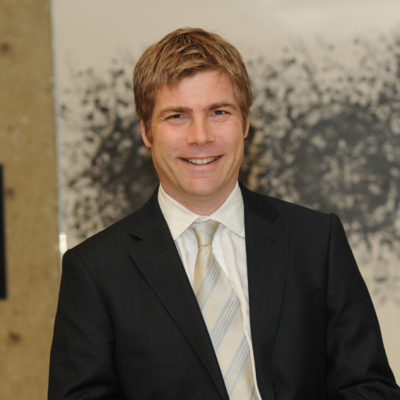
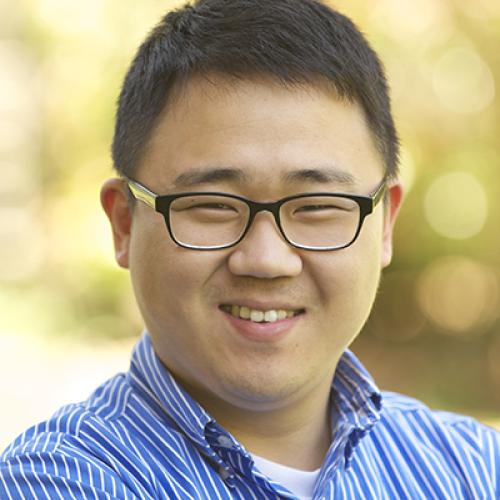
Jacob Bukoski is Assistant Professor and Director of the Forests and Climate Change graduate certificate at Oregon State University's College of Forestry. His research examines forest carbon dynamics, climate mitigation, and international forestry. Education includes: PhD in Environmental Science from UC Berkeley MS in Environmental Science from Yale University BA in Environmental Studies from UNC Chapel Hill Research focuses on carbon accumulation in forests, mangrove conservation, and climate policy integration. Teaches interdisciplinary courses on social-ecological systems and forest carbon analysis. Recent publications quantify carbon storage in global plantations and mangrove ecosystems. Current projects investigate albedo impacts on reforestation protocols and coastal conservation synergies. Directs graduate studies in Forests and Climate Change.
Michael Wara is a Senior Research Scholar at the Stanford Woods Institute for the Environment and Director of the Climate and Energy Policy Program. He holds a JD from Stanford Law School, a PhD in Ocean Sciences from UC Santa Cruz, and a BA from Columbia University. His work bridges legal, scientific, and policy domains to address climate and energy challenges through bipartisan technical assistance and research collaboration with economists, engineers, and scientists. His research focuses on carbon pricing mechanisms, energy innovation, and regulatory solutions for climate policy. He advises policymakers on designing effective laws and regulations, with particular expertise in international environmental treaties like the ozone and climate regimes. Wara also teaches courses on energy law, wildfire policy, and carbon taxation at Stanford Law School. Key contributions include analyzing the economic impacts of EPA regulations, evaluating California’s carbon market mechanisms, and advancing strategies to decarbonize building electrification. His interdisciplinary approach emphasizes practical solutions to global environmental challenges, leveraging Stanford’s expertise in energy systems and policy. Wara’s policy practicum courses engage students in real-world projects such as evaluating carbon pollution standards and wildfire management policies. His work frequently appears in peer-reviewed journals and media outlets like The Atlantic and New York Times , addressing topics like the Supreme Court’s EPA rulings and wildfire insurance issues.
Jesse Jenkins is an Assistant Professor at Princeton University, jointly appointed in the Department of Mechanical and Aerospace Engineering and the Andlinger Center for Energy and Environment, with courtesy affiliations in the School of Public and International Affairs and the High Meadows Environmental Institute. He leads the Princeton ZERO Lab and specializes in macro-scale energy systems engineering. Education: PhD and SM – Massachusetts Institute of Technology (MIT) Postdoctoral Fellow – Harvard Kennedy School and Harvard University Center for the Environment Research Interests: Jenkins focuses on the transition to zero-carbon energy systems . His work spans the integration of distributed energy resources, optimization of national and sub-national energy systems, and the role of electricity in economy-wide decarbonization. He applies advanced modeling techniques to inform policy and planning decisions. Publications Focus: His recent work emphasizes the intersection of decarbonization strategies and nature-based climate solutions , exploring how ecosystem-based interventions can complement technological pathways to net-zero emissions. These publications underscore the importance of policy frameworks and risk assessments in scaling sustainable climate interventions. Labs & Teams: Jenkins leads the Princeton ZERO Lab (Zero-carbon Energy systems Research and Optimization Laboratory) , which develops and applies optimization-based models to evaluate low-carbon energy technologies and support policy decisions in transitioning to net-zero emissions systems.
Carlos Portugal Gouvêa is an Associate Professor at the University of São Paulo Law School, where he leads multiple research centers including the Center for Corporate Governance (CGC-USP), Asian Legal Studies Center (CELA-USP), and Law and Poverty Group (GDP-USP). He is also the Chief Executive Officer of the Global Law Institute (IDGlobal), a leading think tank in Brazil focusing on environmental and social justice. Educational background includes S.J.D. from Harvard Law School and LL.B. and Livre-Docência from the University of São Paulo Research interests span corporate governance, ESG, human rights, and distributive justice in private law He has coordinated impactful projects including mapping global litigation on homelessness and analyzing carbon offset mechanisms in indigenous territories His scholarly work has influenced major rulings in the Brazilian Supreme Court, particularly regarding intellectual property and health rights. He is a human rights activist and founding member of influential non-profits like Instituto Sou da Paz and Conectas Human Rights. With a focus on high-impact research, his recent publications address racial diversity in corporate leadership, class action trends in Brazil, and social rights for marginalized populations. He actively engages in public policy and legal innovation through his roles in regulatory commissions and academic organizations.
Dr. Heesung Woo is an Assistant Professor of Advanced Forestry at the College of Forestry, Oregon State University , specializing in robotics, sensor integration, and precision forestry. His work focuses on autonomous forestry machinery, AI-driven forest management, and sustainable practices. He advises two graduate students and collaborates internationally through research projects. Research Interests: Autonomous Forest Machinery Development Sensor Integration & ICT Solutions Precision Forestry via Remote Sensing/LiDAR/GIS Machine Learning for Forest Inventory Advanced Forestry Practices for Sustainability Publications emphasize innovative applications of technology in forestry, including LIDAR integration, harvester data analytics, and carbon offset project modeling. His work bridges engineering, environmental science, and policy. Dr. Woo leads the Advanced Forestry Lab at Oregon State, focusing on real-world deployment of cutting-edge technologies to address challenges in forest operations, sustainability, and resource optimization.
Professor Bradley D Eyre is a leading academic at Southern Cross University, serving as a Professor in the Faculty of Science and Engineering and as the Foundation Director of the Centre for Coastal Biogeochemistry (CCB). His work spans the land-ocean continuum, with a focus on carbon and nitrogen biogeochemistry in coastal and estuarine systems under global change pressures. Education: BAppSc(Hons), University of Adelaide PhD, Queensland University of Technology His research centers on ecosystem-scale biogeochemical processes, particularly the impacts of climate change, ocean acidification, and eutrophication on greenhouse gas emissions and carbonate dynamics. He employs multi-scale approaches, from field measurements to global modeling. His recent work highlights how methane and nitrous oxide fluxes alter the climate benefit of blue carbon ecosystems and how ocean acidification drives net dissolution of coral reef sediments. An analysis of his recent publications reveals a strong focus on quantifying greenhouse gas fluxes in aquatic systems, with an emphasis on upscaling methods, geomorphic controls, and climate feedbacks. His work frequently appears in high-impact journals such as Nature , Science , and Nature Climate Change , reflecting broad disciplinary influence in environmental science, biogeochemistry, and climate research. Scientific Awards and Recognitions: Fellow, Association for the Sciences of Limnology and Oceanography (ASLO), since 2018 Member, ARC College of Experts, since 2022 Deputy Chair, 2024 MPCE DECRA Panel Professor Eyre has supervised 32 PhD students to completion and currently mentors 13 more, in addition to 22 early- and mid-career researchers. His research has attracted over $20 million in funding, including 32 ARC grants (>$10 million), 11 ARC Linkage projects (> $7.5 million), and over $3 million in contract research. His collaborations span federal and state agencies, local governments, private sector partners, and multiple universities across Australia and internationally, demonstrating extensive impact on policy and practice. He leads the Centre for Coastal Biogeochemistry, which played a key role in securing SCU’s ERA Rank 5 (well above world standard) in Geochemistry. His team conducts interdisciplinary research on coastal carbon cycling, sediment dynamics, and climate change impacts, contributing significantly to national and global environmental assessments.
Professor Tavis Potts is a Personal Chair in Sustainable Development and Environmental Governance at the University of Aberdeen, affiliated with the Department of Geography and Environment within the School of Geosciences. He is actively engaged in research on just transitions, environmental justice, marine governance, and participatory planning. His research focuses on: Understanding just transitions and the social dimensions of climate and energy Marine resource governance and planning Participatory and community-based approaches to managing natural capital The political economy of environmental policy The blue economy and net zero transitions His recent publications highlight a strong trend toward policy-relevant research on just transitions, stakeholder engagement, and environmental governance. Articles and reports examine climate assemblies, community participation in net zero planning, nuclear decommissioning, and measuring equitable outcomes in transition processes. His work integrates social science perspectives with environmental policy, emphasizing democratic participation and equity. Key scientific contributions include commissioned reports for the Just Transition Commission and the Nuclear Decommissioning Authority, as well as peer-reviewed articles in journals such as Environmental Science & Policy and Marine Policy . He has led and contributed to projects funded by Interreg EU, NERC, British Council, and the World Bank. Professor Potts advises research students and leads the Just Transition Lab at Aberdeen. He holds external advisory roles with Aberdeen City Council’s Net Zero Delivery Unit and Aberdeenshire Council’s Climate Ready Aberdeenshire Board, demonstrating active engagement with policy and practice. He is affiliated with key research centers including the Centre for Marine and Coastal Zone Management and the Just Transition Lab, where he advances interdisciplinary work on sustainable futures and equitable environmental governance.
David Newburn is an Associate Professor in the Department of Agricultural and Resource Economics at the University of Maryland, College of Agriculture and Natural Resources. His research focuses on environmental and resource economics, particularly land-use regulations for farmland and forest preservation, and water quality in the Chesapeake Bay. He develops spatial models to manage urban sprawl and evaluates incentive-based programs for conservation practices. Research Areas: Land-Use Change and Urban Sprawl Water Quality Trading and Conservation Spatial Economic Modeling Payment for Ecosystem Services (PES) Collaborations: NSF-funded Baltimore Ecosystem Study (BES) National Center for Smart Growth Chesapeake Bay Program Scientific and Technical Advisory Committee Recent Publications: Highlight trends in household behavior, land-use policy effectiveness, and coastal adaptation to climate impacts. Articles span environmental economics, urban ecology, and interdisciplinary sustainability research. Education: B.S., University of Maryland, College Park (1991) Ph.D., University of California, Berkeley (2002)
Garrett Cullity is a Professor of Philosophy at the School of Philosophy, Australian National University (ANU), within the Research School of Social Sciences (RSSS). Previously, he held positions at the Universities of Oxford, St Andrews, and Adelaide, including the Hughes Professor of Philosophy at Adelaide. His research spans moral philosophy, focusing on topics such as moral judgment, moral knowledge, practical reason, moral virtues, and applied ethics related to climate change, international aid, and consumer ethics. Education: B.Phil. and D.Phil. (Oxford), undergraduate studies at UWA. He has supervised numerous research students and contributed to projects like The Ethics of Net Zero (2023–2026) and Ethics, Responsibility and the Carbon Budget (2018–2024). Research interests include the theoretical foundations of morality, moral virtues, climate ethics, fairness in collective action, and global poverty. His work bridges abstract moral theory with practical issues like environmental policy and humanitarian responsibility.
Rosalie Arendt is an Assistant Professor specializing in multidisciplinary water management and sustainability assessment methodologies. Her research focuses on life cycle assessment (LCA) integration with social dimensions, climate policy analysis, and sustainable construction materials. She has contributed to UN Sustainable Development Goals related to climate action and sustainable cities. Her work explores topics such as monetization of social life cycle assessment results, residual carbon emissions in corporate climate pledges, and material criticality in construction. Recent research includes case studies on renewable building materials and socio-ecological responses to housing challenges in Germany. Research Highlights: Developed frameworks for integrating social indicators into LCA methodologies Analyzed institutional conflicts in urban sustainability policies Evaluated greenhouse gas reduction strategies in construction sectors Rosie's publications appear in journals like Climate Policy , Resources , and IOP Conference Series , with a focus on peer-reviewed contributions. She collaborates internationally on environmental valuation techniques and climate policy implementation.
Sebastian Heilpern serves as Acting Assistant Professor in Stanford University's Department of Earth System Science, transitioning to Assistant Professor in January 2026. An ecologist and sustainability scientist, he investigates biodiversity change in aquatic ecosystems—particularly the Amazon basin—and its implications for human well-being through food systems, renewable energy, and public health lenses. His research integrates fieldwork, data science, and synthesis across local to global scales. His educational background includes: PhD in Ecology, Evolution & Environmental Biology from Columbia University (2020) MS in Ecology & Evolution from the University of Chicago (2015) BS in Biological Sciences from Cornell University (2011) Heilpern's research centers on identifying synergies between biodiversity conservation and societal objectives. His work examines how aquatic biodiversity sustains nutritional security through fisheries, assesses hydropower's socio-ecological tradeoffs, and develops climate-smart planning frameworks. By connecting ecological processes to human outcomes, he advances sustainability science through interdisciplinary approaches that bridge environmental and social domains. His 2023-2025 publications reveal dominant themes in Amazonian freshwater systems, fisheries nutrition, and renewable energy planning. Key trends include quantifying biodiversity's role in dietary resilience, optimizing hydropower development to minimize ecological harm, and establishing mercury-nutrition linkages in fish consumption. His work consistently emphasizes win-win solutions that align conservation with food/energy security. Award highlights: Eric & Wendy Schmidt AI in Science Postdoctoral Fellowship at Cornell University As principal investigator of Stanford's Biodiversity Lab, Heilpern leads research reconciling conservation with food, energy, and water security. His team prioritizes equity in science practice while addressing historical inequities. Current projects focus on Amazonian freshwater systems, sustainable aquaculture siting, and climate-resilient energy planning, supported by interdisciplinary collaborations across ecology, data science, and policy domains. The Biodiversity Lab actively recruits researchers through structured opportunities emphasizing diversity and justice in sustainability science. Laboratory values explicitly center on correcting science's inequitable legacy while advancing stronger ecological understanding through inclusive practices.
Professor James Watson is a leading conservation scientist and biogeographer at The University of Queensland , affiliated with the Centre for Marine Science and Centre for Biodiversity and Conservation Science. As a Professor of Conservation Science, he specializes in biodiversity policy, climate change impacts, and species recovery strategies. PhD from University of Oxford (Rhodes Scholar) Co-leader of Green Fire Science and RARES research groups Over 400 peer-reviewed publications His research focuses on ecosystem integrity , protected area effectiveness , and conservation economics , with recent work addressing mining impacts on biodiversity, climate change adaptation, and the global 30x30 initiative. He advocates for evidence-based strategies to save Australia’s rarest species. 2025-2024 research trends show expertise in tropical forest regeneration, climate-species interactions, and policy implementation gaps. Collaborative projects span scientific modeling , GIS analysis , and international conservation frameworks . International Panel on Biodiversity and Ecosystem Services (IPBES) Task Force member Research Fellow, United Nations Environment Program Senior Technical Expert, UNDP’s Nature for Development Program Founding Chair, IUCN Climate Change Specialist Group Supervision includes 12 current PhD candidates working on topics such as night parrot conservation , ecological corridors , and urban biodiversity . Completed students have addressed threatened species recovery and climate adaptation planning . He leads lab teams at Green Fire Science (www.greenfirescience.com) and RARES (https://raresgroup.com.au), focusing on applied conservation solutions.
Andrew Macintosh is a Professor at the Australian National University College of Law, where he serves as Associate Dean (Research). He is a leading environmental law and policy scholar with extensive expertise in climate change mitigation and adaptation, carbon markets, and environmental impact assessment processes. Professor Macintosh's research is distinctly cross-disciplinary, applying legal, economic, and political science methodologies to environmental policy challenges. His work has established him as one of Australia's foremost experts on carbon offsets, land sector carbon abatement, and federal environmental law. His publications in prestigious journals including Nature Climate Change and the Journal of Environmental Law demonstrate the high impact of his scholarly contributions. His recent publications reveal a consistent focus on the integrity of Australia's carbon credit system, particularly examining human-induced regeneration projects, landfill gas methods, and nature-based markets. His research critically assesses regulatory compliance, measurement accuracy, and actual environmental outcomes of carbon offset projects, highlighting systemic issues in policy implementation. Among his notable recognitions is the Schlamadinger Prize for Climate Change Research awarded in 2012. Professor Macintosh maintains significant policy engagement through leadership roles including Chair of the Australian Emissions Reduction Assurance Committee, Director of the Port of Newcastle, and membership on the Australian Government's Emissions Reduction Fund Expert Reference Group and National Greenhouse Gas Inventory User Reference Group. His previous roles include Chair of the Domestic Offsets Integrity Committee and Associate Member of the Australian Climate Change Authority. He serves as an editor of the Environmental and Planning Law Journal . His work bridges academic research and practical policy implementation, with regular advisory roles for governments, corporations, and non-government organizations on environmental law and policy matters. Professor Macintosh's research directly informs climate policy development and implementation at national and international levels.
Nathalie Frascaria-Lacoste is a Professor at AgroParisTech and Director of the UMR ESE (Ecology, Society, Evolution) since 2022. She previously served as Assistant Professor at ENGREF (Paris/Nancy) and Deputy Director of UMR CNRS/UPS/AgroParisTech 8079 for nearly two decades. Her research focuses on three core areas: (1) socio-ecosystem dynamics related to biodiversity and climate change, (2) environmental assessment processes in French public policies, and (3) urbanization impacts on biodiversity with decision-making tools. She has coordinated interdisciplinary projects like the « Manuel de la Grande Transition » and serves on scientific councils for institutions like the Yves Rocher Foundation and Campus de la Transition. Current affiliations: AgroParisTech, UMR ESE, Université Paris-Saclay Former affiliations: ENGREF, CNRS Noteworthy grants include VINCI Chairs (2009-2012, 2014-2019), LabEx funding (INDISS/ACT), ITTECOP grants, and ANR EVNATURB. Her editorial roles include the NSS journal and scientific councils at INRAE and ACT department. Prominent scientific award: Chevalier in the National Order of Merit (2016). Supervision includes 5 current PhD students and 6 former PhD/postdocs. She collaborates with institutions like INRAE, CNRS, and the Yves Rocher Foundation.
Dr Megan Evans is a Senior Lecturer in Public Sector Management at the School of Business, UNSW Canberra. She is an interdisciplinary social scientist focusing on environmental laws, policies, and tools, particularly in biodiversity and carbon offsetting frameworks. Education: PhD in environmental policy (Australian National University), BSc (Ecology) and BA (Mathematics) from The University of Queensland Her research drives policy impact in carbon offset integrity , biodiversity conservation , and environmental markets , including contributions to the Australian Government’s Biodiversity Offset Policy and the Queensland Land Restoration Fund . Her recent work examines biodiversity credits, carbon-negative technologies, and policy implementation challenges in human-induced regeneration projects. Key awards: Young Tall Poppy Award (2021) UQ Faculty of Science Rising Star Award (2018) ARC CEED scholarships (2014, 2017) She supervises five PhD students and has completed supervision of Dr Toiaba Binta Taher (PhD, with Professor Catherine Althaus). Her grants include an ARC DECRA Fellowship (2020–2023) and funding from the Department of Agriculture, Water and the Environment. Contact: megan.evans@unsw.edu.au