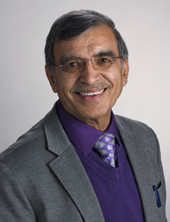
Om Prakash is a Professor in the Department of Biochemistry & Molecular Biophysics at Kansas State University. He serves as the Director of the NMR Facility and holds roles as Graduate Admissions Chair and Undergraduate Advisor. Education: B.S. (1970) and Ph.D. (1978) from University of Meerut His research focuses on structural characterization of biomolecules using multidimensional NMR spectroscopy and computer-aided molecular modeling. Key areas include molecular pharmacology, rational drug design, protein folding, and solution-phase biostructures. Recent studies emphasize structure-activity relationships of fowlicidins and their role in anticancer agent development. His laboratory specializes in integrating NMR data with computational methods to design constrained peptide ligands for pharmaceutical applications. Facility capabilities under his leadership include 3D structural analysis of proteins, metabolite identification, and homology modeling. The NMR Facility houses a 500 MHz Varian spectrometer with advanced probes and Linux workstations for data processing.
Ross Carlson is a Professor of Chemical and Biological Engineering at Montana State University's College of Engineering, affiliated with the Center for Biofilm Engineering. His research focuses on metabolic engineering, microbial consortia dynamics, and chronic wound biofilms. He holds a PhD in Chemical Engineering from the University of Minnesota (2003). Key research interests include metabolic network modeling, biofilm community behavior, and synthetic biology applications. He has pioneered studies on reverse diauxie in Pseudomonas aeruginosa and engineered microbial consortia for biofuel production and bioremediation. Recent work highlights metabolic resource allocation strategies, cross-feeding dynamics, and systems-level analysis of chronic wound infections. His team has developed computational models to predict microbial community behavior and design bioengineered systems. Notable achievements include securing $3 million in graduate research funding (2021), U.S. Army grants for biomining research (2019), and collaborative projects with industry partners like Nature's Fynd. His research spans laboratory studies to industrial applications in biofuel production and microbial ecology. Dr. Carlson's work integrates experimental and computational approaches, emphasizing stoichiometric modeling, proteomics, and metabolomics. He collaborates with interdisciplinary teams to address challenges in biotechnology, environmental engineering, and medical microbiology.
Mathias Janssen is a Senior Researcher at the Environmental Systems Analysis group at Chalmers University of Technology. His work focuses on applying life cycle assessment (LCA) methodologies during early technology development to guide environmentally sustainable design decisions, with particular emphasis on prospective LCA for emerging technologies. Dr. Janssen's research spans multiple areas of environmental systems analysis, with expertise in method development for assessing technologies in their early development stages. His application areas include biorefinery processes and products (biofuels, bio-based chemicals and materials), and circular economy solutions such as second use and material recycling of Li-ion batteries. He has developed a stepwise approach for Scenario-based Inventory Modelling for Prospective LCA (SIMPL) and has extensive experience applying LCA in material development projects, particularly for carbon fiber composites and structural battery materials for electric vehicles. His publication record demonstrates a strong methodological focus, with recent work examining carbon capture and utilization assessment frameworks, environmental benefits of repair strategies for high-voltage electric motors, and comparative assessments of emerging materials. His research consistently bridges the gap between environmental assessment methodologies and practical application in early-stage technology development. Dr. Janssen serves as examiner for the Environmental Systems Analysis (VMI010) and Life Cycle Assessment (VTM081) courses at Chalmers, contributing to sustainability education. He has also been involved in developing Massive Open Online Courses (MOOCs) on sustainability topics. His current research projects include: SCALED-UP PRODUCTION OF NEXT-GENERATION CARBOHYDRATE-DERIVED BUILDING BLOCKS (2024-2028) Demonstrating sustainable value creation from industrial CO 2 by its thermophilic microbial conversion into acetone (PYROCO2) (2021-2026) Robust enzymatic and microbial conversion and valorization of biorefinery side streams (2020-) Biomass production and conversion in sustainably managed landscapes (2020-) Mistra REES (Resource-effective and efficient solutions) phase 2 (2019-2023)
Trang Pham is a Research Fellow in Medicinal Chemistry at Monash University, actively engaged in sustainable and green chemistry research. Her work focuses on transforming biorenewable feedstocks such as cellulose, chitin, and lignin into high-value chemicals with applications in pharmaceuticals and cosmetics. Her research interests center on green and sustainable chemical synthesis, particularly the development of catalytic and environmentally benign processes for converting biomass into functional molecules. Key areas include heterocyclic synthesis, amino sugar chemistry, and valorization of waste biomass. She leverages automated synthesis planning and innovative reaction design to achieve efficiency and sustainability. Trang Pham's recent publications demonstrate a strong trend in sustainable chemistry, with a focus on nitrogen fixation alternatives, biobased pharmaceuticals, and green routes to heterocycles. Her work bridges organic chemistry and environmental responsibility, contributing significantly to green catalysis and renewable feedstock utilization. No scientific awards mentioned. There is no information available regarding student supervision, grants, or external funding. Trang Pham collaborates with researchers across disciplines, particularly in biomass conversion and sustainable materials, but specific advising roles or funded projects are not disclosed. While no specific lab or research group is named, her work appears to be part of a broader collaborative network at Monash University focused on sustainable chemistry and biorefinery technologies, likely involving interdisciplinary teams in chemistry and engineering.
Dr. Sebastien Poget is an Associate Professor at the College of Staten Island (CSI), CUNY. His research focuses on membrane proteins, particularly ion channels and their interactions with animal peptide toxins, using nuclear magnetic resonance (NMR) spectroscopy. He develops NMR methodologies to study these systems and investigates toxin-channel interactions to understand channel modulation for potential drug development. His work spans structural biology, biophysics, and toxinology. Education: Ph.D. in Chemistry (University of Cambridge, 2001) and Diploma in Chemistry (University of Basel, 1997). His lab, the Poget Lab, is active in toxin discovery from venoms and studies their structural and functional effects on ion channels. Key research areas include potassium/sodium channel physiology, venom peptide mechanisms, and NMR methodology advancements. His publications (2017–1999) cover receptor structures, toxin-channel interactions, and membrane protein dynamics. No awards are explicitly mentioned, but his work contributes to understanding neurological disorders and drug design.
Surachet Imlimthan is a Postdoctoral Researcher in the Department of Chemistry at the University of Helsinki, Finland. His work focuses on molecular imaging, radiopharmaceuticals, and nanotechnology-based drug delivery systems. Education: Chemical Engineering (BEng), Bioengineering (MSc), Radiochemistry (PhD) His research spans the development of imaging probes for cancer therapy, targeted drug delivery, and diagnostics using PET technology. He has contributed to advancements in boron neutron capture therapy (BNCT) and glymphatic system imaging. Recent publications highlight his work in designing radiotracers for cerebrospinal fluid dynamics, BNCT agents, and peptide radiolabeling. Collaborations include institutions like Bern University Hospital and the University of Tokyo. Surachet has participated in key conferences such as the World Molecular Imaging Congress and the Society for Biomaterials Annual Meeting, reflecting his engagement in interdisciplinary research at the intersection of chemistry, pharmacology, and nanotechnology.
Professor Clare Mahon is an Assistant Professor in Synthetic Organic Chemistry at the Department of Chemistry, Durham University , where she leads a research group focused on the intersection of materials science and biological chemistry. Her work combines synthetic polymer chemistry with biological recognition systems to develop functional materials for pathogen detection, sustainable polymer design, and biomedical applications. PhD in Synthetic Polymer Chemistry, Newcastle University (2014) EPSRC Doctoral Prize Fellowship, University of Leeds (2015-2017) Marie-Skłodowska Curie Global Fellowship, University of Sydney and University of York (2017-2019) Assistant Professor, Durham University (2019-present) Research interests include: Designing synthetic polymers that interact with biological systems Developing sustainable materials via novel polymer synthesis and degradation Exploring molecular recognition for pathogen capture and detection Creating glycopolymer sensor arrays for carbohydrate-binding proteins Engineering responsive and biodegradable materials Publication trends reveal expertise in polymer-based biosensing, carbohydrate-protein interactions, sustainable materials chemistry, and bioconjugation techniques. Her group frequently applies polymer scaffolds to address challenges in drug delivery, allergen detection, and pathogen identification. Scientific awards include: EPSRC Doctoral Prize Fellowship Marie-Skłodowska Curie Global Fellowship Supervision roles encompass PhD students and research postgraduates working on interdisciplinary projects. Clare actively collaborates with institutions in the UK, Australia, and beyond, and welcomes inquiries about research opportunities in her group.
Thierry Maugard is a University Professor (Exceptional Class) at La Rochelle University, serving as Head of the Biotechnologies and Chemistry of Bioresources for Health Team (BCBS, UMR-LIENSs-CNRS-7266) and Director of the BIOAQTIV Platform. He leads the Joint PHYTOMAR Laboratory with Valbiotis and holds significant institutional roles including membership in CNU section 64 (College A) and board positions with the League Against Cancer (Charente-Maritime) and ADEBIOTECH (French Biotechnology Network). His research focuses on bioprocesses for transforming marine and agricultural resources into health, food, and cosmetic applications, specifically targeting biomolecules regulating pathological processes like cancer, diabetes, and hypertension. Key research areas include understanding mechanisms of action for hydrolases, peptides, oligosaccharides, polyphenols, and pigments in biological regulation, and developing natural-origin formulations for active ingredients—particularly algae-sourced compounds for skin aging and metabolic syndrome interventions. Analysis of recent publications reveals strong emphasis on marine biotechnology (especially algal polysaccharides), enzyme engineering for oligosaccharide synthesis, nutraceutical development for metabolic disorders, and biomaterial applications in drug delivery. His work bridges fundamental biochemistry with industrial applications across pharmaceuticals, nutraceuticals, and cosmetics. 99 publications in international journals with h-index 28 (Scopus) 13 patents and 2 licenses demonstrating translational impact Member of CNU section 64 and scientific referent for CNRS INEE Board member of League Against Cancer (Charente-Maritime) Professor Maugard actively supervises doctoral research with 16 thesis students (15 completed, 1 ongoing) and has mentored 31 Master's and 14 engineering students. His leadership extends to the BIOAQTIV Platform for advanced biotechnology applications and collaborative PHYTOMAR Laboratory focused on marine bioresources.
Dr. Jason Paris is a Research Associate Professor in the Department of BioMolecular Sciences at the University of Mississippi School of Pharmacy. His laboratory investigates neurodegenerative disease pathology associated with addiction and neuroHIV, employing behavioral, cellular, and molecular techniques to develop therapeutic interventions. Research focuses on neuroendocrine dysfunction, immune modulation, and pharmacological strategies to mitigate neurocognitive decline. Education includes a Ph.D. in Behavioral Neuroscience from The University at Albany-SUNY and a B.S. from Marywood University. Research interests encompass HIV neuropathology, substance abuse neurobiology, and neuroendocrine-immune interactions. Publications demonstrate consistent focus on neuroHIV mechanisms and therapeutic interventions, with recent emphasis on mitochondrial dysfunction, neurosteroid pathways, nanoparticle delivery systems, and gender-specific neuropathology. Methodologies include transgenic models, molecular biology, and behavioral assays. Laboratory collaborations include chemists and bioengineers to develop novel compounds targeting addiction and neuroHIV. Current work emphasizes neuroprotective strategies using natural compounds and pharmacological agents to modulate stress responses and neuroinflammation.
Jonathan S. Dordick serves as Institute Professor of Chemical and Biological Engineering at Rensselaer Polytechnic Institute (RPI), with joint appointments in Biomedical Engineering and Biological Sciences. He holds multiple leadership roles including Vice President for Strategic Alliances and Translation, Co-Director of the Rensselaer-Mount Sinai Center for Engineering and Precision Medicine, and Senior Advisor to the President for Strategic Initiatives. Dordick is a member of the National Academy of Engineering and National Academy of Inventors, reflecting his significant contributions to biochemical engineering. His educational background includes a B.A. in Biochemistry and Chemistry from Brandeis University (1980), followed by M.S. (1983) and Ph.D. (1986) degrees in Biochemical Engineering from MIT. Prior to joining RPI, he was Professor of Chemical and Biochemical Engineering at the University of Iowa, where he served as founding Associate Director of the Center for Biocatalysis and Bioprocessing. Institute Professor, Department of Chemical and Biological Engineering, RPI (2021-present) Co-Director, Rensselaer-Mount Sinai Center for Engineering and Precision Medicine (2022-present) Senior Advisor to the President for Strategic Initiatives, RPI (2018-present) Guest Faculty Investigator, Rockefeller University (2016-present) Director, Center for Biotechnology & Interdisciplinary Studies, RPI (2008-2012) Dordick's research has pioneered the development of enzymatic and chemoenzymatic methods for new materials synthesis, initiated the field of molecular bioprocessing, and expanded understanding of enzymatic catalysis in abiotic environments. His work bridges fundamental biochemical principles with clinical translation in infectious diseases, neurological disorders, and anticoagulant therapy. Recent publications reveal a strong focus on sulfated glycans as antiviral agents against SARS-CoV-2, HSV-1, and other pathogens, demonstrating his lab's consistent innovation in biomolecular engineering and therapeutic applications. His scientific achievements have been recognized with numerous prestigious awards: Election to National Academy of Engineering (2021) James E. Bailey Award (2022) Amgen Award in Biochemical and Molecular Engineering (2019) AIChE Food, Pharmaceutical and Bioengineering Award (2015) ACS-BIOT Marvin J. Johnson Award (2007) International Enzyme Engineering Award (2003) Dordick has cofounded multiple companies including EnzyMed, Solidus Biosciences, Redpin Therapeutics, SynAppBio, and Lavaage, Inc., translating research into commercial applications. His lab has developed innovative platforms for high-throughput drug screening, 3D tumor spheroid microarrays, and CRISPR-based biosensors. The Dordick Research Group, housed within RPI's Center for Biotechnology and Interdisciplinary Studies, brings together chemical engineers, bioengineers, biologists, and chemists to advance biomanufacturing, immune system engineering, neurotechnologies, and AI-driven drug discovery.
Suzana K. Straus is a Professor in the Department of Chemistry at the University of British Columbia (UBC), part of the Faculty of Science. Her research focuses on membrane proteins, antimicrobial peptides, and solid-state NMR techniques. She holds a BSc (Honours) from McGill University and a PhD from ETH Zurich. Her work integrates spectroscopic methods to study biomolecules in native lipid environments, with applications in drug design and understanding viral proteins linked to diseases like multiple sclerosis. Key projects include developing novel antibiotics and elucidating mechanisms of action for host defense peptides. Straus has advised numerous graduate and undergraduate students, contributing to over 100 peer-reviewed publications. She leads the Straus Group at UBC, collaborating on projects ranging from antimicrobial conjugates to HHV-6 protein interactions.
Pedro Alves Martins is a postdoctoral researcher at the Department of Biotechnology and Biomedicine, Technical University of Denmark (DTU), specializing in lignin biotechnology and enzyme engineering. His work focuses on enhancing cellulose hydrolysis and lignin extraction through glucuronoyl esterases and other ligninolytic enzymes. Research Interests His research bridges biocatalysis and biorefining , targeting sustainable conversion of lignocellulosic biomass into valuable compounds. Key areas include: Enzymatic mechanisms for lignin-carbohydrate complex deconstruction Optimization of cellulose hydrolysis efficiency Valorization of agricultural byproducts like brewer’s spent grain Structural analysis of enzyme-substrate interactions Publication Trends Recent work emphasizes biotechnological applications of fungal esterases, with a focus on synergistic enzyme systems and their industrial potential. Publications span 2023–2025 , highlighting collaborations with experts in bioprocessing and computational modeling. Collaborations Collaborators include Prof. Jan W. Agger (DTU), Dr. Camila L. Bourmaud (DTU), and Prof. Jeremy S. Luterbacher (EPFL), reflecting interdisciplinary efforts in enzyme technology and biomass deconstruction.
Dr. Del Lucent is an Associate Professor at Wilkes University’s Division of Engineering and Physics, holding a joint appointment in the Department of Physics and Bioengineering. His research focuses on computational biophysics, particularly the rational design of enzymes for bioremediation and the study of protein folding mechanisms. Education: PhD in Chemistry and Structural Biology from Stanford University. Previous Roles: OCE Postdoctoral Fellow at CSIRO, Melbourne (2010–2012). Dr. Lucent’s research spans computational enzyme design, bioremediation of pesticides linked to bee colony collapse, and protein folding dynamics in confined environments. He has pioneered tools like Meltdown for analyzing thermal melt data and integrated Stanford’s Folding@Home network into undergraduate research at Wilkes. His publications highlight interdisciplinary work in structural biology, enzyme engineering, and environmental toxicology, with recent studies on oxalate sensing, pesticide detoxification, and HIV-1 integrase inhibition. Earlier work focused on solvent behavior in protein folding and chaperonin mechanisms. Scientific Awards: American Society of Plant Biologists Undergraduate Research Fellowship (2001) Outstanding Biology Graduate (2003) Office of the Chief Executive Postdoctoral Fellowship (2009) Dr. Lucent co-leads Wilkes’ new B.A. in Physics and M.A. Bioengineering programs, aiming to expand interdisciplinary research opportunities for undergraduates. He collaborates with Dr. Walter Placek to address shortages in high school physics education through curriculum development.
Professor Roman Hovorka is affiliated with the Institute of Metabolic Science at the University of Cambridge, where he leads research in diabetes technology and artificial pancreas development. He is a Professor of Metabolic Technology in the Department of Paediatrics, focusing on clinical testing and optimization of automated insulin delivery systems. His research spans diabetes technology , closed-loop systems , and metabolic modeling , integrating subcutaneous glucose monitors, control algorithms, and insulin pumps. Recent work examines ultra-rapid insulin analogs , perioperative glucose management , and gut starch turnover in Type 2 Diabetes. Key trends in his publications highlight advancements in hybrid closed-loop systems , real-world efficacy , and personalized glucose targets , with a focus on pediatric, adolescent, and postpartum populations. His team includes Dr Charlotte Boughton, Ms Josephine Hayes, and others. Funding Sources: JDRF Diabetes UK Helmsley Trust H2020 NIDDK NIHR NIH FP7 Scientific Awards: Summer Studentship Award His work emphasizes clinical trials , device safety , and patient-reported outcomes , particularly in improving sleep quality and reducing caregiver burden. Labs include the Metabolic Research Laboratories and collaborations with Cambridge hybrid closed-loop systems .
Dr. Keyu Tao is a Postdoctoral Research Fellow at the School of Chemical Engineering, University of Queensland. His research focuses on molecular structure-property relations in food science, particularly starch and biopolymer applications. University of Queensland School of Chemical Engineering His work addresses starch molecular structures in rice and barley, their impact on food texture and digestibility, and innovative applications in food packaging and brewing. Notable studies include collagen-based biodegradable films , rice starch digestibility optimization , and molecular brewing processes . Keyu Tao has co-authored 15 recent publications spanning Food Science , Materials Engineering , and Biomedical Applications . His 2024 conference paper explores glycosaminoglycan additives for stem cell therapy. Research trends include starch structural analysis , cereal processing , and food quality evaluation . Collaborations involve experts in food chemistry , biopolymer engineering , and agricultural biotechnology . Dr. Tao is available for supervision in fields related to starch science and food molecular engineering . He contributes to projects on starch biosynthesis , functional food design , and bioprocess innovation .