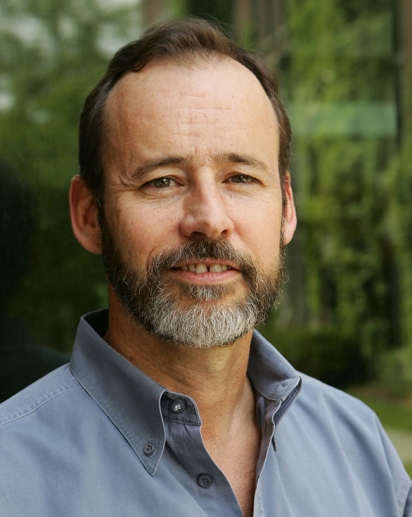
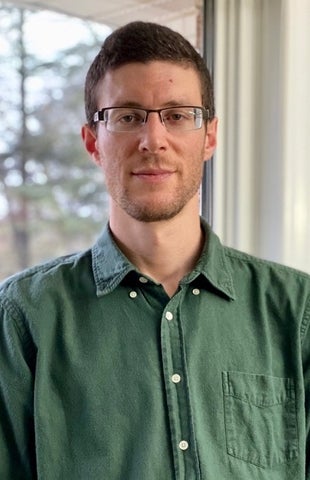
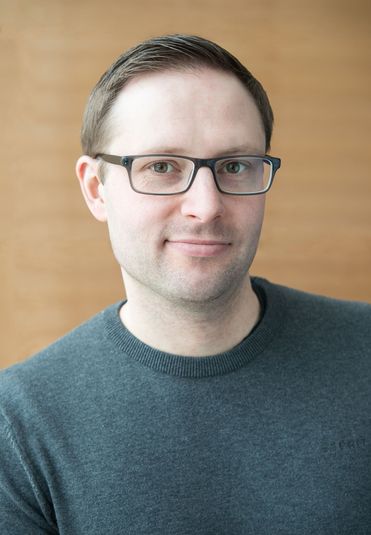
Audrey Béliveau is an Associate Professor at the University of Waterloo, affiliated with the Department of Statistics and Actuarial Science. She can be reached at audrey.beliveau@uwaterloo.ca and is located in M3 4232. Her research focuses on Bayesian statistical methods, network meta-analysis, and environmental and population dynamics modeling. She has contributed to software development, notably the Bugsnet R package for Bayesian network meta-analyses. Her work spans interdisciplinary applications, including estimating homeless population sizes, methane emissions quantification, and genetic mark-recapture methods for ecological studies. She also explores error propagation in medical treatment comparisons and Bayesian approaches for item response modeling in online assessments. Béliveau’s research emphasizes methodological rigor and practical tools, such as automated R packages for reproducible statistical analyses. She regularly publishes in top-tier journals, addressing both theoretical and applied challenges in statistics.
Simon Bonner is an Associate Professor in Environmetrics in the Department of Statistical and Actuarial Sciences at The University of Western Ontario. Previously, he held positions at the University of Kentucky (Assistant Professor), University of British Columbia (Postdoc), and completed his PhD at Simon Fraser University. His research focuses on developing statistical models for ecological data, particularly Bayesian hierarchical methods applied to wildlife population monitoring via mark-recapture experiments. He has contributed to studies on salamanders impacted by mountaintop removal mining, predator-prey dynamics, and conservation challenges in diverse ecosystems. Education: PhD in Statistics, Simon Fraser University Postdoc, University of British Columbia Research Interests: Ecological statistics, Bayesian modeling, and hierarchical models Applications in wildlife population dynamics, conservation, and environmental impact studies Methodological advancements in capture-recapture and occupancy modeling Advising & Grants: Supervises PhD/MSc students in statistical ecology and applied data science Focus on interdisciplinary projects with collaborators in biology and environmental science Labs & Teams: Lead of the Ecological Statistics and Applied Data Science Laboratory at Western University Collaborations with researchers on salamander ecology, predator behavior, and conservation biology
Scott A. Ritchie is a senior academic and researcher affiliated with James Cook University, specializing in medical entomology and vector biology. His work focuses on mosquito-borne diseases, particularly dengue and Japanese encephalitis, and the role of Wolbachia in disease control. He has extensively contributed to understanding mosquito population dynamics, vector control strategies, and surveillance methodologies. Ritchie's research emphasizes the application of novel trapping technologies, such as the male Aedes sound trap and nucleic acid preservation cards, to improve disease surveillance. His collaborations span international studies, including field trials in Australia and the Pacific, evaluating Wolbachia-based interventions to suppress mosquito populations and reduce disease transmission. Key projects include investigating Wolbachia stability in Aedes aegypti populations, analyzing dispersal pathways of invasive species like Aedes albopictus, and developing tools for real-time monitoring of arboviruses. Ritchie’s interdisciplinary approach integrates molecular biology, ecology, and engineering to address public health challenges posed by vector-borne diseases.
Bruce J. Stephen is a researcher at the University of Nebraska-Lincoln specializing in freshwater ecology and malacology, with extensive work on Nebraska's gastropod biodiversity and invasive species management. His research is primarily conducted through the Nebraska Cooperative Fish and Wildlife Research Unit, focusing on conservation status assessments and ecological dynamics of freshwater systems. His research interests center on freshwater gastropod ecology , particularly the distribution patterns and conservation needs of indigenous species versus invasive threats like Bellamya chinensis . Key methodologies include ecoregion-based biodiversity surveys, population dynamics modeling, and chemical/physical control testing for invasive species. His work emphasizes practical conservation applications through quartile-based status assessments and habitat-specific management recommendations. Stephen's publication trends reveal consistent focus on invasive species ecology (85% of works), with dominant themes in population monitoring techniques (mark-recapture, thermal tolerance), conservation status quantification, and chemical control efficacy. His research spans Nebraska's major ecoregions with particular emphasis on reservoir systems and wetland complexes. Stephen has collaborated extensively with the Nebraska Cooperative Fish and Wildlife Research Unit on multi-year projects examining Chinese mystery snail ecology. His work demonstrates strong institutional partnerships with state conservation agencies, though no individual scientific awards are documented in the provided materials. His research methodology frequently employs field-based population studies in Nebraska reservoirs, utilizing mark-recapture techniques and environmental parameter monitoring. Current work appears focused on refining conservation status metrics for indigenous gastropods while developing targeted management protocols for invasive species.
Professor Peter van der Heijden is a prominent academic in Social Statistics at the University of Southampton and concurrently holds a professorship in Statistics for Social and Behavioral Sciences at Utrecht University since 1992. He chairs the Advisory Council on Methodology and Quality at Statistics Netherlands and serves on the Executive Board of the European Commission’s ESAC. His research focuses on categorical data analysis, population size estimation (via capture-recapture), randomized response techniques, and correspondence analysis. Key projects include estimating ethnic group populations in New Zealand and developing methodologies for active learning stop rules. Education: Not explicitly detailed in the provided texts, but academic roles suggest advanced degrees in statistics. External Roles: Chair at Statistics Netherlands (2015–present), Chair at European Commission (2019–present). Research interests emphasize innovative statistical methods for sensitive topics, including human trafficking prevalence monitoring and methodological advancements for census improvements. He collaborates with institutions like Statistics Netherlands and the ESRC on projects such as the SPF ‘UK Population Laboratory’. His work has produced impactful studies, such as the 2021 REF case study on human trafficking and contributions to global guidelines on slavery estimation. Awards include election to the International Statistical Institute (1995). Grants/Projects: ESRC-funded ‘UK Population Laboratory’, SPF collaborations, and multiple system estimation for Māori population studies in New Zealand. Advising: Supervises PhD students Mark Piatek and Ceejay Anne Hammond, focusing on social statistics and demography. Labs/Teams: Active member of the Statistical Sciences Research Institute (S3RI) and collaborates with interdisciplinary groups on official statistics and methodological innovation.
Douglas Thomas Bolger is a Professor of Environmental Studies and Adjunct Professor of Biological Sciences at Dartmouth College, serving as Director of the Environmental Studies Africa Foreign Studies Program. His educational background includes: B.S. from Rutgers University Ph.D. from University of California at San Diego An ecologist and conservation biologist, Bolger investigates human land-use impacts on plant and animal populations through research on residential development in southern California's coastal sage scrub ecosystem and agricultural intensification near African national parks. His work integrates field ecology with computational methods to address biodiversity conservation challenges in human-altered landscapes. His publication record reveals a consistent focus on African wildlife conservation, particularly ungulate population dynamics using photographic mark-recapture techniques. The research demonstrates interdisciplinary integration of ecological fieldwork, spatial analysis, and computational innovation to address conservation bottlenecks and habitat connectivity issues in savanna ecosystems. Scientific Awards: No awards mentioned in source material. Advising and Grants: Source text provides no details regarding graduate student mentorship or research funding. Bolger leads field research teams in Tanzania's Tarangire-Manyara Ecosystem studying giraffe and wildebeest populations, and developed Wild-ID software for photographic mark-recapture analysis, establishing a research infrastructure for non-invasive wildlife monitoring.
Albert Fernandez Chacon is a Research Fellow at the Department of Natural Sciences, University of Agder, Norway, where he has been working since 2019. His research focuses on quantitative ecology and animal population dynamics, particularly in aquatic environments. Prior to his current position, he worked as a Quantitative Ecologist at Bretagne Vivante in France (2018-2019), and held postdoctoral positions at the University of Oviedo, Spain (2016-2018) and the Institute of Marine Research, Norway (2013-2015). Dr. Fernandez Chacon specializes in the statistical modeling of individual-based ecological data, with expertise in capture-recapture and occupancy models. His primary research interests include animal population dynamics (abundance, growth, survival, dispersal), ecology of aquatic species in marine and freshwater environments, effects of marine protected areas on population dynamics, and eco-evolutionary impacts of conservation measures. His work spans disciplines from zoology to biogeography and evolutionary ecology. His publication record demonstrates a consistent focus on how protection measures affect marine populations, with particular attention to Atlantic cod and other commercially important species. Recent work examines juvenile shark survival, amphibian responses to disease, and the effectiveness of lobster reserves. His research at the Centre for Coastal Research (CCR) focuses specifically on coastal fish and lobster populations within and outside marine protected areas in the Skagerrak region. The analysis of his 15 most recent publications reveals a strong methodological emphasis on statistical modeling combined with practical conservation applications. Dr. Fernandez Chacon has established extensive international collaborations across Europe, contributing to interdisciplinary studies that bridge ecology, conservation, and fisheries management. His work consistently combines field data collection with sophisticated statistical approaches to address pressing conservation questions, particularly regarding the effectiveness of marine protected areas and sustainable fisheries management.
Dr. Sean Sterrett is an Associate Professor of Wildlife Ecology at Monmouth University, affiliated with the Department of Biology. His research focuses on wildlife biology, ecology, management, and conservation, with a specialization in reptiles and amphibians. He conducts both basic and applied research addressing real-world conservation challenges. Current projects include diamondback terrapin ecology and management on the Jersey Coast Investigating the impact of volunteer efforts during "Big Night" to reduce amphibian road mortality Developing drone-based population monitoring for terrapins Dr. Sterrett leads a research lab funded by the National Parks Service, National Science Foundation, and Wildlife Management Institute. His lab trains students in population ecology and conservation technology, with recent work involving FAA drone certification for field research and mentorship program development. Scientific awards include: NSF grant for SPARCnet mentorship program Wildlife Management Institute grant for drone surveys National Parks Service grant for terrapin monitoring He teaches courses in ecology, evolution, and natural resource conservation. Lab members have received recognition at regional conferences, including Adriana Simancas' best undergraduate poster award. His research spans urban ecology, nutrient dynamics, and climate change impacts on amphibians.
Martin Lysy is an Associate Professor and Director of the Statistical Consulting and Survey Research Unit at the University of Waterloo. His primary affiliation is with the Department of Statistics, and he is actively involved in the fields of Statistics and Quantitative Finance. His research focuses on developing advanced statistical methodologies with applications in biostatistics, environmental science, neuroscience, and machine learning. Lysy’s work often involves creating robust computational tools and software packages to address complex problems in these domains. Key research interests include Bayesian inference, spatial statistics, stochastic processes, and the statistical analysis of biological systems such as microrheology and neural spike trains. He has contributed to the development of R packages like SpatialGEV for spatial extremes and nichROVER for ecological niche modeling. His recent work emphasizes methodological innovations in capture-recapture methods for population estimation, environmental data analysis, and computational efficiency in Bayesian frameworks. Notable contributions include studies on the lockdown effects on air quality in Ontario, Canada, and interdisciplinary projects integrating machine learning with systems pharmacology. Lysy’s research bridges theoretical statistics with real-world applications, ensuring practical relevance across diverse scientific disciplines.
Dr. Benedikt Holtmann is a Research Fellow at the Faculty of Biology, Ludwig Maximilian University of Munich. His research focuses on behavioral ecology and evolutionary biology, particularly studying how social environments influence behavior-related settlement decisions in wild passerine birds. Funded by the German Research Foundation (DFG), his work examines the non-random assortment of behavioral phenotypes and its implications for individual fitness and population dynamics. Research interests center on animal personality, behavioral syndromes, and evolutionary ecology in avian systems. His investigations utilize model species including great tits ( Parus major ) and dunnocks ( Prunella modularis ) to understand: Social environment effects on settlement patterns Fitness consequences of behavioral phenotypes Personality-matching habitat selection Genetic basis of animal behavior Reproductive strategies and sexual selection Recent publications demonstrate strong emphasis on: Integrative studies of animal personality traits Social structure dynamics in corvids and passerines Reproductive success determinants Long-term ecological monitoring approaches Physiological and genetic mechanisms underlying behavior with research conducted across European and New Zealand ecosystems. Current research infrastructure includes access to the Biozentrum Martinsried facilities and field sites across Germany supporting avian population studies through capture-mark-recapture methodologies and behavioral observation systems.
Torbjørn Håkan Ergon is an Associate Professor at the University of Oslo's Department of Biosciences, working at the Centre for Ecological and Evolutionary Synthesis (CEES). He also serves as the director of the Finse Alpine Research Center and is an associate editor of Methods in Ecology and Evolution. His educational background includes: BSc and MSc from the University of Bergen PhD from the University of Oslo Additional PhD work at the University of Aberdeen, Scotland He completed a post-doctoral fellowship at Patuxent Wildlife Research Centre (Maryland) and University of Tromsø, and has conducted research at University of Otago (New Zealand), University of Wellington (New Zealand), University of California, Berkeley, and Cornell University (NY). Ergon's research focuses on understanding variation in life-history traits and demographic rates within populations and linking this to population level patterns and processes such as delayed density dependence. His work combines theoretical and empirical approaches, with particular emphasis on developing statistical models to estimate (correlated) distributions of latent life-history traits within populations. This research has significant implications for evolutionary processes, especially the evolution of phenotypic plasticity in life-history traits. His broader research interests include long term bird population studies, bioacoustics, and statistical modeling in ecology. His research spans multiple areas including small rodent population dynamics, seabird ecology, and the development of innovative statistical methods for ecological data analysis. Ergon has led and participated in numerous research projects including BIODIVTRENDS, studies on Fennoscandian bird populations, fishing-induced eco-evolutionary changes, and spatio-temporal dynamics of small rodents. Ergon teaches several courses at the University of Oslo: Design and analysis of biological studies (BIOS3000/4000) Alpine Ecology (BIOS5312/9312) Terrestrial Zoology (BIOS2210) Life history strategies and climate effects (BIOS 5112/BIOS 9112) His scientific work has been widely cited, with 78 publications accumulating over 19,000 reads and 2,600+ citations according to ResearchGate. His research has been published in leading journals including Nature, Proceedings of the National Academy of Sciences, Journal of Animal Ecology, Ecology, and Methods in Ecology and Evolution. As an associate editor for Methods in Ecology and Evolution, Ergon plays an important role in advancing methodological approaches in ecological research. His leadership of the Finse Alpine Research Center facilitates important alpine ecosystem studies in Norway.