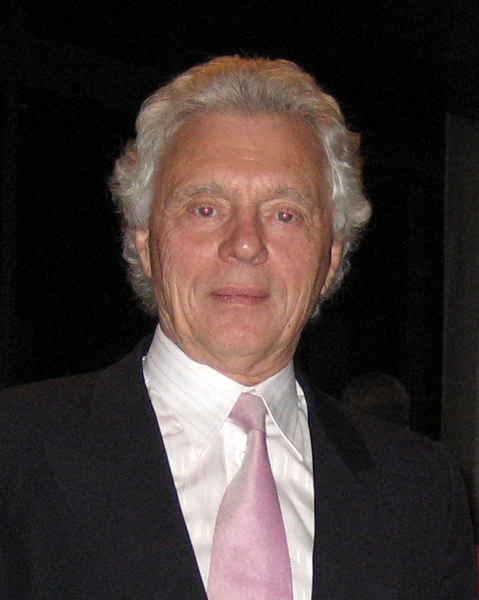
Professor Michael Ben-Gad is a Professor of Economics at City, University of London, where he has served since 2009. He previously held roles as Head of the Department of Economics (2010–2013) and Deputy Head (2008–2010). His research focuses on dynamic macroeconomics, taxation, public debt, immigration economics, and national security, with notable contributions to endogenous growth models and compositional data econometrics. He holds a PhD from the University of Chicago (1996) and has taught at institutions including the University of Houston and University of Haifa. Ben-Gad served on the U.S. National Academy of Sciences panel on immigration's economic and fiscal impacts (2014–2016) and received a 2017 Fellowship from the Royal Society of Arts (FRSA). His work spans academic journals (Economic Modelling, Journal of Economic Dynamics and Control) and media outlets (BBC, CNBC, Al Jazeera), addressing topics like Brexit economics, fiscal policy, and geopolitical challenges. He co-convenes the City Branch of Academics for Academic Freedom and is a founding member of London Universities' Council for Academic Freedom. His research grants include funding from HM Treasury/ESRC on fiscal policy and immigration (2011), the Israel Science Foundation (2007–2008), and the Samuel Ne'eman Foundation (2004). Professional roles include editorial board membership for Economic Affairs and membership of the ESRC Grant Assessment Panel (2021). He is proficient in Hebrew and contributes to policy debates on taxation, macroprudential frameworks, and defense economics.
Mauro Bambi is an Associate Professor at Durham University Business School and an Associate Fellow at the Institute of Advanced Studies. His research focuses on Macroeconomic Theory, Endogenous Growth, Habit Formation, and Behavioral Economics. He earned his PhD from the European University Institute (2007) and held positions at ETH Zurich and the University of York. He directs the Centre for Macroeconomic Policy (CEMAP) and has been recognized with the 2008 Italian Association of Applied Mathematics award for his PhD thesis. Education: PhD in Economics (European University Institute, 2007); Postdoctoral Fellowships at Université Catholique de Louvain (Belgium) and ETH Zurich (Switzerland). Research Interests: Macroeconomic Theory and Policy Design Endogenous Growth and Fluctuations Habit Formation in Economic Models Behavioral Economic Preferences Mathematical Methods in Macroeconomics Key Contributions: His work on habit formation models, time-to-build frameworks, and policy design has influenced macroeconomic theory. Recent studies analyze post-COVID demand shifts and pandemic economic impacts. Awards: 2008 Graduate Prize for Best PhD Thesis (Italian Association of Applied Mathematics). Advising and Leadership: Supervised PhD students like Federico Bertoni and Xinyi Xu. Directed CEMAP from 2019–2022, fostering macroeconomic policy research. Active in interdisciplinary collaborations at the Institute of Advanced Studies. Labs/Teams: Leader of CEMAP, collaborating with global institutions on macroeconomic policy analysis.
Claire Célérier is an Associate Professor of Finance at the Rotman School of Management, University of Toronto, where she holds the Canada Research Chair in Household Finance. Her academic career spans prestigious institutions including the University of Toronto (where she advanced from Assistant to Associate Professor between 2016-2022) and the University of Zurich (2014-2016). She maintains an affiliation with the People's History Lab and actively contributes to academic discourse through conference organization including 'Race, Equity and Public Policy' (2023) and 'Banks, States and the People' (2024). Dr. Célérier's research explores how finance can benefit households through multiple lenses including behavioral economics, asset pricing, and financial history. Her work investigates innovation in finance, diversity and inclusion impacts, and historical perspectives on financial systems. She has developed significant expertise in household finance, banking, and the intersection of finance with social issues, particularly racial disparities in financial markets as demonstrated in her award-winning research on the Freedman's Savings Bank. Her scholarly output shows a clear trajectory from foundational work on security design and investor behavior toward increasingly socially relevant research on financial inclusion, racial equity, and household financial decision-making. Recent publications demonstrate her growing focus on historical contexts of financial systems and their contemporary implications, particularly regarding marginalized communities. Canada Research Chair in Household Finance (2024) Bank of Canada Governor's Award (2022) University of Toronto Top 5% Merit Award (2021) Petro Canada Young Innovators Award Program (2021) Multiple Rotman School of Management Teaching Awards (2019-2021) Ieke van den Burg Prize for Research on Systemic Risk (2015) Dr. Célérier has successfully secured substantial research funding including Insight Development Grants (CAD 54,500), Connaught Research Grant (CAD 10,000), and the Marianne and Marcus Wallenberg Foundation Grant (EUR 400,000). She mentors several PhD students including Andrada Bilan (2020), Alexey Vasilenko (2023), and Purnoor Tak (Expected 2026), and has supervised numerous master's theses at both University of Toronto and University of Zurich. Her service contributions include Rotman School of Management MBA program committee, executive committee, seminar coordination, and faculty recruiting committee.
Todd Sorensen is an Associate Teaching Professor at the University of California, Merced (UC Merced), affiliated with the School of Social Sciences, Humanities & Arts and the Economics and Business Management department. He holds fellowships at IZA (Institute of Labor Economics) and GLO (Global Labor Organization). Prior to UC Merced, he served as an Associate Professor at the University of Nevada, Reno (2014–2023) and an Assistant Professor at UC Riverside (2007–2014). His professional journey includes a visiting role as Visiting Associate Professor at UC Merced before his current appointment in 2022. Education: PhD in Economics, University of Arizona, 2007 Research Interests: Todd's work focuses on labor market structures , exploring topics like monopsony power and wage-setting dynamics; immigration , including its demographic and policy implications; and discrimination , particularly in criminal sentencing and labor markets. His research has been published in journals like ILR Review , Labour Economics , and the Journal of Population Economics , with findings cited in the U.S. Economic Report of the President. Scientific Awards: Fellow at IZA (2022–present) Fellow at GLO (2022–present) Advising & Grants: Todd has advised students across various levels but no specific advisees are listed. His grants and funding sources are not detailed in the provided text. He collaborates with interdisciplinary teams and maintains affiliations across UC campuses through his and his spouse’s academic careers. Labs/Teams: Engaged with research networks at IZA and GLO, focusing on labor market policies and migration studies. Active in collaborative projects analyzing immigration trends, labor market competition, and discrimination metrics.
Abby Innes is an Associate Professor of Political Economy at the European Institute, London School of Economics , where she has been a faculty member since 1997. Her academic career includes a Visiting Fellowship at MIT (1995–1997) and a Jean Monet Fellowship at the European University Institute (2001–2002) . She has received multiple teaching awards , including the LSE Teaching Prize and European Institute Departmental Teaching Prize, and currently serves as the Teaching Chair of her institute. Research Interests : Dr. Innes specializes in the political economy of Central Europe , neoliberalism , and materialist utopias . Her work explores state capture , systemic transitions , and comparative capitalism , with a focus on the UK’s neoliberal transformation. Recent research addresses the political economy of the green transition and neoliberal institutional failures . British Academy Mid-Career Fellowship (2017-2018) LSE Teaching Prize (2002) LSE/ASRC Excellence in Education Award (2020) European Institute Departmental Teaching Prize (2011, 2013, 2015) Nominee for LSE Student-Led Teaching Excellence Awards (2014, 2020) Publications : Her 2023 book Late Soviet Britain: Why Materialist Utopias Fail argues that UK neoliberalism parallels Soviet economic dogma, leading to institutional rigidity , democratic erosion , and governance crises . She has published in journals such as The Review of International Political Economy and Comparative Politics , alongside frequent contributions to LSE Blogs and The London Review of Books .
Zhi Da is the Howard J. and Geraldine F. Korth Chair in Finance and Professor of Finance at the University of Notre Dame , Mendoza College of Business, Department of Finance. He completed his Ph.D. in Finance at Northwestern University’s Kellogg School of Management (2006), preceded by an M.Sc. in Financial Engineering from the National University of Singapore (2001) and a B.B.A. with First-Class Honors (1999) from the same institution. Holding editorial roles at Journal of Finance , Management Science , Review of Financial Studies and several other top journals, he is a leading voice in empirical finance research. Education Ph.D. in Finance, 2006 – Kellogg School of Management, Northwestern University M.Sc. in Financial Engineering, 2001 – National University of Singapore B.B.A. (1st Class Honors), 1999 – National University of Singapore Research Interests Zhi Da’s scholarship sits at the intersection of asset pricing , behavioral finance , and market microstructure . He investigates how investor attention, institutional trading, liquidity frictions, and information flows jointly determine the cross-section of expected returns. His work delves into retail margin trading, the role of pension-fund flows in exchange-rate dynamics, the informational content of SEC filings, and the efficiency of short-selling mechanisms. By combining large-scale data analytics, textual analysis, and structural modeling, he uncovers novel predictors of returns ranging from presidential approval ratings to real-time attention measures. Recent projects explore fractional trading ’s impact on price efficiency, hedging demand as a driver of intraday momentum, and the hidden effort problem in delegated portfolio management. These themes collectively advance our understanding of limits to arbitrage and the formation of extrapolative beliefs. Publication Landscape Spanning 2025 back to 2009, his 15 most recent articles in Journal of Finance , Review of Financial Studies , Management Science , Journal of Financial Economics , and Journal of Financial and Quantitative Analysis converge on three broad motifs: (1) micro-level trading frictions—liquidity costs, margin requirements, and short-selling constraints; (2) macro-finance linkages—exchange rates, fiscal policy, and global capital flows; and (3) information economics—attention allocation, media analytics, and regulatory disclosures. The collective evidence demonstrates that seemingly small trading or informational frictions aggregate into large, persistent cross-sectional return predictability. Honors and Awards 2017 William F. Sharpe Award for Best Paper, Journal of Financial and Quantitative Analysis Lead-article distinctions in Journal of Finance , Review of Financial Studies , and Management Science Featured coverage in SmartMoney and CNBC Teaching & Mentorship At Notre Dame’s Mendoza College, Professor Da teaches Investments (undergraduate and MBA) and Fixed Income Securities , integrating cutting-edge research insights into the curriculum. While specific advisees are not listed, his extensive co-author network (22+ recurring collaborators) attests to a vibrant mentoring environment. Laboratory & Data Resources He publicly distributes the NAT (Net Arbitrage Trading) dataset, a stock-quarter panel of arbitrage positions used in Chen, Da & Huang (2019). This resource has become a standard tool for researchers studying arbitrage capital movements.
Inés Valdez is a Professor in the Department of Political Science at Johns Hopkins University's Krieger School of Arts & Sciences. Her research bridges critical race and feminist theory with analyses of migration, transnationalism, empire, and racial capitalism. She has held fellowships from the Humboldt Stiftung, Global Arts & Humanities Society of Fellows, and the Princeton University Center for Human Values. Her 2023 book Democracy and Empire rethinks popular sovereignty through the Black radical tradition, winning the T.V. Paul Best Book Award. Earlier work includes Transnational Cosmopolitanism (2019), which redefines cosmopolitanism through global structures of domination. Her scholarship critiques empire's entanglement with democratic systems, emphasizing ecological responsibility and transnational solidarity. Recent publications explore anti-imperial sovereignty, Du Bois's ecological critiques, and Latinx political thought. She has contributed to journals like Contemporary Political Theory and Review of Politics , and her blog post Undoing Empire's Hold on Democracy (2024) addresses contemporary political crises. Valdez co-authored influential articles on migration politics and Kantian philosophy's racial dimensions. Her work integrates political theory with anticolonial praxis, advocating for transformative frameworks that challenge global hierarchies. She advises on transnational solidarity strategies and serves as a leading voice in decolonial and critical race studies.
Anastasia Semykina is a Professor of Economics and Deputy Dean (Research and Innovation) at RMIT University's School of Economics, Finance & Marketing. She holds a PhD from Michigan State University (2006) and previously served as Charles and Joan Haworth Professor of Economics at Florida State University. Her expertise spans theoretical and applied econometrics, with a focus on panel data models, missing data estimation, and their application in labor economics, education economics, transition economies, and economic psychology. She teaches advanced econometrics and microeconomics courses at both undergraduate and graduate levels. Research Interests: Theoretical and Applied Econometrics Labor Economics Economics of Education Transition Economies Economics and Psychology Health Economics Her recent publications address topics such as panel data methodologies, healthcare cost-effectiveness analysis, and educational policy evaluation. She is actively involved in supervising PhD and Master's research students in econometrics and applied economics.
Taina Bucher is a Professor at the Department of Media and Communication, University of Oslo, specializing in algorithmic studies, digital infrastructure, and human-machine communication. She leads the Screen Cultures research group and serves as Principal Investigator for HumAIn , a five-year humanities hub reimagining AI (2024-2029). Research Focus: Her work examines Algorithmic power and politics Cultural imaginaries of digital technology Temporalities of algorithmic media Feminist epistemologies in digital contexts Monitorial citizenship in platform societies Publications: Bucher has authored two monographs: Facebook (Polity Press, 2021) and IF…THEN: Algorithmic Power and Politics (Oxford University Press, 2018). Her recent articles explore facial recognition systems, algorithmic temporality, and digital divides. Academic Background: PhD in Media Studies (University of Oslo, 2012), MSc in Culture & Society (London School of Economics, 2007), with visiting scholar appointments at The New School, Ryerson University, and New York University. Teaching: She supervises and teaches topics including Digital infrastructure Algorithm studies Screen cultures Media theory Critical data studies Digitalization of public sectors Editorial Roles: Active on editorial boards for Journal of Communication , New Media & Society , and Information, Communication & Society .
Ricardo Caballero is the Ford International Professor of Economics at the Massachusetts Institute of Technology's School of Humanities, Arts, and Social Sciences, where he previously served as Chairman of the Economics Department from 2008 to 2011. A leading scholar in macroeconomics and financial economics, his research focuses on safe assets, monetary policy, financial crises, and international economics. His research interests center on the macroeconomic implications of financial frictions, with particular emphasis on safe asset shortages, risk premium dynamics, and monetary policy transmission mechanisms. Caballero's work has pioneered the risk-centric approach to macroeconomics, explaining phenomena such as the Wall Street/Main Street disconnect, global imbalances, and the collapse of interest rates through the lens of safe asset scarcity and risk intolerance. His research bridges theoretical modeling with empirical analysis of financial crises and policy interventions. Caballero's recent publications demonstrate a consistent focus on financial conditions indexing, monetary policy frameworks, and the interaction between financial markets and the real economy. His work increasingly examines how central banks can target financial conditions directly and how risk premia evolve during crises, with applications to pandemic-era economic policy and zero lower bound environments. 2002 Frisch Medal of the Econometric Society Smith Breeden Prize by the American Finance Association Journal of Finance 2014 Brattle Group Prize 2022 Banque de France-TSE Senior Prize in Monetary Economics and Finance Elected Fellow of the Econometric Society (1998) Elected Fellow of the American Academy of Arts and Sciences (2010) As an NBER Research Associate and frequent policy advisor, Caballero has influenced central bank thinking globally through his work on financial stability, monetary policy frameworks, and global imbalances. His research has informed policy discussions at the Federal Reserve, IMF, and multiple central banks regarding crisis management, safe asset creation, and the appropriate monetary response to financial shocks. Caballero maintains active collaborations with major financial institutions and central banks worldwide, translating theoretical insights into practical policy frameworks.
Allen J. Scott is a Distinguished Research Professor at the University of California, Los Angeles, with a joint appointment in the Department of Public Policy (School of Public Affairs) and Department of Geography. He has held prestigious positions at UCLA since 1994 and previously at the University of Toronto (1969–1994). His career spans over five decades, focusing on urban geography, regional development, and cultural economy. Education : BA (1961) from Oxford University; MA and PhD (1962, 1965) from Northwestern University. Research Interests include: Creative cities and cognitive-cultural capitalism Political economy of urbanization and globalization Industrial clusters and labor-intensive economies Human capital distribution in metropolitan areas Cultural landscapes and peripheral development Publication Trends (2005–2014) emphasize: Globalization's impact on low-technology industries Cognitive-cultural capitalism in urban contexts Human capital dynamics in metropolitan hierarchies Celebrity culture and urban glamour Creative field theories and urban policy implications Scientific Awards : 1986 Guggenheim Fellow 2003 Vautrin Lud Prize 2005 Meridian Book Prize 1999–2013: Chaires d’Excellence, Fellowships, and Doctor Honoris Causa 2008 Carol and Bruce Mallen Lifetime Achievement Award 2003 ISI Highly Cited Author
Antonio A. Casilli is a Professor of Sociology at Télécom Paris (Institut Polytechnique de Paris) and a researcher at the Interdisciplinary Institute of Innovation (i3) . He is an associate member of LACI-IIAC (formerly the Edgar Morin Center) at EHESS and serves as a Faculty Fellow at the Nexa Center for Internet and Society (Polytechnic University of Turin) since 2018. Research Focus: Digital labor, platform economy, AI ethics, and the social implications of technology Awards: Prix Étoiles de la SCAM, Prix Meilleur Documentaire de l'Année (Bangkok), selected as Nature Journal Top Science Pick His work analyzes how digital platforms reshape labor dynamics, privacy norms, and social inequalities. Recent studies explore global AI data work, including fieldwork in Latin America, Africa, and Europe. He advocates for ethical frameworks recognizing human labor behind automation. Media Engagement: Regular contributor to France Culture , Le Monde , Wired , and Rue89 . Authored En attendant les robots (2019) and Schiavi del clic (2020), investigating hidden digital labor structures.
Philip F. Postlewaite serves as the Harry R. Horrow Professor in International Law and Director of the Tax Program at Northwestern University School of Law, where he is a leading authority in federal taxation with extensive expertise in individual, corporate, partnership, and international tax systems. His academic foundation includes: BBA from Texas Christian University J.D. from University of California, Berkeley LL.M. in Taxation from New York University Professor Postlewaite's research examines complex intersections of domestic and international tax frameworks, with particular focus on partnership structures and cross-border compliance. His scholarship directly informs his teaching of advanced courses including Partnership Tax (LLM), Advanced Partnership Taxation, and U.S. International Taxation, where he integrates practical applications with theoretical foundations of tax law. Analysis of his recent publications reveals sustained scholarly leadership in partnership taxation mechanics and international tax compliance, with recurring emphasis on problem-solving methodologies and evolving regulatory landscapes. His textbooks systematically address both foundational principles and advanced technical challenges in tax practice. Throughout his career, Professor Postlewaite has maintained active engagement with tax practice through his directorship of Northwestern's Tax Program and development of comprehensive educational materials used nationally in legal education.
Matthias Parey is a Professor in the Department of Economics at the University of Surrey. He holds additional roles as a Research Fellow at the Institute for Fiscal Studies (IFS) and the Institute for the Study of Labor (IZA), a Researcher at the ESRC Research Centre on Micro-Social Change (MiSoC), and a Research Associate at ZEW. His research spans Labour economics Economics of education Micro-econometrics Inequality Economics of innovation . His recent publications analyze high-skilled migration selection, trade shocks, cannabis market size estimation, and gasoline demand elasticity. He has contributed to journals like Review of Economics and Statistics , Economica , and Journal of the European Economic Association . Scientific awards include fellowships at IFS and IZA. His work on trade shocks examines gender-specific labor supply responses to Chinese import competition, while his cannabis market research introduces a forensic economics approach using legal inputs. Earlier studies focus on maternal education impacts on child development and the long-term labor market effects of Erasmus student exchanges.
Thomas Chaney is a Professor of Economics at the University of Southern California (USC), holding the John Elliott Chair in Economics. He is affiliated with Sciences Po’s Department of Economics and leads the ERC Project HTMG. His research focuses on International Trade, Networks, and Finance, with notable contributions to historical trade dynamics and modern financial constraints. Chaney is a CEPR and CESifo Research Fellow, reflecting his academic standing. Research Interests: Chaney’s work bridges historical and contemporary economic phenomena, analyzing trade networks, collateral constraints in corporate finance, and the impact of migration on innovation and urban development. His research often employs innovative methodologies, such as combining archaeological data with economic models to study ancient trade systems. Articles Trends: Recent work examines Bronze Age trade networks, modern corporate investment dynamics, and the role of real estate collateral. His 2024 articles explore ancient trade’s end and contemporary empathy’s economic implications, showcasing interdisciplinary approaches. Earlier papers like Trade, Merchants, and the Lost Cities of the Bronze Age (2019) exemplify his historical focus. Grants & Awards: Chaney leads the ERC-funded HTMG project and holds prestigious fellowships. His work has been published in top journals and spans empirical trade analysis, financial economics, and historical methods. Labs/Teams: Active in USC’s Economics Department and collaborates with global institutions like Sciences Po and the Bank for International Settlements (BIS). His research group integrates economists, historians, and data scientists for interdisciplinary projects.