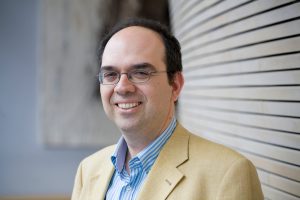
René M. Stulz is the Everett D. Reese Chair of Banking and Monetary Economics at The Ohio State University's Max M. Fisher College of Business , where he also serves as Director of the Dice Center for Research in Financial Economics . He has held academic positions at MIT, University of Chicago, and University of Rochester. Ph.D., Massachusetts Institute of Technology Marvin Bower Fellowship (Harvard Business School) Doctorat Honoris Causa (University of Neuchâtel) Risk Manager of the Year (Global Association of Risk Professionals) His research spans corporate finance , financial institutions , and asset pricing , with recent work on unicorns , cyberattack economic impacts , and banking regulation . His articles show expertise in market volatility , governance , and financial globalization . Stulz has won multiple scientific awards and served as editor of the Journal of Finance and Journal of Financial Economics . He consults for the IMF , World Bank , and major financial institutions , and has testified in federal/state courts .
Ranjan D'Mello is a full-time Professor of Finance at the Mike Ilitch School of Business, Wayne State University, where he has been a faculty member since 2001 and was appointed full professor in 2017. He previously served as Assistant Professor at the University of New Orleans from 1995 to 2001. His administrative roles include Interim Associate Dean (2011–2012) and Interim Finance Department Chair (2010–2011). Education: Ph.D., The Ohio State University, 1995 MBA, The Ohio State University, 1990 M.Com, Sydenham College, 1988 B.Com, Sydenham College, 1986 Ranjan D'Mello's research centers on corporate finance, with a focus on capital structure, executive compensation, trade credit, agency problems, internal capital markets, and corporate social responsibility. His work investigates how firms make financing and investment decisions, the role of debt and equity in corporate policy, and how governance mechanisms like institutional ownership and compensation structures influence firm behavior. He frequently publishes in top-tier finance and accounting journals. His recent publications (2023–2003) reflect a strong empirical focus on corporate financial policy, including trends in leverage, trade credit, CSR, and equity issuance. The articles span disciplines such as finance, accounting, and economics, with recurring themes in capital structure optimization, agency theory, and financial decision-making under uncertainty. Scientific Awards: Excellence in Teaching Award – 2013, Wayne State University Excellence in Teaching Award – 2006, Wayne State University Best Paper in Corporate Finance, Southwestern Finance Association (2006) Ranjan D'Mello has made significant contributions to finance education and research, advising numerous co-authors and contributing to working papers on topics like the marginal value of cash and climate change risk disclosure. He teaches advanced courses in corporate and international finance, including FIN5270 and BA7020, with scheduled instruction through Winter 2025, reflecting his active engagement in academic programs. Labs and Research Teams: While no formal lab is mentioned, Ranjan collaborates extensively with co-authors such as Mark Gruskin, Francesca Toscano, and Mercedes Miranda on research projects related to corporate finance and governance. His work is associated with the Finance department’s research initiatives at the Mike Ilitch School of Business.
Prof. Dr. Peter Gomber is a Professor of e-Finance at the Faculty of Economics and Business Administration , Goethe University Frankfurt, since 2004. He co-chairs the Data Science Institute (efl) and holds adjunct professorships at the University of Bamberg (2004), Mannheim (2009), and Luxembourg (2018). His roles include board memberships at the Frankfurt Stock Exchange, Clearstream Banking AG, and advisory positions for European regulatory bodies. Education : Diplom-Kaufmann in Economics, University of Gießen (1999), PhD in Business Informatics. Research Interests focus on market microstructure , FinTech , electronic trading , and regulatory impacts on financial markets. His work explores algorithmic trading , liquidity dynamics , and AI-driven compliance . Publication Trends (15 most recent) emphasize digital finance , market fragmentation , regulatory analysis , and AI applications in trading and compliance. Key subfields include blockchain , high-frequency trading , and news-driven liquidity shocks . Scientific Awards : Reuters Innovation Award (2000) Hochschulpreis des Deutschen Aktieninstituts (1999) IBM SUR Grant (2007) Best Paper Awards (multiple conferences) Best Information Systems Publications Award (2020) Advising & Grants : Teaches in executive programs (Goethe Business School, Amsterdam Institute of Finance). Secured grants from public/private institutions, including a U.S. patent for market model innovation. Labs & Teams : Leads the e-Finance professorship and contributes to the Data Science Institute (efl) , fostering industry-academia collaborations with Deutsche Börse, Capveriant, and others.
Peter Kondor is an Assistant Professor affiliated with the London School of Economics & Political Science (LSE) and Central European University (CEU). His research focuses on finance, asset pricing, liquidity risk, market microstructure, and arbitrage dynamics. Research Interests: Asset pricing with heterogeneous agents Liquidity risk and intermediary capital Over-the-counter market structures Behavioral finance and sentiment analysis Global financial cycles and investment waves Information diffusion and market stability Key Publications Trends: 2011-2025: Explores causal inference in asset pricing, hedge fund impacts on idiosyncratic risk, and liquidity risk dynamics. 2018: Investigates arbitrage capital and liquidity risk in global markets. 2020-2025: Analyzes rational sentiments, narrative momentum, and aggregate earnings.
George Skiadopoulos is a Professor of Finance at the University of Piraeus (Department of Banking and Financial Management) and Queen Mary University of London (School of Economics and Finance). He serves as Director of the Institute of Finance and Financial Regulation (IFFR) and holds an Honorary Senior Visiting Fellowship at Bayes Business School, City University of London. His research focuses on asset pricing, commodities, financial derivatives, climate finance, and ESG integration. He has published in prestigious journals like Management Science and Journal of Financial and Quantitative Analysis, and his work influences policy at institutions like the European Securities Markets Authority (ESMA). Education: PhD in Finance from the University of Warwick, M.Sc. in Mathematical Economics from LSE, and a Ptychion in Economics from Athens University of Economics and Business. He has advised financial institutions globally and received grants from the Chicago Mercantile Exchange and others. His notable award is the 2018 German Finance Association best paper prize for work on transaction costs and stock returns. He has also contributed to executive training and policy discussions on climate-related financial risks.
YUE Heng is a Full-time Professor of Accounting at Singapore Management University (SMU), holding dual roles as Director of the SMU-ZJU Doctor of Business Administration (Accounting & Finance) Program and Programme Director of the SMU Tsinghua Joint Master of Science in CFO Leadership. He joined SMU in 2015 after teaching at Peking University, where he earned his Bachelor's degree in Management from the Guanghua School of Management. He holds a PhD in Accounting from Tulane University's Freeman School of Business. His research focuses on corporate governance, earnings management, voluntary disclosure in emerging markets, and capital market dynamics. Notable contributions include studies on tunneling through intercorporate loans, political corruption impacts on reporting quality, and cultural influences on corporate risk-taking. His work has been published in top journals like the Journal of Financial Economics and The Accounting Review . Honors include the Liyining Research Award (2013) and the ICBC Economic Scholar Award (2011). He advises doctoral students in accounting and has contributed to curriculum development in executive education programs. His current research explores green transition challenges, audit quality in anti-corruption contexts, and information asymmetry in emerging markets. Key Research Themes: Corporate Governance Failures, Financial Transparency, Political Economy of Accounting, Emerging Market Financial Systems Teaching Areas: Advanced Financial Accounting, CFO Leadership, Financial Statement Analysis
Paolo Colla is an Associate Professor of Finance at Bocconi University and serves as Director of the International Economics and Finance B.Sc. Program. His research focuses on asymmetric information in financial markets, corporate financing strategies, and market fragmentation. He has published extensively in leading journals such as the Journal of Finance and Review of Financial Studies. Key topics include price manipulation in FX markets, debt structure dynamics, and the impact of legal frameworks on financial instruments. His work bridges theoretical finance with practical applications, addressing issues like sovereign debt pricing and regulatory policy implications. Teaching responsibilities include courses on financial modeling, derivatives, and institutional finance. His research has explored diverse themes, including the dissemination of short-sellers' information and strategic trading behaviors in fragmented markets. Despite no explicit mention of awards or grants, his prolific publication record underscores his scholarly contributions to corporate finance and financial markets.
Dr. Vikram Nanda is the O.P. Jindal Distinguished Chair Professor of Finance at the Naveen Jindal School of Management, University of Texas at Dallas. He holds a PhD in Finance from the University of Chicago, MBA from Yale University, and a Bachelor of Technology from Indian Institute of Technology Kanpur. His research focuses on corporate finance, financial institutions, and behavioral finance, with emphasis on topics like hedge fund strategies, managerial overconfidence, and corruption's economic impacts. Key research highlights include studies on multi-market trading (best paper award), litigation risk effects on contracting, and cryptocurrency bubble detection. He has served on editorial boards for Journal of Financial Research and Financial Letters , and contributed to non-academic publications like Barron’s . His work spans 30+ years across top-tier institutions including USC, University of Michigan, and Georgia Tech. Current research explores AI's role in investment management, gender diversity in executive roles, and legal frameworks affecting corporate behavior. Awards include Smith Breeden Prize nominations and Q-Group research grants. Educations: PhD (Chicago), MBA (Yale), B.Tech (IIT Kanpur) Affiliations: Financial Intermediation Research Society, European Finance Association Labs/Teams: Behavioral Finance Research Group, Corporate Governance Initiative He advises on strategic financial decisions and has authored/coauthored over 50 publications. Recent work examines environmental, social, and governance (ESG) investment strategies and the impact of trade secret laws on financial opacity.
Viral V. Acharya is the C.V. Starr Professor of Economics in the Department of Finance at New York University Stern School of Business. He is a Research Associate at the National Bureau of Economic Research (NBER), a Research Affiliate at the Center for Economic Policy Research (CEPR), and a Research Associate at the European Corporate Governance Institute (ECGI). He previously served as Deputy Governor of the Reserve Bank of India (2017–2019), with responsibilities in monetary policy, financial markets, and financial stability. He is currently Director of Doctoral Education at NYU Stern (2025–), Advisor to the NYU Stern Henry Kaufman Initiative on Financial History (2023–2026), and a Scientific Advisor to the Sveriges Riksbank (2024–). He is also a member of the Climate-related Financial Risk Advisory Committee (CFRAC) of the Financial Stability Oversight Council (2023–2026), the Bellagio Group, and the Financial Advisory Roundtable of the Federal Reserve Bank of New York. Education: B.Tech. in Computer Science and Engineering, Indian Institute of Technology, Mumbai (1995) Ph.D. in Finance, New York University Stern School of Business (2001) His research focuses on systemic risk, financial regulation, sovereign and financial linkages, credit and liquidity risk, and the macroeconomic implications of financial frictions. He has also recently explored risks related to pandemics and climate change. His recent publications examine commercial real estate exposure in banks, spillover risks from non-banks, U.S. Treasury market dynamics, and industrial policy in India. The body of work consistently emphasizes financial stability, regulatory design, and the interaction between public policy and financial markets. Scientific Awards: Alexandre Lamfalussy Senior Research Fellowship, Bank for International Settlements (2017) Inaugural Banque de France – Toulouse School of Economics Junior Prize (2011) Senior Houblon-Norman Research Fellowship, Bank of England (2008) Clarivate Analytics Highly Cited Researcher (2020–2022) Acharya has held numerous editorial and leadership roles, including Editor of the Journal of Law, Finance and Accounting (2014–2016, 2020–), member of the Editorial Committee of the Annual Review of Financial Economics (2022–), Board Member of the American Finance Association (2024–), and Director of the Western Finance Association (2012–2015). He has served as an Academic Advisor to multiple Federal Reserve Banks and international institutions including the IMF, World Bank, and BIS. He advises on financial policy globally and is a frequent commentator in major media outlets. He is not known to advise specific students, but his leadership in doctoral education at NYU Stern underscores his role in mentoring the next generation of finance scholars. He is affiliated with research centers and policy initiatives focused on financial history, climate risk, and financial stability.
Prof. Michael HALLING is a Full Professor in Sustainable Finance at the University of Luxembourg's Faculty of Law, Economics and Finance, Department of Finance. His work focuses on sustainable finance, corporate finance dynamics, climate risk assessment, and financial regulation. He holds the prestigious Chair in Sustainable Finance and has published extensively on topics like MiFID II compliance, mutual fund fee structures, and post-pandemic market recovery. Contact: michael.halling@uni.lu Research Interests : Prof. HALLING’s research bridges theoretical finance with practical applications, emphasizing sustainable investment practices, corporate debt management, and regulatory frameworks. Key themes include: Climate risk modeling using public news sentiment analysis Impact of behavioral preferences on corporate investment decisions Automated compliance systems for financial institutions Market dynamics during crises (e.g., pandemic effects on capital access) Recent Publications Trends : Recent works analyze MiFID II regulatory impacts (2024), stochastic modeling of corporate investment (2023), and firm-specific climate risk quantification. His 2020 studies explored pandemic-driven shifts in corporate financing strategies. Awards : No awards explicitly mentioned in the provided texts. Grants & Advising : No student advisees or grant details provided in available data. Labs/Teams : No specific research group affiliations listed.
Ke Xu is an Assistant Professor at the Department of Finance, Faculty of Business and Economics, University of Victoria. His research bridges finance, econometrics, and cryptocurrency, focusing on market microstructure, high-frequency trading, and price discovery mechanisms. He has extensively studied Bitcoin ETFs, fractional cointegration models, and machine learning applications in financial markets. Key Research Areas: Market Microstructure High-Frequency Trading Cryptocurrency Dynamics Price Discovery Machine Learning in Finance Financial Econometrics Article Trends: Xu’s work spans empirical analyses of Bitcoin ETFs, volatility modeling (e.g., affine GARCH), and algorithmic trading strategies. His recent papers explore mini flash crashes using machine learning, regulatory impacts on market quality, and sustainable crypto portfolios.
Marti G. Subrahmanyam is the Charles E. Merrill Professor of Finance, Economics and International Business at the Leonard N. Stern School of Business, New York University , and a Global Network Professor of Finance at NYU Shanghai . He holds a PhD in Finance and Economics (MIT, 1974) , a post-graduate diploma from the Indian Institute of Management, Ahmedabad (1969) , and a B.Tech. in Mechanical Engineering from IIT Madras (1967) , where he has also served as a visiting professor. His career spans over five decades, with editorial roles at top journals like Journal of Finance and Review of Financial Studies . Research Focus : Derivatives markets, corporate finance, fixed income, market microstructure, ESG investing, and quantitative easing. Academic Leadership : Founded NYU Stern and NYU Shanghai Undergraduate Honors Programs, served on over 85 doctoral committees, chaired 35. Scientific Awards : New York University Distinguished Teaching Medal (2003) Anneliese Maier Award (2016) - First economist to receive this honor Distinguished Alumnus Awards from IIT Madras (2004) and IIM Ahmedabad (2011)
Christian von Drathen is a Visiting Assistant Professor in Finance and Managerial Economics at The University of Texas at Dallas (UTD), affiliated with the Jindal School of Management. His research focuses on corporate finance dynamics, including CEO turnover mechanisms, board decision-making processes, and private equity performance evaluation. Education: PhD in Finance, London School of Economics (2014) MSc with Sloan Fellowship, London Business School (2007) MSc, London School of Economics (1991) Dipl. W.-Ing., Universität Karlsruhe (1990) His research interests span financial modeling for valuation, mergers & acquisitions strategies, and private equity financing. Notable works include causal analysis of stock market comovement and structural estimation of CEO performance evaluation by corporate boards. Awards: Abraaj Capital Finance Research Studentship (2011–2013) Coller Capital Award for Best Student Paper (2007) He teaches advanced courses such as FIN 6352 Financial Modelling for Valuation and has contributed to major financial texts like Valuation: Measuring and Managing the Value of Companies .
Professor Peter Feldhütter is a faculty member at the Department of Finance, Copenhagen Business School (CBS), where he has held the position since 2017. He earned his PhD from CBS and previously worked at the London Business School. His research focuses on fixed income markets, particularly examining how prices are influenced by illiquidity, credit risk, and supply-demand imbalances. Notable contributions include studies on U.S. corporate bond market liquidity and credit spread dynamics. Key research areas include empirical asset pricing, credit risk, fixed income analysis, and liquidity risk. He has authored influential papers such as The Myth of the Credit Spread Puzzle and Corporate Bond Liquidity Before and After the Subprime Crisis . Received awards: Jack Treynor Prize, Wharton’s Outstanding Paper Award, and Nykredit’s Talented Researcher Award. External advisory roles: Legal advice for NTC Parent, Shell, and FourWorld Capital Management; academic advising for Copenhagen Economics. Teaching: External faculty at London Business School and University College London. His recent work explores ESG investing’s impact on capital structure and pricing of sustainability-linked bonds. Ongoing projects include studies on financial market liquidity and corporate bond valuation frameworks.
David Musto is the Ronald O. Perelman Professor in Finance at the University of Pennsylvania's Wharton School, where he has served on the faculty since 1995. He currently directs the Stevens Center for Innovation in Finance and teaches core finance courses including Capital Markets and Strategic Equity Finance across undergraduate, MBA, and executive programs. Education PhD, University of Chicago, 1995 BA, Yale University, 1987 Professor Musto's research centers on capital markets dynamics, consumer credit mechanisms, and financial intermediation structures. His work examines market liquidity during crises, predatory lending practices, and the contractual implementation of impact investing. He investigates how financial incentives interact with social goals and how market structures influence trading behavior, with particular focus on Treasury markets, short-selling constraints, and mortgage lending regulations. His publications from 2008-2021 reveal consistent empirical analysis of market microstructure and credit markets. Key contributions include identifying illiquidity feedback loops in Treasury markets during the financial crisis, demonstrating how impact funds contractually integrate social goals without direct compensation ties, and analyzing how failing to deliver stock affects options pricing. His research bridges theoretical models with high-resolution market data across diverse financial instruments. Scientific Awards No scientific awards were mentioned in the provided text. Advising and Grants Professor Musto supervises independent study projects (FNCE8990) for finance students but specific advisees and grant details are not provided. His teaching portfolio includes capstone projects evaluating student loan offers and strategic equity financing decisions, reflecting applied research supervision without explicit grant disclosures. Labs and Teams As Director of the Stevens Center for Innovation in Finance, Professor Musto leads initiatives connecting academic research with industry practice. The Center develops financial education tools including an app created by teens for teens, and runs leadership programs for underrepresented Philadelphia high school students, fostering practical finance innovation through academic-industry collaboration.