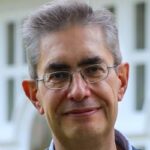
Dr. Guillermo Amador is an Assistant Professor in the Experimental Zoology department at Wageningen University & Research. His research focuses on understanding how animals interact with complex environments through locomotion, adhesion, and fluid dynamics. He investigates biological systems like insects, plants, and marine organisms to inspire bio-engineered solutions for robotics, microfluidics, and material science. Amador received his PhD in Mechanical Engineering from Georgia Institute of Technology (USA), followed by postdoctoral research at the Max Planck Institute for Intelligent Systems (Germany) and a Marie Sklodowska-Curie fellowship at TU Delft (Netherlands). His expertise spans biophysics, biomaterials, and biomechanics, with a focus on self-cleaning mechanisms and bioadhesion. He collaborates with the 4TU consortium on Dutch Soft Robotics to develop bio-inspired designs. His work bridges fundamental biology with engineering applications, emphasizing interdisciplinary approaches to solve challenges in robotics and environmental science. Amador teaches courses including Biomimetics and Functional Zoology , integrating his research into education. His research highlights include studies on cuttlefish suction cups, stick insect adhesion, and pollen transport mechanisms in pollinators.
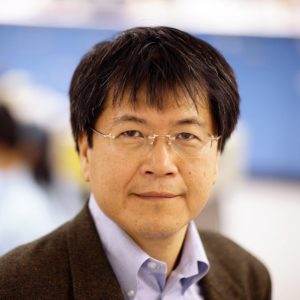
Howard A. Stone is the Donald R. Dixon '69 and Elizabeth W. Dixon Professor and Neil A. Omenn '68 University Professor in the Department of Mechanical and Aerospace Engineering at Princeton University's School of Engineering and Applied Science. He leads the Complex Fluids Group, conducting interdisciplinary research at the intersection of engineering, physics, chemistry, and biology. Dr. Stone received his B.S. in Chemical Engineering from UC Davis (1982) and Ph.D. from Caltech (1988). After a postdoctoral year at Cambridge University, he joined Harvard University's faculty in 1989, where he became the Vicky Joseph Professor of Engineering and Applied Mathematics before moving to Princeton in 2009. His research focuses on fluid dynamics phenomena across multiple scales, with particular emphasis on microfluidics, complex fluids, and biomechanics . His group investigates multiphase flows, colloidal systems, bio-inspired fluid phenomena, and physicochemical hydrodynamics. Recent work spans from fundamental studies of thin film drainage and droplet dynamics to applications in biological systems including blood flow, bacterial transport, and biomolecular condensates. The Complex Fluids Group employs experimental, theoretical, and computational approaches, often collaborating with industry partners on applications from medical devices to industrial processes. Analysis of his recent publications reveals a continued expansion into biological applications of fluid dynamics, with increasing focus on cellular mechanics, biomolecular condensates, and pathological hemodynamics, while maintaining strong contributions to fundamental fluid mechanics in complex systems. His work consistently bridges theoretical insights with practical applications across multiple disciplines. Major honors include: Election to the National Academy of Engineering (2009) Election to the National Academy of Sciences (2014) APS Fluid Dynamics Prize (2016) G.K. Batchelor Prize in Fluid Dynamics (2008) NSF Presidential Young Investigator Award Professor Stone has advised numerous PhD students through their Final Public Oral examinations, with recent graduates working on topics spanning microfluidics, bacterial transport, and complex fluid phenomena. His research has been supported by diverse funding sources including NSF, NIH, and industry partnerships. The Complex Fluids Group maintains state-of-the-art experimental facilities in the Engineering Quadrangle, featuring specialized equipment for microfluidics, rheology, and interfacial phenomena investigations. The group actively collaborates with researchers across Princeton and globally, maintaining strong connections to both academic and industrial partners working on fluid-related challenges.
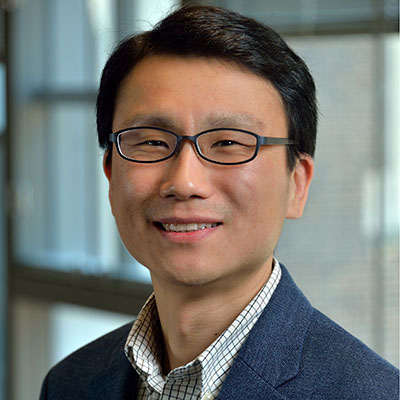
Hang Lu is a Professor and holds the Cecil J. "Pete" Silas Chair of Chemical & Biomolecular Engineering at the Georgia Institute of Technology. Dr. Lu also holds a Love Family Professorship and leads the Lµ Fluidics Group, which focuses on engineering microfluidic systems and machine learning tools to address complex questions in neuroscience, developmental biology, and cell biology that are difficult to address with conventional techniques. Dr. Lu's research lies at the intersection of engineering and biology, with primary interests including: Microfluidic systems for high-throughput screens and image-based genetics and genomics Systems biology: large-scale experimentation and data mining Microtechnologies for optical stimulation and optical recording Big data, machine vision, and automation Developmental neurobiology, behavioral neurobiology, and systems neuroscience Cancer biology, immunology, embryonic development, and stem cells Her laboratory engineers microfluidic devices and BioMEMS to study neuroscience, genetics, cancer biology, and biotechnology. These miniaturized Lab-on-a-chip tools operate at scales comparable to biological systems, leveraging unique micro and nano-scale phenomena to gather large-scale quantitative data about complex biological systems. Current projects include Microfluidics for Life Sciences, Optical Neuron Recordings and Manipulations, Machine Learning Tools for Neuroscience, Measuring and Modeling Behavior, and High-throughput, High-content Cell-based Assays. Analysis of Dr. Lu's recent publications (2024-2025) reveals a strong trend toward integrating microfluidics with advanced computational methods: Development of deep learning frameworks for biological image analysis Advanced neuron tracking and functional imaging techniques Non-invasive characterization of 3D organoid cultures Sophisticated neuromechanical modeling of locomotion Microfluidic temperature control systems for in vivo studies Label-free imaging pipelines for neural development Dr. Lu's significant professional honors include: Cecil J. "Pete" Silas Chair of Chemical & Biomolecular Engineering Love Family Professorship The Lµ Fluidics Group actively mentors students and postdocs, currently accepting new postdoctoral researchers. The lab receives substantial funding for interdisciplinary projects at the engineering-biology interface, with research implications spanning fundamental biological understanding to therapeutic development. The group operates within Georgia Tech's School of Chemical & Biomolecular Engineering, with specialized facilities for microfluidic device fabrication, biological experimentation, and advanced imaging, maintaining strong collaborative ties across engineering, neuroscience, and biological disciplines.
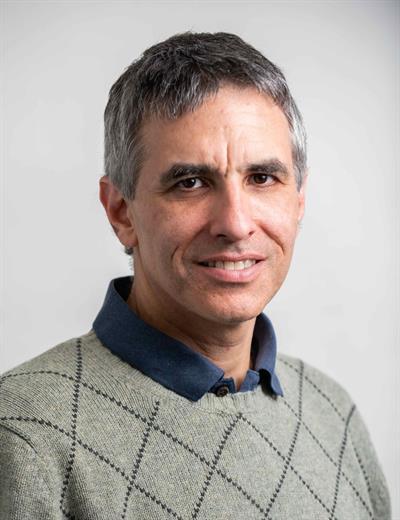
Professor Todd Squires is a distinguished faculty member in the Department of Chemical Engineering at the University of California, Santa Barbara, within the Robert Mehrabian College of Engineering. His research focuses on the fundamental principles of transport phenomena as applied to interfaces, membranes, and complex fluids, employing theoretical, computational, and experimental approaches to address significant challenges in micro-scale fluid mechanics. Dr. Squires' educational background includes: BS in Physics, UCLA (1995) BA in Russian Language and Literature, UCLA (1995) PhD in Physics, Harvard University (2002) His research interests span microfluidics and electrokinetics, active and nonlinear microrheology of complex materials, polymer dynamics and sensors, with particular emphasis on non-linear electrokinetic flows, interfacial rheology, and the self-assembly of nanostructured materials. His work bridges fundamental fluid mechanics with practical applications in microfluidic devices, energy storage, and biomedical systems, demonstrating the versatility of this fascinating field. Analysis of Professor Squires' recent publications reveals a consistent focus on interfacial phenomena, with particular attention to the rheological properties of fluid interfaces, particle dynamics in complex fluids, and novel microfluidic techniques for measuring and manipulating these systems. His research demonstrates strong interdisciplinary connections between chemical engineering, physics, and materials science, with applications spanning energy storage, biomedical engineering, and environmental systems. Professor Squires has received numerous prestigious awards and honors: 2018 Robert W. Vaughan Lecture in Chemical Engineering, Caltech 2015 Elected Fellow of the American Physical Society 2013 Mid-Career Award, American Electrophoresis Society 2012 The Dudley Saville Memorial Lecture at Princeton 2010 Pierre Gilles de Gennes Prize 2010 Allan P. Colburn Memorial Lectureship, University of Delaware 2009 Francois Frenkiel Award for Fluid Mechanics 2009 Camille Dreyfus Teacher-Scholar Award 2008 Beckman Young Investigator 2007 NSF CAREER Award 2005 'Rising Star' - Chronicle of Higher Education As principal investigator of the Squires Group, Professor Squires leads a dynamic research team that combines experimental, theoretical, and computational approaches to investigate transport phenomena at interfaces. His work has been supported by major funding agencies including the National Science Foundation, with his CAREER award indicating early recognition of his potential as both researcher and educator. While specific grant details aren't provided in the source material, his extensive publication record and prestigious awards suggest robust and sustained research funding. The Squires Group maintains state-of-the-art laboratory facilities for studying micro-scale fluid mechanics, including specialized equipment for microrheology measurements, microfluidic device fabrication, and interfacial characterization. Their research environment fosters collaboration across disciplines, with connections to materials science, physics, and biomedical engineering researchers at UCSB and beyond.
Justin A. Weibel is a Professor of Mechanical Engineering at Purdue University, affiliated with the School of Mechanical Engineering. He directs the Cooling Technologies Research Center (CTRC), a National Science Foundation Industry/University Cooperative Research Center. His research focuses on advanced electronics cooling, phase-change transport, additive manufacturing for thermal components, and machine-learning-driven design optimization. He has led projects funded by DARPA, ONR, ARPA-E, and industry partners, advancing cooling solutions for high-power electronics and energy systems. Research interests span thermal management, heat transfer, micro/nano-scale engineering, and sustainable energy. Key contributions include topology optimization for heat sinks, two-phase flow modeling, and embedded cooling systems for electric motors. His work integrates computational methods with experimental validation. Grants & Programs: DARPA TGP/ICECool, ONR NEPTUNE, ARPA-E ASCEND/COOLERCHIPS, SRC CHIRP Labs: Cooling Technologies Research Center (CTRC) Future Work: Expanding additive manufacturing applications, improving thermal efficiency in electrified transport, and advancing AI-driven thermal system design. Awards: Fellow of ASME (2023) Outstanding Faculty Mentor (2022) Multiple best paper awards from IEEE ITherm, ASME, and SEMI-THERM conferences
Dr. Daniel J. Preston is an Assistant Professor of Mechanical Engineering at Rice University, leading the Preston Innovation Laboratory (PI Lab). He holds a B.S. from the University of Alabama (2012), M.S. and Ph.D. from MIT (2014, 2017), and postdoctoral training at Harvard University (2017-2019). His research focuses on energy efficiency, soft materials, fluid mechanics, and robotics, with applications in wearable technologies and sustainable systems. Key achievements include the NSF CAREER Award (2022) and pioneering work on necrobotics using biotic materials. The PI Lab collaborates widely, with projects involving biomimetic surfaces, smart textiles, and fluidic control systems. Education: B.S. Mechanical Engineering, University of Alabama (2012) M.S./Ph.D. Mechanical Engineering, MIT (2014/2017) Research Interests: Energy : Thermal management, heat transfer optimization, and waste heat recovery. Materials : Soft actuators, surface coatings, and functional biomaterials. Fluids : Interfacial phenomena, droplet dynamics, and fluid-structure interactions. Notable Publications: Recent work includes advancements in wearable haptic devices ( Science Advances ), necrobotics ( Advanced Science ), and fluidic logic textiles ( PNAS ). Over 50 peer-reviewed articles span multidisciplinary topics from magnetic levitation to virus decontamination. Honors: In addition to the CAREER Award, Dr. Preston has received the NSF Graduate Research Fellowship, Tau Beta Pi Fellowship, and Wunsch Foundation Award. His lab fosters innovation through grants and industry partnerships. Advising & Grants: Supervises ~15 graduate and undergraduate students, including NSF GRFP recipients. Active in mentoring initiatives like the Randall Research Scholars Program and AATCC grants. Labs & Teams: The PI Lab collaborates with MIT’s DRL, Harvard’s Whitesides Group, and institutions globally. Core projects include smart wearables, energy harvesting fabrics, and autonomous soft robots.
Dr. Sophie Koch is a Lecturer at ETH Zürich's Department of Civil, Environmental and Geomatic Engineering. Her research focuses on bio-based composites, circular wood use, and enhancing wood properties. She leads the research streams 'Enhanced wood properties' and 'Resource-efficient wood utilization.' Education: PhD Candidate (2020-2023): ETH Zurich, Wood Materials Science Group MSc in Biobased Materials (2018-2020): Maastricht University BSc in Wood Technology (2013-2017): UAS Rottenburg Key Research Themes: Her work emphasizes sustainable material innovation through bio-based composites, wood recycling, and functionalization of wood for advanced applications like soft actuators and energy-harvesting systems. Recent publications highlight advancements in transparent wood films, triboelectric nanogenerators, and durable delignified composites. Professional Experience: Postdoctoral Researcher & Lecturer (2024-2024) Master’s Thesis at Swiss Wood Solutions AG (2019-2020) Research Assistant at UAS Rottenburg (2017-2018) Journalist at Holz-Zentralblatt (2014-2017) Labs & Teams: Active in the Professur Holzbasierte Materialien research group at ETH Zürich's HIF E 20.1 laboratory.
Robert M. Holt is a Professor in the Department of Geology and Geological Engineering at the University of Mississippi. His research focuses on geological CO2 sequestration, fluid transport in porous media, and hydrogeological characterization for nuclear waste disposal. Holt investigates how fluid behavior in heterogeneous geological formations impacts environmental processes ranging from carbon storage to groundwater contamination. His work examines the fundamental physics governing multiphase flow through porous and fractured geological media, with applications to contaminant transport, energy resources, and waste isolation. Holt has developed experimental methods for visualizing and modeling fluid behavior in heterogeneous subsurface environments, improving understanding of capillary processes and flow dynamics. Holt's research includes field studies of evaporite karst systems, geochemical assessments of aquifer systems, and investigations of hydraulic properties in low-permeability mudrocks. His work on CO2 injection monitoring has contributed to safer implementation of carbon sequestration technologies.
Professor Emilio Artacho is a faculty member in the Department of Physics at the University of Cambridge, based at the Cavendish Laboratory. He transitioned from the Department of Earth Sciences in 2011, where he was granted a Professorship in 2006. His research focuses on computational simulations of non-equilibrium processes in condensed matter, particularly using first-principles molecular dynamics and density-functional theory. He co-developed the SIESTA program for linear-scaling electronic structure calculations, widely utilized in computational materials science. Artacho’s work spans far-from-equilibrium phenomena in irradiated matter, multiferroics, nanoconfined water systems, and surface chemistry. His contributions include studies of electronic stopping power in materials, 2D electron gas formation at ferroelectric interfaces, and the structural dynamics of water under confinement. His academic roles include adjunct positions at Ikerbasque (Nanogune, Spain) and visiting professorships at institutions like the University of California, Berkeley, and École Normale Supérieure de Lyon. Research interests are anchored in theoretical condensed matter physics, with applications to nanomaterials, radiation effects, and interfacial phenomena. His computational methods bridge quantum mechanics and classical dynamics, enabling insights into complex systems like proton-irradiated solar cells and confined water films.
Prof. Dr. Patrick Huber is a leading physicist and Institute Director at the Hamburg University of Technology (TUHH) , heading the Institute for Materials and X-Ray Physics (M-2) . He also leads the High-Resolution X-Ray Analytics of Materials group at DESY through a cooperative professorship. His research spans condensed matter physics , nanoporous materials , and X-ray analytics , with significant contributions to molecular water science and soft matter in confinement . Education: PhD in Physics (1999, Saarland University), Diploma in Physics (1995, Saarland University) Professional Career: Full Professor at TUHH (2020-present), Member of CRC 1615 (2023-present), Spokesperson for CMWS (2024-present), Cluster of Excellence BlueMat (2025) Research Interests focus on multi-scale material behavior under extreme confinement, particularly hierarchical porous silicon and silica systems . His work examines adsorption-induced deformation , elastocapillarity , fluid transport in nanopores, and metamaterial design principles using electrolytes , polymers , and liquid crystals . Fundamental studies include fluid interface thermodynamics and microscopic hydrodynamics . Scientific Awards include the Top Reviewer Award (2018) from Applied Physics Letters and the Dr.-Eduard-Martin Award (2000) for his dissertation. He contributes to 130+ publications with an h-index of 36 (2021). Advising and Grants involve supervising 18 doctoral and master's students , including Manuel Brinker , Marc Thelen , and Stella Gries . He participates in Collaborative Research Centre CRC 1615 , Cluster of Excellence EXC 3120 BlueMat , and the United Nations University Hub on Climate Engineering . Laboratory and Teams include the Institute for Materials and X-Ray Physics (M-2) at TUHH, the High-Resolution X-Ray Analytics group at DESY, and contributions to the Centre for Hybrid Nanostructures (CHyN) .
Hsueh-Chia Chang is the Bayer Professor of Chemical Engineering in the Department of Chemical and Biomolecular Engineering at the University of Notre Dame's College of Engineering. He also holds a concurrent faculty position in the Department of Aerospace and Mechanical Engineering. As Principal Investigator of the Chang Lab, he leads cutting-edge research in microfluidic and nanofluidic technologies for biomedical applications. Prof. Chang received his B.S. in Chemical Engineering from Caltech in 1976, followed by M.S. and Ph.D. degrees in Chemical Engineering from Princeton University in 1977 and 1980, respectively. His academic journey has established him as a leader in the field of microfluidics and biosensing technologies. Chang's research focuses on developing low-cost liquid biopsy nanotechnologies for cancer screening and therapy management. His lab specializes in microfluidic and nanofluidic research coupled with electrokinetics, optics, plasmonics and acoustics for biosensing applications. Key research areas include Electrokinetics & Biosensing, Optics & Plasmonics, Nanoelectrokinetics, and Droplet Microfluidics. The Chang Lab has developed innovative platforms that can isolate and sort tumor cells, exosomes, microvesicles, lipoproteins, and stress granules from blood samples, then lyse these structures to release RNA/protein biomarkers for detection and quantification. His recent publications reveal a strong focus on extracellular vesicle diagnostics, cancer biomarker detection, and point-of-care diagnostic technologies. The research spans multiple disciplines including oncology, cardiology, and neurology, with applications for pancreatic, liver, breast, ovarian, and lung cancers as well as myocardial infarction diagnosis. Fellow of American Institute of Medical and Biological Engineering (2025) Provost Research Achievement Award, Notre Dame (2024) Fellow of the National Academy of Inventors (2020) Lifetime Achievement Award, American Electrophoresis Society (2019) Fellow of the American Physical Society (1997) Presidential Young Investigator Award, NSF (1985) Prof. Chang has advised over 50 PhD students and postdocs who have gone on to prominent positions in academia and industry. His lab has secured significant funding and has commercialized several technologies through startups like Aopia Biosciences, which launched NanoEx at ISEV 2024. The Chang Lab maintains active collaborations with medical researchers for validating their diagnostic platforms against various cancers and cardiac conditions.
Marc Hodes is Professor in Mechanical Engineering and Mathematics at Tufts University. With a PhD from MIT, his research focuses on heat transfer phenomena with applications in electronics cooling, supercritical fluids, and thermoelectric systems. He directs the graduate program in Mechanical Engineering. Education: BS, University of Pittsburgh (1990) MS, University of Minnesota (1994) PhD, Massachusetts Institute of Technology (1998) Research Areas: Thermal management of electronics through microchannel cooling and liquid metal technologies; Apparent slip phenomena in microstructured surfaces; Mass transfer in supercritical CO 2 systems for aerogel processing; Thermoelectric module optimization for precision temperature control. Awards & Honors: NSF REU Fellowship (1989) E.T.S. Walton Visitorship Award Best Associate Editor, ASME Journal of Heat Transfer (2023) Research Leadership: Principal investigator on multiple NSF grants including projects on aerogel manufacturing, dropwise condensation, and analysis of convection in slip flows. Industry collaborations include Google, DARPA, and Bell Labs.
Daeyeon Lee is a Professor in the Department of Chemical and Biomolecular Engineering at the University of Pennsylvania and holds the Russell Pearce and Elizabeth Crimian Heuer Professorship. He leads the Soft Materials Research and Technology (SMART) Lab, focusing on interdisciplinary research in soft materials, microfluidics, and biomedical applications. His work spans gas-encapsulating microcapsules, nanozyme-shelled microrobots, and AI-empowered droplet synthesis. Research Interests : Soft materials, polymer-nanoparticle interactions, microfluidics, targeted drug delivery, and AI-driven manufacturing. Grants : NSF Artificial Intelligence-driven RNA BioFoundry (NSF AIRFoundry), Wellcome Leap contract for lipid nanoparticle research. Scientific Awards : Penn CBE Distinguished Teaching Award, 2022 Outstanding Achievement Award in Nanoscience, Nemirovsky Engineering and Medicine Opportunity (NEMO) Prize. The SMART Lab has produced notable publications in ACS Nano , Advanced Healthcare Materials , and Science Advances , with recent work on biofilm treatment, water harvesting, and RNA-lipid nanoparticle manufacturing. The lab relocated to the Vagelos Laboratory for Energy Science and Technology (VLEST) in 2024 and collaborates with institutions like the Technical University of Munich and Carnegie Mellon University.
Parviz Moin holds the Franklin P. and Caroline M. Johnson Professorship in Stanford University's School of Engineering. As founding director of the Center for Turbulence Research (CTR)—a NASA-Stanford consortium established in 1987—he has pioneered computational methods for turbulence physics, including direct numerical simulation and Large Eddy Simulation (LES) techniques. CTR serves as an international hub for turbulence studies across engineering, mathematics, and physics disciplines. Moin's research encompasses computational physics of turbulent flows, with emphasis on boundary layer control, hypersonic aerodynamics, propulsion systems, and aircraft icing. His recent work advances high-fidelity simulations for aerospace applications, particularly developing wall models for LES that accurately capture separation phenomena under complex pressure gradients and Reynolds number effects. Recent publications demonstrate extensive applications of LES to aircraft design challenges, including transonic buffet prediction, high-lift configuration analysis, and icing aerodynamics. Investigations consistently address fundamental turbulence physics while developing practical computational tools for aerospace engineering, with particular focus on hypersonic boundary layers, flow separation mechanisms, and conjugate heat transfer in iced environments.
Nadia Shardt is an Associate Professor in the Department of Chemical Engineering at the Norwegian University of Science and Technology (NTNU). Her research focuses on interfacial thermodynamics, particularly in systems with nanoscale curvature, with applications spanning atmospheric science, biomedical cryopreservation, and industrial process optimization. She contributes to teaching courses such as TKP4580 - Chemical Engineering Specialization Project and KP3100 - Chemical Engineering . PhD in Chemical Engineering (University of Alberta, 2019) BSc in Chemical Engineering (University of Alberta, 2015) Postdoctoral researcher at ETH Zurich (2020-2022) Her work addresses fundamental challenges in phase behavior under curvature constraints, combining microfluidic experimentation , Gibbsian thermodynamic modeling , and machine learning techniques to study systems like CO 2 storage media, cloud microphysics, and food emulsions. Recent publications emphasize surface tension modeling for complex multi-component systems and cryoprotectant loading efficiency. Scientific awards include the ETH Postdoctoral Fellowship Natural Sciences and Engineering Research Council of Canada (NSERC) Postdoctoral Fellowship Outstanding Academic Fellows Programme 2024-2028