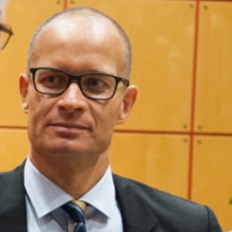
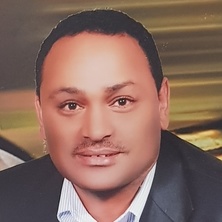
Peter C.J.M. van der Wielen is a part-time Professor of Reliability Grid Components at the Department of Electrical Engineering, Eindhoven University of Technology (TU/e), while maintaining a full-time role as Business Director for Power Failure Investigations and Principal Consultant in Power Cables at DNV GL – Energy. His work bridges academic research and industrial applications, focusing on grid component reliability, power cable technology, and asset management. Role: Part-time Professor (since 2018) Primary Affiliation: DNV GL – Energy (since 2000) Academic Affiliation: TU/e Department of Electrical Engineering His research interests center on grid component reliability , power cable degradation , and failure analysis , with a strong emphasis on translating scientific findings into practical tools like "Smart Cable Guard" for on-line partial discharge monitoring in medium voltage cables. He explores remaining life estimation , condition assessment , and maintenance methodologies to enhance power grid availability. Recent publications highlight his expertise in load scenario modeling using copulas, thermal monitoring of power cables via wave velocity, and congestion management strategies for power grids. These works align with his broader focus on asset management and reliability engineering . Scientific Awards : Hidde Nijland Award (2014) for groundbreaking power cable technology research At DNV GL, he leads power failure investigations and provides consultancy on power cable systems. As a TU/e Professor, he teaches grid component reliability and contributes to research on degradation mechanisms , failure analysis , and dynamic cable rating in collaboration with industry partners.
Professor Rainer Sauerborn serves as Director of the Department of Tropical Hygiene and Public Health at Heidelberg University Hospital, a position he has held since 1997. With a background in pediatrics and public health, his work focuses on health systems in developing countries, particularly Burkina Faso, where he began his field work in 1979. He is an active member of the Network Aging Research since 2007, bringing a global perspective to aging research. Dr. Sauerborn completed his pediatric training at the Universities of Bonn, Heidelberg, and London, followed by further studies at the Harvard School of Public Health. His academic journey began with hands-on experience as a District Medical Officer in Nouna, Burkina Faso, where he served for three years in 1979 as a conscientious objector. This early experience shaped his lifelong commitment to global health issues in resource-limited settings. Professor Sauerborn's research spans multiple critical areas at the intersection of global health and environmental challenges. He investigates health systems in developing countries, with particular focus on aging processes in populations traditionally considered young. His work increasingly addresses climate change impacts on health, examining how environmental changes affect disease patterns, food security, and healthcare systems in vulnerable regions. He has pioneered research connecting climate variability with health outcomes in Burkina Faso and other developing nations, emphasizing the need for global cooperation on health threats that transcend borders. His recent publications reveal a strong focus on climate-health interlinkages, particularly examining heat exposure impacts on farmers, migration dynamics related to climate-driven crop failures, and healthcare system responses to climate challenges. The research demonstrates consistent attention to Burkina Faso as a key field site while expanding to other regions including Bangladesh, Brazil, and Germany. A unifying theme across these studies is the examination of vulnerable populations and health system adaptation to environmental changes. Though specific awards aren't detailed in the available information, Professor Sauerborn's leadership in global health research, particularly his long-term commitment to Burkina Faso and his role in bridging pediatric and aging research perspectives, represents significant contributions to the field. His work has influenced understanding of health systems in resource-limited settings and the global dimensions of health challenges. While specific advising information isn't provided, Professor Sauerborn's leadership position suggests he mentors junior researchers and students. His involvement in projects like the EU-funded "health system challenges of the AIDS epidemic" indicates experience with substantial research grants. His work with the Network Aging Research and his efforts to establish a junior research group focused on aging in developing countries demonstrate his commitment to building research capacity. Professor Sauerborn leads research activities centered at Heidelberg University Hospital's Department of Tropical Hygiene and Public Health, with extensive field operations in Burkina Faso, particularly in the Nouna region. His team collaborates with local health authorities and researchers to study health systems, climate change impacts, and aging processes in resource-limited settings. The department serves as a hub for international research collaborations addressing global health challenges through a multidisciplinary approach.
Matti Minkkinen is a Docent at the Turku School of Economics (University of Turku) and a Postdoctoral Researcher in Information Systems Science at the Department of Management and Entrepreneurship. His work bridges futures studies with ethics, privacy, and socio-technical systems in digital transformation. Recent roles focus on responsible AI governance and foresight methodologies. University: University of Turku School: Turku School of Economics Department: Department of Management and Entrepreneurship His research explores how digital technologies reshape organizational practices, emphasizing Futures Consciousness as a human capacity. Key themes include responsible AI , privacy protection , and causal layered analysis in scenario planning. Publications highlight ethical governance frameworks and EU policy debates. Recent articles address generative AI ethics , ML system integration , and AI auditing across journals like Communications of the Association for Information Systems and Information and Management . Topics cluster around socio-technical systems, digital ethics, and institutional adaptation to AI. Teaching and editorial roles include co-curating student research collections at Finland Futures Research Centre. No explicit scientific awards are listed, but his work contributes to foresight theory and practice.
Andreas Wladis is an Adjunct Professor at the Department of Biomedical and Clinical Sciences (BKV) at Linköping University , Sweden. He also serves within the Department of Surgery, Orthopaedics and Oncology (KOO) , where his interdisciplinary research bridges clinical surgery with disaster medicine frameworks. His academic mission focuses on strengthening disaster medicine as a formal discipline and developing traumatology as a clinical research field in Sweden. Research Focus : Disaster medicine preparedness and response systems Global surgery accessibility in low-resource and conflict-affected settings Trauma care optimization in non-specialist environments Pandemic response structures and indirect health consequences Humanitarian surgical education and competency development Recent Research Trends emphasize surgical outcomes in resource-limited contexts (e.g., Rwanda, Uganda), trauma triage accuracy in non-trauma hospitals, and pediatric injury patterns in war zones. His 2025 publications include groundbreaking studies on groin hernia repair techniques and war-related pediatric trauma in Ukraine. Professional Affiliations include: Disaster Medicine Center, Linköping University Former Chief Surgeon at the International Committee of the Red Cross (ICRC) (2022-2023) Medical Expert for the European Union (CPCC) (2008-2020) Current adjunct professorship at BKV since 2024
Dr. Jesus Barreal Pernas serves as Assistant Professor in the Department of Quantitative Economics at the Faculty of Economic and Business Sciences, University of Santiago de Compostela. His research bridges environmental policy, tourism economics, and educational innovation with significant regional impact in Galicia and broader European relevance. His academic foundation includes a 2015 PhD from the University of Santiago de Compostela with thesis "Wildfires in Galicia: causality, forest policy and risk in forest management" supervised by Dra. Maria L. Loureiro. This environmental economics work established his expertise in spatial analysis of forest systems. Barreal Pernas' research program demonstrates three converging trajectories: First, environmental economics focusing on wildfire patterns and forest policy in Galicia using spatial econometrics. Second, tourism economics examining sustainable financing mechanisms (particularly green tax willingness), international tourist segmentation, and PDO region development. Third, educational innovation through gamification techniques for teaching statistics in economics and tourism degrees. His recent publications reveal increasing emphasis on gender perspectives in financial inclusion and pandemic-related economic impacts. Analysis of his 2023-2025 publications shows methodological sophistication in spatial modeling and survey-based behavioral research, with strong policy relevance for Galician regional authorities and European tourism sectors. Key thematic clusters include sustainable tourism financing (12% of recent output), educational technology applications (18%), wildfire management (8%), and gender economics (7%). No scientific awards are documented in the provided materials, though his collaborative network spans multiple European institutions as evidenced by co-authorship patterns. His advisory role appears focused on thesis supervision within USC's economics programs, with research projects frequently addressing practical challenges in Galician tourism and environmental management. Current initiatives suggest expansion into post-pandemic tourism recovery and advanced gamification frameworks for quantitative education.
Maja M. Natić is a Full Professor in the Department of Analytical Chemistry at the Faculty of Chemistry, University of Belgrade . She has held various academic roles since her professional associate appointment in 1999, including Researcher-intern, Assistant Trainee, Assistant, and eventually achieving the title of Full Professor in 2022. She actively participates in teaching courses like Analytical Chemistry 1 , Separation Methods , and Classical Analytical Chemistry for pharmaceutical chemistry students. Undergraduate: Chemical Sciences (University of Belgrade, 1998) Master's: Chemical Sciences (University of Belgrade, 2003) Doctorate: Chemical Sciences (University of Belgrade, 2008) Her research focuses on analytical chemistry of phenolic compounds , chromatographic methods for food authentication , and environmental pollutant analysis . She has led projects on Serbian wine authentication, soil contamination assessment between Serbia and Slovakia, and bioactive compound extraction from raspberry waste. Her work frequently employs TLC, HPLC, and LC-MS techniques. Key research trends include phenolic fingerprinting of honey, berries, and plant extracts; antioxidant capacity evaluation ; and structure-retention relationships in chromatography. She has published extensively on these topics in journals like Food Chemistry , Journal of Agricultural and Food Chemistry , and Journal of the Serbian Chemical Society .
Matthias Kranke is Junior Professor for Global Sustainability Governance at the Institute for Socio-Economics, Faculty of Social Sciences, University of Duisburg-Essen, within the College for Social Sciences and Humanities of the University Alliance Ruhr. His research critically examines global governance structures through socioeconomic and socioecological lenses. His educational background includes: PhD in Politics and International Studies, University of Warwick (2013-2018) MA in International Relations, Macquarie University, Sydney (2008-2009) MA in Political Science, Economics and Modern History, University of Trier (2002-2008) Kranke's research centers on the political economy of global governance, with particular focus on international organizations' role in sustainability transitions. His work interrogates how quantification practices, forecasting techniques, and indicator systems shape policy spaces and power dynamics in post-growth paradigms. He critically analyzes boundary work within international bureaucracies and the anticipatory governance of global challenges like debt sustainability and ecological transformation. Analysis of his 2021-2025 publications reveals dominant themes in post-growth political economy, anticipatory governance, and the politics of measurement. His work bridges International Relations, Political Economy, and Science and Technology Studies, demonstrating how international organizations produce knowledge that legitimizes specific policy pathways while marginalizing alternatives. The publications consistently examine power dynamics in global governance through empirical studies of IMF-World Bank interactions, sustainability indicators, and future-oriented policymaking. His scientific recognition includes: Best Graduate Student Paper Award, International Political Economy Section, International Studies Association (2017) Vice-Chancellor's Commendation for academic excellence, Macquarie University (2009) No formal advising roles or grant information is publicly documented, though his work connects to the Research Alliance Ruhr and third-party funded projects at the Institute for Socio-Economics. His research appears embedded within collaborative networks examining socio-ecological transformation and inequality, as evidenced by co-authored working papers and participation in the Doctoral Program 'Political Economy of Socio-Ecological Transformation'.
Associate Professor Yibeltal Assefa Alemu is a researcher at the School of Public Health , University of Queensland, specializing in Global Health Systems . He has over 15 years of experience in health systems research, disease control programs, and policy development, with a focus on Universal Health Coverage (UHC) and Global Health Security . Before joining UQ in 2016, he held leadership roles in Ethiopia, including Deputy Director General of the Ethiopian Public Health Institute and Director of Planning, Monitoring and Evaluation at the Federal HIV/AIDS Prevention and Control Office. Education : MD (Addis Ababa University), MSc (Institute of Tropical Medicine, Belgium), PhD (Free University of Brussels VUB) Research Interests His research centers on strengthening health systems to achieve UHC and health security, with a focus on: Health systems and Primary Health Care Equity in disease control programs (e.g., HIV/AIDS, TB) Digital health technologies for multimorbidity management Knowledge translation into policy and practice Global health guidelines and implementation science Recent Publications His 2025 articles analyze multidisciplinary approaches to Ethiopia’s health extension program, equity in HIV/AIDS policy, and the economic trade-offs of global health security. Earlier works (2024) examine maternal/neonatal care coverage, cancer disparities, and digital health strategies. These studies span sub-Saharan Africa and Iran, addressing vertical and horizontal health system interactions. Supervision He supervises PhD students on topics including HIV/AIDS epidemiology in South Sudan , equitable vaccine access , and climate-resilient health systems , with completed projects on cervical cancer elimination in Ethiopia and HIV service equity.
Willis Lang is a Researcher at Microsoft , focusing on Database Systems , Cloud Computing , and Data Management . His work bridges academic research with industrial applications in cloud databases. Education: PhD in Computer Sciences - Databases (University of Wisconsin-Madison, 2012) MS in Computer Science and Engineering - Databases (University of Michigan, 2008) BMath in Honours Computer Science - Bioinformatics (University of Waterloo, 2006) Research Interests: Willis’s research spans Database Systems , Cloud Computing , and Energy Efficiency , with a focus on scalability, tenant management, and predictive provisioning. His work addresses real-world challenges in cloud database optimization, multi-tenancy, and power-aware systems. Recent Publications highlight trends in Cloud Database Efficiency , including auto-scaling, tenant placement, and energy-conscious cluster design. His contributions often involve collaboration with industry leaders like Microsoft and Jignesh M. Patel. Scientific Awards: Best Paper Award, DaMoN 2010 Best Presented Award, Midwest Database Research Symposium 2007 Service: Willis has served as a reviewer for conferences like SIGMOD, VLDB, and journals including VLDBJ and JPDC. His expertise is sought in cloud and database research communities.
Professor Irwin Nazareth serves as Professor of Primary Care and Population Science at University College London's Department of Primary Care & Population Health. He previously held leadership roles including Head of Department (2006-2015) and Director of the MRC General Practice Research Framework (2005-2012), and currently directs the PRIMENT Clinical Trials Unit. His work bridges clinical practice, research, and education in primary care settings. His research spans mental health in primary care , with specific focus on depression, anxiety, psychosis, addiction disorders, and unexplained medical symptoms. Methodologically, he specializes in designing complex intervention trials and analyzing big data from clinical databases. His work extends internationally across Europe, South America, Africa, and South Asia, with significant projects in India. Nazareth's recent publications reveal strong trends in functional neurological disorders (particularly Physio4FMD trials), epilepsy dietary interventions (KIWE trials), and digital health solutions for tobacco cessation. His work consistently combines clinical neurology, mental health, and innovative trial methodologies with practical primary care applications. As an educator, he supervises doctoral students in Primary Care and Mental Health, teaches clinical medicine to medical students, and provides continuing education for GPs. He also leads Commonwealth Fellowship programs training healthcare professionals from Africa, India, Southeast Asia, and the Caribbean. Secured major funding from MRC, Wellcome Trust, Cancer Research UK, European Commission, and NIHR Extensive international collaborations across multiple continents Focus on implementation of research findings into clinical practice Expertise in complex intervention trials and big data analysis
Emily Lee, MD is a Professor in the Department of Psychiatry at the University of California, San Francisco (UCSF) School of Medicine . Her research focuses on improving HIV testing in inpatient psychiatry settings and analyzing health services within the public sector and urban health systems . Research Interests : Integration of HIV screening into psychiatric care Public sector mental health service capacity Health promotion for vulnerable populations Emergency psychiatric services in urban areas Publication Trends : Dr. Lee’s work examines the intersection of psychiatry and public health policy , with a focus on hospital bed capacity , community mental health , and urban health services . Notable Collaborators : Dilley, James (UCSF) Shumway, Martha (UCSF) Leary, Mark (UCSF) Mangurian, Christina (UCSF) Woodard, Eric (UCSF)
Donatella Strangio serves as Professor of Economic History and Director of the Department of Methods and Models for the Economy, Territory and Finance (Memotef) at Sapienza University of Rome. She also holds the position of Deputy Rector for Chile and Brazil in the Latin America and Caribbean region. Her academic leadership extends to directing international research projects including the European Project PNRR Changes 5 and the Jean Monnet Project EUMCHA. Her research spans economic development and underdevelopment, financial history, tourism economics, international migration patterns, and colonial-decolonization processes. She examines these topics through historical lenses, particularly focusing on pre-industrial economic systems, 20th century European history, famines, food policies, and institutional evolution. Her work often bridges historical analysis with contemporary policy challenges. Professor Strangio's recent publications demonstrate strong thematic coherence across economic history, with particular emphasis on resilience mechanisms during crises, migration as knowledge transmission, and tourism's economic dimensions. Her scholarship shows consistent engagement with both Italian and global contexts, especially regarding Mediterranean and Latin American connections. She actively mentors through multiple master's programs including the Master in Migration and Development and the Master in Tourism Economics and Management. Her leadership in the Civis short-term courses on Crisis Sustainability and Cultural Heritage Enhancement demonstrates commitment to innovative teaching approaches. Professor Strangio directs significant research initiatives including the Spoke9 of PNRR Cultural Heritage and coordinates the Scientific Guarantee Committee for the 'Repertory of Italian banks from 1861 to today.' Her international collaborations span Columbia University, Universidad de Quilmes, University of Adelaide, London School of Economics, and numerous Latin American institutions.
Raisa Carpelan is a University Lecturer and Docent in Educational Sciences specializing in school development and leadership at the University of Helsinki's Faculty of Educational Sciences, Department of Educational Sciences. She serves as a supervisor in the Doctoral Program in Cognition, Learning, Teaching and Communication and the Doctoral Program in School, Education, Society and Culture. Her research focuses on educational leadership, inclusive education, diversity, multilingualism, and social justice in education. With expertise in educational change, reforms, and special education development, Carpelan examines leadership practices through multiple lenses including early childhood education settings, comprehensive schools, and policy implementation contexts. Her work particularly addresses how principals construct meaning around inclusive leadership and navigate diversity in Finnish educational environments. Analysis of her recent publications reveals a strong emphasis on practical applications of leadership theories in real-world educational settings, with particular attention to multicultural contexts, migrant communities, and equity-focused practices. Her research consistently bridges theoretical frameworks with practical implementation challenges faced by educational leaders. As an active researcher, Carpelan participates in numerous funded projects including EDUCA (Academy of Finland Flagship Program), OPH VEPO leadership development initiatives, MångSam research on multilingualism, and INSPECT COVID19 studies. She has supervised doctoral work and contributed to educational evaluation through the University of Helsinki Centre for Educational Evaluation (HEA). Her professional activities extend to academic service including membership on the Swedish Research Council evaluation panel, conference organization, and invited presentations on reimagining teacher education and inclusive school community development.
Dr. Leila Harris is a Professor at the University of British Columbia , affiliated with the Institute for Resources, Environment, and Sustainability and the Institute for Gender, Race, Sexuality and Social Justice . Her research focuses on water governance, political ecology, and gender equity across global contexts including Turkey, Ghana, South Africa, and Canada. Key research areas: water justice, feminist political ecology, climate adaptation Geographic expertise: Global South/Global North comparative studies Methodological emphasis: transdisciplinary collaboration, participatory video Recent projects examine the human right to water , social equity in water access , and relational approaches to water insecurity . Her Google Scholar publications (2022-2025) reveal trends in intersectional water governance , green gentrification , and non-material dimensions of water insecurity , with a strong focus on gendered subjectivities and hydrosocial territories . Harris leads the EDGES Collaborative , integrating environment, development, gender, and sustainability perspectives.
Allen Hsiao MD, FAAP, FAMIA is Professor of Pediatrics, Biomedical Informatics and Data Science, and Emergency Medicine at Yale School of Medicine. He serves as Chief Health Information Officer (CHIO) for Yale School of Medicine and Yale New Haven Health System, and as Vice Chair of Clinical Systems in Biomedical Informatics & Data Science. BA in Biomedical Ethics and MD from Brown University Pediatrics residency at Yale-New Haven Children's Hospital Fellowships in Pediatric Emergency Medicine and Medical Informatics at Yale His research focuses on leveraging health information technology to improve care delivery, with emphasis on electronic health records, clinical decision support, natural language processing, and AI applications. He actively explores how informatics can optimize systems, improve transitions of care, and advance health equity through diverse clinical trial participation. His work spans pediatric emergency medicine, gastroenterology, child abuse detection, and opioid safety. Dr. Hsiao's recent publications demonstrate leadership in AI-augmented clinical decision support, EHR-based machine learning models, and pandemic response infrastructure. His team has developed innovative tools for child abuse identification, gastrointestinal bleeding risk prediction, and collaborative research data platforms. 56 Hospital and Health System CMIOs and CNIOs to Know (Becker's Healthcare, 2023) Healthcare Diversity Leader Award (National Diversity Council, 2023) 48 CMIOs and CNIOs to Know (Becker's Hospital Review, 2022) Norman J. Siegel Faculty Award (Yale School of Medicine, 2022) As principal investigator and co-investigator on NIH and AHRQ-funded grants, he examines health information technology's impact on healthcare quality. He co-directs Yale's CTSA Informatics Core, working with Yale Center for Clinical Investigations to equip researchers with EHR (Epic) and clinical trials management (OnCore) tools. His leadership extends to national committees including American Academy of Pediatrics, HIMSS, and Children's Hospitals Association.