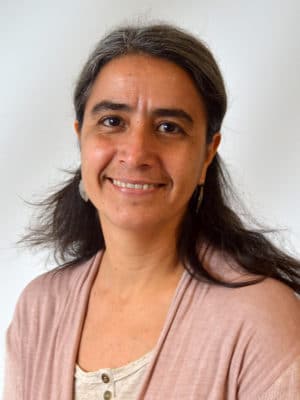
Matthew Holmes is a Lecturer in Management at the University of York's School for Business and Society, where he leads the MSc International Business Management program. His research employs sociological frameworks to analyze sport-for-development initiatives in Zambia, particularly focusing on poverty alleviation and UN Sustainable Development Goals. Methodologically, he uses participatory approaches and interdisciplinary theory. His publications critically examine power structures in international development, with recent work applying postcolonial theory to decolonize research methods. Articles emphasize socio-economic inequality, community agency, and gender equity in least developed countries.
Valerie Thompson is a Professor of Cognitive Psychology at the University of Saskatchewan, specializing in intuitive and analytic decision-making, metacognition, and reasoning processes. She holds roles as Past President of the Canadian Society of Brain, Behaviour, and Cognitive Science and Editor-in-Chief of *Thinking & Reasoning*. Her research has been continuously funded by the Natural Sciences and Engineering Research Council of Canada (NSERC) since 1991. Education: BSc, University of Calgary, 1985 MA, University of Western Ontario, 1987 PhD, University of Western Ontario, 1991 Research Focus: Investigates when people rely on intuitive judgments versus analytical reasoning, metacognitive monitoring of decisions, and individual differences in reasoning strategies. Utilizes the Experimental Decision Lab (EDL) with eye-tracking and advanced experimental setups. Her work bridges cognitive science and applied decision-making, emphasizing dual-process theories. Grants & Facilities: Co-developed the Social Sciences Research Lab with a CFI grant, featuring 23 linked computers for cognitive experiments. This facility supports studies on reasoning, decision-making, and metacognition.
Erik Teodoor Verhoef is a Full Professor of Spatial Economics at the Department of Spatial Economics, Faculty of Economics and Business Administration, Vrije Universiteit Amsterdam. He also serves as a Visiting Professor at the Institute for Transport Studies, University of Leeds since 2009. Previously, he was a Member of the Faculty Board (serving as Research Director and Vice dean) at the Faculty of Economics and Business Administration, VU University Amsterdam from 2008 to 2011. His educational background includes a Cum Laude graduation in Economics from State University Groningen in 1991, followed by a PhD from VU University Amsterdam under the supervision of Professors Peter Nijkamp and Piet Rietveld. Since 1996, he has been an Elected Research Fellow at the Tinbergen Institute, Amsterdam-Rotterdam. Verhoef's research focuses on traffic congestion, static and dynamic network analysis, urban externalities, second-best regulation, efficiency and equity aspects of spatial externalities and regulation, spatial equilibrium modelling, valuation, transport economics, and urban economics. His work has significantly contributed to understanding congestion pricing mechanisms, transport policy design, and the economic analysis of transportation networks. His research often combines sophisticated theoretical modeling with empirical analysis to provide practical insights into optimal transport policies. His publication record shows a consistent contribution to transportation economics, with particular emphasis on congestion pricing, road pricing schemes, and the economic analysis of transportation networks. Analysis of his recent publications reveals a strong focus on equity implications of pricing mechanisms, behavioral responses to transport policies, and the integration of reliability considerations into transport economics. The Epainos Prize 1996, European Regional Science Association Honorable Mention for the 1996 Dissertation Prize of the Transportation Science Section of INFORMS RSUE Award for Innovative Research by Recent Doctoral Candidates 2000 Reimut Jochimsen Prize 2006 Honorable Mention for the WCTRS Prize 2007 Highly Cited Author Award 2004–2008, Journal of Urban Economics Elected Fellow of the Regional Science Association International (2010) Verhoef serves in significant editorial capacities, including as one of two Editors-in-Chief for Economics of Transportation and Associate Editor for Transportation Research B. He also serves on the editorial boards of several prestigious journals including the Journal of Urban Economics, Journal of Transport Economics and Policy, and Journal of Regional Science. His academic leadership extends to international organizations where he serves on the Founding Board of the International Transportation Economics Association and as Vice-chair of NECTAR, while having organized numerous academic events including the Nectar-Kuhmo Summer Schools and the European Regional Science Association Conference.
Pauwke Berkers is a full professor of Sociology of Popular Music at the Erasmus School of History, Culture and Communication, Erasmus University Rotterdam, where he is also head of the Department of Arts and Culture Studies. He specializes in the sociology of popular music with a focus on inclusion, well-being, and resilience. Berkers co-founded the Rotterdam Popular Music Studies (RPMS) research group and the EUR minor MU$IC, and is a founding member of the Rotterdam Arts and Sciences Lab and part of the EUR Cultuurcampus core team. His educational background includes an MA in Sociology from Tilburg University, where he specialized in the sociology of arts and culture, with a thesis on women in punk and feminism. He completed his PhD at Erasmus University Rotterdam, studying the integration of ethnic minority authors into literary mainstreams in the U.S., the Netherlands, and Germany. Berkers' research spans cultural sociology, focusing on social inequality, boundary work, authenticity, and stigmatization in music. His recent work explores well-being and resilience in the music ecosystem, including projects like NWO Smart Culture's POPLIVE and a pilot on resilience principles with Codarts and Utrecht University. He has led major initiatives such as the HERA project FestiVersities and the EUR Fellowship Hearing Diversities. The most recent publications reflect a strong interdisciplinary trend, merging cultural sociology with emotional and interactional theory, especially in the 2025 book A Sociology of Awkwardness , which introduces a new theoretical framework for understanding social discomfort. Other works address gender inequality in metal, music festivals, and fair pay for artists, demonstrating a consistent focus on equity, inclusion, and systemic change in cultural sectors. Berkers has not received explicitly mentioned scientific awards in the provided texts. However, his leadership in funded projects and public engagement highlights significant recognition. He supervises PhD candidates, including Wessel Coppes, and has secured multiple grants from NWO, EUR, and other funding bodies. His research often involves collaboration with arts councils, municipalities, and cultural institutions, such as the Rotterdam Arts Council and the City of The Hague. He is currently active in the National Workgroup Inclusion, advising on cultural policy. Berkers is involved in several research groups and labs, including RPMS, Rotterdam Arts and Sciences Lab, and Cultuurcampus. His collaborative projects with Codarts Rotterdam and Utrecht University emphasize transdisciplinary approaches to music, well-being, and resilience.
Hilary Johnson is an Adjunct Associate Professor at the Living with a Disability Research Centre, La Trobe University, and has taught part-time in the School of Allied Health. Her academic and clinical work centers on improving communication access for individuals with complex communication needs, including those with aphasia, intellectual disabilities, and developmental conditions. Adjunct Associate Professor, Living with a Disability Research Centre Part-time teaching, School of Allied Health, La Trobe University Extensive collaboration with Scope and other disability organizations Hilary holds a PhD, MA (Ed), B Ed, and Dip Sp Th, reflecting a strong interdisciplinary background in speech pathology, education, and disability studies. Diploma in Speech Therapy (Dip Sp Th) Bachelor of Education (B Ed) Master of Arts in Education (MA Ed) Doctor of Philosophy (PhD) Her research is deeply committed to enhancing the lives of people with little or no speech through Augmentative and Alternative Communication (AAC), saliva control, and inclusive communication practices. She investigates communication access in healthcare, legal, transport, and community settings, aiming to foster dignity, autonomy, and social inclusion. Analysis of her recent publications reveals a consistent focus on participatory research, accessibility standards, and the development of practical tools and training for frontline workers. Her work spans qualitative studies, intervention evaluations, and policy-oriented research, often employing co-design and community-based methodologies. Her scientific contributions have been recognized through widespread citation, media pickup, and policy references, though formal awards are not listed in the provided text. Keynote speaker at national and international conferences Multiple publications in high-impact journals such as Disability and Rehabilitation and Journal of Intellectual and Developmental Disabilities Research cited in policy and news outlets Hilary actively mentors students and collaborates across disciplines, though specific advisees are not named. Her work is supported through institutional and organizational partnerships, including Scope, and emphasizes capacity building in both professional and community contexts. She is involved in developing and evaluating digital tools like the Aphasia App and communication access networks, reflecting a forward-looking approach to leveraging technology for inclusion.
Christer Malm is a Professor at Umeå University's Department of Community Medicine and Rehabilitation, Section of Sports Medicine. His research spans molecular muscle adaptation, anti-doping technologies, and physical performance optimization for firefighters and athletes. Primary Affiliation: Umeå University, Sweden Key Focus Areas: Exercise physiology, proteomics, anti-doping, muscle disease mechanisms Research Interests: Muscle Adaptation: Revisiting the damage-repair hypothesis using proteomic screening to study cytoskeletal remodeling. Anti-Doping: Developing proteomic methods to detect autologous blood doping and investigate erythrocyte breakdown mechanisms. Work Capacity: Establishing physiological benchmarks for Swedish firefighters through extensive testing. Musculoskeletal Diseases: Comparative proteomic analysis of trapezius, vastus lateralis, and extraocular muscles to uncover disease resistance mechanisms. Exercise Impact: Exploring how physical activity modulates immunity in health and disease contexts. Scientific Contributions: Over 20 years of publications in Journal of Sports Sciences , PLOS ONE , and Scandinavian Journal of Medicine & Science in Sports , including studies on anabolic steroid effects and cold climate physiology. Ongoing Projects: PhD studies on blood doping detection, firefighter performance limits, and cross-country skiing physiology. Contact: christer.malm@umu.se
Dr. Mehmet Emin Yakut is an Assistant Professor at Bingöl University's Faculty of Arts and Sciences, Department of Architecture and Urban Planning. He holds a PhD in Social Sciences from Marmara University (2020), following a Master's from Fırat University (2013) and a Bachelor's from Selcuk University (2001). Prior to his academic career, he served as a teacher in Turkey's Ministry of National Education from 2001 to 2021. His research focuses on urban geography, population dynamics, and administrative geography, with particular attention to urban transformation projects, housing policies, and regional development. Recent work includes studies on Diyarbakır's urban renewal impacts, Bingöl's administrative geography, and toponymic analysis in Hasankeyf. His courses include Population Geography, Settlement Geography, and Human Economic Geography of Turkey. Dr. Yakut has presented at international conferences such as the Batman Symposium (2022–2024) and contributed chapters to books like Gercüş Kitabı (2021) and Seçilmiş Örneklerle Türkiye'de Yer Değiştiren Yerleşmeler (2022). His research bridges historical, cultural, and spatial dimensions of geography with contemporary urban challenges.
Professor Sandy Oliver is a leading academic in public policy and evidence-based research, currently serving as Professor of Public Policy at the Social Research Institute, University College London (UCL), and Deputy Director of the EPPI Centre. Her work focuses on bridging research and decision-making in policy, healthcare, and public services. She pioneered patient and public involvement in research, particularly within the NHS, and co-founded the journal Research for All to promote collaborative research between communities and academia. Education: PhD, University of Surrey (1981) Bachelor of Arts, University of York (1976) Research Interests: Systematic reviews and evidence synthesis Public and stakeholder involvement in research and policy Evidence-informed decision-making in global health and development Transdisciplinary research approaches Health equity and marginalized populations Awards and Affiliations: Member of the Campbell Collaboration Board Editor with the Cochrane Collaboration Co-editor of Research for All Former Director of UCL’s Social Science Research Unit (2015–2020) Distinguished Visiting Professor at the University of Johannesburg (2018–2023) Grants and Projects: Lead on initiatives like the CEPHI project exploring complexity in public health evidence Work with DFID and the WHO on global health guidelines Development of frameworks for rapid evidence assessments and stakeholder engagement Labs and Teams: Active in the EPPI Centre, a global leader in evidence synthesis, and collaborates with interdisciplinary teams on global health and development projects.
Dr Peter Eckersley is an Associate Professor in Public Policy and Management at Nottingham Business School, Nottingham Trent University. His research focuses on central-local government relations, public policy, climate change governance, and public accountability. He chairs a support network for early career researchers and serves as Managing Editor of Local Government Studies . PhD in Political Science, Newcastle University MA in European Union Studies (Pass with Distinction), Newcastle University BA in Government and EU Studies (First Class), Newcastle University Peter's research examines how local governments address 'wicked' issues like climate change through collaborative strategies. He analyzes governance models in German and English municipalities, emphasizing policy diffusion and multilevel dynamics. Published over 30 peer-reviewed articles in journals like npj Urban Sustainability , Environmental Politics , and Regional Studies Authored/co-authored books including Power and Capacity in Urban Climate Governance and Rebuilding the Fire and Rescue Services Key themes: climate policy, urban resilience, public procurement, and governance reforms Scientific awards include funding from the Economic and Social Research Council (ESRC), German Academic Exchange Service (DAAD), and Political Studies Association (PSA). He supervises PhD students, including Katarzyna Lakoma, and collaborates with scholars across Europe. His work bridges academic research with policy impact, featuring in media outlets like BBC, LBC, and The Conversation .
Lennart Heim is a Professor of Policy Analysis at the RAND School of Public Policy and Compute Lead at the Technology and Security Policy Center within The RAND Corporation. His research focuses on AI governance, compute infrastructure, and their strategic implications for national security and global competitiveness. He advises organizations like Epoch and contributes to initiatives such as the OECD.AI Expert Group on AI Compute and Climate. Previously, he held roles at ETH Zürich and the Centre for the Governance of AI. Education: Studied computer engineering at ETH Zürich and RWTH Aachen University. Current affiliations include adjunct fellowships at GovAI and pro forecasting at INFER Pub. Research Interests: He examines how compute capacity shapes AI development, policy frameworks for AI governance, and the interplay between technology and geopolitical strategy. His work emphasizes leveraging compute for ethical AI deployment while mitigating security risks. Advising & Grants: Advises Epoch on AI trajectory analysis and has collaborated with the National Science Foundation and NIST on policy frameworks. His grants focus on AI energy requirements and global engagement strategies. Labs/Teams: Leads compute research initiatives in the Technology and Security Policy Center, engaging interdisciplinary teams to address AI’s societal and security challenges.
Sarah B. Hunter is a Professor of Policy Analysis at the RAND School of Public Policy, Director of the RAND Center on Housing and Homelessness, and a Senior Behavioral and Social Scientist at the RAND Corporation. Her work focuses on vulnerable populations, implementation science, and evidence-based program delivery. She holds a PhD and MA from UC Santa Barbara and a BA from NYU. Education: PhD and MA in Psychology, University of California, Santa Barbara BA in Psychology, New York University Research Interests: Sarah’s research addresses homelessness, substance use disorders, mental health, and healthcare integration. She emphasizes continuous quality improvement (CQI) and policy evaluation, particularly in community settings. Her work often intersects with federal initiatives, such as improving veteran homelessness programs and scaling evidence-based practices. Recent Articles: Her 2025 studies include analyses of Los Angeles’ unsheltered populations, opioid treatment implementation in mental health centers, and federal funding strategies for scaling health interventions. Earlier work includes evaluations of housing programs and substance use treatment sustainment. Awards & Service: Fellow of the Association for Psychological Science (APS) Editorial Board Member, Journal of Substance Use and Addiction Treatment Member of the Veteran and Community Oversight and Engagement Board (VA campus development) Core Faculty, Implementation Research Institute (Washington University) Grants & Labs: Sarah collaborates with NIH grant panels and has advised projects such as the Housing for Health program. Her work is supported by federal and state grants focused on healthcare and social service system improvements.
Dr Kutoma Wakunuma is an Associate Professor in Information Systems at the School of Computer Science and Informatics, De Montfort University (DMU), UK. She is actively involved in research, teaching, and leadership, serving as Module Leader, Programme Leader for MSc Computing, and Deputy Subject Group Leader. She is affiliated with the Centre for Computing and Social Responsibility (CCSR) and holds a PhD in Information Communication Technologies for Development and Gender from Coventry University. PhD in Information Communication Technologies for Development and Gender, Coventry University, UK Post-Graduate Certificate in Higher Education (PGCert. Teaching), De Montfort University, UK MA in Women’s Studies (Challenges in Management and Decision-Making), Lancaster University, UK HND in Management Information Systems, Zambia Institute of Management Her research focuses on the societal impacts of technology, particularly in the Global South. Key areas include ICT for Development (ICT4D) , ethics in emerging technologies , gender and technology , Responsible Research and Innovation (RRI) , and AI governance in Africa . She explores how digitalisation affects development, equity, and sustainability, with a strong emphasis on the UN Sustainable Development Goals. Her recent publications reflect a growing focus on ethical AI, digital platforms, and the gig economy in Africa. Themes include gendered AI design , responsible innovation , digital governance , and stakeholder engagement . Her work often bridges technical systems with ethical and social justice concerns, particularly in underrepresented regions. Dr Wakunuma has received numerous awards and recognitions, including the Initiativkreis Ruhrgebiet Fellowship for outstanding research, UN World Summit Award, and DAAD Scholarships. She has also been a recipient of EU and UKRI/GCRF research funding. DMU award on Exploring Sustainable Development in Ahmedabad, India, 2019 Coventry University PhD full Studentship, 2007 Open Society Institute scholarship, Oxford Internet Institute, 2006 UN World Summit on the Information Society Award, 2005 DAAD Scholarships (2004, 2000) Initiativkreis Ruhrgebiet Fellowship (Honoured for outstanding research), 2002 International Federation for Information Processing (IFIP) Award, 2000 She is an active PhD supervisor and examiner, mentoring students on topics such as identity theft in Nigeria, e-voting, digital SMEs in South Africa, and feminist critiques of techno-capitalism. She has served as a Principal Investigator and Senior Researcher on major EU-funded projects including RRING, SATORI, CONSIDER, and ETICA. She is also a Visiting Lecturer and PhD Supervisor at Stockholm University, an Editorial Board Member for the Journal of Responsible Technology, and an ethics advisor for the European Commission. Dr Wakunuma is affiliated with the Centre for Computing and Social Responsibility (CCSR), where she contributes to interdisciplinary research on technology ethics and governance. She leads and participates in teams focused on responsible innovation, digital inclusion, and sustainable technology development, particularly in African contexts.
Iokine Rodriguez Fernandez is a Professor in Environment and Development at the School of Global Development (DEV), University of East Anglia (UEA). She is a member of the Global Environmental Justice Group, the Tyndall Centre for Climate Change Research, and Area Studies. Her work bridges sociology, development studies, and environmental governance, with a strong emphasis on grassroots-led transformation. Ph.D. in Development Studies, University of Sussex M.Phil. in Environment and Development, University of Cambridge Post-doctorate, Centre of Social Studies of Science, IVIC, Venezuela Her research centers on environmental conflict transformation, decolonial environmental justice, and the role of local and indigenous knowledge in sustainable development. She employs participatory action research to empower communities and challenge dominant environmental narratives. Her expertise includes intercultural dialogue, equity in conservation, and fire management in pyrobiocultural landscapes. The 15 most recent publications highlight a consistent trajectory in decolonial and grassroots environmental justice, with strong regional focus on Latin America—particularly Colombia, Bolivia, Chile, and Mexico. Key themes include the pluriverse of peace, co-management of protected areas, fire stewardship, and restorative justice. These works reflect interdisciplinary engagement across political ecology, geography, sociology, and indigenous studies. Scientific awards include: Winner of Joint Project Award, 2016 UEA Engagement Awards Winner of the Achievement Award, 2022 UEA Engagement Awards She has supervised and collaborated on multiple research projects, including international grants from the British Academy, ESRC, NERC, and Research Councils UK. Her advisory roles span community-based initiatives, academic collaborations, and policy development. She is co-founder of Grupo Confluencias, a Latin American network for environmental conflict transformation. Her research is conducted through active engagement with local communities, indigenous groups, and NGOs. She leads or contributes to projects such as Following the Light , IXCHEL2 , School, Territory and Post-conflict , and ACKNOWL-EJ , all emphasizing co-produced knowledge, capacity building, and justice-centered environmental governance.
Professor Ali Wardak is a Professor of Criminology at the University of South Wales , affiliated with the Faculty of Life Sciences and Education and the Criminology, Policing and Security Research and Innovation Group . He serves as Vice President of the South Asian Society of Criminology and Victimization and has been an invited speaker at global conferences. United Nations Development Programme (UNDP) Consultant, Kabul (2006–2008) Collaborator with Professor John Braithwaite on Peacebuilding Compared Project Fieldwork in Bangladesh (2019) and Afghanistan Focus on displacement, hybrid justice, and SDG policy alignment Research Interests: Professor Wardak specializes in comparative criminology , state and non-state justice systems , and peacebuilding across conflict zones. His work spans Afghanistan , Bangladesh , and Myanmar , examining the intersections of displacement , legal reform , and sustainable solutions . Recent Publications: His 2025 work includes studies on poppy cultivation regulation in Afghanistan and restorative justice frameworks . Earlier research (2024–2022) explores hybrid justice implementation , Rohingya refugee camp dynamics , and comparative displacement solutions . Scientific Awards: 2017 University of South Wales Best International Impact Award 2018 THE Awards Nomination 2013 Radzinowicz Memorial Prize Collaborations: Professor Wardak’s research is funded by the British Academy and conducted with Dr. Palash Kamruzzaman from the Centre for Social Policy . He has organized the Jean Monnet Network on EU Counter-Terrorism (2020) and contributed to International Criminology journal as an editor.
Markku Kangaspuro is Professor and Director of the Aleksanteri Institute - Finnish Centre for Russian and East European Studies at the University of Helsinki. He holds a Docent title in Political History from the Faculty of Social Sciences. His roles include Research Director (2009-2010), Vice Director (2010-2018), and Director (2018-present) of Aleksanteri. He earned his PhD from the University of Joensuu in 2000 with a dissertation on Soviet Karelia. Education highlights include a MA in History (1991), Lic.Phil in History (1996), and Docent qualifications from both University of Helsinki (Political History) and University of Joensuu (Russian History). His research focuses on Russian political development, nationalism, and post-Soviet modernization challenges. Key projects include the Russian Media Lab and studies on health data manipulation in authoritarian regimes. Research interests span political history of the USSR/Russia, identity politics, and foreign policy analysis. Recent work examines Victory Day politics, Stalinist legacy, and contemporary security dynamics. He has authored/co-edited over 120 publications including War and Memory in Russia, Ukraine and Belarus (2017) and contributed to studies on toponymic disputes and authoritarian modernization. Recipient of prestigious awards such as Doctor Honoris Causa from Petrozavodsk State University (2020) and Honorary Professor title in Stavropol (2009). Active in policy consultations, media commentary, and international academic networks. Supervised two doctoral theses and participates in interdisciplinary research initiatives like the Finnish Centre of Excellence in Russian Studies.