Professor Keshav Dasgupta holds the position of Professor in Physics at McGill University since March 2021. His academic journey includes a MSc from the Indian Institute of Technology, Delhi and a PhD from the Tata Institute of Fundamental Research, Mumbai. Postdoctoral research followed at the Institute for Advanced Study (Princeton, USA) and Stanford University (USA). He transitioned to faculty roles at McGill starting as an Assistant Professor (2005-2010), then Associate Professor (2010-2021), and currently as a full Professor. His research interests span Superstring Theory (focusing on flux compactifications and gauge/gravity dualities), String Cosmology (exploring de Sitter spaces and primordial phenomena), Quantum Field Theories (confinement dynamics in thermal QCD), and Mathematics (non-Kähler manifolds and Lie group applications in string theory). He also investigates Knot Theories within M-theory frameworks. Recent work emphasizes de Sitter vacua in string theory, leveraging Glauber-Sudarshan states and confronting swampland conjectures. His publications address topics like holographic QCD, quantum gravity equations, and non-perturbative string solutions. He teaches advanced courses such as PHYS 562: Electromagnetic Theory (Winter 2023).
Vladimir Kazeev is an Assistant Professor at the Faculty of Mathematics, University of Vienna , where he has held a faculty position since 2019. He also held previous academic appointments as a Szegő Assistant Professor at Stanford University (2017–2019), a postdoctoral researcher at the University of Geneva (2015–2017), and research positions at ETH Zurich (2011–2015), Russian Academy of Sciences (2008–2011), and Moscow Institute of Physics and Technology (2009). His research focuses on adaptive, data-driven numerical methods for differential equations, nonlinear low-parametric approximation, and numerical linear algebra. His work intersects computational mathematics, tensor methods, and high-dimensional problem-solving, particularly in the context of partial differential equations (PDEs) and stochastic modeling. The 15 most recent publications reveal a strong emphasis on quantized tensor-structured methods for PDEs, low-rank approximations, and high-dimensional numerical analysis. His research spans theoretical advancements in tensor decomposition, practical applications in chemical reaction networks, and novel discretization techniques for multiscale and degenerate diffusion problems. Scientific awards include the prestigious ETH Medal for outstanding doctoral theses (2016) Russian Academy of Sciences Medal for outstanding student works in mathematics (2011) Advising and teaching activities include supervising Jason Zhu (Stanford, 2019) and Simon Etter (ETH Zurich, 2014), as well as teaching advanced courses in tensor methods, numerical analysis, and PDEs at the University of Vienna, Stanford University, and the University of Geneva. His service to the community includes peer review for 15+ journals and co-organizing minisymposia at SIAM meetings.
Marco Manetti is a Full Professor of Geometry at the Dipartimento di Matematica 'Guido Castelnuovo' of Sapienza Università di Roma. His primary academic role involves research and teaching in algebraic geometry and deformation theory. He has held editorial positions, including Editor-in-Chief of Rendiconti di Matematica e delle sue Applicazioni and editor of Annali di Matematica Pura ed Applicata . Research interests focus on algebraic surfaces, moduli spaces, deformation theory, and differential graded Lie algebras. Notable contributions include work on semiregularity maps, formality conjectures, and L∞-algebras. He has authored influential textbooks like Topologia and Lie Methods in Deformation Theory . He actively engages in outreach, organizing mathematics competitions and events like Intrecci Matematici . Awards include the Premio Bartolozzi (1999). His work bridges pure mathematics with applications in mathematical physics and topology.
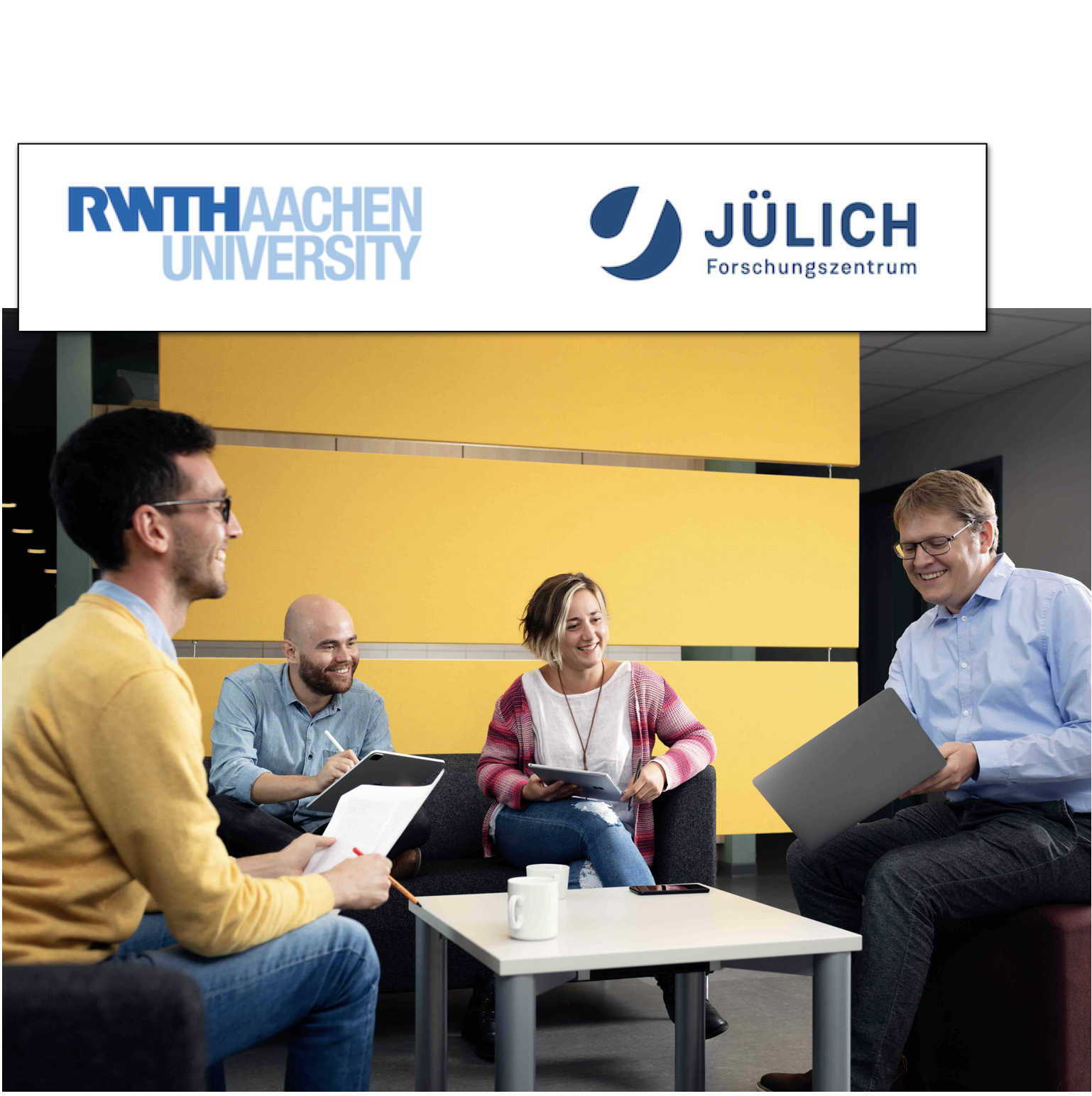
Markus Müller is a Professor in Theoretical Quantum Technology at RWTH Aachen University and the Forschungszentrum Jülich's Peter Grünberg Institute. He leads a research group focused on quantum information processing, quantum simulation, and topological quantum computing/ error correction using atomic, molecular, and optical systems. His work bridges theory and practice, with collaborations on trapped-ion and neutral-atom quantum processors. Education: PhD in Quantum Simulation (2011, University of Innsbruck). Postdoctoral positions at Complutense University Madrid. Faculty roles at Swansea University (2015–2019) before moving to Aachen. Research Interests: Quantum error correction, fault-tolerant protocols, topological phases, quantum neural networks, and scalable quantum hardware. His group explores applications in trapped ions, Rydberg atoms, and superconducting qubits, with projects funded by ERC and EU Quantum Flagship grants. Grants/Projects: ERC Starting Grant (Quantum Neural Networks), EU AQTION (Trapped Ion Quantum Computing), VEQTOR (Fault-Tolerance Validation), and Munich Quantum Valley (Neutral-Atom Processors). Key Publications: Includes experimental demonstrations of fault-tolerant gates, surface-code error correction, and quantum neural networks. Over 120 peer-reviewed articles in Nature Physics , Physical Review X , and Quantum .
Robert Berman is a Professor in the Department of Mathematical Sciences at the University of Gothenburg. He is affiliated with the Algebra and Geometry division and can be reached at robertb@chalmers.se. His research focuses on advanced areas of mathematics including algebraic geometry, complex geometry, and geometric analysis, with a particular emphasis on Kähler metrics, Monge-Ampère equations, and probabilistic methods in geometry. His work bridges pure mathematics with applications in theoretical physics and numerical analysis. Key research themes include the study of K-stability in algebraic geometry, the interplay between statistical mechanics and geometric structures, and the analysis of discretized Monge-Ampère equations in optimal transport. Recent publications (2023–2025) address Hölder inequalities in Kähler geometry, Manin-Peyre conjectures, and probabilistic approaches to Kähler-Einstein metrics. Berman collaborates extensively with leading researchers such as Bo Berndtsson and Sébastien Boucksom. His contributions span foundational results in geometric analysis and their implications for birational geometry and arithmetic geometry. No awards or grants are explicitly listed in the provided materials.
David Sherman is an Associate Professor in the Department of Mathematics at the University of Virginia, part of the College of Arts & Sciences. His research focuses on functional analysis and operator algebras, with specialized interests in noncommutative L p spaces, operator theory within von Neumann algebras, model theory of operator algebras, and noncommutative convexity. He has contributed to foundational studies of noncommutative L p spaces, isometries between operator algebras, and applications of logic to operator algebras. Recent teaching includes advanced calculus, linear algebra, and operator theory courses. His work bridges pure mathematics with interdisciplinary themes, such as applying set-theoretic methods to algebraic structures and exploring connections between operator algebras and logic. Sherman has co-authored significant papers on topics like support expansion C*-algebras and quantization of coarse spaces, reflecting his expertise in modern operator theory. His research outputs emphasize structural properties of operator algebras, with notable contributions to the classification of II₁ factors and model-theoretic approaches to noncommutative systems. While no specific awards are listed, his extensive publication record and teaching roles highlight his academic impact. Sherman maintains administrative involvement in undergraduate mathematics programs and graduate initiatives at UVA.
Dr. Charles Wang is a Reader in the Department of Physics at the University of Aberdeen, within the School of Natural and Computing Sciences. He has held this position since 2005 and is also an Honorary Cruickshank Lecturer in Astronomy at the same institution. His academic journey began with a BSc in Physics from National Taiwan University, followed by a Certificate of Advanced Study in Mathematics from Cambridge, and culminated in a PhD in Mathematical Physics from Lancaster University. Education: BSc (National Taiwan University), CASM (Cambridge), PhD (Lancaster) Current Position: Reader, Department of Physics, University of Aberdeen Additional Role: Honorary Cruickshank Lecturer in Astronomy Dr. Wang's research lies at the intersection of theoretical physics and experimental gravity, focusing on general relativity, quantum gravity, modified gravity, astrophysics, and cosmology. He is a pioneer in quantum gravity phenomenology, particularly through atom interferometry techniques. His work extends into applied mathematics, including differential geometry, Clifford algebra, and the Cosserat theory of rods. He actively collaborates with industry and research institutions on quantum sensing, gravity gradiometry, and precision measurement applications. His recent publications reveal a strong trajectory in quantum aspects of gravity, including Unruh radiation, gravitational decoherence, quantum sensing of spacetime fluctuations, and loop quantum gravity formulations. These works are published in high-impact journals such as Physical Review D, Classical and Quantum Gravity, and the European Physical Journal C. Scientific honors include being a Fellow of the STFC Centre for Fundamental Physics. He has secured significant research funding from sources like MoD/Dstl, EPSRC, UKSA, and BP for projects related to quantum gravity experiments and gravity sensing technologies. STFC Centre for Fundamental Physics Fellow Dr. Wang has supervised PhD students and contributed to major international collaborations such as STE-QUEST (ESA mission candidate), GG-TOP (with Birmingham), and CERN-related supernova research. He has also served in professional roles including Grampian Regional Organiser for the Institute of Physics in Scotland and as a Series Editor for Springer Briefs in Physics. He is affiliated with research groups including the Plasma Science Research Group (PSRG) and contributes to interdisciplinary initiatives such as the Advanced Centre for Energy and Sustainability (ACES).
Michela Zedda is an Associate Professor at the Department of Mathematical, Physical and Computer Sciences of the University of Parma. Her research focuses on differential and symplectic geometry, particularly in Kähler metrics, Sasakian manifolds, and geometric quantization. Department: Mathematical, Physical and Computer Sciences (University of Parma) Academic Rank: Associate Professor Email: michela.zedda@unipr.it Her work explores the interplay between Kähler and symplectic structures, with key contributions to projectively induced metrics, immersions into complex space forms, and the geometry of Cartan-Hartogs domains. Recent publications (2024–2025) address scalar flat metrics on line bundles and symplectic cones over Sasakian manifolds. Zedda's research spans geometric analysis, including the Yamabe problem, Ricci solitons, and stability under Lie group actions. She has extensively studied diastasis functions, TYZ expansions, and balanced metrics in both Cartan and Hartogs domains. Teaching appointments include Geometry courses for Mathematics and Management Engineering students at the University of Parma (2022–2025) and previous roles in Mathematics and Dental Medicine programs. No scientific awards or advisees are documented in the provided texts.
Jorge Pullin is a Professor and Horace C. Hearne, Jr. Chair of Theoretical Physics at Louisiana State University (LSU), affiliated with the Department of Physics & Astronomy within the College of Science. He holds a Ph.D. from the Instituto Balseiro, Argentina (1988). His research focuses on quantum gravity and general relativity, particularly canonical quantization methods and loop quantum gravity. Collaborating with Rodolfo Gambini since 1990, Pullin has co-authored influential works like the book Loops, knots, gauge theories and quantum gravity (1996). He challenges mainstream string theory by advocating for quantization of general relativity itself. His work also explores black hole collisions, leveraging LSU's access to the world's fastest university-controlled supercomputer for numerical relativity simulations, and contributes to gravitational wave detection via LIGO collaborations. Recent articles highlight interdisciplinary efforts in quantum foundations, including interpretations of quantum mechanics and consciousness theories, alongside advancements in dark matter searches and scalar field interactions with quantum black holes. Pullin's group has pioneered the Lazarus Project and developed novel lattice-based quantum gravity approaches. Awards: Hearne Chair of Theoretical Physics His advising and grants activities reflect no listed students but significant collaborative efforts. Research is anchored at the Hearne Institute of Theoretical Physics, where he leads investigations into quantum gravity's implications for spacetime and black hole physics.
Alexander R.H. Smith, Ph.D., is an Assistant Professor of Physics at Saint Anselm College and holds an adjunct appointment at Dartmouth College. His research employs information-theoretic methods to investigate quantum theory and gravitational physics, focusing on quantum time dilation, relational quantum mechanics, and quantum field theory in curved spacetimes. Education Ph.D. in Theoretical Physics, University of Waterloo, Canada (2017) Ph.D. in Theoretical Physics, Macquarie University, Australia (2017) M.Sc. in Theoretical Physics, University of Toronto, Canada (2012) B.Sc. in Physics, University of Waterloo, Canada (2011) Academic Appointments Assistant Professor of Physics, Saint Anselm College (2020–present) Adjunct Assistant Professor, Dartmouth College (2020–present) Junior Fellow, Society of Fellows, Dartmouth College (2017–2020) Postdoctoral Fellow, National Science and Engineering Research Council of Canada (2017–2019) Research Interests Smith's research adopts John Wheeler's 'radically conservative' approach, pushing quantum theory and general relativity to their extremes. Key areas include: Quantum Time Dilation : Exploring quantum corrections to relativistic time dilation using superposed clocks. Relational Quantum Physics : Developing frameworks for quantum reference frames to eliminate classical dependencies. Quantum Field Theory in Curved Spacetime : Studying operational probes like Unruh-DeWitt detectors to analyze spacetime effects. Satellite-Based Tests : Leveraging quantum technologies for experimental tests of general relativity. Publication Trends Recent articles (2019–2021) concentrate on quantum time dilation, relational dynamics, and entanglement in curved spacetimes, with experimental implications for fundamental physics. Earlier work (2016–2018) established foundations in quantum reference frames and relativistic quantum information. Awards and Fellowships Junior Fellow, Society of Fellows, Dartmouth College (2017–2020) Postdoctoral Fellowship, NSERC Canada (2017–2019) Smith teaches undergraduate physics courses including Calculus-Based Physics, Classical Mechanics, and Quantum Mechanics.
Tomi S. Koivisto is a theoretical physicist and cosmologist holding a 2006 PhD from the University of Helsinki under Hannu Kurki-Suonio. He is currently active at the Institute of Physics, University of Tartu (Estonia), and the National Institute of Chemical Physics and Biophysics (NICPB) in Tallinn. Earlier he was also affiliated with the Helsinki Institute of Physics. Research Focus: Modified theories of gravity beyond General Relativity, including teleparallel, metric-affine, and Lorentz-gauge formulations. Cosmological applications: dark energy, dark matter, cosmic acceleration, and observational tensions. Black-hole physics and gravitational waves within extended gravity frameworks. His publication record (≈ 143 papers, 2009-2025) reveals a steady flow of highly-cited works in JHEP , Phys. Rev. D , JCAP , and Universe , often co-authored with José Beltrán-Jiménez, Manuel Hohmann, Luca Marzola, Tom Złośnik, and others. Articles Trend: Recent papers explore Spin(4) gauge-theoretic unification of gravity and matter, ghost-free symmetric teleparallel models, relativistic viscous fluids, and black-hole solutions in Lorentz-gauge theory—showing a shift toward geometrically richer, observationally testable extensions of gravity. Scientific Awards & Recognition: None explicitly reported in the supplied texts. Advising & Grants: No specific student names or funded-grant details are provided in the supplied material. Laboratories & Teams: Works within the gravity and cosmology groups at Tartu and NICPB; participates in international collaborations such as the CosmoVerse and CANTATA networks.
Prof. Domenico Giulini is a Professor for Theoretical Physics at Leibniz University Hannover, affiliated with the Institute of Theoretical Physics and the Riemann Center for Geometry and Physics. He holds a PhD (1990) from the University of Cambridge and has held academic positions at institutions including the University of Freiburg, University of Zurich, and the Max Planck Institute for Gravitational Physics. His research focuses on theoretical/mathematical aspects of general relativity, including exact solutions, asymptotic symmetries, and quantum gravity applications. Education: 1981–1984: Undergraduate studies in Physics and Mathematics at University of Heidelberg 1984–1985: Part III Mathematical Tripos at University of Cambridge 1985–1990: Graduate studies and PhD at University of Cambridge 1996: Habilitation (Venia Legendi) at University of Freiburg Research Interests: Giulini's work addresses foundational questions in general relativity, such as the Hamiltonian formulation, gravitational wave dynamics, black hole thermodynamics, and the interplay between quantum mechanics and classical gravity. He also explores post-Newtonian approximations and geometric aspects of spacetime structure. Recent lectures cover advanced topics like canonical gravity, relativistic localization, and quantum cosmology. Teaching: He has taught courses on analytical mechanics, general relativity, electrodynamics, and black hole physics. Notable seminars include explorations of global black hole properties, Hamiltonian systems with symmetries, and KAM theory. Affiliations: Member of the QUEST cluster of excellence (Quantum Engineering and Space-Time Research) and collaborator with the Center of Applied Space Technology and Microgravity (ZARM). Labs/Teams: Leads the Giulini Research Group, focusing on theoretical physics and mathematical methods in relativistic field theories.
Francisco de Asis Guil Asensio is a Professor at the Faculty of Informatics , Universidad de Murcia , with a research focus spanning partial differential equations , integrable systems , and quantum theory . He holds a PhD in Mathematics (1996) from Universidad de Murcia, with a thesis on automorphism groups and Picard groups of finite-dimensional algebras. Education : PhD in Mathematics, Universidad de Murcia (1996) Thesis: "El grupo de automorfismos y el grupo de Picard de un álgebra finitodimensional" Research Interests : Specializing in soliton equations , nonlinear wave phenomena , and geometric methods in physics , his work bridges mathematical physics and applied mathematics . Key contributions include studies on Dirac-KP correspondence , twistor solutions , and quantum lattice states under magnetic fields. Publications (2007–1980): 15 major works on integrable hierarchies, geometric PDE reductions, and quantum systems. Articles explore topics like dromion deformations , self-dual Yang-Mills , and Heisenberg subalgebras in AKNS systems. Collaborations : Frequent co-authorship with Manuel Mañas on integrable systems (21 joint papers) and Luis Martínez Alonso on Whitham hierarchies. His work is cited in 57 documents across 28 serials. Technical Contributions : Developed spectral methods for Davey-Stewartson equations, applied Grassmannian geometry to soliton hierarchies, and formulated Banach-Lie group frameworks for infinite-dimensional integrability.
Salvador Jose Robles Perez is an Assistant Professor in the Department of Mathematics at Carlos III University of Madrid. His research centers on Quantum Cosmology, Theoretical Physics, and Multiverse Theory. Robles Perez explores fundamental questions about universe creation, quantum entanglement in cosmological contexts, and the implications of multiverse dynamics. His work often bridges quantum mechanics and general relativity to address problems like initial conditions and cosmic inflation. Articles predominantly investigate quantum gravity effects, entanglement entropy, and observational signatures of multiverse interactions in cosmic microwave background data.
Eduardo Jesús Sánchez Villaseñor is an Associate Professor in the Department of Mathematics at Universidad Carlos III de Madrid since 2009. He holds a PhD in Theoretical Physics from Universidad Complutense de Madrid (2001). His research focuses on mathematical and theoretical physics, with emphasis on classical and quantum aspects of general relativity, field theory, statistical mechanics, and combinatorics. He has contributed extensively to topics like gravitational theories with boundaries, loop quantum gravity formulations, and geometric approaches to spacetime symmetries. Education: PhD in Theoretical Physics, Universidad Complutense de Madrid (2001) Bachelor's degree in Computer Science with courses in Calculus and Discrete Mathematics (UC3M) Research Interests: His work bridges theoretical physics and mathematics, addressing foundational questions in general relativity (e.g., Palatini formalism, nonmetricity, torsion), quantum gravity (loop quantization, black hole entropy), and combinatorial structures (permutations, recurrence relations). Recent efforts explore edge observables in gauge theories and geometric diffusion phenomena. Publications: His 15 most recent articles (2021–2025) reflect a focus on gravitational theories with boundaries, geometric constraint formulations, and topological field theories. Key themes include equivalence of phase space approaches, self-dual gravity formulations, and Dirac’s algorithm in boundary contexts. Teaching: He teaches courses including Perturbation Methods (Master’s level), Calculus , and Discrete Mathematics at UC3M. His pedagogical materials emphasize applications of advanced mathematical techniques to physics problems. Labs/Teams: Collaborates actively with researchers like F. Barbero, J. Margalef-Bentabol, and V. Varo, focusing on gravitational and mathematical physics projects. His work is supported by institutional research portals at UC3M.