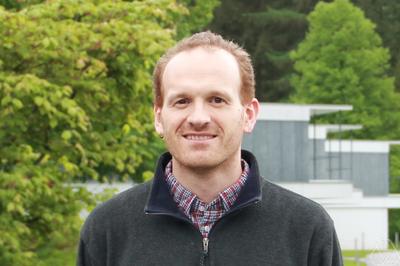
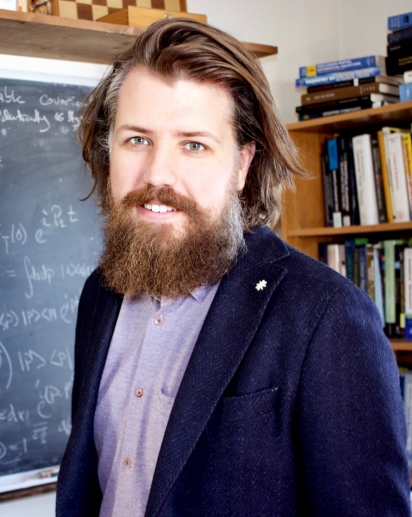
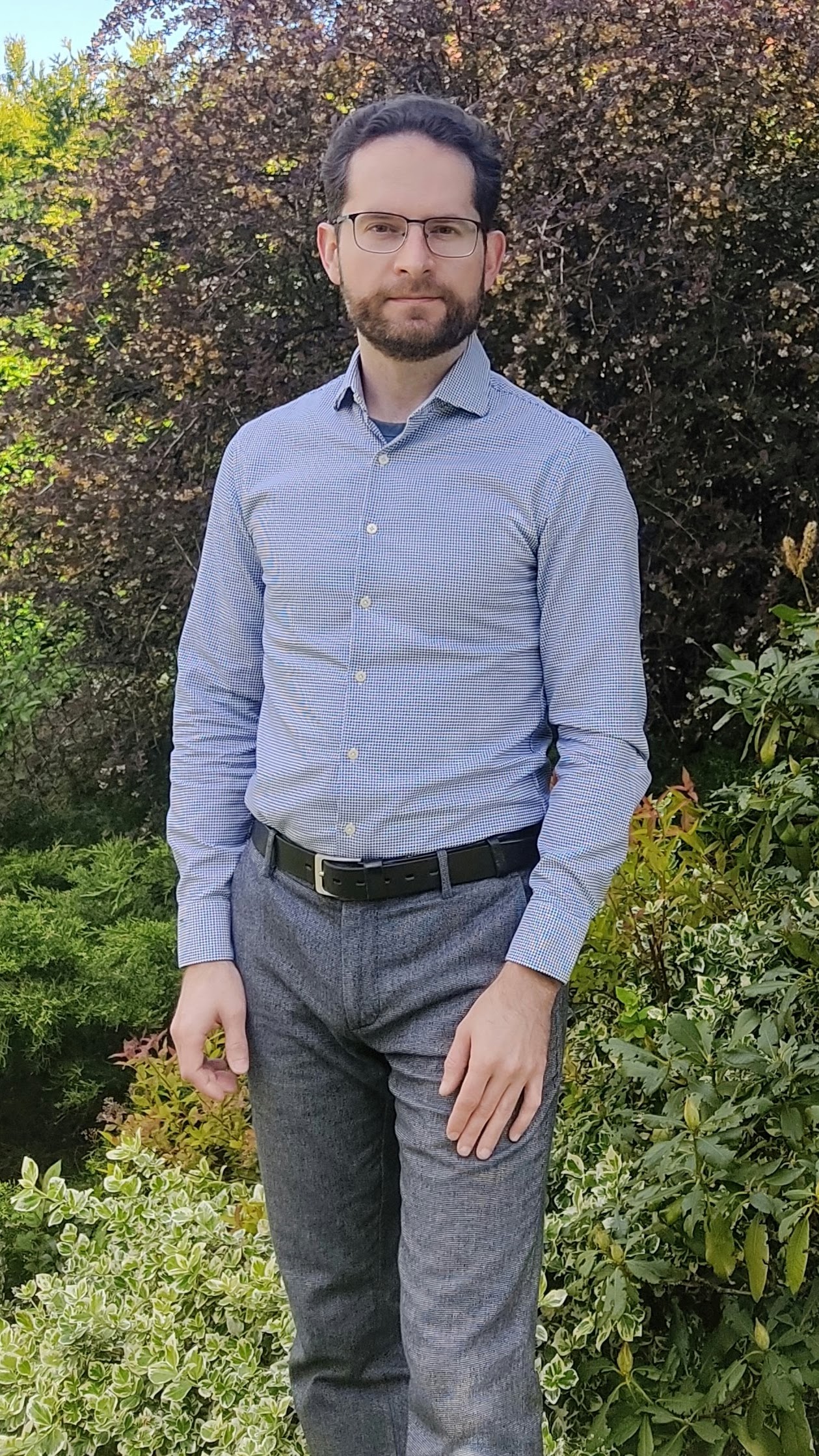
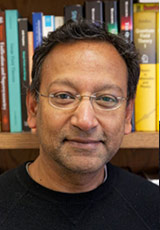
Hans Plesner Jakobsen is an Adjunct Professor at the University of Copenhagen , affiliated with the Department of Mathematical Sciences . His research spans quantum algebra, representation theory, and mathematical physics. Research Focus : Quantum groups, noncommutative geometry, Lie algebras/superalgebras, and their applications in theoretical physics. Recent Work : Explores quantized differential operators, canonical commutation relations, and SU(2,2) representations for fermion modeling. Contact : Email jakobsen@math.ku.dk | Phone +4535320689 | Address: University Park 5, 2100 Copenhagen Ø.
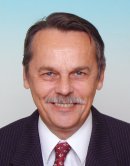
Dr. Bart van Steirteghem is a mathematics professor at Friedrich Alexander University Erlangen Nuremberg (FAU), where he teaches analysis courses and body theory workshops for state examinations. His academic profile reflects deep expertise in advanced mathematical research with particular emphasis on geometric structures and algebraic methods. His research focuses on: Algebraic geometry with specialization in spherical varieties Lie group actions and representation theory Symplectic geometry and Hamiltonian systems Classification problems in algebraic geometry Geometric invariant theory Van Steirteghem's publication trajectory reveals sustained scholarly contribution since 2006, with recent work exploring multiplicity-free actions and quasi-Hamiltonian spaces. His research bridges multiple mathematical subdisciplines, connecting abstract algebraic structures with geometric interpretations. The consistent appearance of his work in prestigious journals like Transformation Groups and Journal of Lie Theory demonstrates recognition within the mathematical community. His collaborative research network spans international institutions, with frequent co-authorship with European and North American mathematicians. Teaching responsibilities include both lecture courses and specialized workshops for state examinations, reflecting his dual commitment to research and education. His work continues to advance fundamental understanding of geometric structures in mathematics.
María-José Guzmán is an Associate Professor in theoretical physics at the Laboratory of Theoretical Physics, University of Tartu, Estonia, leading the Estonian Research Council Starting Grant PSG910 ("Theoretical frameworks for numerical modified gravity") from 2024–2028. Her work bridges geometric foundations of gravity and numerical relativity, focusing on modified theories like f(T) and f(Q) gravity. PhD in Physics (2013–2018), Instituto de Astronomía y Física del Espacio (IAFE), Universidad de Buenos Aires, Argentina MSc in Physics (2010–2013), Pontificia Universidad Católica de Chile BSc in Astronomy (2006–2010), Pontificia Universidad Católica de Chile Her research explores the interplay between curvature, torsion, and nonmetricity in gravity theories. By generalizing spacetime connections, she investigates Hamiltonian formulations, local Lorentz violation, and numerical relativity frameworks for modified gravity. Recent projects focus on metric-affine approaches for gravitational wave simulations and addressing theoretical tensions in cosmology via geometric extensions. María-José has contributed to the Hamiltonian analysis of teleparallel gravity, revealing extra degrees of freedom in f(T) models. Her work impacts cosmology, black hole physics, and high-energy theory, with applications to inflation and dark energy. Current research aims to resolve controversies in covariant teleparallelism and develop novel mathematical tools for gravitational wave interpretation. She supervises students on topics like non-Riemannian connections in teleparallel gravity and numerical simulations of scalar fields. Her grants include Mobilitas Pluss and FONDECYT postdoctoral awards, reflecting international collaboration in gravity research. Starting Grant PSG910 (2024–2028), Estonian Research Council Mobilitas Pluss Grant MOBJD622 (2021–2023) FONDECYT Postdoctoral Grant Nº3190531 (2019–2022) CONICET Postdoctoral Grant (2018–2020)
Alexander R. H. Smith is an Adjunct Assistant Professor at Dartmouth College and Assistant Professor of Physics at Saint Anselm College, specializing in information-theoretic approaches to quantum-gravity intersections. His work bridges foundational theory and experimental verification in relativistic quantum systems. His academic credentials include dual PhDs from the University of Waterloo (2017) and Macquarie University (2017), an MSc from the University of Toronto (2012), and a BSc (Hons) from the University of Waterloo (2011). PhD, University of Waterloo, Canada (2017) PhD, Macquarie University, Australia (2017) MSc, University of Toronto, Canada (2012) BSc (Hons), University of Waterloo, Canada (2011) Smith's research spans Quantum Information Science, Quantum Field Theory, General Relativity, Relational Quantum Mechanics, and Quantum Gravity. He investigates quantum time dilation phenomena, relational quantum dynamics, and operational probes of quantum fields in curved spacetime using Unruh-DeWitt detectors and interferometric methods. His publication trends reveal a cohesive focus on unifying quantum mechanics and relativity through quantum reference frames and the problem of time, with increasing emphasis on experimental testability via satellite technologies and atomic spectroscopy. No major scientific awards or fellowships are documented in available sources. Information regarding academic advising activities and research grants is not publicly specified in current materials. He actively participates in the "Detectors, Reference Frames, and Time" research group at Dartmouth, collaborating on foundational quantum mechanics in relativistic contexts through initiatives like the Quantizing Time conference series.
Hans-Georg Brachtendorf is a Professor at the Research Center Hagenberg Embedded Systems within the School of Informatics, Communications and Media at the University of Applied Sciences Upper Austria - Hagenberg Campus. His work focuses on advanced circuit simulation techniques, RF engineering, and digital signal processing with significant contributions to harmonic balance methods and nonlinear circuit analysis. His research interests span electronic circuit design, RF power amplifiers, digital signal processing, and nonlinear dynamics. Specializing in harmonic balance methods and oscillator circuits, he has developed innovative techniques for steady-state circuit simulation, nonlinear adaptive filtering, and multiplier-less digital filter design. His work bridges theoretical mathematics with practical electronic engineering applications, particularly in THz-wave detection and wireless communication systems. Analysis of his recent publications (2022-2025) reveals a strong focus on nonlinear dynamics identification using symbolic regression, optimization of digital filters through multiplier-less architectures, and governing equation reconstruction from measurement data. His work demonstrates consistent advancement in computational efficiency for circuit simulation while addressing modern challenges in RF and THz technologies. While no specific scientific awards are listed in the available data, his research has generated significant academic impact with 43 publications since 1994 and an h-index reflecting substantial citation influence. Professor Brachtendorf has supervised at least two academic works according to institutional records, though specific student names are not provided. His research activities include collaborations evidenced by joint publications with researchers such as Steiger, Dalpiaz, and Kronberger across multiple institutions. The Research Center Hagenberg Embedded Systems serves as his primary laboratory environment, focusing on digital transformation within ICT strength areas with particular emphasis on circuit simulation and signal processing applications.
Robert G. Leigh is a Professor of Physics at the University of Illinois, recognized as an APS Fellow (2006). His research focuses on quantum gravity, string theory, gauge theories, and entanglement entropy, with notable contributions to relational quantum geometry and constraint quantization. He explores foundational questions in quantum reference frames, holography, and the interplay between quantum field theory and spacetime geometry. Key research areas include the problem of time in quantum gravity, non-commutative spacetime structures, and renormalization group techniques applied to quantum systems. His work bridges mathematical physics (e.g., crossed product algebras) with physical applications in black hole physics and condensed matter systems. Recent studies investigate entanglement singularities, quantum null geometry, and the geometric underpinnings of gauge theories. Collaborations emphasize extended phase spaces and topological entanglement in Chern-Simons theories. Awards include the 2006 APS Fellowship for contributions to theoretical physics. His research portfolio spans over 130 peer-reviewed articles, with recent work appearing in Nuclear Physics B and Journal of High Energy Physics , addressing topics like modular spacetime, metastring theory, and holographic fluids. Leigh’s work often integrates advanced mathematical tools with high-energy physics challenges, maintaining a focus on unresolved questions in quantum gravity and gauge theory.
Professor Viqar Husain is affiliated with the University of New Brunswick, specializing in theoretical physics and quantum gravity. His work focuses on canonical quantization methods applied to general relativity, including studies of spacetime singularities, gravitational entropy, and loop quantum gravity formalisms. Education: Ph.D. 1989, Yale University (Advisor: Lee Smolin) Research explores foundational questions in quantum gravity using ADM and Ashtekar formulations, with particular attention to Gowdy cosmology models and Weyl curvature's role in entropy. His dissertation developed solutions to Hamiltonian constraints using loop-based methods and analyzed quantum gravitational effects on spacetime structure. No academic awards or grants are explicitly mentioned. No student advisees listed in available records.
ALEKSANDAR MIKOVIC is a Professor at the Faculty of Veterinary Medicine, Universidade de Lisboa, and affiliated with COPELABS (Cognitive and People-centric Computing). His research focuses on theoretical physics, particularly quantum gravity, general relativity, and related fields. Quantum gravity foundations Spin foam and state-sum models Cosmological constant problems Higher-dimensional gauge theories His recent work includes studies on piecewise-flat quantum gravity, BFCG theory, and connections to the Standard Model. He has published extensively on topics such as Hawking radiation, superstring theory, and topological field theory, with 54 research outputs over his career.
Pawel Duch serves as a Lecturer and Scientist at École Polytechnique Fédérale de Lausanne (EPFL) within the School of Basic Sciences, Department of Mathematics. He is affiliated with the Chair of Probability and Partial Differential Equations (PROPDE) and the SMA-Teaching unit, maintaining his office at MA B2 487. Previously, he held postdoctoral positions at Adam Mickiewicz University in Poznań and the Max Planck Institute for Mathematics in the Sciences in Leipzig. He earned his PhD in 2017 from Jagiellonian University in Kraków with research on massless fields and the adiabatic limit in quantum field theory. Dr. Duch's research centers on the intersection of probability theory, partial differential equations, and Euclidean quantum field theory. He specializes in singular stochastic partial differential equations and renormalization techniques, with significant contributions to the flow equation approach for constructing quantum field theory models. His work bridges mathematical rigor with theoretical physics challenges, particularly in stochastic quantization and model construction. Recent publications reveal a strong trend toward applying stochastic analysis to quantum field theory, exemplified by constructions of the fractional Φ^4_3 model and Gross-Neveu model using flow equations. His research consistently addresses renormalization challenges in singular SPDEs across subcritical regimes. Scientific Awards: None. Supported by the Simons Foundation, Dr. Duch actively contributes to the PROPDE research group under Martin Hairer. He teaches mathematics courses at EPFL and has organized academic events including the 47th LQP workshop on Foundations and Constructive Aspects of QFT. His mentoring extends through lecture courses and summer school instruction. He is integral to the PROPDE group's mission, advancing mathematical methods for stochastic PDEs and quantum field theory through collaborative research and workshop organization.
Mark Walton is a Professor in the Department of Physics and Astronomy at the University of Lethbridge, where he has been a faculty member since January 1991. His research focuses on theoretical and mathematical physics, particularly the quantum-classical relation and phase-space quantum mechanics. Education: B.Sc. (Honours) in Physics from Dalhousie University M.Sc. and Ph.D. (1987) in Theoretical High-Energy Physics from McGill University Mark Walton's research centers on the foundations of quantum mechanics, particularly the quantum-classical relation. He investigates how classical mechanics emerges from quantum theory using phase-space quantum mechanics. His work also includes conformal field theory, string theory, and applications of Lie algebras and groups to physical systems. His recent publications (2018-2022) focus on phase-space quantum mechanics and the quantum-classical relation. Key topics include dynamical brackets, canonical quantum-classical dynamics, and the role of star products. His work often involves collaboration with students and addresses foundational issues in quantum theory. Scientific Awards: NSERC Postdoctoral Fellowship Prof. Walton has advised students including M Amin and M P G Robbins. He has been an NSERC Grantholder since 1992. His current grants include: NSERC Discovery Grant (2022-2027): $24,000/year for Phase-Space Quantum Mechanics and the Quantum-Classical Relation NSERC Alliance - Alberta Innovates Advance Programs (2022-2024): $16,000/year for the same project
Viqar Husain is a Professor in the Department of Mathematics and Statistics at the University of New Brunswick. His research centers on quantum gravity, seeking a unified theory of gravitation and quantum mechanics. This involves re-examining classical notions of space and time, with applications to black holes and cosmology. He also explores mathematical finance and scientific computing. Research includes black hole-white hole transitions, semiclassical cosmology, quantum entanglement in cosmological bounces, and geometrodynamics. His publications frequently address singularity resolution and quantum gravity corrections to general relativity. Side interests involve Ising models in gravitational contexts and dark matter cosmology. No scientific awards, students, or grants are detailed in the source material.
Anwar Shiekh is an Instructor of Physics at Colorado Mesa University (CMU), located in Grand Junction, CO. He holds dual citizenship (American and British) and has a strong academic background with two BSc degrees (Physics and Mechanical Engineering) from Imperial College London (1980, 1983), followed by a PhD in Theoretical Physics from the same institution in 1987 under advisor Chris Isham. His research focuses on theoretical physics, including quantum gravity, black hole dynamics, quantum field theory, and the intersection of quantum mechanics with general relativity. He has contributed to textbooks such as College Physics (Serway & Vuille) and Principles of Physical Optics , providing critical feedback for improvements. Research Interests: His work addresses foundational challenges in theoretical physics, such as quantizing gravity, resolving paradoxes in black hole physics (e.g., event horizon evaporation), and exploring quantum computing error avoidance via the Zeno effect. He has also investigated impossibility proofs in physics, proposing solutions to issues like macroscopic wormhole limitations and gravitational radiation from accelerating charges. Publications Trends: Shiekh’s articles span decades, emphasizing quantum gravity corrections, operator regularization techniques, and black hole thermodynamics. Recent works include studies on magnetic monopoles and accelerating charges in gravitational fields, while earlier contributions focused on path integrals, canonical transformations, and zeta-function regularization. His 1990s research included pioneering efforts to quantize orthodox gravity and derive quantum field theory formalisms. Book Contributions: He actively collaborated on textbook revisions, notably College Physics (11th ed.) and Principles of Physical Optics (2nd ed.), where his insights addressed typographical errors and conceptual clarity. His expertise also extends to reviewing quantum gravitational corrections to Newtonian gravity and proposing experimental setups for quantum interference-based computing.
Christian Fleischhack is a Professor of Analysis at the Institute of Mathematics within the Faculty of Electrical Engineering, Computer Science and Mathematics at Paderborn University, Germany, a position he has held since October 2009. His research bridges mathematical rigor with theoretical physics, focusing on foundational aspects of quantum gravity and geometric structures. His educational background includes: Diploma in Physics (1998): Funktionalintegralzugang zu Eichtheorien und Gravitation im Rahmen des Ashtekarprogramms (Leipzig) Diploma in Mathematics (1999): Stratifizierung des verallgemeinerten Eichorbitraums im Ashtekarprogramm (Leipzig) PhD (2001): Mathematische und physikalische Aspekte verallgemeinerter Eichfeldtheorien im Ashtekarprogramm (Leipzig) Fleischhack's research centers on Functional Analysis (measures on topological spaces, operator algebras), Differential Geometry (stratifications, diffeomorphisms), and Mathematical Physics (quantum geometry, quantum gravity). His work explores quantization methods—particularly loop quantization versus symmetry reduction—with emphasis on mathematical consistency in quantum gravity frameworks. He investigates how algebraic structures and geometric constraints shape physical theories, often addressing foundational questions in gauge theories and cosmology. His publication record reveals a sustained focus on loop quantum gravity's mathematical underpinnings, evolving from early work on generalized connections (2003-2006) to cosmological applications (2016-2019). Key themes include representation theory of algebras in quantum geometry, spectral properties of operators, and the interplay between symmetry and quantization. Recent articles demonstrate increasing sophistication in handling non-unital algebras and cosmological models. His scientific recognition includes: Emmy Noether Fellowship from the Deutsche Forschungsgemeinschaft (funding an independent junior research group) Alumnus status in the prestigious Young Academy (Junge Akademie) Fleischhack actively shapes his field through academic service: serving on Paderborn's PhD Board (Promotionsausschuß) and Examination Board (Prüfungsausschuß), and securing DFG funding for his Emmy Noether group. He co-organizes the annual Tux Workshops on Quantum Gravity (since 2016) and LQP Workshops on local quantum physics, fostering international collaboration. His editorial contributions include co-editing the compendium Heureka – Evidenzkriterien in den Wissenschaften (2010) and reviewing for journals like Mathematische Semesterberichte . He leads a research environment centered around the Mathematical Physics group at Paderborn, with strong ties to the Max Planck Institute network. His workshop series in Tux, Austria, and northern Germany serve as critical hubs for the loop quantum gravity community, attracting leading researchers to advance theoretical frontiers.
Demeter Krupka is a Professor of Geometry and Topology at the Lepage Research Institute in Slovakia, serving as founding editor of Differential Geometry and Its Applications . His work bridges pure mathematics and theoretical physics through geometric frameworks for physical theories. His research focuses on calculus of variations on smooth manifolds , natural bundles and jets , differential invariants , and tensor algebra . Recent publications (2015–2025) reveal consistent exploration of principal bundle structures, Schwarzschild spacetime topology, Grassmann fibrations, and higher-order homogeneous functions, demonstrating deep integration of geometric methods in variational problems. Krupka’s scholarly impact includes editorial roles for Journal of Geometry and Physics and International Journal of Geometric Methods in Modern Physics , alongside Czech-language textbooks on quantum mechanics, general relativity, and differential invariants. He maintains active collaborations with the University of Prešov, Eötvös Loránd University, and the Italian Society for General Relativity and Gravitation.
Prof. Dr. Hugo Reinhardt is a faculty member at the University of Tübingen, affiliated with the Department of Physics in the Faculty of Science. He leads the Reinhardt group at the Institute for Theoretical Physics, focusing on Quantum Chromodynamics (QCD) and Yang-Mills theory in Coulomb gauge. University: University of Tübingen School: Faculty of Science Department: Department of Physics Academic Rank: Professor His group employs three main approaches to study QCD and Yang-Mills theory: the canonical formalism (via Hamiltonian analysis), lattice discretization (numerical simulations), and functional methods (Dyson-Schwinger equations). These frameworks are cross-validated to address theoretical challenges, with a special emphasis on analytical solutions in 1+1 dimensions as benchmarks for higher-dimensional techniques. The Reinhardt group includes postdocs such as Giuseppe Burgio, Davide Campagnari, and Markus Quandt, as well as PhD students like Ebadati, Heffner, and Safari. Alumni from the group, including Prof. Christian Fischer and Dr. Oliver Schröder, hold prominent positions in academia. Contact details: Email: hugo.reinhardt@uni-tuebingen.de Office: Raum D7A40, Gebäude D, Ebene 7