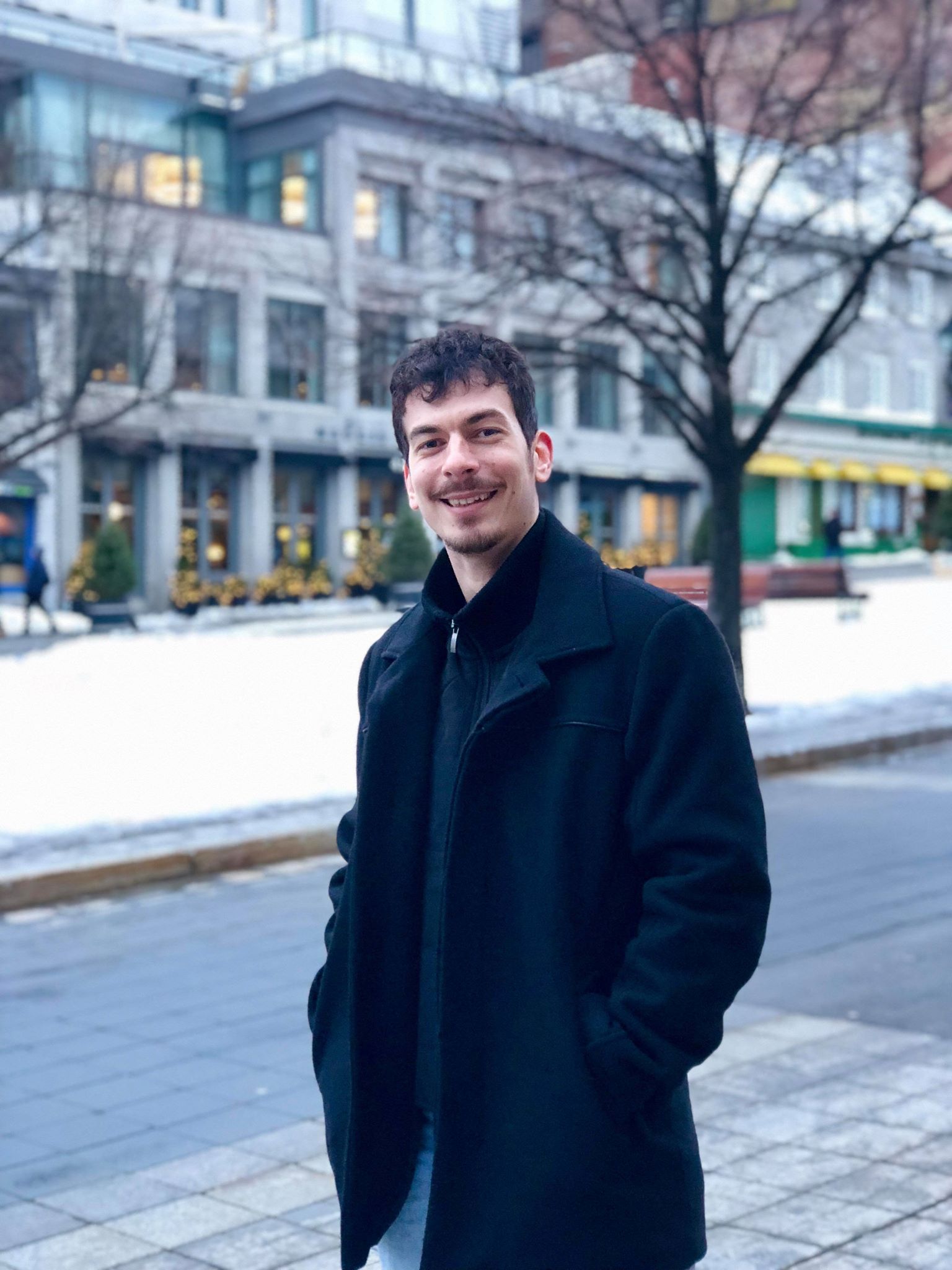
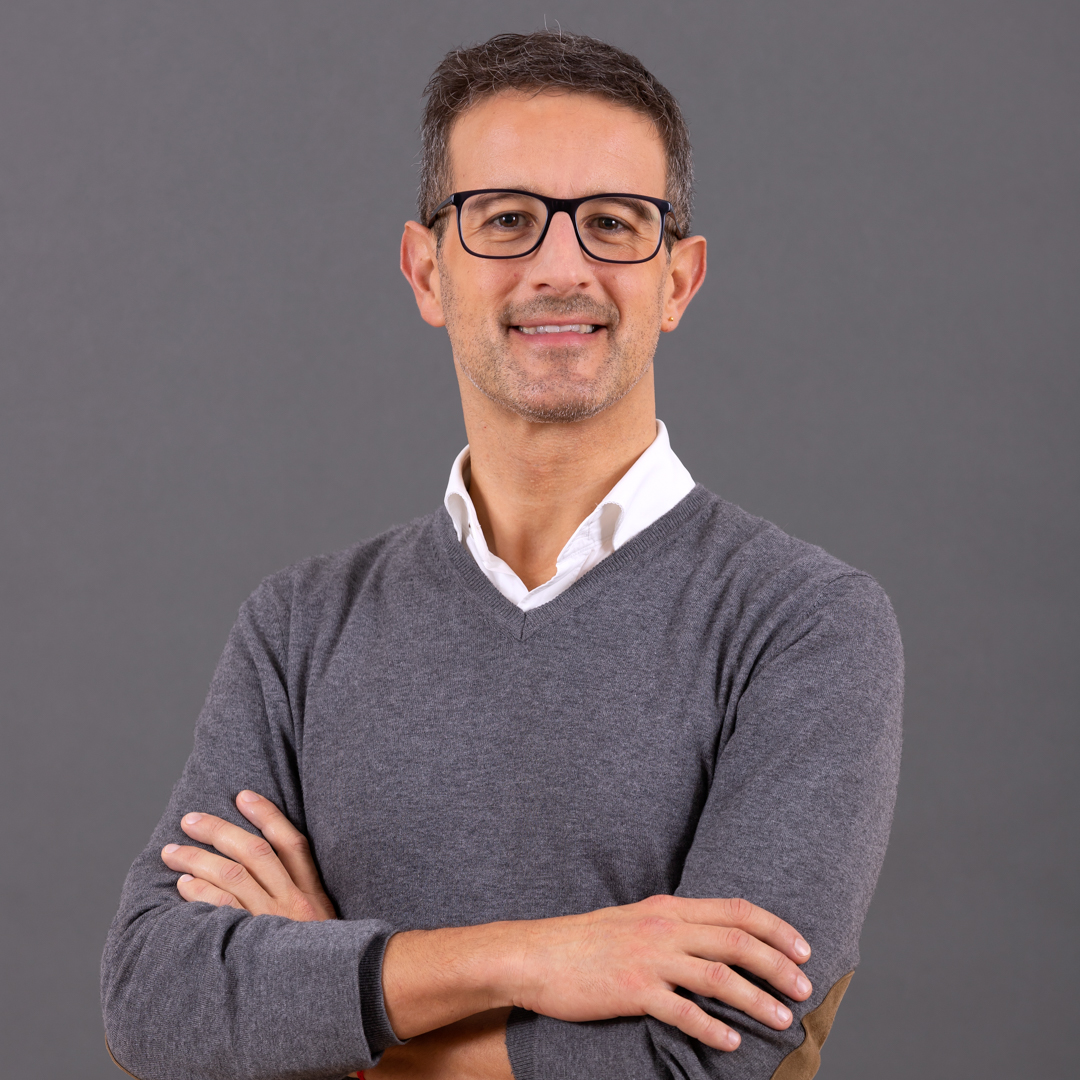
Alexandros Kontogiannis is a research fellow at the University of Cambridge, Department of Engineering, specializing in fluid dynamics and applied mathematics. His work combines Bayesian inference, machine learning, and physics-informed algorithms to solve inverse problems in magnetic resonance velocimetry (MRV) and fluid-structure interaction. EPSRC National Fellow in Fluid Dynamics Member of Energy, Fluids and Turbomachinery Division Research Focus: Development of digital twin frameworks that integrate MRV data with Navier-Stokes equations to reconstruct flowfields, infer rheological parameters in non-Newtonian fluids, and estimate hidden quantities like pressure and wall shear stress. Key innovations include: Physics-informed compressed sensing for sparse MRV data Simultaneous boundary shape and flowfield estimation Bayesian turbulence model parameter learning Scientific Awards: ASME Fluids Engineering Division Graduate Student Scholar (2021) Technical Chamber of Greece (TEE) Award (2018) Limmat Foundation Academic Excellence (2017) Mentzelopoulos Scholarship for international studies (2017) Greek State Scholarships Foundation Award (2012) Key Contributions: Algorithms for 3D flow reconstruction with adaptive discretization, viscous signed distance field regularization, and multi-objective aerodynamic shape optimization. His methodologies enable 27x reductions in MRI scanning time while maintaining diagnostic accuracy.
Tasso J. Kaper is a Professor and Chair of the Department of Mathematics and Statistics at Boston University. He holds a Ph.D. in Applied Mathematics from the California Institute of Technology (1992). His research focuses on dynamical systems, nonlinear dynamics, reaction-diffusion equations, and mathematical biology. He is a Fellow of both the American Mathematical Society (AMS) and the Society for Industrial and Applied Mathematics (SIAM). He serves as Editor-in-Chief of Nonlinearity (UK Institute of Physics) and has held editorial roles for journals such as the SIAM Journal on Applied Dynamical Systems and Advances in Differential Equations. His work bridges applied mathematics and interdisciplinary fields, including fluid mechanics, climate modeling, and neuronal dynamics. Recent research highlights include studies on bifurcation phenomena, symmetry-breaking rhythms in coupled oscillators, and delayed Hopf bifurcations in reaction-diffusion systems. He has advised over 15 Ph.D. students, many of whom now hold academic and industry positions. Key awards include the AMS and SIAM fellowships, recognizing his contributions to dynamical systems theory and applications. His lab collaborates on topics ranging from glacial cycle modeling to chimera states in oscillator networks.
Professor Georg Gottwald is a distinguished academic in the School of Mathematics and Statistics at the University of Sydney, where he has been a faculty member since 2002, progressing from Lecturer to his current position as Professor since 2013. He also holds a Visiting Professor position at the University of Surrey in the UK since 2013. His extensive research career spans dynamical systems theory, geophysical fluid dynamics, and the intersection of machine learning with complex systems. Professor Gottwald's research focuses on dynamical systems theory as an abstract formalism for studying systems evolving in time and space. His work has significant applications across diverse fields including climate modeling, biological systems, and complex networks. He is particularly known for developing methods for model reduction of complex dynamical systems, stochastic modeling approaches, and the application of machine learning techniques to dynamical systems. His research aligns with the Faculty of Science Research Strengths in Understanding the Universe, Fundamental Laws of Nature, Complex Systems, Climate and Environmental Change, Data and Decisions, and National Security. His most recent publications demonstrate a strong trajectory toward integrating machine learning with dynamical systems theory, particularly in developing stable generative models, learning dynamical systems with random feature maps, and combining data assimilation with machine learning for forecasting. His work spans pure mathematical theory to practical applications in climate science, finance, and biological systems, showing remarkable breadth while maintaining deep mathematical rigor. Future Fellowship, 'Stochastic methods in mathematical geophysical fluid dynamics', Australian Research Council, 2010-2014 Australian Research Fellowship, 'Stochastic methods in mathematical geophysical fluid dynamics', Australian Research Council, 2010-2015 (declined) Australian Research Fellowship, 'Geometric methods in geophysical fluid dynamics', Australian Research Council, 2004-2009 Professor Gottwald has successfully supervised numerous PhD and Master's students who have gone on to academic and industry positions worldwide. His current research group includes postdocs and PhD students working on machine learning for dynamical systems, stochastic model reduction, physics-informed machine intelligence, and tensor methods for scientific machine learning. He has secured multiple ARC Discovery Project grants and has been involved in significant international collaborative research projects. He is actively involved with the Sydney Dynamics Group, which he co-founded in 2007, fostering collaboration between the University of Sydney and UNSW. Professor Gottwald maintains strong editorial commitments as Associate Editor for Geophysical and Astrophysical Fluid Dynamics, SIAM Journal of Applied Dynamical Systems, and Journal of Computational Dynamics, and serves on the Editorial Advisory Board for Chaos and the Editorial Board for Physical Review E. His professional activities demonstrate leadership in the dynamical systems community through organizing workshops, seminars, and special journal issues.
Arjen Doelman is a Professor of Applied Analysis at the Mathematical Institute of Leiden University, where he has been employed since February 2009. He previously served as director of the Lorentz Center from November 2009 until September 2023, after which he returned to a full-time research and teaching position at the Mathematical Institute. His academic career includes professorships at the University of Amsterdam (1998-2009) and research positions at CWI (Center for Mathematics and Computer Science) where he headed the Modelling, Analysis and Simulation cluster (2007-2009). Doelman's research focuses on nonlinear dynamical systems, pattern formation, and singular perturbation theory, with applications spanning ecology, oceanography, geophysics, chemistry, and biology. His work has increasingly concentrated on understanding tipping points in ecosystems, culminating in the ERC Synergy project RESILIENCE in 2023. He employs mathematical analysis of reaction-diffusion systems to study how spatial patterns can prevent or trigger critical transitions in ecological systems. His recent publications demonstrate a consistent focus on pattern formation in ecological contexts, particularly examining how vegetation patterns influence ecosystem resilience to environmental change. The research spans theoretical mathematical analysis of reaction-diffusion equations while maintaining strong connections to real-world ecological phenomena, especially in dryland ecosystems. Doelman's work bridges fundamental mathematics with pressing environmental questions about climate change impacts on ecosystems. ERC Synergy Grant (RESILIENCE project, 2023) Editor-in-Chief of Physica D (2006-2012) Contributor to NWO Complexity Program Doelman has supervised over 30 PhD students throughout his career, including notable researchers such as Robbin Bastiaansen, Eric Siero, and Koen Siteur. His research has been supported by multiple grants, most significantly the €10 million ERC Synergy Grant awarded in 2022 for the RESILIENCE project investigating environmental tipping points. He collaborates extensively with ecologists, particularly Max Rietkerk at Utrecht University, bridging the gap between mathematical theory and ecological applications. Doelman is a key member of the Analysis and Dynamical Systems research group at Leiden University's Mathematical Institute and has been involved with the Nonlinear Dynamics of Natural Systems+ (NDNS+) research network. His work connects mathematical analysis with ecological modeling, creating a productive interdisciplinary environment that brings together mathematicians, ecologists, and environmental scientists to address fundamental questions about ecosystem resilience and pattern formation.
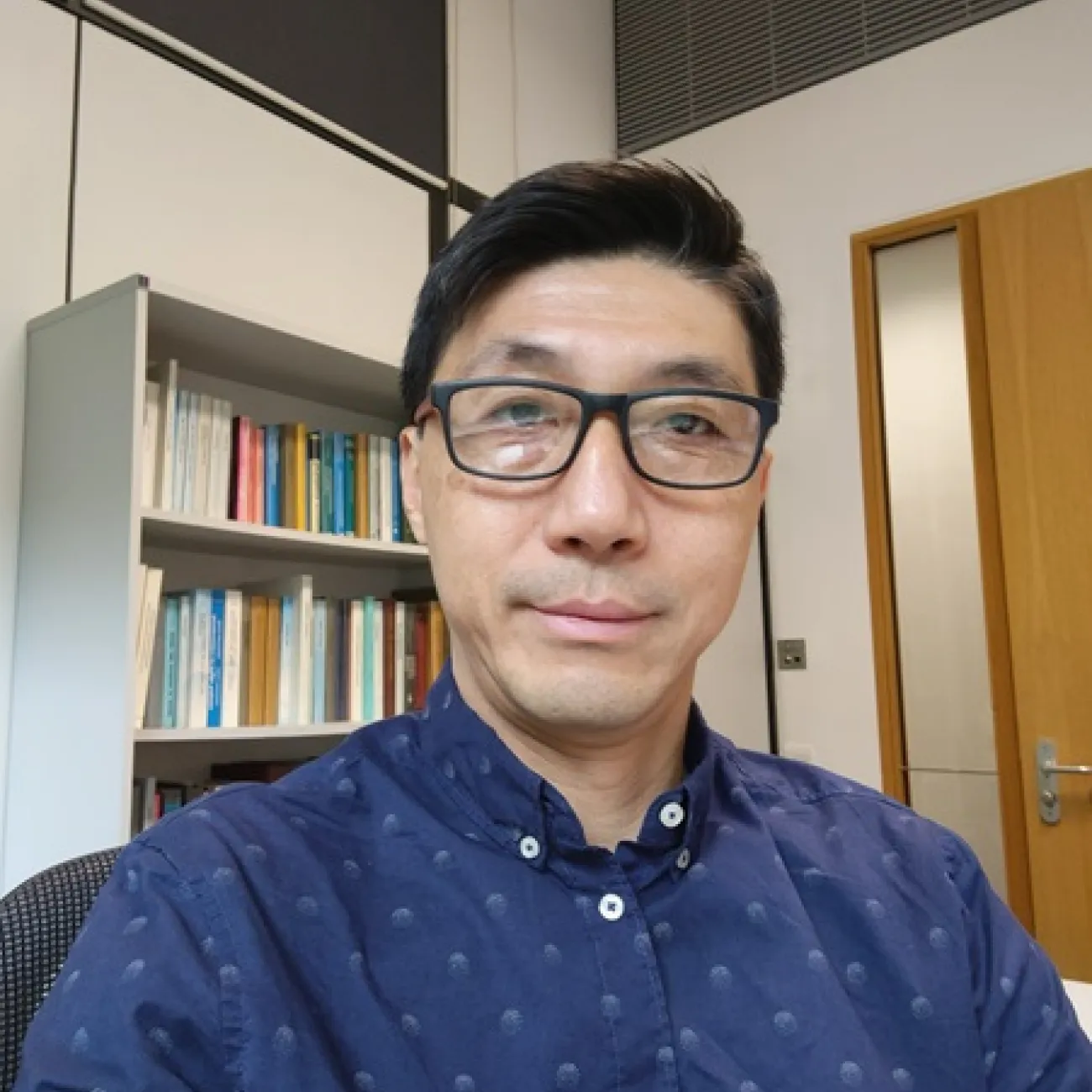
Theodore Vo is a Lecturer in the School of Mathematics at Monash University. He previously held an Assistant Professor position at Florida State University (2017–2019). His research focuses on geometric singular perturbation theory, canards, and slow-fast analysis applied to excitable cells and bursting oscillations. He earned a PhD in Applied Mathematics from the University of Sydney (2011–2014), specializing in mixed-mode dynamics in pituitary cells. Education: Doctor of Philosophy (Applied Mathematics), University of Sydney, 2014 Research Interests: His work explores canard-mediated phenomena in cardiac cells, bursting dynamics in biological systems, and bifurcation analysis in reaction-diffusion equations. Recent studies include delayed Hopf bifurcations, symmetry-breaking in coupled oscillators, and spatiotemporal canards. Article Trends: Vo’s recent work emphasizes multiscale systems, particularly in cardiac electrophysiology and coupled oscillator networks. Key themes include canard-induced early afterdepolarizations, delayed bifurcation effects, and chimera states in reaction-diffusion systems. Awards: SIAM Outstanding Paper Prize (2017) for collaborative work on bursting oscillations in pituitary cells. Advising/Grants: He accepts PhD students and has contributed to interdisciplinary projects at the interface of mathematics and cellular biology. No grants are explicitly listed, but his research is supported by institutional and collaborative funding.
Dr. Donald L. Kunz is a Professor in the Department of Aeronautics and Astronautics at the Air Force Institute of Technology (AFIT), part of the Graduate School of Engineering and Management. He holds a PhD in Aerospace Engineering from the Georgia Institute of Technology and has extensive experience in both academic and military aerospace research environments. BS, Aerospace Engineering, Syracuse University, 1971 MS, Aerospace Engineering, Georgia Institute of Technology, 1972 PhD, Aerospace Engineering, Georgia Institute of Technology, 1976 Dr. Kunz’s research is centered on rotorcraft dynamics, structural dynamics, vibrations, aeroelasticity, multibody systems, smart structures, and computational structural mechanics . His work integrates advanced modeling and simulation techniques to solve complex problems in helicopter and tiltrotor systems. He has made significant contributions to understanding nonlinear vibrations, rotor fault detection, and active vibration control using smart materials. His recent publications show a strong trend in developing and applying high-fidelity computational models for rotorcraft components, with particular focus on vibration mitigation, dynamic balancing, and nonlinear structural behavior . The integration of numerical methods with experimental validation underscores his commitment to practical engineering solutions. Dr. Kunz has received numerous honors, including: Distinguished Service Award, AIAA (2006, 1998) Leadership Award, AIAA (2004) Gold Circle Award, American Helicopter Society (1999) NASA Tech Brief Award (1990) Multiple entries in Who's Who publications He has advised numerous graduate students through thesis research and collaborative projects, though specific names are not listed. His work has been supported by U.S. Air Force, NASA, and Army research programs. Dr. Kunz is also a licensed Professional Engineer in Virginia and maintains active affiliations with AIAA (Associate Fellow and Lifetime Member) and the American Helicopter Society (Lifetime Member). His research has contributed to major programs such as the Apache Longbow, CH-53E, and tiltrotor development, often involving experimental testbeds and simulation frameworks like GRASP (General Rotorcraft Aeromechanical Stability Program).
Prof. Yuri B. Suris is a distinguished academic at the Institute of Mathematics, Technical University of Berlin, specializing in integrable systems, discrete differential geometry, and mathematical physics. His research focuses on geometric discretization methods, integrable lattices, and the interplay between continuous and discrete systems. He has contributed to foundational works on pluri-Lagrangian systems, discrete Painlevé equations, and the Hirota-Kimura discretization approach. Suris has authored seminal books such as The Problem of Integrable Discretization: Hamiltonian Approach and Discrete Differential Geometry: Integrable Structure . He actively participates in editorial roles for journals like Journal of Nonlinear Mathematical Physics and coordinates large-scale projects like Methods of Integrable Systems, Geometry, and Applied Mathematics (MISGAM). His teaching spans advanced courses on mathematical physics, analysis, and geometry, alongside mentoring the Berlin Mathematical School's student circles. Suris' work bridges pure mathematics with applications in dynamical systems and numerical analysis, emphasizing geometric and algebraic structures in discrete settings.
Prof. Dr. Rinie Akkermans is Professor of Aerodynamics and Flight Mechanics at Hamburg University of Applied Sciences (HAW Hamburg), affiliated with the Department of Automotive and Aeronautical Engineering. He holds leadership roles as Vice-Director of the Research and Technology Transfer Center 'Future Air Mobility' and serves on the university Senate. His academic background includes a PhD in Physics from TU Eindhoven and an MSc in Aerospace Engineering from TU Delft. Research expertise spans computational and experimental fluid dynamics with emphasis on: Aeroacoustics and noise reduction techniques Turbulent flow modeling using DNS/LES methods Aerodynamic optimization of wings, propellers, and high-lift systems Bio-inspired flow control and vortex dynamics He actively supervises PhD candidates from TU Braunschweig, Volkswagen AG, and Beihang University. Recent publications focus on advancing computational methods (Lattice Boltzmann, Overset-LES) and experimental validations in aeroacoustics, flow control, and propeller/wing optimization. Work frequently appears in leading aerospace journals including AIAA Journal and Aerospace Science and Technology . Professional service includes doctoral committee memberships and industry collaborations with Volkswagen AG on automotive aeroacoustics. No awards are documented in the provided text.
Antonio Algaba Duran is a Professor at the Higher Technical School of Engineering within the University of Seville , specializing in Applied Mathematics at the Center for Advanced Studies in Physics, Mathematics, and Computing . His research focuses on dynamical systems , nonlinear differential equations , and bifurcation theory , with significant contributions to the analysis of nilpotent singularities , homoclinic/heteroclinic orbits , and chaotic behavior in systems like the Lorenz , Chen , and Lü systems . Education : PhD from University of Seville (1996), thesis on Hypernormal forms and bifurcations in flat and three-dimensional systems , supervised by Emilio Freire Macías and Estanislao Gamero Gutiérrez. Research Highlights : 131+ publications since 1998, including 2 preprints Developed algorithms for normal forms and nonlinear time transformations to analyze canard explosions and homoclinic bifurcations Key work on Z2-symmetric systems , inverse integrating factors , and geometric criteria for centers Collaborators : Cristóbal García, Alejandro J. Rodríguez-Luis, Manuel Merino, Estanislao Gamero, and others. His scientific work spans applications in electronic circuits, biological systems, and physical models, with a focus on structural stability , analytic integrability , and global bifurcations .
Professor Jae Wook Kim is a leading expert in Aerodynamics & Aeroacoustics at the University of Southampton , affiliated with the Department of Aeronautics & Astronautics and the Rolls-Royce University Technology Centre for Propulsion Systems Noise within the Institute of Sound & Vibration Research (ISVR). He has developed the high-order DNS/LES solver CANARD for compressible flow simulations using supercomputers. Research Focus: Unsteady aerodynamics, aeroacoustics, and high-fidelity numerical simulations Projects: Funded by EPSRC, EU Horizon 2020, Rolls-Royce, Airbus, Vestas, and AWE His work explores noise mechanisms in undulated aerofoils, serrated trailing edges, and cavity flows, with applications in aviation and wind energy. He contributed to NASA's Computational Aeroacoustics Workshop series (1995–2004). Scientific Awards: Fellow of the Royal Aeronautical Society (FRAeS) Fellow of the Higher Education Academy (FHEA) Chartered Engineer (CEng) Professor Kim actively supervises PhD students and collaborates on projects involving acoustic resonance , turbulent flow , and noise reduction strategies .
Hildeberto Jardon Kojakhmetov is an Assistant Professor in the Dynamical Systems, Geometry & Mathematical Physics group at the Bernoulli Institute of the University of Groningen. His research focuses on dynamical systems with multiple time scales, singular perturbations, control theory, mathematical biology, neuroscience, and complex networks. He actively contributes to interdisciplinary applications, including epidemiological models on hypergraphs and slow-fast systems analysis. His work bridges theoretical mathematics with practical applications in biology, engineering, and network science. Key research areas include ergodicity in planar slow-fast systems, singular bifurcations in ecological models, and topological canard theory. Recent publications emphasize hypergraph-based systems, co-evolutionary control, and nonlinear diffusion dynamics on networks. He collaborates on projects involving multi-scale dynamics and control strategies for coupled systems. Professional activities include organizing events like the Summer School on Multiscale Modelling and the Floris Takens Seminar. His research leverages geometric singular perturbation theory and bifurcation analysis to address challenges in complex systems.
Katarzyna Szymańska-Dębowska is a full professor at the Department of Mathematical Modeling within the Faculty of Technical Physics and Applied Mathematics at Lodz University of Technology. She holds multiple leadership roles including Director of the Institute of Mathematics, Head of the Department of Mathematical Modeling, Deputy Chairman of the Mathematics Discipline Council, and Chairman of the Mathematical Methods in Data Analysis Faculty Council. Current academic rank: Professor Research focus: Nonlinear differential equations, nonlocal boundary conditions, and topological methods Notable collaborations: Jean Mawhin, Mirosława Zima, Bogdan Przeradzki Her work emphasizes existence theorems for boundary value problems, particularly those involving generalized p-Laplacian operators and resonance phenomena on bounded/unbounded domains. Publications span topological degree approaches, convex set theory, and time-scale analysis. Recent article trends show increasing specialization in nonlocal conditions, homeomorphism operators, and multidomain applications. She supervises PhD students Ewa Skrzypek and Igor Kossowski, co-edits special issues like the 2023 Mathematical Methods in the Applied Sciences celebrating Jean Mawhin's 80th birthday, and contributes to mathematical modeling in therapy dynamics.
Alexandre Rodrigues is a Senior Assistant Professor in the Department of Mathematics at the ISEG Lisbon School of Economics and Management, University of Lisbon. His research focuses on dynamical systems, bifurcation theory, and nonlinear dynamics, with applications to mathematical analysis and financial mathematics. He holds a PhD, Master's, and Bachelor's degree in Mathematics from the Faculty of Sciences at the University of Porto (Portugal). His work explores complex phenomena such as heteroclinic cycles, canards in fast-slow systems, and strange attractors. Recent studies include transitions in bifurcation diagrams under forced dynamics and pulse vaccination strategies in epidemiological models. Rodrigues has contributed to understanding chaos generation in nonlinear systems and stability analysis of dynamical networks. His publications span theoretical and applied mathematics, with a focus on bifurcation scenarios, periodic forcing effects, and the interplay between mathematical models and real-world systems like heart failure and disease transmission.
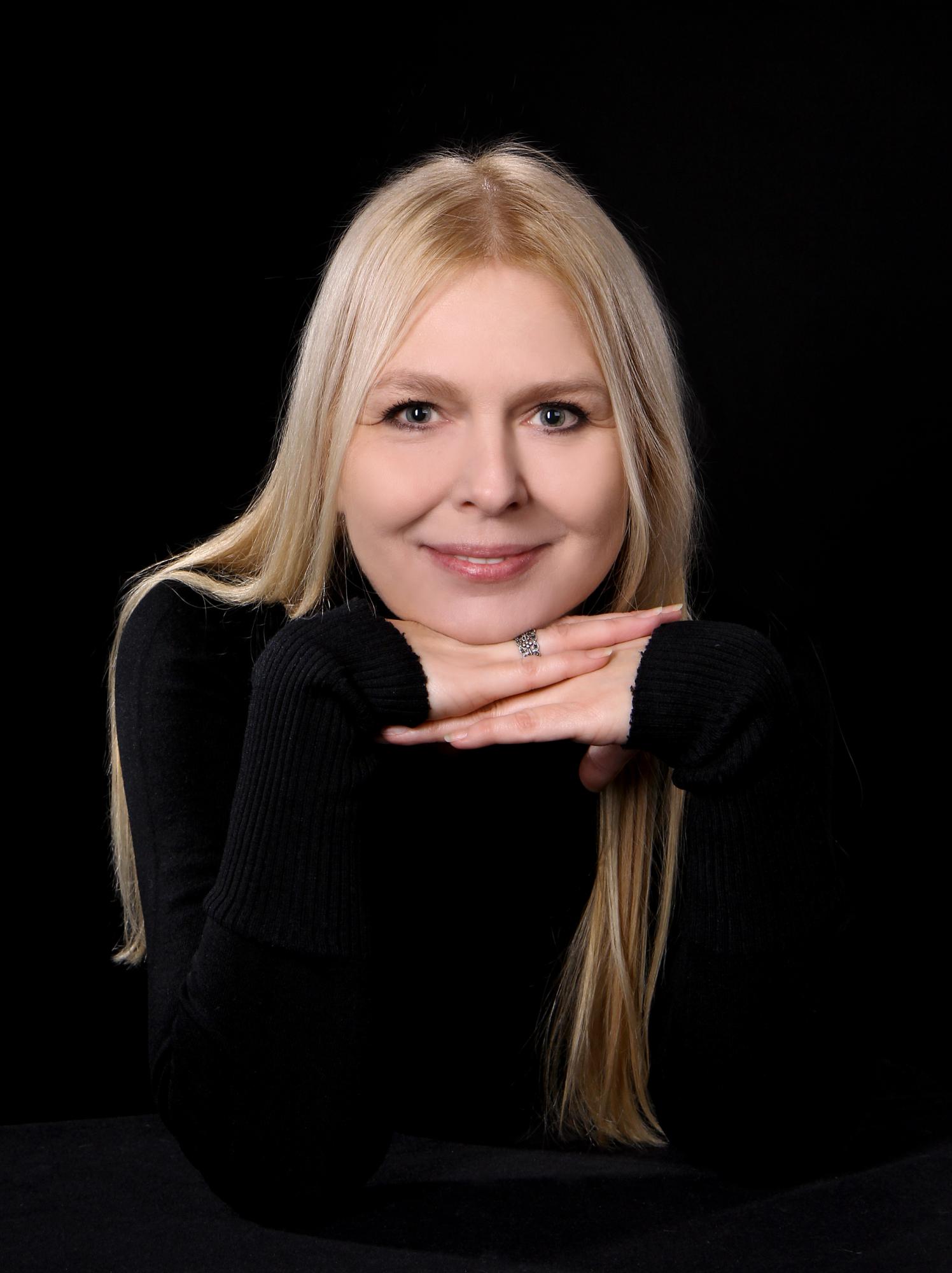
Pranali Roy Chowdhury is a Research Fellow at the University of Alberta's Department of Mathematical and Statistical Sciences, where she leads toxic-based ecosystem modelling research in the Interdisciplinary Lab for Mathematical Ecology and Epidemiology (ILMEE) under Prof. Hao Wang. Previously, she held a postdoctoral position at the Indian Institute of Technology (IIT) Bombay in the Department of Mathematics, contributing to the National Disease Modelling Consortium's work on Respiratory Syncytial Virus (RSV) burden estimation in India. She earned her PhD in Mathematics from IIT Kanpur in 2023. Pranali completed her PhD in Mathematics at the Indian Institute of Technology Kanpur (IITK), India, in 2023. Her doctoral research focused on canards, relaxation oscillations, and transient spatiotemporal patterns in ecological systems. Prior to this, she briefly held a postdoctoral position at IIT Bombay. Her research interests revolve around mathematical modelling in ecological and epidemiological contexts, with a focus on dynamical systems and pattern formation. She explores these topics through interdisciplinary approaches, particularly examining the impact of toxins on ecosystems, slow-fast systems in predator-prey interactions, and spatio-temporal dynamics in fragmented habitats. Her work integrates both theoretical analysis and applied mathematical techniques to address real-world challenges in environmental and public health domains. Her publications reflect a strong emphasis on slow-fast dynamical systems and their applications in ecology and epidemiology. Recent work includes examining methane's ecological impact, oxygen minimum zones in plankton dynamics, and bifurcation analysis in predator-prey models. She also investigates transient dynamics and pattern formation in spatio-temporal systems, highlighting the role of time scales in ecological stability and disease spread modeling. In terms of advising and grants, Pranali Roy Chowdhury is currently leading research projects within ILMEE and previously contributed to the National Disease Modelling Consortium. While she has not listed formal advisees, her work involves collaborations and supervision within these interdisciplinary research environments. Details about specific grants or funding are not explicitly provided in the text. She is affiliated with the Interdisciplinary Lab for Mathematical Ecology and Epidemiology (ILMEE) at the University of Alberta and was part of the National Disease Modelling Consortium during her time at IIT Bombay.
Richard Bertram is a Professor in the Department of Mathematics at Florida State University. His research focuses on mathematical neuroscience, mathematical physiology, and dynamical systems, applying mathematical models to investigate complex biological processes such as neural coding, hormonal regulation, and cellular oscillations. He is affiliated with the university’s Department of Mathematics and maintains a research website. His work bridges applied mathematics with experimental biology, particularly in studying pancreatic islets, pituitary cells, and avian neural networks. His research interests span three core areas: Mathematical Neuroscience: Analyzing neural coding strategies and network dynamics, including studies on birdsong and chemosensory systems in mice. Mathematical Physiology: Modeling metabolic and electrical oscillations in pancreatic β-cells and pituitary cells, with emphasis on mechanisms like glycolytic oscillations and hormone secretion. Dynamical Systems: Investigating bursting phenomena, canards, and multi-timescale oscillations in biological systems, using computational tools to explore nonlinear dynamics. Recent articles emphasize interdisciplinary approaches, such as linking pancreatic islet adaptations to hyperglycemia with mathematical models, and decoding sensory signals in active licking mice. His work frequently addresses how cellular networks coordinate rhythmic activity through feedback mechanisms and genetic mutations. Richard Bertram has not listed any scientific awards or honors in the provided information. His research narrative highlights contributions to understanding cellular and neural dynamics without explicit mention of grants or advisees, though his publications suggest collaborative projects. He explores systems like the olfactory bulb, gustatory cortex, and pituitary cell networks, emphasizing the symbiosis between electrical and metabolic processes in cells.