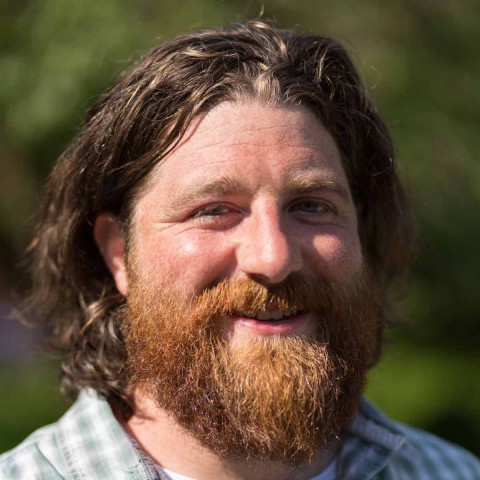
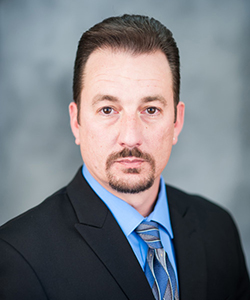
Narada Dilp Warakagoda is an Associate Professor at the University of Oslo, affiliated with the Section for Autonomous Systems and Sensor Technologies. His research focuses on Artificial Intelligence, Autonomous Systems, Computer Vision, Robotics, Machine Learning, and Deep Learning, with notable contributions to underwater acoustics, renewable energy forecasting, and unmanned vehicle control systems. He collaborates extensively with researchers across disciplines to advance applications in environmental monitoring, energy systems, and autonomous technologies. His work integrates advanced machine learning techniques with domain-specific challenges, such as synthetic aperture sonar analysis, spatio-temporal wind forecasting, and reinforcement learning for autonomous navigation. He has published in leading journals and conferences, addressing topics like probabilistic solar irradiance prediction, graph-based wind energy modeling, and deep learning for seabed munitions detection. Warakagoda’s research bridges theoretical advancements with practical implementations, emphasizing applications in robotics, environmental science, and defense technologies. His projects often involve interdisciplinary teams, reflecting his commitment to solving real-world problems through innovative AI-driven solutions.
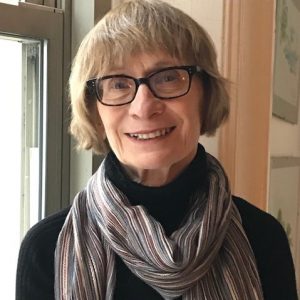
Ye Tao is a Visiting Professor at Queen Mary University of London's School of Electronic Engineering and Computer Science. Her research focuses on computer vision, machine learning, and deep learning techniques applied to video analysis and surveillance systems. Key areas include foreground segmentation, background modeling, and neural network architectures for multi-scene adaptation and real-time processing. Her work demonstrates expertise in developing algorithms for PTZ cameras and generative models like UNet. While no awards or grants are explicitly listed, her publications highlight contributions to advancing video analysis through fusion networks and comparative studies. She is affiliated with the School's research initiatives in electronic engineering and computer science.
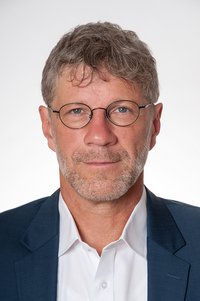
Hassan Al Razi is a Bangladeshi zoologist and biodiversity conservationist currently pursuing his Doctor of Philosophy at the School of Human Sciences, University of Western Australia. His research focuses on primate behavioral ecology, with particular emphasis on endangered species in Bangladesh including Bengal slow lorises, hoolock gibbons, and Phayre's langurs. Affiliated with the university's research programs, he contributes to multiple international conservation initiatives addressing primate conservation challenges. His educational background includes a Master of Science in Wildlife and Biodiversity Conservation (2017) and a Bachelor of Science in Zoology (2016), both from Jagannath University in Bangladesh. His thesis work examined Population Status, Habitat Preference and Threats of Phayre's Leaf Monkey in Satchari National Park. Al Razi's research interests span primate behavioral ecology, primate morphology and evolution, conservation biology, and biodiversity management. His work particularly emphasizes loris and chimpanzee conservation, with field studies conducted in Bangladesh's tropical forests. His fingerprint analysis reveals significant contributions to National Parks management, Lorisidae conservation, Anura studies, New Species discovery, Hylobatidae research, Nycticebus conservation, Sciuridae studies, and Tropical Forest ecology. Analysis of his 15 most recent publications (2021-2025) reveals a strong focus on primate conservation challenges in Bangladesh, with particular attention to road infrastructure impacts, wildlife trafficking, habitat fragmentation, and community-based conservation strategies. His work spans multiple primate species including hoolock gibbons, slow lorises, and langurs, with increasing emphasis on digital monitoring of wildlife trade and climate change adaptation strategies. His scientific recognition includes the award for Population Status, Threats, and Conservation of Bengal Slow Loris (Nycticebus bengalensis) in Northeast Bangladesh (2017), which received significant media attention with coverage from 9 news outlets, mentions by 3 X users, and 5 readers on Mendeley. Al Razi actively collaborates with international researchers across multiple countries, contributing to global conservation initiatives including the Global Primate Roadkill Database. His work aligns with UN Sustainable Development Goals related to biodiversity conservation and environmental protection. While specific lab affiliations aren't detailed in the provided text, his research involves extensive fieldwork in Bangladesh's forest ecosystems and collaboration with international conservation networks.
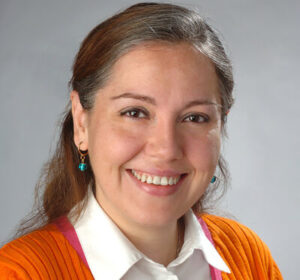
Jennifer Eberhardt is a Professor of Psychology at Stanford University, holding additional roles as Morris M. Doyle Centennial Professor of Public Policy and William R. Kimball Professor at the Graduate School of Business. She investigates the intersection of race and crime, focusing on implicit bias in criminal justice and societal systems. Her work bridges social psychology with interdisciplinary collaborations, addressing racial disparities in policing, sentencing, and everyday interactions. Education: Ph.D., Harvard University (1993) A.M., Harvard University (1990) B.A., University of Cincinnati (1987) Research Interests: Racial bias in criminal justice Implicit bias and policing Stereotyping and mental representation Impact of racial imagery on societal outcomes Awards: MacArthur Fellowship (2014) – Recognized for groundbreaking research on racial bias Inducted into the National Academy of Sciences (2017) Key Collaborations: Consulted with police departments on reducing racial profiling Worked with platforms like Airbnb and Nextdoor to combat bias Partnered with Oakland Police Department on body camera data analysis Public Engagement: Authored the book Biased: Uncovering the Hidden Prejudice That Shapes What We See, Think, and Do (2019) Featured in media including NPR, BBC, and TIME Magazine
Matt Geary is an Associate Professor in Conservation Biology/Animal Behaviour at the University of Chester's School of Natural Sciences . He serves as REF coordinator, research lead, and Faculty Postgraduate Tutor, chairing key committees for research and postgraduate education. Geary leads MRes Biological Sciences and MSc Wildlife Conservation programs while teaching conservation, ecology, and statistical/field methods. PhD in Conservation Ecology (Manchester Metropolitan University) MRes in Ecology and Environmental Science (University of York) BSc in Biology (Newcastle University) PGCert in Higher Education (University of Chester) His research specializes in conservation of threatened species (birds, mammals, amphibians) through statistical/ecological modeling and survey optimization . He focuses on endangered species in the UK and globally, with particular emphasis on birds and using camera traps and genetic analysis to inform conservation strategies. Geary's work spans population viability analysis , habitat association studies , and non-invasive sampling techniques . He has developed camera trap protocols for species like wolves and pangolins while investigating genetic diversity in island endemics. His funded projects include studies on Grenada Dove and Capercaillie conservation. He teaches conservation technologies , field research techniques , and population biology modules. Geary has designed multiple programs including BSc Zoology and MRes Research Methods , integrating work-based learning and employability skills into curricula.
Zeynep Çelik is a Visiting Professor at Columbia University. She holds a PhD from the University of California, Berkeley; an M.Arch from Rice University; and a B.Arch from Istanbul Technical University. Her research focuses on colonial and Ottoman architectural history, postcolonial theory, and the intersections of photography, urbanism, and empire. She has curated major exhibitions such as 'Palestine from Above' and 'Camera Ottomana,' exploring visual and spatial colonial legacies. Çelik has received prestigious awards including the Tamayouz Award (2019) and the Giorgio Levi Della Vida Award (2019). Her work critically examines how colonial and orientalist frameworks shaped architectural canons and urban spaces in regions like Algeria, Palestine, and the Ottoman Empire. Education: PhD, UC Berkeley; M.Arch, Rice; B.Arch, Istanbul Tech Exhibitions: Curated 6 major shows on colonial visual culture and Ottoman modernity Fellowships: Guggenheim (2004), ACLS (multiple years), NEH (2012) Her scholarship bridges architectural history with critical postcolonial theory, analyzing how built environments encode colonial ideologies. Recent work investigates late Ottoman spatial visions of Palestine and the afterlives of colonial monuments in North Africa.
Affiliations & Roles Prof. Dr. Stefan Alexander Schneider holds a professorship in Autonomous Driving and Driver Assistance Systems at the Faculty of Electrical Engineering of Kempten University of Applied Sciences. He also serves as Program Coordinator and Academic Advisor for the Master's program in Driver Assistance Systems. Additionally, he is a Visiting Professor at Shibaura Institute of Technology (Tokyo, Japan) . Education & Academic Background He completed his doctoral thesis "Adaptive Solution of Elliptic Partial Differential Equations by Hierarchical Tensor Product Finite Elements" in 2000, laying groundwork for his later research in computational methods. Research Focus His work centers on autonomous driving technologies , including: Simulation methodologies for vehicle systems Safety validation of driver assistance systems Human-machine interface design for elderly mobility solutions Standardization of testing frameworks (e.g., Open Simulation Interface) Key Contributions Recent projects include: ZuMoBe: Exploring autonomous electric vehicles in mountain valleys Development of Virtual Systems Prototyping frameworks for automotive innovation Cross-border collaboration via the VIVID German-Japanese initiative Teaching & Mentorship As a leader in one of the world's few Master's programs dedicated to ADAS/AV technologies, he mentors students in cutting-edge topics like monocular depth estimation, trajectory modeling, and interface design. His advisees have produced impactful works on autonomous scooter usability, localization algorithms, and motion planning validation.
Senem Velipasalar is a Professor in the Department of Electrical Engineering and Computer Science (EECS) at Syracuse University, affiliated with the Smart Vision Systems Laboratory and the Aging Studies Institute. She holds a Ph.D. and M.A. from Princeton University, an M.S. from Brown University, and a B.S. from Bogazici University. Her research focuses on machine learning, computer vision, and wireless smart camera systems, with applications in human activity classification, driver behavior analysis, and defense against adversarial attacks. Her honors include the NSF CAREER Award (2011), 2021 IEEE Technological Innovation Award, and multiple doctoral prizes for her advisees. She leads grants totaling over $4M, including ARPA-E projects on occupancy detection and DOE-funded research on aerial energy modeling. Research interests span embedded vision, distributed multi-camera tracking, and energy-efficient algorithms. Her lab develops technologies like wearable camera-based fall detection and autonomous UAV navigation. Notable publications include works on adversarial attacks, fNIRS brain activity analysis, and thermal pedestrian detection.
Don Platt is an Associate Professor in the Department of Aerospace, Physics and Space Sciences at Florida Institute of Technology, part of the College of Engineering and Science (COES). He also serves as Director of the Spaceport Education Center. His work focuses on developing advanced avionics, communications systems, rocket propulsion, and astrobiology/biotechnology tools for space exploration. Platt has extensive experience with NASA engineering standards (7150.2A/7120.5) and emphasizes human adaptation to deep space environments, small satellite systems, and interdisciplinary approaches to space challenges. His research spans human deep space exploration , microgravity biotechnology , and high-performance cubesats . Notable projects include the WEISS-SAT1 astrobiology payload and the Virtual Camera system for astronaut-rover collaboration. Platt advocates for integrating human-centered design into space medical infrastructure and risk mitigation systems. Publications (2002–2025) reflect expertise in propulsion systems, astrobiological instrumentation, and space mission design. He has contributed to pioneering work on tissue chip platforms for studying muscle degeneration in space and cooperative AI assistants for deep space missions. Platt's work bridges engineering, biology, and human factors to advance sustainable space exploration technologies. Grants and advising details are not explicitly stated in the provided materials, though his leadership in the Spaceport Education Center suggests active engagement in educational and applied research initiatives. Collaborative projects like UNESCOsat highlight his commitment to global space education and interdisciplinary innovation.
Alexis Mychajliw is an Assistant Professor of Biology and Environmental Studies at Middlebury College, where she joined in 2021. She holds affiliations with the National Geographic Society as an Explorer and the Natural History Museum of Los Angeles County as a Research Associate. Her research integrates conservation biology and paleontology to study historical and contemporary ecological shifts, particularly focusing on extinction dynamics, baseline shifts, and socio-ecological systems. She has conducted fieldwork across the Caribbean, California, and Japan, addressing topics like the North American fur trade legacy and grizzly bear ecology. Dr. Mychajliw holds a B.S. from Cornell University and a Ph.D. from Stanford University. Her postdoctoral work included roles at the University of Oklahoma and Hokkaido University. She teaches courses such as Mammalogy, Conservation Biology, and Jurassic World: Fossil Stories of Our Future, emphasizing hands-on, field-based research and community engagement. Her research priorities include tracing historical ecological baselines through archaeological and fossil records, curating Middlebury’s natural history collections, and promoting science communication through projects like the HEDGE Lab. Awards include a Japan Society for the Promotion of Science Fellowship and recognition as a National Geographic Explorer. Her lab’s current projects focus on the socio-ecological impacts of the fur trade, megafauna ecology, and leveraging historical data to inform conservation strategies. She collaborates with trappers, NGOs, and Indigenous communities to contextualize modern ecological challenges within deep-time perspectives.
Lonneke Goddijn-Murphy is a Researcher at the University of the Highlands and Islands, affiliated with the Environmental Research Institute. She holds a Doctor of Science (2006) from the National University of Ireland Galway and a Master of Physics (1990) from Leiden University. Her research focuses on remote sensing applications in marine environments, plastic pollution monitoring, air-sea gas flux dynamics, and seabird habitat analysis. Lonneke has contributed to over 37 peer-reviewed articles, with recent work emphasizing emerging technologies for detecting marine plastics and understanding their environmental impacts. She collaborates internationally on projects involving satellite remote sensing, UAV monitoring, and climate science. Her work aligns with UN Sustainable Development Goals related to clean water, climate action, and life below water. Research interests include: Remote sensing of marine debris Environmental impact of plastics on ecosystems Climate interactions via air-sea gas fluxes Acoustic tracking of migratory species Earth observation for seabird conservation Notable contributions include advancements in thermal infrared camera systems for plastic detection and interdisciplinary studies linking marine plastics to greenhouse gas dynamics. Her work has received media attention for innovative approaches to environmental challenges. Lonneke actively supervises PhD students and participates in collaborative projects addressing global environmental issues.
Karim Ahmadi Dastgerdi is a Lecturer at the School of Architecture, Technology and Engineering at the University of Brighton. His work spans aerospace engineering, marine engineering, and robotics, focusing on adaptive control systems and fault-tolerant design for unmanned vehicles. Research focus areas: Adaptive control strategies for dynamic environments Fault-tolerant systems in multi-rotor UAVs Obstacle avoidance for marine vehicles and autonomous crafts Geometric path planning under uncertainty Image-based navigation and velocity estimation Collision risk assessment in multi-vessel encounters Publication trends (2019–2024): His research output includes 15 recent works on adaptive velocity obstacle avoidance, fault-tolerant control, and geometric planning for quadcopters, marine vehicles, and Mars rovers. These publications reflect interdisciplinary work in control theory, computer science, and aerospace/marine engineering. Collaborative networks: Active collaborations with researchers like W. Naeem, N. Athanasopoulos, and B. Singh in control systems and autonomous navigation.
Gene Paoline, Ph.D., is a Professor and Chair in the Department of Criminal Justice at the University of Central Florida's College of Community Innovation and Education. His research focuses on police culture, use of force, criminal justice theory, and systemic observation methods. He has held significant academic leadership roles within the university's criminal justice program. Key research interests include police mentorship dynamics, gender disparities in policing environments, and the intersection of technology (e.g., body-worn cameras) with officer attitudes. His work often examines how institutional culture impacts decision-making, training outcomes, and occupational stressors. Recent articles highlight trends such as the impact of media scrutiny on policing behavior, racial/ethnic disparities in police academy completion rates, and the psychological effects of workplace environments on officers. These studies emphasize systemic challenges within law enforcement structures and potential solutions for cultural reform. Paoline has contributed to national-level analyses of police training curricula and jail staff perceptions of safety. His interdisciplinary approach bridges criminal justice theory with practical applications, addressing both academic and practitioner audiences through collaborative research initiatives.
JESÚS PABLO GONZÁLEZ VAZQUEZ is a contracted professor at the University of Santiago de Compostela, affiliated with the Higher Polytechnic School of Engineering's Department of Agroforestry Engineering. He is a member of the AMGeo research group (Algorithms and Geospatial Modelling) and previously contributed to the PROEPLA group (Projects and Planning). His doctorate (2002) focused on land consolidation processes using GIS, supervised by Dr. Rafael Crecente Maseda and Dr. Carlos José Álvarez López. Research interests include geospatial modelling, precision agriculture, remote sensing applications in viticulture, and water resource management. He employs advanced technologies like drones (UAVs), thermal imaging, and multispectral satellites for vineyard and hop cultivation monitoring. His work addresses irrigation efficiency, crop nutrition, and sustainable land-use planning, with a focus on Spain's Rias Baixas and Ribeiro wine regions. Key projects involve developing methodologies for hydrokinetic energy projects and GIS-based tools for land management. His publications span agricultural engineering, environmental science, and geomatics. He has contributed to academic texts such as Manual simplificado de autoCAD para enxeñerías and pioneered automation in land consolidation planning through tools like COPA. His research integrates technical innovation with agricultural sustainability, emphasizing data-driven solutions for crop optimization and environmental stewardship. While no specific awards are listed, his contributions to geospatial and agricultural engineering reflect significant academic impact.
Dr. Sooyeon Lee is an Assistant Professor in the Department of Informatics at the New Jersey Institute of Technology (NJIT). Her research focuses on accessible technologies for people with disabilities, particularly those with visual impairments and deaf or hard-of-hearing (DHH) needs. She designs innovative solutions in areas such as AI-driven navigation systems, multimodal interaction frameworks, and inclusive virtual reality experiences. Her work bridges human-centered design principles with cutting-edge AI and sensor technologies. Dr. Lee holds a Ph.D. and B.S. in Information Sciences and Technology from Pennsylvania State University, with a specialization in Human-Computer Interaction. Her academic contributions span over 30 peer-reviewed publications, including seminal work on NaviGPT, an AI-driven navigation system for visually impaired users, and BubbleCam, a privacy-focused remote assistance tool. Central to her research are collaborations with user communities, including participatory design studies with blind users, DHH viewers, and ASL learners. She explores topics such as non-speech audio captioning trends, spatial audio descriptions for VR performances, and text simplification for DHH adults. Her datasets, such as the ASL-Homework-RGBD dataset, have become benchmark resources for sign language technology research. Dr. Lee’s work addresses emerging challenges in human-AI collaboration for accessibility, ethical AI practices in assistive tech, and the intersection of privacy and remote assistance systems. She actively contributes to advancing accessibility standards in multimedia content, educational tools, and smart environments.

/naradadw/narada.png)