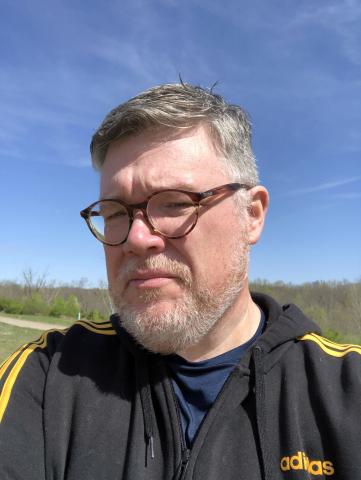
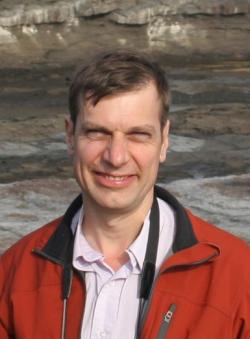
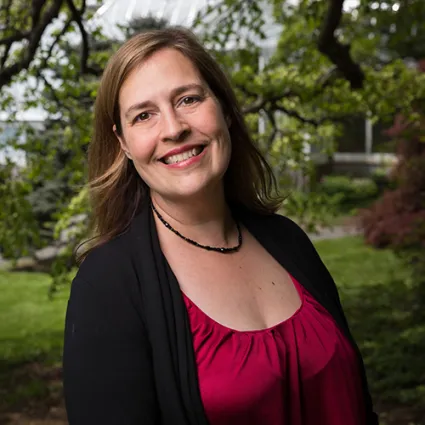
Dr. John Warren Huntley is an Associate Professor in the Department of Geological Sciences at the University of Missouri. His research examines the fossil record of biotic interactions including parasitism, predation, and competition, with additional focus on conservation paleobiology and morphological disparity evolution. Dr. Huntley investigates host-parasite dynamics in marine bivalves, human impacts on mollusk populations, and Phanerozoic predation patterns. His work integrates stratigraphic paleobiology with ecological and evolutionary analyses to reconstruct historical ecosystem dynamics. His recent publications demonstrate expertise in paleoparasitology, taphonomy, and conservation paleobiology, applying novel analytical methods to questions about parasite-host coevolution, preservation biases, and extinction events. This research provides critical insights into long-term ecological patterns and biological responses to environmental change. Dr. Huntley has received significant recognition including an NSF CAREER Award and Humboldt Research Fellowship, and he co-edited the comprehensive volumes 'The Evolution and Fossil Record of Parasitism'.
Alex Liu is a Researcher at the Department of Earth Sciences within the University of Cambridge. He specializes in palaeobiology , focusing on the origin and early evolution of animals, particularly the Ediacaran biota (~579–539 million years ago), and their co-evolution with Earth's environment. Research Focus: Refines understanding of animal body plan evolution, taphonomy, sedimentology, and macroevolutionary trends. Methodologies: Combines fieldwork, experimental studies, petrology, phylogenetics, and big-data analyses. Collaborations: Works with international museums and research teams on fossil sites in Namibia, Canada, and Brazil. Additional Interests: Explores meiofaunal evolution, paleogeography, paleoclimate, and conservation paleobiology. He supervises Cambridge NERC Doctoral Landscape Awards (DLA) projects and welcomes student contributions to taxonomic, paleoecological, and analytical studies.
Professor John Parnell is the Chair in Geology & Petroleum Geology at the University of Aberdeen , affiliated with the School of Geosciences and Department of Geology and Petroleum Geology . His research focuses on geochemistry, paleoenvironmental reconstruction, trace element cycling, and sedimentary systems , with significant contributions to studies of the Rhynie Chert, Bowland Shale, and Lewisian Complex. Research Interests Professor Parnell's work spans: Geochemical analysis of Paleoproterozoic and Neoproterozoic systems Trace metal mobility in sedimentary and metamorphic environments Organic carbon burial and its tectonic implications Planetary analog studies for Mars exploration Shale resource characterization and environmental impact assessment Recent Publications His recent articles highlight investigations into: Graphitization processes in Scottish Highlands marbles Sulphur isotope records in Precambrian successions Trace element dynamics in the Bowland Shale Biogeochemical cycling at the Precambrian-Cambrian boundary Labs & Collaborations He leads research in the Geofluids Group and collaborates with the Planetary Sciences Department on Mars analog studies.
Professor Jochen J. Brocks is a faculty member at the Research School of Earth Sciences (RSES) at the Australian National University (ANU). He holds a PhD in Organic Geochemistry from the University of Sydney (2002) and a Diplom Chemie (~MSc Chemistry) from the University of Freiburg, Germany. His research focuses on Paleobiogeochemistry, using molecular fossils (biomarkers) to study ancient ecosystems and evolutionary processes, including the origin of life and the emergence of complex organisms. He is particularly interested in the conditions that led to the appearance of multicellular life and the role of primary producers in mass extinctions, as well as the potential existence of a 'lost world' of complex life in Earth's early oceans. He previously served as a Junior Fellow of the Harvard Society of Fellows (2001–2004). His research group, Brocks Geobiology, explores topics such as the molecular signatures of early organisms, the geochemical record of ancient oceans, and the preservation mechanisms of organic matter in sedimentary deposits. Brocks collaborates on projects like the biogeochemistry of salt lakes and the analysis of Precambrian rocks to trace microbial diversity. Education: PhD (Organic Geochemistry, University of Sydney, 2002), MSc (Chemistry, University of Freiburg, Germany). His research interests span the intersection of organic geochemistry and paleontology, with a focus on applying biomarker analysis to understand Earth's history. Recent work includes studies on the environmental aftermath of Snowball Earth glaciations, the origins of Dickinsonia as an early animal, and the preservation of ancient biomolecules in extreme conditions like evaporites and concretions. Brocks has contributed to significant debates in the field, such as reinterpreting steroid biomarkers to challenge early animal evolution timelines and identifying novel preservation mechanisms for plant fossils. His work often integrates experimental geochemistry with field studies, particularly in northern Australia and Mauritania, to explore the co-evolution of life and Earth's systems. Awards: Junior Fellow of the Harvard Society of Fellows (2001–2004). He supervises multiple research projects, including those investigating the Velkerri Formation and the McArthur River deposit. Brocks also collaborates on initiatives like the Sedimentary Geochemistry and Paleoenvironments Project, which synthesizes global data to inform Earth history. His lab work emphasizes the development of analytical techniques to distinguish syngenetic biomarkers from contaminants in ancient samples.
Charles R. Marshall is the Philip Sandford Boone Chair in Paleontology and Professor in the Department of Integrative Biology at the University of California, Berkeley. He serves as Director of the University of California Museum of Paleontology (UCMP) and Chair of the Berkeley Natural History Museums (BNHMs). His research focuses on deep-time evolutionary biology, integrating fossil and genomic data to understand life's evolution, extinction dynamics, and morphological innovation. He holds a joint appointment in Earth and Planetary Sciences. Research Interests: Dr. Marshall explores processes shaping long-term evolution, including mass extinctions, biodiversity dynamics, and the origins of animal body plans. His work combines epistemological tools with interdisciplinary approaches, such as molecular phylogenetics and fluid dynamics analysis of fossilized structures. He emphasizes collaboration across institutions and disciplines, leveraging museum collections and computational models. Key Contributions: Notable projects include quantifying Tyrannosaurus rex population size, analyzing extinction pulses, and evaluating timetree methodologies. He co-authored influential studies on the Cambrian Explosion and the Red Queen hypothesis in mammalian extinctions. His work bridges paleobiology with conservation science to address modern ecological challenges. Awards: Recipient of the 2023 Paleontological Society Pojeta Award. His leadership roles include directing major initiatives like the Eastern Pacific Invertebrate Communities of the Cenozoic (EPICC) project, advancing global biodiversity documentation.
Sara Pruss is the Esther Cloudman Dunn Professor of Geosciences at Smith College, where she has established herself as a leading researcher in geobiology and paleontology. Her work focuses on critical transitions in Earth's history, particularly mass extinctions and the evolution of early life forms. She maintains an active research program that combines field work, laboratory analysis, and theoretical approaches to understand the complex interactions between life and Earth's environments through geological time. Education: Ph.D., University of Southern California M.S., University of Southern California B.S., University of Rochester Professor Pruss's research spans several interconnected areas within geobiology and paleontology. Her primary focus is on understanding mass extinction events, particularly the end-Permian extinction and Cambrian-Ordovician transitions. She investigates how these events affected marine ecosystems and the subsequent recovery patterns. Her work on Neoproterozoic carbonates and early animal evolution has provided important insights into the environmental conditions that facilitated the emergence of complex life. Professor Pruss also examines microbial sedimentary structures and their implications for interpreting ancient environments. Her research often combines detailed field observations with geochemical analyses to reconstruct paleoenvironments and understand the taphonomic processes that affect fossil preservation. Analysis of Professor Pruss's recent publications reveals a consistent focus on critical transitions in Earth's history. Her work spans the Ediacaran-Cambrian boundary, the Cambrian-Ordovician transition, and the Permian-Triassic extinction. A recurring theme is the relationship between environmental changes (particularly oxygenation and redox conditions) and biological evolution. Her research increasingly incorporates geochemical proxies like mercury chemostratigraphy to identify potential volcanic triggers for extinction events. The geographical scope of her work is global, with field sites in North America, Scotland, Namibia, and the Arctic. Scientific Awards: Outstanding Contributions to Geobiosciences by the Society for Geobiology and Geomicrobiology (2014) Sherrerd Prize for Distinguished Teaching by Smith College (2015) Professor Pruss has mentored numerous undergraduate students through her research lab at Smith College. Several of her former students, including Katie Castagno, Jana Burke, Kelsey Moore, Sophie Westacott, and Kiara Gomez, have gone on to earn PhDs from prestigious institutions like MIT, Yale, and Woods Hole. Her research has been consistently supported by major funding agencies including the National Science Foundation and the National Geographic Society. Beyond her research mentorship, Professor Pruss has been actively involved in programs aimed at supporting underrepresented women in STEM fields, demonstrating her commitment to inclusive excellence in science education. Professor Pruss leads an active research laboratory at Smith College that combines field, laboratory, and analytical approaches to geobiological research. Her lab has produced numerous publications with undergraduate co-authors, reflecting Smith's strong emphasis on undergraduate research. The lab's work often involves international collaborations with researchers from institutions around the world. Current research directions include investigating the relationship between oxygenation and early animal evolution, studying microbial influences on sedimentary structures, and examining the environmental triggers for major extinction events throughout Earth's history.
Alan Rooney is an Assistant Professor in the Department of Earth & Planetary Sciences at Yale University, affiliated with the Yale School of Arts and Sciences. He leads the Rooney Geochronology and Geochemistry Group, which is part of the Yale Metal Geochemistry Center. His research integrates radiogenic isotope geochemistry (e.g., Re-Os, Sr, Nd) with field-based methods like sedimentology and stratigraphy to investigate tectonic, climatic, and biologic transitions in Earth history. Current projects include refining Neoproterozoic chronology, studying Mid-Pleistocene ice sheet dynamics, and advancing EARTHTIME’s Re-Os geochronometer standards. His research interests are centered on three main areas: 1) Proterozoic tectonics and eukaryotic diversification, 2) ice sheet dynamics over the last 5 million years using multiple geochemical proxies, and 3) radiogenic isotopes as tracers of crustal-mantle processes. He collaborates with researchers at Dartmouth College, Oxford University, and other institutions to address these topics. The Rooney Lab emphasizes experimental approaches, such as simulating seafloor weathering of mafic rocks, to better understand isotopic fluxes into the sedimentary record. His articles highlight a focus on geochronology and isotopic analysis to unravel climate-tectonic interactions, with recent work emphasizing the Great Oxidation Event, Ediacaran biogeochemical shifts, and Mid-Pleistocene glacial variability. These studies often combine field observations with laboratory experiments to deconvolve complex Earth system processes. Dr. Rooney has no listed scientific awards. He advises three graduate students: Gryphen Goss, Sam Shipman, and Carey Ciaburri. The lab’s NSF-funded involvement in EARTHTIME underscores its commitment to advancing geochronological standards. The Rooney Geochronology Lab operates within ultra-clean facilities equipped with advanced mass spectrometers (e.g., Thermo Fisher Neptune-Plus MC-ICP-MS, Triton-Plus TIMS), adjacent to the Microprobe Facility’s electron microprobe resources, enabling precise geochemical and petrological analyses.
Professor Gary Hampson is a Professor of Sedimentary Geology at the Department of Earth Science & Engineering, Faculty of Engineering, Imperial College London. His roles include Director of Undergraduate Studies (2023–present) and former Director of the Petroleum Geoscience MSc course. He holds affiliations with the Energy Futures Lab, Grantham Institute, and NORMS research groups. Hampson's research focuses on depositional systems, stratigraphy, and subsurface reservoir characterization, with applications to CO2 storage and fluid flow dynamics. Education: PhD in Sedimentology and Sequence Stratigraphy, University of Liverpool (1991–1995) BA in Natural Sciences (Geology), University of Cambridge (1988–1991) Research Interests: His work integrates sedimentology, stratigraphy, and reservoir modeling to understand subsurface fluid dynamics. Key areas include sediment dispersal patterns, stratigraphic architecture, and the impact of heterogeneity on reservoir performance. Recent studies emphasize CO2 storage potential in sedimentary systems and the application of advanced modeling techniques. Articles Trends: Recent publications highlight CO2 storage mechanisms, sedimentological heterogeneity in reservoirs, and the use of machine learning in geological analysis. His work bridges theoretical stratigraphy with applied reservoir engineering, particularly in carbonates and fluvio-deltaic systems. Awards: 2020 IAMG Best Paper Award 2016 AAPG Bennison Lecturer 2010 SEPM Excellence Awards Advising & Grants: Hampson has advised numerous students and led projects on reservoir characterization. His editorial roles include co-chief editor of the Journal of Sedimentary Research and guest editorships in Petroleum Geoscience. Labs/Teams: Active in the Energy Futures Lab and NORMS initiative, focusing on novel reservoir modeling and simulation for subsurface energy systems.
G. Evelyn Hutchinson Professor of Earth & Planetary Sciences at Yale University and Curator of the Yale Peabody Museum of Natural History. Research focuses on exceptional fossil preservation and its evolutionary significance. Investigates decay processes, mineralization mechanisms, and fossilization conditions through experimental approaches and field studies. Major discoveries include insights into Burgess Shale-type preservation and color reconstruction in fossils. Recipient of the Paleontological Society Medal. Current research explores molecular preservation in ancient tissues and biophotonic structures in fossil insects. Supervises large team of postdoctoral researchers and graduate students at Yale Paleobiology Group.
David Fletcher Wright is an Assistant Professor of Paleobiology in the School of Geosciences at the University of Oklahoma and Assistant Curator of Invertebrate Paleontology at the Sam Noble Museum of Natural History. He also holds research associate appointments at the National Museum of Natural History and the American Museum of Natural History. Wright combines specimen-based fossil data with statistical phylogenetics to study biological diversity through Earth's history, focusing on echinoderms and their evolutionary radiations. Ph.D., The Ohio State University (2016) M.S., Ohio University (2012) B.S., University of Kansas (2010) His research intersects macroevolution , phylogenetic comparative methods , and the evolutionary history of marine invertebrates , particularly crinoids (sea lilies, feather stars). He applies Bayesian techniques to fossil phylogeny reconstruction and investigates how ecological vs. geological changes drive diversification and mass extinctions. His work often leverages the ~500-million-year echinoderm fossil record as a natural experiment for testing evolutionary theories. Wright's 15 most recent publications span topics like crinoid systematics, Jurassic sea star origins, and the impact of seawater chemistry on echinoderm evolution. Common themes include phylogenetic uncertainty, character evolution modeling, and integrating fossil data with molecular phylogenies. Notable journals include Nature Communications Biology , Papers in Palaeontology , and Biological Reviews . 2025 Junior Faculty Fellowship, University of Oklahoma 2024 NSF grant ($1.17M) for Late Ordovician extinction research 2018–2020 Gerstner Scholar & Lerner-Gray Fellow, American Museum of Natural History 2017–2018 Peter Buck Postdoctoral Fellow, National Museum of Natural History 2016 Presidential Fellow, The Ohio State University Wright advises students in phylogenetic paleobiology, including Phifer, E.J. His lab collaborates globally on projects like the Anticosti Island biodiversity initiative and systematic revisions of Paleozoic echinoderms. He has authored or co-authored 35 peer-reviewed publications, describing 26 new species and 20 higher taxa, with over 878 citations and an h-index of 17.
Erik Sperling is an Associate Professor of Earth and Planetary Sciences at Stanford University, affiliated with the Stanford Doerr School of Sustainability. He is also a Senior Fellow at the Woods Institute for the Environment and holds a courtesy appointment as Associate Professor in the Department of Oceans. His research focuses on Earth’s environmental and biological evolution, particularly the interplay between atmospheric oxygen levels, marine redox conditions, and the emergence of complex life during the Neoproterozoic and Paleozoic eras. Research interests include paleoceanography, geochemical analysis of sedimentary records, early animal evolution, and the biogeochemical drivers of mass extinctions. He integrates fieldwork, laboratory geochemistry, and computational modeling to explore topics such as Ediacaran-Cambrian transitions, the role of oxygenation in metazoan diversification, and modern organismal responses to environmental stressors. His work spans geological time scales, from studying Precambrian shales and stromatolites to analyzing the physiological limits of marine organisms under deoxygenation scenarios. Recent studies emphasize the long-term oxygenation history of oceans, the ecological consequences of hypoxia-temperature interactions, and the application of novel geochemical proxies to reconstruct ancient environments. Laboratory activities include the Sperling Lab, which develops innovative methods for trace element analysis and integrates multi-proxy datasets to address questions in Earth’s history. Collaborations with institutions worldwide focus on global sedimentary geochemical databases and field projects in regions like the Yukon, Brazil, and Australia.
Steven J. Hageman is a Professor in the Department of Geological and Environmental Sciences at Appalachian State University, where he has been faculty since 1998. His academic background includes a B.S. and Ph.D. from the University of Illinois and a research associate position at the Field Museum of Natural History. He specializes in invertebrate paleontology and paleoecology with a focus on evolutionary patterns. Dr. Hageman's research explores microevolution, speciation dynamics, and the interplay between colonial growth habits and environments in bryozoans and other marine invertebrates. His work integrates phenotypic-genotypic relationships across geological timescales, with emphasis on Ordovician diversification events and paleoenvironmental reconstruction. His recent publications demonstrate interdisciplinary approaches bridging paleontology, geochemistry, and evolutionary biology. Articles frequently analyze fossil morphology using quantitative methods, investigate ecosystem responses to ancient environmental perturbations, and resolve taxonomic controversies through microstructural analysis. Recurring themes include Cambrian-Ordovician transitions, trace fossil interpretation, and environmental applications of geological materials. Honors and Awards: Board of Governors’ Appalachian State University College Teaching Award (2009) William Strickland Outstanding Junior Faculty Award (2000) Distinguished Lecturer, Paleontological Society (2000-2002) Fulbright Research Fellowships in Croatia (2006) and Poland (2018) Transfer Student Champion Award (2019) Fellow, Geological Society of America (2019) As the department's Transfer Student Mentor, Dr. Hageman supports academic transitions and curriculum development. He teaches courses including Historical Geology, Paleontology, and Geological Field Methods.
William Guenthner is an Associate Professor in the Department of Earth Science & Environmental Change at the University of Illinois at Urbana-Champaign (UIUC). He holds an adjunct appointment in the School of Earth, Society & Environment. His research focuses on low-temperature thermochronology and tectonics, using (U-Th)/He systems to reconstruct crustal thermal histories. He leads a state-of-the-art noble gas laboratory equipped with laser microfurnaces and mass spectrometers, and co-manages clean labs for mineral dissolution and laser ablation studies. Education Ph.D. in Geosciences, University of Arizona (2013) M.S. in Geosciences, University of Arizona (2009) B.A. in Geology, Carleton College (2007) Research Interests His work integrates field data with laboratory analyses to investigate mountain building, craton stability, and radiation damage effects in zircon thermochronology. Key projects include: Thermal evolution of the Grand Canyon Great Unconformity Denudation histories of Antarctic mountain ranges Gold mineralization in Nevada's Battle Mountain district Glacial loess provenance studies in midcontinental North America Awards & Recognition 2023 Helen Corley Petit Scholar (UIUC) 2020 Charles and Nancy Naesar Prize (International Thermochronology Committee) 2019 NSF CAREER Award Teaching & Outreach Teaches courses in Physical Geology, Structural Geology, and Geochronology. Actively collaborates with researchers worldwide through lab visits and data sharing. Runs an open-access thermochronology training program for early-career scientists. Laboratory Facilities (U-Th)/He lab with diode laser microfurnace and QMS Class 1000 clean lab for mineral dissolution Shared excimer laser ablation system and ICP-MS
Constanza Rodriguez Piceda is a researcher at the Deutsches GeoForschungsZentrum (GFZ) in Potsdam, Germany, affiliated with the Department of Basin Modelling. She holds a PhD in Geophysics from Universität Potsdam (2022) and is associated with University of Plymouth (email: constanza.rodriguez@plymouth.ac.uk ). Her research focuses on geodynamics, lithospheric modeling, subduction zone processes, and paleomagnetism. Education: PhD in Geophysics (Universität Potsdam, 2022) Research Areas: Southern Central Andes geodynamics, 3D gravity/rheological modeling, lithospheric strength analysis, mantle hydration, Cambrian paleogeography, and tectonic evolution. Publications: 15+ peer-reviewed articles on lithospheric-scale modeling, seismicity distribution, paleomagnetic constraints, and geodynamic simulations of subduction zones. Key collaborations include institutions like Universidad de Buenos Aires, Technical University of Munich, and GFZ.
Prof Graham Shields is a Professor of Geology at University College London's Department of Earth Sciences. His research focuses on Earth's evolution through geochemical and isotopic analysis, particularly in the Precambrian and Cambrian periods. He investigates how the planet's surface environment co-evolved with life, with a focus on ocean/atmosphere composition during critical junctures like the Sturtian Snowball Earth event and Ediacaran-Cambrian transitions. His work combines field studies in Australia, Spain, and China with analytical techniques such as Rb-Sr dating, multi-isotope analysis, and sedimentary proxy development. Research themes include ocean oxygenation, redox dynamics, and the interplay between glaciation, volcanism, and biological innovations. Applied projects explore geochemical solutions for environmental issues like soil erosion and sustainable resource extraction. He leads the Precambrian Research Group and contributes to initiatives like the Life and the Planet initiative. Publications span Neoproterozoic climate modeling, Ediacaran ocean chemistry, and the geological time scale subdivision. Courses taught include GEOL0008 (Geochemistry).