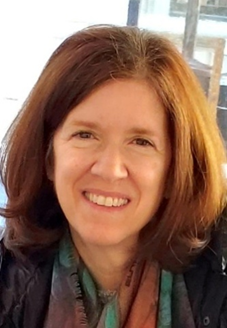
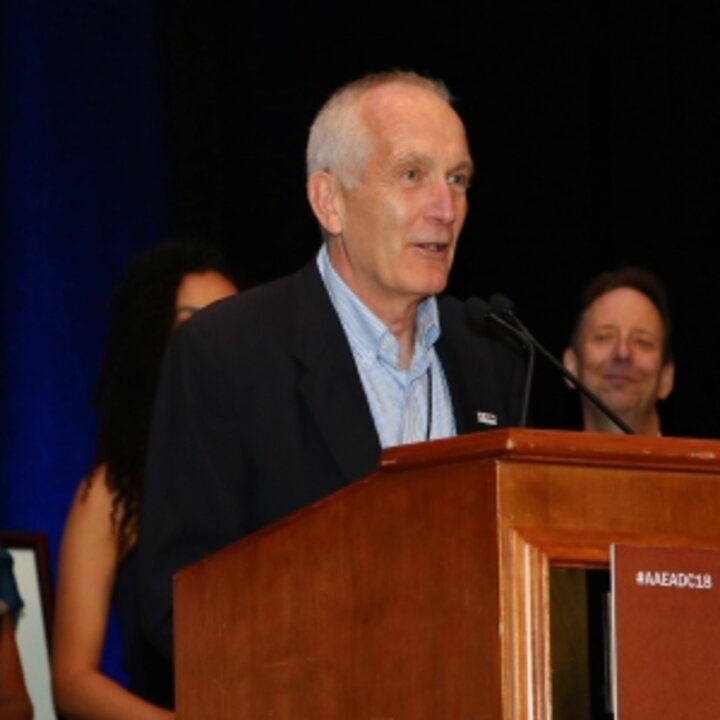
Professor Ruerd Ruben is an external academic expert in Development Economics with over 300 research outputs spanning food systems, smallholder livelihoods, and rural poverty alleviation. His work focuses on value chain transformation, nutrition, and sustainable agricultural practices in Africa, Latin America, and Asia. Research Pillars: Food systems optimization Smallholder economic empowerment Value chain governance Sustainable diets and nutrition Rural development strategies Ruben's recent publications examine midstream actors in informal economies (2025), market-based poverty reduction (2024), and fair trade limitations (2023). His editorial work includes contributions to Food Security journal, and he has supervised 19 PhD projects on topics ranging from Ethiopian potato chains to climate-resilient East African agribusinesses. Scientific Leadership: Contributed to 300+ academic works Received 7 Scopus citations for key publications Active in global food systems discourse
Dr. Bradley Schoenfeld is a Professor of Exercise Science at Lehman College, serving as Graduate Director of the Human Performance and Fitness program. He previously acted as Sports Nutritionist for the New Jersey Devils hockey team. His research focuses on the effects of exercise on body composition, particularly muscle hypertrophy and fat loss, along with related nutrition interventions. Schoenfeld has authored over 300 peer-reviewed papers and the influential textbook Science and Development of Muscle Hypertrophy . He has received notable awards including the 2016 Dwight D. Eisenhower Fitness Award and 2018 NSCA Young Investigator of the Year. His work examines muscular adaptations from exercise variables manipulation, body composition changes, and supplementation effects. Key research themes include resistance training protocols, load progression strategies, and the physiological mechanisms underlying muscle growth. Education: Doctoral degree in Exercise Science Key Affiliations: National Strength and Conditioning Association (NSCA Fellow) Publications consistently address practical applications of resistance training science, emphasizing evidence-based approaches to optimize muscle development. His studies frequently explore training variables like volume, frequency, intensity, and rest periods. Grants and collaborations have supported investigations into deload strategies, isometric training effects, and nutritional strategies for hypertrophy. Labs/Teams: Conducts research through Lehman College's Human Performance Lab Future Work: Continuing exploration of training variables optimization and nutritional ergogenic aids
Mary A. Carskadon is Professor of Psychiatry and Human Behavior at Brown University's Warren Alpert Medical School and Director of the EP Bradley Hospital COBRE Center for Sleep and Circadian Rhythms in Child and Adolescent Mental Health. Her distinguished career spans over five decades with foundational contributions to sleep science. Her educational background includes a BA in psychology from Gettysburg College (1969) and a doctorate with distinction in neuro- and biobehavioral sciences from Stanford University (1979), earned under William C. Dement. She is a distinguished alumna of Gettysburg College and holds an honorary doctor of sciences degree from that institution. Carskadon's research focuses on circadian timing systems and sleep/wake patterns in children, adolescents, and young adults. Her work on school start times has significantly influenced public health policy, prompting organizations like the American Academy of Pediatrics and CDC to advocate for later school schedules. She developed the multiple sleep latency test (MSLT) with Dr. Dement, which remains a global standard for assessing sleep disorders. Current research examines sleep-health disparities in urban children with asthma, sleep patterns in suicide risk populations, and the impact of sleep restriction on adolescent performance. Her extensive publication record shows consistent focus on adolescent sleep physiology, circadian rhythms, and public health implications. Recent work explores connections between sleep timing, mental health, and academic performance, particularly during the COVID-19 pandemic, while maintaining her foundational work on sleep measurement methodologies. Lifetime Achievement Award of the National Sleep Foundation Distinguished Scientist and Outstanding Educator Awards of the Sleep Research Society (the latter now presented in her name) 2023 Brown University Distinguished Research Achievement Award William C. Dement Academic Achievement Award (2023) V. Sagar Sethi, M.D., Mental Health Research Award Leadership in Sleep Medicine Award from American Academy of Physicians of Indian Origin-Sleep Elected Fellow of the Association for Psychological Science Elected Fellow of the American Association for the Advancement of Science Carskadon directs the NIH/NIGMS-funded Bradley Hospital COBRE Center, mentoring junior researchers in pediatric sleep and circadian rhythms. She serves as inaugural editor-in-chief of SLEEP Advances and has secured multiple NIH grants including R01 HL142058 examining ethnic differences in children's sleep patterns with asthma, P20 GM139743 for the COBRE center, and R01 HD103665 investigating sleep restriction effects using neuroimaging. Her work bridges laboratory research with real-world applications, particularly in school policy reform and health equity initiatives. She leads multiple research teams including the CLASS Study (Circadian Light in Adolescence, Sleep and School), projects on sleep disruption in urban children with asthma, and studies examining sleep's role in opioid use disorder treatment. Her laboratory continues to innovate in sleep measurement techniques while maintaining longitudinal studies on adolescent sleep patterns across developmental stages.
Dr. Kathryn Kaiser is an Assistant Professor in the Department of Health Behavior at the University of Alabama at Birmingham (UAB) School of Public Health. She holds concurrent appointments in multiple research centers including the Center for Clinical and Translational Science and the Nutrition Obesity Research Center (NORC). Her research focuses on meta-research methodologies, race/sex disparities in obesity, systematic reviews of nutrition interventions, and advancing FAIR data principles for scientific communication. Education: B.S. Microbiology (Texas A&M), B.S. Medical Technology (University of Texas Health Science Center), Ph.D. in Health Psychology (University of North Texas Health Science Center). Postdoctoral training in Vascular Biology/Hypertension at UAB. Extensive background in medical diagnostics instrumentation and laboratory science prior to academia. Research Interests: Systematic review methodologies, FAIR data standards, obesity disparities with a focus on neuroendocrine mechanisms, and translational research in bariatric surgery outcomes. Specializes in methodological rigor for clinical trials and evidence synthesis. Grants: NIH-funded projects on FAIR principles implementation, dairy intake research, obesity energetics, and lifespan studies. Recent grants include $2.1M for metadata education programs and $1.8M for knowledge mapping initiatives. Awards: Recognized as 2015 Top Reviewer for American Journal of Preventive Medicine. Serves as Associate Editor for Frontiers in Nutrition. Active member of Cochrane Collaboration and multiple professional societies. Teaching: Graduate courses in Health Program Evaluation, Psychophysiology, and Systematic Review Design. Supervises doctoral students in health behavior research through 30+ dissertation committees since 2011. Labs/Teams: Key contributor to UAB's Nutrition Obesity Research Center (NORC) and Center for Outcomes and Effectiveness Research (COERE). Collaborates with international metadata initiatives like Metadata 2020 and science dialogue mapping projects.
Anna H. Grummon is an Assistant Professor of Pediatrics (General Pediatrics) and Health Policy at Stanford University School of Medicine. She serves as Director of the Stanford Food Policy Lab , conducting interdisciplinary research at the intersection of nutrition science, public health, and environmental sustainability. PhD & MSPH in Health Behavior, UNC Gillings School (2019) BA with Honors in Human Biology, Stanford (2011) Postdoctoral Fellowship, Harvard T.H. Chan School of Public Health (2019) Her research focuses on evaluating policy interventions to improve dietary quality through: Experimental studies of food labeling (e.g., nutrient warnings, ecolabels) Beverage taxation and food assistance programs Environmentally sustainable diets using simulation modeling Health communication effectiveness across diverse populations Recent publications in Nature Food and JAMA Network Open demonstrate: 35% reduction in dietary carbon footprint through simple substitutions Graphic labels increase attention to nutrition warnings (Appetite 2024) Weight-neutral labels reduce stigma while maintaining effectiveness Major recognitions include: 2024 Clinical Science Research Award (Stanford Pediatrics) 2023 Jules Hirsch Research Innovation Award (The Obesity Society) 2020 UNC Dean’s Distinguished Dissertation Award Dr. Grummon's work has been funded by: National Institutes of Health Robert Wood Johnson Foundation New York City Department of Health and featured in New York Times , Washington Post , and NPR coverage.
Anisha I. Patel is a Professor at Stanford University School of Medicine, holding appointments in Pediatrics and Epidemiology and Population Health. She directs the Partnerships for Research in Child Health Lab and serves as Associate Dean of Research and Co-Director of the Office of Child Health Equity. Her work addresses health inequities through community-engaged research, focusing on chronic disease prevention in underserved populations. Undergraduate, Medical, and Public Health degrees from University of North Carolina, Chapel Hill (UNC-CH) Completed Clinical Scholars Program at UCLA and Health Policy Studies at UCSF Dr. Patel's research examines how community partnerships can improve child health outcomes through policy interventions related to school nutrition, drinking water access, and obesity prevention. She has led initiatives like Agua4All, which provided filtered water stations in schools, and evaluated universal free school meal policies. Her studies often involve randomized trials in schools and childcare centers. Recent publications analyze institutional barriers to community-engaged research, newborn temperature norms, and policy impacts of universal school meals. She has received national recognition for her work, including awards from the American Academy of Pediatrics and the National Heart Lung and Blood Institute. Outstanding Achievement Award, American Academy of Pediatrics (2025) Sidney S. Chipman Award, UNC-CH (2025) K24 Midcareer Investigator Award, NHLBI (2025) ELAM Program Fellow (2025) As a mentor, Dr. Patel supervises postdoctoral fellows and junior faculty in community-engaged research. Her projects have been funded by NIH, RWJF, and W.K. Kellogg Foundation. She also practices clinical pediatrics at Gardner Packard Children’s Health Center. Key collaborations include Stanford Maternal and Child Health Research Institute, Office of Community-Engaged Research, and partnerships with California and national school nutrition programs.
Anna Weinberg is an Associate Professor in the Department of Psychology at McGill University. Her research focuses on identifying biological pathways underlying disordered emotional experiences, particularly in mood and anxiety disorders. She employs neurophysiological methods like event-related potentials (ERPs) to study neural systems involved in processing errors, emotional stimuli, and rewards, linking these to behavioral outcomes. Key interests include distinguishing neural markers between anxiety and mood disorders, and determining whether these biological correlates represent vulnerability factors or symptoms. Her work has examined the impact of childhood maltreatment, social stress, and the intergenerational transmission of depression risk. She leads the TRAC Lab and collaborates on large-scale projects like the Adolescent Brain Cognitive Development (ABCD) Study. Education details are not explicitly listed in the provided text, but her academic career includes extensive postdoctoral and faculty roles in clinical and developmental neuroscience. Her research has been published in high-impact journals such as Biological Psychiatry , Clinical Psychological Science , and Psychophysiology . Research interests emphasize translational neurophysiology, with a focus on developmental trajectories of neural systems and their modulation by stress, trauma, and social environments. Recent studies investigate how neural responses to rewards and errors predict symptom progression during stressful events like the pandemic. No scientific awards are explicitly mentioned in the text. Her advising and grants involve collaborations on ERP methodologies, risk markers for depression, and adolescent neurodevelopment. She directs the TRAC Lab, which focuses on translational research in affective neuroscience.
Rui Chang is an Associate Professor at Yale University School of Medicine , jointly appointed in the Department of Neuroscience and Department of Cellular and Molecular Physiology . His research focuses on organ-to-brain circuits and neurocardiology with specific interest in Parkinson's disease . He completed his B.S. in Biological Sciences at Tsinghua University (2005) Ph.D. in Neuroscience at University of Southern California (2011) Postdoctoral training in the lab of Stephen Liberles at Harvard Medical School (2017) Research Highlights: The Chang lab employs single-cell gene expression profiling , virus-based anatomical mapping , and optogenetics to investigate vagal interoceptive systems and their roles in cardiovascular regulation and gut-brain axis dysfunction in neurodegenerative diseases. Their work has revealed a multidimensional coding architecture for visceral sensory signals. Notable Scientific Awards: McKnight Neurobiology of Brain Disorders Award (2021) NIH Director’s New Innovator Award (2019) Kavli Faculty Innovative Research Award (2019) NIH K01 Mentored Research Scientist Award (2017) Keystone Symposia Future of Science Scholarship (2016) Collaborative Network: Chang collaborates with experts in neurodegeneration (David A. Hafler, MD), biostatistics (Hongyu Zhao, PhD), and neural imaging (Le Zhang, PhD). His work intersects with the Stephen & Denise Adams Center for Parkinson’s Disease Research and Kavli Institute for Neuroscience .
Sue A. Shapses, Ph.D., RD, is a Professor in the Department of Nutritional Sciences at Rutgers University and holds a secondary Professor position in the Department of Medicine at Rutgers-RWJ Medical School . She directs the NEXT Metabolism Center (Human Nutrition, Exercise & Metabolism) at the New Jersey Institute of Food, Nutrition, and Health. Her academic journey includes a Ph.D. from Columbia University (1988), postdoctoral training at Albert Einstein College of Medicine and University of Sydney, and leadership roles in shaping national dietary guidelines for vitamin D and calcium via the Institute of Medicine. Dr. Shapses' research bridges endocrinology and nutritional sciences , focusing on the interplay between obesity , osteoporosis , and metabolic health . Key areas include circadian rhythm , inflammation , gastrointestinal absorption , and the impact of protein , MUFA , and vitamin D on bone metabolism during weight loss. Her work also explores how nutrients and behavioral interventions affect hormones , bone density , and cognition in older adults. Recent publications highlight her lab's exploration of vitamin D binding protein in postsurgical recovery, nutrient-gene interactions in bone health, and dietary lipids in metabolic disorders. Trends in her research emphasize translational studies linking clinical observations to mechanistic insights in animal models. Scientific honors include Fellowship in the American Society for Bone and Mineral Research . Her work is funded by the NIH , USDA , foundations, and pharmaceutical companies. She actively serves as an editor for clinical journals and mentors trainees at all academic levels.
Michael J. Larson is a Professor of Psychology in the College of Family, Home, and Social Sciences at Brigham Young University (BYU), where he directs the Clinical Cognitive Neuroscience and Neuropsychology (CCNN) Lab. His research integrates neuropsychology and cognitive neuroscience methodologies to investigate cognitive control mechanisms in healthy individuals and cognitive dysfunction following traumatic brain injury (TBI). He employs advanced techniques including event-related potentials (ERPs) and functional magnetic resonance imaging (fMRI) to examine neural correlates of cognitive processes. Dr. Larson's research program has four primary aims: (1) Investigating behavioral and neural reflections of cognitive control using ERP/fMRI; (2) Understanding lifespan developmental trajectories of cognitive control in neurologic insult or psychopathology (TBI, autism, depression); (3) Examining cognitive control's role in exercise and food-related behaviors including obesity; (4) Determining psychometric properties of biological measures for clinical application. His work spans traumatic brain injury recovery, exercise cognition, food inhibitory control, and psychopathology-neurocognition interactions. His publication trends reveal strong focus on methodological rigor in psychophysiology, with recent articles emphasizing ERP reliability across paradigms, preregistration practices, and multiverse analysis approaches. Key research domains include TBI rehabilitation (particularly via photobiomodulation and HRV biofeedback), sex differences in concussion mechanisms through the LIMBIC MATARS Consortium, and neural markers of food-related inhibitory control. Editor-in-Chief, International Journal of Psychophysiology (2016-Present) Top-Cited Scholar for Scientific Field (2019) Martin B. Hickman Innovation in Teaching Award (2018) University Young Scholar Award (2015) College Outstanding Young Alumnus, University of Florida (2014) Dr. Larson mentors students through the BYU Chapter of the Association of Neuropsychology Students and Trainees (ANST) and collaborates extensively with Dr. Tricia Merkely, Dr. Derin Cobia, and Dr. Shawn Gale on clinical neuropsychology training. His lab emphasizes rigorous methodology and psychometric validation, contributing significantly to standards in electrophysiological research through editorial leadership and methodological publications.
Jayson Lusk is the Vice President and Dean of Oklahoma State University's Division of Agricultural Sciences and Natural Resources. He holds the Regents Professor title in the Department of Agricultural Economics and leads the Ferguson College of Agriculture, OSU Extension, and OSU Ag Research. With over 290 peer-reviewed articles and six books, he specializes in food policy, consumer behavior, and agricultural economics. His research spans topics like GLP-1 agonists' impact on food consumption , precision livestock farming , and animal welfare policies . Research Interests : Lusk's work focuses on food policy trade-offs, emerging technologies (e.g., biotechnology, gene editing), consumer behavioral economics, and livestock marketing. He has pioneered methods like inferred valuation and calibrated choice experiments . Recent Publications analyze plant-based meat substitution , risk preference visualization , and extreme weather's economic impacts . His articles often integrate experimental economics and neuroeconomic techniques . Scientific Honors include fellowships from the Agricultural and Applied Economics Association (AAEA) and American Association for the Advancement of Science (AAAS) , alongside a past presidency in AAEA. Funding History features grants from the National Institute of Food and Agriculture (2015–2024) addressing topics like consumer trade-offs , fairness in supply chains , and gene-edited food valuation . His career bridges academic research with policy advisory roles and extensive media engagement.
Fabian-Xosé Fernandez serves as Associate Professor in the Department of Psychology within the College of Science at the University of Arizona, where he directs the Circadian Trends Laboratory. His research program bridges neuroscience, clinical psychology, and public health through investigations of circadian biology and sleep-wake patterns. His primary research interests focus on circadian fluctuations in real-world data , psychology of nighttime wakefulness , and suicide risk mechanisms . Key investigations explore how nocturnal wakefulness correlates with suicidal ideation, homicide risk, and metabolic dysregulation. His work employs National Violent Death Reporting System analyses Controlled circadian phase-shifting experiments Population-level sleep surveys Translational rodent models Recent publications reveal strong temporal patterns in behavioral health outcomes, with suicide risk peaking during circadian night across diverse populations. His lab develops chronotherapeutic interventions including spectral filtering devices and lighting protocols to optimize circadian alignment. Current work examines how blue-light modifiers affect phase-shifting responses and how sleep disruption mediates psychiatric outcomes in bipolar disorder. Fernandez teaches graduate and undergraduate courses including PSY 350 (Sleep/Wake, Time Cycles, & Life) and PSY 578 (Sleep & Sleep Disorders), with recent instruction through 2025. His academic service includes editorial review for journals like Clocks & Sleep and Neuropsychopharmacology.
Jørgen Jensen serves as Professor in the Department of Physical Performance at the Norwegian School of Sport Sciences, where he leads the Biochemical Laboratory and heads the biochemistry research group. His responsibilities encompass teaching, research supervision, and service on the Committee for Postgraduate Education. Dr. Jensen earned his PhD from the Norwegian School of Sport Sciences in 1993, followed by postdoctoral training at the University of Oslo. Prior to his current position, he conducted research at the National Institute of Occupational Health from 1997 to 2009, investigating skeletal muscle glucose uptake and glycogen metabolism mechanisms. His research centers on carbohydrate metabolism regulation during and after exercise, with particular emphasis on caffeine's ergogenic effects, protein supplementation impacts on endurance performance, and exercise-induced insulin sensitivity changes. This work bridges exercise physiology, biochemistry, and nutritional science to advance understanding of human performance and metabolic health. Analysis of his 15 most recent publications reveals strong focus on nutritional interventions (protein/carbohydrate supplementation, fasting), metabolic adaptation to exercise, and biochemical monitoring through nitrogen excretion and proteome analysis. His studies frequently employ human trials with endurance athletes and controlled metabolic testing. No scientific awards were documented in the provided materials. As an educator, Jensen holds academic responsibility for Metabolism (THP204) and Metabolic Regulation (MA408) courses, delivering lectures on metabolic processes. His supervision activities include mentoring graduate students within the biochemistry research group framework. The biochemistry research group operates the university's Biochemical Laboratory, conducting studies on exercise-induced metabolic responses, nutrient-exercise interactions, and molecular mechanisms underlying performance adaptations.
John Beghin is a Professor and Michael Yanney Chair in International Trade and Finance at the University of Nebraska-Lincoln’s Department of Agricultural Economics and Clayton Yeutter Institute. His expertise spans international agricultural trade, non-tariff barriers, trade-environment linkages, and global food security policy. Educational Background: MSc from NC State, PhD from UC Berkeley (1988) Prior Roles: Professor at NC State (1988-2008), Director of Food and Agricultural Policy Research Institute at Iowa State University (1998-2016) Research focuses on trade policy analysis , sanitary and phytosanitary measures , and economic implications of genetic engineering . Recent work explores genome-editing regulation, trade wars, and sedentarism’s impact on dietary needs. Over 100 publications include analyses of GMO impacts on trade, food security modeling, and trade agreements. Awards include Fellow of the Agricultural and Applied Economics Association. Married to Yalem Teshome (Professor of Practice at UNL), with daughter Carla (economist) and two labradoodles.
Jennifer Orlet Fisher is a Professor in the Department of Social and Behavioral Sciences at Temple University's College of Public Health and serves as Associate Director of the Center for Obesity Research and Education (CORE), where she leads the Family Eating Laboratory. Her work bridges public health, nutrition science, and behavioral psychology, with a strong emphasis on early childhood eating behaviors and obesity prevention. Education: PhD, Nutrition, Pennsylvania State University AM, Nutritional Sciences, University of Illinois, Champaign-Urbana AB, Biology, Augustana College Dr. Fisher's research investigates how family environments shape eating habits in infants and young children, particularly focusing on caregiver feeding practices, snacking behaviors, appetite regulation, and socioeconomic disparities. Her studies often involve longitudinal and experimental designs with low-income populations, aiming to inform interventions that promote healthy eating from an early age. Her recent publications highlight consistent contributions to understanding snacking patterns, maternal feeding styles, self-regulation, and the impact of economic stress on children's diets. These works appear in top journals such as Appetite , Journal of the Academy of Nutrition and Dietetics , and International Journal of Behavioral Nutrition and Physical Activity , reflecting a strong interdisciplinary focus on behavioral nutrition and public health. Scientific Awards: 2006 Alex Malspina Future Leader Award, International Life Sciences Institute North America Dr. Fisher is an active leader in her field, serving as Co-Executive Editor of Appetite and on the Editorial Board of Nutrition Reviews . She is a member of The International Society of Behavioral Nutrition and Physical Activity and The Obesity Society, where she has held leadership roles. Her federally funded research has led to over 100 peer-reviewed articles and national media recognition, including features in the New York Times and PBS. She mentors research teams and collaborates widely on child nutrition studies, particularly those involving low-income families and Hispanic populations. She directs the Family Eating Laboratory at Temple University, a research hub focused on observational and experimental studies of child feeding and eating behavior. The lab's work informs evidence-based strategies for preventing childhood obesity through early behavioral interventions.