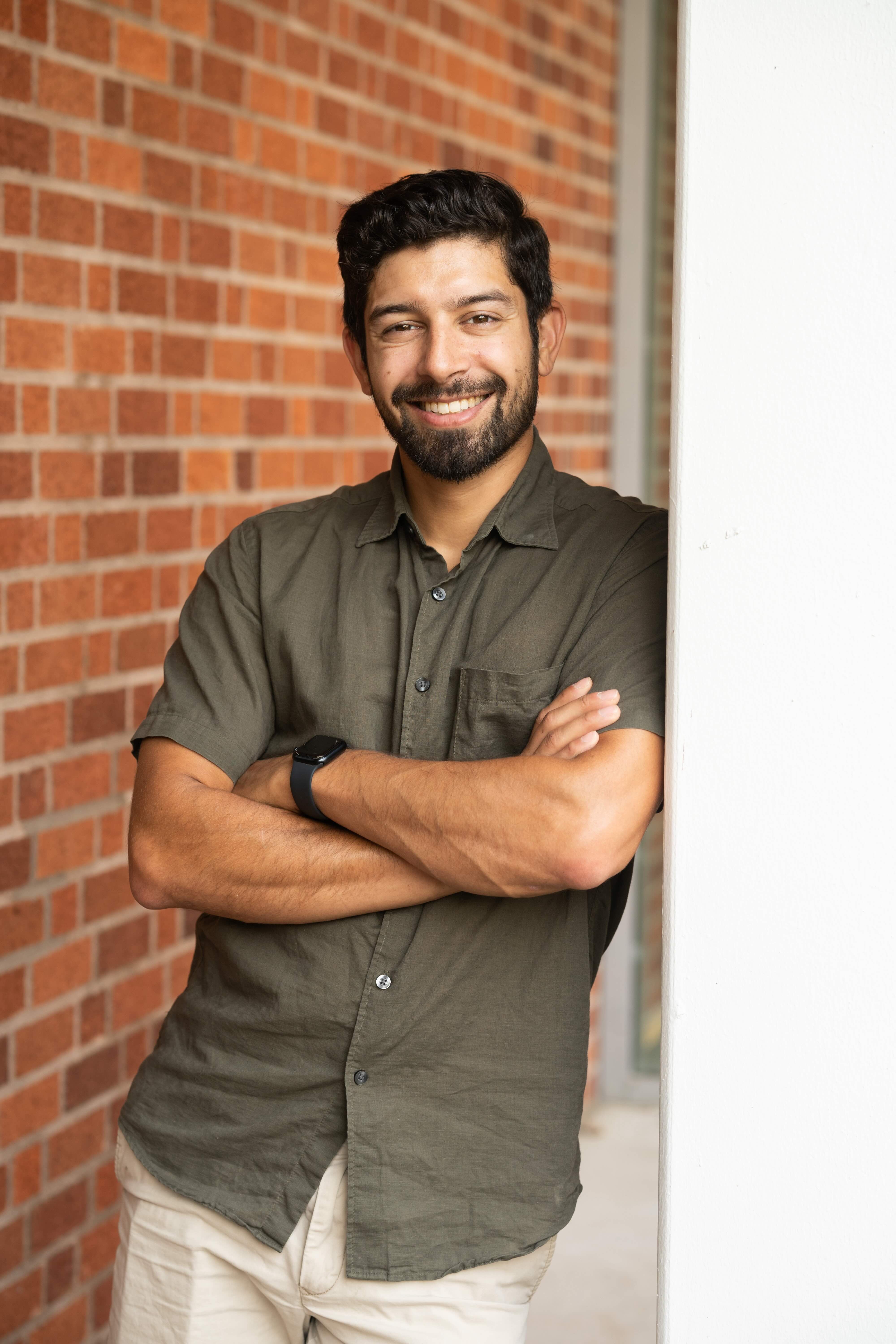
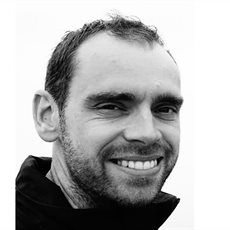
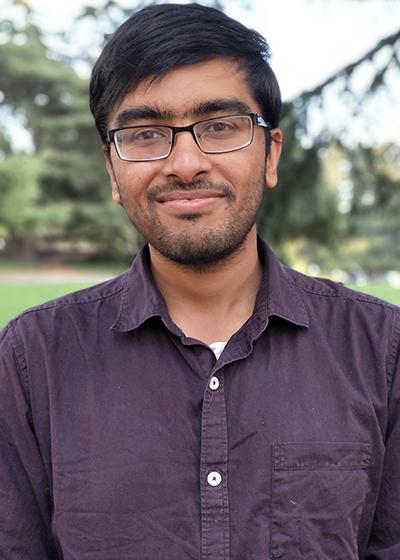
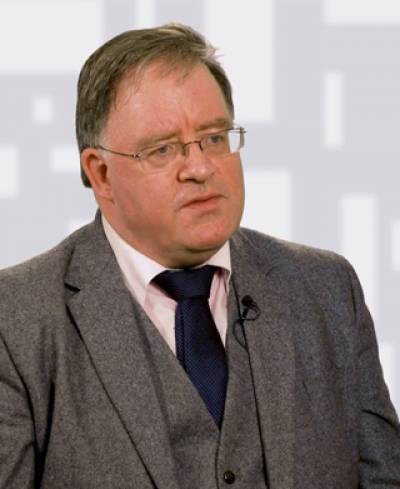
Johan Gilchrist (a.k.a. Yoshi) is a National Science Foundation Earth Sciences Postdoctoral Fellow in the Department of Earth Sciences at the University of Oregon , affiliated with the College of Arts and Sciences . His research focuses on volcanology, glaciology, landslides, wildfires , and planetary geology , with expertise in multiphase turbulent flow and explosive eruption dynamics . Current research includes supraglacial landslides , wildfire plumes , and methane river flows on Titan . His work featured in Nature Geoscience (2023) connects terraced submarine caldera deposits to eruption source conditions and tsunami generation. Scientific Awards: NSF EAR Postdoctoral Fellowship Notable Contributions: Developed novel methods for analyzing volcanic plumes using thermal imagery and spectral clustering , and advanced understanding of sedimentation waves and eruption column stability through analog experiments and field studies.
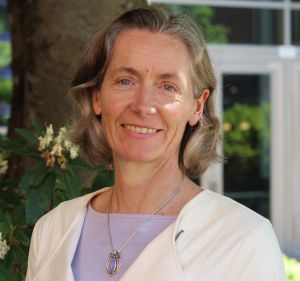
Emilie Hooft is a Professor in the Department of Earth Sciences at the University of Oregon , where she has worked since 2006. Her research focuses on volcanic plumbing systems, mantle plumes, and subduction zone dynamics, particularly in the Cascadia region. She leads field expeditions and employs advanced seismic imaging techniques. PhD from MIT/Woods Hole Oceanographic Institution BSc from University of Toronto Research interests include: Volcano-mantle interactions Subduction zone segmentation Magma transport mechanisms Seismic imaging methodologies Plume-ridge dynamics Recent publications analyze volcanic systems in Santorini, Cascadia, and the Galapagos using seismic tomography, waveform inversion, and geophysical modeling. Her work integrates interdisciplinary approaches with geodynamics and geochemistry. She advises graduate students in seismology and related fields and collaborates with Oregon Hazards Lab , Oregon Center for Volcanology , and UO Geophysics Group .
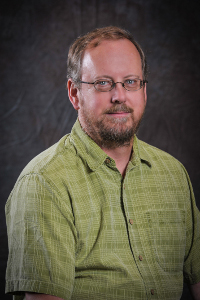
E. Bruce Pitman is a Professor in the Department of Materials Design and Innovation at the University at Buffalo's School of Engineering and Applied Sciences. His research focuses on mathematical modeling, high-performance computing, and uncertainty quantification for geophysical hazards. Education includes a PhD in Mathematics from Duke University (1985), MS in Mathematics from Duke (1981), and BS in Physics and Mathematics from Northwestern University (1979). Employment history spans professorial roles at SUNY Buffalo since 1989, with adjunct appointments in Mechanical and Aerospace Engineering since 2004. Research concentrates on computational approaches to volcanic hazards, debris flows, and geophysical risk assessment using advanced statistical and modeling techniques. Publications demonstrate consistent focus on volcanic hazard prediction, debris flow modeling, and computational methods, with recent emphasis on uncertainty quantification and machine learning applications in geosciences.
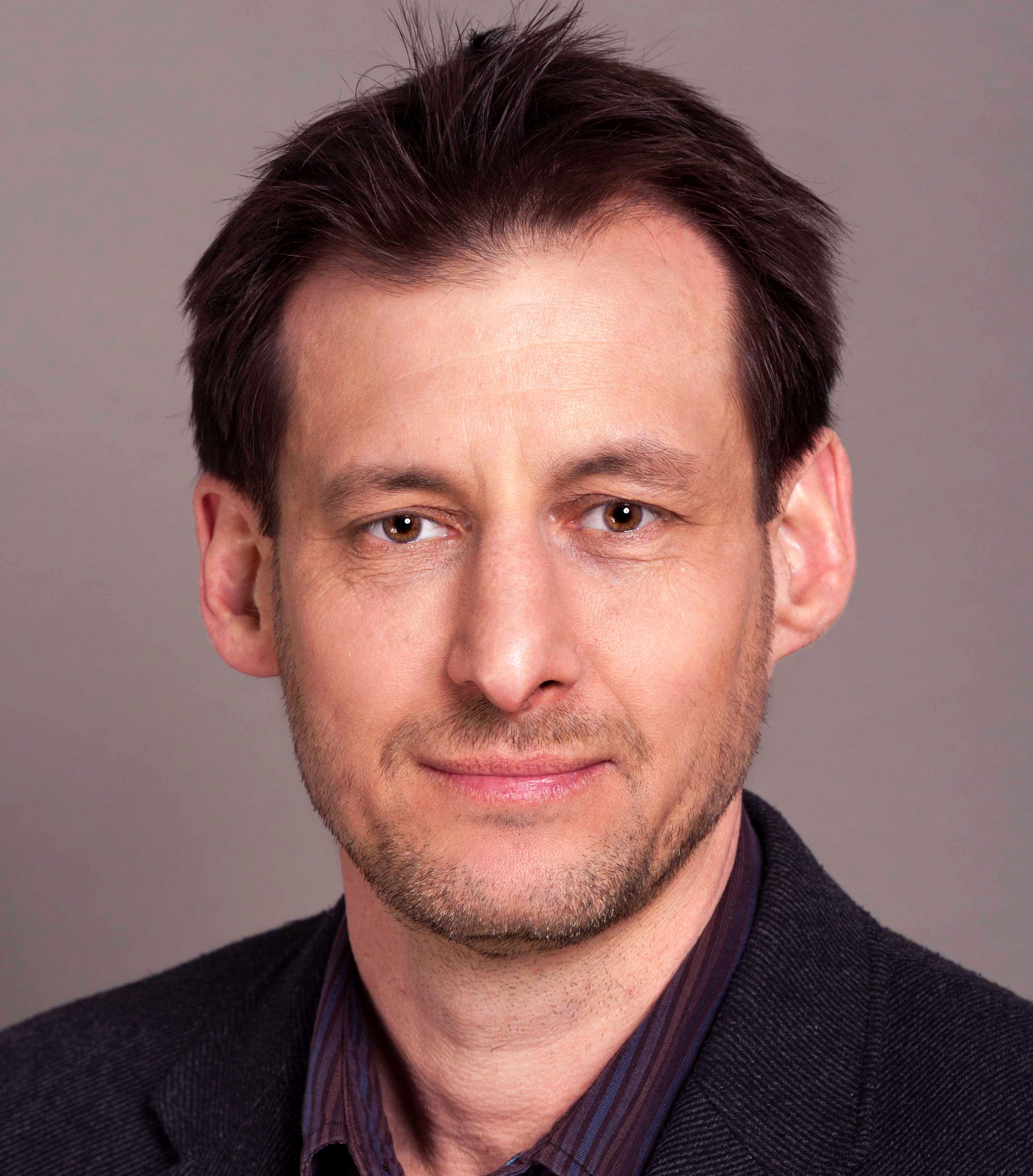
Greg A. Valentine is a UB Distinguished Professor in the Department of Earth Sciences at the University of Buffalo, State University of New York. He specializes in basaltic volcanism, pyroclastic deposits, and volcanic risk assessment through multiphase fluid dynamics and numerical modeling. Education: PhD in Geological Sciences, University of California Santa Barbara (1988) His research encompasses physical processes of basaltic eruptions, from small-scale vent dynamics to large-volume ignimbrite-forming events. Key areas include computational fluid dynamics for pyroclastic currents, soft sediment deformation in dry pyroclastic deposits, and volcanic landform evolution in arid environments. Recent publications (2024-2018) reveal trends in phreatomagmatic explosion dynamics, numerical modeling of pyroclastic flows, erosion processes in volcanic constructs, caldera-forming eruptions, lithic content in ignimbrites, magma-water interaction experiments. Scientific Awards: UB Distinguished Professor He has advised 9 PhD and MS students, including Brandon Keim (2022) on computational models of pyroclastic surges and Maria Clara Parreira Murta (2022) on Utah basaltic volcanism. Former students like Andrew Harp (2018) and Matthew Sweeney (2018) explored magma transport and multiphase eruption modeling respectively.
Eric M. Dunham is a Professor of Geophysics at Stanford University, where he also serves as Director of the SDSS Center for Computation and is a member of the Institute for Computational and Mathematical Engineering. His research focuses on physics-based computational simulations to understand earthquakes, tsunamis, and volcanic phenomena through identifying fundamental mechanical processes, developing numerical models, validating with observations, and predicting system behavior. Department of Geophysics, Stanford University Institute for Computational and Mathematical Engineering SDSS Center for Computation (Director) His research spans earthquake rupture dynamics, tsunami generation, volcano seismology, ice stream stick-slip events, and numerical methods for wave propagation. Dunham's work emphasizes coupling between mechanical processes, fluid flow, and thermal effects, particularly in fault zones where these interactions govern earthquake nucleation and propagation. He develops high-order accurate numerical methods, including summation-by-parts finite difference techniques, for simulating complex wave propagation problems in geophysical systems. Dunham's recent publications reveal strong trends in computational earthquake source modeling, fluid-driven seismicity, volcanic processes, and numerical method development. His work increasingly focuses on the coupling between fluid flow, poroelastic effects, and fault mechanics, with applications to both natural earthquake systems and induced seismicity. His research group has made significant contributions to understanding slow slip events, caldera collapse earthquakes, and wave propagation in complex media. Dunham actively mentors a large research group including numerous postdocs, graduate students, and undergraduates. His students have gone on to positions at universities, national laboratories, and industry. The SDSS Center for Computation under his direction supports computational research across multiple geophysical disciplines. His laboratory develops and maintains several computational codes including FDMAP (2D earthquake rupture dynamics), WaveQLab3D (3D earthquake rupture dynamics), Scycle (2D earthquake cycle code), and specialized codes for modeling wave propagation in fluid-filled cracks and volcanic systems.
Jess Johnson is Associate Professor in Solid Earth Geophysics at the University of East Anglia's School of Environmental Sciences, specializing in volcano seismology, earthquake hazards, and geodetic monitoring. Her research investigates subsurface fluid movement through seismic anisotropy and ground deformation analysis at active volcanoes including Kilauea (Hawaii), Ruapehu (New Zealand), and Icelandic systems. She leads projects on seismic anisotropy origins, machine learning for earthquake swarms, and volcanic deformation modeling. Current work includes repeating earthquakes at Ruapehu and magma dynamics at Kilauea. She directs admissions for the School of Environmental Sciences and teaches geophysics, hazards, and field skills modules. Her publications focus on advancing seismic monitoring techniques and deformation models for eruption forecasting. Awards include 2022 PhD Supervisor of the Year.
Stephen McNutt is Professor of Volcano Seismology at the University of South Florida's School of Geosciences, where he coordinates volcano seismology research. Previously affiliated with the Alaska Volcano Observatory (1991-2012) and California Division of Mines and Geology (1984-1991), his research examines volcanic tremor, hazard assessment, earth tide effects, infrasound, and volcanic lightning. He earned his Ph.D. from Columbia University (1985) and B.A. from Wesleyan University (1977). McNutt currently supervises PhD students and has published extensively on eruption processes and monitoring techniques. Professional service includes former Secretary-General for the International Association of Volcanology (1999-2007). Research integrates seismic, infrasound, and lightning detection systems to analyze eruption dynamics. Recent investigations focus on swarm seismicity patterns and the 2022 Hunga Tonga eruption mechanisms. Fieldwork spans Alaska, Central America, and the Pacific Rim.
Eric Dunham is a Professor of Geophysics at Stanford University, affiliated with the Department of Geophysics and the Institute for Computational and Mathematical Engineering. He leads the SDSS Center for Computation and holds a PhD from the University of California, Santa Barbara (2005) and a BS from the University of Virginia (2000). His research focuses on computational simulations of geophysical phenomena such as earthquakes, tsunamis, volcanoes, and ice dynamics, emphasizing numerical methods and wave propagation. Key projects include earthquake rupture dynamics, volcano seismology, and atmospheric-seismic interactions. Research interests span fluid-induced seismicity, caldera collapse modeling, and tsunami generation. Dunham directs interdisciplinary efforts in computational geosciences, leading teams in developing codes like FDMAP and WaveQLab3D. His work bridges theory and observation, with applications to subduction zones and induced seismicity. Advising spans postdocs, PhD students (e.g., Rikuto Fukushima on adjoint methods, Mario Ruiz on volcanic eruptions), and undergraduates (e.g., Eric Berg on ice mechanics). Roles include editorial contributions, leadership in initiatives like CRESCENT (Cascadia subduction zone studies), and software development for poroelasticity and fault modeling. His research addresses both fundamental and applied challenges in geophysical hazards and computational science.
Dávid Karátson is a Professor at the Institute of Geography and Earth Sciences , Eötvös Loránd University (ELTE), Budapest, affiliated with the Department of Physical Geography and the Center of Geography . His career focuses on volcanology, geomorphology, and geoheritage, with a particular emphasis on volcanic landforms, hazards, and tectonic-climatic interactions. Doctor of Science (DSc) recipient Specializes in volcanic geomorphology, ignimbrite stratigraphy, and hazard assessment Research spans Late Quaternary volcanoes in the East Carpathians and Central Paratethys His recent work explores the interplay between magma composition, eruption styles, and post-depositional processes, including tephra dispersal and inverted volcanic relief. He employs advanced geomorphometric techniques (e.g., DTM-based analyses) and integrates paleomagnetic/radiometric dating to reconstruct volcanic histories. Scientific contributions include: Key Awards : Doctor of Science (DSc) Email : karatson.david@ttk.elte.hu
Dr. Mike Cassidy is an Associate Professor in Volcanology and Petrology at the University of Birmingham's School of Geography, Earth and Environmental Sciences. He leads the Global Environmental Change and Sustainability Degree program and teaches modules in Geology and Environmental Science. His research focuses on volcanic explosivity, eruption forecasting, and mitigating impacts of large eruptions, using machine learning and experimental petrology. Education: PhD, University of Southampton (2012) MSc Volcanology, University of Lancaster (2008) BSc Geology, University of Bristol (2006) Research Interests: Mike investigates physio-chemical controls on volcanic eruptions, with a focus on magma volatility, overpressure, and eruption dynamics. He applies cross-disciplinary methods like machine learning and petrology to improve forecasting and disaster preparedness. Recent work includes studies on the 2018 Anak Krakatau collapse and Tambora’s climatic impacts. He advocates for global volcanic risk mitigation strategies and ethical geoengineering practices. Professional Roles: Editorial board member for Geology (ITB), NERC Peer Review College, and founder of the VMSG Postdoctoral Keynote Award. He established collaborations with Institut Teknologi Bandung (ITB) and led efforts to abolish Oxford University’s graduate application fee. Advising & Grants: Supervised PhD students at Oxford and Birmingham. Active in funding initiatives for volcanic research and international collaborations. His work bridges academia and policy, emphasizing real-world applications of scientific research. Labs & Teams: Collaborates with global institutions on volcanic hazard assessments and geoengineering ethics. Leads fieldwork in Indonesia, Iceland, Chile, Mexico, and the West Indies.
Tushar Mittal is an Assistant Professor in the Department of Geosciences at Pennsylvania State University, affiliated with the College of Earth and Mineral Sciences. His research focuses on solid Earth processes, integrating magmatic systems, submarine volcanism, and volcano-climate interactions. He employs fluid dynamics models, thermo-mechanical theory, and machine learning to study phenomena across planetary scales. Research interests include: Magmatic processes in continental flood basalts (e.g., Deccan Traps) Submarine volcanic eruptions and their environmental impacts Planetary geophysics, including icy ocean worlds like Enceladus Volcanic climate effects through sulfur and carbon emissions Publications emphasize interdisciplinary approaches, linking geological observations with theoretical models. Recent work examines the 2022 Hunga eruption's climate impact, Deccan Traps' eruption chronology, and hydrothermal plumes on icy satellites. His research also explores magma mush dynamics, mantle plume interactions, and mid-ocean ridge systems. Labs/Teams: Collaborates on projects involving magnetotelluric imaging, heat mining feasibility studies, and planetary interior composition analysis. Active in international volcanic monitoring initiatives and astrobiology-related geodynamics.
Pavel Izbekov is a Research Associate Professor at the Geophysical Institute of the University of Alaska Fairbanks (UAF), specializing in volcanic petrology and magma dynamics. His work integrates igneous petrology, experimental methods, and remote sensing to study active volcanoes in Alaska and Kamchatka. Education: PhD in Geology (UAF, 2002), B.Sc. in Geochemistry (Novosibirsk State University, 1992) His research focuses on quantifying magma processes in volcanic arcs, including pressure changes, volatile evolution, and crystallographic analysis. He has led field campaigns in extreme environments across Alaska, Kamchatka, and Japan, utilizing helicopters, boats, and cross-country vehicles. Recent publications highlight his multidisciplinary approach, combining seismic tomography, mineral chemistry, and gas emission data to unravel magma storage and ascent mechanisms. Key projects include probabilistic eruption forecasting for Redoubt Volcano and caldera studies in the Aleutian Arc. Prior grants include NSF-PREEVENTS (eruption forecasting) and USGS Volcano Hazards Program (monitoring). He teaches the International Volcanological Field School and has supervised numerous graduate students in volcanology and geochemistry.
Dr. Ellen Gottschämmer is a geophysicist who served as Senior Lecturer and researcher at Karlsruhe Institute of Technology's Geophysical Institute (GPI) until April 2022, now working in the Department of Mechanical Engineering. Her roles included Department Manager, Head of Study Program Management for ETIT and MACH programs, and founder of KIT's Geophysics school lab in 2012. She actively contributed to academic governance through the Faculty Council, Examination Committee, and German Geophysical Society's Executive Board. Her research focuses on Volcano Seismology and Earthquake Seismology, specializing in seismic hazard assessment through field-based methodologies. She pioneered "in-situ lecturing" techniques conducting geophysical field exercises across global locations including Guatemala's Santiaguito volcano, Indonesia, the Black Forest, Eifel region, and Mediterranean volcanoes. Her work integrates seismic, infrasound, and thermal monitoring to analyze volcanic processes and associated hazards, with particular emphasis on eruption dynamics and long-term activity patterns. Recent publications (2019-2021) demonstrate concentrated research on Santiaguito volcano, examining seismic tremor mechanisms, open-vent activity transitions, and explosion characteristics using multi-parameter monitoring. These studies reveal evolving eruption styles and precursory patterns critical for hazard assessment, often resulting from international collaborations with institutions in Guatemala and Indonesia. Her methodology emphasizes practical field data integration with classroom instruction. Dr. Gottschämmer developed comprehensive geophysics curricula including Introduction to Geophysics, Geological Hazards, and specialized field courses. She supervised student research through geophysical laboratory exercises and international field schools, while managing study program accreditation and module coordination. Her administrative leadership extended to chairing the Committee for Academic Studies at the German Geophysical Society. She founded KIT's Geophysics school lab in 2012, creating a dedicated space for hands-on geophysical education. This facility supports her innovative teaching approach through practical instrumentation training and serves as the operational base for international field expeditions to volcanic regions worldwide, fostering direct student engagement with active geohazards.
Prof Christopher Kilburn is Professor of Volcanology and Geophysical Hazards at University College London's Department of Earth Sciences. His research focuses on volcanic eruption forecasting, lava flow dynamics, and landslide hazard mitigation with 30+ years of field experience at volcanoes in Italy, Cameroon, and the Caribbean. He leads the UCL Hazard Centre and has pioneered physical models for forecasting eruptions at long-dormant volcanoes like Campi Flegrei. Key contributions include developing warnings systems for vulnerable communities and advancing understanding of magma chamber dynamics through geophysical monitoring. PhD: Volcanological studies (inferred from academic role) Postdoctoral experience in volcanic seismology and fluid dynamics Research interests include: Fracture mechanics of volcanic systems Caldera unrest mechanisms Lava flow emplacement processes Volcanic hazard communication Recent publications emphasize Campi Flegrei's deformation patterns, magma recharge processes, and eruption forecasting models. His work bridges fundamental science with practical applications for disaster risk reduction. Notable projects include the Campi Flegrei Deep Drilling Project (CFDDP) and collaborations with international volcano observatories. Active in science communication, he advises insurance industries on volcanic risk assessment and trains emergency responders in hazard management.
Claire Harnett is an Associate Professor at the School of Earth Sciences, University College Dublin (UCD), where she leads the Geohazards Research Group and serves as the primary supervisor to four PhD students. She is also involved in setting up a rock mechanics laboratory at UCD, focusing on volcanic rocks and civil engineering applications. Her roles include teaching across Earth Sciences and Civil Engineering programs, particularly contributing to the MSc in Subsurface Characterisation and Geomodelling. Beyond UCD, she is the elected Early Career Representative for the Volcanic and Magmatic Studies Group (VMSG) committee and a Technical Editor for the journal Volcanica . Dr. Harnett holds a BSc from the University of Portsmouth, a PhD from the University of Leeds, and a Professional Diploma in University Teaching & Learning from UCD. Her research emphasizes numerical modeling of volcanic environments, specifically investigating dynamic stability in lava domes, calderas, and hydrothermally altered systems. Key interests include extrusion dynamics, collapse mechanisms, and the interplay between mechanical properties and volcanic hazards. She has secured over €2.8 million in research grants, including leadership of the €10 million European Research Council Synergy Grant (ROTTnROCK), which explores hydrothermal alteration's role in volcano instability. Other grants focus on magma-induced deformation, geomechanical property scaling, and geothermal energy potential in volcanic systems. Recent work combines remote sensing, rock physics, and computational modeling with international teams at GFZ Berlin, EOST Strasbourg, and Uppsala University. Her awards include the UCD Excellence in Teaching & Learning Award (2022), the Bob Hunter Memorial Prize for Best Student Talk (2018), and the Itasca Educational Partnership (2015–2019). She actively contributes to professional activities as a peer reviewer for Journal of Volcanology and Geothermal Research and Scientific Reports .