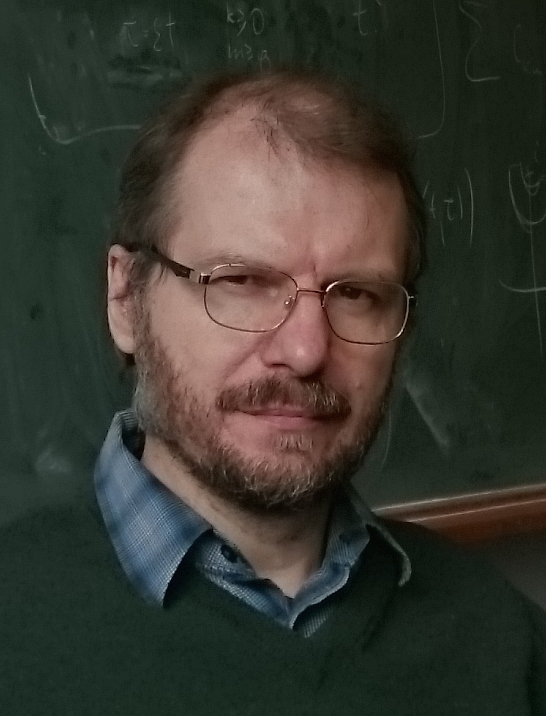
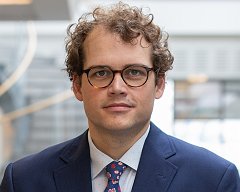
Vassili Gelfreich is Professor of Mathematics at the University of Warwick, specializing in dynamical systems, conservative dynamics, and bifurcation theory. His research investigates geometric foundations of Hamiltonian systems and chaotic transport mechanisms. Current teaching includes 'MA143 Calculus 2' and 'MA482 Stochastic Analysis'. Research examines energy equilibration in slow-fast systems, Arnold diffusion in chaotic symplectic maps, and vector field interpolation techniques. Publications frequently address Hamiltonian chaos and perturbation theory. International collaborations include invited talks at European institutions and research in symplectic geometry applications.
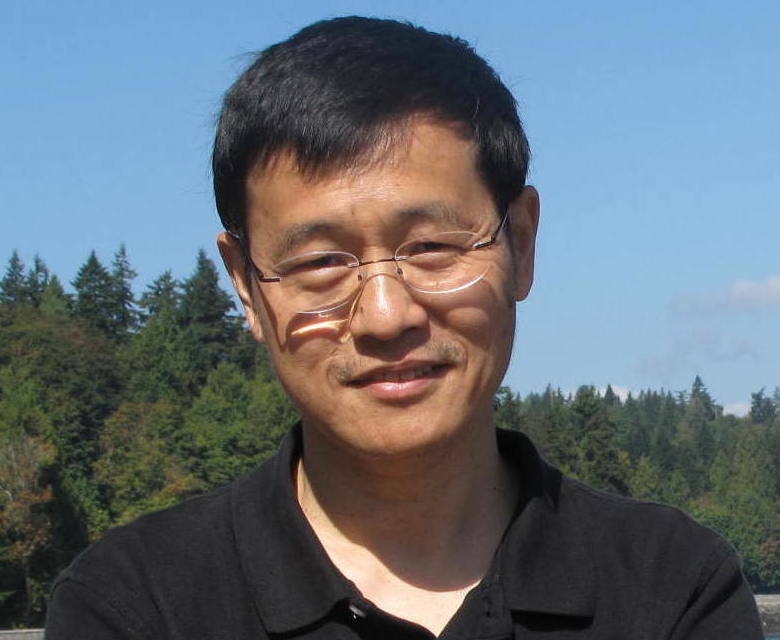
Qiudong Wang is a Professor in the Department of Mathematics at the University of Arizona, where he conducts research and teaches in the field of dynamical systems and differential equations. His work spans theoretical and applied aspects of nonlinear dynamics, celestial mechanics, and chaotic systems. Education: Ph.D., University of Cincinnati, 1994 B.S., Nanjing University, China, 1982 His research focuses on homoclinic tangles, Melnikov methods, rank one attractors, twist maps, and the N-body problem . He has made significant contributions to the understanding of chaotic behavior in both deterministic and stochastically perturbed systems. His work often involves deep analytical techniques and has been published in premier journals such as Annals of Mathematics , CPAM , and JDE . He has also contributed expository works on rank one chaos and homoclinic tangles, including a Scholarpedia article. The trends in his recent publications emphasize nonautonomous and stochastic perturbations, geometric methods in dynamical systems, and the statistical properties of chaotic attractors . His research bridges pure mathematics with applications in physics and engineering, particularly in celestial mechanics and circuit systems. Scientific Contributions: Development of high-order Melnikov methods Theory of rank one attractors with Lai-Sang Young Analysis of homoclinic tangles and their chaotic dynamics Study of the N-body problem and integral manifolds Investigations into twist maps and variational methods Wang advises students in mathematics and has mentored work in dynamical systems, though specific names are not listed. He has received recognition through publications in top journals, though formal awards are not mentioned. He teaches undergraduate courses such as Math 254 and maintains comprehensive lecture notes on dynamical systems, homoclinic tangles, and rank one chaos. He is actively involved in research and continues to publish preprints and expository works, indicating ongoing scholarly activity. He leads a research group focused on nonlinear dynamics and chaos theory, with a strong emphasis on rigorous mathematical analysis. His team explores theoretical frameworks for understanding complex dynamical behavior in both finite and infinite-dimensional systems.
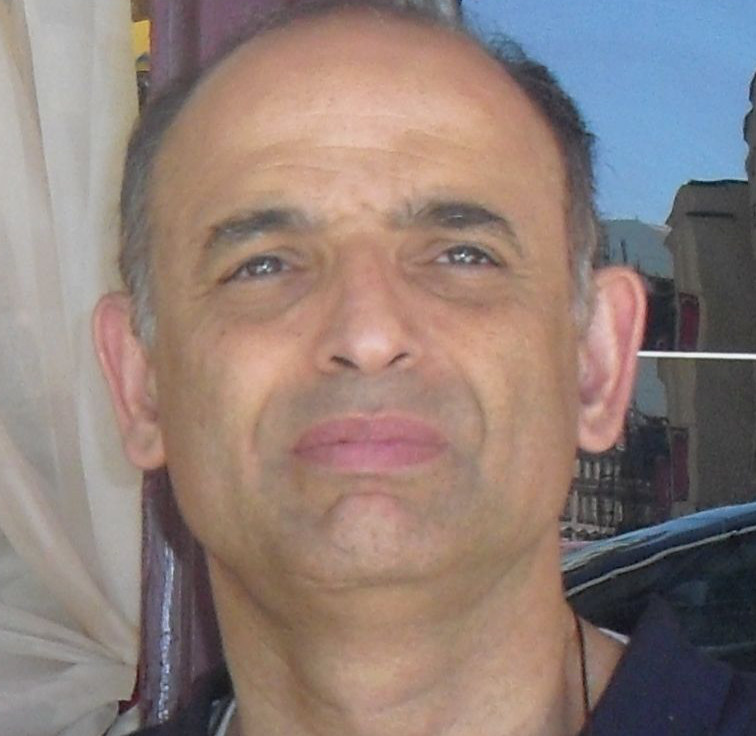
Aslak Bakke Buan is a Professor of Mathematics at the Department of Mathematical Sciences, Norwegian University of Science and Technology (NTNU), affiliated with the Faculty of Information Technology and Electrical Engineering. His research focuses on representation theory of finite-dimensional algebras, homological algebra (including triangulated categories), and combinatorial methods in representation theory (e.g., AR-theory and cluster combinatorics). He has been Vice Chair of the Department of Mathematical Sciences (2013–2017) and held leadership roles in projects like the NFR-funded 'Clusters, Combinatorics and Computations in Algebra' (2014–2017). Education: Dr.Scient. (PhD) in Mathematics from NTNU (2000), Cand.Scient. (Master’s) from Universitetet i Trondheim (1995). His work experience includes academic roles since 1996, with a postdoctoral fellowship (2003–2005) and professorship at NTNU since 2009. Research contributions span cluster algebras, silting theory, and triangulated categories. Notable recent work includes studies on tau-exceptional sequences, endomorphism algebras of silting complexes, and derived categories of decorated marked surfaces. His publications reflect interdisciplinary approaches between algebraic structures and geometric/topological methods. Awards include election to The Royal Norwegian Society of Sciences and Letters (2013). He has supervised 16 master’s students and 8 PhD students, and contributed to educational initiatives like the KTDiM project on mathematics education quality and accessibility. Teaching includes courses on cryptography, discrete mathematics, and representation theory.
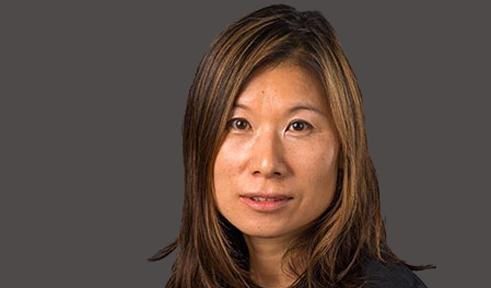
Bo Li is a Professor in the Department of Mathematics at the University of California, San Diego (UCSD). He holds affiliations with the Quantitative Biology Ph.D. Program and the Halicioglu Data Science Institute as a faculty member. His research focuses on scientific computing, numerical analysis, and applied mathematics with applications in biophysics, computational biology, materials science, and continuum mechanics. Current projects include biomolecular simulation, variational solvation methods, bacterial colony dynamics modeling, and neural network foundations. Li has led multiple funded research initiatives, including NIH and NSF grants, and has been involved in interdisciplinary collaborations. He teaches advanced courses such as Topics in Applied Mathematics (Math 217) and Numerical Analysis (Math 270B). His work bridges mathematical theory with computational methods for solving complex biological and physical systems.
Antti Kauppinen is a Professor of Practical Philosophy at the University of Helsinki, affiliated with the Helsinki Inequality Initiative (INEQ). He serves as a supervisor for the Doctoral Programme in Philosophy, Arts, and Society. His work bridges ethics, moral psychology, and epistemology, focusing on topics like emotional valence in morality, reflective equilibrium, and the philosophy of well-being. He has published extensively in leading journals like Philosophical Studies and Mind . Research Interests: Kauppinen's primary areas include moral psychology (emotions' role in ethics), normative ethics (moral motivation and value theory), epistemology (reflective equilibrium, epistemic norms), and social philosophy (inequality, distributive justice). His recent work explores how affective states shape moral reasoning and the ethical implications of self-narratives. Professional Contributions: He led the Responsible Beliefs: Why Ethics and Epistemology Need Each Other project (2019–2023), examining intersections between moral and epistemic responsibility. His 32+ publications span articles, book chapters, and reviews, with notable works on sentimentalism, moral agency, and meaning in life. Kauppinen actively contributes to academic discourse through invited talks (e.g., on Affective Valence and the Nature of Happiness ) and supervises doctoral research in moral philosophy. Academic Service: As a thesis supervisor and committee member, he guides students in ethics and epistemology. His work frequently bridges theoretical philosophy with practical implications, addressing topics like self-driving vehicle ethics and the moral significance of pain.
Jasmin Blanchette is a Professor of Theoretical Computer Science and Theorem Proving at Ludwig-Maximilians-Universität München (LMU), where he also serves as the Dean of Studies for Computer Science since January 22, 2024. He is affiliated with the Institute for Informatics and leads the Theoretische Informatik und Theorembeweisen research unit. Additionally, he is a guest researcher in the VeriDis group at Loria, Nancy. Research Interests: His research centers on strengthening proof automation for general-purpose logics and enhancing the usability of proof assistants. He combines automatic and interactive methods, bridging human and artificial intelligence in formal verification. His work spans higher-order logic, automated and interactive theorem proving, formalization of mathematical results, and foundational mechanisms for (co)datatypes and (co)recursive functions. Key projects include Sledgehammer, Nitpick, Matryoshka, Nekoka, IsaFoL, and Lean Forward. Publication Trends: His recent publications (2023–2025) show a strong focus on higher-order automated reasoning, superposition calculus, proof automation in Isabelle/HOL, and formalization of logical and mathematical concepts. There is a consistent emphasis on verification, efficiency, and integration of SAT/SMT techniques into higher-order provers. Scientific Awards: FroCoS 2023 Best Paper Award (with Visa Nummelin and Sander Dahmen) CADE 2023 Best Paper Award for 'Verified given clause procedures' (with Qi Qiu and Sophie Tourret) IPA Dissertation Award (awarded to student Petar Vukmirović) Dutch Prize for ICT Research 2022 Advising and Grants: He supervises a large team of postdocs and PhD students at LMU and co-supervises students at other institutions. His leadership in major collaborative projects like Matryoshka indicates significant grant funding and collaborative research efforts. He is editor-in-chief of the Journal of Automated Reasoning and serves on numerous steering and program committees, reflecting strong academic leadership and visibility. Labs and Teams: He leads a research group at LMU’s Institute for Informatics, focusing on theorem proving and formal methods. He is also associated with the VeriDis group at Loria, Nancy, and collaborates widely across Europe in the automated reasoning community.
Fayssal Benkhaldoun is a Professor at Université Paris 13, affiliated with the LAGA laboratory (UMR7539). He has held leadership roles including former Head of the MCS team (Modeling and Scientific Computing) at LAGA and former President of the Scientific Council at IUT Villetaneuse. He is also the Project Leader of the International Office at IUT Villetaneuse. His research focuses on numerical methods for partial differential equations, particularly finite volume schemes for hyperbolic and elliptic problems. Key areas include shallow water equations, flow in porous media, mesh adaptation, and combustion front propagation. He has organized major conferences such as the International Symposium on Finite Volumes for Complex Applications (FVCA), initiating its first edition in 1996. Recent work emphasizes advanced numerical techniques like stabilized meshless methods, GPU acceleration, and parallel computing for CFD applications. His contributions span environmental modeling (flood simulation, sediment transport) and industrial applications (phosphate slurry rheology). Students advised include Jan Karel (2014, streamer propagation) and Saida Sari (2013, multilayer shallow water equations). He co-organized conferences since 1996 and has been an invited speaker at numerous institutions globally.
Jinhwa Lee is an Assistant Professor of Instruction in the Department of Mathematics at Ohio University's College of Arts and Sciences, Athens Campus. Their role emphasizes academic instruction and student engagement in undergraduate mathematics education. Their research interests span various areas of mathematics, including pure and applied mathematics, with a strong focus on mathematical education. This includes expertise in algebra, calculus, and differential equations, contributing to foundational learning in STEM disciplines. No recent publications or scientific awards were mentioned in the provided information. Jinhwa Lee is actively involved in teaching and mentoring students within the mathematics program. While specific advisees or grant funding details are not listed, their position supports core curriculum delivery and academic development in the department. They are associated with the mathematics faculty at Ohio University, contributing to departmental instructional goals and academic service.
David Costa is a Full Professor in the Department of Mathematical Sciences at the University of Nevada, Las Vegas (UNLV), where he has been a faculty member since 1993. His research is centered on partial differential equations and variational methods, particularly elliptic type equations modeling steady-state phenomena. He is affiliated with the Center for Applied Math & Statistics at UNLV. Ph.D. in Mathematics, Brown University (1973) B.S. in Electrical Engineering, Universidade Federal de Pernambuco, Brazil (1967) David Costa's research focuses on the theoretical and applied aspects of nonlinear partial differential equations. He employs variational and topological methods from nonlinear analysis to study existence, multiplicity, and qualitative properties of solutions. His work often involves critical nonlinearities, semipositone problems, Hamiltonian systems, and inequalities in Sobolev spaces. He has made significant contributions to the understanding of logistic-type equations, Kirchhoff problems, and Schrodinger-type models. The recent publications highlight a strong trend in critical and subcritical elliptic problems in unbounded domains, particularly in R^N and exterior domains. His work frequently explores variational characterizations, Nehari manifolds, and maximum principles. Many papers involve collaborations with H. Tehrani, J. do O’, and others, focusing on symmetry, concentration phenomena, and nonstandard growth conditions. Notable scientific contributions include foundational work on Caffarelli-Kohn-Nirenberg inequalities, Hardy-Rellich inequalities, and Trudinger-Moser type embeddings. While no formal awards are listed, his sustained publication record in top journals and editorial contributions reflect high scholarly recognition. Costa has advised several students and collaborators, though specific names are not listed in the provided text. He has contributed to research grants and collaborative projects, particularly in nonlinear analysis and PDEs. His work on mathematical biology, including a forthcoming book, indicates interdisciplinary outreach. He has also held leadership roles in the Brazilian Mathematical Society and the CNPq advisory committee. David Costa is associated with the Center for Applied Math & Statistics at UNLV, where he participates in research seminars and collaborative programs. His work environment supports theoretical and applied mathematical research, especially in differential equations and variational methods.
Max S. New is an Assistant Professor in Computer Science & Engineering at the University of Michigan, affiliated with the MPLSE research community . He works on the mathematical foundations of programming languages, focusing on Gradual Typing , Category Theory , Secure Compilation , and Effect Handlers . His research bridges formal methods with practical language design. Educational background : PhD in Computer Science, Northeastern University (2020) Postdoctoral Research, Wesleyan University (with Dan Licata) Max's recent work explores the intersection of Dependent Lambek Calculus and parsing verification, Synthetic Guarded Domain Theory for gradual typing semantics, and Relative Monads in computational models. His publications span top venues like PLDI , POPL , and ICFP , emphasizing formal verification and category-theoretic abstractions. He has served as Committee Member in OOPSLA and POPL, Session Chair for type systems tracks, and Program Co-Chair for HOPE workshops. His PhD students include Eric Giovannini, Steven Schaefer, and Jesse Slater (co-advised with Xinyu Wang).
Davide Gabrielli is a Full Professor in the Department of Information Engineering, Computer Science and Mathematics (DISIM) at the University of L'Aquila, Italy. His academic position focuses on Mathematical Physics with extensive contributions to statistical mechanics and probability theory. His primary research interests encompass Statistical Mechanics, Probability Theory, Non-equilibrium Thermodynamics, and Stochastic Processes. Gabrielli's work bridges theoretical mathematics with physical applications, particularly in understanding non-equilibrium systems, large deviations theory, and transport phenomena. His research demonstrates strong interdisciplinary connections between probability theory, statistical physics, and mathematical analysis. Analysis of his recent publications reveals consistent focus on non-equilibrium statistical mechanics, with particular emphasis on large deviation principles, stochastic processes on graphs, and thermodynamic uncertainty relations. His work frequently appears in leading journals including Journal of Statistical Physics, Physical Review Letters, and Communications in Mathematical Physics. Gabrielli maintains active collaborations with prominent researchers including L. Bertini, A. De Sole, G. Jona-Lasinio, and C. Landim, forming part of an influential research group in non-equilibrium statistical mechanics. His teaching responsibilities include advanced courses in Stochastic Processes, Probability Calculus, and Equations of Physics-Mathematics.
Jean-Yves Le Boudec is a Professor at École Polytechnique Fédérale de Lausanne (EPFL), affiliated with the School of Computer and Communication Sciences and the Institute of Electrical Engineering. He has been a key figure in advancing the theory and application of network calculus and deterministic networking, contributing significantly to standards such as IEEE Time-Sensitive Networking (TSN) and IETF DetNet. His research focuses on network calculus , time-sensitive and deterministic networking , traffic regulation , worst-case delay analysis , and cyber-physical systems , with cross-cutting applications in smart grids , real-time communication , and network security . He has co-authored foundational texts on network calculus and developed theoretical frameworks for traffic regulators, service curves, and delay bounds in complex networked systems. The recent publications highlight a strong trend in analyzing and improving performance guarantees in deterministic networks, including scheduling mechanisms like Deficit Round-Robin and Cyclic Queuing and Forwarding, traffic shaping via interleaved regulators, and security against time-synchronization attacks in power systems. The work spans theoretical modeling using stochastic and min-plus/max-plus algebra, practical algorithm design, and application to critical infrastructure. IEEE Fellow Le Boudec has advised numerous researchers and PhD students, including Ehsan Mohammadpour, Ludovic Thomas, and Seyed Mohammadhossein Tabatabaee. His collaborative projects often involve grants related to European and Swiss research initiatives in networking and smart grid technologies. He leads a research group focused on networked systems at EPFL, contributing to both theoretical advances and real-world implementations in industrial and energy-critical networks. His lab work centers on modeling and verification of time-sensitive network behaviors, integrating formal methods with practical experimentation. The team investigates regulators, shapers, and synchronization mechanisms, aiming to ensure robustness, predictability, and security in next-generation communication infrastructures. Future work continues to explore the interplay between communication, control, and energy systems in highly reliable environments.
Ngoc Tien Tran is a Junior Professor for Numerical Simulation at the Institute of Mathematics, Faculty of Mathematics, Natural Sciences and Technology, University of Augsburg since 2023. Previously, he was a Research Associate at Friedrich Schiller University Jena (2021-2023) and Humboldt University of Berlin (2018-2021). Dr. Tran's educational background includes: Doctorate in Mathematics, Humboldt University of Berlin (2021) Master of Mathematics, Humboldt University of Berlin (2018) Bachelor of Mathematics, Humboldt University of Berlin (2016) Dr. Tran's research focuses on advanced numerical methods for complex mathematical problems. His primary areas of interest include numerical methods for completely non-linear second-order PDEs , the convergence behavior of adaptive methods , nonstandard discretizations and hybridizable methods , and convex minimization and eigenvalue problems . His work bridges theoretical mathematics with practical computational techniques, developing innovative approaches to solve challenging problems in numerical analysis. Dr. Tran's publication record demonstrates a consistent focus on hybrid high-order methods and their applications to various mathematical problems. His recent work shows a progression from foundational methods to specialized applications in areas like the Monge-Ampère equation, eigenvalue problems, and convex minimization. A notable trend is his emphasis on guaranteed error control and stability analysis, reflecting a commitment to robust and reliable numerical methods. Dr. Tran is involved in research supported by the ERC Consolidator Grant and participates in the GAMM Workshop on Numerical Analysis and the One World Numerical Analysis Seminar. As a Junior Professor at the University of Augsburg, Dr. Tran advises students and contributes to the Numerical Mathematics research team. His teaching includes courses such as 'Finite elements in the calculus of variations' and a 'Seminar on Numerics' for Summer semester 2025. He is part of a vibrant research community that includes colleagues like Daniel Peterseim and Tatjana Stykel, as well as numerous research associates.
Laura Kovacs is a full Professor at TU Wien's Faculty of Informatics, where she serves as head of the FORSYTE research unit focused on Automated Program Reasoning. She also holds a part-time associate professorship at Chalmers University of Technology in Sweden. As a leading researcher in automated reasoning, she was recently elected President and Chair of the ETAPS steering committee (2025) and has received prestigious awards including ERC Consolidator and Starting Grants. TU Wien, Faculty of Informatics (2016-present) Chalmers University of Technology, Sweden (part-time) Postdoctoral researcher at EPFL and ETH Zurich (2007-2010) FWF Hertha Firnberg Research Fellow (2010-2013) Her research spans automated theorem proving, program analysis, symbolic summation, and computer algebra, with a particular focus on developing theoretical foundations and practical tools for software verification. She is best known as co-developer of the Vampire theorem prover, which recently made history by winning all eight divisions at the CASC competition in 2025. Her recent publications demonstrate strong activity in first-order reasoning, quantifier handling, and security applications, with notable work including the Amazon-funded FOREST project (2020) and QuAT (2023). The 2025 CAV conference awarded her co-authored paper 'The Vampire Diary' a Distinguished Paper Award, highlighting continued leadership in the field. ERC Consolidator Grant 2020 for 'ARTIST: Automated Reasoning with Theories and Induction for Software Technology' Wallenberg Academy Fellowship (2014) ERC Starting Grant (2014) Amazon Research Awards (2020, 2023) Distinguished Paper Award at CAV 2025 Professor Kovacs actively supervises PhD students working on cutting-edge topics in automated reasoning, with recent successful defenses including Márton Hajdu's 'Redundancy, Rewriting, and Induction' (2025) and Sophie Rain's 'Automated Security Analysis of Blockchain Protocols' (2025). She leads the newly established Doctoral College on Automated Reasoning at TU Wien, which received FWF funding for 13 doctoral positions focusing on security and AI applications. As head of FORSYTE, she oversees research in automated program reasoning, working closely with colleagues on projects spanning software model checking, static analysis, and formal methods for distributed systems. Her group has established strong industry connections, particularly with Amazon through the Amazon Research Awards program.
Lars-Henrik Eriksson is a Senior Lecturer in the Department of Computer Science at Uppsala University, part of the Department of Information Technology. He holds a PhD and is recognized as an Excellent Teacher and educational mentor. He currently serves as the program director for the Master's program in Computer Science and has previously held leadership roles, including Head of the Department of Computer Science from 2004 to 2018. PhD in Computer Science Excellent Teacher Award Pedagogical Mentor at Uppsala University His research focuses on the applications of logic in computer science, particularly formal methods for software development. His work spans formal specification, verification, and synthesis, with strong emphasis on logic programming, interactive theorem proving, and logical frameworks. He has made significant contributions to the use of formal methods in safety-critical domains such as railway signaling. His current research includes modeling application domains within formal methods and formalizing concurrency theory using the Isabelle proof assistant. The recent publications reflect a sustained focus on modal logics for nominal transition systems, formal verification tools (e.g., GTO), and domain-specific applications of formal methods. These works demonstrate deep integration of theoretical logic and practical software engineering, especially in distributed and safety-critical systems. The recurring themes include concurrency, verification, and the use of domain models to enhance formal reasoning. Scientific Awards and Recognitions: Excellent Teacher Pedagogical Mentor Lars-Henrik Eriksson has advised numerous students through project supervision, thesis reviews, and course mentorship, though no formal list of advisees is provided. He has been involved in significant research management, including leading the department and directing a master’s program. He has also collaborated with industry, particularly in railway signaling, contributing to safety analysis and formal verification projects with Trafikverket and through companies he co-founded. He is a board member of Formal Methods Europe and served as program committee chair for the FME Symposium 2002 (part of FLoC’02). His work bridges academia and industry, especially in the application of formal methods to real-world engineering challenges.