Yvonne Cadet-James is a Researcher at James Cook University , with a focus on Indigenous Australian health , social and emotional wellbeing , and empowerment programs . Her work spans maternal and child health, tobacco control, food security, and health systems improvement in remote communities. Her research emphasizes participatory action methods and cultural adaptation , particularly through initiatives like the Family Wellbeing Program . Recent publications (2022–2025) address stillbirth disparities, tool development for Indigenous youth wellbeing, and interventions for hyperglycaemia in pregnancy. Collaborations with scholars like Komla Tsey and Megan Ferguson highlight her role in community co-design and health policy evaluation . Key subfields include maternal mortality , youth mental health , and social determinants of health . She contributes to public health journals such as BMC Public Health and BMJ Open , with a focus on Indigenous-led solutions and health equity .
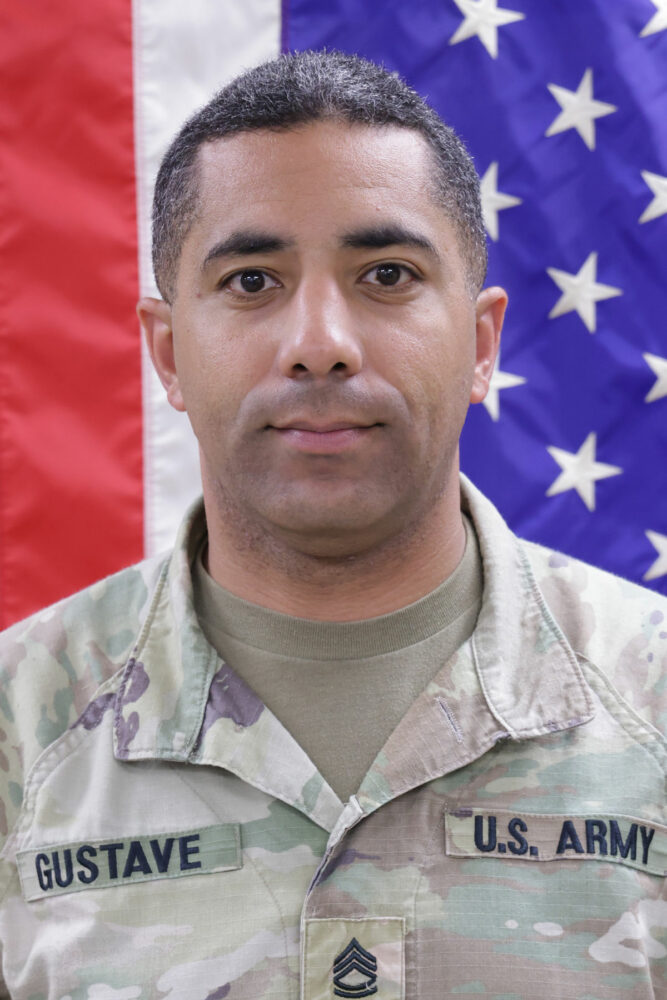
Cedric Gustave serves as an Instructor in Military Science at the University of Wisconsin-Stevens Point, affiliated with the Department of Military Science. His office is located in Marshfield Clinic Health System Champions Hall, room 159G, with contact phone 254-449-2288. His professional background includes: Staff Sergeant (SFC), United States Army, 2015 Bradley Master Gunner School, 2011 Drill Sergeant training, 2007 His expertise centers on military leadership development across operational contexts, specialized M2A3 Bradley armored vehicle crew training, and tactical instruction for individual soldiers and small units. He emphasizes character-driven leadership development and practical combat readiness, drawing from extensive field experience in combined arms exercises. His teaching philosophy prioritizes translating battlefield lessons into leadership frameworks for future military officers. His distinguished recognition includes the 1st Brigade, 1st Cavalry Division Master Gunner award for Brigade Combined Arms Live Fire Exercise (CALFEX) at Fort Hood, TX, in 2019. SFC Gustave mentors cadets in military science curriculum with a focus on experiential learning, advising students that 'you will get back what you put in' and stressing that leadership development requires matching effort with passion. He actively shapes future Army leaders through ROTC programs while maintaining active-duty service connections.
Aditya Chopra is a Lecturer in Cadet Education (Engineering) at the Warsash Maritime School, part of Solent University. His role focuses on engineering and maritime training for cadets. Professional affiliations include direct academic contributions to nautical and technical education programs. Research interests are inferred to center around maritime education methodologies, engineering training efficacy, and cadet skill development in technical disciplines. No publications, grants, or awards are explicitly documented in the provided text. Affiliations remain limited to his current academic position.
Md Shahriar Zaman is a Lecturer in Cadet Education (Deck) at the Warsash Maritime School, part of Solent University. His role focuses on maritime training and education, particularly in nautical disciplines. Research interests appear centered around maritime safety, shipping operations, and cadet development, inferred from his departmental affiliation. No specific publications or awards are listed in the provided information. No documented advising activity or grants are mentioned. The Warsash Maritime School is recognized for its maritime training programs, suggesting potential involvement in practical ship-handling education and regulatory compliance training.
Alex Procupuk is a Lecturer in Cadet Education (Deck) at the Warsash Maritime School, part of Solent University. His role focuses on maritime training and nautical education, particularly for cadets preparing for deck officer roles. He specializes in areas such as navigation, maritime safety protocols, and regulatory compliance within the shipping industry. While specific research interests are not detailed in the provided text, his professional affiliation with the Warsash Maritime School—a globally recognized institution for maritime education—suggests expertise in cadet development programs, training methodologies for seafarers, and practical navigation techniques. No awards, grants, or recent publications are listed in the available information.
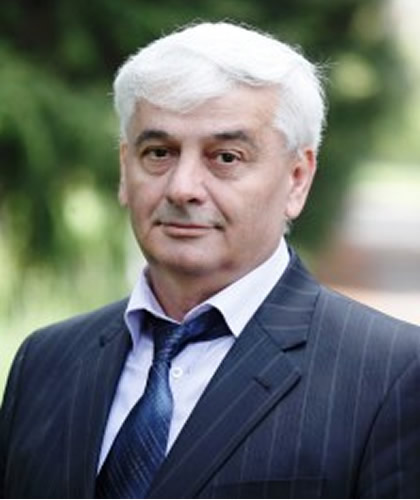
V. Prof. Dr. sc. Aleksa Stanković is an Associate Professor at the Faculty of Sports and Physical Education, University of Zenica. His academic journey includes a Master of Science in Physical Education from the Faculty of Physical Education, Sarajevo, and a Doctorate in Sports and Physical Education. He specializes in teaching Physical Education I and maintains an active research profile. Research interests span both sports science and theoretical computer science. In sports science, he focuses on motor abilities, morphological characteristics, and athletic performance in youth sports (e.g., basketball and football). His computer science work addresses algorithmic challenges in constraint satisfaction problems, approximation algorithms, and combinatorial optimization. Recent publications (2023–2025) highlight advancements in algorithm design and sports biomechanics. His work often bridges theoretical and applied domains, with studies analyzing training effects on motor skills and exploring computational complexity in discrete optimization problems. Consultations are managed via email or electronic communication, adhering to scheduled teaching hours. No scientific awards are explicitly mentioned in the provided texts. His professional role emphasizes teaching and research, with no noted affiliations to specific labs or teams beyond departmental responsibilities.
James R. Pascoe serves as Professor of Military Science at Widener University, where he leads the Reserve Officers' Training Corps (ROTC) program. His role encompasses training and mentoring future military officers within the university's framework, with direct oversight of cadet development and commissioning pathways. His educational background includes: Master of Science in Business, Leadership, and Administration (2006) from The University of Texas at El Paso Bachelor of Science in International and Strategic History (2002) from United States Military Academy Professor Pascoe's professional focus centers on applied military pedagogy, with emphasis on strategic leadership development and historical analysis of international security frameworks. His work directly translates academic theory into practical officer training through the ROTC curriculum, integrating historical case studies with contemporary military doctrine. Under his administration, the ROTC program has achieved notable milestones including cadet attainment of elite combat diver status as documented in September 2021 media coverage. Program sustainability and legacy were further highlighted in December 2024 and January 2025 features examining Widener's commitment to military education continuity. His advisory responsibilities encompass comprehensive cadet mentoring across academic, physical, and leadership domains. Recent program developments demonstrate institutional support for ROTC infrastructure as evidenced by 2024-2025 coverage of facility enhancements and community partnerships. The Military Science program operates as an integrated training unit within Widener's campus ecosystem, maintaining close coordination with Army headquarters while adapting curriculum to evolving defense requirements. Current initiatives focus on legacy preservation through structured knowledge transfer between graduating and incoming cadet cohorts.
Jhonny Mancia is an Instructor in the ROTC Program at the University of Mary Hardin-Baylor (UMHB), where he contributes to military science education and leadership training for cadets. He is actively serving in this academic instructional role with faculty-equivalent status. His areas of professional focus include Military Science , Leadership Training , Defense Studies , Strategic Studies , and National Security . These interests align with the mission of the ROTC program in preparing future officers for service in the armed forces. Mr. Mancia maintains an active presence at UMHB with his office located in Frazier 114, and he can be reached via email at jmancia@umhb.edu or by phone at (254) 295-4276. There is no public information available regarding research publications, awards, or student advisement.
Maj. Lawrence Bufalino serves as an Assistant Professor of Military Science at South Carolina State University, overseeing the Army ROTC Bulldog Battalion's quality control in contracting, cadet pay, administration, and logistics. As a primary instructor, he provides academic advising and counseling while contributing to targeted recruitment and retention efforts for commissioning programs. Education: Master's in Organizational Leadership (2014-2015) from University of Texas at El Paso; Bachelor's in Criminal Justice/Law Enforcement Administration from Mercyhurst University Key Responsibilities: Cadet payment administration, logistics coordination, leadership development, and test control officer functions His expertise spans military organizational systems, leadership training, and educational program administration, with a focus on developing future officers through structured ROTC programming.
Capt. Jeremy Heyward serves as an Assistant Professor of Military Science within the Army ROTC Bulldog Battalion at South Carolina State University. He holds primary responsibility for instructing Military Science I and II courses at Voorhees University while collaborating closely with South Carolina State University's ROTC program. His role focuses on developing foundational military competencies and leadership principles for cadets progressing toward Army commissioning. Heyward's professional expertise centers on military leadership pedagogy and training methodology development for early-stage ROTC cadets. His instructional approach emphasizes practical application of leadership fundamentals through structured military skill acquisition, preparing students for advanced officer training. This work directly supports the transition from civilian academic environments to military leadership roles within the Army's commissioning pipeline. As an integral member of the Army ROTC Bulldog Battalion, Captain Heyward operates within a multi-institutional framework that delivers standardized military science curriculum across partner universities. His position bridges academic instruction with practical military training requirements through the collaborative structure between South Carolina State University and Voorhees University.
Antonio Pittman serves as Professor of Military Science and ROTC Department Chair at South Carolina State University. He oversees cadet development, curriculum integration, and physical readiness programs. His responsibilities include ensuring good order and discipline, mentoring cadets, and coordinating military science courses (e.g., Military Science 4).
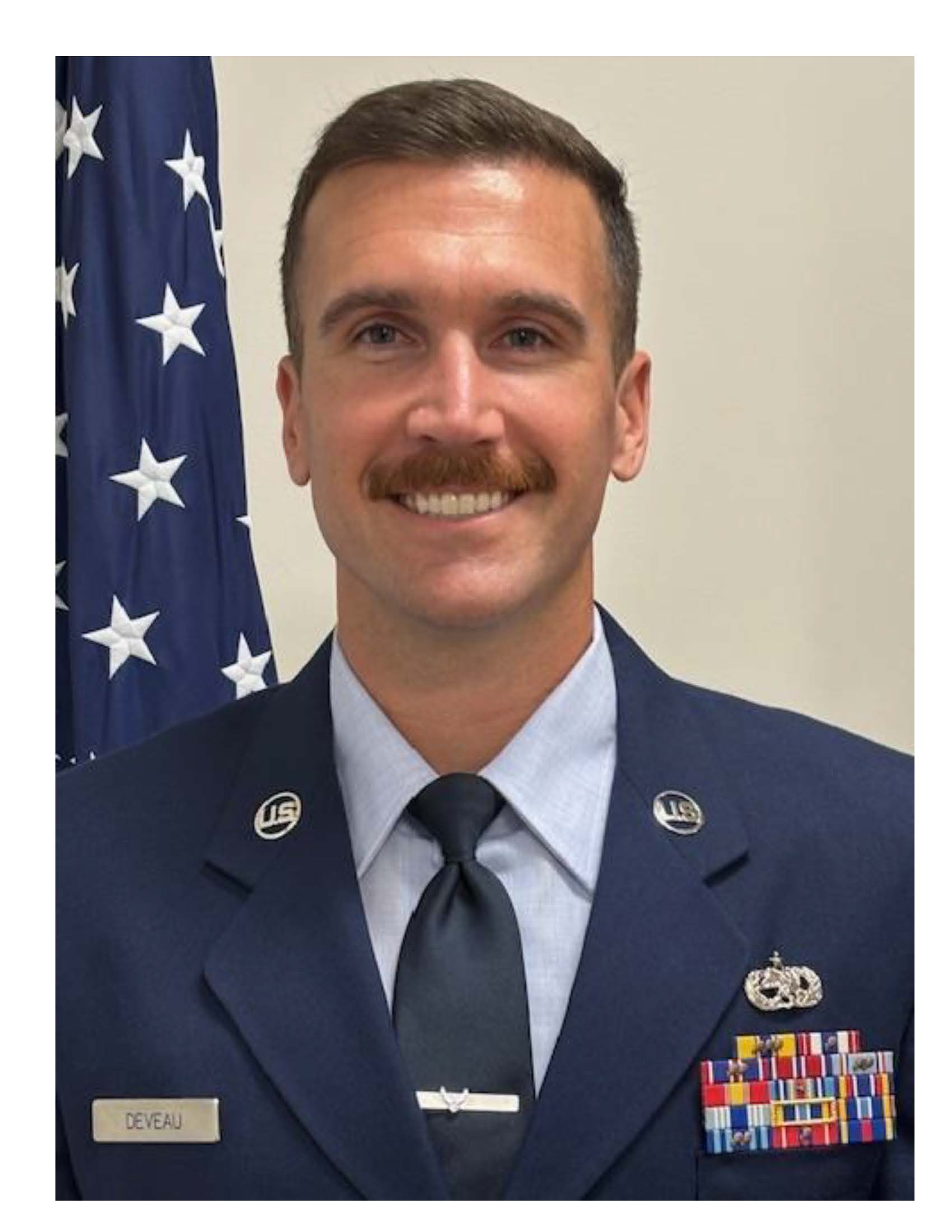
Nickolas Deveau serves as an Instructor of Aerospace Studies within the AddRan College of Liberal Arts at Texas Christian University, where he holds the military rank of Technical Sergeant in the U.S. Air Force ROTC program. Based in Rickel Hall, Room 247, he delivers curriculum through TCU Box 298330 and maintains direct university affiliation via n.deveau@tcu.edu. His academic focus centers on: Military Science Leadership Development Aviation and Aerospace History As a core instructor in the Air Force ROTC detachment, Technical Sergeant Deveau trains cadets in operational principles, leadership methodologies, and aerospace systems through structured academic and field exercises. His role emphasizes real-world military application while developing future Air Force officers' professional competencies within TCU's academic environment.
Alex Parker is a Professor in the Department of Oceanography at California State University Maritime Academy, a unique degree-granting maritime institution located in Vallejo, California. He contributes to the academic and research mission of the College of Natural Sciences and Mathematics, focusing on marine microbial processes in diverse aquatic environments. His research centers on marine microbial biogeochemistry, with emphasis on understanding the controls on phytoplankton and bacterial activity, quantifying microbial food web dynamics, and assessing microbial responses to coastal nutrient pollution. He conducts field studies in urbanized estuaries such as the San Francisco Bay Estuary and Delaware Bay, as well as in more remote marine systems including the Gulf of the Farallones National Marine Sanctuary, the Equatorial Pacific Ocean, the Chukchi Sea in the Arctic, and Antarctica. His work integrates field observations with biogeochemical analyses to reveal ecosystem-level impacts of anthropogenic nutrient inputs. Dr. Parker’s research spans multiple marine environments, reflecting a strong interdisciplinary approach combining oceanography, microbiology, and environmental science. Though no specific publications or funding details are listed, his research trajectory indicates sustained engagement in coastal and open-ocean microbial ecology. His work contributes to broader understanding of how microbial communities respond to environmental change, particularly in nutrient-impacted systems. He has not been noted to receive any specific scientific awards in the provided text. Dr. Parker advises students and contributes to academic training within the oceanography program, though no named advisees are listed. There is no mention of external grants or funded projects in the available information. His work likely supports undergraduate and cadet research opportunities aligned with the academy’s 'Learn by Doing' philosophy. He is involved in research fieldwork across diverse marine ecosystems, suggesting participation in collaborative oceanographic teams and potential leadership in field campaigns, though specific labs or research groups are not named in the text.
Zander Parker is an Assistant Professor in the Department of Marine Transportation at Maine Maritime Academy, Castine, Maine. He is actively involved in academic instruction related to marine transportation and maritime operations, with office hours held on Wednesdays and Thursdays. His role supports the academy's mission of providing hands-on, professional maritime education. His research and teaching interests center on marine transportation systems, including navigation, ship handling, maritime safety, and commercial shipping practices. These fields align with the operational and academic focus of the Department of Marine Transportation at a maritime-focused institution. No publications or scientific awards are listed in the available information. There is no mention of research grants, student advising, or laboratory affiliations in the provided text. Zander Parker advises students during scheduled office hours and by appointment on Mondays, Tuesdays, and Fridays. While no formal advisees are listed, his role likely includes mentoring cadets and supporting academic development within the maritime curriculum. He is affiliated with the Department of Marine Transportation at Maine Maritime Academy, which offers specialized training through programs such as the TSSOM Training Cruise, Bowdoin Training Cruise, and waterfront-based education using vessels like the training ship State of Maine and the schooner Bowdoin.
Adam Slazas is an Associate Professor in the Department of Marine Transportation at Maine Maritime Academy, where he has been a faculty member since 2007. He plays a vital role in maritime education, serving as the Senior Deck Training Officer aboard the T.S. State of Maine and as the Marine Transportation Cadet Shipping Coordinator. His expertise spans ship stability, navigation rules, and advanced tanker operations. His academic background includes a Bachelor of Science in Marine Transportation from Massachusetts Maritime Academy, and he holds a U.S. Coast Guard Master’s license for Steam and Motor Vessels of Unlimited Tonnage. His seagoing career encompassed diverse vessels such as petroleum carriers, research ships, and RoRo vessels across global trades. His research and teaching interests center on marine transportation systems, maritime safety, and operational best practices in commercial shipping. With over 23 years of domestic and international maritime experience, he brings real-world insights into the classroom and training cruises. His contributions to teaching excellence were recognized with the Academy’s Excellence in Teaching Award in 2011–2012, voted by recent alumni. This honor underscores his impact on students and maritime education. He advises cadets through structured shipping programs and training cruises, contributing to their professional development. Although specific grants are not listed, his leadership in training and cadet coordination reflects ongoing institutional support for maritime workforce development. He is actively involved in the training cruise programs aboard the T.S. State of Maine and the Schooner Bowdoin, integral to the hands-on education model at the academy. These programs emphasize practical seamanship, navigation, and leadership at sea.