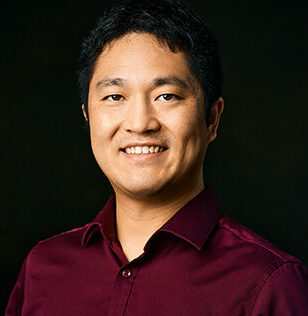
Martin Hildebrand is a Professor in the Department of Mathematics & Statistics at the University at Albany. His research focuses on Probability on finite groups and Combinatorics . Contact: Hudson 247A, (518) 442-4016, mhildebrand@albany.edu Courses: Spring 2025: Mathematics 367 (Discrete Probability), 468/555 (Mathematical Statistics). Fall 2025: Mathematics 403 (Actuarial Mathematics), 467/554 (Mathematical Statistics), 469 (Actuarial Exam P Preparation). His publications analyze random processes on finite groups, including Markov chains , random walks , and Chung-Diaconis-Graham processes , with applications in probability theory and combinatorics. Recent work (2022) explores symmetrized random processes, while earlier studies (2000-2014) address packing density, log-concavity, and convergence rates of random walks.
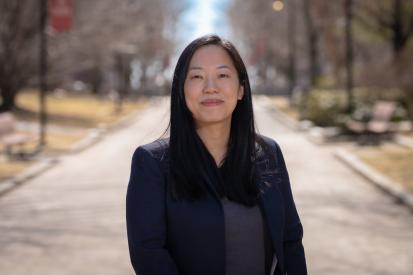
Phoenix Fang is an Assistant Professor in the Computer Science and Software Engineering Department at California Polytechnic State University (Cal Poly San Luis Obispo). She is also affiliated with the Computer Engineering Program. Her research focuses on wireless communications, public safety communications, cybersecurity (including 5G, IoT, and critical infrastructure security), and privacy preservation. She teaches courses such as Intro to Computer Security and Wireless Security. Education: PhD in Electrical and Computer Engineering, University of Nebraska-Lincoln (2019) MS in Mechatronic Engineering and Automation, Shanghai University (2014) BS in Astronautics, Harbin Institute of Technology (2011) Her research projects include improving communication energy efficiency in public safety systems, enhancing 5G security with privacy preservation, and developing schemes for IoT device protection. She has published extensively in journals like Ad Hoc Networks and conferences such as IEEE ICC and VTC. Phoenix emphasizes hands-on cybersecurity education for diverse students and collaborates on interdisciplinary projects involving smart grids and cyber-physical systems.
Alexandra Jimborean is a Ramón y Cajal researcher at the University of Murcia and affiliated Associate Professor at Uppsala University. She holds a PhD from the University of Strasbourg and specializes in compile-time code analysis, optimization, and software-hardware co-designs for performance and energy efficiency. Research focuses on: Instruction prefetching and speculative execution mechanisms Compiler-assisted code optimization techniques Hardware-software co-design for secure and efficient processors Dynamic program analysis frameworks Significant contributions include the development of the DAEDAL and Clairvoyance compiler technologies, commercialized through the EtaScale startup. Holds leadership roles in major conferences including Program Chair for CGO 2019 and CC 2020.
Elizabeth Varki is an Associate Professor and Graduate Program Coordinator in the Department of Computer Science at the University of New Hampshire's College of Engineering and Physical Sciences. Her research focuses on computer operating systems, simulation/modeling, and systems analysis. She holds a Ph.D. in Computer Science from Vanderbilt University and multiple advanced degrees from the University of Delhi and Villanova University. Her work emphasizes performance evaluation of computing systems, storage optimization, and parallel systems design. Key research contributions include innovative approaches to storage positioning (GPSonflow), RAID systems (RAIDX), and cache prefetching techniques. Her teaching spans courses like Operating System Fundamentals, Database Systems, and Distributed Systems. Varki's publications span ACM Transactions, IEEE journals, and major conferences in performance evaluation and storage systems. Her advising and grants focus on advancing storage and distributed systems research, though specific grant details are not provided here. She is affiliated with the UNH's Computer Science department and contributes to interdisciplinary efforts in computational performance analysis.
Professor Ed Ferrari is Director of the Centre for Regional Economic and Social Research (CRESR) at Sheffield Hallam University. He holds a PhD and is a Fellow of the Higher Education Academy (FHEA). His expertise spans housing market analysis, strategic planning, GIS applications, and transport policy. He co-led the £6m Collaborative Centre for Housing Evidence (CaCHE) and serves as Managing Editor of Housing Studies , a leading journal in the field. Key roles include advising the Sheffield City Region on housing policy and chairing the Housing Studies Association. Education : PhD (Housing Studies) Bachelor of Arts (BA Hons) Diploma in Teaching in the Physical Sciences (DipTP) Research Focus : Ed specializes in housing policy, spatial analysis, and the intersection of transport and housing markets. Recent projects include evaluations of the Affordable Homes Programme and the Doncaster Health Determinants Research Collaboration. His work emphasizes evidence-based policy, particularly in addressing low-income neighborhood challenges and urban planning. Publications : He has authored over 50 peer-reviewed articles focusing on housing markets, GIS applications, and policy impact. Notable works include analyses of transport barriers to employment and the role of online property platforms in market dynamics. Grants & Projects : Lead on £6m CaCHE (2017-2022) Active Travel Portfolio Research (Department for Transport, 2022-2027) Evaluation of Housing Twenty11 (Red Kite Community Housing Association, 2018-2021) Advisory Roles : He advises regional governments and contributes to national housing taskforces, emphasizing equitable urban development and policy innovation.
Dr. Michael Horsch is a retired Associate Professor in the Department of Computer Science at the University of Saskatchewan. His research focuses on Artificial Intelligence, Reasoning Under Uncertainty, Constraint Satisfaction, and Machine Learning. He has contributed to bioinformatics through the P2IRC sub-theme, linking genotype and environment to phenotype using computational methods. Education: PhD (Computer Science, UBC, 1998), M.Sc. (Computer Science, UBC, 1990), B.Sc. (Computer Science & Physics, University of Toronto, 1988). Postdoctoral work at Simon Fraser University (2000). Research interests emphasize practical AI applications, including Bayesian networks, constraint satisfaction algorithms, and machine learning. His work bridges theoretical foundations and real-world problems, such as path planning and sensor optimization. Teaching highlights include courses on AI (CMPT 317), programming (CMPT 145), and machine learning (CMPT 423/820). He revised first-year curricula to improve student accessibility, replacing C++ with more user-friendly languages. Recognized for teaching excellence with the 2014 Provost’s Award. Publications span constraint satisfaction, probabilistic reasoning, and Bayesian networks, with notable contributions to algorithm design and optimization.
Haffay ABREHA is a Doctoral researcher at the University of Luxembourg's Interdisciplinary Centre for Security, Reliability and Trust (SnT), within the SigCom department. His research focuses on advanced networking technologies, including edge computing, satellite communications, and federated learning. He holds a strong interest in network virtualization, resource management, and optimizing mission-critical applications in distributed systems. Contact: haftay.abreha@uni.lu Research Interests: ABREHA’s work spans satellite edge networks, federated learning frameworks, fog computing monitoring, and resource-aware caching strategies. He explores how machine learning can enhance adaptive systems and improve network reliability in dynamic environments. Recent studies emphasize fairness-aware VNF scheduling, SDN/NFV integration, and optimizing content delivery in multi-layer satellite architectures. Labs/Teams: Active member of the SigCom research group at SnT, contributing to interdisciplinary projects on secure and reliable communication systems.
Xenofontas Dimitropoulos is an Associate Professor at the University of Crete's Computer Science Department and Affiliated Researcher at Foundation for Research and Technology Hellas (FORTH), where he leads the INSPIRE research group focusing on Internet security, privacy, and intelligence. His research examines software defined networks, Internet measurements, and cybersecurity frameworks. Education: PhD in Electrical and Computer Engineering, Georgia Institute of Technology (2006) MSc in Electrical and Computer Engineering, Georgia Institute of Technology (2002) BS in Physics, Aristotle University of Thessaloniki (2001) His research focuses on developing novel approaches to Internet routing security, privacy-preserving network monitoring, and SDN-based infrastructure optimization. Recent work explores BGP hijacking mitigation, IXP architectures, and mobile edge caching systems. Publications demonstrate consistent focus on network security and Internet measurements, with recent studies concentrating on practical solutions for routing vulnerabilities, colocation facility disruptions, and mobile edge computing optimizations. Earlier foundational work established privacy-preserving computation frameworks for multi-domain networks. Scientific Awards: ERC Proof of Concept Grants (2018, 2019) IEEE Security Symposium Best Paper Award (2013) ACM CoNEXT General Chair (2018) Marie Curie Reintegration Grant (2007) Fulbright Fellowship (2001) Research Leadership: Directs the INSPIRE research group with over 15 members including postdocs, PhD students, and research engineers. Secured €1.41M ERC Starting Grant for innovative Internet routing research. Current projects include RAVEN (BGP vulnerability assessment) and PHILOS (hijacking detection system).
Polyvios Pratikakis is Associate Professor in the Computer Science Department at University of Crete and Visiting Researcher at FORTH-ICS. Research develops tools for parallel/distributed software execution, focusing on programming languages, runtimes, and static analysis for modern hardware. Current projects include EuroEXA (programming models for exascale applications) and ETAK (earthquake simulation deployment in cloud environments). Past projects include ASAP (big data workflows), Myrmics/BDDT/PARTEE (task-parallel runtimes), and GreenVM (JVM for non-cache-coherent architectures). Additional research examines software fault tolerance and static analysis for parallel programs. Teaching includes undergraduate/graduate courses on Parallel Programming, Type Systems, Multicore Programming, and Computer Science fundamentals. Supervises multiple MSc/PhD students in compiler design, runtime systems, and social network analytics. Service includes program committees (EuroPar, CF), HiPEAC organization, and faculty committees at University of Crete.
Di Wu is an Assistant Professor at the University of Central Florida in the Department of Electrical and Computer Engineering. Their research focuses on next-generation computing systems spanning computer architecture , neuromorphic computing , and quantum computing . PhD in Electrical and Computer Engineering from University of Wisconsin, Madison (2023) Research highlights include innovations in domain-specific acceleration and heterogeneous systems . Recent publications demonstrate expertise in value-level parallelism , stochastic computing , and quantum error correction . Current projects target deep learning systems , neuromorphic brain-computer interfaces , and quantum architecture optimization . Professional recognition includes: 2024 ASPLOS Distinguished Artifact Evaluation Award 2024 Harold Peterson Outstanding Dissertation Award 2023 ML & Systems Rising Star Di Wu contributes to academic leadership as a program committee member for top conferences (ASPLOS, HPCA, ISCA, MICRO) and organizing chair roles for WUC @ ASPLOS 2024 and ARTEQC @ HPCA 2025.
Dr Zhiyuan (Thomas) Tan is an Associate Professor in the School of Computing, Engineering and the Built Environment at Edinburgh Napier University (ENU). His research focuses on Cybersecurity, Machine Learning, and Network Security with applications in IoT, Edge Computing, and Intelligent Transportation Systems . He has supervised 11 PhD students over 10 years, with 6 completing their studies successfully. Education: BEng (2005) from Northeastern University (China), MEng (2008) from Beijing University of Technology, PhD (2014) from University of Technology Sydney. Research Interests include: Cybersecurity and Machine Learning for Malware Detection Adversarial Machine Learning in Network Security Trust Evaluation in Vehicular Networks Secure Data Architectures for Critical Systems Touch-based Biometric Authentication Hardware Security and Federated Learning Recent Research Trends involve: Advancements in Federated Learning and Machine Unlearning Privacy-preserving IoT and Edge Computing Adversarial Techniques in Malware Analysis Trust Models for Cyber-physical Systems Scientific Awards National Research Award 2017 (Oman) Three Best Paper Awards Kaspersky Lab Finalist Award Stanford Top 2% Scientist (2021-2023) Honourable Mention in SICSA Supervisor of the Year 2019 Grants from organizations including Royal Society (£12,000) , Scottish Informatics Alliance , CSIRO , and ENU Development Trust (£29,703) . He actively recruits self-motivated PhD students for research in Adversarial Machine Learning , Virtualization Security , and Machine Learning Security .
Trung Q. Duong is a Canada Excellence Research Chair and Full Professor at Memorial University of Newfoundland, Canada. He specializes in wireless and quantum communications, with a focus on 5G/6G networks, IoT applications, and quantum machine learning. His research addresses challenges in network optimization, digital twin integration, and UAV-based communication systems. Education: PhD in Telecommunications Systems from Blekinge Institute of Technology, Sweden. Research Interests: Quantum machine learning, real-time optimization for UAVs, integrated satellite-terrestrial networks, and security in communications. His work spans applications in healthcare, disaster management, and smart cities. Key Achievements: Over 500 publications (20,000+ citations, h-index 76), $54M+ in grants, and prestigious awards like the Newton Prize and IEEE Fellowship. He serves as an editor for top journals such as IEEE Trans. on Wireless Communications and IEEE Wireless Communications Letters. Global Collaborations: Visiting Professorships at National Chung Cheng University (Taiwan), Kyung Hee University (South Korea), and Thuyloi University (Vietnam). Active in international grant review panels across 20+ countries.
Tian Guo is an Associate Professor in the Computer Science Department at Worcester Polytechnic Institute (WPI), where he leads research in systems for machine learning and augmented reality. He joined WPI after completing his PhD at the University of Massachusetts Amherst in 2016. His educational background includes: Bachelor of Engineering from Nanjing University (2010) Master of Arts from University of Massachusetts Amherst (2013) PhD from University of Massachusetts Amherst (2016) Professor Guo's research focuses on designing systems mechanisms and policies to handle trade-offs in cost, performance, and efficiency for emerging applications, particularly in the areas of: Cloud/edge resource management for machine learning workloads Deep learning inference optimization for mobile applications Augmented reality systems with focus on lighting estimation Distributed training frameworks for deep learning models His recent publications demonstrate a strong trend toward improving system support for deep learning applications, with particular emphasis on mobile and edge computing environments. His work bridges the gap between theoretical machine learning advances and practical system implementations. Professor Guo has received significant recognition for his research: National Science Foundation CAREER AWARD (2023) National Science Foundation CRII AWARD (2018) Outstanding Achievement by a Young Alum, Manning College of Information & Computer Sciences, UMass Amherst (2022) Best Paper Award, ACM Multimedia Systems Conference (2020) He actively mentors graduate students and has advised several PhD and Master's students to completion. His research is supported by major funding from the National Science Foundation, Google Cloud, and VMware Research. Professor Guo leads The Cake Lab at WPI, which focuses on creating efficient and effective systems for emerging applications, particularly those involving machine learning and augmented reality.
Rezaul Chowdhury is an Associate Professor in the Department of Computer Science at Stony Brook University (SBU), with a joint appointment at the Institute for Advanced Computational Sciences (IACS). His research focuses on algorithms and data structures for efficient serial and parallel computing, computational biology, and experimental algorithmics. He leads the Theoretical and Experimental Algorithmics (TEA) Group, emphasizing both algorithm design and engineering. Notable contributions include the Pochoir stencil compiler and the AutoGen system for dynamic programming algorithms. Chowdhury earned his Ph.D. from UT Austin, working on cache-efficient algorithms, and held postdoctoral positions at MIT and UT Austin. He has received prestigious awards, including the NSF CAREER Award and a Best Paper Award at IPDPS 2010. His work spans parallel programming, cache-oblivious algorithms, and bioinformatics applications like protein-protein docking (F2Dock). Teaching includes advanced courses on algorithms, parallel computing, and supercomputing. He advises multiple Ph.D. and master’s students and actively contributes to competitive programming through the SBU teams. His research projects are NSF-funded, focusing on stencil computations and resource-oblivious algorithms. Key software contributions include Pochoir (for stencil computations), F2Dock (protein docking), and AutoGen (automated algorithm discovery). His work bridges theory and practice, addressing challenges in multicore and distributed systems.
Dongyoon Lee is an Associate Professor in the Department of Computer Science at Stony Brook University. His research focuses on building reliable, secure, and efficient software systems, spanning compiler design, operating systems, security, and hardware architecture. He holds a Ph.D. (2013) from the University of Michigan, Ann Arbor, and has held positions at Virginia Tech (2014-2019) and internships at Microsoft Research, NEC, and IBM. Education: Ph.D. in Computer Science & Engineering, University of Michigan, Ann Arbor (2013) M.S. in Computer Science & Engineering, University of Michigan, Ann Arbor (2009) B.S. in Electrical and Computer Engineering, Seoul National University (2004) Research Interests: Lee's work addresses challenges in software reliability (e.g., concurrency bugs, transient faults), security (e.g., memory safety, kernel permissions), and runtime systems (e.g., stream processing, distributed storage). He leads the COSY Lab (Compilers, Operating Systems, and Security), emphasizing cross-stack solutions. Recent Article Trends: Recent publications focus on homomorphic encryption compilers (e.g., DaCapo , HECATE ), energy-efficient systems ( Write-Light Cache ), and security tools like DevFuzz for device driver testing. Themes include optimizing performance-security trade-offs and addressing vulnerabilities in edge computing and embedded systems. Awards: Distinguished Paper Awards (ESEC/FSE 2018, ASE 2019), ICTAS Junior Faculty Award (2017), Google Research Award (2015), and ProQuest Distinguished Dissertation Award (2013). Advising & Grants: Supervises students in Ph.D., MS, and undergraduate programs. Secured grants including NSF SaTC funding for homomorphic encryption compilers and projects with the South Korean Agency for Defense Development (ADD). Leads research on ARM TrustZone security and energy harvesting systems. Labs/Teams: COSY Lab (Compilers, Operating Systems, and Security) at Stony Brook, collaborating on cross-disciplinary projects with industry and government partners.