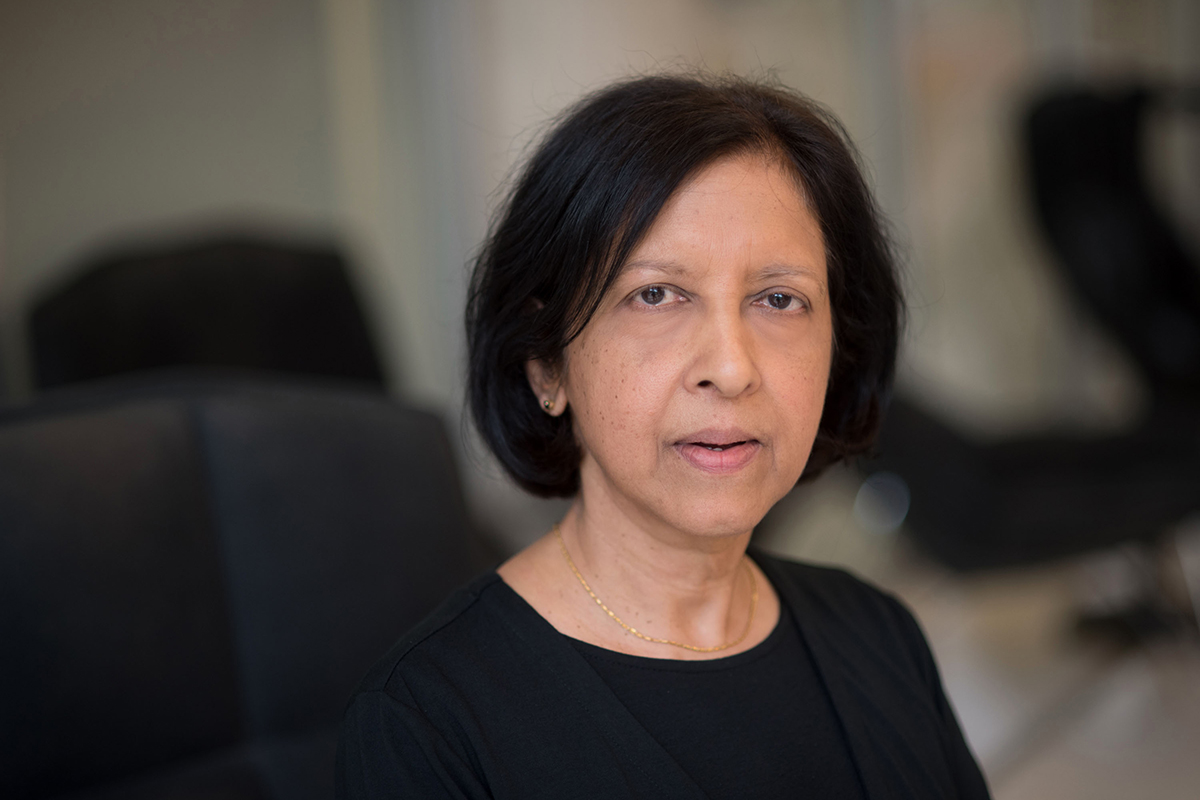
Professor John D. Kubiatowicz is a faculty member at the University of California at Berkeley in the Department of Electrical Engineering and Computer Sciences since 1998. He holds a PhD in Electrical Engineering and Computer Science (minor in Physics) from MIT (1998), an M.S. in EECS (1993), and a double B.S. in Electrical Engineering and Physics (1987) from MIT. His research interests span Quantum Computing Architectures Distributed Systems and Storage Network Security and Peer-to-Peer Protocols Introspective and Manycore Operating Systems Edge and Fog Computing Hardware-Assisted Security He has pioneered systems like OceanStore , a global-scale distributed file system, and Tessellation , a manycore OS with continuous adaptation. The scientific awards he has received include Presidential Early Career Award (PECASE, 2000) Scientific American 50 (2002) Diane S. McEntyre Teaching Award (2003) IEEE ICRA Best Paper (2025) George M. Sprowls Award for MIT PhD thesis (1998) Okawa Research Grant (1998) Best Paper at International Conference on Supercomputing (1993) His recent publications focus on Quantum Circuit Design and Optimization Edge/Fog Computing Architectures Secure Runtime Systems Distributed Garbage Collection Manycore OS Innovations Hardware-Assisted Security Mechanisms He leads the Quantum Architecture Research Center and co-founded the SWARM Lab at Berkeley, advancing a vision of self-adapting, secure systems from the chip level to internet scale.
Julian Shun is an Associate Professor at the Massachusetts Institute of Technology (MIT) in the Department of Electrical Engineering and Computer Science (EECS) and a principal investigator in the Computer Science and Artificial Intelligence Laboratory (CSAIL). Previously, he was a Miller Research Fellow at UC Berkeley and earned his Ph.D. from Carnegie Mellon University under Guy Blelloch. His research focuses on parallel and high-performance computing, with emphasis on graph analytics, spatial/graph clustering, and dynamic algorithms. He designs algorithms with theoretical guarantees and empirical efficiency, along with high-level programming frameworks to simplify parallel code development. His work spans cache-oblivious, external-memory, and streaming graph algorithms, addressing scalability and performance across diverse computational architectures. Julien's recent publications highlight advancements in parallel graph traversal, dynamic connectivity, and approximation algorithms for centrality metrics. His research also explores domain-specific languages like GraphIt for graph analytics and frameworks such as Julienne for work-efficient bucketing. Scientific Awards: Miller Research Fellow at UC Berkeley He has taught graduate-level courses at MIT, including 6.506 (Algorithm Engineering) and 6.886 (Graph Analytics), emphasizing theoretical foundations, experimental analysis, and open-ended research projects.
Baris Kasikci is an Associate Professor in the Paul G. Allen School of Computer Science & Engineering at the University of Washington. Previously (2017-2023), he was a Morris Wellman Assistant Professor in the Electrical Engineering and Computer Science Department at the University of Michigan. His research focuses on building efficient and trustworthy computer systems through innovative combinations of approaches from systems, computer architecture, and programming languages. Dr. Kasikci received his PhD in Computer Science at EPFL and has held research positions at Microsoft Research Cambridge, Google, Intel, and VMware. His work addresses critical challenges in system reliability, security, and performance in increasingly complex software ecosystems. His research interests center on improving the efficiency of datacenter applications and machine learning systems, analyzing and fixing failures, and enhancing hardware security. His lab develops techniques for automated bug detection, formal verification of distributed systems, and building systems support for heterogeneous hardware architectures. Recent projects include Whisper (profile-guided branch misprediction elimination), Huron (taming false sharing), and Agamotto (automatic detection and repair of bugs in persistent memory applications). Analysis of his recent publications shows a strong trend toward optimizing large language model serving, hardware security, and performance optimization for modern heterogeneous architectures. His work bridges traditional systems research with emerging AI infrastructure needs, particularly in efficient LLM serving, security vulnerabilities in modern hardware, and performance optimization for heterogeneous computing environments. NSF CAREER award Microsoft Research Faculty Fellowship Intel Rising Star Award VMware Early Career Faculty Grant Google Faculty Award Roger Needham PhD Award (best PhD thesis in computer systems in Europe) Patrick Denantes Memorial Prize (best PhD thesis at EPFL) Best Paper Award at OSDI'18 Best Paper Award at MICRO'22 Dr. Kasikci has advised numerous PhD students who have gone on to prestigious positions in academia and industry, including Tanvir Ahmed Khan (Assistant Professor at Columbia University), Akshitha Sriraman (Assistant Professor at CMU), and Jiacheng Ma (AMD). His research has been supported by significant grants from NSF, DARPA, Intel, Google, Microsoft, VMware, and Amazon. His lab, the EfesLab, focuses on building tools and techniques that make computer systems more reliable, secure, and efficient. The EfesLab, led by Dr. Kasikci, brings together postdocs, PhD students, and undergraduate researchers to tackle fundamental challenges in systems reliability and performance. The lab has developed numerous influential tools including Whisper, Huron, and Agamotto that address critical performance and reliability issues in modern computing systems. Current research directions include efficient LLM serving, security of emerging hardware technologies, and automated debugging techniques.
Charles E. Leiserson is a Professor of Computer Science and Engineering at MIT, holding the Edwin Sibley Webster Professorship in Electrical Engineering and Computer Science. He leads the Supertech Research Group and is Faculty Director of the MIT-Air Force AI Accelerator. His work focuses on parallel computing, performance engineering, and algorithms. Leiserson is renowned for co-authoring the foundational textbook Introduction to Algorithms , widely used in computer science education globally. He has pioneered technologies like the Cilk multithreaded programming language and contributed to supercomputing architectures such as the Connection Machine CM-5. His research bridges theoretical computer science with practical applications, emphasizing cache-oblivious algorithms and compiler optimizations. Leiserson has received multiple awards for his academic contributions and educational impact, including the ACM-IEEE Ken Kennedy Award and Margaret MacVicar Fellow distinction at MIT. Education: B.S., Yale University, 1975 Ph.D., Carnegie Mellon University, 1981 Research Interests: Leiserson’s work addresses performance engineering challenges in post-Moore’s Law computing. His group develops algorithms, software systems, and hardware strategies for scalable parallelism. Key areas include parallel programming frameworks (e.g., OpenCilk), cache-aware algorithms, and compiler optimizations. He emphasizes making parallel computing accessible to mainstream programmers through tools like Cilk and educational initiatives such as MIT’s Software Performance Engineering course. Projects & Leadership: Leiserson leads the Supertech Research Group and contributed to the Cilk Arts Inc. venture, acquired by Intel. He chairs the MIT Undergraduate Practice Opportunities Program (UPOP) and teaches courses on algorithms and discrete mathematics. His leadership workshops for faculty have educated hundreds worldwide on team management in academia. Awards & Recognition: 2014 ACM-IEEE Ken Kennedy Award IEEE Taylor L. Booth Education Award ACM Paris Kanellakis Theory and Practice Award Member of the National Academy of Engineering Labs & Teams: Active in MIT’s CSAIL, Leiserson collaborates through the Supertech Group and Theory of Computation communities. His current projects include Tapir compiler infrastructure, graph neural network applications for anti-money laundering, and deterministic parallel scheduling algorithms.
Michael A. Bender is the John L. Hennessy Chaired Professor of Computer Science at Stony Brook University. His work spans both theoretical and applied domains in algorithms, data structures, and storage systems. He co-founded Tokutek, Inc., a database company acquired by Percona in 2015, and has held visiting positions at MIT and King's College London. Education: PhD in Computer Science from Harvard University (1998), DEA and Magistère in Computer Science from École Normale Supérieure de Lyon (1993), BA in Applied Mathematics from Harvard (1992). His research focuses on cache-oblivious algorithms , I/O-efficient computing , parallel systems , and scheduling . His work addresses scalability in large-scale data management and computational geometry, with applications in bioinformatics and robotics. The 15 most recent publications highlight advancements in list labeling , hash table design , graph algorithms , and memory optimization . These papers reflect his commitment to solving practical problems with rigorous algorithmic approaches. Awards include: PODS Best Paper Award (2024) ASPLOS Distinguished Paper Award (2023) USENIX FAST Best Paper Award (2016) Chancellor's Award for Excellence in Teaching (2015) R&D 100 Award (2006) He has led the Stony Brook Computer Science Honors Program and advised graduate students in algorithmic research. His grants portfolio includes 39 funded projects, emphasizing algorithm engineering and systems optimization.
Dr. Sebastian Wild is a Lecturer at the University of Liverpool, specializing in algorithms and data structures. His research focuses on developing space-efficient and adaptive methods for computing over compressed data, optimizing performance based on input characteristics. He has led projects on sorting, selection, and dictionary operations, with an emphasis on exact constant-factor analysis and practical efficiency. Research Grants: Computing over Compressed Graph-Structured Data (EPSRC, 2024-2027) Decomposition techniques for graphs (Royal Society, 2023-2025) Lazy Finger Search Trees (Royal Society, 2021-2022) Recent publications highlight advancements in adaptive sorting, approximation algorithms for scheduling, and cache-oblivious data structures. Themes include implicit representations, compressed graph processing, and run-adaptive methods. His work bridges theoretical analysis with real-world applications in databases, compression, and algorithm engineering. Professional Roles: REF Impact Lead (Department, 2023-present) Outreach Co-ordinator (Department, 2020-present) Recruitment Lead (School/Institute, 2022-2024) He teaches modules like COMP335: Communicating Computer Science and supervises theses, integrating his research into pedagogy.
Richard J. Cole is a Silver Professor of Computer Science at New York University's Courant Institute of Mathematical Sciences, part of the Faculty of Arts and Science. His research focuses on algorithm design, algorithmic economics, game theory, and parallel computing. He holds a Ph.D. in Computer Science from Cornell University (1982) and a B.A. in Mathematics from Oxford University (1978). Education: Ph.D., Computer Science, Cornell University, USA, 1982 B.A., Mathematics, Oxford University (University College), United Kingdom, 1978 His research spans algorithmic economics (market theory, mechanism design), parallel algorithms, and foundational areas like string matching and graph algorithms. Recent work emphasizes stable matching, non-quasi-linear agent mechanisms, and fair resource allocation. He has advised notable Ph.D. students including Yun Kuen Cheung and Vasilis Gkatzelis. Teaching includes undergraduate and graduate courses on algorithms, computational theory, and algorithmic aspects of the internet. His 15+ years of publications reflect contributions to theoretical computer science and interdisciplinary applications in economics. His work on parallel computing and resource-oblivious algorithms addresses multicore efficiency, while contributions to market equilibrium analysis and mechanism design highlight algorithmic solutions to economic challenges.
Miriam Schulte is a Professor at the University of Stuttgart’s Institute for Parallel and Distributed Systems, leading the Institute for the Simulation of Large Systems. She holds a Carl von Linde Junior Fellowship and has held academic roles since 2002, including heading the CFD Group at TUM. Her expertise spans computational fluid dynamics (CFD), high-performance computing (HPC), and numerical methods for PDE solvers. She earned her diploma (1997) and PhD (2001) in mathematics from TUM, followed by habilitation in Computer Science (2010). Her research focuses on optimizing algorithms for efficient simulation software, integrating mathematics and computer science. Key areas include fluid-structure interactions, multi-physics coupling, and scalable parallel computing. She has contributed to frameworks like Peano for adaptive Cartesian grids and developed methodologies for partitioned fluid-structure interaction simulations. Publications highlight advancements in HPC, multi-physics coupling, and parallel algorithms. Awards include the Bayerische Begabtenfoerderung (1993–1997). Her work bridges computational methods with real-world applications, emphasizing scalability and efficiency in large-scale simulations.
Vincent Danjean is an associate professor at Grenoble Alpes University , specializing in parallel computing, high-performance computing, and bioinformatics. He earned his PhD in 2004 from École Normale Supérieure de Lyon under the supervision of Raymond Namyst. Research Interests: Vincent's work spans several critical areas in computational science: Parallel and Distributed Systems: Focus on task-based parallelism and hybrid cluster architectures. Performance Analysis: Development of visual frameworks for analyzing parallel applications. Bioinformatics: Application of computational methods to genetic and genomic data analysis. GPU Computing: Efficient scheduling and work stealing strategies for multi-GPU systems. Reproducible Research: Workflows using Git and Org-mode for scientific transparency. Publication Trends: His publications demonstrate a consistent focus on advancing parallel computing techniques, with significant contributions to GPU scheduling, cache-efficient algorithms, and visualization tools. Recent work includes interdisciplinary applications in genomics and cybersecurity protocols. Contact: vincent.danjean@imag.fr
Norbert Zeh is a Professor in the Faculty of Computer Science at Dalhousie University, Halifax, Nova Scotia, Canada. He has been a faculty member since April 2003 and is actively engaged in research and teaching in algorithms and data structures, with applications in bioinformatics and large-scale data processing. His research interests include: Algorithms and data structures I/O-efficient and cache-oblivious algorithms Parallel algorithms Graph algorithms Computational geometry Algorithm engineering NP-hard problems in bioinformatics, particularly phylogenetic network construction He previously held a Tier II Canada Research Chair in Algorithms for Memory Hierarchies from 2007 to 2017, reflecting significant recognition in his field. Norbert Zeh completed his PhD in Computer Science at Carleton University in 2002 and earned his Master's degree (Dipl.-Inf.) from Friedrich-Schiller-Universität Jena, Germany, in 1998. His scientific recognition includes: Tier II Canada Research Chair in Algorithms for Memory Hierarchies (2007–2017) He mentors graduate students and is currently seeking new students for his research project on Efficient Algorithms for Constructing Phylogenetic Networks. He teaches a range of courses, including design and analysis of algorithms, programming language concepts, Unix and C programming, and algorithm engineering. He is also involved in academic service, including promoting academic integrity and supervising student projects.
Hamdi Joudeh is an Associate Professor in the Department of Electrical Engineering at Eindhoven University of Technology (TU/e). He is affiliated with the Information and Communication Theory (ICT) Lab and the Signal Processing Systems (SPS) Group. His research focuses on information theory, communications, and signal processing, with applications in wireless networks and radar systems. He holds a Ph.D. in Electrical Engineering from Imperial College London and has held research positions at Technische Universität Berlin and Imperial College London. His research interests include quantum sensing, error exponents, MIMO systems, and channel coding. He leads projects such as the IT-JCAS (Information Theoretic Foundations of Joint Communication and Sensing) and ANTERRA (Beam Prediction for Fast-Moving LEO), addressing challenges in 5G/6G communication and radar technologies. He has received an ERC Starting Grant (2023) for his work on environment-scanning mobile networks. Education: Ph.D. in Electrical Engineering (Imperial College London), M.Sc. in Communications and Signal Processing (Imperial College London) Editorial Roles: Editorial board member of IEEE Transactions on Signal Processing , IEEE Communications Letters , and EURASIP Journal on Wireless Communications and Networking Labs/Teams: ICT Lab, SPS Group, and leads projects at TU/e’s Center for Wireless Technology Grants: ERC Starting Grant, TKI-HTSM/22.0547/TKI2212P11 RAIDAR, and others His recent work explores the intersection of communication and sensing, including quantum radar processing and robust beamforming techniques. He has published extensively on topics like error exponents, MIMO channel analysis, and interference management, with over 40 peer-reviewed articles.
Guy E. Blelloch is the U.A. and Hellen Whitaker University Professor at Carnegie Mellon University , affiliated with the Computer Science Department . He focuses on the intersection of algorithms and programming languages within parallel computing , with significant experimental and theoretical contributions. His recent work includes the PSCICO project (with Gary Miller, Bob Harper, Peter Lee) exploring high-level programming constructs in geometric algorithms, and continued development of the NESL programming language for parallel computation. Research spans Parallel Garbage Collection Work-Efficient Scheduling Deterministic Parallel Algorithms Processing-in-Memory Models Key publications since 2022 show trends in dynamic data structures , cache-oblivious algorithms , and concurrent memory management , with applications in graph processing (PIM-tree), geometric computation (tree-based sorting), and multiversioning systems. His work often bridges theory and practice, demonstrated in frameworks like Ligra , GBBS , and Aspen for large-scale graph analysis. Scientific awards include ACM Paris Kanellakis Theory and Practice Award (2023) IEEE Charles Babbage Award (2021) Best Paper Awards at PPoPP 2022, SPAA 2021 SCS Doctoral Dissertation Award (Honorable Mention) He has advised numerous PhD students including Magdalen Dobson (current student on nearest-neighbor problems), Daniel Anderson (parallel batch-dynamic algorithms), and Julian Shun (graph processing frameworks). His teaching includes advanced courses on Parallel and Sequential Data Structures and Parallel and Concurrent Algorithms .
Rezaul Chowdhury is an Associate Professor in the Department of Computer Science at Stony Brook University (SBU), with a joint appointment at the Institute for Advanced Computational Sciences (IACS). His research focuses on algorithms and data structures for efficient serial and parallel computing, computational biology, and experimental algorithmics. He leads the Theoretical and Experimental Algorithmics (TEA) Group, emphasizing both algorithm design and engineering. Notable contributions include the Pochoir stencil compiler and the AutoGen system for dynamic programming algorithms. Chowdhury earned his Ph.D. from UT Austin, working on cache-efficient algorithms, and held postdoctoral positions at MIT and UT Austin. He has received prestigious awards, including the NSF CAREER Award and a Best Paper Award at IPDPS 2010. His work spans parallel programming, cache-oblivious algorithms, and bioinformatics applications like protein-protein docking (F2Dock). Teaching includes advanced courses on algorithms, parallel computing, and supercomputing. He advises multiple Ph.D. and master’s students and actively contributes to competitive programming through the SBU teams. His research projects are NSF-funded, focusing on stencil computations and resource-oblivious algorithms. Key software contributions include Pochoir (for stencil computations), F2Dock (protein docking), and AutoGen (automated algorithm discovery). His work bridges theory and practice, addressing challenges in multicore and distributed systems.
Nodari Sitchinava is a Professor in the Department of Information and Computer Sciences at the University of Hawaii at Manoa, where he leads the Algorithms and Parallel Computing Group (AlgoPARC). His research focuses on designing efficient algorithms for modern parallel systems, particularly cache-efficient and I/O-optimized solutions for multicore and GPU architectures. His educational background includes advanced training in computer science with specialization in parallel algorithms. Research interests span: Parallel algorithm design for multicores and GPUs Cache-oblivious and I/O-efficient algorithms Communication-efficient distributed computing models Computational geometry and graph algorithms Lower bounds in computational complexity Publication analysis reveals consistent focus on parallel computing foundations, with recent work emphasizing GPU algorithm efficiency, external memory models, and geometric computations. Theoretical contributions frequently include novel lower bound proofs and practical implementations optimized for modern hardware constraints. Awards and honors include: Best Paper Award at the European Symposium on Algorithms (2019) for contributions to comparison-based algorithm complexity Teaching encompasses graduate and undergraduate courses in algorithms, parallel computing, and data structures. His instructional approach emphasizes fundamental principles of algorithm design and analysis across sequential and parallel computational models.
Vijaya Ramachandran is the William Blakemore II Regents Professor in Computer Sciences at the University of Texas at Austin. Her research focuses on theoretical computer science, particularly algorithm design and analysis, data structures, graph theory, and parallel computation. Research Interests: Theoretical Computer Science Algorithm Design and Analysis Data Structures Graph Theory and Algorithms Parallel and Distributed Algorithms Effective Models for Computation Recent publications highlight advancements in distributed shortest path algorithms, sparse graph complexity, cache-oblivious data structures, and resource oblivious sorting. Her work explores foundational aspects of efficient computation across diverse models. Scientific Awards: Honorary Professor As a leading academic, she has mentored numerous students and participated in collaborative research projects, though specific details about her advisees and grants are not provided in this text.