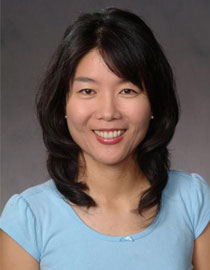
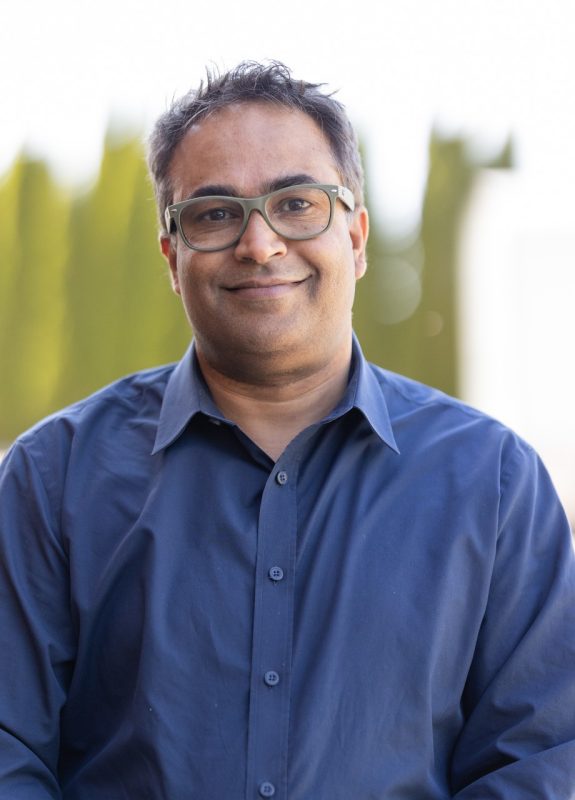
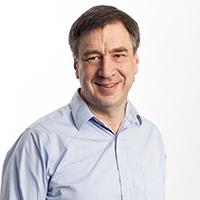
Eun Jung Kim is a Professor in the Department of Computer Science and Engineering at Texas A&M University, affiliated with the College of Engineering. Her research focuses on computer architecture, power-efficient systems, parallel/distributed systems, cluster computing, performance evaluation, and fault-tolerant computing. Ph.D.: Computer Science and Engineering, Pennsylvania State University (2003) M.S.: Computer Science and Engineering, Pohang University of Science and Technology (1994) B.S.: Computer Science, Korea Advanced Institute of Science and Technology (1992) Her work explores innovative solutions for optimizing hardware and software systems, including energy-efficient interconnects, security enhancements, and adaptive network-on-chip designs. Notable achievements include the NSF Early CAREER Award (2009) and contributions to publications like IEEE Transactions on Parallel and Distributed Systems . Recent research trends include advancements in near-data processing, secure computing abstractions (e.g., WHISTLE), and mitigating hardware vulnerabilities (e.g., cache timing attacks). She also integrates IoT and low-cost cluster systems for environmental research applications.
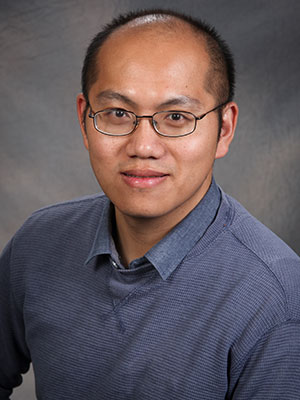
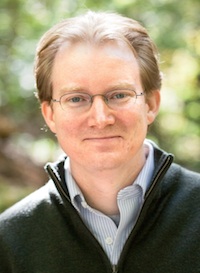
Chia-Che Tsai is an Assistant Professor in the Department of Computer Science & Engineering at Texas A&M University, part of the College of Engineering. He joined the faculty in Spring 2019 after earning his Ph.D. from Stony Brook University in 2017 and completing a postdoc at UC Berkeley's RISE Lab. His educational background includes an M.S. from Columbia University and a B.S. from National Taiwan University. His research focuses on operating systems, software security, and secure hardware, with emphasis on compatibility, performance, and hardware support. Key interests include library operating systems (e.g., Graphene), SGX-based security, and cloud computing. He has received notable awards, including the 2016 EuroSys Best Paper Award and NSF grants for confidential cloud applications and resilient systems. Teaching responsibilities span courses like Operating Systems (undergraduate/graduate), Software Security, Distributed Systems, and Secure Computer Systems. His work integrates practical system design with theoretical principles, addressing challenges in multi-tenant environments and secure execution. Current research explores enclave-based security, deterministic debugging, and virtualization techniques. He leads projects funded by NSF and collaborates with industry partners, emphasizing real-world impact in secure computing systems.
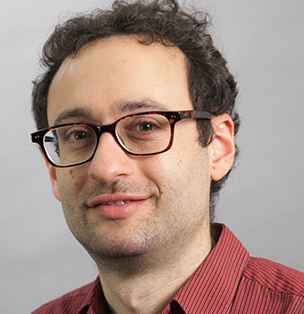
Allan Gottlieb is a Professor of Computer Science at the Courant Institute of New York University, where he led the NYU Ultracomputer Project. His research focuses on parallel computing, computer architecture, operating systems, and distributed systems. He holds a Ph.D. in Mathematics from Brandeis University (1973), with earlier degrees from Brandeis (M.A., 1968) and MIT (B.S., 1967). He was elected an ACM Fellow in 2005 for contributions to parallel computing and computer architecture. His work includes pioneering combining switch designs for parallel systems and developing the Symunix operating system. He has authored a seminal textbook on highly parallel computing and contributed to projects like the NECI LAMP cluster architecture. Teaching includes courses on computer systems organization and operating systems, with active involvement in academic leadership and research projects. Personal interests extend to free software advocacy and a 50-year puzzle column.
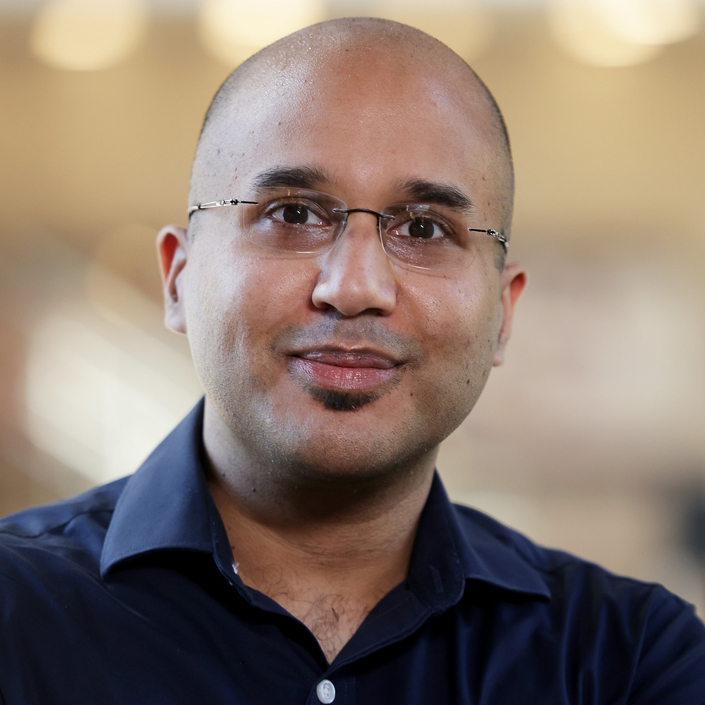
Kunle Olukotun is the Cadence Design Systems Professor of Electrical Engineering and Computer Science at Stanford University, where he has been a faculty member since 1991. He is a pioneer in multicore processor design, leading the Stanford Hydra CMP project and founding Afara Websystems (acquired by Sun Microsystems), which developed the Niagara processor. Currently, he co-leads SambaNova Systems as Chief Technologist and directs the Pervasive Parallelism Lab (PPL), focusing on domain-specific languages (DSLs) and machine learning infrastructure. Education: PhD in Computer Engineering from the University of Michigan (1991). Research interests include parallel computing architectures, transactional memory, and scalable systems. Awards include ACM Fellow, IEEE Fellow, and the Harry H. Goode Memorial Award. Key projects include the Hydra chip multiprocessor, Transactional Coherence and Consistency (TCC), and modern initiatives in dataflow architectures and AI acceleration. His work spans over 100 publications, emphasizing compiler design, hardware-software co-design, and high-performance computing. Current roles: Director of PPL and DAWN Lab, advisor to multiple students, and leader in industry collaborations like SambaNova’s dataflow accelerators. His research bridges academic innovation with commercial impact, addressing challenges in parallelism and scalable systems.
Prof. Hind CASTEL is a Professor at Telecom SudParis affiliated with the SAMOVAR Lab (formerly UMR 5157). Her research focuses on computational statistics, multimedia engineering, e-health, and distributed systems. She contributes to projects involving optical technologies, cybersecurity, and IoT networks. She participates in academic events such as the SOP Seminar on June 12, 2023, discussing advanced mathematical methods for optimization and boundary problems. Her work addresses challenges in memory management (disaggregated systems), high-speed optical communication (III-V-on-SOI lasers), and natural language interfaces for process data. Part of the NeSS group Active in doctoral student mentoring through Samovar's annual PhD Day events Recent publications explore garbage collection in distributed systems, laser-based optical networking, and AI-driven query interfaces for business processes.
Alastair Donaldson is a Professor and Director of Research in the Department of Computing at Imperial College London, where he has been a faculty member since 2011. He leads the FastPL research group (formerly Multicore Programming Group), focusing on formal analysis, software testing, and programming languages techniques for improving software reliability, with special emphasis on high-performance systems. Donaldson earned his BSc (First Class Honors) in Computing Science and Mathematics from the University of Glasgow in 2003, followed by a PhD in Computing Science from the same institution in 2007 under Alice Miller. His academic journey includes positions as an EPSRC Postdoctoral Research Fellow at Oxford, Visiting Researcher at Microsoft Research Redmond, and Research Engineer at Codeplay Software Ltd. His research spans automated reasoning, compiler verification, and GPU programming with significant contributions to software reliability. He pioneered metamorphic testing for graphics drivers through GraphicsFuzz (acquired by Google in 2018) and developed innovative compiler fuzzing techniques. His work addresses critical challenges in memory models, concurrency, and verification of complex systems. Recent publications show increasing focus on applying these techniques to modern challenges including AI-generated code and verification-aware programming languages like Dafny. Donaldson's scientific contributions have been recognized with the 2017 BCS Roger Needham Award, an EPSRC Early Career Fellowship, and multiple best paper awards including EuroSys 2024 (Best Paper), ICST 2024 (Best Industry Paper), and ISSTA 2023 (Distinguished Paper). His 2012 GPUVerify paper received the ACM SIGPLAN Most Influential OOPSLA Paper Award in 2022. As an advisor, Donaldson has mentored numerous PhD students and postdocs, many now in prominent academic and industry positions. His research is supported by Amazon Research Awards (2022-2023) for Dafny ecosystem testing and compiler validation. He previously served as Senior Software Engineer and Visiting Researcher at Google following the GraphicsFuzz acquisition. The FastPL group maintains strong industry connections with Google, Microsoft, and Amazon, ensuring practical relevance of their theoretical work. Donaldson currently serves as Editor-in-Chief of ACM TOPLAS (2025-present) and on program committees for major conferences including PLDI, ICSE, and ASPLOS.
Umut A. Acar is a Professor at the Department of Computer Science, Carnegie Mellon University, and an Amazon Scholar. His research bridges formal methods, systems, algorithms, and AI, focusing on concurrency, quantum computing, self-adjusting computation, and dynamic algorithms. 2025: Promoted to Full Professor 2025: PC Chair for SPAA 2025 His research group includes current PhD students like Pengyu Liu, Colin McDonald, and Mingkuan Xu (jointly advised with Zhihao Jia). Alumni include notable researchers like Sam Westrick (now at NYU) and Stefan Muller (now at IIT Chicago). Recent publications span quantum computing (e.g., Atlas for GPU-based simulation, GraFeyn for sparse circuits), parallel functional programming (e.g., Quartz, DePa), and self-adjusting computation (e.g., dynamic trees, mesh refinement). Key themes: Bridging safety and performance in parallel systems Quantum circuit optimization and simulation Incremental algorithms for dynamic data Provenance tracking in functional programs Scientific awards include: Best paper (QCE 2024) Distinguished paper (POPL 2024, ICFP 2022, POPL 2021) Intel Award (2022), JP Morgan Chase AI Award (2021) ACM SIGPLAN Research Highlight (2019) CMU Teaching Innovation Award (2019) He has supervised numerous projects (Diderot, MPL, Quartz) and advised students on PhD theses in parallel and quantum computing. His work emphasizes practical implementations of theoretical principles.
Vincent Liu is an Associate Professor in the Department of Computer and Information Science at the University of Pennsylvania's School of Engineering and Applied Science. He directs the Distributed Systems Lab (DSL) and leads the PennNetworks research group. His research bridges distributed systems and networking, focusing on programmable networks, fault-tolerance, cloud infrastructure, and Internet architecture. Education includes a Ph.D. from the University of Washington and undergraduate research at the University of Texas at Austin in compilers and parallel systems. Research spans distributed systems optimization, cloud computing, sustainable computing, and ML infrastructure. Recent publications emphasize low-latency systems (Paella), cloud multicast (Cloudcast), distributed snapshots (Beaver), and sustainable computing frameworks (Carbon Connect). Network simulation innovations include DONS and NetVision. Awards & Honors: NSF CAREER Award (2019) VMWare Early Career Award (2019) Best Paper Award, USENIX NSDI (2015) Google Fellowship in Networking (2014) Qualcomm Innovation Fellowship (2014) Facebook Faculty Research Award Google Research Award Advises 11+ PhD students, with graduates at Meta, AWS, Microsoft Research, and academia (e.g., Qizhen Zhang, Asst. Prof. at Toronto). Secured grants from NSF, VMWare, Facebook, and Google. Leads the Distributed Systems Lab and PennNetworks group exploring cloud architectures, programmable networks, and sustainable computing. Actively recruiting PhD students.
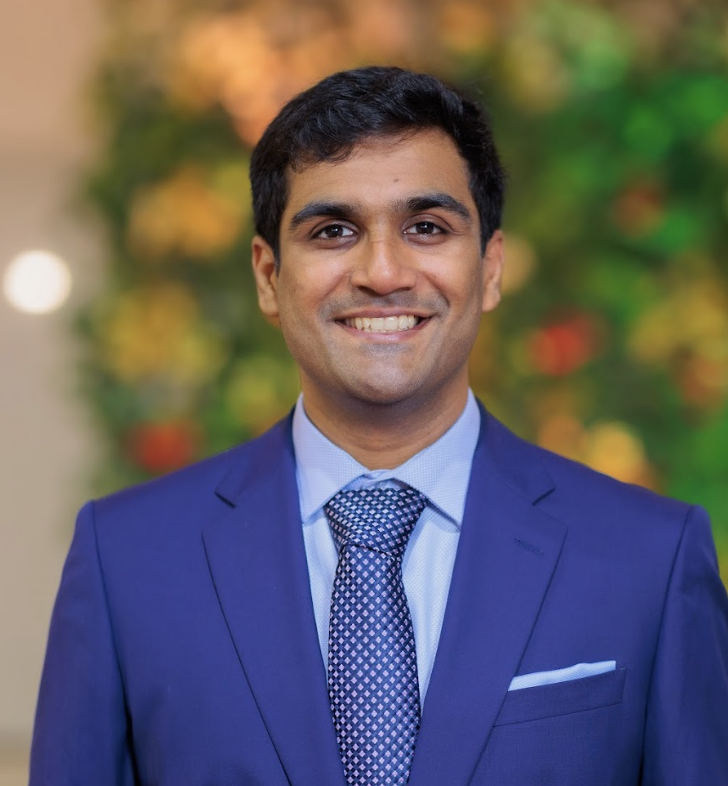
Rishabh Iyer is an Assistant Professor in the Electrical Engineering and Computer Sciences department at the University of California, Berkeley. His research bridges computer systems, networking, and formal methods with a focus on performance predictability and reliability. Prior to Berkeley, he completed his PhD at EPFL and undergraduate studies at IIT Bombay. His educational background includes: PhD in Computer Science from École Polytechnique Fédérale de Lausanne (EPFL) Bachelor's degree from Indian Institute of Technology Bombay (IIT Bombay) Iyer's research centers on performance interfaces for computer systems – creating succinct abstractions that allow engineers to reason about system performance without understanding implementation details. His work spans three major directions: (1) Extracting performance interfaces from implementations, (2) Designing systems with predictable performance, and (3) Formally verifying performance claims. This research combines operating systems, networking, computer architecture, and formal verification techniques to address performance unpredictability in modern systems. His group develops tools like PIX for network functions, KFlex for kernel extensions, and Software LPN for hardware accelerators. His publications reveal strong focus on performance modeling for network functions, kernel extensions, and hardware accelerators, with recent work expanding into real-time systems and SD-WAN validation. The research consistently targets practical impact, with deployments at companies like Meta and Alibaba. Scientific recognition includes: ACM SIGOPS Dennis M. Ritchie Award Eurosys Roger Needham PhD Award Dimitris N. Chorafas Award Best Paper at VDAT 2019 Iyer actively advises students at UC Berkeley and teaches courses including CS 294-262 (Performance Analysis) and CS 168 (Internet Architecture). Previously at EPFL, he taught Principles of Computer Systems, Software Engineering, and Vector Calculus. His group seeks talented students interested in building reliable, high-performance systems. Current research directions include performance interfaces for distributed applications, next-generation kernel extensions, and formally verified network systems. He leads research within UC Berkeley's systems community and maintains strong connections with EPFL's Dependable Systems Lab where he completed his PhD.
Binoy Ravindran is a Professor and Bradley Senior Faculty Fellow in the Department of Electrical and Computer Engineering at Virginia Tech, where he leads the Systems Software Research Group. He holds a Ph.D. from The University of Texas at Arlington (1998). His research focuses on computer systems, emphasizing security, performance, energy efficiency, and timeliness in areas like concurrent, heterogeneous, distributed, and real-time computing. Recent projects include the Low-level Reasoning Machine (LLRM), Popcorn Linux, and LibrettOS. He teaches courses such as ECE/CS 5510 (Multiprocessor Programming), ECE/CS 5544 (Compiler Optimizations), and ECE 5984/SS (Modern Binary Exploitation). His service roles include editorial board positions at IEEE Transactions on Cloud Computing and ACM Transactions on Embedded Computing Systems, and he co-chaired ACM Systor 2025. Ravindran has published over 330 papers, earning nine best paper awards, and has mentored 26 PhD students, 23 postdocs, and 11 research faculty. Notable honors include ACM Distinguished Scientist and an Office of Naval Research Faculty Fellowship. His research group explores projects like LLRM (binary security verification), Popcorn Linux (heterogeneous ISA systems), and KairosVM (real-time hypervisor). Recent advancements include Stramash OS (ASPLOS'25) and Hexo (DOD infrastructure offloading).
Ata Turk is a Lecturer in the Department of Electrical and Computer Engineering at Boston University, with an affiliation as Adjunct Faculty. He holds a Ph.D. from Bilkent University, awarded in 2012. His research focuses on cloud architecture, high-performance computing (HPC), and interdisciplinary applications such as medical informatics. Key interests include optimizing cloud resource management, diagnosing performance variations in HPC systems via machine learning, and developing scalable distributed systems. His research outputs span cloud software discovery, distributed caching strategies, and medical imaging analysis using MRI. He has contributed to frameworks like Praxi for cloud software detection and D3N for multi-layer caching. Recent work integrates machine learning for real-time diagnostics in HPC environments and explores edge-based sampling techniques for large-scale graph analysis. Dr. Turk’s publications emphasize practical solutions for cloud security, workload management in data centers, and parallel processing techniques. Notable areas include optimizing MapReduce task scheduling and improving load balancing in space plasma simulations. His work intersects system architecture, distributed computing, and healthcare informatics, reflecting a commitment to bridging theoretical research with applied technology.
Christopher Batten is a Professor of Electrical and Computer Engineering at Cornell University, affiliated with the Computer Science department. He leads the Batten Research Group within the Computer Systems Laboratory (CSL), focusing on computer architecture, electronic design automation, and VLSI systems. His work spans programmable accelerators, interconnection networks, and agile chip design methodologies. Batten holds a PhD from MIT, an M.Phil. from the University of Cambridge, and a B.S. from the University of Virginia. He has held visiting roles at UC Berkeley and NVIDIA. Research Interests: Computer Architecture: Accelerators, interconnection networks, and emerging technologies VLSI Design: Agile methodologies, chip prototyping, and physical design Hardware-Software Co-Design: Parallel programming frameworks and productivity tools Recent Work: Focuses on optical interconnects, 3D integration, and AI-driven hardware design. Led projects like Cornell Custom Silicon Systems (C2S2), which taped out multiple chips in SkyWater 130nm. Collaborates with industry partners like NVIDIA and Meta. Awards: Recognized with the ACM/IEEE MICRO Hall of Fame, NSF CAREER Award, and multiple teaching accolades. His group emphasizes student-led chip projects and open-source frameworks like PyMTL3. Grants & Sponsors: Supported by NSF, DARPA, AFOSR, and industrial partners including Intel, NVIDIA, and Xilinx. Current efforts include NSF CSSI projects improving gem5 and NSF Panorama for pangenomics.
Adam Chlipala is the Arthur J. Conner Professor of Computer Science at MIT, with appointments in the Computer Science and Artificial Intelligence Laboratory (CSAIL) and the Department of Electrical Engineering and Computer Science. His research integrates programming languages and formal methods to develop verified computer systems. Education: PhD in Computer Science, University of California, Berkeley MS in Computer Science, University of California, Berkeley BS in Computer Science, Carnegie Mellon University Research Focus: Dr. Chlipala's work spans: Verified compilers and programming tools Cryptographic protocol implementation Hardware description languages Proof automation in theorem provers High-performance parallel computing His current projects focus on rethinking abstractions for parallel systems with end-to-end formal verification. Teaching: He has created and teaches courses on verified software engineering (6.S057), programming fundamentals (6.1010), and formal reasoning about programs (6.5120). His educational materials include textbooks on Certified Programming with Dependent Types and Formal Reasoning About Programs. Awards and Honors: His research has been recognized with the German IT Security Award, Humies Gold Award for evolutionary computation, and multiple teaching prizes including the Jamieson Prize. He is an ACM Distinguished Member and NSF CAREER awardee. Research Teams: Dr. Chlipala leads the Programming Languages & Verification Group at MIT CSAIL. His startup Nectry develops no-code enterprise software based on the Ur/Web language and UPO proof system.
Yatin Manerkar is an Assistant Professor in the Department of Computer Science and Engineering at the University of Michigan. His research focuses on formal methods for ensuring correctness in computing systems, particularly in hardware and software verification. He holds a PhD from Princeton University and has conducted postdoctoral research at UC Berkeley. His work has led to significant contributions in verifying memory consistency models, hardware security, and cache coherence protocols. **Education:** PhD in Computer Science, Princeton University (Advisor: Margaret Martonosi) M.S. in Computer Science and Engineering, University of Michigan BASc in Computer Engineering, University of Waterloo **Research Interests:** Manerkar's research bridges computer architecture and formal methods. He develops automated techniques for verifying and synthesizing computing systems, targeting emerging hardware like heterogeneous processors. Key areas include memory consistency models, security vulnerabilities (e.g., Meltdown/Spectre variants), and ethical AI implications of hardware design. **Awards & Recognition:** ACM SIGARCH/IEEE CS TCCA Outstanding Dissertation Award Honorable Mention (2021) Best Paper Nomination (FMCAD 2022) IEEE Micro Top Picks Honorable Mentions (2023, 2021, 2018) Heidelberg Laureate Forum Participant (2019) **Advising & Teaching:** Manerkar advises PhD and undergraduate students on formal verification and hardware-software co-design. He has taught courses on parallel computer architecture and formal verification at the University of Michigan.
Dr. Ross Paterson is a Lecturer at City St George's, University of London, where he has been employed since 1998. He is a member of the Research Centre for Machine Learning and specializes in programming languages and functional programming. His research interests focus on functional programming techniques, embedded domain-specific languages, program transformations, and persistent data structures. His work bridges theoretical computer science with practical applications in programming language design and implementation. Dr. Paterson's publication record spans over three decades, with significant contributions to functional programming, type theory, and data structures. His most influential work includes the development of arrows as a general interface to computation, applicative functors, and finger trees as a general-purpose data structure. His research shows consistent focus on theoretical foundations with practical implementations in functional programming languages. Throughout his career, Dr. Paterson has maintained strong academic connections, having previously worked at the University of North London (1996-1998), Imperial College London (1990-1995), and the University of Queensland (1988-1989).