
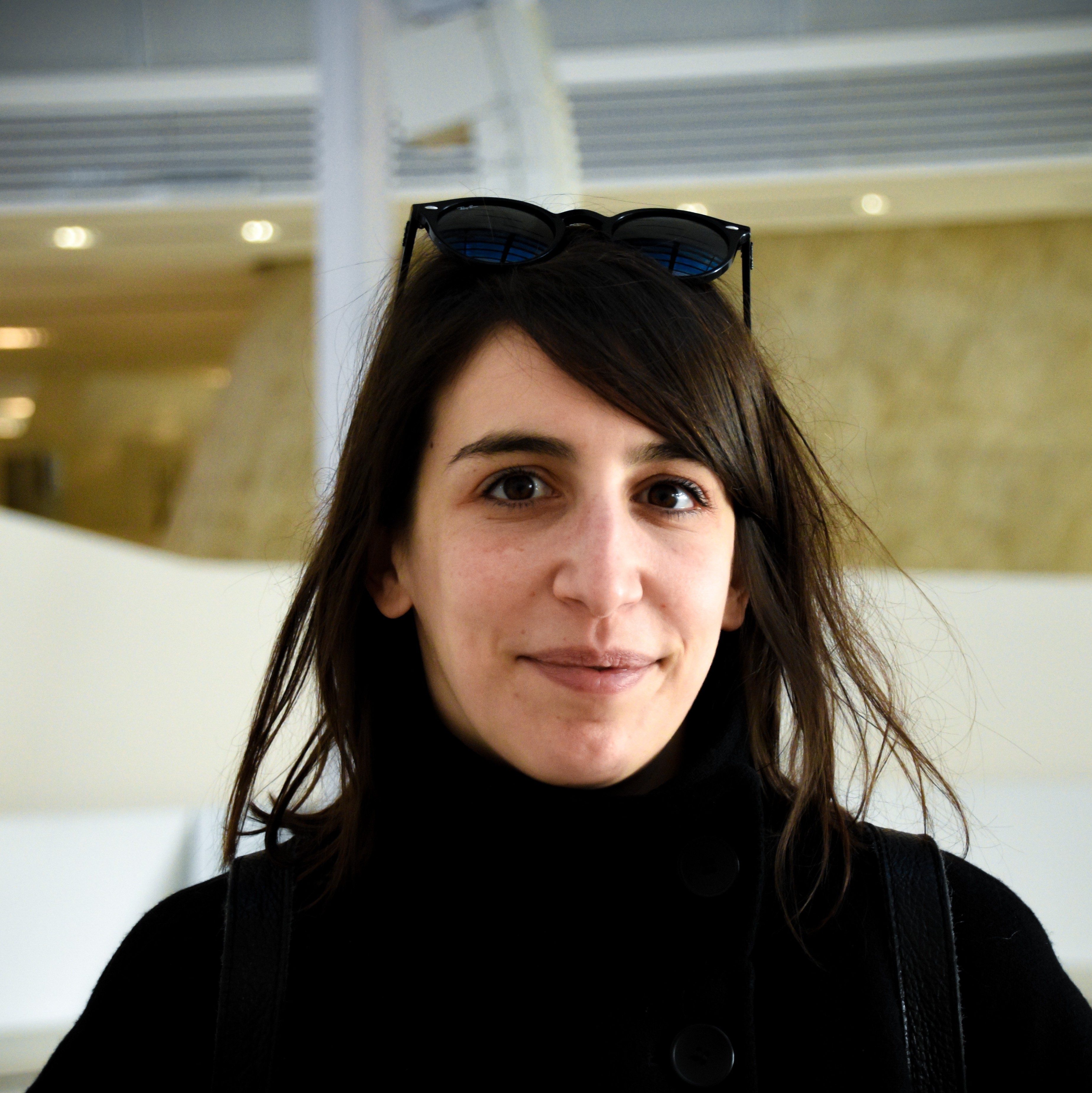
Nikela Papadopoulou is a Lecturer (Assistant Professor) in Low Carbon and Sustainable Computing at the University of Glasgow's School of Computing Science. She is affiliated with the GLAsgow Systems Section and focuses on optimizing high-performance computing (HPC) systems for reduced environmental impact, including performance modeling, application optimization, and energy-efficient resource management. Her work also explores co-design strategies for machine learning workloads. Education: PhD in Electrical and Computer Engineering from National Technical University of Athens (NTUA). Postdoctoral research at Chalmers University of Technology (Sweden) and NTUA, contributing to European projects like ACTiCLOUD, EuroEXA, and HiDALGO. Member of ACM and HiPEAC. Research Interests: HPC systems optimization, energy efficiency in computing, sustainable computing practices, machine learning co-design, and parallel algorithm development. Teaching: Currently teaches Systems Programming (COMPSCI4081) and Internet Technology (COMPSCI5012) at the MSc level. Advising: Supervises Shuxuan Li on FPGA-based compiler transformations for sequence models. Active in grant-funded projects related to HPC and sustainable computing. Labs/Teams: Active contributor to the GLAsgow Systems Section, focusing on HPC and low-carbon computing innovations.
جستوجوی استاد و پژوهشگر
استاد راهنما، استاد دانشگاه یا پژوهشگر مناسب برای مسیر پژوهشیتان را پیدا کنید و با او ارتباط بگیرید.
نمایش ۶۱-۷۵ از ۲۱۵ استاد راهنما
اطلاعات این پروفایلها از صفحات عمومی دانشگاهها جمعآوری شده و ممکن است بهروز نباشد.

- Wastewater Treatment Plant Modeling
- Numerical Flow Simulation
- Smoothed Particle Hydrodynamics (SPH)
- +۳ مورد دیگر
Michael Meister is a Professor at MCI – The Entrepreneurial School, holding a position in the Department of Environmental, Process & Energy Technology. He has held roles including Junior Professor and Post-Doc researcher at Universität Innsbruck and teaching positions at Imperial College London. His research focuses on wastewater treatment plant modeling, numerical flow simulation using SPH, and hydraulic simulations. Education: PhD in Environmental Technology (University of Innsbruck), MSc in Physics (Imperial College London), BSc in Physics (University of Innsbruck). Research interests include optimizing anaerobic digester mixing efficiency, CFD applications in wastewater processes, and developing SPH-based models for environmental systems. His work bridges computational fluid dynamics with practical engineering solutions for sustainable energy and water management. Key projects include OPTIFAUL (energy-efficient mixing optimization) and SPHAUL (SPH-based digester modeling). He has received multiple teaching awards from MCI and recognition for his doctoral and undergraduate work. Advised over 15 students on topics ranging from biogas potential estimation to CFD-based energy optimization in wastewater treatment plants. Active in peer review for journals and conferences, and serves on evaluation committees for international research programs. Labs/Teams: Leads the OptiFaul research initiative and collaborates with institutions like the University of Leeds and the Austrian Research Promotion Agency.
Dr. Stuart Barnes is a Lecturer in Computational Intelligence and Data Analytics at Cranfield University , where he also serves as Course Director for the MSc Computational & Software Techniques in Engineering program. His academic background combines Physics (BSc, MSc from University of Kent) and Computer Vision (PhD, MSc from Cranfield University). Research focuses on Vision-Based Computing with applications in - Human-Computer Interaction (HCI) and Gesture Recognition - Surveillance and Security systems - Autonomous Vehicle Operations Recent publications highlight his work in semantic segmentation (2025), autonomous refueling systems (2023-2024), and historical contributions to laser shearography (2004-2006). His technical expertise spans algorithm development, machine learning models, and industrial software deployment across aerospace and automotive sectors. Key Collaborations : • Jaguar Land Rover Ltd • Airbus SE • Saab UK Ltd (BlueBear) • Thales SA
Bastian Köpckeمشاهده پروفایل
پژوهشگر
- Parallel Computing
- GPU Programming
- Compiler Design
- +۳ مورد دیگر
Bastian Köpcke is a researcher at the Department of Computer Science, Westfälische Wilhelms-Universität Münster. His work focuses on parallel computing, GPU systems programming, and compiler design, with notable contributions to safe GPU language development (e.g., Descend) and optimizing high-performance numerical algorithms. He collaborates with Prof. Dr. Sergei Gorlatch on multiple research and teaching projects. Affiliation: Faculty of Mathematics and Computer Science Location: Einsteinstr. 62, Room 707, 48149 Münster Research interests include GPU architecture exploitation, compiler optimizations for parallel systems, and memory-safe programming models. His publications address tensor core utilization, FFT code generation, and distributed systems architecture. Teaching activities involve capstone projects on GPU algorithms, parallel programming, and compiler optimization, often co-taught with senior faculty. No explicit awards or grants are listed in the provided data.
- Large-scale Scientific Computing
- Computational Linear Algebra
- Parallel and Distributed Processing
- +۴ مورد دیگر
Professor Efstratios Gallopoulos is a faculty member at the Department of Computer Engineering & Informatics , University of Patras, where he holds the Division of Computer Software . He currently serves as Deputy Department Chair and Director of the High Performance Information Systems Laboratory (HPCLab) . His academic career spans multiple institutions including the University of Illinois at Urbana-Champaign, University of California Santa Barbara, and collaborations with INRIA Rennes and NASA Goddard Space Flight Center. Education : B.Sc. in Mathematics (First Class Honours) from Imperial College London (1979) Ph.D. in Computer Science from University of Illinois at Urbana-Champaign (1985) Research Focus : His work centers on Large-scale Scientific Computing with emphasis on Computational Linear Algebra , Parallel/Distributed Processing , and Data Mining . Recent publications highlight innovations in Randomized Numerical Linear Algebra , Heterogeneous Cluster Scheduling , and GPU-Accelerated Inversion Techniques . Article Trends : His research bridges High-Performance Computing with Data Science , focusing on scalable algorithms for Matrix Computations , Recommender Systems , and Biomarker Analysis . The work spans theoretical advancements (e.g., Givens Rotations ) and practical implementations (e.g., pylspack library). Scientific Awards : NASA Group Achievement Award for Massively Parallel Processor (MPP) development ACM SIGWEB Hypertext Ted Nelson Newcomer Award (2012) Advising and Grants : He has advised numerous research projects funded by European Research Council , Hellenic Foundation for Research and Innovation (HFRI) , and international bodies like the US National Science Foundation. Notably, he co-organized the 2015 Gene Golub SIAM Summer School and served as Chair of the SIAM Gene Golub Summer School Committee (2020-24). Labs and Teams : He leads the High Performance Information Systems Laboratory (HPCLab) and co-directs the interdisciplinary graduate program Data Driven Computing and Decision Making . His teams have contributed to the Cedar vector multiprocessor project at UIUC and Text-to-Matrix Generator (TMG) tools for data mining.

Vincent Danjean is an associate professor at Grenoble Alpes University , specializing in parallel computing, high-performance computing, and bioinformatics. He earned his PhD in 2004 from École Normale Supérieure de Lyon under the supervision of Raymond Namyst. Research Interests: Vincent's work spans several critical areas in computational science: Parallel and Distributed Systems: Focus on task-based parallelism and hybrid cluster architectures. Performance Analysis: Development of visual frameworks for analyzing parallel applications. Bioinformatics: Application of computational methods to genetic and genomic data analysis. GPU Computing: Efficient scheduling and work stealing strategies for multi-GPU systems. Reproducible Research: Workflows using Git and Org-mode for scientific transparency. Publication Trends: His publications demonstrate a consistent focus on advancing parallel computing techniques, with significant contributions to GPU scheduling, cache-efficient algorithms, and visualization tools. Recent work includes interdisciplinary applications in genomics and cybersecurity protocols. Contact: vincent.danjean@imag.fr

Dr. Sebastian Kuckuk is a researcher and head of training at the Erlangen National High Performance Computing Center (NHR@FAU), Friedrich-Alexander-Universität Erlangen-Nürnberg. He is affiliated with the Department of Computer Science and contributes to the Chair of System Simulation. His work bridges research, training, and software development in high-performance computing. Education: PhD in Computer Science, Friedrich-Alexander-Universität Erlangen-Nürnberg (2019) His research focuses on enhancing performance portability and programmer productivity using domain-specific languages, code generation, automatic parallelization, and GPU programming. These techniques are applied to develop massively parallel numerical solvers for computational fluid dynamics, particularly for the shallow water equations. He is a core developer of the ExaStencils framework, which enables automated generation of efficient multigrid solvers for structured and patch-structured grids. Analysis of his recent publications (2020–2025) reveals a consistent focus on code generation, GPU acceleration, and solver optimization for fluid dynamics problems. Key themes include heterogeneous computing, block-structured grids, and adaptive methods. His work integrates advanced compiler techniques with numerical mathematics to improve scalability and performance on modern HPC architectures. Scientific Recognition: NVIDIA Deep Learning Institute (DLI) University Ambassador Certified Instructor for DLI courses in GPU programming and CUDA He actively contributes to teaching and training through courses such as Programming Techniques for Supercomputers and High-End Simulation in Practice . He conducts workshops and tutorials on GPU programming and performance optimization. While no formal students are listed, his mentoring role is evident through collaborative research and training activities. He has no recorded grants in the provided text, but his involvement in NHR and KONWIHR projects indicates active participation in funded HPC initiatives. Laboratories and Projects: Lead developer of ExaStencils , a code generation framework for multigrid solvers Contributor to GHODDESS , a module for higher-order discretizations in shallow water modeling Active in NHR@FAU and KONWIHR projects focused on GPU computing and performance optimization

Deming Chen is the Abel Bliss Professor of Engineering at the University of Illinois at Urbana-Champaign, holding appointments in the Electrical and Computer Engineering Department within the Grainger College of Engineering. He serves as a research professor in the Coordinated Science Laboratory and an affiliate professor in the Computer Science department. Additionally, he is the Director of the AMD-Xilinx Center of Excellence and the Co-Director of the IBM-Illinois Discovery Accelerator Institute. Dr. Chen earned his B.S. in Computer Science from the University of Pittsburgh in 1995, followed by his M.S. and Ph.D. in Computer Science from UCLA in 2001 and 2005, respectively. After working as a software engineer during two periods (1995-1999 and 2001-2002), he joined the University of Illinois at Urbana-Champaign in 2005 and became a full professor in 2015. His research spans reconfigurable computing, AI hardware acceleration, high-level synthesis, cloud computing, and hardware security. Dr. Chen's work has significant industry impact, with open-source solutions like Medusa being integrated into NVIDIA's TensorRT-LLM, improving LLM execution speed by 1.9-3.6x. His research group pursues system-level and high-level design automation, machine learning and cognitive computing, hybrid cloud systems, hardware/software co-design, and FPGA and GPU computing. His recent publications show a strong trend toward AI acceleration and large language model optimization, with projects like SnapKV and Medusa addressing critical challenges in LLM efficiency. His work consistently bridges theoretical innovation with practical implementation, as evidenced by numerous open-source projects that have been adopted by industry. IEEE Fellow (2019) Abel Bliss Professor of Engineering (2020-present) Google Faculty Award (2020) IBM Faculty Award (2014, 2015) NSF CAREER Award (2008) Ten Best Paper Awards TCFPGA Hall-of-Fame paper award DAC International System Design Contest wins (2017, 2019) Dr. Chen has served as PI/Co-PI on over 40 research grants from US Federal agencies and industry partners. He has led numerous open-source projects including FCUDA, DNNBuilder, SkyNet, ScaleHLS, and Medusa, many of which have been adopted by industry. As Editor-in-Chief of ACM TRETS (2019-2025), he increased the journal's impact factor by 3.8x. He actively mentors students and has been recognized as an excellent teacher by UIUC students in 2008 and 2017. His research group operates at the intersection of hardware and AI, with projects spanning from low-level hardware design to high-level AI applications. The AMD-Xilinx Center of Excellence and IBM-Illinois Discovery Accelerator Institute provide substantial infrastructure for his team's research in hybrid cloud systems and AI acceleration.

Edwin Carlinetمشاهده پروفایل
استادیار
Edwin Carlinet is an Assistant Professor at EPITA Research Laboratory (LRE), specializing in mathematical morphology, hierarchical image representations, and high-performance computing. His research develops efficient algorithms for image processing with applications in document analysis and historical map vectorization. Key projects include the SoDuCo initiative extracting data from 19th-century Parisian trade directories and parallel implementations of morphology algorithms. He leads development of the Pylene image processing library, focusing on generic and efficient implementations. Teaching covers parallel programming, data compression, C++, and GPU programming at EPITA, alongside bioinformatics courses at Sup'Biotech. Research supervision includes PhD candidates working on modern implementations of mathematical morphology algorithms and noise estimation techniques. Recent publications focus on optimizing computational workflows for historical document processing, including noise impact analysis on morphological structures and GPU acceleration of max-tree computation.
- Big Data
- Distributed Systems
- Cloud Computing
- +۴ مورد دیگر
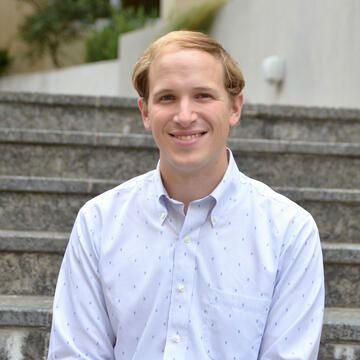
Matthew Malensek is an Associate Professor in the Department of Computer Science at the University of San Francisco and Academic Director of the MSCS, MSCS Bridge, and MSCS 4+1 programs. He holds a PhD in Computer Science from Colorado State University. Education: PhD in Computer Science (Colorado State University) His research focuses on systems approaches to data science, including scalable analytics, geospatial data management, fog computing, and cloud-edge integration. Notable projects include Galileo (distributed geospatial storage), Minerva (cloud resource management), and Agami (visual analytics for data streams). He co-authored An Introduction to Parallel Programming , a textbook used at USF. Recent work explores computer science identity development among undergraduates and community-engaged learning initiatives addressing tech inequities. His awards include Best Paper recognitions at IEEE/ACM Symposia in 2014 and 2012. Teaching responsibilities include Operating Systems (CS 326) and the Senior Team Project (CS 490). He advises capstone projects in areas like distributed systems, cloud computing, and machine learning. Research labs and collaborations involve fog/cloud hybrid systems, high-throughput data streams, and geospatial analytics frameworks. He actively contributes to open-source projects like FogOS, emphasizing collaborative development and real-world applicability.

Dar-Jen Changمشاهده پروفایل
دانشیار
Dar-Jen Chang is an Associate Professor in the Department of Computer Science and Engineering at the University of Louisville. He holds a B.S. in Mathematics from National Tsing Hua University (1970), an M.S. in Computer Information/Control Engineering from the University of Michigan (1982), and a Ph.D. in Mathematics from the same institution (1982). His research focuses on parallel computing, GPU programming, bioinformatics, 3D modeling, and algorithm optimization. His work spans disciplines including computer science, data mining, and biomedical applications. Chang’s research interests emphasize leveraging GPU acceleration for computational tasks such as RNA folding algorithms, hierarchical clustering, and Euclidean distance calculations. He has explored applications in 3D anatomical modeling, robotics simulation using Unity, and gaming frameworks with CUDA integration. His contributions include developing frameworks for algorithm visualization and database systems for automated process planning. His publications highlight trends in GPU-optimized algorithms, graph database analysis (e.g., Yelp and IMDb datasets), and interdisciplinary applications like medical imaging and genetic sequence prediction. He has also contributed to neural networks for fuzzy logic systems and biological sequence mining.

Dr. Gabriele Mencagli is an Associate Professor in the Department of Computer Science at the University of Pisa, Italy. He holds a Ph.D. in Computer Science (2012) and has served as an Assistant Professor (2014–2018) and Tenure-Track Professor (2018–2021) before his current position. His research focuses on parallel systems, including architectures, programming models, and runtime systems for data stream processing. He leads work on the WindFlow stream processing library and has contributed to projects like TEXTAROSSA, ADMIRE, and EUPEX. He co-organized major conferences like HPDC 2024 and DEBS 2025 and serves on editorial boards for journals like Future Generation Computer Systems and Cluster Computing. Education: B.Sc. (2006, summa cum laude), M.Sc. (2008, summa cum laude), Ph.D. (2012) in Computer Science, all from the University of Pisa. Research Interests: Parallel programming, self-adaptive systems, data stream processing, GPU/FPGA acceleration, and high-performance computing. Over 80 publications in top journals and conferences, including IEEE TPDS, JPDC, and Euro-Par. Awards include Italian Habilitation as Full Professor (2025). Teaching: Courses on High-Performance Computing and Computer Architecture, including CUDA programming and parallel design patterns. Active in curriculum development for both bachelor’s and master’s programs. Grants & Projects: Principal investigator in EU-funded projects (e.g., TEXTAROSSA, NOUS) and collaborations with industry (e.g., List-group S.p.A., Autodesk). Focus on exascale computing, digital twins, and edge computing.
Prof. Piotr Białas is a Professor of Physical Sciences and Director of the Institute of Applied Informatics at Jagiellonian University. He holds a habilitation in physics from the same institution and has served as department head and faculty member since 1993. His research focuses on GPU programming, multi-core processor optimization, and theoretical physics areas like simplicial gravity and quantum chromodynamics on networks. He has supervised over three doctoral and dozens of master's theses. Current projects include GPU acceleration for medical imaging (J-PET tomograph) and real-time FPGA-based data processing. Education: PhD in Physics (1993), MSc in Physics (1990) from Jagiellonian University. Academic roles include membership in the Academic Council of Technical Informatics and Complex Systems Commission at Polish Academy of Arts and Sciences. Invited professorships at universities in Amsterdam, Bielefeld, Barcelona, and Saclay. Specializes in CUDA optimization, parallel computing, and medical imaging algorithms.
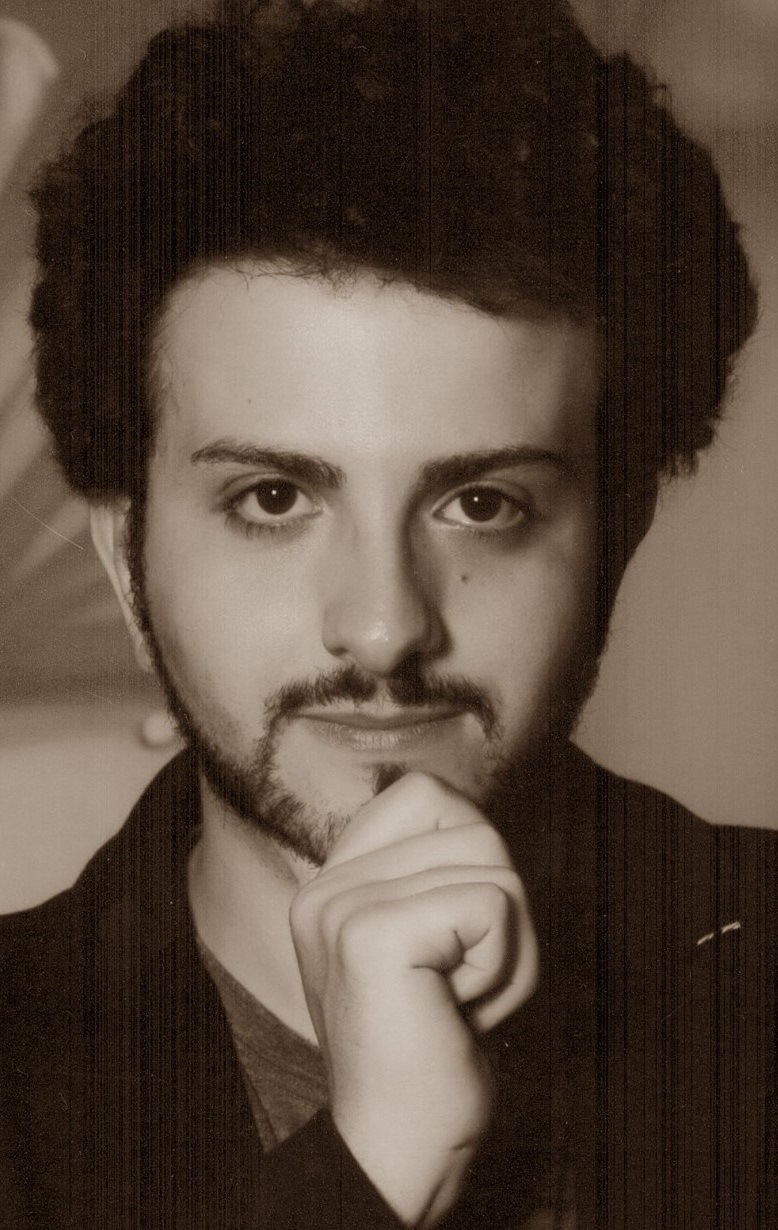
Daniele Francesco Santamaria is Assistant Professor at the Department of Mathematics and Computer Science of the University of Catania. His research spans knowledge engineering, semantic web ontologies, blockchain technologies, cybersecurity, and digital humanities. Key projects include: POC4COMMERCE (ONTOCHAIN initiative for blockchain e-commerce) PECS (Privacy-Enrooted Car Systems for automotive data security) GODSCAPES (ontological approaches in archaeology) His work integrates computational logic with practical applications in agent systems, IoT interoperability, and legal language processing. Publications focus on semantic blockchain frameworks, smart contract modeling, and ontological reasoning systems. Editorial roles include reviewer, program committee member, and workshop organizer (Semantic Shields I, SWTHS 18). Certifications: Nvidia Cuda programming, IBM Mainframe, Computer Forensics.

Jayesh Badwaikمشاهده پروفایل
پژوهشگر
Dr. Jayesh Badwaik is a Scientific Researcher at the Jülich Supercomputing Center (JSC) within Forschungszentrum Jülich, a leading interdisciplinary research center in Europe. His work is centered in the Accelerating Devices Lab, where he focuses on high-performance computing architectures and computational methods for scientific applications. Dr. Badwaik's research spans multiple disciplines at the intersection of computer science, physics, and mathematics. His primary research interests include: Computational Physics and numerical methods for scientific computing High Performance Computing (HPC) with focus on exascale systems GPU programming models and accelerated computing Software engineering for large-scale scientific applications Lattice Boltzmann Methods for fluid dynamics simulations Parallel numerical algorithms for conservation laws Analysis of Dr. Badwaik's publication record reveals a clear evolution from theoretical numerical methods toward practical implementation on cutting-edge computing architectures. His early work (2016-2020) focused on mathematical foundations of numerical schemes for conservation laws, while his recent publications (2023-2024) demonstrate increasing emphasis on exascale computing challenges. His contributions to the JUPITER benchmark suite represent significant work in evaluating next-generation supercomputing systems. A substantial portion of his research centers on scaling the Lattice Boltzmann Method to exascale platforms, addressing critical challenges in computational fluid dynamics at unprecedented scales. His expertise in GPU programming is evident from his practical overview of programming models, which provides valuable insights for the HPC community. Dr. Badwaik is actively involved in the Accelerating Devices Lab at JSC, contributing to Europe's high-performance computing ecosystem. His work bridges theoretical numerical analysis with practical implementation on advanced computing architectures, making significant contributions to scientific computing at scale. His research has implications for multiple scientific domains that rely on large-scale simulations, including climate modeling, materials science, and computational fluid dynamics.