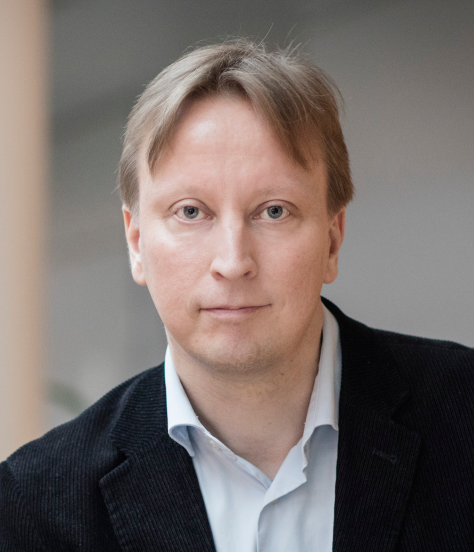
Professor Simo Särkkä holds a position in Sensor Informatics and Medical Technology at the Department of Electrical Engineering and Automation (EEA), Aalto University. His research focuses on multi-sensor data processing, Bayesian filtering, machine learning, and their applications in medical technology, brain imaging, and inverse problems. He leads research groups including the Helsinki Institute for Information Technology (HIIT) and Sensor Informatics and Medical Technology. His work bridges theoretical advancements in probabilistic methods with practical implementations in healthcare and engineering. Key research interests include Gaussian processes, stochastic differential equations, quantum machine learning, and signal processing. He has contributed to advancements in algorithms for nonlinear state-space models, parallel computing techniques, and medical imaging technologies such as scatter correction in CT scans. His methodologies are applied across domains like autonomous systems, robotics, and bioengineering. Notable publications span topics like quantum-assisted Gaussian regression, physics-informed machine learning for industrial processes, and parallel-in-time numerical methods. His work emphasizes computational efficiency and robustness in high-dimensional and real-time systems.
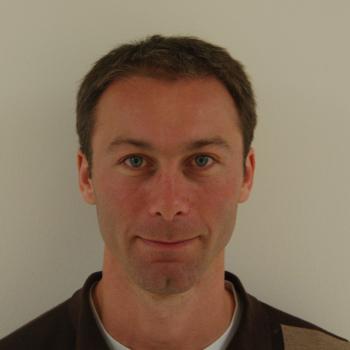
Yin Bao is an Assistant Professor in Plant and Soil Sciences and Mechanical Engineering at the University of Delaware since 2023, previously holding the same position at Auburn University's Department of Biosystems Engineering (2019-2023). He holds a BE in Mechanical Engineering from China Agricultural University (2012) and a PhD in Agricultural and Biosystems Engineering from Iowa State University (2018), followed by postdoctoral research there until 2019. His research focuses on automation technology for agriculture and forestry, leveraging robotics, machine learning, and sensing systems to develop tools for precision farming and plant phenotyping. Key areas include unmanned systems (UGVs/UAVs), spectral imaging, and AI-driven predictive models for crop and livestock management. Recent work emphasizes automated inventory systems for forest nurseries, UAV-based vegetation assessment, and machine learning applications in crop yield prediction. His publications span robotic guidance systems, root segmentation in X-ray CT scans, and equine gait analysis using deep learning. Notable projects include the Robotic Assay for Drought (RoAD) system and the 'smart canopy' sorghum initiative. Collaborative efforts involve integrating multifrequency microwave sensing and electronic nose technologies for crop quality analysis.
Mingchen Gao is an Associate Professor in the Department of Computer Science and Engineering at the University at Buffalo, SUNY. He serves as Program Director for the Engineering Sciences (Artificial Intelligence) MS Program and is affiliated with the Institute for Artificial Intelligence and Data Science. Previously, he was a Postdoctoral Fellow at the NIH Clinical Center's Radiology and Imaging Science Department (2014–2017). His research focuses on medical imaging informatics, computer vision, and machine learning applications in healthcare. Notable projects include NSF-funded work on continual learning and federated domain adaptation. He teaches advanced courses like CSE674 (Advanced Machine Learning) and CSE703 (Deep Learning for Medical Imaging). Dr. Gao earned his Ph.D. in Computer Science from Rutgers University (2014), advised by Dimitris N. Metaxas, and a B.S. from Southeast University, China (2007). His lab develops AI systems for medical diagnosis, with recent work on robust neural networks and federated learning frameworks. His team has produced impactful algorithms for segmentation, classification, and domain adaptation in imaging tasks. Current research includes NSF CAREER Award (2023–2028) for deployable medical diagnosis systems and collaborations on drug discovery and toxicity prediction. He advises four PhD students and has authored over 60 peer-reviewed publications in top venues like NeurIPS, CVPR, and MICCAI.
Dr. Owen Dillon is a Research Fellow in the Discipline of Medical Imaging Sciences at the University of Sydney's Faculty of Medicine and Health. He holds affiliations with the ACRF Image X Institute and the Dodd-Walls Centre for Photonic and Quantum Technologies. His work focuses on advanced imaging techniques for medical applications, particularly computed tomography (CT) and motion compensation in radiation therapy. He completed his PhD in Mathematics at the University of Auckland, specializing in probabilistic compression algorithms for inverse problems. Education: B.Sc. Physics & Applied Mathematics (2013, University of Auckland), First Class Honours in Mathematics (2015), PhD Mathematics (2018). Research interests include inverse problems, Bayesian statistics, CT image reconstruction, and real-time imaging systems. Current projects involve optimizing CT acquisition geometries, motion-compensated 4D imaging, and anatomical motion estimation. His contributions have led to clinical trials reducing radiation dose and scan times. He advises two PhD students and collaborates on grants like the Quantum CT project. Grants: 'Quantum CT for Cancer Diagnosis' (2024), 'Functional Imaging in Lung Cancer' (2024). His work bridges mathematical theory with clinical applications in oncology and interventional radiology.
Jeremy Dahl is a Professor of Radiology (Pediatric Radiology) at Stanford University School of Medicine. He directs the Ultrasound Imaging & Instrumentation Lab and serves as Director of Research Academic Affairs in the Department of Radiology since 2020. He holds multiple affiliations across Stanford including Bio-X, the Cardiovascular Institute, Wu Tsai Human Performance Alliance, Maternal & Child Health Research Institute, Stanford Cancer Institute, and Wu Tsai Neurosciences Institute. Dr. Dahl received his B.S. in Electrical Engineering from the University of Cincinnati (1999) and Ph.D. in Biomedical Engineering from Duke University (2004). His research focuses on developing ultrasonic beamforming and image reconstruction methods for diagnostic imaging applications, particularly techniques that generate high-quality images in difficult-to-image patients. His laboratory specializes in B-mode and Doppler imaging techniques that utilize additional information from ultrasonic wavefields to improve image quality and develop real-time imaging systems for clinical applications including cardiac, liver, and fetal imaging. Dr. Dahl's research has led to significant advancements in ultrasound molecular imaging platforms, sound speed estimation, aberration correction, and reverberation noise suppression. His work often bridges engineering innovation with clinical applications for cancer detection and other diseases. His recent publications demonstrate strong focus on machine learning applications in ultrasound, distributed aberration correction, and molecular imaging techniques. Fellow, American Institute of Ultrasound in Medicine (2021) Senior Member, Institute of Electrical and Electronics Engineers (2020) Distinguished Investigator Award, The Academy for Radiology & Biomedical Imaging Research (2018) Outstanding Paper Award, IEEE Ultrasonics, Ferroelectrics, and Frequency Control Society (2011) Dr. Dahl serves in editorial roles for major journals including IEEE Transactions on Medical Imaging (2017-2024) and IEEE Transactions on Ultrasonics, Ferroelectrics, and Frequency Control (2013-Present). His laboratory has successfully translated numerous innovations into clinical applications, with multiple patents including recent developments in pulsed focused ultrasound therapy and speed of sound quantification.
Laurent Tapie is a Senior Lecturer at Paris Descartes University with a focus on Biomedical Engineering, Mechanical Engineering, and CAD/CAM . As Deputy Director of the URB2i research unit and manager of the PlatiNum platform , he coordinates the 3d4care.org consortium . His academic background includes a Doctorate in Mechanical Engineering from École Normale Supérieure de Cachan and authorization to direct research (HDR) from Université Paris 13. Research Interests: Mechanical Engineering, Biomedical Engineering, Medical Devices, CAD/CAM, Shaping of Biomaterials Theses Supervised: 3D evaluation of dento-prosthetic joints, impact of CAD/CAM on dental prosthesis integrity, and metrological evaluations of prostheses. Publications: His work spans dental CAD/CAM systems, surface integrity of prostheses, additive manufacturing, and 3D printing applications during the COVID-19 pandemic . Recent articles focus on data dispersion in CAD/CAM chains, tool-material influence on roughness, and numerical workflow standardization . Scientific Award: Prix du comité scientifique de la session recherche (2019). Projects: Currently leads initiatives like ProGéoMéca (Labex LaSIPS), Bio-Dents (CNRS Biomimicry), and additive process development for multi-material dental aligners .
Ping He is a Professor in the Department of Molecular, Cellular, and Developmental Biology (MCDB) at the University of Michigan in Ann Arbor. His research focuses on plant immunity mechanisms, particularly using Arabidopsis as a model system to study pathogen defense activation, signaling pathways, and the interplay between immunity and environmental stress responses. He also leads the Molecular, Plant-Microbe Interaction Laboratory, applying interdisciplinary approaches (genetics, biochemistry, cellular biology) to enhance crop resilience through foundational plant science discoveries. His work bridges plant biology and computational biology, with recent contributions to AI-driven medical imaging applications such as bladder cancer treatment response assessment, lung cancer early detection, and breast tomosynthesis denoising. These efforts emphasize integrating machine learning into clinical workflows and establishing best practices for AI in healthcare. Research Highlights: Plant immunity signaling and environmental stress crosstalk Radiomics and deep learning for cancer diagnosis/prognosis AI model validation and multi-institutional clinical trials Medical imaging artifact correction (e.g., motion blur, noise) Publications emphasize AI applications in oncology imaging, radiologist decision support systems, and multimodal data fusion. He has contributed to AAPM task group guidelines for AI in computer-aided diagnosis and advocates for rigorous quality assurance frameworks in medical AI deployment.
Dr. Mark Gardner is a Research Fellow in Clinical Imaging at the ACRF Image X Institute, part of the University of Sydney's Sydney School of Health Sciences and Faculty of Medicine and Health. His work focuses on advancing radiation therapy and medical imaging technologies, with particular emphasis on improving treatment accuracy and patient comfort. Gardner holds a PhD from Flinders University, completed in collaboration with the Medical Device Research Institute, and has held research roles at the Cystic Fibrosis Airway Research Group (CFARG). His current projects include the Nano-X radiation therapy device and the Remove the Mask initiative , which aims to eliminate immobilization masks in head and neck cancer treatments. Gardner is affiliated with organizations like the IEEE Engineering in Medicine and Biology Society and the American Association of Physicists in Medicine. Research interests span radiation oncology, translational research in medical imaging, and device innovation. His work integrates advanced imaging techniques (e.g., synchrotron X-rays, cone-beam CT) with machine learning and wearable sensors to address challenges in respiratory therapy and tumor targeting. Notable contributions include developing real-time motion tracking for radiation therapy and improving mucociliary transport measurements. Awards: FameLab 2020 State Finalist, 2018 Medtech e-Challenge Winner, 2017 3MT Runner-Up Grants/Projects: Nano-X radiation therapy development, Remove-the-Mask surface-guided system Collaborations: Industry partnerships, multi-institutional research networks Gardner advises Chen Cheng on real-time head/neck motion monitoring during radiation therapy. His lab contributes to open-source tools and preclinical imaging advancements, bridging engineering and clinical oncology.
Justin Wan is a Professor in the Department of Computer Science at the University of Waterloo. His research focuses on scientific computing, medical image processing, computational finance, and machine learning. He holds a Ph.D. from UCLA (1998), an M.A. from UCLA (1995), and a B.Sc. from the Chinese University of Hong Kong (1992). Wan’s work bridges numerical methods, optimization, and deep learning, with applications in financial modeling, medical imaging, and fluid dynamics. His research interests include advanced techniques in scientific computing (e.g., multigrid methods), computer graphics simulation, and medical image enhancement (e.g., CT scan artifact reduction). He has pioneered applications of machine learning to computational finance, including option pricing and hedging using deep neural networks and GANs. His recent work explores denoising diffusion models and multi-agent systems for optimal execution in finance. Publications span topics like volatility surface computation, optimal mass transport for image registration, and parallel solvers for fluid dynamics. His methods address challenges in high-dimensional problems, robust numerical valuation, and scalable algorithms for large datasets. Wan collaborates across disciplines, integrating mathematical rigor with practical engineering solutions.
Michela Bertolotto is a Professor in the School of Computer Science at University College Dublin (UCD). Her research focuses on spatio-temporal data modeling, GIScience, and applications of geospatial technologies in fields like urban planning and health informatics. She leads a research group and has supervised 19 PhD and 8 MSc students. Her work includes innovations in LiDAR-based flood risk visualization, semantic web quality assurance, and open-source spatial data analysis. Bertolotto has held roles including College Lecturer at UCD (2000–2006) and postdoctoral research positions at the University of Maine and University of Genoa. Education: BSc and PhD in Computer Science from the University of Genoa (1993, 1998). Professional achievements include over 100 publications, 24 grants (e.g., Science Foundation Ireland-funded Urban ARK project), and editorial roles at journals like the International Journal of Geographical Information Science. Awards include the UCD President's Research Award (2001) and NATO Postdoc Fellowship (1998–1999). Research interests span map personalization, volunteered geographic information (VGI), and geospatial data quality. Her lab develops tools like the LAMSkyCam (low-cost sky imaging system) and dynamic flood risk viewers. She chairs international conferences and serves on program committees for GIScience events.
YingLi Tian is a CUNY Distinguished Professor in the Department of Electrical Engineering at The City University of New York. Their work focuses on computer vision, machine learning, and medical imaging. Key areas include sign language recognition, medical image analysis, and AI-driven healthcare solutions. Research Interests: Artificial Intelligence applications in healthcare 3D point cloud and scene understanding Self-supervised learning and domain adaptation Sign language recognition systems Medical imaging segmentation and diagnosis Human-robot interaction and assistive technologies Notable Projects: Developed AI systems for American Sign Language recognition using RGB-D data Pioneered self-supervised feature learning techniques in medical imaging Created virtual contrast enhancement tools for CT scans Advanced sea ice motion prediction using deep learning Labs & Teams: Leads the Media and Information Technology Lab at CCNY, focusing on multimodal AI and healthcare technology innovations.
Thomas Grenier is an Associate Professor in the Department of Electrical Engineering at INSA Lyon and a member of the CREATIS laboratory (CNRS UMR 5220, INSERM U1294). He obtained his HDR (Habilitation à Diriger des Recherches) in 2023 and his Ph.D. in Image Processing from INSA Lyon in 2005. His research focuses on medical image segmentation, clustering, and filtering using feature space, scale-space, and deep learning approaches. Doctoral School: EEA (Electronics, Energy, and Automatics) Research Affiliation: CREATIS Lab (CNRS/INSERM/INSA Lyon/Université Lyon 1/Université Jean Monnet Saint-Etienne) He has contributed to 20 papers and co-supervised 5 PhD students, including Léo Dumortier and Florent Guépin. Grenier leads the annual Deep Learning for Medical Imaging (DLMI) school, which he co-founded, and has organized five editions across Lyon and Montreal since 2019. The school emphasizes practical deep learning applications in medical imaging for participants of all expertise levels. His work spans interdisciplinary domains such as medical imaging , deep learning , and image processing , with recent publications on generative AI for MRI synthesis, explainable networks, and segmentation of neurological pathologies in preclinical models. He manages pedagogical platforms, coordinates LabEx PRIMES project activities, and oversees lab room infrastructure for 200 hours/year across 10 training programs. Grenier also leads the MUSIC transversal project on Multiple Sclerosis since 2019.
Dr. Alastair Key serves as Director of Studies in Archaeology and Official Fellow in Archaeology at Queens' College, University of Cambridge. His research bridges Paleolithic archaeology, stone tool technology, and hominin behavioral evolution through experimental and computational approaches. Director of Studies and Official Fellow at Queens' College, Cambridge Specializes in Paleolithic stone tool analysis, Acheulean technology, and hominin adaptation Conducts experimental archaeology and computational modelling to assess tool functionality Key's research focuses on Acheulean handaxe production , lithic microwear patterns , and ergonomic constraints in prehistoric tool use . He has extensively published on topics including glacial-stage hominin occupations , Oldowan toolmakers , and machine learning applications to archaeological analysis . His recent publications (2025-2023) span diverse subfields: Acheulean chronology , hominin tool use biomechanics , experimental projectile testing , and computational morphometric methods . The work often integrates multidisciplinary datasets and open-source analytical tools to address fundamental questions about human technological evolution. Current research directions include stone tool sharpness quantification , handaxe social signaling potential , and cross-species tool use comparisons through primate studies.
Truong Q. Nguyen is a Professor in the Electrical and Computer Engineering (ECE) Department at the University of California San Diego (UCSD), affiliated with the Jacobs School of Engineering. He holds positions at the Center for Wireless Communications and the California Institute for Telecommunications and Information Technology. His research focuses on image/video processing, wavelets, 3D video technology, and applications in healthcare and robotics. He has authored influential textbooks like Wavelets & Filter Banks and pioneered low-power video processing algorithms for mobile devices. Nguyen earned his B.S., M.S., and Ph.D. in Electrical Engineering from the California Institute of Technology (1985–1989). He held roles at MIT Lincoln Laboratory and Boston University before joining UCSD in 1998. His honors include the IEEE Signal Processing Paper Award (1992), NSF Career Award (1995), IEEE Fellow (2005), and UCSD’s Distinguished Teaching Award (2019). His research interests span 3D video processing, machine learning for health monitoring, and biomedical imaging. Notable contributions include wavelet-based compression techniques and AI-driven medical image analysis. He leads the UCSD Video Processing Lab, exploring computer vision, robotics, and generative AI applications. Nguyen is committed to educational innovation, co-creating programs like the Hands-on Curriculum, Summer Research Internship Program (SRIP), and Project-in-a-Box (PIB) for K-12 students. Nguyen’s work bridges academia and industry, with patents in wavelet design and signal analysis. Recent projects include NSF-funded initiatives to develop inclusive engineering curricula and collaborate on graduate pathways programs through the Inclusive Engineering Consortium (IEC).
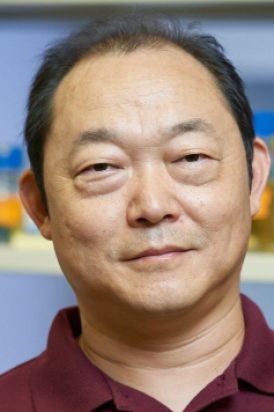
Teng-Fong Wong is a Research Professor in the Department of Geosciences at Stony Brook University, where he has been a faculty member since 1982. His research focuses on the intersection of rock mechanics, earthquake processes, and environmental applications, making significant contributions to understanding deformation mechanisms in geological materials. Education: Sc.B., Brown University, 1973 M.S., Harvard University, 1976 Ph.D., Massachusetts Institute of Technology, 1981 Research Interests: Professor Wong's research centers on rock mechanics with emphasis on earthquake mechanics, energy resources, and environmental applications. He investigates both phenomenological and micromechanical aspects of rock deformation and fluid flow using an integrated approach combining high-pressure deformation experiments, quantitative microstructure characterization, and theoretical analysis. His work spans brittle-ductile transitions in porous rocks, permeability evolution, strength properties of fault zone materials from SAFOD and TCDP drilling projects, and submarine groundwater discharge systems. Publication Trends: Wong's recent publications (2006-2008) demonstrate a consistent focus on strain localization mechanisms in porous rocks, particularly examining compaction bands and deformation bands in sandstones. His work integrates advanced imaging techniques (X-ray radiography, CT scanning) with mechanical testing to understand the micromechanics of rock failure. A significant thread connects his research on fault zone properties from major drilling projects (SAFOD, TCDP) with fundamental rock deformation processes. Scientific Recognition: U.S. Patent 6,874,371 for Ultrasonic Seepage Meter (2005) U.S. Patent 7,107,859 for Ultrasonic Seepage Meter (2006) Co-author of "Experimental Rock Deformation - The Brittle Field" (2nd Edition, Springer-Verlag, 2005) Professional Activities: Professor Wong maintains an active international research profile with numerous visiting appointments including at Australian National University, MIT, ETH Zurich, and institutions in China and France. His work involves extensive collaboration with USGS and international research teams on major fault zone drilling projects. He has developed specialized equipment like the ultrasonic seepage meter for measuring submarine groundwater discharge. Research Infrastructure: Wong's laboratory utilizes advanced capabilities including high-pressure deformation equipment, 3D visualization through laser scanning confocal microscopy and synchrotron microCT, and integrates these with analytic modeling and numerical simulation techniques (finite element and discrete element methods) to investigate micromechanics of dilatant and compactant failure in geological materials.