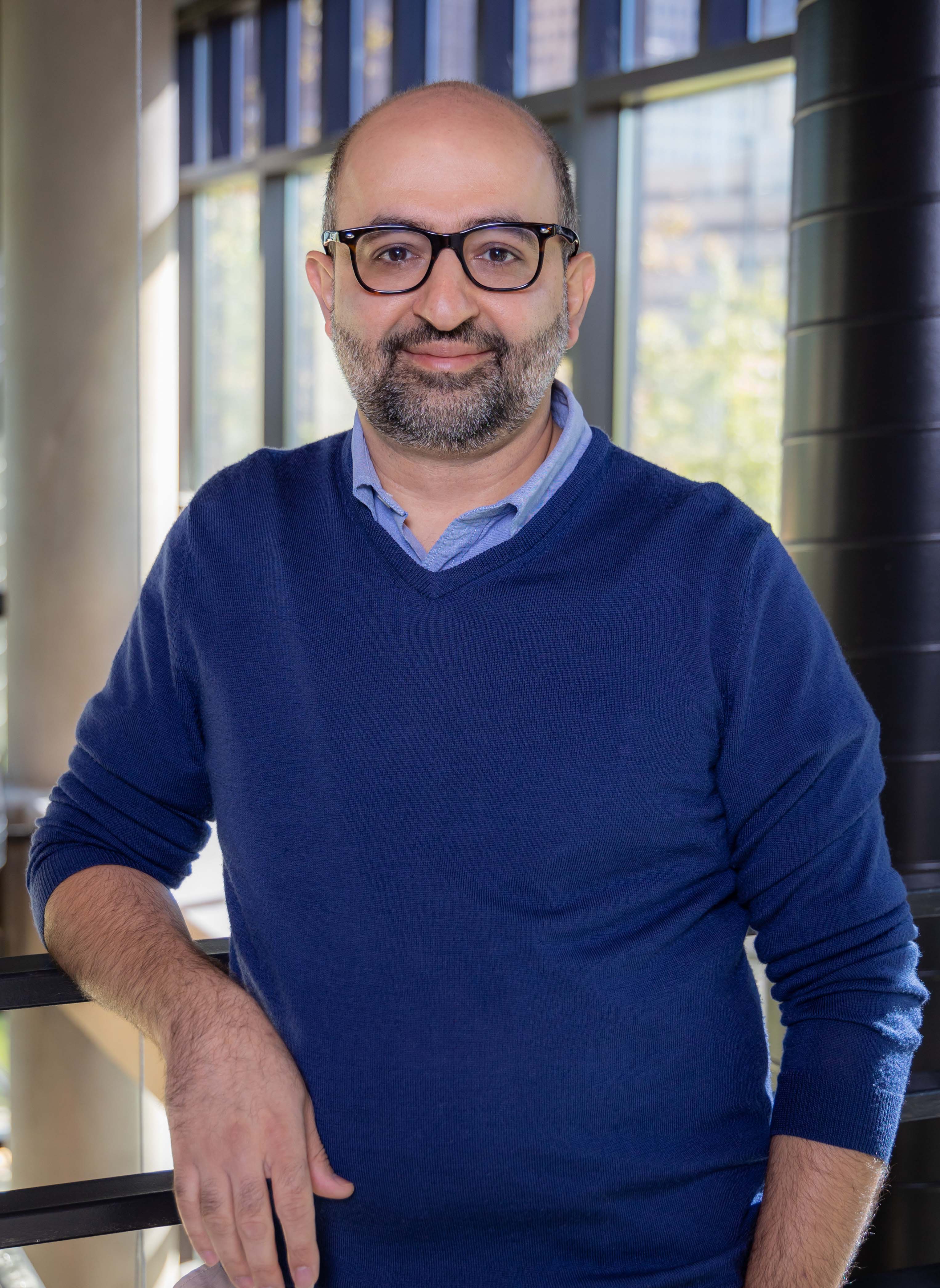
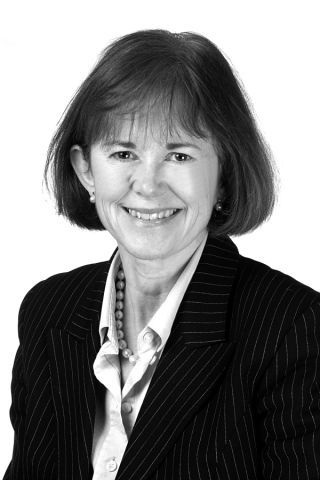
Kelly Arnold is an Associate Professor in the Department of Biomedical Engineering at the University of Michigan. Her research integrates systems engineering principles with immunology to investigate variability in immune responses across infection, vaccination, and injury, with a focus on computational modeling and clinical translation. Research Focus Systems-level immune response modeling Vaccination and antibody functionality Vaginal microbiome-host interactions Chronic lung disease progression Computational serology and proteomics Recent Work Her 2025 studies examine SARS-CoV-2 vaccination responses in cancer patients and computational frameworks for vaginal probiotics. Earlier works (2024-2007) span COPD progression, lupus fibrosis, HIV susceptibility, and tissue engineering for fertility preservation. Methodologies include proteomic profiling, network modeling, and microfluidic systems.
Farnoush Banaei-Kashani is an Associate Professor (Tenured) in the Department of Computer Science and Engineering at the University of Colorado Denver. She also holds an Adjunct Associate Professor position in the Department of Mathematical and Statistical Sciences. As the founder and director of the Big Data Management and Mining Lab (BDLab), she leads multiple GAANN Fellowship Programs, including BDSE (Big Data Science and Engineering), DDC (Data-Driven Cybersecurity), and II (Infrastructure Informatics). She directs the 'Data Science in Biomedicine' MS Track and focuses on data-driven decision systems (DDSs), integrating machine learning and big data analytics into healthcare, energy, transportation, and environmental applications. Education: Details not explicitly provided in the text. Her research spans data management cycles for DDSs, addressing challenges like big data volume, velocity, and variety. Key projects include iWatch (crime surveillance), POCM (mobility monitoring), and GeoSIM (urban texture documentation). She teaches courses such as Machine Learning Systems, Big Data Science, and Data Mining. Publications highlight advancements in sea ice classification, federated learning, proteomic networks, and privacy-preserving AI. Her work is funded by NSF, NIH, DOT, and industry partners like Google and IBM. She has advised numerous students and contributes to academic leadership as editor, conference chair (ACM SIGSPATIAL 2018/2019), and program committee member for venues like SIGMOD and KDD.
Melody Alsaker is an Associate Professor in the Department of Mathematics at Gonzaga University, where she has held this position since January 2016. Her research focuses on medical imaging and applied inverse problems, particularly in the field of electrical impedance tomography (EIT). She specializes in mathematical modeling, algorithm design, and biomedical image processing, with applications in pulmonary and thoracic imaging. Her work emphasizes improving EIT reconstruction techniques using the D-bar method, incorporating spatial priors, and developing real-time solutions for clinical applications. Notable contributions include the ACE1 EIT system for thoracic imaging and studies on stroke classification, air trapping in lungs, and surrogate measures of pulmonary function in children with cystic fibrosis. Alsaker's research bridges mathematics and engineering, addressing challenges in medical imaging accuracy and computational efficiency. Her collaborations span disciplines, including biomedical engineering, respiratory physiology, and clinical medicine.
Prof. Abbas Samani is a Professor at the Department of Electrical and Computer Engineering and holds a joint appointment in the Department of Medical Biophysics at Western University . He is a core faculty member of the Biomedical Engineering Graduate Program and an Associate Scientist at Imaging Research Laboratories of Robarts Research Institute . His academic journey includes a Ph.D. from the University of Waterloo, an M.Sc. from the University of Tehran, and a B.Sc. from Amirkabir University of Technology. His research focuses on biological tissue computational modeling and its applications in medical imaging, intervention, and image analysis . He develops computer/image-assisted tools for minimally invasive disease diagnosis and therapy , targeting heart disease, cancer, and lung disease . Key projects include myocardium biomechanical modeling , handheld medical devices for breast cancer screening , and lung disease diagnostics via CT image segmentation . His recent publications emphasize ultrasound elastography , finite element modeling , and inverse problems in biomechanics , primarily in journals like IEEE Transactions on Computational Imaging and Translational Oncology . His work spans both computational modeling and medical device development . Selected Graduate Supervision : Ph.D. Candidates : Seyed Hassan Haddad, Elham Karami, Seyed Mohammad Hesabgar Graduated Ph.D. Students : Ali Sadeghi Naini, Seyed Reza Mousavi M.Sc. Students : Cristian Linte, Patrick Courtis, Joseph O'Hagan, Hatef Mehrabian, Hirad Karimi, Hosein Amooshahi, Seyed Mohammad Hesabgar, Nastaran Ghadarghadr, Shadi Shavakh, Ehsan Salamati, Ehsan Omidi Teaching Contributions : Graduate: BME9519B/CAMI9519B/ECE9202B/ECE9022B - Advanced Image Processing and Analysis , MBP9530A - Human Biomechanics and Biomedical Applications Undergraduate: ECE4438B - Advanced Image Processing and Analysis , ES1050 - Introductory Engineering Design and Innovation Studio , MBP3330F - Human Biomechanics and Biomedical Applications Research Affiliations : Robarts Research Institute - Associate Scientist at Imaging Research Laboratories Western University - Core Faculty, Biomedical Engineering Graduate Program
Marita Dale is a Senior Lecturer in the Discipline of Physiotherapy at the University of Sydney and an Early Career Researcher affiliated with the Charles Perkins Centre. She specializes in cardiorespiratory physiotherapy, focusing on exercise interventions for chronic respiratory and cardiac diseases, particularly asbestos-related and dust-related conditions. Her work emphasizes improving accessibility to pulmonary rehabilitation services and leveraging mHealth technologies for patient care. Education: PhD in Physiotherapy (2016, University of Sydney). Her research interests include optimizing pulmonary rehabilitation through mobile health platforms, such as the m-PR™ app, and investigating pediatric burn injury rehabilitation, including orthosis use and scar prevention. She also explores multimorbidity management and simulation-based learning in healthcare education. Recent studies have highlighted her contributions to COPD care protocols, telehealth implementation during the pandemic, and qualitative analyses of patient experiences. Major awards: Sydney School of Health Sciences Teaching Citation (2022), Ashurst Prize for Outstanding Oral Presentation (2015), Helga Pettitt FHS Postgraduate Study Award (2010). Marita supervises Honours, Masters, and PhD students, including Mitchell Taylor on airway clearance in bronchiectasis. Her teaching spans undergraduate and postgraduate programs in cardiopulmonary and musculoskeletal physiotherapy. She collaborates on projects like the Lung Support Service, a nationwide text message program for chronic respiratory patients during the pandemic, and contributed to the commercialization of the Perx-R app for pulmonary rehab. Labs/teams: Active member of the Charles Perkins Centre, focusing on interdisciplinary chronic disease research and healthcare innovation.
Dr. Basak Tas is a Research Fellow at King's College London, based in the Institute of Psychiatry, Psychology & Neuroscience within the Department of Addictions Sciences. She has been working at King's since 2014, initially as a PhD student and then as a Post-doctoral Research Associate, before taking up her current role in 2021. Her work focuses on opioid overdose and related interventions, collaborating with Professor Sir John Strang and Dr. Will Lawn. Her educational background includes an undergraduate degree in Neuroscience from King's College London and an MSc in Neuroscience from the University of Edinburgh. She completed her PhD at King's College London under the supervision of Professor Sir John Strang, Dr. Caroline Jolley, and Dr. James Bell. Her PhD thesis was titled "Clinical and Laboratory Investigation into Heroin and Opioid Overdose Risk". Dr. Tas's research centers on opioid overdose mechanisms, opioid use disorder treatments, and health interventions to reduce drug-related deaths. She investigates experimental drug studies and develops wearable technologies for overdose detection. Her work aims to understand the physiological underpinnings of overdose and create practical tools for real-world overdose prevention, particularly in high-risk populations. Her recent publications (2020-2025) focus on innovative approaches to prevent opioid overdose deaths, including wearable biosensors (e.g., PneumoWave) and mHealth technologies. She explores risk factors for respiratory depression and the acceptability of detection devices among people who use opioids. Her work bridges laboratory models of overdose with clinical applications in supervised injecting facilities and community settings. Dr. Tas was awarded the following scientific award: Addictions Clinical Academic Group (CAG) Early Career Research Prize (2022) She contributes to teaching by supervising MSc Addiction Studies projects and teaching in the BSc Psychology "Addictions" and "Choices" modules. Additionally, she has been involved in public engagement, including school workshops and the art-science project "Heroin Bodies". Dr. Tas is part of the Drugs Research Group within the Addictions Department at King's, led by Professors John Strang and John Marsden. Her current work involves collaboration on projects related to opioid overdose and wearable technologies.
Dr. Joshua Brinkerhoff is an Associate Professor in Mechanical Engineering at the University of British Columbia Okanagan Campus. He serves as the Associate Director for Research & Industrial Partnerships in the School of Engineering and leads the UBC-Okanagan Computational Fluid Dynamics Laboratory. His research spans computational fluid dynamics, turbomachinery, multiphase flows, hydrogen safety, wind energy, and biofluid mechanics. He teaches courses in mechanics of materials, alternative energy systems, turbulence, computational fluid dynamics, and aircraft design. PhD, Aerospace Engineering (Carleton University, Ottawa, ON) BEng, Aerospace Engineering (Carleton University) Dr. Brinkerhoff’s research interests include: Computational Fluid Dynamics (CFD) for laminar-to-turbulent transition and instability analysis Wind energy systems and turbine aerodynamics Hydrogen storage and safety protocols for transportation Biofluid mechanics for respiratory diseases and aneurysm modeling Multiphase flows in industrial and environmental contexts His publications focus on CFD simulations for: Aerosol dispersion and mitigation in indoor environments Wind farm interactions and atmospheric gravity waves Cavitation and phase transitions in cryogenic and LNG systems Heat transfer optimization in industrial and thermal systems Instability dynamics in buoyancy-driven and swept flows Turbulent structures in fluidized beds and reactors Dr. Brinkerhoff has no listed scientific awards in the provided data but has extensive contributions to renewable energy, hydrogen safety, and medical fluid dynamics. His laboratory develops open-source tools like TOSCA for large-eddy simulations and investigates practical applications in urban air quality, dental aerosol control, and turbine wake modeling.
Prof. Raimon Jané Campos is a leading figure in biomedical signal processing at the Universitat Politècnica de Catalunya (UPC) and Universitat de Barcelona (UB). As co-director of UPC's Biomedical Signal and System Group (CREB) and coordinator of the Biomedical Engineering PhD Programme, he bridges engineering and clinical applications. His work focuses on respiratory and sleep disorder diagnostics, with significant contributions to COPD and sleep apnea monitoring through wearable devices and machine learning. PhD in Biomedical Engineering (UPC, 1989) Visiting researcher at Université de Nice-Sophia Antipolis Vice-president of Spanish Society of Biomedical Engineering Research spans respiratory mechanics , sleep-disordered breathing , acoustic biomarkers , bioimpedance , and machine learning in biomedical contexts . His 2025 work on microcalorimetric pathogen classification and 2024 spiking neural networks for apnea detection demonstrate cutting-edge integration of computational methods with physiological monitoring. Articles from 2017-2024 reveal consistent focus on non-invasive diagnostics , cardiorespiratory synchronization , and smartphone-based health solutions . Awarded the Barcelona City Technology Research Award (2005) and serving on the International Advisory Board for Physiological Measurement since 2010, his career combines academic leadership with real-world clinical translation through IBEC's technology transfer initiatives.
Jennifer Dy is a Distinguished Professor at Northeastern University with joint appointments in Electrical and Computer Engineering and Khoury College of Computer Sciences. As Director of AI Faculty at the Institute for Experiential AI, she leads research in machine learning, computer vision, and explainable AI. Her work spans biomedical applications (COPD phenotyping, neuroimaging) and fundamental algorithms (active learning, continual learning). She holds a PhD from Purdue University and is an AAAI Fellow. Research Focus: Dy develops methodologies for robust and interpretable machine learning, including techniques for model stability in continual learning, dependency-aware active learning, and axiomatic explanation frameworks. Her applied research advances diagnostic tools using Raman spectroscopy, CT imaging, and multi-omics biomarker discovery. Awards: Recognized with the NSF CAREER Award, Faculty Research Team Award, and AAAI Fellowship for contributions to unsupervised learning and medical AI. Publication Trends: Recent articles demonstrate strong cross-disciplinary integration, combining theoretical advances in explainability/robustness with applications in healthcare, wireless systems, and particle physics. Methodological themes include optimal transport theory, probabilistic modeling, and transformer architectures.
Anne Holland is Professor of Physiotherapy and Head of Respiratory Research at Monash University and Alfred Health in Melbourne, Australia. She is an NHMRC Leadership Fellow (2021–2025) and a Chief Investigator for the NHMRC Centre of Research Excellence in Pulmonary Fibrosis and the NHMRC Centre of Research Excellence in Treatable Traits. Her research focuses on supportive therapies for chronic respiratory diseases, particularly COPD and pulmonary fibrosis, with a strong emphasis on pulmonary rehabilitation, telerehabilitation, and ambulatory oxygen therapy. Her research interests include: Respiratory physiotherapy Pulmonary rehabilitation (home-based and low-cost models) Access to care for chronic lung disease Telerehabilitation and digital health Symptom management in interstitial lung disease Exercise training and physical activity promotion Her recent publications focus on symptom management, digital self-management tools, treatable traits models, and clinical trials in pulmonary fibrosis and COPD. The body of work reflects a strong trend toward patient-centered, accessible, and evidence-based interventions that improve quality of life and clinical outcomes in chronic respiratory conditions. Her major scientific awards include: Society Medal, Thoracic Society of Australia and New Zealand (2021) European Respiratory Society Gold Medal for Allied Health Professionals (2022) NHMRC Investigator Fellow (Leadership 1) (2021) Fellow, Thoracic Society of Australia and New Zealand (2019) American Thoracic Society Pulmonary Rehabilitation Assembly Award (2016) Anne Holland supervises PhD students and is actively involved in advising and grant leadership. She is the Primary Chief Investigator on major trials such as the PERFORM trial and the TAPPET trial, and she leads a multinational ambulatory oxygen trial for fibrotic lung disease. Her work is supported by NHMRC and international collaborations. She is also President of the Thoracic Society of Australia and New Zealand, reflecting her leadership in the field. Anne leads the Holland Respiratory Care Research Group at Monash, which focuses on innovative models of care delivery, validation of remote monitoring tools, and improving patient self-management in chronic lung disease. The team collaborates widely across Australia and internationally, particularly in trials involving pulmonary rehabilitation and treatable traits.
Associate Professor Fiona O'Leary is affiliated with the University of Sydney's Sydney Nursing School and the Discipline of Nutrition and Dietetics within the Faculty of Medicine and Health. She holds membership in the Charles Perkins Centre's Brain and Body, Biology of Ageing, and Healthy Food Systems research nodes. Her academic qualifications include a PhD, BSc (Hons), and a Graduate Diploma in Nutrition and Dietetics. Her research focuses on dietary assessment, malnutrition, public health nutrition, and evidence translation for healthy ageing. Notable projects include the NHMRC-funded Maintain Your Brain dementia prevention trial and secondary analysis of the Australian National Nutrition Survey. She also leads initiatives in Tanzania and Zambia addressing childhood malnutrition through poultry and crop integration. Current research projects: Maintain Your Brain trial, dietary patterns analysis, COPD supplementation, and food security initiatives in Africa. Dr. O'Leary has 33 peer-reviewed publications, primarily in ageing and dementia. She teaches Medical Nutrition Therapy and coordinates the Dietetic Professional Studies course. Awards include Advanced Accredited Practising Dietitian status. Her advisory roles include associate supervision of PhD and MPhil students in nutrition and cognitive function, oral health, and biomarker panel development.
Veronique Pepin, PhD, is a Professor in the Department of Health, Kinesiology & Applied Physiology at Concordia University and serves as the current interim dean of the School of Health. She holds a researcher position at the Centre de recherche du CIUSSS-NIM, based at the Centre Jean-Jacques-Gauthier, where she has established research infrastructure in cardiopulmonary exercise testing (CPET) and pulmonary rehabilitation. She is also a member of the Executive Committee of the Canadian Thoracic Society. Her research focuses on CPET, exercise interventions for chronic diseases (e.g., COPD), and physical activity monitoring. She has expertise in kinesiology, clinical exercise physiology, and translational research in respiratory health. No specific grants, advising details, or lab affiliations are explicitly listed in the provided text. Her educational background is noted but lacks specific degree details.
Moira Whyte serves as Sir John Crofton Professor of Respiratory Medicine and Head of Edinburgh Medical School at the University of Edinburgh, while directing the MRC University of Edinburgh Centre for Inflammation Research. Her leadership spans clinical academia and major research initiatives focused on respiratory pathophysiology. Her educational background includes a 1st Class B.Sc. (1981), M.B., B.S. (1984), and Ph.D. (1993) from the University of London, complemented by professional qualifications: M.R.C.P. (1987), F.R.C.P. (1998), and F.Med.Sci. (2005) from the Academy of Medical Sciences. Whyte's research centers on neutrophil biology, macrophage function, and hypoxia signaling pathways in respiratory diseases. Her work explores how oxygen-sensing mechanisms like HIF pathways regulate immune cell function in COPD, pulmonary fibrosis, and bacterial infections, with particular focus on cellular metabolism and inflammation resolution. Analysis of her 15 most recent publications reveals consistent focus on neutrophil and macrophage biology within respiratory diseases, with growing emphasis on metabolic regulation of immune responses. Her work bridges basic science (using zebrafish models) with clinical applications, particularly in COPD and pulmonary fibrosis. Her scientific recognition includes: 2014 OBE for Services to Respiratory Medicine 2014 Foundation Fellow of the European Respiratory Society 2005 Fellow, Academy of Medical Sciences 2002 Tudor Edwards Lecturer of the Royal College of Physicians 1994 Wellcome Trust Advanced Fellowship 1989 MRC Clinical Training Fellowship Whyte directs substantial research funding, including a £6.4M Wellcome Trust Clinical PhD Programme (ECAT-Plus) and multiple grants investigating macrophage function in COPD, hypoxia pathways in pulmonary fibrosis, and neutrophilic inflammation regulation. Her collaborative approach is evident in multi-institutional projects like the EME-TIPAC study on pulmonary fibrosis. As Director of the MRC Centre for Inflammation Research, she leads a multidisciplinary team investigating fundamental mechanisms of inflammation across multiple disease contexts, with particular strength in respiratory immunology and translational applications.
Dae-Jin Lee is an Assistant Professor at IE University’s School of Science and Technology, specializing in statistical modeling and data science. Previously, he served as a Research Line Leader at the Basque Centre for Applied Mathematics (BCAM) and coordinated the Knowledge Transfer Unit in Data Science/AI. His academic background includes a Ph.D. in Mathematical Engineering (2010) from Universidad Carlos III de Madrid and postdoctoral research at CSIRO (Australia). His research focuses on statistical methods for complex data, including penalized splines, tensor product smooths, and applications in biomedicine, epidemiology, environmental science, and sports analytics. He has led multidisciplinary projects funded by public and industry grants, collaborating globally with experts across fields like engineering, medicine, and biology. Key research themes include predictive modeling for health outcomes (e.g., SARS-CoV-2 pneumonia severity), sports injury prevention, and AI in healthcare. His work integrates machine learning with traditional statistical techniques, addressing real-world challenges like pedestrian dynamics simulations and automated medical diagnostics. He is actively involved in scientific organizations, including the Spanish Biostatistics Society and the Statistical Modelling Society. His recent publications highlight innovations in growth curve modeling, AI ethics, and spatiotemporal data analysis, reflecting his commitment to advancing both theoretical and applied statistics.
Volker J Schmid is a Professor of Bayesian Imaging and Spatial Statistics at the Department of Statistics, Ludwig Maximilian University of Munich. He leads the Bayesian Imaging and Spatial Statistics group and contributes to interdisciplinary initiatives like the Munich Center of Machine Learning. His work bridges statistical theory with applications in medical imaging and biology. PhD in Statistics (2004), LMU Munich Diploma in Statistics (2000), LMU Munich Abitur, Joseph-von-Fraunhofer-Gymnasium Cham (1993) His research focuses on Bayesian computational methods for high-dimensional data, particularly in medical imaging (MRI, DCE-MRI) and biological microscopy (e.g., 3D nuclear architecture analysis via super-resolution microscopy). Key applications include disease mapping , image segmentation , and spatio-temporal modeling . His software tools (e.g., nucim , bioimagetools , BAMP ) enable quantitative analysis in nuclear imaging and age-period-cohort modeling. His 15 most recent publications span Bayesian modeling for medical imaging , spatio-temporal epidemiology , and computational biology . Topics include co-localization metrics in fluorescence microscopy, nuclear architecture analysis, and dynamic Bayesian frameworks for MRI data. Collaborations extend to neuroimaging, oncology, and nuclear biology.